Literary calendar for week of Jan. 18

posted in: All news | 0

LORETTA ELLSWORTH: Minnesota author discusses her novel “The Jilted Countess.” 6 p.m. Thursday, Barnes & Noble, 3230 Galleria, Edina.

JACK EL-HAI: Minnesotan discusses his book “The Nazi and the Psychiatrist,” basis for the film “Nuremberg,” starring Russell Crowe and Rami Malek. 2 p.m. Jan. 25, University of St. Thomas, O’Shaughnessy Education Center, 2115 Summit Ave., St. Paul. Presented by Jewish Community Relations Council, Jewish Historical Society of the Upper Midwest, University of St. Thomas and Jay Phillips Center for Interreligious Studies. Free, registration required. Go to Jewish Community Relations Council Minnesota & Dakotas.

DAVID HAKENSEN: Introduces “Her Place in the Woods: The Life of Helen Hoover.” 5 p.m. Wednesday, Lowell Inn, Stillwater, presented by Valley Bookseller.

HOLBROOK/LITTLE: Carolyn Holbrook, teacher, author and founder of More Than a Single Story, and Arletta Little, executive and artistic director at the Loft Literary Center, talk about their their lives and careers and the paths that got them where they are now, part of Holbrook’s Embracing Our Roots program that puts Black artists with next-generation arts leaders. Free.1 p.m. Saturday, University of Minnesota Elmer L. Andersen Library, 222 21st Ave., Mpls.

MINNESOTA MYSTERY NIGHT: Monthly series begins its new season with guest reader and Edgar award-winner David Housewright in conversation with movie producer and director Patrick Coyle. Both men live in St. Paul. Housewright has written 31 novels, most in either the Holland Taylor or Rushmore McKenzie series with the next one, “Fear the Reaper,” to be published in June. He is winner of three Minnesota Book Awards and past president of the Private Eye Writers of America. Coyle has written and directed four nationally released feature films. His newest play, “Big Blue River,” premiered in 2023 at North Garden Theatre in St. Paul and ran for six sold-out weeks. He is an adjunct professor of film at the Minneapolis College of Art and Design and lead singer of the band One Hit Wonders. 7 p.m. Monday, Lucky’s 13 Pub, 1352 Sibley Memorial Hwy., Mendota. Free. Registration required at mnmysterynight.com. $13 reservation charge.

READINGS BY WRITERS: Tim Nolan hosts poets Jane Dickerson, Douglas Padilla, Pete Heiden and William Reichard. 7:30 p.m. Tuesday, University Club, 420 Summit Ave., St. Paul.

DEBRA J. STONE: Discusses “The House on Rondo” in Friends of the St. Paul Public Library’s Fireside Readings series. 6:30 p.m. Wednesday, Rondo Community Library at Hallie Q. Brown Community Center, 270 N. Kent St., St. Paul.

What else is going on

Thomas Maltman (Courtesy of the author)

Thomas Maltman, award-winning Minnesota mystery writer whose books include “Ashes to Ashes” and “Little Wolves,” will open the spring Club Book series March 18 at Wescott Library in Eagan followed by Lee Hawkins on March 28, Nathan Harris on April 1, Carley Fortune pn April 9, Tessa Bailey on April 14, Sara Hashem on April 16, Cleyvis Natera on April 28 and Daniel H. Wilson on May 4. The free series, which brings important authors to metro-area libraries, is presented by Metropolitan Library Service Agency (MELSA). Venues will be announced closer to the authors’ reading dates.

Related Articles


This book about historical figures’ drug use is an intoxicating must-read


Literary calendar for week of Jan. 11


Readers and writers: Follow women through difficult lives in two disparate debut novels


Charles Beaumont was a spy. Now he’s writing spy novels


Pine Needles residency program refocuses as next group of artists and writers sought

Lisa Jarvis: The Dry January experiment is working

posted in: All news | 0

As New Year’s Eve approached, I found myself mulling over something that in all my previous adult years would have been unthinkable: What if I didn’t drink? Sure, I had a lovely bottle of champagne chilling in the fridge. But I’d already planned on having Dry(ish) January. Wouldn’t it be great to wake up in 2026 fully rested and with a clear head?

My internal dialogue mirrors the growing number of Americans leaning into moderation. After everyone went a little overboard during the pandemic, more people in the U.S. are reassessing their drinking habits — or, especially among younger generations, eschewing alcohol altogether.

That reassessment has manifested in a sustained decline in alcohol consumption, as was underscored in a recent Gallup poll showing that just 54% of adults said they consume alcohol — the lowest level in nearly 90 years.

So how much of the credit does Dry January — the annual monthlong break from drinking that started in the UK in 2013 and has since gained popularity in the U.S. — deserve for a more sober country?

At least a little. Substance abuse experts caution against attributing too much to any single trend, particularly when there’s limited data on the long-term effects. But one thing seems clear: Dry January (along with Sober October) has helped accelerate a shift in Americans’ attitudes about what it means to abstain. The annual event has given people “cultural permission to pause,” says Marisa M. Silveri, director of the Neurodevelopmental Laboratory on Addictions and Mental Health at McLean Hospital, in Massachusetts.

That’s a big deal.

“Both the sober curious movement and Dry January have really helped normalize not only pausing but also being able to evaluate your own drinking without labeling, without stigma — without feeling bad about it,” Silveri says. That fits into a broader harm reduction approach that allows people to get the health benefits of cutting back without necessarily cutting out altogether, she adds.

The event gives people the space to evaluate their habits and take a hard look not just at how much and how often we drink, but at how it affects our sleep, mood, and even weight — not to mention how we manage stress. My own experience with a more sober month has resulted in a slow shift away from alcohol. Three years into my “damp” January approach, I still drink, but far less often and more thoughtfully.

This societal experiment with moderation or sobriety seems fueled by a growing recognition that alcohol isn’t particularly good for us. That may sound obvious — it’s no secret that heavy drinking wreaks havoc on the liver. But last year’s health advisory from then-Surgeon General Vivek Murthy, which highlighted the link between moderate drinking and cancer, was a wake-up call for many. After the report’s release, my phone lit up with messages from friends who hadn’t been aware of the increased risk of breast cancer associated with heavier drinking.

And as evidence continues to mount linking alcohol to other long-term harms, such as dementia, the public health narrative is shifting — from one that suggests moderation is safe or even healthy to one that suggests no amount of drinking is safe.

Gen Z appears to be particularly internalizing that message, leading to a “generational redefinition of what is normal drinking, or what is acceptable drinking,” Silveri says. The Gallup poll found that some 66% of young adults view moderate drinking as bad for their health — more than double the number that felt that way a decade ago. Perhaps it’s no surprise, then, that they are drinking less: In that same poll, just half of adults under 35 said they drank, down from 59% in 2023.

Silveri also suspects that some consumer trends may be helping more people cut back. The widespread use of wearables, for example, can offer hard evidence of just how much that second (or third) glass of wine disrupts sleep. Meanwhile, the booming market for alcohol-free beverages is making it easier for Gen Z’s sober party girls to go alcohol-free and Millennials to zebra stripe (a “mindful drinking” trend where you alternate alcoholic drinks with non-alcoholic ones) their way through a night out.

So how much further will this trend go? Henry Kranzler, director of the Center for Studies of Addiction at the University of Pennsylvania’s Perelman School of Medicine, points to the decades-long decline in cigarette smoking in the U.S. as a model. After a landmark 1964 report from the U.S. surgeon general linking cigarettes to lung cancer, smoking rates steadily fell from 42% to below 12%.

While Kranzler can’t predict whether alcohol will follow the same trajectory, Gen Z’s disinterest in drinking is a good sign the downward trend will continue. Problematic drinking has historically peaked in young adulthood, so the hope is that fewer young adults engaging in heavy drinking today will translate into a lower lifetime risk for heavy drinking for that generation.

Ultimately, I did pop open that special bottle of champagne. My best health bet might be to abstain altogether, but I also find joy in celebrating with my loved ones. Still, the next day, I returned to my “damp” January project — and have felt all the better for it.

Lisa Jarvis is a Bloomberg Opinion columnist covering biotech, health care and the pharmaceutical industry. Previously, she was executive editor of Chemical & Engineering News.

Related Articles


David Blobaum: Admitting unprepared students into college isn’t equity


Ronald Brownstein: This ICE crackdown is making the case for real immigration reform


Mary Ellen Klas: What my Trump-supporting friends won’t say


Barbara McQuade: The DOJ suing for voter data is dangerous on many levels


Marc Champion: Putin just sent a reminder he’s a threat to NATO

David Blobaum: Admitting unprepared students into college isn’t equity

posted in: All news | 0

As the regular application deadlines approach this month, getting into college is top of mind for many high school seniors. But students assume that if a college admits them, it means the school has accurately assessed that they can handle the work. That is hardly the case anymore.

Even though COVID-19 lockdowns no longer prevent students from taking the SAT or ACT, most colleges have remained test-optional, many citing that requiring the tests would diminish their ability to compete for applicants.

Yet we are seeing the consequences of these admissions policies: Less-informed decisions lead to worse decisions. And the data proves it.

After the University of California San Diego stopped using SAT and ACT scores in admissions beginning in 2020, the percentage of its students who placed into remedial math jumped from 1% to 12%. Even worse, the school had to redesign a remedial math course, Math 2, and teach students not just high school or even middle school math but also elementary school math — meaning what students learn in first to fifth grade. Yet, despite UCSD’s best efforts, the report shows that these students never catch up to their peers — and suffer the consequences.

Nearly one-third of students who take Math 2 are unable to complete their degrees in psychology and biology because they drop, withdraw from or fail the final calculus course required for graduation in these majors. Worse, it appears that “few, if any students who place into Math 2 have successfully completed an engineering degree.”

Admitting underprepared students hurts those students, who complete all the credits leading up to math courses they then cannot pass. Their dreams of graduating in their chosen profession are crushed, and they then have to switch majors, spend additional time in college, take on more debt and often earn less in life. For instance, students who graduate with degrees in science, technology, engineering or mathematics have, on average, 50% higher incomes than those of other college graduates.

Compounding the problem, even the remaining information that college admissions officers use (grades) is less reliable. According to the Higher Education Research Institute, in 2024, 84% of students in its survey of freshmen at four-year bachelor’s degree-granting universities had A averages in high school. When almost everyone has an “A,” then no one does because grades cease to accurately communicate the academic preparedness they did before.

This is exactly what the UCSD researchers found as well: “Grades achieved in high school math classes are not helping UC to evaluate math skills much more either.” In 2024, over 25% of the students in remedial Math 2 had a math grade average of 4.0.

That’s stunning. One-fourth of the students who could not do elementary and middle school math had perfect grades in high school math. Their high school math grades were essentially meaningless, rising even as their actual math skills declined. In 2024, the National Center for Education Statistics found the same trend: The vast majority of 12th grade students are not proficient in reading and math.

In fact, 12th grade students have the lowest ever recorded proficiency in reading and math. But inflated grades hide the problem from parents: 90% of parents in the U.S. believe that their children are at or above grade level proficiency.

The situation is not hopeless. While I don’t think high schools will return to grading based on academic preparedness — their students would have lower grades and likely face lower chances of getting into colleges — both high schools and colleges can use long-established, statistically valid standardized measures of academic preparedness.

For instance, the College Board is already expanding its Advanced Placement exams to cover a broader range of courses. Students, parents, high schools and colleges don’t have to wonder whether an A in, for example, pre-calculus means the student actually learned pre-calculus; they can now look at the AP exam score to more accurately understand how much pre-calculus a student knows. Recognizing this, Caltech and Stanford recently became the first colleges to require that students submit their AP exam scores. All stakeholders need to know how well-prepared a student is.

The colleges remaining test-optional or test-blind should follow the lead of a majority of the nation’s most prestigious institutions (and plenty of middle-of-the-road ones as well): Return to using standardized measures of academic achievement. As the UCSD report notes, “the single best predictor for math placement has been the SAT (math section) score, with the ACT score being an equally good predictor.”

This echoes what other schools, such as Yale, Brown and Dartmouth, have publicly stated: SAT and ACT scores are the best predictors of success at their institutions. A 2024 multi-institution study found that SAT/ACT scores are 3.9 times better predictors of success at Ivy and Ivy-plus colleges than are high school grades.

When students are not academically ready for a major or a college, they have lower rates of completing their desired degrees, take longer to graduate (and are less likely to do so), and take on more debt. In fact, according to National Student Clearinghouse data, the six-year college completion rate in 2024 was only 61.1%. That means nearly 40% of college students fail to graduate within six years or at all.

But students are not aware that they are not being fully vetted. Like a homebuyer who takes out a loan, they assume the professionals did their job to determine whether they can actually afford it. As nonprofits, colleges are supposed to serve a public benefit; admitting underprepared students, taking their money and watching them fail is the opposite of that.

Colleges should immediately return to fully vetting applicants to ensure that they are enrolling students who are prepared for the coursework in their desired major and will graduate without taking on excessive debt from additional years of college.

David Blobaum is on the board of directors and is the director of outreach for the National Test Prep Association, a nonprofit that works to support the appropriate use of testing in admissions. He wrote this column for the Chicago Tribune.

Related Articles


Lisa Jarvis: The Dry January experiment is working


Ronald Brownstein: This ICE crackdown is making the case for real immigration reform


Mary Ellen Klas: What my Trump-supporting friends won’t say


Barbara McQuade: The DOJ suing for voter data is dangerous on many levels


Marc Champion: Putin just sent a reminder he’s a threat to NATO

$7M youth sports complex coming to Apple Valley

posted in: All news | 0

Apple Valley is shelling out millions to level up its youth sports facilities.

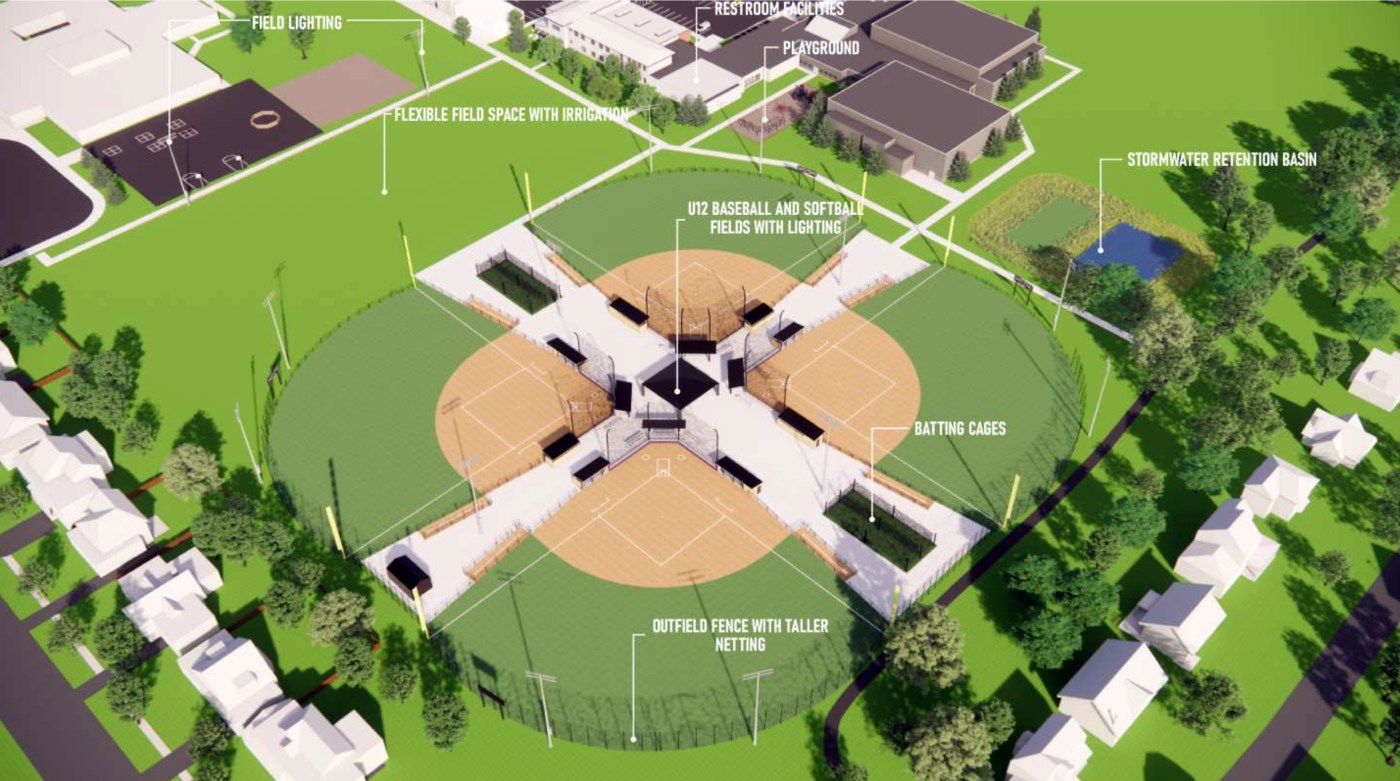
Once completed, the Hayes Youth Athletic Complex will boast four youth baseball and softball fields, covered dugouts, irrigated turf and lighting for evening games, said Eric Carlson, director of parks and recreation for Apple Valley.

The estimated $7.1 million project, to be located at 14603 Hayes Road, is made possible through a recent parks referendum.

“In 2023, voters approved a $73.25 million park bond referendum to upgrade the city’s park system,” said Tom Lawell, city administrator for Apple Valley, in an email.

The two-question voter-approved referendum asked residents to issue more than $73 million in bonds to fund improvements to the city’s parks, recreation facilities and trails.

The focal point of the athletic complex will be four baseball/softball fields in a wheel pattern near the Apple Valley Community Center. The wheel-shaped development will include batting cages, outfield fencing and lighting.

A rendering of the project also notes flexible field spaces to be used for soccer, football or lacrosse, additional storage and an expanded parking lot.

School district partnership

While the project is paid for by the city, it is a partnership with ISD 196, the Rosemount-Apple Valley-Eagan school district, which owns part of the land the complex is being built on, Carlson said.

The land provided by the district is part of the Westview Elementary School site, which is located at 225 Garden View Drive.

Once the project is completed, Westview students will have access to the new facilities for gym class and recess. High school sports teams for ISD 196 will use the facilities for softball, soccer, lacrosse and football, Carlson said.

Also using the new facilities will be Valley Athletic Association, a nonprofit organization that serves students of ISD 196 communities, and Eastview Athletic Association, which offers sports programs to families living within the Eastview High School enrollment boundaries as well as the city of Apple Valley.

A stone’s throw from the planned youth sports facilities sits the former Hayes Arena, now known as Wings Arena, Carlson said, following the signing of a naming rights agreement between Wings Credit Union and the city. “We are currently working with Wings on a logo and will be updating things soon,” Carlson said.

While the Hayes Youth Athletic Complex does not currently have a naming partner, Carlson said, “We are open to signing naming agreements on a number of city projects including the youth baseball/softball complex.”

The athletic complex is set to be seeded this spring and construction is expected to wrap up in early 2027 at the latest, Carlson said.

Other park projects

In addition to the Hayes Youth Athletic Complex, the 2023 parks referendum also funded updates made to the Splash Valley Water Park, the construction of a skate park and an inclusive playground.

Formerly known as the Apple Valley Family Aquatic Center, the Splash Valley Water Park received updates last summer including a renovated bathhouse and concessions area, and updated mechanical systems. It also added an area for lawn games and implemented solar panels and accessibility improvements.

Redwood Park in Apple Valley is also benefitting from the 2023 referendum with a $16 million construction project that began last summer.

A courtesy rendering of the newly imagined Redwood Park in Apple Valley, which will include an inclusive playground area, pickleball courts, a basketball court, as well as a new community pool and pool house with community meeting spaces, and other amenities. The park and pool will be fenced off for the entire year, with the goal of reopening in spring 2026. (Courtesy of Confluence and the City of Apple Valley)

Once completed, the renovated park will offer the city’s first inclusive playground, pickleball courts, basketball court, pool and pool house with community meeting spaces and other amenities.

Redwood Park’s swimming pool could open as early as June with the rest of the park tentatively scheduled to open in August, according to city documents.

Related Articles


Calling all Minnesotans: Have you tested your home for radon?


Twin Cities: Events planned for Martin Luther King Jr. Day on Monday


Waiting for a mentor: Emmett


Champlin mother charged with killing toddler after Lakeville father granted custody


Apple Valley man spared prison in Mounds View shooting case