Column: Some unsolicited advice for Craig Counsell on handling his first year as Chicago Cubs manager

posted in: News | 0

Chicago Cubs manager Craig Counsell wanted to take things slowly after a whirlwind chain of events since his initial Nov. 1 meeting with President Jed Hoyer.

You really can’t blame him. There’s a lot to learn about the Cubs organization, from the farm system to the current roster to the offseason game plan. He’s already begun talking to returning players, learning the names and faces of front office employees and media relations personnel, and probably looking for a place to live during the season.

Fortunately for Counsell, he already knows much of the local media thanks to the Cubs-Brewers rivalry and its many controversies, including but not limited to rainouts with no rain and roof closings in the middle of an inning.

He also has long-standing relationships with Marquee Sports Network play-by-play man Boog Sciambi and WSCR-AM 670 analyst Ron Coomer, lessening the pain of leaving old pal Bob Uecker, the forever voice of the Brewers.

While the transition from Wisconsinite to Chicagoan may take some time — Counsell wouldn’t go along with one reporter’s facetious request to say “Go Bears” — he’ll eventually learn the lingo and customs. Before you know it, Counsell will be standing in line at The Wieners Circle getting insulted by “Poochie.”

To help speed up the learning process in his first year as Cubs manager, we offer Counsell some unsolicited advice on how to make his day-to-day life go smoothly in 2024:

Move into the neighborhood

The mere sight of Hoyer’s mansion in Winnetka — where the two had their initial meeting — and the $40 million contract, could convince Counsell to become North Shore Man. But does he really understand Chicago traffic and its stranglehold on our blood pressure readings? A better idea would be to move close to Wrigley Field, where he can get to his office before his coffee is cold and start thinking about how to win that day.

Former President Theo Epstein used to walk to the ballpark from his nearby home, going down side streets with a Pearl Jam cap pulled down over his eyebrows. “I know how to live in the shadows,” Epstein said.

Walking to work is a nice way to make a living.

Limit office access

It’s nearly impossible for a modern-day manager to get any “me time” before games because of the steady stream of people providing him with information or trying to get information from him, particularly before home games.

From game-planning and learning bullpen availability and players’ health issues, to schmoozing with broadcast media and hearing media relations people tell you what the print media is about to ask in the upcoming news conference, it can be a long slog. (I’m old enough to remember managers taking pregame naps in their offices, which seems nostalgic now.)

With all the reams of data the Cubs collect, you’d think someone could streamline the process, eliminate a few layers and save the manager a half hour or more of office time for himself. Personally, I’d also hire a bouncer to kick out loitering media members from the media rights holders, Marquee and The Score, other than the pregame show with Coomer the manager is contracted to do.

The bouncer can inform all stragglers that Counsell is busy trying to win a baseball game.

Come to think of it, maybe Coomer can be the bouncer.

No soliloquies

A baseball news conference can be conducted in under 10 minutes if the manager and media are on the same page. The manager needs to deliver information in a timely manner without meandering, while the media assemblage needs to limit the number of questions to relevant topics. It’s a win-win for both sides.

David Ross was a media favorite but tended to give long answers to questions he liked, and short ones to those he didn’t, particularly after Cubs losses. That’s fine, but not every question deserves a soliloquy, and many others don’t deserve to be dodged.

Counsell has a reputation for having a moderate temperament, getting along with everyone and giving direct answers to tough questions. He’s already shown that he’s not image-conscious, revealing he joked to general manager Carter Hawkins: “I don’t know much about the Cubs.”

Doing pregame news conferences in the dugout also might help, even though the Cubs prefer using the interview room to cater to TV. That’s Cub.

Meet the employees

The Cubs were rated No. 1 in baseball in guest experience in MLB’s Voice of the Consumer survey, a testament to the organization’s focus on making Wrigley a fun place to attend a game, and the friendliness of the employees who work there on a daily basis.

The fact the Cubs were ranked at the top by fans in a season that ended badly on the field makes the showing even more impressive. There are too many employees to learn all their names, but it wouldn’t hurt to have Counsell talk at a pregame meeting of ushers, security, concession workers and the grounds crew to let them know they’re all part of the same team with the same basic goal — to satisfy their fans.

Embrace day baseball

Despite complaints over the years by business operations president Crane Kenney and former manager Joe Maddon that the Cubs are forced to play more day games than their peers, day baseball games on weekdays at Wrigley remain one of the few things that separate the franchise from the other 29 teams. It’s usually the only game being played on a Friday afternoon, meaning the Cubs have the baseball spotlight to themselves.

Counsell, an outdoors kind of guy who spends winters in his Wisconsin hometown, is finally getting outside again after spending the last nine years managing under a retractable dome in Milwaukee.

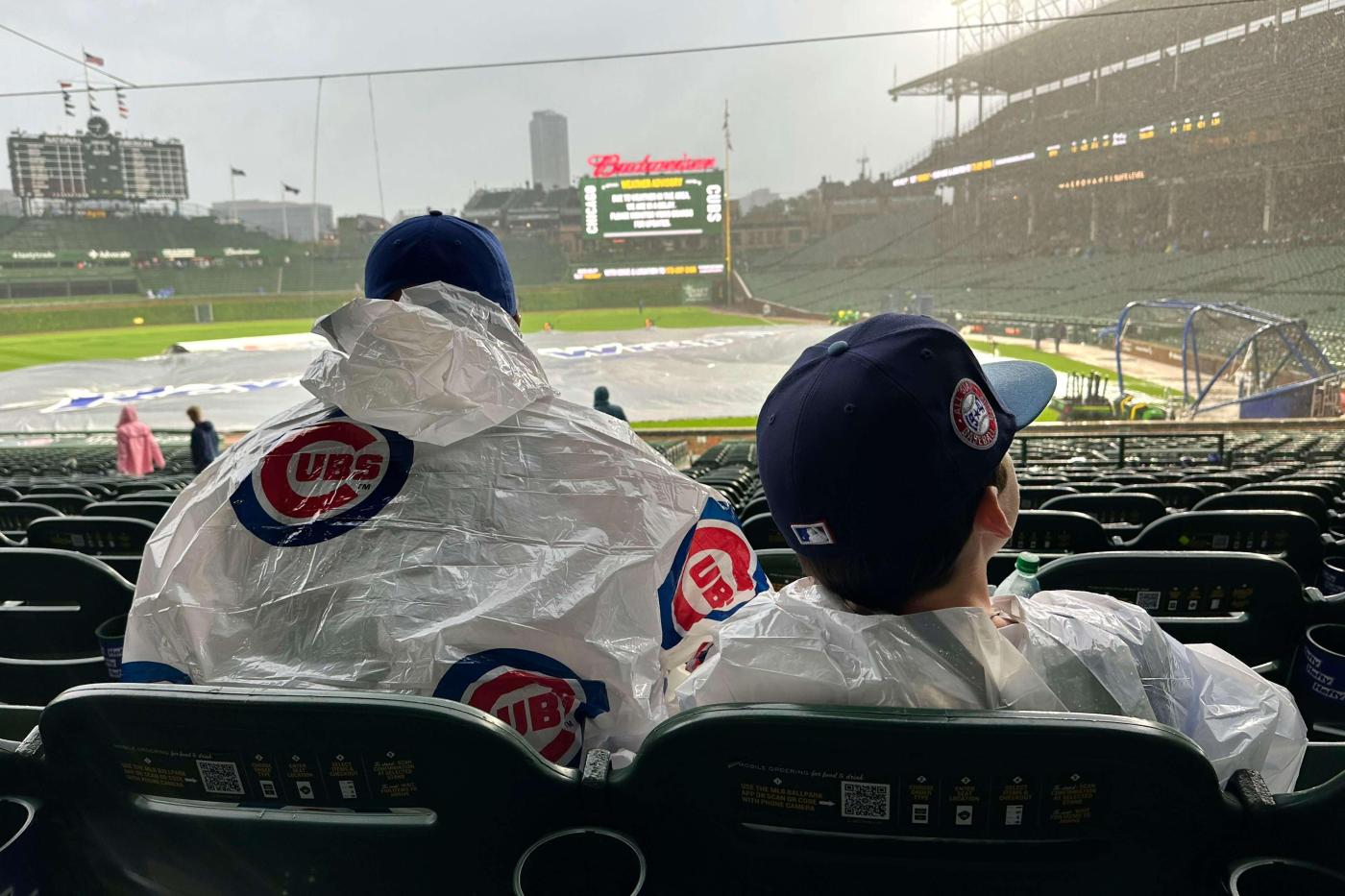
He should feel energized just thinking about experiencing his first rain delay at Wrigley as Cubs manager.

()
Week 11 updates: LB Tremaine Edmunds is active for the Chicago Bears today vs. the Detroit Lions

posted in: News | 0

The 3-7 Chicago Bears will play the 7-2 Detroit Lions at Ford Field in a Week 11 matchup. Here’s what you need to know before kickoff Sunday (noon, Fox-32).

Inactives announced

Bears linebacker Tremaine Edmunds will return Sunday against the Lions after a two-game absence.

Edmunds is active for the game at Ford Field after recovering from a knee injury.

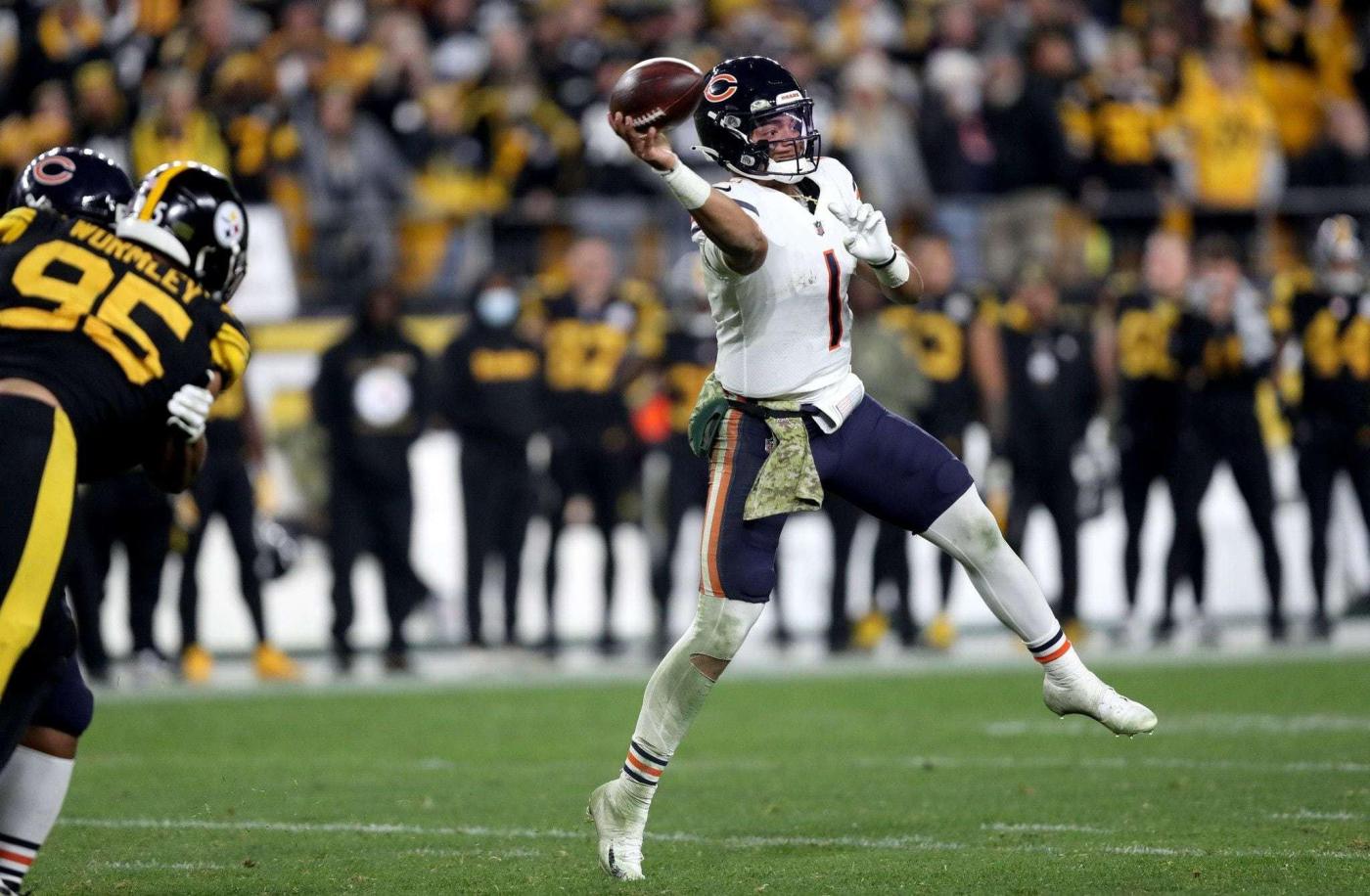
He is one of three players returning from injuries, including quarterback Justin Fields. The Bears announced Wednesday that Fields would start after a four-game absence due to a thumb injury. Running back Khalil Herbert also is active after missing five games while on injured reserve with a high ankle sprain.

Running back D’Onta Foreman is active after battling an ankle injury during the week of practice, and linebacker Jack Sanborn will play after recovering from an ankle injury and an illness.

The Bears previously declared linebacker Noah Sewell out with a knee injury.

Wide receiver Velus Jones Jr., offensive lineman Ja’Tyre Carter, defensive end Dominique Robinson, quarterback Nathan Peterman, safety Quindell Johnson and linebacker Micah Baskerville are inactive.

For the Lions, defensive linemen Isaiah Buggs, Brodric Martin and Levi Onwuzurike, cornerback Steven Gilmore, wide receiver Antoine Green, guard Jonah Jackson and linebacker Trevor Nowaske are inactive.

‘Just go out there and win games’

Bears quarterback Justin Fields isn’t focused on proving himself over the final seven games of the season — though it will be necessary to do that as team leadership charts its future.

Fields’ purpose is narrower as he prepares to make his first start in more than a month Sunday. Asked if he still feels pain in his hand, he said it’s not 100%.

“But it feels good,” he said. “There’s still a little bit of healing left. But it’s stable.”

Fields said he doesn’t think ball security will be an issue with the injury, noting he wouldn’t be playing if it was. But protecting the football is a major focus. Read more here.

5 things to watch in the Bears-Lions game — plus our Week 11 predictions
Column: As others look at the big picture with Justin Fields, Bears OC Luke Getsy is focused on ‘getting better’

Shifts to the offensive line

Teven Jenkins said the conversation was short. Bears coaches let the offensive lineman know he was moving from right guard back to left guard with the return of Nate Davis to the lineup. Jenkins said he responded, “All right. No problem.”

Matt Eberflus said Davis is expected to return Sunday after a four-game absence because of a high ankle sprain. The Bears determined that Davis’ experience at right guard and Jenkins’ flexibility to play on both sides made the switch the right move.

“I trust everything upstairs,” Jenkins said. “They’re trying to put the best five out there, and if it comes down to what it is right now, I trust them.” Read more here.

Stats package

13-4: The Lions record over the last 17 games, solidifying them as one of the best teams in the NFL. Only the Chiefs, Eagles and 49ers — all 14-3 — have been better over their last 17 games.

3-14: The Bears record over the last 17 games. That ranks 31st in the league; only the Cardinals (2-15) have been worse. Compounding the disappointment for the Bears, they have lost their last 11 NFC North games dating to 2021.

Read more attention-grabbing numbers and nuggets here.

Catch up on all our coverage before kickoff

Column: Montez Sweat’s big contract with the Bears gives him security — and with it comes big-time pressure
Bears Week 11 storylines: Dan Campbell’s magic touch, Cairo Santos’ reliability and a new power in the NFC North
Bears Q&A with Brad Biggs: What’s Matt Eberflus’ status?
5 big questions facing the Bears
4 things we learned from Bears coach Matt Eberflus, including the Montez Sweat ‘Tez Factor’ and Cairo Santos’ milestone
The Bears have played 37 times on Thanksgiving — but not this year. Here’s how they’ve fared in each game since 1920.

()

Former first lady Rosalynn Carter dies at 96

posted in: Politics | 0

Rosalynn Carter, one-half of the longest-lived presidential couple in American history and perhaps the most egalitarian as well, died on Sunday, the Carter Center announced.

She was 96.

In May 2023, her family reported that she was living with dementia; last week, they said that she had entered hospice care.

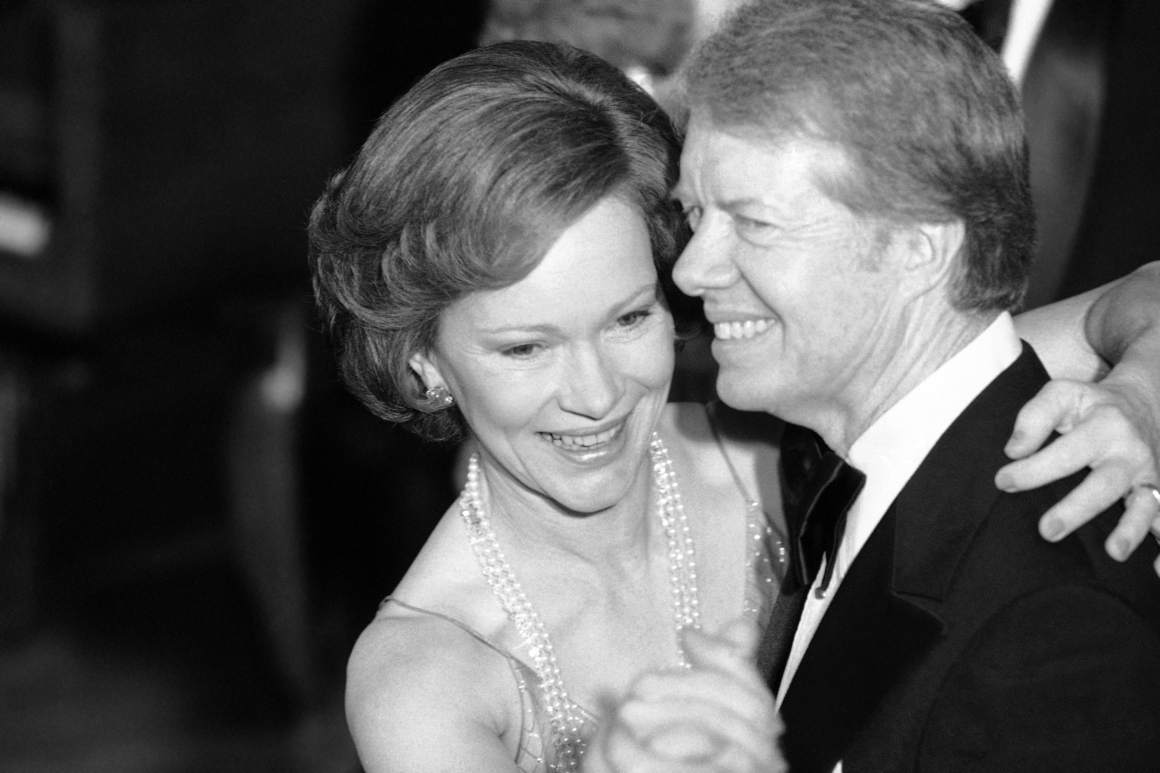
Carter, who married Jimmy Carter in 1946, was widely credited with expanding the role of first lady beyond the nation’s most prominent hostess to an active partner in policy and international travel, becoming a trusted adviser even in an era when most newspapers would only call her “Mrs. Carter.”

“Rosalynn Carter set a new precedent for first ladies,” wrote historian E. Stanly Godbold, author of “Jimmy and Rosalynn Carter: A Biography.“ “She established the Office of First Lady, worked side by side with her husband as an equal partner in most of the responsibilities of the presidency, and actively pursued her own agenda to make the world a gentler place.“

The Carters were perceived as exemplars of the “new” South in the 1970s, a marked change from the years of George Wallace, John Patterson and Lester Maddox and other Southern governors who thrived on rage and intolerance in support of segregation and states’ rights — and who, at least some of the time, countenanced extrajudicial violence against African Americans.

Jimmy Carter, as much as it was possible for an ambitious political leader to do so, projected beneficence not bitterness, and Rosalynn Carter was a picture-book complement to her husband, a woman of gentle grace. It was these traits that made them much-admired figures long after Jimmy Carter’s thorny presidency had left his reputation nowhere to go but up.

In their long post-presidential lives, she would remain by his side through public and private matters.

“The best thing I ever did was marrying Rosalynn. That’s a pinnacle in my life,” Jimmy Carter would say.

Eleanor Rosalynn Smith was born Aug. 18, 1927, in Plains, a small Georgia town that certainly didn’t know it was on its way to becoming world famous. Her father died of cancer when she was 13, leaving her with extended family responsibilities in difficult financial times.

Her future husband was also from Plains. They first dated when she was 17 — she was a friend of his sister’s — and a student at Georgia Southwestern College, and he was attending the Naval Academy in Annapolis, Md.

“I thought he was the most handsome young man I had ever seen,“ she would say later. Jimmy Carter would tell his mother after the first date that he had met his future wife.

In her autobiography, Rosalynn Carter said that she didn’t accept his first proposal, determined as she was to honor a promise to her father to finish college. On July 7, 1946, shortly after Jimmy’s graduation, they were married. The couple had four children, the youngest of whom, Amy, would grow up in the public eye in the White House.

The family returned to Plains in 1953, and Jimmy Carter entered politics a few years later. By 1970, she was making speeches for him as he ran for governor of Georgia.

In December 1974 her husband launched his presidential campaign. He started as the longest of longshots, but, amazingly, Carter ended up getting elected in November 1976.

During that underdog campaign, Rosalynn Carter visited more than 40 states on his behalf, maintaining a busy speaking schedule.

“It drew us closer together,“ she told a Plains audience 40 years later. “We were separated for 18 months during the campaign. I always felt like he could not have won without me.”

Her husband then added: “We used the wisdom and advice of each other throughout.”

She established a different tone for a first lady even before he took office: She chose to to wear the same gown to the inaugural balls she had worn when Jimmy was sworn in as a governor in 1971.

“It enhanced the incoming Carter presidency’s notions of modesty and frugality,” Smithsonian curator Lisa Kathleen Graddy said years later.

Once they were in the White House, it was clear the first lady would have a meaningful role: She had her own office and sometimes attended Cabinet meetings.

In June 1979, the New York Times described her partnership with her husband in “The Importance of Being Rosalynn.” The article shined a light on their weekly working luncheon, one that the Times said was devoid of typical husband-and-wife small talk.

“For the next 40 minutes, the Carters explore a wide range of subjects as they sit through meal of lamb chops, baby potatoes and salad. They customarily discuss the minutiae of political appointments and the status of the White House staff; they weigh the future of their pet bills in Congress and the fate of Mrs. Carter’s favorite projects; they consider lobbying efforts and campaign plans. Their discussions move from domestic politics to assessments of China, Iran, and the latest events in the Middle East,” the Times wrote.

The president added: “I have found, that the more that she and I can share responsibilities, with her being in an unofficial position and me in an official position, then that tends to strengthen the personal kind of relationship between husband and wife.”

Her advice sometimes led to important breakthroughs. It was at her suggestion that Jimmy Carter invited Prime Minister Menachem Begin of Israel and President Anwar Sadat of Egypt to Camp David, which became the site of their stunning 1978 peace deal.

She made her presence felt around the globe. In 1977, she embarked on a 13-day trip that took her to Jamaica, Costa Rica, Ecuador, Peru, Brazil, Colombia and Venezuela, drawing praise for her knowledge and empathy. An official in Peru called her “highly competent,” and she was praised in Ecuador as “a lively spokesman of the greatest good will.”

In November 1979, she visited tens of thousands of Cambodian refugees in Thailand. The trip was widely credited with increasing awareness of a humanitarian crisis created by years of war, tyranny and international indifference.

“Rosalynn Carter walked among the hungry and the dying, trailed by 150 reporters,” wrote George Packer of the Thailand-Cambodia trip in 2015. “She held a starving baby in her arms while speaking to the infant’s mother, who lay on the ground. ‘Give me a smile,‘ she told another woman, kissing her forehead. Afterward, Mrs. Carter said that she wanted to hurry home ‘and tell my husband.‘”

Carter had other causes she made her own. She fought for ratification of the Equal Rights Amendment, attempting “to present ERA in a way that would appeal to mothers, housewives and Southerners,” said Texas Christian University professor Elizabeth Flowers. Despite her efforts, time ran out before the ERA amendment was approved by the required number of states.

She was an advocate for mental health, serving as a honorary member of the President’s Commission on Mental Health and lobbying on behalf of the Mental Health Systems Act of 1980. Implementation of that law, however, was left to the incoming Reagan administration, which had little interest in it. “The incoming president put it on the shelf,” she lamented in 2013.

And she was an articulate defender of the United States. In 1978, Russian writer Aleksandr Solzhenitsyn assailed America and the West during a speech in Harvard: “Destructive and irresponsible freedom has been granted boundless space. Society appears to have little defense against the abyss of human decadence.“ Addressing the National Press Club, Rosalynn Carter responded: “I’m not a Pollyanna about the mood of the country, but I can tell you flatly — the people of this country are not weak, not cowardly, and not spiritually exhausted.”

After Jimmy Carter failed to win reelection in 1980, the couple returned to Plains. In the decades afterward, they were involved in a seemingly never-ending series of public activities, many of them for charity. They could frequently be seen helping to build houses on behalf of Habitat for Humanity. The two also founded the Carter Center, a worldwide organization.

“The Carter Center is guided by the principles of our Founders, Jimmy and Rosalynn Carter,“ it said on its website.

“Founded, in partnership with Emory University, on a fundamental commitment to human rights and the alleviation of human suffering, the Center seeks to prevent and resolve conflicts, enhance freedom and democracy, and improve health.”

In 2013, she expressed delight when the Obama administration issued a rule designed to expand access to mental health care decades after her efforts to do so. “As soon as I heard it, I started shaking, you know? … I had wanted it, so it was exciting. It was emotional,” Carter said.

During the 2016 presidential season, she made a rare campaign appearance in Albany, Ga., on behalf of Democratic candidate Hillary Clinton. “A thing I like about Hillary is she’s a mother and a grandmother. She has one daughter and two grandbabies, and she’ll be concerned about children,” she said.

In October 2019, the Carters surpassed George H.W. Bush and Barbara Bush as the longest-married presidential couple of all time. (The Bush marriage lasted from January 1945 until her death in April 2018.)

Pundits dug up quotes to attempt to explain their longevity even as the two continued to speak at the Carter Center, attend sporting events or attend church in Plains, where he taught Sunday school and then posed for photos afterward with visitors.

“She leaves a legacy,“ Godbold said of Rosalynn Carter, “of improved care for the mentally ill, help for the vulnerable in American society, successful peace initiatives in the Middle East and elsewhere, and the advancement of human rights around the globe. A master politician, diplomat, as well as caring mother and wife, she was intimately involved in every aspect of the Carter presidency.“

For one group of trans women, the pope and his message of inclusivity are a welcome change

posted in: Politics | 0

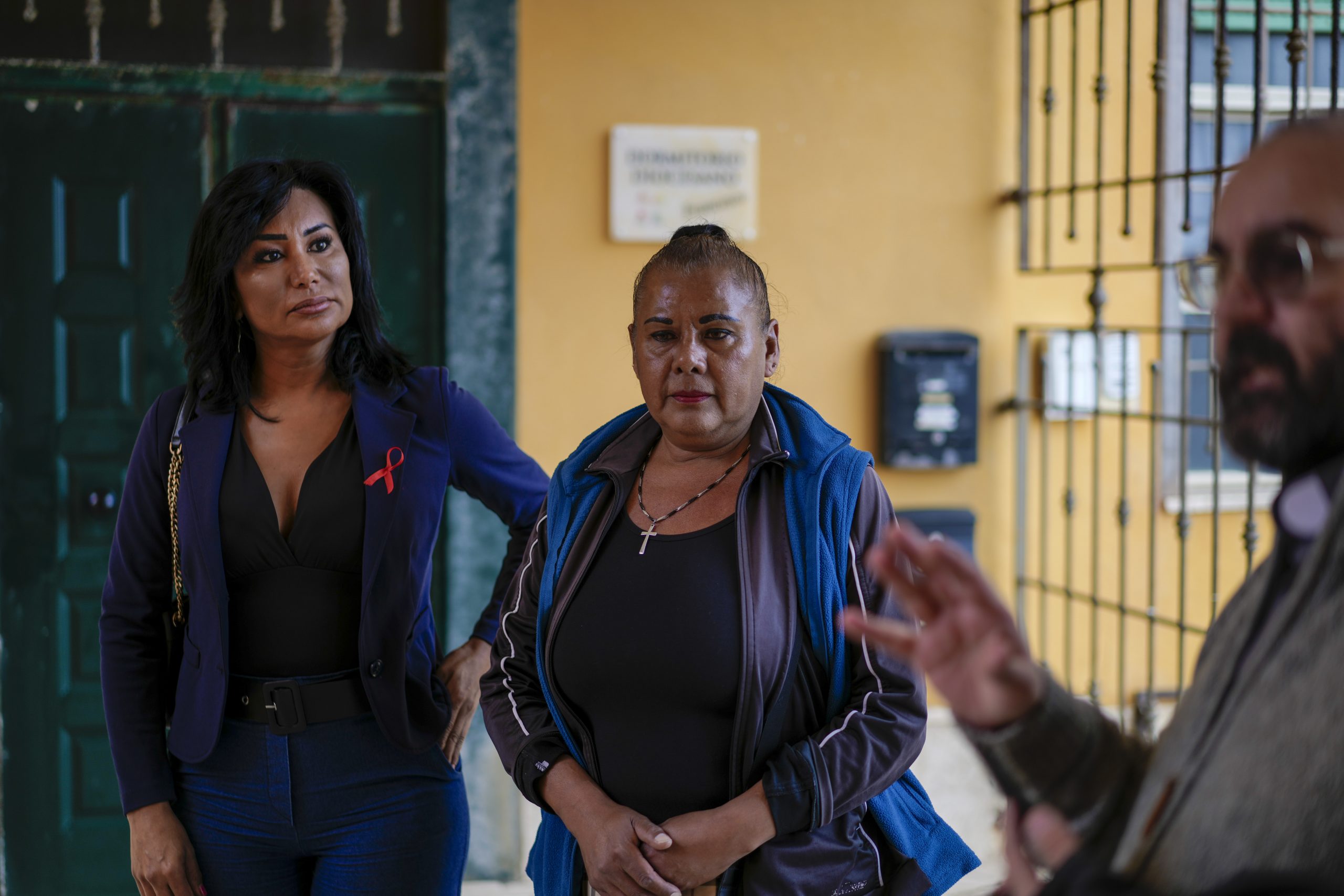
TORVAIANICA, Italy — Pope Francis’ recent gesture of welcome for transgender Catholics has resonated strongly in this working class, seaside town south of Rome, where a community of trans women has found help and hope through a remarkable relationship with the pontiff forged during the darkest times of the pandemic.

Thanks to the local parish priest, these women now make monthly visits to Francis’ Wednesday general audiences, where they are given VIP seats. On any given day, they receive handouts of medicine, cash and shampoo. When Covid-19 struck, the Vatican bussed them into its health facility so they could be vaccinated ahead of most Italians.

On Sunday, the women — many of whom are Latin American migrants and work as prostitutes — joined over 1,000 other poor and homeless people in the Vatican auditorium as Francis’ guests for lunch to mark the Catholic Church’s World Day of the Poor.

The menu was evidence of Francis’ belief that those most on the margins must be treated with utmost dignity: cannelloni pasta filled with spinach and ricotta to start; meatballs in a tomato-basil sauce and cauliflower puree, and tiramisu with petit fours for dessert.

For the marginalized trans community of Torvaianica, it was just the latest gesture of inclusion from a pope who has made reaching out to the LGBTQ+ community a hallmark of his papacy, in word and deed.

“Before, the church was closed to us. They didn’t see us as normal people, they saw us as the devil,” said Andrea Paola Torres Lopez, a Colombian transgender woman known as Consuelo, whose kitchen is decorated with pictures of Jesus. “Then Pope Francis arrived and the doors of the church opened for us.”

Francis’ latest initiative was a document from the Vatican’s doctrine office asserting that, under some circumstances, transgender people can be baptized and can serve as godparents and witnesses in weddings. It followed another recent statement from the pope himself that suggested same-sex couples could receive church blessings.

In both cases, the new pronouncements reversed the absolute bans on transgender people serving as godparents issued by the Vatican doctrine office in 2015, and on same-sex blessings announced in 2021.

Prominent LGBTQ+ organizations have welcomed Francis’ message of inclusivity, given gay and transgender people have long felt ostracized and discriminated against by a church that officially teaches that homosexual acts are “intrinsically disordered.”

Starting from his famous “Who am I to judge” comment in 2013 about a purportedly gay priest, to his assertion in January that “being homosexual is not a crime,” Francis has evolved his position to increasingly make clear that everyone — “todos, todos, todos” — is a child of God, is loved by God and welcome in the church.

That judgment-free position is not necessarily shared by the rest of the Catholic Church. The recent Vatican gathering of bishops and laypeople, known as a synod, backed off language explicitly calling for welcoming LGBTQ+ Catholics. Conservative Catholics, including cardinals, have strongly questioned his approach.

After his latest statement about trans participation in church sacraments, GLAAD and DignityUSA said Francis’ tone of inclusion would send a message to political and cultural leaders to end their persecution, exclusion and discrimination against transgender people.

For the trans community in Torvaianica, it was a more personal message, a concrete sign that the pope knew them, had heard their stories and wanted to let them know that they were part of his church.

Carla Segovia, a 46-year-old Argentine sex worker, said for transgender women like herself, being a godparent is the closest thing she will ever get to having a child of her own. She said that the new norms made her feel more comfortable about maybe one day returning fully to the faith that she was baptized in but fell away from after coming out as trans.

“This norm from Pope Francis brings me closer to finding that absolute serenity,” she said, which she feels is necessary to be fully reconciled with the faith.

Claudia Vittoria Salas, a 55-year-old transgender tailor and house cleaner, said she had already served as a godparent to three of her nieces and nephews back home in Jujuy, in northern Argentina. She choked up as she recalled that her earnings from her former work as a prostitute put her godchildren through school.

“Being a godparent is a big responsibility, it’s taking the place of the mother or father, it’s not a game,” she said as her voice broke. “You have to choose the right people who will be responsible and capable, when the parents aren’t around, to send the kids to school and provide them with food and clothes.”

Francis’ unusual friendship with the Torvaianica trans community began during Italy’s strict Covid-19 lockdown, when one, then two, and then more sex workers showed up at the Rev. Andrea Conocchia’s church on the main piazza of town asking for food, because they had lost all sources of income.

Over time, Conocchia got to know the women and as the pandemic and economic hardships continued, he encouraged them to write to Francis to ask for what they needed. One night they sat around a table and composed their letters.

“The pages of the letters of the first four were bathed in tears,” he recalled. “Why? Because they told me ‘Father, I’m ashamed, I can’t tell the pope what I have done, how I have lived.’”

But they did, and the first assistance arrived from the pope’s chief almsgiver, who then accompanied the women for their Covid-19 vaccines a year later. At the time of the pandemic, many of the women weren’t legally allowed to live in Italy and had no access to the vaccine.

Eventually, Francis asked to meet them.

Salas was among those who received the jab at the Vatican and then joined a group from Torvaianica to thank Francis at his general audience on April 27, 2022. She brought the Argentine pope a platter of homemade chicken empanadas, a traditional comfort food from their shared homeland.

Showing the photo of the exchange on her phone, Salas remembered what Francis did next: “He told the gentleman who receives the gifts to leave them with him, saying ‘I’m taking them with me for lunch,’” she said. “At that point, I started to cry.”

On Sunday, Salas was seated at Francis’ table in the Vatican auditorium. She said she had woken up at 3 a.m. to make him more chicken empanadas for his dinner. “They’re still hot,” she said.

For Canocchia, Francis’ response to Salas and the others has changed him profoundly as a priest, teaching him the value of listening and being attentive to the lives and hardships of his flock, especially those most on the margins.

For the women, it is simply an acknowledgement that they matter.

“At least they remember us, that we’re on Earth and we haven’t been abandoned and left to the mercy of the wind,” said Torres Lopez.