Nicholas Kristof: So many child deaths in Gaza, and for what?

posted in: Society | 0

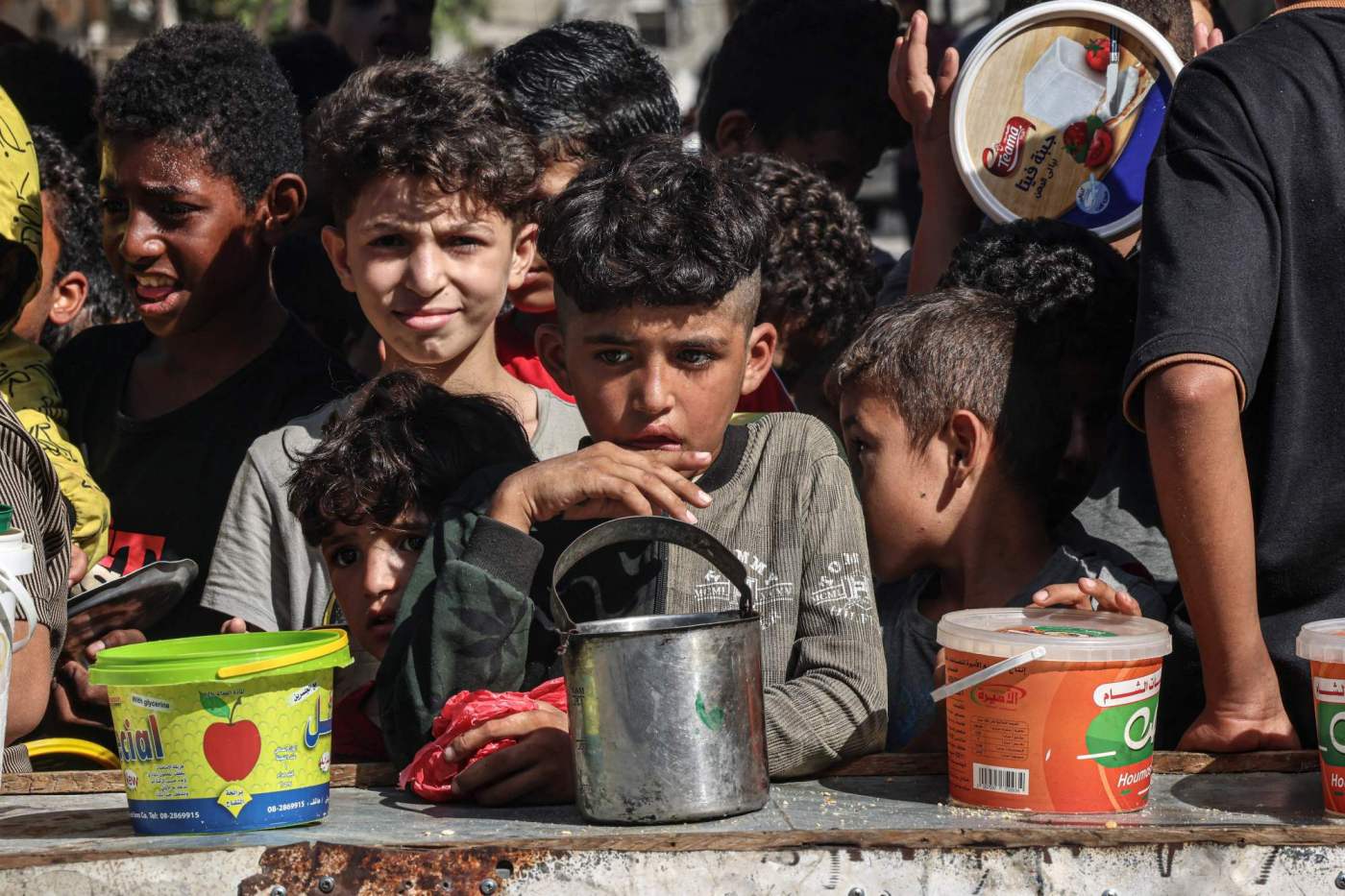
Consider this: The most dangerous place to be a child in the world today is the Gaza Strip.

That’s the assessment of Catherine Russell, executive director of UNICEF, who is not a bleeding-heart radical but a former ambassador and veteran lawyer who worked for Presidents Joe Biden and Barack Obama.

Already it appears that more than twice as many children have died in Gaza just since the war started Oct. 7 than in all the conflicts worldwide in 2022, according to United Nations figures.

“Almost 1 out of every 150 Palestinian children in Gaza have been killed in just two months,” noted Dr. Zaher Sahloul, president of MedGlobal, an aid group working there. “That is the equivalent of half a million American children.”

Sahloul warned that many others may “die from infections, waterborne diseases or dehydration,” while others will suffer from lifelong physical disabilities.

We can and should despise Hamas, a repressive, misogynist and homophobic force that uses Palestinian civilians as human shields. And we can understand how Israel, traumatized by savage killings and rapes by Hamas, is determined to strike back. But just because Hamas is indifferent to the lives of Palestinian children does not mean that Israel or the United States should be reckless as well.

The Biden administration has continued to periodically defend Israel not only when it is attacked, which is right, but even when it causes enormous numbers of Palestinian civilian deaths. Contrary to Biden administration claims that Israel is getting the message to show restraint, the U.N. reports that this week “saw some of the heaviest shelling in Gaza so far” and that “if possible, an even more hellish scenario is about to unfold.”

“Nowhere is safe in Gaza,” said Martin Griffiths, the top U.N. official for humanitarian matters. “Such blatant disregard for basic humanity must stop.”

The U.N. commissioner for human rights, Volker Türk, has suggested that war crimes have been committed by both Hamas and Israel, yet too many Americans decry some deaths but not others. We tell the world that we are supporting Ukraine because of our belief in the “rules-based international order,” and then we provide weaponry that ends up killing children on a huge scale in Gaza.

Too many see events through a prism in which lives are invaluable on one side while deaths on the other are regrettable.

Gaza health authorities say that 16,248 people have been killed in the enclave so far, about 70% of them women and children. It’s impossible to verify the figures, but human rights monitors say the figures are credible and have proved reliable in the past. A senior Biden administration official told Congress that the reported figures may well be an undercount (presumably because of bodies unrecovered under the rubble).

If those figures are right, that means that a woman or child has been killed on average about every seven minutes around the clock since the war began. Some have been babies in incubators.

The savagery of the Oct. 7 attacks precipitated the bombardment, of course, and Hamas continues to hold hostages. Every bit of diplomatic pressure should be applied to Hamas to free those hostages and, in the meantime, to allow them visits by humanitarian workers. The penchant of some American progressives to tear down posters for hostages is nauseating, as is the wave of antisemitism that we’ve seen in both the United States and Europe.

There is a distinction: Hamas deliberately killed and kidnapped children Oct. 7. Israel is not deliberately killing Palestinian children; it is simply bombing entire neighborhoods with far too little attention to civilian life. There is a moral difference there, but I wouldn’t want to try to explain it to grieving parents in Gaza.

While recognizing Israel’s right to defend itself, how is it advancing its security by flattening large areas with 2,000-pound bombs? The United States has repeatedly counseled Israel to use smaller bombs and more surgical strikes, in part to avoid turning tactical victories into strategic defeat.

As best we can tell, these are the results of its operation so far:

— Israel appears to have modestly degraded Hamas’ military capacity. An Israeli military spokesperson estimated that several thousand Hamas fighters had been killed, which might amount to 10% or less of the Hamas force.

— Hamas has gained popularity and credibility in the West Bank (Hamas flags were everywhere when I visited recently).

— Israeli hostages have been placed at risk and reportedly killed.

— The initial global outpouring of support for Israel has been replaced by a flood of sympathy for Palestinians.

— Hamas has succeeded in one of its aims: putting the Palestinian cause back on the global agenda.

— Revulsion at the Palestinian loss of life has jeopardized the stability of neighbors like Jordan and put off any hope for now of an accord between Israel and Saudi Arabia.

— The risks of an uprising in the West Bank have increased, along with those of a wider war with Lebanon.

So has this made Israel safer? Enough to justify killing a woman or child every seven minutes around the clock?

I’ve covered lots of conflicts, and one of the striking things about the bombardment of Gaza is how intense it has been. About half of buildings in northern Gaza show structural damage, according to analyses of satellite images.

The pace of killing of civilians has been much greater than in most other recent conflicts; the only one that I know of that compares is perhaps the Rwanda genocide in 1994. Far more women and children appear to have been killed in Gaza than in the entire first year of the Iraq War, for example.

“It has condensed the suffering usually acquired over several years into six weeks,” said Dr. Annie Sparrow, a pediatrician with long experience practicing in war zones and an associate professor at the Icahn School of Medicine. “For the babies born into this war … it is as if they inherit a congenital affliction — a destiny to suffer, to live a constrained life, due to events that they have no ability to affect.”

By pulverizing entire neighborhoods and killing huge numbers of civilians instead of using smaller bombs and taking a much more surgical approach, as American officials have urged, Israel has provoked growing demands for an extended cease-fire that would arguably amount to a Hamas victory. In short, I fear that inflicting mass casualties is a strategic error as well as a moral one; while parts of Gaza were flattened with the goal of destroying Hamas, that might be what rescues Hamas.

We should be particularly pained that children are dying from American bombs and missiles. I’m glad that Biden administration officials are finding their voice and speaking up to try to slow the killing, but I wish it hadn’t taken so long.

If Prime Minister Benjamin Netanyahu is wading into a quagmire, Biden is doing Israel no favors by biting his tongue in public. He should speak up more forcefully on behalf of the children in whose deaths I fear we are complicit.

Look, it’s hard to have a conversation about the Middle East, because people quickly divide into sides. But the side we should be on is that of children dying pointlessly in Israel and Gaza alike without advancing anyone’s security. The lives of Israeli, American and Palestinian children all have equal value, and we should act like it.

Related Articles

Opinion |


Bret Stephens: Silence is violence — but not when it comes to Israeli rape victims?

Opinion |


Elizabeth Shackelford: Ukrainians won’t submit to Russian rule. The horrors of the Holodomor help explain why

Opinion |


Stephen L. Carter: Sandra Day O’Connor’s legacy: She listened

Opinion |


David French: It’s time to fix America’s most dangerous law

Opinion |


Chris Churchill: Schumer calls out antisemitism on his own side

Nicholas Kristof writes a column for the New York Times, 620 Eighth Ave., New York, NY 10018. He’s at Facebook.com/Kristof and Twitter.com/NickKristof

Biden’s battleground states footprint (or lack thereof) leaves Dems concerned

posted in: Politics | 0

Democratic officials and strategists are growing worried that President Joe Biden’s reelection campaign has been too slow in building out its campaign infrastructure in key states, potentially undermining his bid against likely GOP nominee Donald Trump.

In the swing states of Pennsylvania, Wisconsin, Arizona, Nevada and Georgia, the Biden team has not announced any staff, lagging months behind Trump’s pace in 2019 when he was running for a second term. By May of that year, Trump’s reelection team had named nine regional directors in addition to other state directors.

Biden’s campaign is also trailing Barack Obama’s reelection effort. By October of 2011, then-President Obama had paid staff in at least 38 states and opened offices in at least 15.

Interviews with more than 20 Democratic elected officials and strategists in battleground states, many of whom were granted anonymity to speak freely, reveal concerns that Biden’s comparatively sluggish rate of staffing up will make it more challenging for him to activate key voters, including African-Americans and Latinos. They also said it has left swing states without a clear point of contact in the Biden campaign for organizing travel and resource distribution, while also slowing voter protection plans and delaying other in-state hires.

“They’ve got to build a serious infrastructure in the battleground states, and they don’t have it right now,” said Pete Giangreco, a longtime Democratic strategist who’s worked on multiple presidential campaigns. “You have to build an infrastructure to drive [the] message and deliver votes. It’s not something you do just on paid communications.”

“There’s still time, but time is the one thing you can never get back in a campaign,” Giangreco said.

The worries reflect a larger anxiety that Democratic officials have about the relatively slow ramp-up of the campaign and Biden’s weak polling in these states. But they also point to a more philosophical divide within the party over whether to make early investments in an on-the-ground presence or on ads and online organizing. It’s a debate accelerated in the pandemic era, when in-person campaigning largely halted among Democrats and political operations adapted by developing their tools online.

The Biden campaign argued that Democrats’ fears are overblown and ignore the groundwork already laid by the Democratic National Committee and Democratic state parties — entities that aides said are far stronger and better-resourced than in previous cycles.

“We are incredibly well-positioned to win up and down the ballot next year thanks to the president’s work to unite and strengthen the Democratic Party since his first day in office,” Kevin Munoz, a Biden campaign spokesperson, said in a statement. “Every cycle, anonymous sources and pundits vent to reporters, but make no mistake: this campaign is building strategically and aggressively to earn every vote and to win what will be a competitive election.”

But the Biden campaign has also deliberately taken a different approach than other presidential campaigns. Unlike Obama, who oversaw a weakened DNC in the 2012 election, Biden has built up and leaned heavily on the national party apparatus this year. The campaign prioritized early TV advertising, plowing more than $13 million into ads airing in battleground states, according to ad-tracking firm Ad Impact. That’s an unprecedented sum for a presidential campaign in an off year, as is the spending focused directly on Black and Latino voters, particularly through radio and digital ads.

These moves, which have allowed the campaign to save money, are often missed by fearful Democrats, said Sam Cornale, the DNC’s executive director, who added that the party is trying to “innovate around how campaigns are run” for “the first time in a generation.”

Among those innovations, the DNC is running pilot organizing programs in Wisconsin and Arizona to test ways to reach voters in a post-pandemic cycle. The national party has doubled its staff since 2017, while maintaining a 250,000-person national volunteer program. They’ve also placed communications staffers in the four early Republican primary states and Florida.

“People are presenting this as a choice of — either you’re on the ground, two years out, to do traditional field [organizing], or you’re only going to do digital and paid media campaign,” Cornale said. “We’re saying we’re [going to do] all of it, and we’re going to make it smarter, more efficient and, ultimately, more effective.”

Jim Messina, who managed Obama’s 2012 campaign, said in a statement: “Anyone who mistakes headcount as a stand-in metric for communicating with voters doesn’t know much about the realities of the modern election cycle — or running a campaign built to win in one. Instead of using an outdated model burning through resources this early in the 2024 cycle, Democrats are being smart about when, where and how to invest in a ground game.”

Still, worries in the battleground states persist. More than a dozen Democrats said that the absence of top in-state staff had clogged up the rest of the campaign machinery — slowing down everything from building out a coordinated organizing program with state parties, to planning for voter protection programs, to hiring more staff.

One Democratic strategist in a western state called for more urgency, noting it’s “taking a long time to get things moving, both at [headquarters] and in the battlegrounds.”

“People are waiting for marching orders that have not been handed down yet,” said an Arizona operative.

“They are trying to save money, but what would a state director or deputy state director cost them for an extra three or four months to really get organized?” said a Pennsylvania Democratic strategist, who also added that state directors are better positioned than national staffers to advocate for Biden to travel to specific areas in states that are critical for swing voters.

Others stressed that by waiting to invest in formal campaign infrastructure, the Biden campaign was putting itself behind in engaging Black and Latino voters. LaTosha Brown, co-founder of Black Voters Matter Fund, noted that those communities are more responsive to sustained engagement year-round by campaigns and advocacy groups rather than last-minute outreach.

“They’re looking at it like, ‘we have a year,’” Brown said. “But what they’re underestimating is how much damage is being done now … with massive disinformation campaigns.”

Over the course of the week that POLITICO reported on these concerns, several Democrats said that they detected heightened activity from the campaign to finalize filling slots.

On Thursday, the Biden campaign announced Ed Duggan, the son of Detroit’s mayor and a former adviser to Gov. Gretchen Whitmer, as its state director in Michigan, which came as a relief to Democrats in the state. In addition, Democratic officials and strategists in other swing states said that they expect the campaign to announce additional staff in their battlegrounds in the coming weeks.

“For months, there has been a state’s program being built out across departments (as evidenced by our hires this week) and we will share specifics, including names of hires, when we are ready to,” Munoz said in a statement.

In Pennsylvania, the Biden campaign is in the process of identifying key staff. Some people who are being considered for top jobs there include Nikkilia Lu, chief-of-staff at the Labor Department’s Women’s Bureau and Biden’s 2020 Pennsylvania deputy state director; Kellan White, senior adviser for the reelection campaign for Sen. Bob Casey (D-Pa.); and Kunal Atit, former campaign manager for Rep. Matt Cartwright (D-Pa.), said the Democratic sources.

DNC Chair Jaime Harrison met with Pennsylvania Democratic Party Chair Sharif Street on Thursday, according to two people familiar with their plans.

Until those hires are formalized, however, Biden’s campaign will continue to lean on the DNC and state parties.

“Technically there aren’t Biden-Harris staff on the ground in these states yet, but the state parties and DNC infrastructure is there and stronger than 2011,” said Dan Kanninen, a Democratic strategist who served as a regional state director during Obama’s 2012 campaign. “They’re tactically doing the same sort of capacity-building that Obama staff would have been doing in late 2011 or early 2012.”

While that arrangement has stoked panic in places — “they’re being slow everywhere,” said one senior Michigan Democratic elected official — others are urging calm.

Wisconsin Democratic Party Chair Ben Wikler said that Biden’s off-year strategy of partnering “with state parties rather than to staff up heavily” on the campaign was “working.”

“In just one weekend this fall, a year out, we knocked on the doors and called the phones of 100,000 voters,” Wikler continued. “All of that builds the operation that will be the ground game for Biden [in Wisconsin], while Republicans have nothing like it.”

Her Online Sex Life Was Exposed. She Lost Her Election. Now She’s Speaking Out.

posted in: News | 0

It is not often that a state legislative campaign in an off-season election seizes the national spotlight. But that is what happened in September, when the Washington Post revealed that a promising Virginia Democrat, Susanna Gibson, had previously been captured in a recorded video performing sex acts online with her husband.

Gibson, a 40-year-old nurse practitioner, was running in one of the most competitive elections in the state — a race for a Richmond-area seat in the House of Delegates that had the potential to determine whether Democrats or Republicans would control the chamber. There was unusual national interest in Virginia’s elections because the Republican governor, Glenn Youngkin, had staked his credibility as a national political figure in part on his ability to take full control of state government.

The video — a recording of an explicit livestream that the Post said had been uploaded elsewhere on the internet — had been shared by a Republican political operative, according to the paper. The Post’s report upended Gibson’s life, to say nothing of her candidacy.

“I’m fundamentally changed as a human having gone through something like that,” she said in an interview.

The episode also detonated a debate in Virginia and beyond about digital and sexual privacy in 21st-century politics. In a possible reflection of shifting social norms, Gibson nearly won the race anyway — she lost by less than 1,000 votes and has not ruled out a return to electoral politics in the future. (Despite losing Gibson’s race, Democrats still took full control of the Virginia State Legislature.)

To explore the difficult social and legal questions that churned through Virginia politics, POLITICO Magazine spoke with Gibson about her experience in the campaign — and the implications of that race for a larger cohort of younger candidates who grew up in a world of increasingly blurry lines around their public, private and online lives.

This conversation has been edited for length and clarity.

The last three months of a campaign are just a blur. Can you talk about what that experience was like for you, having to do the home sprint of a campaign with this other issue on top of it?

My entire life was rocked on Sept. 11, when the article ran. It ran, implying that I performed sex acts online with my husband for money. It was really written based on this Dropbox file that self-described Republican operatives shopped around. They had found these videos on the dark web and shopped them around to various news outlets. I didn’t have any idea that there were ever videos of me that had been made and uploaded to multiple sites.

I think it was Sept. 7, I was in clinic seeing patients and a reporter reached out to my campaign, trying to get my phone number. That’s how I found out. When you find out that there are sexually explicit videos of you online, especially by being contacted by national reporters — it is a feeling that I would not wish on my worst enemy.

It took me about two weeks to actually be able to get up and function. We had reporters, Daily Mail reporters especially, camped out in front of my house for two weeks. I had to leave — left the state, actually, for a few days, to get them to go away and leave my children and my family alone. After those two weeks, I was chomping at the bit to go out and start door-knocking again and meeting voters and campaigning.

On Sept. 7, when there was that first contact with the reporter — did you immediately know, “Oh, this is what they’re talking about, how could they possibly know about this?” Or was it just sort of, “What on earth is this?” Can you narrate that moment?

So, they called and spoke with my media consultant. I was seeing patients in clinic and I got three phone calls in a row within a minute of each other. I always keep my phone with me in clinic just because my kids have severe food allergies. The first two, it was just coincidental and had nothing to do with this, but they were in the political world. The third call was my media consultant. So, I picked up.

I was like, “Well, what is going on? Is everything okay, because I’m seeing a patient?” He said, “No, everything is not okay.” And he told me that this particular reporter was looking for my phone number but wouldn’t tell him what it was about. She had told him, ‘I don’t want to tell you, you don’t know what it’s about. It’s personal. She’s a mother. I don’t want to have to discuss this with you. I don’t want to go after her.” I really appreciated that respectfulness of her, by the way, but they went back and forth. Finally, I had to text and say: “Please tell him anything and everything, my full permission — I’m in clinic.”

But no, I had no idea. This was not what came to mind at all. I sat there racking my brain and then thought that it could be from this. But I still wasn’t sure until the Washington Post reporter came two days later to a canvas launch — where I had my daughter, by the way. My manager intercepted her. He said, “Well, I don’t even know what you have. You don’t even know what that is.” And she started texting with them.

Can I ask you how your family and your friends responded to the Post story?

We spent a few days fighting with them, two days or so, a day and a half —

Sorry, “fighting with them” — meaning, the Post?

Fighting with the Post. I hired an amazing attorney who worked around the clock and wrote them several letters, essentially saying: To be clear, Ms. Gibson never acknowledged or consented to videos being recorded, this is illegal pornography because it is illegal to record someone in a state of undress without consent.

It was a few days of feeling hopeful, then swung from hopeful to devastated. How can this be happening? How can a national news outlet decide to run a story about this? I think if I wasn’t a candidate, the Post probably would have been appalled at the invasion of my privacy. But because I was a candidate, they decided that it was a political story, rather than an invasion of my privacy and potentially a crime.

You said, “invasion of your privacy.” How much do you feel like people in general should be free to live really separate lives online?

So, this is interesting. I think this is going to continue to happen as millennials age into running for office. There was a 2014 study conducted by McAfee that said or showed that 90 percent of millennial women have taken nude photos at some point. This is something that is very common, especially in the younger generations.

I think a big underlying factor that really needs to be addressed, and our society needs to start being educated on, is there is this devaluation and misunderstanding of consent, especially when we’re talking about digital privacy. Content that is initially made in a consensual context, which is then distributed in a non-consensual context digitally, is a crime. Just because someone consented to share something in one particular context doesn’t mean that it is or should be fair game for the whole world to see.

Choosing to share content, online or in whatever medium, with select people with the understanding that it will disappear and can only be seen by those present at the time — when we’re talking live streaming, webcamming and Skype — that is a far cry from consenting for that content to be recorded and then broadly disseminated. And there is case law precedent confirming this.

You referred before to the Post treating this as a story because you’re a candidate — that their view, as you put it, was that it was not an invasion of privacy, it was a political story because you’re a candidate. Separate and apart from what the legal questions involved are, how much do you feel like there ought to be a bigger barrier between what people do digitally and the way they are assessed as people in their non-digital lives?

How strongly I would have felt about this before this actually happened to me — who knows? I think I would probably feel the same way, but just not quite as strongly.

I think what people do in their private lives, digitally — if it is legal, it is consensual and has no bearing on their ability to do their jobs — I think there should be a barrier. I think that it is unethical to make people’s private lives — especially their sexual private lives — public and part of how we think about them and their ability to do their jobs and make positive contributions to their communities.

The part that strikes me as tricky is that there certainly are things that people do online that we do want to be able to assess in a political context or make part of the public record on that person, right?

If it had to do with policy.

Or if you had been writing racist rants on the internet or something, I don’t think anybody would say, “Whoa, that’s a protected private space” — right? I think defining that line is the hard part.

I think that anything that has to do with people’s families — point blank, period — should not be. And I think that anything that has to do with nudity or sexuality, there needs to be a barrier there.

We know that when images, particularly that have to do with sexuality and nudity, because of our society’s particular interest in those things — our prurient interest — the moment that an image like that or a video like that gets put on the internet, it’s like lighting a fire in a dry forest. It spreads rapidly and extensively until it causes irreversible damage. I think anything, especially that has to do with sexuality — there needs to be a significant barrier there, because of the damage that it can do. It’s a breach of trust and a breach of dignity — the right to dignity and privacy and sexual autonomy.

There are scholars that argue that non-consensual pornography really should be relabeled and called image-based sexual abuse, because of the damage that it causes. We know that victims of sexual abuse experience significant mental health issues, they experience damage to their reputation, social isolation, breakdown of relationships and friendships and loss of current or future employment.

Have you suffered irreversible damage?

I would say I’ve fundamentally changed as a human, as a professional. Very few people understand what it is like to be afraid to leave your home because you have had people parked in front of your house or driving through your cul-de-sac or coming up to your door and ringing the doorbell. That damage is something that, depending on how people process trauma, can really do a number on them. We see increased risk of suicide, certainly of suicidal ideation, in victims of non-consensual pornography or image-based sexual abuse.

So, yeah, I would say I’m fundamentally changed as a human having gone through something like that.

I’m curious whether there was ever a point, in either responding to the initial story or in the balance of the campaign, where you felt tempted to take a more defiant approach to responding to this and say, “You know what, you’re damn right I did it. It was a harmless activity and you’re a bunch of creeps for talking about it.”

[Laughs] Well, I did not do everything that they said I did. But you know, and to people’s point, they were correct in saying: Hey, don’t give it air.

It’s something that kind of shook a lot of people in the political sphere, in our social sphere in the community. But then, after that kind of shock wore off — of such a salacious story — voters started not caring. They care much more about what I can do for them and the issues that affect them every day, which is why you even saw the Republican Party of Virginia, loudly and proudly, take credit for and send out mailers that contained images and verbiage from these videos. I mean, that’s appalling.

I want everyone to stop for a second and take a step back from this particular story and take more of a long-lens view of what actually happened in the way this Post article was written. A political operative found sexually explicit videos of a young woman running for office that she never knew existed — and we made that pretty clear in our statement — and shopped them around to various news outlets, trying to get them published to humiliate, intimidate, coerce, harass this woman, and with the purpose of influencing the outcome of an election that very well could have been the majority maker or breaker for the House.

There are legal experts who argue that this is a violation of federal and state laws: possession of illegal pornography, dissemination of illegal pornography across state lines, violating revenge porn laws. But the way our nation more ultimately interprets that and reads that story, it’s the young woman that’s nationally blamed, shamed, harassed, bullied, threatened, all of the above. There’s very little discussion — I saw no discussion in this in particular — of blaming and shaming the political operative.

When the media, the press, labels and reports on something as a scandal — using that word “scandal” — it dismisses the seriousness of the situation and essentially shifts and puts that blame on the victim.

Did you observe any variation, based on generation or based on gender, in how voters responded to the story?

Yes. It’s interesting. Younger voters don’t care. Very, very few of them, I would say. My age and younger, maybe even mid-40s up to 50 or so, didn’t care. I’m a millennial, I’m the oldest possible millennial — 90 percent of millennials have taken nude photos. So, I think we all understand.

When I was in college, probably when you were in college, there was all this, “Oh no, there will be photos of people drinking on the internet when they run for Congress later on.” That’s totally quaint now, right? Or, I mean, this is a very different situation but the original Anthony Weiner scandal — not the one that landed him in jail, but the initial DMing, you know, a lewd photo —

I just finished Huma Abedin’s memoir, have you read it?

No, I haven’t.

Oh my God, I actually have to write to her because she describes something that was really poignant for me, about how she was pregnant — she was early in her pregnancy, hadn’t told her friends and family — and The New York Times got wind of this story that she was pregnant. She was just absolutely horrified that something so private and personal was going to be revealed to her family and friends through reading about it in The New York Times. That loss of control, how damaging and traumatizing that was for her.

I don’t know that a congressman caught in Weiner’s position would have to resign, right? Because it’s 12 years later. There’s no novelty factor to it, anymore.

That’s what I tell people about what happened to me. This was bound to happen to some young woman. This was inevitable. And my hope is that I can prevent it from happening to other women down the road, but also that, hopefully, it has absorbed some of that shock value and will make it easier if it does happen.

How supported did you feel by the Democratic Party in the final months of your campaign?

Some people were wonderful. Sen. Louise Lucas, immediately, as soon as she heard what happened, jumped and said: “This is not OK, let’s rally around her and help her.” She’s been wonderful, in particular. There are several others that have been.

We had several partners — Planned Parenthood, Repro Rising, ACLU, Equality Virginia — they were really wonderful to me and rallied behind me, particularly the repro groups. And I felt very much supported by them. They had volunteers flying in from Minnesota, specifically because they wanted to knock for me. We had support.

There were certainly people that didn’t know how to process this and kind of shied away from being actively involved. And I’m disappointed. That’s not just in the party or in these particular people but just in general — disappointment that this happened. It never should have happened. It never should have been on the scale that it was.

What do you draw from the fact that the race was so close in the end?

That voters didn’t care. The Republican Party in Virginia never would have sent those mailers if they didn’t know I was going to win or certainly could win.

I stopped working [at the clinic] the last two months of the campaign after the story came out. I was always going to take some time off; I took more time off than originally intended and I knocked, on average, 100 doors a day for two months. You have conversations with voters and you can kind of tell who knew and who didn’t know, and who knew and didn’t care. Very few people actually seemed to care — very few. I can count them on less than two hands.

They cared about reproductive rights. They cared about gun violence and having their kids get the best quality education and being able to come home from school safely. Those are the things they care about. They care about being able to afford their home. They care about having transportation. After the initial shock wore off, I think it had little to do with the race.

Are you still considering legal action?

Yes. I want the person who found and then disseminated illegal pornographic images of me — again, violating federal and state laws — they need to be held accountable. I’m working with a few members in the General Assembly in Virginia right now to amend Virginia’s current revenge porn law, particularly to remove intent or motives, because intent is so hard to prove in a court of law, and also to increase the penalty from a misdemeanor. If we don’t do that, what is the deterrence for people?

I think we also need, on a federal level, to push for legislation that covers the non-consensual distribution and sexual privacy of intimate material in every single way.

How optimistic are you that you will be able to hold the person accountable?

I’ve told people this forever, but it’s true: When I decide to do something, I will work and work and work — I will outwork everyone. I will make sure it happens.

It’s going to be a long process. Subpoenas take a long time. But there is a special victims detective who also has FBI privileges looking into it now. She has been for about a month now. I’m optimistic.

Texas Supreme Court pauses lower court’s order allowing pregnant woman to have an abortion

posted in: Society | 0

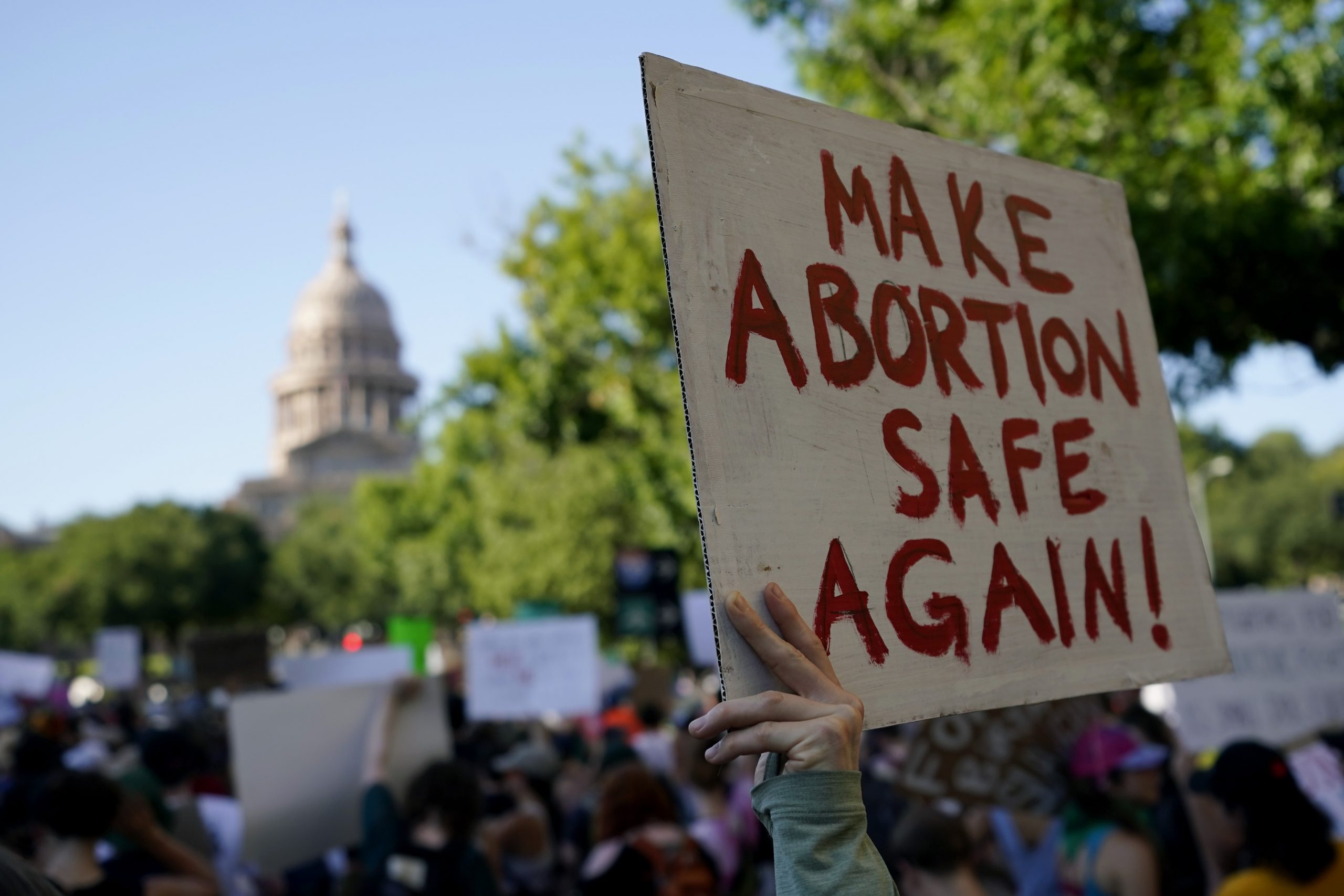
The Texas Supreme Court on Friday night put on hold a judge’s ruling that approved an abortion for a pregnant woman whose fetus has a fatal diagnosis, throwing into limbo an unprecedented challenge to one of the most restrictive bans in the U.S.

The order by the all-Republican court came more than 30 hours after Kate Cox, a 31-year-old mother of two from the Dallas area, received a temporary restraining order from a lower court judge that prevents Texas from enforcing the state’s ban in her case.

In a one-page order, the court said it was temporarily staying Thursday’s ruling “without regard to the merits.” The case is still pending.

“While we still hope that the Court ultimately rejects the state’s request and does so quickly, in this case we fear that justice delayed will be justice denied,” said Molly Duane, an attorney at the Center for Reproductive Rights, which is representing Cox.

Cox’s attorneys have said they will not share her abortion plans, citing concerns for her safety. In a filing with the Texas Supreme Court on Friday, her attorneys indicated she was still pregnant.

Cox was 20 weeks pregnant this week when she filed what is believed to be the first lawsuit of its kind since the landmark U.S. Supreme Court ruling last year that overturned Roe v. Wade. The order issued Thursday only applied to Cox and no other pregnant Texas women.

Cox learned she was pregnant for a third time in August and was told weeks later that her baby was at a high risk for a condition known as trisomy 18, which has a very high likelihood of miscarriage or stillbirth and low survival rates, according to her lawsuit.

Furthermore, doctors have told Cox that if the baby’s heartbeat were to stop, inducing labor would carry a risk of a uterine rupture because of her two prior cesareans sections, and that another C-section at full term would would endanger her ability to carry another child.

Republican Texas Attorney General Ken Paxton argued that Cox does not meet the criteria for a medical exception to the state’s abortion ban, and he urged the state’s highest court to act swiftly.

“Future criminal and civil proceedings cannot restore the life that is lost if Plaintiffs or their agents proceed to perform and procure an abortion in violation of Texas law,” Paxton’s office told the court.

He also warned three hospitals in Houston that they could face legal consequences if they allowed Cox’s physician to provide the abortion, despite the ruling from state District Judge Maya Guerra Gamble, who Paxton called an “activist” judge.

On Friday, a pregnant Kentucky woman also filed a lawsuit demanding the right to an abortion. The plaintiff, identified as Jane Doe, is about eight weeks pregnant and she wants to have an abortion in Kentucky but cannot legally do so because of the state’s ban, the suit said.

Unlike Cox’s lawsuit, the Kentucky challenge seeks class-action status to include other Kentuckians who are or will become pregnant and want to have an abortion.