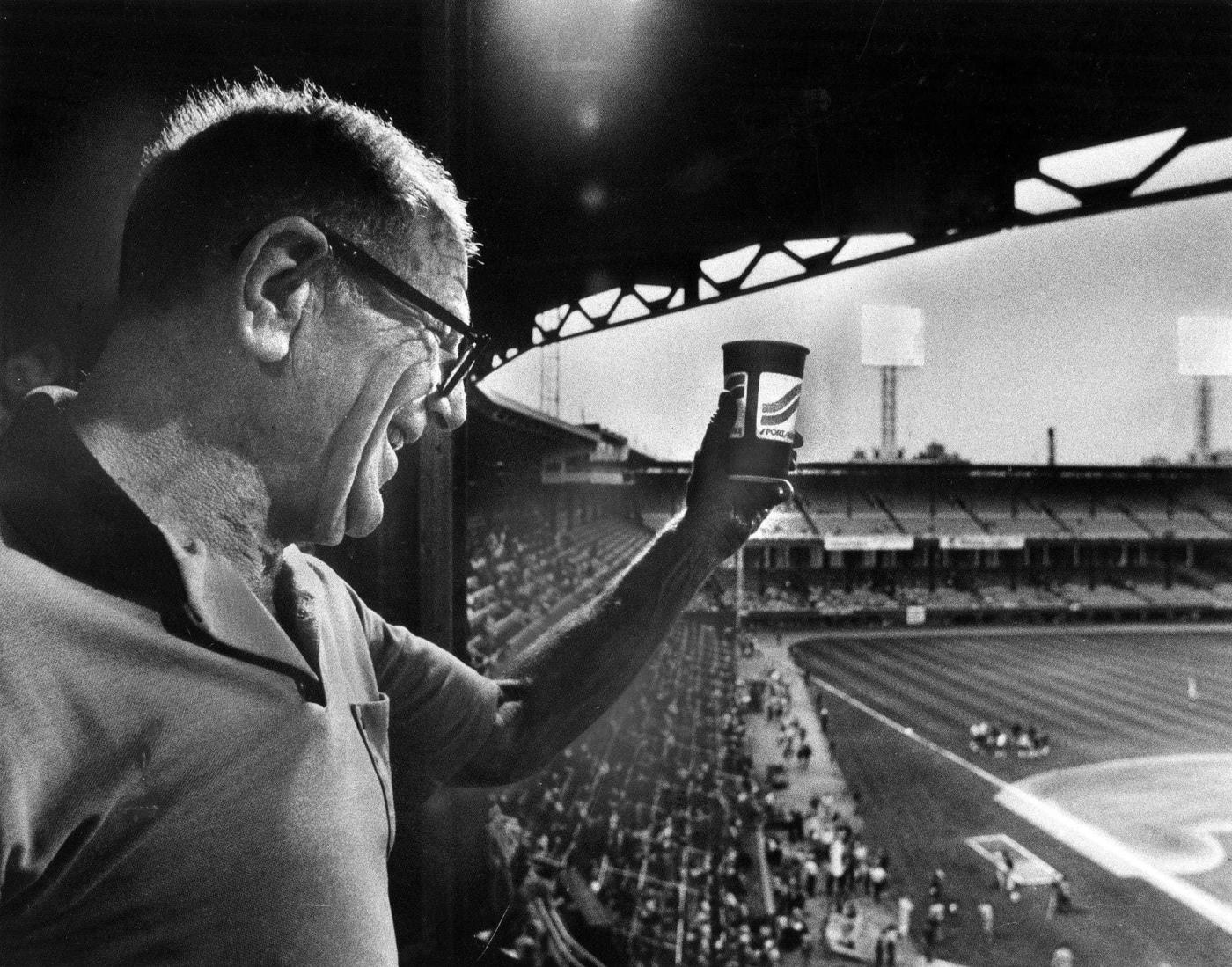
When the Chicago White Sox unveiled a sparkling new stadium on 35th Street in 1991, owner Jerry Reinsdorf declared he was “awestruck” at its beauty and predicted it wouldn’t “take a back seat” to any stadium in Major League Baseball for years to come.
But since that April day after the Sox had shuttered the original Comiskey Park across the street, the South Siders’ current home stadium has been a consistent source of criticism, tension and angst, with fans clamoring for a change even as major improvements have been made.
This week, a new twist developed in that long-running saga when it was revealed that Reinsdorf and the White Sox were in discussions about building a baseball-only Sox stadium about 3 miles to the northeast at Roosevelt Road and Clark Street as part of a massive development at a property in the South Loop called “The 78.″
Ald. Pat Dowell, whose 3rd Ward includes The 78, confirmed Related Midwest, the developer that owns the parcel, wants to discuss a White Sox relocation to that site.
“I will meet soon with the developers of The 78 to discuss the possibility of a stadium being built for the Chicago White Sox,” Dowell said in a statement Thursday afternoon.
Ald. Nicole Lee, who represents the area that includes Guaranteed Rate Field, where the team plays now, said she will also meet with Related Midwest and the Sox on the proposal.
“The White Sox have proudly called Chicago and Bridgeport home for over a century,” Lee said. “As a lifelong fan and now alderperson of the 11th Ward, I am wholeheartedly committed to keeping the Sox on the South Side.”
While serious questions remain about how real the talks are, whether such a plan will get off the ground and how it would be paid for, the news the Sox might leave their longtime home in the Bridgeport-Armour Square neighborhood spurred dreams that a modern ballpark ringed by skyscrapers and closer to downtown could breathe new life into the team and its fan base.
“The ballpark is right now not really in a neighborhood, it’s in the middle of nowhere, and a not very attractive nowhere,” said Allen Sanderson, a senior lecturer at the University of Chicago who studies the economics of sports. “And getting to the ballpark, there is nothing wonderful about that experience.”
Related Midwest declined to comment through Tricia Van Horn, vice president of marketing and communications. The Illinois Sports Facilities Authority — which owns Guaranteed Rate Field — has not been involved in the talks, the organization’s CEO, Frank Bilecki, told the Tribune.
“I’m not part of the discussion, at least as of yet,” Bilecki said. “I truly know nothing. I’m a landlord and they’re a tenant, and they’re looking at options as tenants do everywhere.”
The Chicago Sun-Times reported Thursday that “serious” negotiations have taken place between the Sox and Related Midwest about the potential move to The 78.
The Sox and Mayor Brandon Johnson released a joint statement Thursday that did not address the possibility of a new stadium being built on the site.
“Mayor Brandon Johnson and Chicago White Sox Chairman Jerry Reinsdorf met to discuss the historic partnership between the team and Chicago and the team’s ideas for remaining competitive in Chicago in perpetuity,” the statement reads. “The partnership between the city and the team goes back more than a century and the Johnson administration is committed to continuing this dialogue moving forward.”
Sanderson, a Sox fan who often attends games, and who is also a longtime critic of using public funds to finance stadiums, said a new ballpark may not do much to boost attendance.
“The bigger problem might be it’s a really bad baseball team, coupled with the fact that senior ownership hasn’t exactly endeared itself to the public,” he said.
But a new White Sox stadium could act as an anchor for the South Loop, much like Google will be a north anchor when it occupies the James R. Thompson Center, said Robert Sevim, a Chicago-based president of Savills, a commercial real estate firm.
“This would be transformative if it occurs,” he said. “You will be able to create an entire community around the ballpark. Wrigley Field has an entire community around it, and that’s what makes it special, and in some ways, a White Sox park might even do better because you have a clean slate.”
Sevim was a consultant on The 78 project several years ago, but was not involved in any potential deal with the White Sox.
A major league ballpark would likely help kick off other on-site development, perhaps including residences, offices, restaurants and retail, he added, all accessible to downtown residents and workers, he said.
Less clear is what losing the team would mean for the Bridgeport area that has been its home for over a century.
Bill Jackson, executive director at the University of Illinois’ Discovery Partners Institute, said a new home for the White Sox won’t interfere with his group’s plans to construct a $250 million headquarters at the 78.
DPI still plans to break ground this year on the eight-story, glass-and-steel dome, and complete it by December 2026.
Jackson added that he was shown drawings of the proposed stadium this week and believes having an on-site ballpark will help attract more scientists and startup firms to DPI’s future lab, research and office spaces.
He also expects the new infrastructure needed for the ballpark, including additional parking and transportation upgrades, will be useful to DPI as it expands.
A Sox stadium on The 78 site would be a huge positive development for the team and the city — but that doesn’t mean it will happen, said SportsCorp Ltd. President and consultant Marc Ganis, who is not involved with the proposal.
There are many roadblocks, Ganis said, the first being money. Sox owner Jerry Reinsdorf is not known as a big spender, and Johnson has other priorities eating up resources, such as schools, pensions, public safety, and now, the migrant crisis.
“This site could be a great one for the Sox for generations to come,” Ganis said. “But a lot of things that make sense around here don’t happen.”
The question about how any new ballpark would be funded is significant. Guaranteed Rate Field — where the Sox lease runs through 2029 — was paid for using money raised through an increase in Chicago hotel room taxes in a last-minute deal in Springfield in 1988. The city and state also each kick in $5 million per year.
The ISFA still owes about $50 million toward the construction of the stadium, which opened near 35th Street and Shields Avenue in 1991.
Gov. J.B. Pritzker has indicated he’s generally not supportive of state money going toward private, professional sports teams. He expressed this sentiment in the last year over rumblings about whether the Sox would move and in the Chicago Bears’ quest to find a new stadium in the city or suburbs.
As for the reports of the latest talks involving a possible new stadium for the Sox, Pritzker suggested he’d be open to listening to any proposals.
“Nobody’s made an ask yet, so having said that, I think you know my views about privately owned teams and whether the public should be paying for private facilities that will be used by private businesses,” the governor said during an unrelated event at an elementary school outside of Springfield. “Having said that, I mean, there are things that government does to support business all across the state, investing in infrastructure, making sure that we’re supporting the success of business in Illinois.
“So, as with all of the other (things), whether it’s sports teams or other private businesses, we’ll be looking at whatever they may be suggesting or asking.”
Where the Sox will be playing in the future has been a topic of conversation for several months.
In August, Crain’s Chicago Business reported the team was considering a move when its lease at Guaranteed Rate Field expires.
At that time, the Sox said in a statement: “We have not had any conversations about our lease situation, but with six years remaining, it is naturally nearing a time where discussions should begin to take place. The conversations would be with the city, ISFA and the state and most likely would be about vision, opportunities and the future.”
The Sox confirmed a meeting between Reinsdorf and Nashville Mayor Freddie O’Connell took place during the MLB winter meetings in December. But they did not disclose the topics discussed.
Nashville has long been mentioned in speculation as a city to consider if MLB decides to expand.
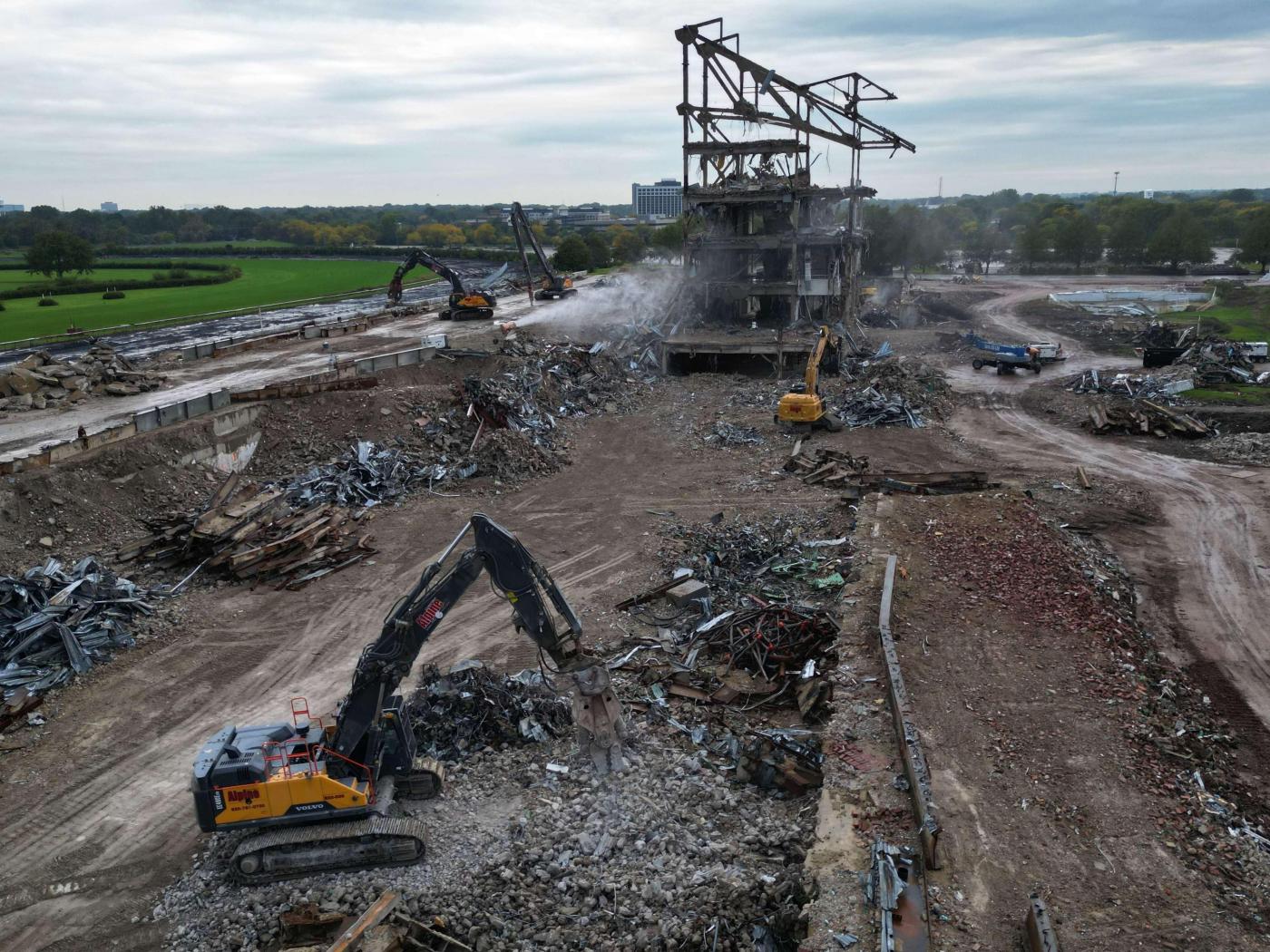
A Sox move could add a wrinkle to the Bears’ efforts to build a new enclosed stadium. The Bears spent $197 million to buy the former Arlington Park racetrack almost a year ago but have made little progress since then to get tax subsidies or resolve a dispute over property taxes with local school districts.
The Bears have also had discussions with Johnson about staying in the city and with officials about potential sites in Naperville, Waukegan and elsewhere.
Arlington Heights Mayor Tom Hayes said he couldn’t speculate about how the Sox talks might affect the Bears’ options, saying he was still trying to arrange face-to-face meetings between the team and the schools.
“I don’t anticipate that this would negatively impact the momentum we’ve been trying to gain,” he said. “We’re very hopeful things are moving in the right direction, and we’re continuing to work on it.”
A Sox relocation to The 78 might be modeled on the Atlanta Braves’ Truist Park, which opened in 2017 as an anchor to The Battery, a surrounding area of restaurants, housing and entertainment.
Such a mixed-use development is what the Bears have proposed for Arlington Heights. But at 62 acres, the Chicago site is much smaller than the 326 acres at the former Arlington horse track.
Chicago Tribune’s Jeremy Gorner, reporting from Rochester, Ill., and Jake Sheridan contributed.