St. Paul teachers’ union votes on strike; early March walk-out possible if approved

posted in: News | 0

Members of St. Paul’s teachers’ union cast ballots Thursday to decide whether they’ll walk off the job if they can’t reach a new contract agreement with the school district.

If they approve a strike, it could happen as soon as early March.

Months of negotiations between the St. Paul Federation of Educators and St. Paul Public Schools have failed to result in a new contract. Teachers and non-licensed staff are asking for pay raises and more help with health insurance payments, but the district says it can’t budge with a looming budget deficit of more than $100 million.

If the union approves a strike, it would be the fourth consecutive two-year bargaining cycle in a row where that’s happened. The union went on strike for four days in 2020 and almost went on strike in 2018 and 2022.

“I’m frustrated that we’re here again,” SPFE president Leah VanDassor told reporters outside a union hall as members voted Thursday afternoon. “We’ve been doing strike votes since 2018, we have to bargain every two years and we shouldn’t get to this point.”

10-day countdown if strike approved

Word on the strike vote could come as soon as late Thursday night, VanDassor said.

If membership approves the strike, leadership can then announce their intent to follow through, which VanDassor said could come as early as next week.

Members of the St. Paul Federation of Educators wave during a vote on whether to authorize a strike against the St. Paul Public Schools at the Carpenters Local Union 322 hall in St. Paul on Thursday, Feb. 15, 2024. (John Autey / Pioneer Press)

Once the union files to strike, there’s a 10-day countdown for final negotiations between the union and the district before the strike can begin.

VanDassor said her union feels the school district is “dragging its feet” as other districts in the metro and state, such as the Anoka-Hennepin school district, have reached deals.

There are still two more closed-door mediation sessions scheduled — one on Feb. 23 and one on March 1. In a letter to district staff, SPPS human resources chief Pat Pratt Cook said recent discussions between the district and union had been productive.

“While the SPPS bargaining team does not believe (the) strike vote is necessary to move negotiations along, we acknowledge and respect SPFE’s right to take this collective action,” she wrote. “Regardless of the outcome of the vote, we will continue to negotiate in good faith in an effort to reach a fair and financially sound agreement.”

VanDassor said there has been progress in mediation but there are still issues with wages and benefits.

Thousands cast votes

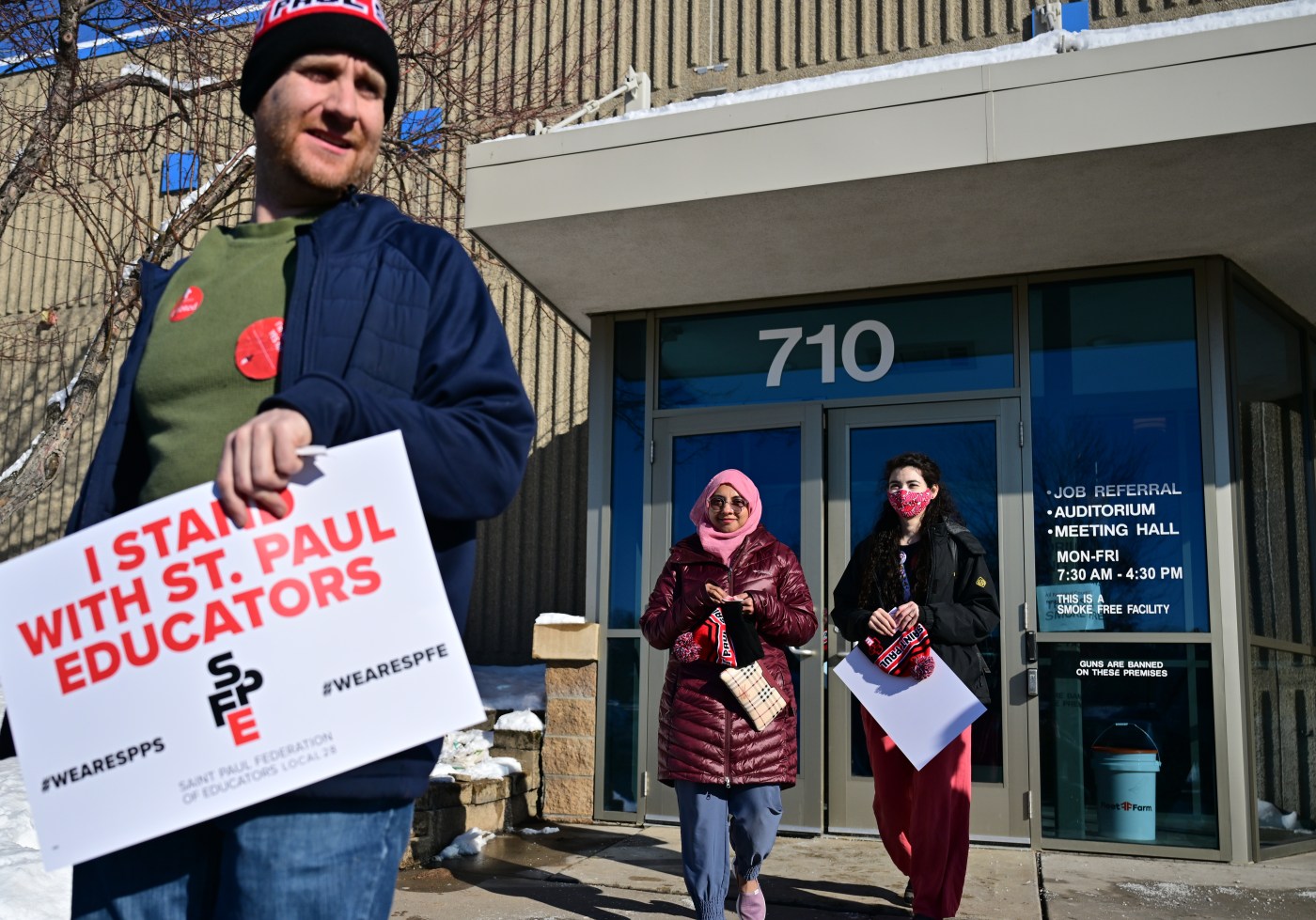
It was a busy scene Thursday afternoon outside the Carpenters Local Union 322 Hall in St. Paul as thousands of members of the St. Paul Federation of Educators showed up to cast their ballots. Members with signs and clad in red caps streamed by the hundreds in and out of the union hall to cast their ballots and others in vests directed traffic in the busy parking lot.

Among the union members who voted in favor of the strike was Michael Houston, a Harding High School math teacher who has been with the district for 20 years and was Minnesota’s teacher of the year in 2023.

Houston said he backs the strike because he wants to support fellow educators.

“I feel like the district doesn’t really value our voices as educators,” he said. “We’re the ones in the classrooms, were the ones on the front lines.”

State funding, projected budget deficit

Despite the state Legislature increasing funding for education last year, many districts still face shortfalls as federal pandemic aid expires. St. Paul Public Schools faces a $107.7 million deficit in the coming year, according to a February budget projection.

St. Paul Public Schools officials estimate requests from the SPFE could top $112 million, and the district said it was willing to allocate only $12.4 million in additional funding.

Early union proposals included a $7,500 pay bump for all teachers and community service personnel in the district, as well as a 7.5% raise in the second year. They’re also asking for a $5.43-an-hour raise for educational assistants followed by a 7.5% raise in the second year.

St. Paul Federation of Educators president Leah VanDassor talks about the union’s strike authorization vote at the Carpenters Local Union 322 hall in St. Paul on Thursday, Feb. 15, 2024. Members of the union voted Thursday on whether to authorize a strike against the St. Paul Public Schools. (John Autey / Pioneer Press)

Besides wage increases and insurance policy changes, teachers want more funding for student mental health support services and more support for restorative practices — a shift away from traditional discipline like suspensions and moving toward an emphasis on community building.

Union leaders say the district should be able to accommodate their demands as it received an ongoing $56 million increase in state funding tied to inflation.

St. Paul teachers are among the highest-paid in the state of Minnesota. In the 2022-2023 school year, the average teacher salary was $87,250, according to data from the Minnesota Professional Educator and Licensing Standards Board, placing the district in the top 10 statewide.

Related Articles

Education |


After St. Paul high school receives tip, student found with gun

Education |


St. Paul schools budget shortfall shrinks, but end of pandemic aid will still strain district

Education |


St. Paul teachers union authorizes strike vote as contract negotiations continue

Education |


St. Paul’s Joe Gothard named finalist for superintendent job in hometown Madison, Wis.

Education |


St. Paul charges: Man who accidentally shot himself at elementary school left his holster at home

Two more charged in Coon Rapids triple slaying

posted in: Society | 0

Two more men have been arrested and charged in last month’s killings of a woman, her son and husband after police say they posed as UPS delivery drivers and went into the family’s Coon Rapids home with guns looking for money.

Demetrius Trenton Shumpert, 31, and his brother, Omari Malik Shumpert, 19, both of Minneapolis, were charged Wednesday with three counts of aiding and abetting second-degree murder in connection with the Jan. 26 killings of Shannon Patricia Jungwirth, 42, her son Jorge Alexander Reyes-Jungwirth, 20, and her husband, Mario Alberto Trejo Estrada, 39.

Alonzo Pierre Mingo, Demetrius Trenton Shumpert and Omari Malik Shumpert (Courtesy of the Anoka County Sheriff’s Office)

Video surveillance from the main floor of the home captured the home invasion and all three being shot in the head, the charges say. Two small children, both under the age of 5, were in the home at the time of the killings but not injured.

Alonzo Pierre Mingo, 37, was arrested the same day in and charged Jan. 29 with three counts of second-degree murder.

According to the latest charges, investigators obtained Ring surveillance audio and video from inside the home on Feb. 2. The video shows Omari Shumpert repeatedly pistol-whipping Estrada before shooting him in the head after he fought back.

Jungwirth realized Estrada had been shot, began screaming and crying and moved toward the back bedroom. Mingo followed her and shot her. Mingo then left the bedroom and shot Reyes-Jungwirth as he moved toward the front door, the charges say.

Court records show that Estrada was suspected of drug trafficking and that law enforcement was on his trail in the days leading up to the murders. Afterward, investigators searched a Golden Valley storage unit that Estrada had rented under a false name and seized three bags of white powder, seven bags of psilocybin mushrooms, three bags of marijuana and a bag of meth, according to a search warrant affidavit.

Cellphone records

Coon Rapids police were dispatched to the home just before 12:30 p.m. Jan. 26 after receiving an emergency call that captured a female voice in the background of a possible domestic situation. All three victims were found dead inside.

Law enforcement learned a pole camera was mounted across the street from the house. It captured a navy blue Nissan Altima pull up and park in front at 12:21 p.m.

Demetrius Shumpert, a known associate of Mingo, was seen on Ring video approaching the house with Mingo, the latest charges say. Mingo carried a cardboard box “as if he is delivering a package” and both men pulled out firearms and forced Reyes-Jungwirth, who went outside to let out his dog, back into the home.

Once inside, Mingo and the Shumpert brothers pistol-whipped Estrada near the front entryway. All three wore clothing similar to UPS drivers and had on masks while they held the victims at gunpoint.

Demetrius Shumpert forced Reyes-Jungwirth to lie on the ground face down, with the hood of his sweatshirt pulled over his head to cover his eyes. Shumpert and Mingo forced Jungwirth to open credenza drawers while demanding money. Video later shows Shumpert pistol-whipping Reyes-Jungwirth.

Seven minutes after arriving, all three suspects exited the house and left in the Nissan. Mingo is the registered owner of the car.

A crime alert was issued on the car. Law enforcement spotted Mingo leaving his Fridley home in the car around 3:15 p.m. He was stopped on 73rd Avenue, near Baker Road, in Fridley and arrested. In his car, a UPS shirt and vest were inside a backpack.

Related Articles

Crime & Public Safety |


Death of witness leads to dismissal of charges against psychologist in Minnesota sex offender program

Crime & Public Safety |


Cottage Grove: Woman who died in U.S. 61 crash identified

Crime & Public Safety |


Things to know about the shooting at the Kansas City Chiefs’ Super Bowl celebration

Crime & Public Safety |


St. Paul police: Man dies after stabbing in North End

Crime & Public Safety |


Forest Lake ‘career offender’ conned motorsports businesses out of $232K, charges say

Investigators later learned that Mingo had been employed by UPS until earlier in January. In an interview with investigators, Mingo said he had never worked at UPS, did not own a cellphone and had been home all day.

Law enforcement later found Mingo’s cellphone, which he threw out of a window while he was being pulled over. Investigators discovered his cellphone was turned off from about 10 a.m. to about 12:39 p.m.

Mingo’s fingerprints were found on the cardboard box that was carried into the home and left there.

Cellphone records show Demetrius and Omari Shumpert and Mingo were at Demetrius’ home at the same time the morning of the killings, the charges say.

Omari Shumpert’s cellphone records also show he was in the area of the Coon Rapids home from 11:03 a.m. until 12:16 p.m. The next activity on his phone started about 20 minutes later on Highway 169 and 109th Avenue North in Brooklyn Park. At that same time, Mingo’s vehicle was seen on state traffic cameras in the same location, the charges say.

Demetrius and Omari Shumpert were arrested Feb. 13 in Minneapolis.

In an interview with investigators, Omari Shumpert said he dropped his cellphone and that it was stolen by a homeless person a couple months ago. He said he hasn’t been to Coon Rapids in over a year. He also said that his brother is “too old for him to hang out with and that they are not close,” the complaint says.

Demetrius Shumpert told investigators that he didn’t go to work on Jan. 26 because he was taking care of his baby at home. He denied he was ever at the Coon Rapids home, and said he hadn’t seen Mingo in about a month and that he hadn’t seen his brother recently either.

Aggravated sentences sought

Demetrius and Omari Shumpert made their first appearances in Anoka County District Court on Thursday. Judge Suzanne Brown set their bail at $5 million, and they remain jailed. Demetrius Shumpert is due back in court Feb. 26, while Omari Shumpert’s next hearing is March 7.

Mingo also remained jailed in lieu of $5 million. His next court hearing is April 3.

In all three cases, prosecutors have filed motions of their intent to seek aggravated prison sentences. They say aggravating factors include the victims being “treated with particular cruelty” and the crimes were committed in the presence of two minor children.

According to court records, Mingo was convicted in 2020 in federal court in Minnesota for being a felon in possession of a gun after St. Paul police found a Glock handgun on him near a BP gas station at Lexington Parkway, just north of Interstate 94, in October 2018.

Mingo had been convicted in Cook County, Ill., with aggravated battery in a public place in 2017; felon in possession of a firearm in 2011 and 2006; and aggravated unlawful use of a weapon in 2006.

Demetrius Shumpert’s criminal history includes two felony theft convictions in 2020.

Court records show Omari Shumpert has five other open criminal cases pending in court: fleeing police in a motor vehicle, third-degree sale of narcotics, driving after revocation and two for driving after suspension.

Related Articles

Crime & Public Safety |


Death of witness leads to dismissal of charges against psychologist in Minnesota sex offender program

Crime & Public Safety |


Things to know about the shooting at the Kansas City Chiefs’ Super Bowl celebration

Crime & Public Safety |


St. Paul police: Man dies after stabbing in North End

Crime & Public Safety |


Forest Lake ‘career offender’ conned motorsports businesses out of $232K, charges say

Crime & Public Safety |


Polaris, employee charged in snowmobile collision that killed 3 sled dogs in Alaska

Twins announce spring training broadcast schedule

posted in: News | 0

FORT MYERS, Fla. — Twins spring training games begin next week, but it will be almost a month until fans can watch a game on Bally Sports North, which was announced earlier this week as their television partner for the upcoming season. The Twins released their spring training broadcast schedule on Thursday and there will be radio or television coverage for most games.

The first televised game will be a simulcast from Bally Sports Detroit on March 12. Seven more games will be televised after that, with new television play-by-play announcer Cory Provus calling three games near the end of spring training. Analysts Justin Morneau and LaTroy Hawkins will provide color commentary alongside Provus.

On the radio side, the Treasure Island Baseball Network will air 20 broadcasts, with 14 also carried on News Talk 830 WCCO and 102.9 The Wolf. Kris Atteberry, who took over radio play-by-play duties for Provus, and longtime color commentator Dan Gladden will call those games.

The first radio broadcast will be on Feb. 23 when the Twins take on the University of Minnesota in their first game of the spring. That game will start at 5:05 p.m. C.T.

Staumont 100 percent

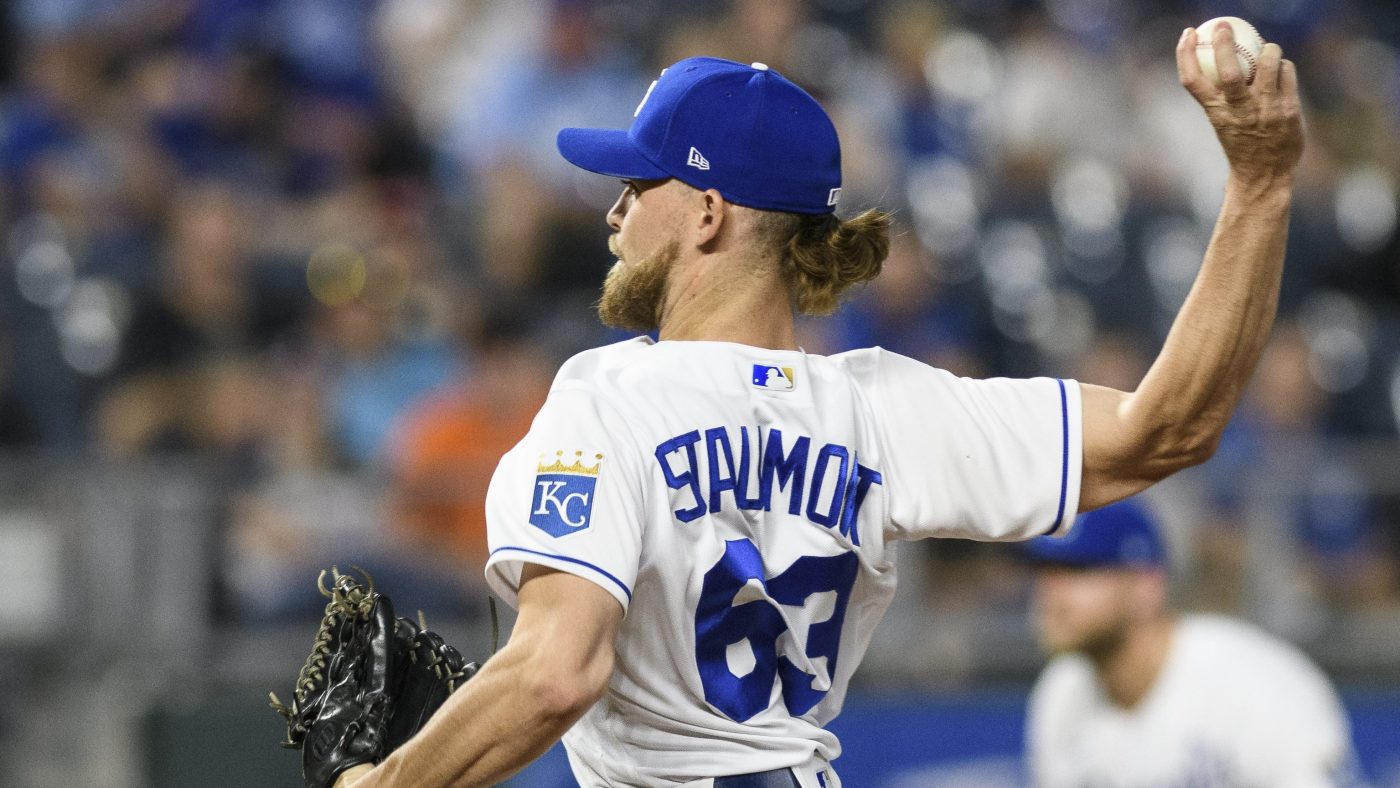
Josh Staumont, 30, spent between a year to a year and a half trying to figure out what was plaguing him. Once his surgeon finally opened him up, the answer, he said, was clear.

“It was blood flow in a vein going down the arm,” Staumont said. “It’s caused by extra musculature in that area, the scalene muscles, so once they removed that first rib and those muscles, it had a huge impact.”

The relief pitcher, who had thoracic outlet syndrome surgery last July, said he started throwing about a month after procedure and he’s been 100 percent for a couple of months now, coming into spring training healthy and ready to go.

In the time between then and now, he was let go by his long-time team, the Kansas City Royals, and picked up by the Twins on a one-year deal where he’ll be in the mix for a spot in the Twins’ bullpen.

Earlier in his career, Staumont was a highly-effective reliever for the Royals — during the pandemic-shortened 2020 season, for example, he posted a 2.45 earned-run average and struck out 13 batters per nine innings — before injuries disrupted both of the past two seasons.

He likened thoracic outlet syndrome to a boiling pot —sometimes, he said, if you let it go and leave the lid on too long, it just overflows. That’s when he felt it and it started to affect him on the mound.

But now he’s healthy and, with that behind him, his aim is on replicating his early-career success.

“Knowing that we’re going to do our job on the back end, the surgical side of that has actually been closed and solved, so a lot of it is just kind of getting that ball rolling,” Staumont said.

Briefly

Star shortstop Carlos Correa was among the players who reported to camp on Thursday. All position players must report by Saturday, though most have already shown up in Fort Myers.

Related Articles

Minnesota Twins |


New Twins starting pitcher Anthony DeSclafani finally healthy, looking to recapture 2021 success

Minnesota Twins |


What to know as Twins’ spring training gets underway in Florida

Minnesota Twins |


Brooks Lee, David Festa among Twins’ non-roster invites to spring training

Minnesota Twins |


Twins back on Bally Sports North for 2024 season on one-year deal

Minnesota Twins |


Twins trade Nick Gordon to Miami for reliever Steven Okert

Lisa Jarvis: A cure for some kinds of hearing loss? Gene therapies are getting closer

posted in: News | 0

Every once in a while, modern medicine can feel like a bit of magic. Like when a vaccine is shown to eliminate cases of cervical cancer among young women or gene editing allows someone with sickle cell disease to live without constant pain. Or when an experimental gene therapy allows a deaf 11-year-old boy to hear.

Aissam Dam is now able to hear sound for the first time in his young life. The treatment he received, developed by Eli Lilly & Co. subsidiary Akouos Inc., is aimed at fixing the underlying cause of his congenital deafness.

As someone who has followed this field for many years, watching drug after drug for various types of hearing loss fail, reading about Dam’s experience gave me goosebumps. Finally, some momentum.

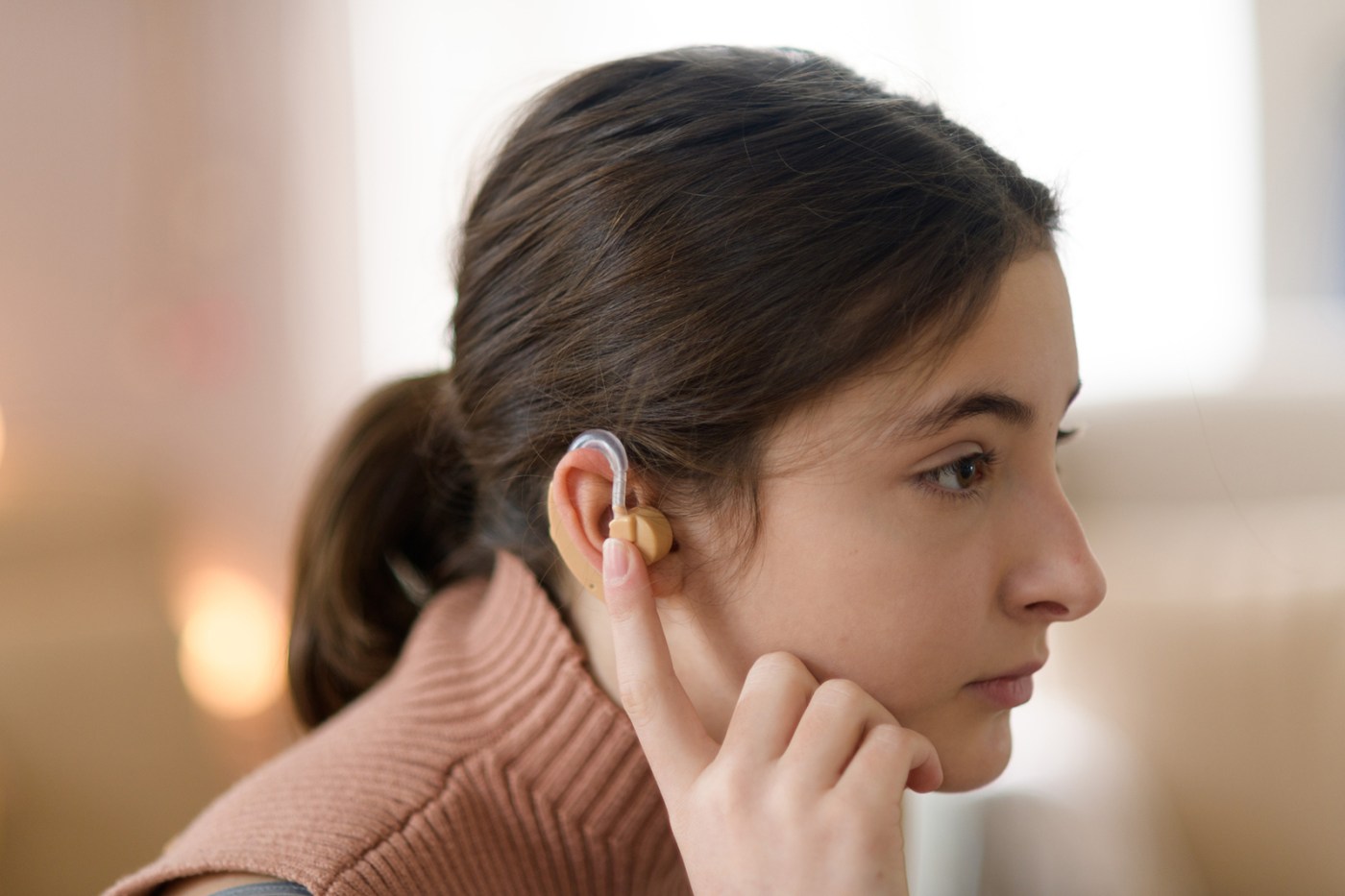
Until now, the options for addressing hearing loss have been limited to devices — a hearing aid can amplify sound for people whose ears can still detect and transmit it, whereas a cochlear implant bypasses damaged parts of the ear to stimulate the auditory nerve.

The current advance can’t help the millions of people in the U.S. experiencing some level of hearing loss — or even most of the people with common forms of congenital deafness. But the path to treatments suddenly looks clearer.

“It’s very exciting,” says Nancy Young, who founded the Lurie Children’s Cochlear Implant program. “It’s the beginning of the future.”

“Beginning” is an important word for families wondering if this treatment or another like it could someday be available to their children with congenital deafness. It’s very early days, and there are some caveats to consider.

The first is that Dam had a very rare form of congenital hearing loss. The gene therapy corrects a mutation that prevents cells in the ear from making a functional form of a protein called otoferlin, variants of which are found in just 1%-8% of infants born without the ability to hear.

People with this form of hearing loss have all the right architecture in their ear. Their cochlea is fully formed and all the thousands of sensory cells that line it, called hair cells, are intact. Those hair cells just can’t send a signal to the brain.

That differs from most other forms of genetic deafness, in which those hair cells die off, sometimes as early as in the womb. That’s a much harder problem to fix because we don’t make new hair cells — what we’re born with is all we’ve got. Damage to those cells is the main reason why hearing loss is so common as we age. (Let this serve as your reminder to turn down the volume on your headphones and carry earplugs to your next concert.)

A gene therapy for more common forms of congenital hearing loss — or really most kinds of hearing loss — likely will need to coax the body into making new hair cells. That’s a tall order, and the one prominent attempt to do so, a gene therapy developed by Novartis and tested in adults, did not pan out.

But there’s also reason to think that what is being learned from efforts to treat otoferlin-mediated hearing loss could inform the development of more complex treatments. While the biology of each form of congenital hearing loss is unique, the way the therapies are delivered is a critical part of inventing other drugs, says Emmanuel Simons, chief executive officer of Akouos and senior vice president of gene therapy at Lilly.

That might not sound like a big deal, but a chronic challenge for all gene therapies is delivering enough of the genetic material to the right cells. In Dam’s case, doctors at the Children’s Hospital of Philadelphia used a special procedure to drip a relatively modest dose of the therapy — a type of hollowed-out virus stuffed with many copies of the genetic fix — directly into his inner ear. That represents significant progress.

Lilly isn’t the only one making progress, either. Researchers from the Eye & ENT Hospital of Fudan University and Shanghai-based Refreshgene Therapeutics said they’d developed a similar gene therapy that restored hearing in 5 of 6 children. The kids who enrolled in the small study, published recently in The Lancet, ranged from 1 to 6 years old. Four of them had a cochlear implant in one year.

That last bit is important. While Dam, who grew up in Morocco and never benefited from cochlear implants, is able to hear for the first time, the chances that he will develop spoken language at 11 are small. Most of those critical neuronal connections related to spoken language are made during the first three years of life, says Dana Suskind, director of University of Chicago Medicine’s Pediatric Hearing Loss and Cochlear Implant program.

“Like milk feeds the body, language feeds the developing brain,” adds Suskind, who is an expert in language development. So any intervention, whether a cochlear implant or a gene therapy or both, will be most effective in that short window.

There’s still so much more to learn about what this advance could mean for children with hearing loss. One day in the distant future, it could give parents of deaf children more options than they have now. But even at this early stage, it’s worth celebrating a leap forward in science that could help so many.

Lisa Jarvis is a Bloomberg Opinion columnist covering biotech, health care and the pharmaceutical industry. Previously, she was executive editor of Chemical & Engineering News.