MN physicians describe ‘chaos and fear’ due to immigration actions

posted in: All news | 0

Minnesota physicians are sounding the alarm over the health care impacts of the surge in federal immigration enforcement activity.

Roughly 50 physicians joined Minnesota Sen. Alice Mann, DFL-Edina, and Sen. Matt Klein, DFL-Mendota Heights, at a press conference Tuesday to share their experiences amid “Operation Metro Surge,” which has flooded the state with as many as 3,000 federal officers.

“I have been a practicing physician for more than 19 years here in Minnesota, and I have never seen this level of chaos and fear in the health care for patients and for our health care teams,” said Dr. Roli Dwivedi, past president of the Minnesota Academy of Family Physicians.

Patients not seeking care

Dr. Erin Stevens, legislative chair for the Minnesota section of the American College of Obstetricians and Gynecologists, said patients have “expressed to us a feeling of being hunted” and that some are giving birth alone.

“Our patients are missing, canceling or deferring important appointments for prenatal care out of fear of being targeted by immigration officials in their place of care,” she said. “Anecdotally, many of our labor and delivery triage units are seeing lower volumes as a sign that individuals are not seeking out care.”

Dr. Janna Gewirtz O’Brien, president-elect of the Minnesota Chapter of the American Academy of Pediatrics, said parents are “rightfully” scared to come in.

“I’ve seen babies miss their jaundice follow-ups,” she said. “We’ve seen moms that have called and said, ‘My baby is having trouble breathing. I don’t know if I should come in.’ Unacceptable. And we’ve seen a burst appendix that could have been detected days earlier.”

More stories

Dwivedi shared more stories:

• A patient with kidney cancer was a no-show for a scheduled visit. His clinician found out he had been detained and moved to Texas without his medications. Legal intervention eventually got his medications to him, but Dwivedi said it’s unknown whether he is actually taking them.

• A patient with insulin-dependent diabetes stopped coming to the clinic. Dwivedi said it was discovered that the patient was out of both insulin and food, and rationing both without knowing how to adjust insulin.

• A pregnant mother missed her check-up and stopped answering her phone. A nurse went to her home and found her 8 centimeters dilated and laboring alone. Dwivedi said she delivered her baby two hours after the nurse convinced her it was safe to go to the hospital.

• A patient discharged from the hospital missed their follow-up, and Dwivedi said what should have been “a routine wound-care appointment turned into a life-threatening case of sepsis.”

• In Dwivedi’s clinic parking lot, a mother and a son were “forcefully separated” while trying to fill a prescription for a seizure medication, and the trauma of the incident triggered a medical crisis. Dwivedi said the son was rushed to the hospital in the midst of a seizure while his mother was sent to a detention center in Texas.

• One teenager nearly collapsed from starvation, surviving on a single egg in three days after her entire family was detained, Dwivedi said.

“I have dozens of other stories to share, but the bottom line is, is this making America healthy again?” she said.

Hospital staff impacted

Gewirtz O’Brien said Immigration and Customs Enforcement activity is not only affecting patients, but also hospital staff.

“First of all, half of our staff are not coming in at the hospital where I work. Our health care workforce is extremely diverse,” she said. “The people taking care of our patients are Somali. They are Latina, and when we look at the nurses, at the health care assistants and at the physicians, many of us are also from backgrounds that are actively being harmed by the campaign of racial profiling and hate.”

When asked whether there is any legal recourse for ICE activity in health care spaces, or any legislative fixes, Klein, the DFL senator from Mendota Heights, said the Legislature “should at least codify what best practices are for that interaction.”

Mann, the Edina senator, said she thinks there is no guarantee that federal agents “would follow any of them (laws).”

“The problem is that we can pass 110 laws, but ICE is already acting above the law. They are already acting unlawfully and against the Constitution,” she said. “We have Fourth Amendment rights that protect these private spaces, and they don’t care. So we can come up with 110 different laws. Certainly, we have no guarantee that they will follow any of them.”

Related Articles


St. Paul police chief: Even off-duty cops are being stopped by ICE agents


Gov. Tim Walz again urges President Trump to end immigration actions in MN


Justice Department subpoenas Walz and others in immigration enforcement obstruction investigation


Trump’s ICE force is sweeping America. Billions in his tax and spending cuts bill are paying for it


David French: The government is defended by a phalanx of immunities and privileges
Israel’s settler movement takes victory lap as a sparse outpost becomes a settlement within a month

posted in: All news | 0

By JULIA FRANKEL, Associated Press

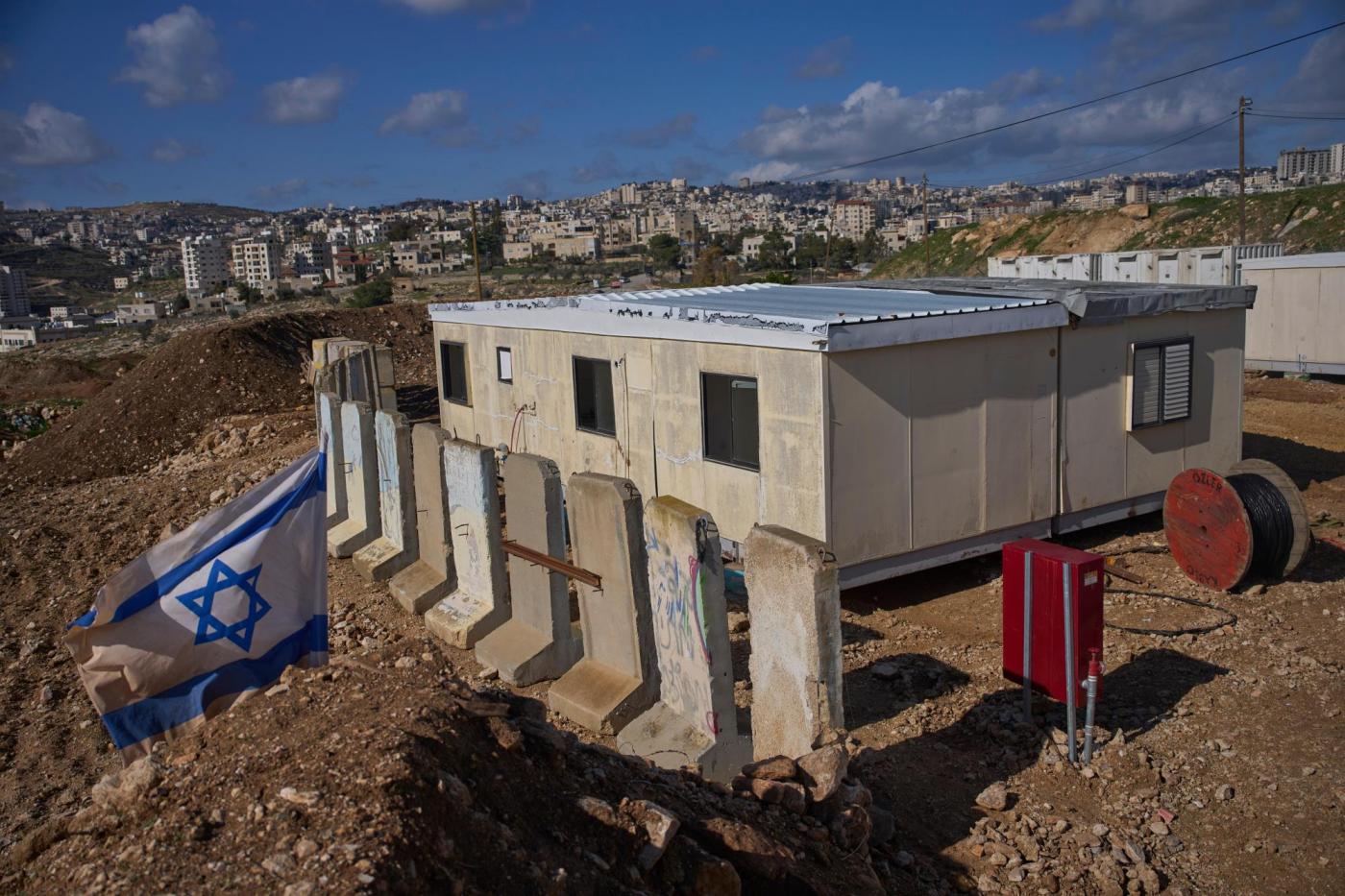
YATZIV SETTLEMENT, West Bank (AP) — Celebratory music blasting from loudspeakers mixed with the sounds of construction, almost drowning out calls to prayer from a mosque in the Palestinian town across this West Bank valley.

Orthodox Jewish women in colorful head coverings, with babies on their hips, shared platters of fresh vegetables as soldiers encircled the hilltop, keeping guard.

The scene Monday reflected the culmination of Israeli settlers’ long campaign to turn this site, overlooking the Palestinian town of Beit Sahour, into a settlement. Over the years, they fended off plans to build a hospital for Palestinian children on the land, always holding tight to the hope the land would one day become theirs.

That moment is now, they say.

Smotrich goes on settlement spree

After two decades of efforts, it took just a month for their new settlement, called “Yatziv,” to go from an unauthorized outpost of a few mobile homes to a fully recognized settlement. Fittingly, the new settlement’s name means “stable” in Hebrew.

“We are standing stable here in Israel,” Finance Minister and settler leader Bezalel Smotrich told The Associated Press at Monday’s inauguration ceremony. “We’re going to be here forever. We will never establish a Palestinian state here.”

With leaders like Smotrich holding key positions in Israel’s government and establishing close ties with the Trump administration, settlers are feeling the wind at their backs.

Smotrich, who has been in charge of Israeli settlement policy for the past three years, has overseen an aggressive construction and expansion binge aimed at dismantling any remaining hopes of establishing a Palestinian state in the occupied West Bank.

While most of the world considers the settlements illegal, their impact on the ground is clear, with Palestinians saying the ever-expanding construction hems them in and makes it nearly impossible to establish a viable independent state. The Palestinians seek the West Bank, captured by Israel in 1967, as part of a future state.

With Netanyahu and Trump, settlers feel emboldened

Settlers had long set their sights on the hilltop, thanks to its position in a line of settlements surrounding Jerusalem and because they said it was significant to Jewish history. But they put up the boxy prefab homes in November because days earlier, Palestinian attackers had stabbed an Israeli to death at a nearby junction.

The attack created an impetus to justify the settlement, the local settlement council chair, Yaron Rosenthal, told AP. With the election of Israel’s far-right government in late 2022, Trump’s return to office last year and the November attack, conditions were ripe for settlers to make their move, Rosenthal said.

“We understood that there was an opportunity,” he said. “But we didn’t know it would happen so quickly.”

“Now there is the right political constellation for this to happen.”

Smotrich announced approval of the outpost, along with 18 others, on Dec. 21. That capped 20 years of effort, said Nadia Matar, a settler activist.

“Shdema was nearly lost to us,” said Matar, using the name of an Israeli military base at the site. “What prevented that outcome was perseverance.”

Back in 2006, settlers were infuriated upon hearing that Israel’s government was in talks with the U.S. to build a Palestinian children’s hospital on the land, said Hagit Ofran, a director at Peace Now, an anti-settlement watchdog group, especially as the U.S. Agency for International Development was funding a “peace park” at the base of the hill.

The mayor of Beit Sahour urged the U.S. Consulate to pressure Israel to begin hospital construction, while settlers began weekly demonstrations at the site calling on Israel to quash the project, according to consulate files obtained through WikiLeaks.

It was “interesting” that settlers had “no religious, legal, or … security claim to that land,” wrote consulate staffer Matt Fuller at the time, in an email he shared with the AP. “They just don’t want the Palestinians to have it — and for a hospital no less — a hospital that would mean fewer permits for entry to Jerusalem for treatment.”

The hospital was never built. The site was converted into a military base after the Netanyahu government came to power in 2009. From there, settlers quickly established a foothold by creating makeshift cultural center at the site, putting on lectures, readings and exhibits

Speaking to the AP, Ehud Olmert, the Israeli prime minister at the time the hospital was under discussion, said that was the tipping point.

“Once it is military installation, it is easier than to change its status into a new outpost, a new settlement and so on,” he said.

Olmert said Netanyahu — who has served as prime minister nearly uninterrupted since then — was “committed to entirely different political directions from the ones that I had,” he said. “They didn’t think about cooperation with the Palestinians.”

Related Articles


A look at Trump’s Board of Peace and who has been invited


Mexico sends 37 cartel members to US in latest offer to Trump administration


Israeli crews target UN facilities for Palestinian refugees in east Jerusalem


Why experts question whether China’s one-child policy was necessary in the first place


Iran warns Trump not to take action against Khamenei

Palestinians say the land is theirs

The continued legalization of settlements and spiking settler violence — which rose by 27% in 2025, according to Israel’s military — have cemented a fearful status quo for West Bank Palestinians.

The land now home to Yatziv was originally owned by Palestinians from Beit Sahour, said the town’s mayor, Elias Isseid.

“These lands have been owned by families from Beit Sahour since ancient times,” he said.

Isseid worries more land loss is to come. Yatziv is the latest in a line of Israeli settlements to pop up around Beit Sahour, all of which are connected by a main highway that runs to Jerusalem without entering Palestinian villages. The new settlement “poses a great danger to our children, our families,” he said.

A bypass road, complete with a new yellow gate, climbs up to Yatziv. The peace park stands empty.

A look at Trump’s Board of Peace and who has been invited

posted in: All news | 0

By JULIA FRANKEL, Associated Press

JERUSALEM (AP) — The Board of Peace led by U.S. President Donald Trump was originally envisioned as a small group of world leaders overseeing the Gaza ceasefire plan. The Trump administration’s ambitions have ballooned into a more sprawling concept, with Trump extending invitations to dozens of nations and hinting it will soon broker global conflicts, like a pseudo-U.N. Security Council.

More details are expected when Trump participates in an announcement about the Board of Peace on Thursday at the World Economic Forum meeting in Davos, Switzerland.

The board’s charter has not yet been made public, but a draft version obtained by The Associated Press indicates much of the power will be concentrated in the hands of Trump himself. A $1 billion contribution secures permanent membership, the draft say.

Here’s what to know:

The scope of the Board of Peace appears to go beyond Gaza

The Trump administration now seems to envision the Board of Peace with a far broader scope beyond Gaza.

In letters sent Friday to various world leaders inviting them to the board, Trump said it would “embark on a bold new approach to resolving global conflict,” suggesting it could act as a rival to the U.N. Security Council, the most powerful body of the global organization created in the wake of World War II.

A draft charter for the board, obtained from a European diplomat and confirmed by a U.S. official as accurate as of Monday, uses expansive language to describe its ambitions.

It emphasizes “the need for a more nimble and effective international peace-building body” and says “durable peace” requires “the courage to depart from approaches and institutions that have too often failed.” It adds an aim to “secure peace in places where it has for too long proven elusive.”

Under the charter, the chairman — which Trump says will be him — has the power to invite member states, break any ties in a vote, decide how frequently it meets, and create or dissolve subsidiary entities.

The expenses of the Board of Peace will be funded by contributions from member states, which serve three-year terms. Members who pay “more than one billion United States dollars in cash” during their first year can have a permanent place on the board, the draft says.

The draft is under constant revision, is not finalized and may undergo significant changes, according to the U.S. official, who was not authorized to comment publicly and spoke on condition of anonymity.

Related Articles


Supreme Court takes up politically charged case with independence of the Federal Reserve at stake


NYC Mayor Zohran Mamdani and US Sen. Bernie Sanders rally with nurses on ninth day of strike


Justice Department subpoenas Walz and others in immigration enforcement obstruction investigation


Despite Greenland, France’s Macron and NATO’s head make nice with Trump behind the scenes


Donald Trump thanks you for your attention to these matters in his second term

Countries around the world have been invited

So far, the United Arab Emirates, Morocco, Vietnam, Kazakhstan, Hungary, Argentina and Belarus have agreed to take part.

Invitation letters from Trump also have been sent to Paraguay’s leader Santiago Peña, Canadian Prime Minister Mark Carney, Egyptian President Abdel-Fattah el-Sissi and Turkish President Recep Tayyip Erdogan. Plus, Russia, Israel, India, Slovenia, Thailand and the European Union’s executive arm have said they received invitations.

The Kremlin is now “studying the details” and will seek clarity of “all the nuances” in contacts with the U.S., Kremlin spokesman Dmitry Peskov said. Trump confirmed Monday night that Russian President Vladimir Putin had been invited.

Israel has been asked to join, though it’s not known whether Israeli Prime Minister Benjamin Netanyahu has accepted the offer, said an Israeli official who spoke on condition of anonymity to discuss a behind-the-scenes diplomatic matter.

Netanyahu’s office earlier said the makeup of the board — including Turkey, a key regional rival — wasn’t coordinated with the Israeli government and “is contrary to its policy,” without clarifying its objections. Israel’s far-right finance minister, Bezalel Smotrich, has criticized the board and called for Israel to take unilateral responsibility for Gaza’s future.

It was not immediately clear how many or which other leaders would receive invitations.

Some US allies have already declined

France — which is at odds with the Trump administration over its desire to take over Greenland, a self-governing territory overseen by NATO ally Denmark — does not plan to join the Board of Peace so far.

“Yes to implementing the peace plan presented by the president of the United States, which we wholeheartedly support, but no to creating an organization as it has been presented, which would replace the United Nations,” French Foreign Minister Jean-Noel Barrot said Tuesday.

Told late Monday that French President Emmanuel Macron was unlikely to join, Trump said, “Well, nobody wants him because he’s going to be out of office very soon.”

“I’ll put a 200% tariff on his wines and Champagnes and he’ll join,” Trump told reporters. “But he doesn’t have to join.”

The other committees that will work with the Board of Peace

The White House said an executive board will work to carry out the vision of the Board of Peace.

The executive board’s members include U.S. Secretary of State Marco Rubio, Trump envoy Steve Witkoff, Trump’s son-in-law Jared Kushner, former British Prime Minister Tony Blair, Apollo Global Management CEO Marc Rowan, World Bank President Ajay Banga, and Trump’s deputy national security adviser Robert Gabriel.

The White House also announced the members of another board, the Gaza Executive Board, which, according to the ceasefire, will be in charge of implementing the tough second phase of the agreement. That includes deploying an international security force, disarming Hamas and rebuilding the war-devastated territory.

Nickolay Mladenov, a former Bulgarian politician and U.N. Mideast envoy, is to serve as the Gaza executive board’s representative overseeing day-to-day matters. Additional members include: Witkoff, Kushner, Blair, Rowan, Turkish Foreign Minister Hakan Fidan; Qatari diplomat Ali Al-Thawadi; Hassan Rashad, director of Egypt’s General Intelligence Agency; Emirati minister Reem Al-Hashimy; Israeli businessman Yakir Gabay; and Sigrid Kaag, the Netherlands’ former deputy prime minister and a Mideast expert.

The board also will supervise a newly appointed committee of Palestinian technocrats who will be running Gaza’s day-to-day affairs.

Associated Press writers Sam Mednick in Tel Aviv, Israel, Matthew Lee in Washington and Catherine Gaschka in Paris contributed to this report.

Testimony ends in Uvalde officer’s trial over response to 2022 school shooting, case set for jury

posted in: All news | 0

By JIM VERTUNO, Associated Press

Witness testimony ended Tuesday in the trial of a former Uvalde, Texas, school police officer accused of failing in his duty to stop a gunman in the critical first minutes of the 2022 Robb Elementary School attack, setting up the case to go to the jury.

Defense lawyers for Adrian Gonzales rested their case after calling just two witnesses, including a police tactics expert to bolster their claim that Gonzales did the best he could after driving onto campus amid a chaotic scene.

Gonzales has pleaded not guilty to 29 counts of child abandonment or endangerment. He faces up to two years in prison if convicted.

Gonzales did not take the stand in his own defense. Closing arguments are scheduled Wednesday before the jury begins deliberations.

Related Articles


Mexico sends 37 cartel members to US in latest offer to Trump administration


Forecasters warn of a ‘major winter storm’ with ice threat from Texas to the Carolinas


The US is on the verge of losing its measles elimination status. Here’s why that matters


Justice Department subpoenas Walz and others in immigration enforcement obstruction probe


Slave descendants take a fight to protect their Georgia island homes to voters

Prosecutors rested their case after nine days of witness testimony in a trial that began Jan. 5. Gonzales’ attorneys presented just two witnesses, starting with a woman who worked across the street from the school who told jurors she saw the shooter ducking between cars and trying to stay out of view — testimony that could reinforce Gonzales’ claims that he never saw the gunman.

Jurors have heard at times gripping and emotional testimony from teachers who recounted the terrifying moments when the 18-year-old gunman entered the school and killed 19 students and two teachers. Prosecutors have presented graphic photos from inside the classrooms and brought to the witness stand officers who described the chaos of the response.

At one point early in the trial, the sister of one of the teachers killed that day was removed from the courtroom after an angry outburst after one of the officers testified.

The prosecution’s case has tugged at the raw emotion and shock of the carnage of May 24, 2022, as they attempt to show what could have been avoided had Gonzales intercepted the gunman in the early seconds of the attack.

Prosecutors allege the 52-year-old Gonzales, a 10-year police veteran who had led an active shooter response training course two months before the shooting, abandoned his training and did not try to stop gunman Salvador Ramos before he entered the school.

“Every second counts in an active shooter situation.” special prosecutor Bill Turner said Tuesday, drilling down on 3 minutes between when Gonzales first arrived and when he went into the building. “Every second, more victims can die if a police officer is standing and waiting.”

Gonzales, however, has insisted he didn’t freeze in the chaotic early moments and never saw the gunman. His lawyers insist three officers on the other side of the school saw the gunman still outside and didn’t fire a shot. Body camera footage shows Gonzales being among the first group of officers to enter a shadowy and smokey hallway trying to reach the killer in a classroom.

The trial in Corpus Christi, Texas, is a rare case of a police officer charged with failing to stop a criminal act to protect lives.

Jury heard powerful and emotional testimony from teachers and parents

The trial has included some graphic and violent evidence.

In addition to the classroom photos, jurors have heard recordings of the jarring gunshots and listened to a medical examiner describe the fatal wounds to the children. They also heard brief, yet anguished testimony from several parents of children were killed or wounded that day.

Teacher Arnulfo Reyes described seeing a “black shadow with a gun” enter the room before he was shot and all 11 of his students were killed. Other teachers described young students, some as young as second grade, grabbing safety scissors to attack the gunman if he came in their room.

Prosecutors stumbled at times while presenting their case, including inconsistent testimony from witnesses and mistakenly showing a photo from inside the classroom that showed “LOL” written in blood.

A teacher who was one of the early witnesses was dismissed because prosecutors had not disclosed before trial that she recalled seeing the gunman dressed in black approaching the school.

Defense lawyers asked for a mistrial on the second day but were denied. After the state rested, they asked the judge to determine the state had not proved it case. That also was denied.

Hundreds of officers went to the school but only two have been charged

Gonzales was one of 376 federal, state and local officers swarmed to the school as the attack unfolded. It would take more than an hour for a tactical team to breach a classroom and kill the gunman.

Only Gonzales and former Uvalde schools police chief Pete Arredondo have been criminally charged for the delayed response.