Muslims spot Ramadan crescent moon in Saudi Arabia, meaning month of fasting starts Monday for many

posted in: Society | 0

By JON GAMBRELL (Associated Press)

DUBAI, United Arab Emirates (AP) — Officials saw the crescent moon Sunday night in Saudi Arabia, home to the holiest sites in Islam, marking the start of the holy fasting month of Ramadan for many of the world’s 1.8 billion Muslims.

The sacred month, which sees those observing abstain from food and water from sunrise to sunset, marks a period of religious reflection, family get-togethers and giving across the Muslim world. Seeing the moon Sunday night means Monday is the first day of the fast.

Saudi state television reported authorities there saw the crescent moon. Soon after, multiple Gulf Arab nations, as well as Iraq and Syria, followed the announcement to confirm they as well would start fasting on Monday. Leaders also shared messages of congratulations the month had begun.

However, there are some Asia-Pacific countries like Australia, Brunei, Indonesia, Malaysia and Singapore, that will begin Ramadan on Tuesday after failing to see the crescent moon. Oman, on the easternmost edge of the Arabian Peninsula, similarly announced Ramadan would begin Tuesday. Jordan will also begin Ramadan on Tuesday.

This year’s Ramadan comes as the Middle East remains inflamed by the ongoing Israel-Hamas war in the Gaza Strip. That’s raised fears that the conflict may spark unrest far beyond the current borders of the war.

Saudi King Salman specifically pointed to the Israel-Hamas war in remarks released to the public after the Ramadan announcement.

“As it pains us that the month of Ramadan falls this year, in light of the attacks our brothers in Palestine are suffering from, we stress the need for the international community to assume its responsibilities, to stop these brutal crimes, and provide safe humanitarian and relief corridors,” the king said.

Meanwhile, inflation and high prices of food around the world since the pandemic began continue to pinch.

In Saudi Arabia, the kingdom had been urging the public to watch the skies from Sunday night in preparation for the sighting of the crescent moon. Ramadan works on a lunar calendar and moon-sighting methodologies often vary between countries, meaning some nations declare the start of the month earlier or later.

However, many Sunni-dominated nations in the Middle East follow the lead of Saudi Arabia, home to Mecca and its cube-shaped Kaaba that Muslims pray toward five times a day.

In Iran, which views itself as the worldwide leader of Islam’s minority Shiites, authorities typically begin Ramadan a day after Sunnis start. Already, the office of Iran’s Supreme Leader Ayatollah Ali Khamenei announced Ramadan will start on Tuesday, according to the state-run IRNA news agency.

During Ramadan, those observing typically break their fast with a date and water, following the tradition set by the Prophet Muhammad. Then they’ll enjoy an “iftar,” or a large meal. They’ll have a pre-dawn meal, or “suhoor,” to sustain themselves during the daylight hours.

Ramadan is the ninth month of the Islamic lunar calendar; the month cycles through the seasons and the months in the Gregorian calendar.

Muslims try to avoid conflict and focus on acts of charity during the holy month. However, the war in the Gaza Strip is looming large over this year’s Ramadan for many Muslims.

The war began on Oct. 7 with Hamas’ attack on Israel that killed around 1,200 people and saw 250 others taken hostage. Israel responded with a grinding war targeting the Gaza Strip that so far has seen more than 30,000 Palestinians killed and an intense siege of the seaside enclave cutting off electricity, food and water.

Scenes of Palestinians praying before bombed-out mosques and chasing after food airdropped by foreign nations continue to anger those across the Middle East and the wider world. The U.S. has been pressuring Israel, which relies on American military hardware and support, to allow more food in as Ramadan begins. It also plans a sea corridor with other partners.

The war, as well as Israeli restrictions on Muslims praying at Jerusalem’s Al-Aqsa Mosque, Islam’s third-holiest site, may further inflame militant anger. The site is also known as the Temple Mount, which Jews consider their most sacred site.

The Islamic State group, which once held a self-described caliphate across territory in Iraq and Syria, has launched attacks around Ramadan as well. Though now splintered, the group has tried to capitalize on the Israel-Hamas war to raise its profile.

War also continues to rage across Sudan despite efforts to try and reach a Ramadan cease-fire.

___

Associated Press religion coverage receives support through the AP’s collaboration with The Conversation US, with funding from Lilly Endowment Inc. The AP is solely responsible for this content.
Letters: The state of Minnesota shouldn’t be the big boss of local zoning

posted in: Society | 0

Stay out of local zoning, Bigfoot

Our state Legislature is considering two bills — AF 4009 and SF 3964 — that would eliminate local control over single-family zoning in Minnesota. Decisions on parking and housing aesthetics — as well as the subdivision of lots in your neighborhood — would be controlled by the state. This legislation is needed, according to bill sponsors, for ‘the common good.’

Cities around the state — like Bemidji — would essentially lose control of city zoning and land-use authority with this legislation.

Do we need more housing? Yes. The state already passed $1 billion for housing last year. That will have a huge impact of housing availability.

There are also thousands of homes around the state and in the Twin Cities that are in disrepair. The best solution would be to offer tax incentives to update them first before passing this draconian legislation. It will provide more housing, and business to the Minnesota construction industry.

The bottom line is Minnesotans should control their own local zoning laws without interference from the state.

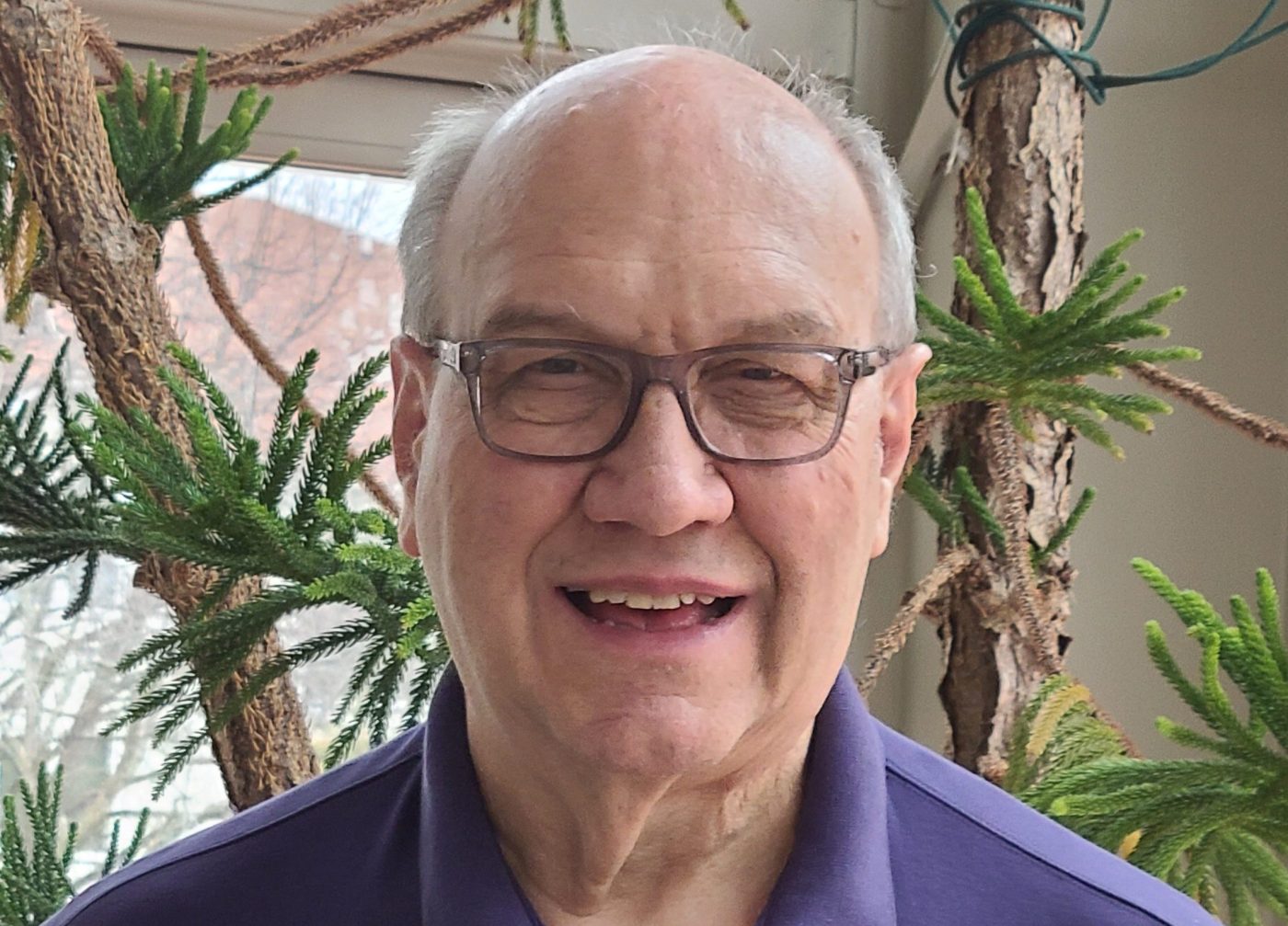
Jim Piga, Mendota Heights

How about a St. Paul cease-fire resolution?

The Saint Paul City Council unanimously called for a cease fire in Gaza, which is about 6,200 miles from St. Paul. With crime so high in St. Paul and on the light rail Green Line in particular, perhaps the City Council should pay more attention to things closer to home and call for a “crime cease fire” for St. Paul.

Ron Schaaf, St. Paul


Hamstringing all other needs

I agree that early childhood education is vital. Reducing St. Paul families’ ability to afford homes and apartments by raising property taxes through a ballot referendum in November so that an ill-defined, marginally funded child care program can be developed is not the appropriate response.

Program backers have yet to identify some key items that, unfortunately, will lead to the program’s (expensive) failure. Even though tax increases would be significant, only a small portion of the demand would be met. According to economist Rob Grunewald, the city needs an additional $39 million annually (for comparison, the St. Paul library budget is $21 million annually). The city council resolution calls for “performance indicators” and yet does not even require a minimum Parent Aware quality rating.

St. Paul cannot afford to tackle an issue that, because of magnitude and complexity, needs to be addressed at the federal and state levels. It will make future potential increases for roads, housing, safety or school excess levy referendums that much more difficult to address. Hamstringing all other needs to address one is not a winning strategy.

Alan Ickler, St. Paul


Pass protections for renters

As a longtime St. Paul resident, I was pleased to read the news report, “District, teachers union reach deal, avoid strike.” Now I would like to see Mayor Carter work with the City Council to pass the Safe Housing Ordinance, which provides much-needed protections for the 47% of our city’s population who rent their homes.

My husband and I own and live in a duplex where we rent out our lower unit. We strive to provide safe, secure, affordable, fair housing. Not having moved for 42 years, I can’t imagine needing to move every six months or year because my rent is raised again, my lease is unexpectedly not renewed, or the landlord can make a lot more money by selling the property. Just imagine having less than 30 days to find a new place you can afford, pack up all of your belongings, arrange to have everything moved, get your children enrolled in a new school, change your address on your mail, driver’s license, etc., all while working and handling everyday life.

Strong public schools and safe, stable and affordable housing are essential, especially for our children. I’m proud to be a resident of St. Paul where City Council President Mitra Jalali has been a champion for passing strong renter protections that help to create a city and economy that work for all of us, now and in the future. Let’s pass a Safe Housing Ordinance that we feel good about.

Yvonne Cournoyer, St. Paul


That didn’t take long

Well, it didn’t take long for the graffiti punks to put their mark on the city’s sparkling new Highland Bridge development.

This is just an early indication of what comes next. The skateboard park (whose idea was that?) on Ford Parkway and River Road is now covered in graffiti, as is the construction fencing along Ford Parkway between Mt. Curve Boulevard and Cretin Avenue. It won’t be long before homeless encampments appear in Highland Bridge along with increased crime as development and density increase.

Look around the rest of St. Paul and you can see the future for Highland Bridge. This is what cities look like when they are controlled by socialist democrats.

Kevin J. Kelly, St. Paul

Related Articles

Letters to the Editor |


Letters: There should be zero deaths from fire in modern buildings

Letters to the Editor |


Letters: To deter carjackers and assault? Issue personal bodycams at a low price

Letters to the Editor |


Letters: Meet these 3 housing goals, St. Paul Council

Letters to the Editor |


Letters: Here’s one reason for front license plates

Letters to the Editor |


Letters: Don’t let repeat offenders keep repeating, Minnesota

Real World Economics: Trump’s stated trade policy would have bad tradeoffs

posted in: News | 0

Edward Lotterman

As the 2024 presidential race nears and narrows, questions increasingly arise. What economic policies would a second-term Donald Trump follow? What about Joe Biden?

Immigration is likely to be a key issue. That is largely but not entirely an economic issue, but also a complex one that deserves treatment alone. After that, inflation is a key issue for many voters even though the annualized rate for the last three months, 3.8%, is below the average for the last four years of the Reagan administration in the 1980s or the eight of Bill Clinton in the 1990s.

Inflation is tied to the Federal Reserve, of which Biden would likely keep hands off. But what a second Trump administration would do there based on his actions in his previous term also deserves separate treatment.

Inflation also is tied to trade policy, and this is what we’ll focus on. Our nation imports large quantities of consumer goods as well as other finished goods and raw materials. Values of imports exceed those of exports — as they have for most of the last four decades.

So what would Trump or Biden do about trade? Trump promises to raise taxes on imports. Biden says little and it is safe to assume that, as with many other issues, he would “stay the course” set in his first term.

A recent episode of The Bulwark Podcast, the opinion series started by well-known conservative pundit Charlie Sykes, is good background for those interested in trade issues.

Republican Tim Miller, who worked as a campaign staffer for late senator John McCain, former governor and current Sen. Mitt Romney and former Govs. Jon Huntsman and Jeb Bush, now runs the podcast. He is an intellectual conservative who might come close to our former Gov. Tim Pawlenty on practical issues. And he is an impassioned anti-Trumper.

The episode in question, “Another Trump Economy is a TERRIBLE IDEA,” was posted earlier this week. In it, Miller queries Catherine Rampell, economics writer for the Washington Post, about Trump’s ideas for trade, immigration and the Fed.

Rampell is one of the sharpest young commentators on economic issues and the best informed on recent economic scholarship. She has a BA in anthropology from Princeton but also did graduate work there in economics, much with Alan Krueger, a brilliant scholar who, if he had not taken his own life, would have been included in the 2021 Nobel award with his collaborator David Card. Politically, she probably would align with our Sen. Amy Klobuchar and certainly is more conservative than Sens. Elizabeth Warren or Bernie Sanders.

An unfair starting point, one may say, if I’m basing a discussion on Trump trade policies on an exchange between two pundits who oppose Trump. True. But it is exceedingly hard to find any noted economist who supports Trump, especially on trade. Moreover, even if you disagree with both the Democrat and the Republican, listen to what they say on trade.

Neither candidate nor party has published a detailed platform or policy statement on trade for the fall elections. But Trump has called for higher tariffs, including a 10% tax on all imports, except for those from China which would be subject to 60%. Again, Biden’s trade stance apparently would be to continue current policies, including the tariff increases instituted by Trump in his first term that Biden chose not to reverse.

Much uncertainty stems from whether Trump really means “everything” would be taxed. Would imports of crude and refined petroleum be taxed? This would foster drilling of higher-cost wells in our country and increase production, but would also push up gas prices. It is something never done before.

Moreover, after 70 years of seamless integration of the auto industries of the U.S. with Canada, would the billions in vehicles and components that pass back and forth be taxed at 10%? Ditto for cars assembled in Mexico in plants constructed expecting NAFTA would remain in force.

What about foods largely imported from the tropics like coffee and cocoa or year-round fresh fruits and vegetables including green beans and asparagus that come from Mexico, Chile, Peru and South Africa, among others? Biden has learned painfully how touchy voters are about grocery prices. Would Trump dare to willingly spike prices of many popular foods to which we are now accustomed?

The two pundits in the podcast agree that Trump’s proposed tariffs, particularly 60% on Chinese goods, would be highly inflationary. Yes, they would be, especially in the short run before counter-adjustments from building new production capacity here or increasing domestic output of substitute products.

They fail to note that, according to Milton Friedman, a central bank such as the Fed could prevent increases in increased prices of imported goods from causing an increase in the general price level if it were willing to tighten the money supply enough to force down spending on other items not subject to tariffs. In other words, yes, sudden imposition of tariffs would touch off marked inflation unless the Fed chose to cause a sharp recession. But also there is the factor of consumer choice — would people voluntarily choose to buy lower-cost domestic produce over the imported bananas and avocados we take for granted in our stores?

The pundits also fail to notice that higher tariffs would raise tax revenues. All else being equal, this would reduce the budget deficit. But an inflation that in effect is a major tax on consumer goods would be highly regressive — it would hit lower-income households far harsher than wealthy ones.

Nor do the two discuss the effects of other nations responding to our tariff increases with retaliatory increases of their own. U.S. export sectors would be flogged, especially agriculture and manufacturing. One can imagine shipping container-sized lots of champagne on ice at the headquarters of Airbus and Embraer, Komatsu and Liebherr and in the offices of Brazilian, Argentine, Australian, South African and other nations’ farmers’ associations, waiting for the moment Donald Trump shackled U.S. exporters by taxing imports.

The economic and foreign policy ramifications of a global trade war mimicking that in the early 1930s following U.S. adoption of the 1930 Smoot-Hawley tariff are a subject in themselves, but one that concerned citizens should study.

Congress is dysfunctional and the House often near paralyzed, so citizens may wonder if a president like Trump can simply impose tariffs unilaterally. The answer is that no, under our Constitution and long history of laws, raising tariffs would need to be approved by both houses of Congress.

Tariffs are taxes, and the U.S. Constitution not only requires that only Congress can increase taxes but that any tax bill must originate in the more egalitarian House. Any student of U.S. history knows that fights over tariff levels were probably the Congress’ most contentious issue, except for slavery, until at least the 1930s.

The Reciprocal Tariffs Act of 1934 recognized that Smoot Hawley had caused tremendous damage not just to our own economy but around the globe. It gave the president authority to lower tariffs on imports as long as other nations agreed to also. The Democratic administration of Franklin Roosevelt initiated the bill but it passed with bi-partisan support although the GOP remained the party favoring high tariffs.

The 1934 act remains our basic trade legislation but with many amendments including major ones in 1974 and 1979. These, at the insistence of Democrats, then still influenced by labor unions, added Section 201, Section 301 and “Super 301” giving the president unilateral power to increase tariffs to oppose “unfair” trade practices of other nations. These are the loopholes used sparingly by most past presidents, but ones through which Trump drove trucks. The reality is that unless Congress specifically acts to overturn an executive order or some affected party succeeds in challenging presidentially decreed tariffs, a president can do whatever he gets away with.

So if Biden is elected, expect little change in trade policy. If Trump is the winner, trade will be the center of an economic maelstrom affecting all households and all trade-related businesses, including agriculture and many others important in Minnesota.

Related Articles

Business |


Real World Economics: Why drug monopolies are bad medicine

Business |


Real World Economics: 75 years of wisdom on national defense should not be discarded

Business |


Real World Economics: Craig’s Social Security bill flawed, but pay attention anyway

Business |


Real World Economics: The tango of bond prices and interest rates

Business |


Real World Economics: Ayn Rand and the Grand Canyon

St. Paul economist and writer Edward Lotterman can be reached at stpaul@edlotterman.com.

Wanted: Writers for awards show jokes. Must be skilled at diplomacy

posted in: News | 0

In the middle of struggling through the opening monologue of the Golden Globes in January, comic Jo Koy did something unusual, if not unprecedented, for the host of a major awards show: He blamed the writers.

“I wrote some of these — and they’re the ones you’re laughing at,” he said of his jokes, prompting writers across the country to grind their teeth.

Koy, who later apologized, endured some light mockery a week after the show, when his ex-girlfriend Chelsea Handler followed up a successful joke in her monologue at the Critics Choice Awards by saying, “Thank you for laughing at that. My writers wrote it.”

If something positive came from this episode, it’s that a spotlight was put on a corner of the showbiz workforce that tends to remain in the shadows: the joke writers for awards shows such as the Oscars on Sunday.

“It’s a small fraternity, and they always remained anonymous,” said Bruce Vilanch, the best known of this breed, who said his acclaim for the job, which included starring in the 1999 documentary “Get Bruce!,” had spurred resentment among his predecessors. “They were not personalities in their own way. They never talked about this stuff. I think there was almost a code.”

Indeed, two of the three veterans who wrote jokes for the Golden Globes monologue declined to comment for this article, and a third didn’t respond to a request. While the hosts get all the attention, the writers do work that is less understood and equally tricky, requiring skill, self-awareness and even diplomacy.

Not only do writers not get much credit if things go well, they also don’t always get to attend. Megan Amram wrote for the disastrous host pair James Franco and Anne Hathaway at the 2011 Oscars and didn’t get a ticket to the ceremony. “James and Anne didn’t have the same, let’s say, creative taste,” she told me, using the kind of careful language you hear from this class of writers to describe the challenges they face. Those include the balancing act of finding jokes that will kill both in the room and on television, for audiences of vastly diverse demographics.

Amram, who later wrote for host Jimmy Kimmel at the 2018 Academy Awards, likens writing jokes for the Oscars to giving a best man’s speech at the world’s biggest wedding. “You want it to be a little bit edgy, but not so much that it turns off the grandparents.”

Inside the ceremonies, the audiences are tough: self-conscious, nervous and, as the night unfolds and more of them lose, in a souring mood. Robert Wuhl, a comic and actor who wrote for Billy Crystal when he hosted the Oscars, thinks that there shouldn’t even be comedy bits after the monologue. “It stops the show cold,” he said. “It’s not our show. Do the first eight to 10 minutes and get out of the way. It’s already too long.”

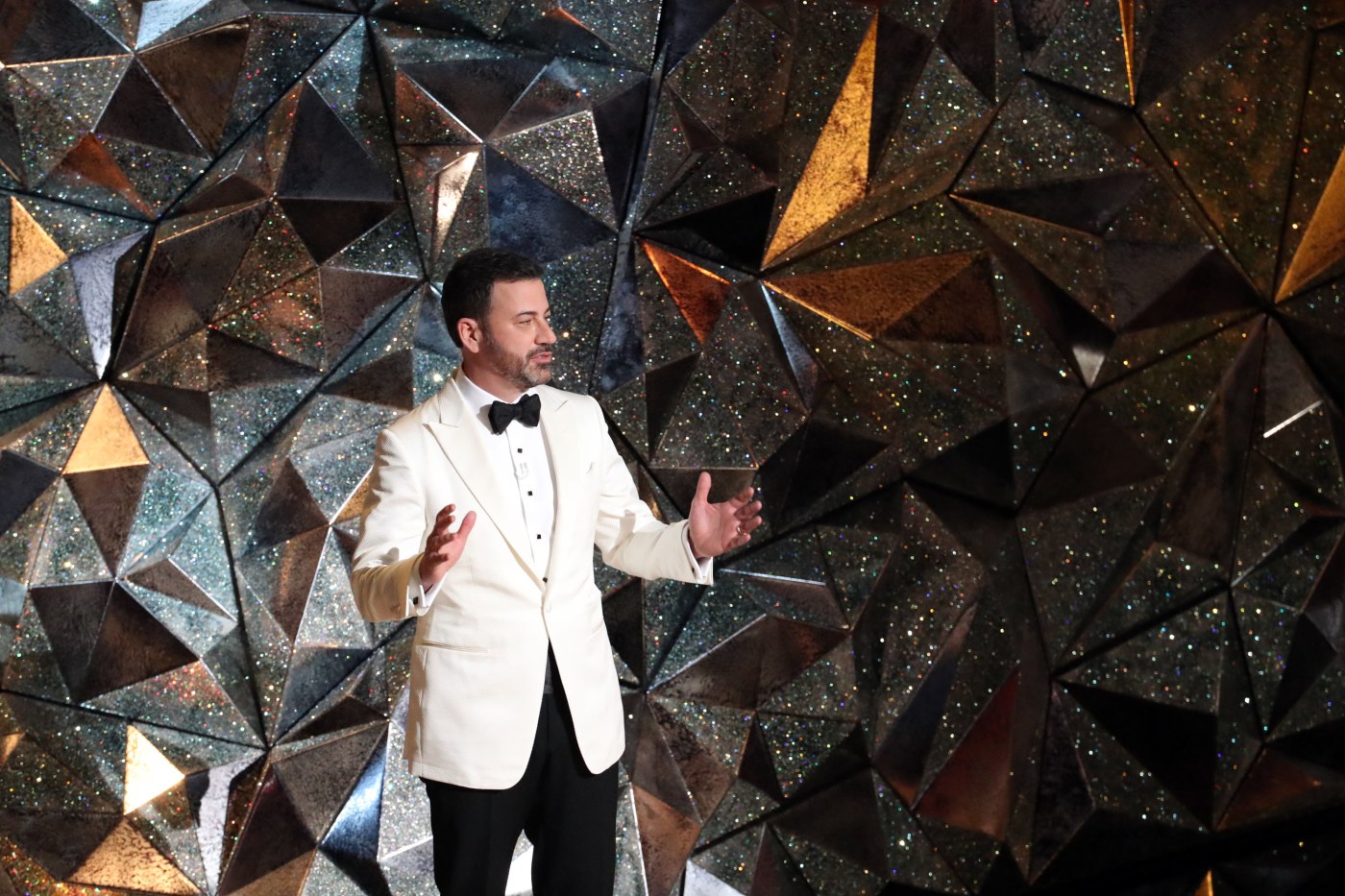
Jimmy Kimmel hosts the Oscars at the Dolby Theater in Los Angeles on March 12, 2023. Kimmel brought writers from his late-night show who know his voice. (Todd Heisler/The New York Times)

Kimmel, who is back as host of the Oscars on Sunday, benefits from bringing his late-night staff, which knows his voice. There are generally two sets of awards show writers: those who work for the host and those who write for the presenters and others on the show, and the two teams rarely intermingle. Compared with the Globes, which used three writers for the host and five overall, there is a small army for the Academy Awards on Sunday — about two dozen.

One of them, comic Jesse Joyce, said he once wrote an entire Tonys monologue for Kevin Spacey by himself despite never seeing a single show on Broadway that year. He said awards show bits demand a more formal style. In late night or stand-up, he explained, you gum up the language to make it seem conversational. “There’s a polish to award show jokes,” he added. “I think it’s a better showcase for sharp, precise jokes, so I kind of admire it on a clinical skill level.”

If writing for hosts can feel like an abstract exercise in joke construction, working for presenters is all about navigating real-world chaos.

Dave Boone, who has won three Emmys and has worked on 120 shows since 1998, spoke nostalgically of the days when producer Buz Kohan, maybe the most storied figure among these writers, would call Gregory Peck or Sophia Loren and knock out a few amusing lines.

Now, nearly every joke goes through a battalion of publicists, managers, even spouses. Some stars ask for bits but then never do them. Others agree but get cold feet at the last moment. Then there are the ones who insist on ad-libbing — and blame the writers on air when their jokes don’t land.

“What’s sometimes frustrating is when you get a note from a talent manager who says, ‘We don’t want to mention the superhero movie, and he doesn’t want to be funny,’” Boone said. “And then the talent shows up on the day and says, ‘You know, this is kind of dry. Wouldn’t it be funnier if I came out in a superhero outfit?’”

Boone said the job there is to bite your tongue. But this is what leads to stilted banter. “Unfortunately, there have been so many awkward moments that have been water-cooler conversation that award shows can get a bad rap.”

Boone’s favorite show is the Tony Awards, for which he has been head writer for the past 18 years. It’s not because the participants understand performing live (although they do), but because theater people respect the word of the playwright. He fondly recalled the time James Earl Jones contacted him to ask about adding a comma to make a line read better.

Renee Gauthier, who was one of two people writing material for presenters at the Globes, said the only person who didn’t have any notes was Oprah Winfrey.

When Koy criticized his writers, Gauthier, who had also submitted monologue jokes, told me her phone blew up with texts from outraged comics. “I didn’t think it was cool for that to be said about writers,” she said. “But as a comedian, I understand. He kind of freaked out and got in his head.” She added: “I forgive him.”

Ironically, part of the problem may have been a failure to listen to writers. Gauthier said they suggested Koy begin with a self-deprecating joke drawing attention to his status as a relative unknown next to Meryl Streep, Martin Scorsese and other major Hollywood figures in the room. Gauthier’s version was something like: “I know you don’t know who I am, but I know exactly who you are.” Echoing many of the writers I talked to, she said he would have been helped by poking fun at himself. “Jo Koy is known, but this is an A-list party. They aren’t all your peers.”

Then again, writers tend to understand their place in the pecking order better than star hosts. Koy might have been unknown to some in the audience, but as a stand-up, he regularly packs arenas. He opened by saying how thrilled he was to be there, then added that it’s “a dream come true not just for me but everybody in here.”

Vilanch, asked what he would have done, said, “The whole monologue would have been: Who am I and why am I here?”

He also expressed sympathy for Koy, pointing to the shots of stars not laughing. “Did he really need the reaction of Taylor Swift to swiftly bring condemnation upon his soul?” he said.

Related Articles

Entertainment |


A new-look circus sends in the clowns, but loses the face paint

Entertainment |


How Netflix survived the streaming wars to stay the subscription video king

Entertainment |


Picks for Oscars 2024: What will win, what should win in a year of movie riches

Entertainment |


‘Damsel’ review: Millie Bobby Brown stars in dark fantasy lacking a pulse

Entertainment |


Movie Review: ‘Kung Fu Panda 4’ is a sweet, fun and well executed passing of the torch