Column: The Chicago Bears need another edge rusher. Could UCLA’s Laiatu Latu be a draft target, injury history and all?

posted in: News | 0

MOBILE, Ala. — In the last 25 years, the Chicago Bears have drafted two edge rushers who went on to have a double-digit-sack season for the team.

Mark Anderson, a fifth-round pick in 2006, had a career-high 12 during his rookie season. Rosevelt Colvin, a fourth-round pick in 1999, had 10 1/2 sacks in 2001 and 2002 before departing leaving as a free agent.

The only other edge rusher to reach at least 10 sacks in a season did it elsewhere — Leonard Floyd, selected ninth in 2016, had 10 1/2 sacks this season for the Buffalo Bills and the same number in 2020 for the Los Angeles Rams.

The Bears have fueled their pass rush largely with free agents or trade acquisitions, and general manager Ryan Poles filled a gaping need midseason when he traded for Montez Sweat and then secured the defensive end with a four-year, $98 million extension.

For coach Matt Eberflus’ defense to reach another level — and that’s the goal — the Bears need a pass-rushing threat opposite Sweat. A handful of veterans will be worth consideration in free agency, including Danielle Hunter of the Minnesota Vikings, but in a perfect world the team would be able to pair a rookie with Sweat, who will turn 28 in September.

It’s way too early to project how things will shake out, but if the Bears draft a quarterback with the No. 1 pick in the draft, they could consider a wide receiver, offensive tackle or edge rusher at No. 9. If Poles trades down at No. 9, he still could fish in the same waters for those positions.

UCLA’s Laiatu Latu is the most accomplished pure edge rusher in the draft and projects as a first-round pick after totaling 23 1/2 sacks over the last two seasons. The Pac-12 defensive player of the year also won the Lombardi Award as the best defensive lineman in the nation, and he has looked the part this week at Senior Bowl practices with some silky smooth spin moves on the edge and high-level hand usage.

Latu measured 6-foot-5, 261 pounds, so he has good size, but his arms probably aren’t an ideal length at 32 1/2 inches. For comparison, Sweat was 6-6, 260 at the combine in 2019, and his arms measured 35 3/4 inches. Eberflus puts a big emphasis on length when he’s scouting defensive players.

But the production is there, and the biggest question for Latu beginning next month at the scouting combine will surround medical reports. Latu briefly retired from football after suffering a neck injury at the beginning his college career at Washington. Latu suffered a stinger in practice as the Huskies prepared for the 2020 season.

“Just took a weird hit and got a stinger going down my body that lasted 20 seconds, like a lot of other people feel,” he said.

Latu didn’t feel right afterward, and following an MRI, Washington doctors decided he would need to sit out the season. He eventually required surgery for a slipped disk in March 2021. The Huskies medical team essentially decided it wasn’t safe for him to continue playing and basically medically retired him.

Rehab was supposed to be a grueling nine-month process. But 2 1/2 months removed from surgery, Latu felt no complications. He was still at Washington and had retained his scholarship but wasn’t allowed to play football.

“You can call me stubborn, but I went into playing men’s rugby and really just testing my body, tackling grown men and stuff like that,” he said. “I earned a contract from the Seattle Seawolves to go and play with them for an extended part of time. They’d pay me and give me housing, stuff like that, turned that down. I wanted to chase my passion for football.”

Latu sought another opinion on his neck injury and met with Dr. Robert Watkins in Southern California. Latu was cleared to play football, entered the transfer portal and turned into a heck of a find for the Bruins.

Every team here has asked him about his journey and the medical process, and he can point out he had no injury issues the last two years at UCLA.

“Head, neck and heart, those are the three issues that get really tricky for the medical teams,” a high-ranking personnel man said after practice Tuesday at South Alabama’s Whitney Hancock Stadium. “It could be a deal where half the teams pass him and half fail him.”

Sweat had a heart issue when he came out of Mississippi State. He was reported to be diagnosed with hypertrophic cardiomyopathy, which results in thickening of the heart walls. Some later said that diagnosis was incorrect, but the official I spoke to said his team removed Sweat from its draft board. Sweat is a clear example of a player with a medical-related issue who can go on to have a productive and durable career despite the questions of highly trained doctors.

On the field, Latu isn’t great defending the run and has had a few instances in practices in which he has struggled to set the edge.

“He’s not overly strong,” a college scouting director said. “He’s willing and it’s not a lack of effort in the run game. You might want him to add some weight if he’s a three-down player. But there’s so many sub packages, if you’re just drafting him to hunt the quarterback, you’re fine.”

In a draft class that isn’t stocked with elite edge rushers, Latu could have skipped the Senior Bowl and kept his focus strictly on preparing for on-field testing at the combine in Indianapolis.

“I was told I could never play football again,” Latu said. “To me, I can’t get enough of it, especially learning from the best of the best while being out here. Really just gaining knowledge and growing.”

()

Chicago White Sox player development staff includes former reliever Sergio Santos as their Double-A manager

posted in: News | 0

Sergio Santos always dreamed of playing in the major leagues.

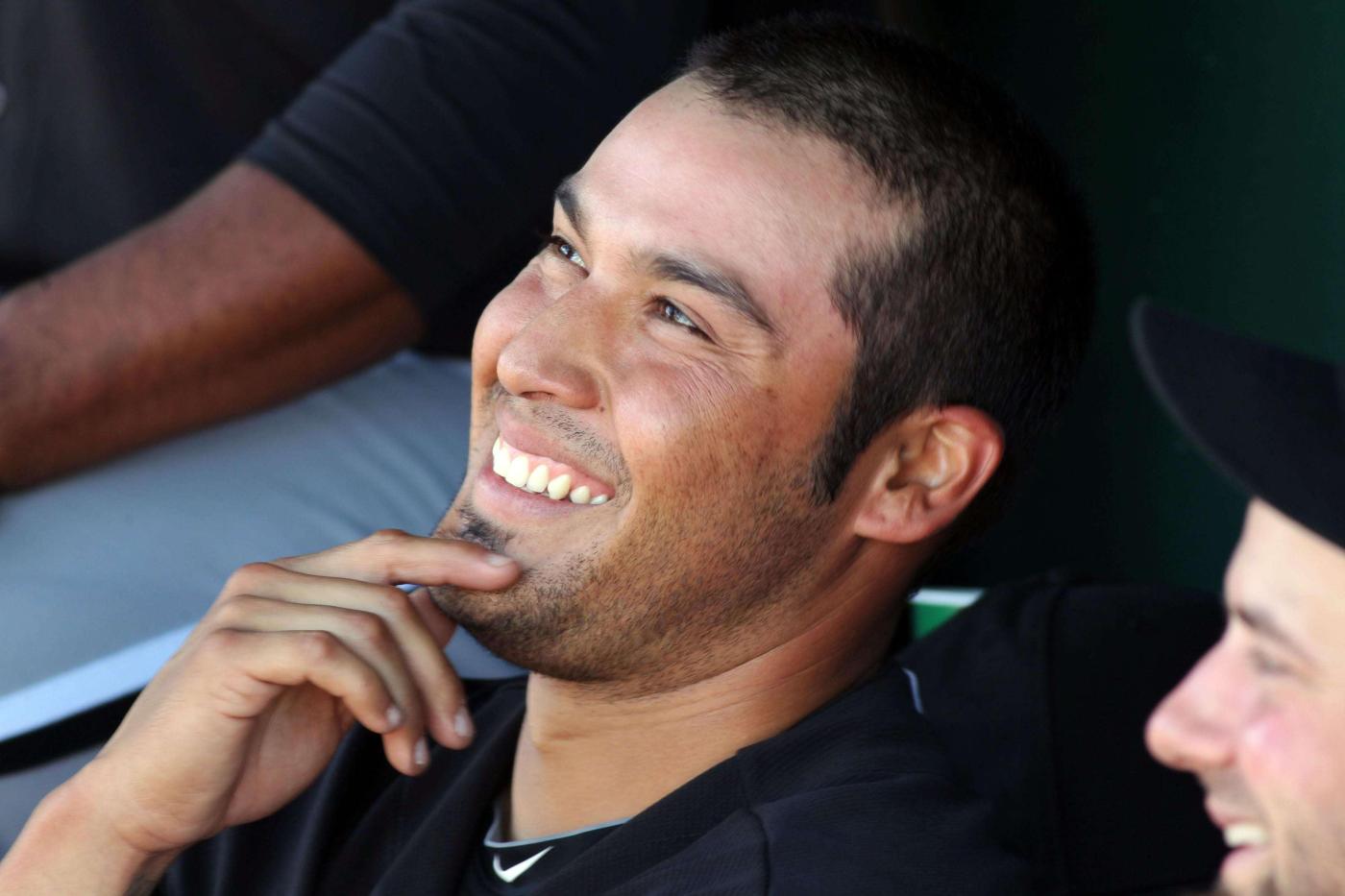
He reached that goal in 2010, pitching for the Chicago White Sox. When his playing career — which included 194 relief appearances during six big-league seasons with the Sox (2010-11), Toronto Blue Jays (2012-14), Los Angeles Dodgers (2015) and New York Yankees (2015) — came to and end, Santos spent a couple of years as a stay-at-home dad and then worked at an MLB youth academy.

A little later, an opportunity arrived to join the Yankees system.

“My biggest fear was like, ‘Man, I did this grind for 15, 16 years and am I really going to want to sit through games again as a manager?’ ” Santos said during a video conference call Friday. “And within a couple of days, I knew this is exactly what I was built for.

“The way my career kind of happened from shortstop to converted pitcher, it makes a whole lot of sense as a manager because I’m able to relate to every single person in that dugout because I’ve been in that position.”

After two seasons managing in the Yankees organization — including 2023 for Class A Hudson Valley — Santos will bring that knowledge back to the Sox as the skipper of the team’s Double-A affiliate Birmingham.

“Anyone who knows Sergio knows he brings a lot of energy to the table, which I think is always welcomed,” director of player development Paul Janish said. “I’m excited for him. I know he’s excited to be back in an organization that he has some affection for because of having played here.”

Santos had a 3.29 ERA and 31 saves in 119 games with the Sox. He said he had “nothing but the fondest memories of Chicago, the fans.”

“In the back of my mind, there was always a hope I could get back with the White Sox,” Santos said.

The Sox announced the addition of Santos on Friday, along with their entire 2024 player development staff and assignments. Janish, hired in November, is in his first year overseeing the organization’s minor-league operations and player development system.

“The overall mission statement is trying to accumulate as many good people as we can that are into making the players better over the course of time,” Janish said.

Santos joins Justin Jirschele (Triple-A Charlotte), Guillermo Quiroz (Class A Winston-Salem), Patrick Leyland (Class A Kannapolis) and Danny González (Arizona Complex League Sox) as managers in the team’s minor-league system. Jirschele, Quiroz, Leyland and González each return to their managerial posts from last season.

Winston-Salem’s staff includes bench coach Darius Day, a Simeon graduate who was a member of the Chicago White Sox Amateur City Elite (ACE) program.

“Being in that culture and being around those guys that kind of helped drive the passion of the game of baseball for me was something I admired for a very long time,” Day said.

Day appeared in 169 minor-league games mostly as an outfielder after being selected by the Texas Rangers in the 23rd round of the 2014 draft. He returned to the area with the ACE program and is set to make his professional coaching debut.

“It was very clear very quickly his passion for helping players,” Janish said.

Day is most looking forward to “getting back to the grind” in the role with the Dash.

“Just getting back to that structure, that everyday grind, everyday process of helping guys and trying to figure out what makes them go,” Day said.

“Being in the system now, it’s kind of surreal for me. I never thought I would be in this position, let alone in a jersey or uniform again. I’m just excited about the opportunity to be part of it.”

Here’s the full list of Friday’s announcement.

Player development staff

Director of Player Development: Paul Janish
Director of Minor League Administration: Kathy Potoski
Assistant Director, Baseball Operations: Graham Harboe
Manager, Player Development/International Operations: Grant Flick
Assistant, Player Development/Video: Jack Larimer
Manager, Player Development Latin America Operations: Louis Silverio
Manager, International Player Development/Education: Erin Santana

Player development instructors/rovers

Field Coordinator: Doug Sisson
Assistant Field Coordinator: Justin Jirschele
Pitching Coordinator: Matt Zaleski
Assistant Pitching Coordinator: Curt Hasler
Assistant Pitching Coordinator: Donnie Veal
Pitching Advisor: J.R. Perdew
Hitting Coordinator: Alan Zinter
Assistant Hitting Coordinator: Danny Santin
Infield Coordinator: Ryan Newman
Catching Coordinator: Julio Mosquera
Assistant Outfield/Baserunning Coordinator: Mike Daniel
Rehab Pitching Coach: Hiram Burgos
Hitting Initiatives: Devin DeYoung
Biomechanist: Jason Hashimoto

Medical staff

Medical Coordinator: Scott Takao
Physical Therapy Coordinator: Brooks Klein
Performance Coordinator: Gage Crosgrove
Assistant Performance Coordinator: Sergio Rojas
Physical Therapist/Athletic Trainer: Katie Stone
Physical Therapist: Evan Jurjevic
Sports Psychologist: Dr. Rob Seifer

Arizona operations

Facility Manager: Joe Lachcik
Minor League Clubhouse Manager: Dan Flood
Assistant Minor League Clubhouse Manager: Bryant Biasotti

Triple-A Charlotte

Manager: Justin Jirschele
Pitching Coach: R.C. Lichtenstein
Hitting Coach: Cam Seitzer
Bench Coach: Pat Listach
Trainer: Hyeon Kim
Performance Coach: George Timke

Double-A Birmingham

Manager: Sergio Santos
Pitching Coach: John Ely
Hitting Coach: Nicky Delmonico
Bench Coach: Ángel Rosario
Trainer: Carson Wooten
Performance Coach: Juan Maldonado

Class A Winston-Salem

Manager: Guillermo Quiroz
Pitching Coach: John Kovalik
Hitting Coach: Jim Rickon
Bench Coach: Darius Day
Trainer: A.J. Smith
Performance Coach: Logan Jones

Class A Kannapolis

Manager: Patrick Leyland
Pitching Coach: Blake Hickman
Hitting Coach: Charlie Romero
Bench Coach: Daniel Milwee
Trainer: Chaerin Yeom
Performance Coach: Donovan Clark

Arizona Complex League White Sox

Manager: Daniel González
Pitching Coach: Jacob Dorris
Hitting Coach: Gerardo Olivares
Assistant Hitting Coach: Mike Gellinger
Development Coach: Nausel Cabrera
Trainer: Jeremy Kneebusch
Performance: Siera Weathers

Dominican Republic Academy/DSL White Sox

Field Coordinator: Julio Bruno
Manager, Complex Operations: Wellington Morrobel
Manager, Administration: Carolina Santos
Manager: Anthony Núñez
Pitching Coach: José Brito
Assistant Pitching Coach: Stolmy Pimentel
Infield Coach: Guillermo Reyes
Assistant Hitting Coach/Catching Coach: Moisés Núñez
Coach: Ángel González
Trainer: Gustavo De La Cruz
Assistant Trainer: Estarlin Rosario
Performance Coach: Fran Batista
Assistant Performance Coach: Carlos Javier
Video Coordinator: Miguel Perez
Lead Educator: Pablo Frías
Education Assistant: Luis Villar

()

Minnesota may open some of the first government-run cannabis dispensaries in the U.S.

posted in: News | 0

Minnesota could become the first state in nine years to open cannabis dispensaries that are run by cities and counties.

That’s because of one line in the state’s new cannabis laws that allow for cities and counties to “establish, own and operate a municipal cannabis store.” The law appears to be the first of its kind in the country and has prompted cities to research whether they want to open their own dispensaries.

But there’s only one city that’s been successful with running a cannabis store. The City of North Bonneville in Washington was the first city in the country to open a municipal cannabis dispensary back in 2015, but was no longer operating it as of 2021.

Municipal cannabis stores are of particular interest to local governments in Minnesota that don’t already operate their own liquor stores. In cities like Edina and Isanti, liquor stores serve as a revenue stream that helps reduce taxes for residents and businesses.

Because of conflicts with federal law, other states have shied away from adopting the state-owned liquor store model for cannabis retailers.

“The idea has been floated and rejected in various states, such as New Mexico and New Hampshire. Lawmakers have done so because cannabis remains illegal (Schedule I) under federal law and they do not wish to enact policies that place state-employees in a position where they are engaging in activity that is in positive conflict with federal law,” said Paul Armentano, deputy director of NORML, a national cannabis advocacy group.

According to state Rep. Zack Stephenson, DFL-Coon Rapids, who helped author the legislation that legalized recreational cannabis last year, the idea of municipal cannabis stores came directly from cities and counties in Minnesota.

“When we were putting the bill together, we weren’t copy-pasting from other states. We were trying to come up with a Minnesota-specific model. And one of the things that works well for many communities across Minnesota is municipal liquor stores. They are important to a lot of cities all across the state. And building from that successful model, there were cities that had some potential interest in taking the same approach with cannabis that they take with liquor. And we wanted to enable them to do that, if they chose to do it and if it was workable,” said Stephenson.

Government officials in the City of Osseo, the City of St. Joseph and Cook County have been weighing the pros and cons of operating a cannabis retail store, despite the fact that Minnesota’s Office of Cannabis Management won’t come out with official cannabis regulations until early 2025.

The Office’s rules will dictate what municipal cannabis dispensaries could look like. But the Office is still in the process of drafting those rules, and most municipalities are still in the early stages of discussion on cannabis dispensaries.

Country’s first government-run dispensary struggled to break even

Cannabis in a jar at the NativeCare dispensary at the Red Lake Nation. (Mathew Holding Eagle III / MPR News)

North Bonneville Mayor Brian Sabo said when the idea of a government-run marijuana store came forward, before he was mayor, marijuana stores were still an uncharted concept in Washington after the state legalized recreational cannabis use and sales in 2012.

Soon after, the city formed a public development authority for the purpose of opening a cannabis retail store. The plan was to use the profits to pour back into North Bonneville, like upgrading street lights and rebuilding a central park playground.

An “aggressive business plan” was put forward outlining the customer base needed to support the store would come from other areas throughout the Northwest, according to Sabo.

“On paper, the plan appeared to be a good one but critics were warning it was far too aggressive given how far out and secluded North Bonneville is within the Gorge, and the number of retail stores that were planned to be opened throughout Washington State,” Sabo said.

The store, known as the Cannabis Corner, opened in 2015 and was widely reported as the first municipal marijuana store in the U.S. Sabo said it did fairly well the first couple years, but as more retail stores opened in the state and in Oregon, business drastically fell off.

Related Articles

Politics |


US forces fly in to beef up security at embassy in Haiti and evacuate nonessential personnel

Politics |


Aid in dying or physician-assisted suicide? As MN lawmakers weigh bill, advocates and opponents choose different terms.

Politics |


Biden: Netanyahu ‘hurting Israel’ by not preventing more civilian deaths in Gaza

Politics |


Katie Britt used decades-old example of rapes in Mexico as Republican attack on Biden border policy

Politics |


Trump blasts Biden over Laken Riley’s death after Biden says he regrets using term ‘illegal’

By 2018, the dispensary was struggling to break even.

“A request by the PDA was granted to move the store and license to a larger market of Stevenson, Washington, the next city 10 miles east of North Bonneville. Although the store did better in the larger market, sales never exceeded break-even status, negating the promise of a financial windfall for the city,” said Sabo.

In 2021, their city council decided the business was more of a liability than an asset. They dissolved the public development authority and sold the store.

Government officials and cannabis experts from multiple states were not aware of any other government-run dispensaries in the U.S., meaning Minnesota appears to be poised to be the second try after North Bonneville failed.

Cities say revenue could reduce property taxes, offset budget increases

Brittany Weichel and Tara Eck pass a joint outside during a celebration at First Avenue in Minneapolis marking the legalization of recreational marijuana on Aug. 1, 2023. (Nicole Neri for MPR News)

The Minnesota cities of Osseo and St. Joseph, along with Cook County, are a few municipalities that don’t operate a liquor store and are exploring the idea of a cannabis store.

The biggest draw for them is the potential revenue a dispensary would bring in.

“It really comes down to dollars and cents. In the time when the costs of providing the high-quality city services to our residents and business owners only continues to go up each and every year, we are looking for any potential revenue stream that can help offset our budget increases,” said Riley Grams, Osseo city administrator.

The sales tax on cannabis product sales in Minnesota is 10 percent, in addition to state and local taxes. Local governments are barred from imposing their own tax on cannabis.

In Cook County, commissioners are divided on the idea. County administrator James Joerke said Cook County currently doesn’t have any enterprise funds or operate any utilities.

“There are some who see this as an opportunity to generate revenue that can be used to offset property taxes. There are others who I think have concerns about playing a role even selling a product that could have harmful effects to residents. And there’s also some sentiment that this is really something that the private sector should handle,” said Joerke.

Similar discussions are happening in the City of St. Joseph. Mayor Rick Schultz said 30 percent of the city’s land is exempt from property taxes and the income from a dispensary could help relieve some of the tax burden for residents and businesses.

Both Osseo and Cook County have formed committees to look more closely into what it would take to run a cannabis store. Cook County is partnering with the City of Grand Marais for the committee, while St. Joseph has had only a few conversations about the topic.

Now, all that’s left to do is to wait for the state’s Cannabis Office to come up with official rulemaking. The Office has until this summer to draft rules and plans to adopt them by early 2025, when licensing applications are also planned to open.

While St. Joseph and Cook County are still in the early stages of exploring a cannabis store, Osseo wants to be ready to submit as soon as the application window for licensing opens.

“We didn’t want to be reactionary. We wanted to get out ahead of the game and be ready as or as ready as we possibly could be once the final rules and regulations were implemented and approved by the state legislature,” said Gram.

Between the summer and early 2025, the rules are subject to change. Depending on those changes, it could elongate the timeline the Office has in mind for opening cannabis sales.

“Realistically, even if we were able to offer full licenses in early 2025, the process of obtaining a license and actually opening your doors is a lengthy one. And so I think that 2025 is always the goal, but OCM is very focused on making those license applications available,” said Charlene Briner, Minnesota’s interim cannabis director.

The timeline could also be impacted by the Minnesota Legislature, which is expected to make some tweaks in cannabis laws this session, with the goal of streamlining the rollout of cannabis dispensaries.

Federal law, banking, public safety concerns

Cody Reid rolls a giant novelty joint during a celebration at First Avenue marking the legalization of recreational cannabis in 2023. (Nicole Neri for MPR News)

There are still a few challenges ahead for Cook County and the cities of St. Joseph and Osseo.

Cook County has already heard some pushback from private businesses who don’t want to compete with a county-operated cannabis store. Others in St. Joseph are worried about how a municipal cannabis operation will impact public safety.

“If it’s a privately owned dispensary, then is it subject to a different crowd than if it’s city-owned? Also if you open one, what kind of consumers are coming into your city?” said Schultz.

Kyle Hartnett is an assistant research manager at League of Minnesota Cities, a membership association representing over 800 cities in Minnesota, and has been fielding questions from cities about municipal cannabis stores. He said public health is a concern.

“This is kind of like municipal liquor in that if we control it, we can have better controls and as to how the operations are being run because we’re making sure it’s not going into the hands of minors, that kind of thing. Ultimately, that’s a policy decision for each city council to make both on the revenue side and then the public health side of it,” said Hartnett.

The other, more obvious obstacle is that cannabis is illegal at the federal level. That means there is the risk that banks won’t accept cannabis funds.

“There’s still so many logistical issues with the fact that it is still illegal at the federal level and because of that, it is a cash business. You cannot use credit cards to take payment and so that presents a huge challenge and frankly a huge risk if you’re running a cash-only business and so there are so many issues that need to be investigated before the county board could feel comfortable making a decision about whether to move forward,” Joerke said.

In the case of the Washington city of North Bonneville, Mayor Sabo said it was difficult to find a bank that would process funds for their dispensary but they were eventually able to find a private company to use for banking services.

Initially, only 30 percent of residents in North Bonneville supported the idea of their cannabis store.

“Most were worried about the feds descending in on North Bonneville and shutting the place down, blackening the eye of the city’s reputation. Fortunately, there was never any federal intervention,” said Sabo.

Related Articles

Politics |


Letters: The state of Minnesota shouldn’t be the big boss of local zoning

Politics |


Aid in dying or physician-assisted suicide? As MN lawmakers weigh bill, advocates and opponents choose different terms.

Politics |


Text of the Gaza ceasefire resolution passed by the St. Paul City Council

Politics |


St. Paul City Council unanimously supports Gaza ceasefire resolution

Politics |


Bill would bar Minnesota schools, colleges, governments from removing LGBTQ+ rainbow pride symbols

Native borrowers pay more interest on home purchases than white borrowers, federal study says

posted in: News | 0

New research released by the Center for Indian Country Development at the Federal Reserve Bank of Minneapolis finds Native Americans pay more to finance home purchases than white borrowers. The report blames a disproportionately broad use of home-only loans on reservations.

“Those are personal property loans used to purchase manufactured homes,” said CICD senior economist Matt Gregg. “So, it’s the composition of the loan products that are driving the higher prices paid by on-reservation Native borrowers.”

Gregg added home-only loans are not typically insured or guaranteed federally.

“When a loan is insured by the federal government, the risk to the lender is borne by the federal government,” he said. “The loan becomes less risky and the benefits will flow to the consumer in the form of lower interest rates.”

The research found that even on-reservation borrowers with good credit scores “disproportionately use home-only loans.”

Gregg said that results in more expense.

“The interest rate paid by an on-reservation Native borrower at the 90th percentile of interest rates is 9 percent,” he said. “Whereas the interest rate paid by a white borrower at the 90th percentile of white interest rates is roughly 5 percent.”

At that rate, a white borrower would pay $50,000 in interest on a $75,000 home loan over the standard term length of 23 years by the time the loan matures. In contrast, Native American borrowers on reservations would pay $100,000. Although the disparity is greater for Native Americans living on reservations, it also affects those off reservations.

Gregg stressed the research findings are important for two reasons.

“This is honestly one of the few papers that dig into the research gaps that are so common among either tribal communities or just Native Americans in general,” he said.

Secondly, he said the price of a home loan has knock-on effects on the rest of homebuyers’ financial lives.

“It affects their standard of living, their budgets, their retirement savings,” Gregg said. “For many borrowers, the interest rate might affect their ability to even become a homeowner in the first place.”

Gregg said future research should explore the reasons for the disproportionate use of home-only loans in tribal areas.

Related Articles

Business |


Real World Economics: Trump’s stated trade policy would have bad tradeoffs

Business |


Biden calls out ‘shrinkflation’ as part of a broader strategy to reframe how voters view the economy

Business |


U.S. adds 275,000 jobs last month; unemployment rises to 3.9%

Business |


Paul Krugman: The rich spend differently from you and me

Business |


Biden administration would cap credit card late fees at $8, part of campaign against junk fees