Judge rules against lawmakers pressing for monitor to ensure release of Epstein files

posted in: All news | 0

By MICHAEL R. SISAK and LARRY NEUMEISTER

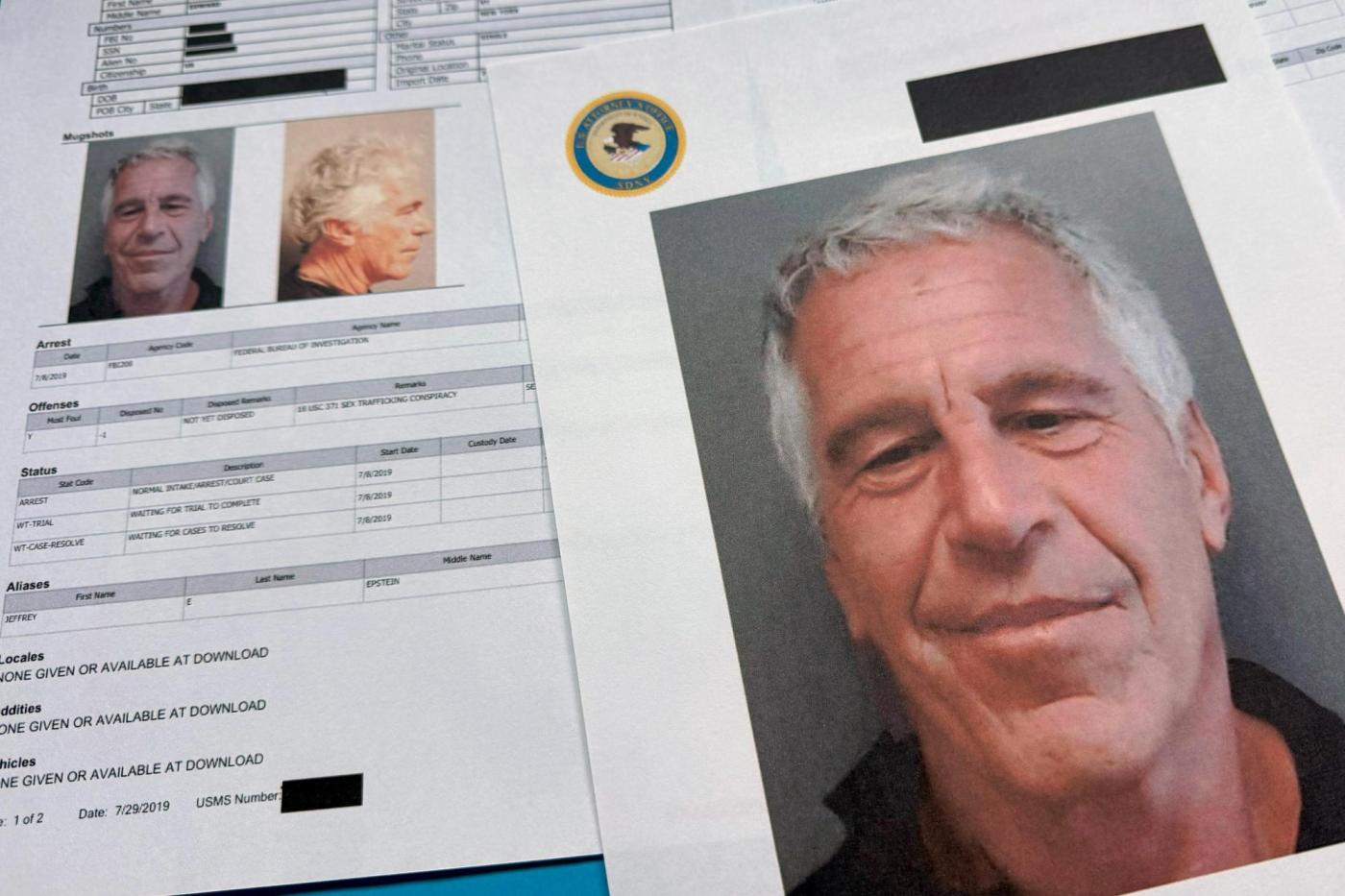
NEW YORK (AP) — A judge overseeing Ghislaine Maxwell’s criminal case said Wednesday that two members of Congress lacked the legal right to intervene and press their demand for a court-appointed observer to ensure the government complies with a new law ordering release of its files on Jeffrey Epstein.

Related Articles


Supreme Court seems inclined to keep Lisa Cook on Fed board despite Trump attempt to fire her


After Minneapolis, Democrats confront political vulnerabilities to battle Trump on immigration


Trump’s list of targeted opponents grows longer with action against Minnesota’s governor


House Republicans begin push to hold the Clintons in contempt of Congress over the Epstein probe


Trump in Davos says NATO should allow the US to take Greenland but he won’t use force

But the lawmakers are free to bring a civil lawsuit or work through the tools they have in Congress to improve oversight, U.S. District Judge Paul A. Engelmayer ruled.

U.S. Reps. Ro Khanna, D-Calif., and Thomas Massie, R-Ky., had co-sponsored the Epstein Files Transparency Act that was signed into law by President Donald Trump in November. It required the public disclosure of files related to the sex trafficking investigations into Epstein, the late financier, and Maxwell, his longtime confidant.

Engelmayer largely agreed with the Justice Department’s insistence that he had no authority to grant the congressmen’s request to speed the release of that material. They had urged Engelmayer to name an independent monitor to ensure that the government immediately released the more than 2 million documents it has identified as investigative materials. Khanna and Massie said the slow disclosure of the documents violated the law and had caused “serious trauma to survivors.”

A month after the deadline had passed for the materials to be made public, only about 12,000 documents have been made public. The department has said the release of the files was delayed by redactions required to protect the identities of those who were abused.

Engelmayer said the questions raised by Khanna and Massie raised about whether the department was complying with the law were “undeniably important and timely.” But, he said, the way in which the members of Congress were trying to intervene was not permitted.

The judge, who inherited Maxwell’s case after the trial judge was appointed to an appeals court, ruled that has no authority to supervise the department’s compliance with the new law, and that Massie and Khanna have no standing, or legal right, to insinuate themselves into Maxwell’s case.

Engelmayer said he has received letters and emails from Epstein abuse survivors in support of the lawmakers’ request for appointment of a neutral overseer.

“These express concern that DOJ otherwise will not comply with the Act,” wrote the judge, who was nominated by Democratic President Barack Obama.

The department has been “paying ‘lip service’ to the victims” and “failing to treat us ‘with the solicitude’ we deserve,” survivors wrote, according to Engelmayer.

Maxwell is serving a 20-year prison sentence after her December 2021 sex trafficking conviction. She recently petitioned the federal court for her release, maintaining that new information has emerged that warrants her release. A jury found that she had helped to recruit girls for Epstein to abuse over the past quarter-century and had also participated in some of the abuse.

Epstein died in a federal jail in New York in August 2019 as he awaited trial on sex trafficking charges. The death was ruled a suicide.

Trump administration drops legal appeal over anti-DEI funding threat to schools and colleges

posted in: All news | 0

By COLLIN BINKLEY, AP Education Writer

WASHINGTON (AP) — The Trump administration is dropping its appeal of a federal court ruling that blocked a campaign against diversity, equity, and inclusion threatening federal funding to the nation’s schools and colleges.

Related Articles


Trump administration delays plan to withhold wages for student loan borrowers in default


The Education Department is opening fewer sexual violence investigations as Trump dismantles it


St. Paul Public Schools to offer online learning at all schools


Students protest ICE enforcement, walk out of classes, rally at the Capitol


Trump signs a law returning whole milk to school lunches

The Education Department, in a court filing Wednesday, moved to dismiss its appeal. It leaves in place a federal judge’s August decision finding that the anti-DEI effort violated the First Amendment and federal procedural rules.

The dispute centered on federal guidance telling schools and colleges they would lose federal money if they kept a wide range of practices that the Republican administration labeled as diversity, equity and inclusion.

The department did not immediately comment.

Democracy Forward, a legal advocacy firm representing the plaintiffs, said the dismissal was “a welcome relief and a meaningful win for public education.”

“Today’s dismissal confirms what the data shows: government attorneys are having an increasingly difficult time defending the lawlessness of the president and his cabinet,” said Skye Perryman, the group’s president and CEO.

The department sent the anti-DEI warning in a “Dear Colleague Letter” to schools last February.

The memo said race could not be considered in decisions involving college admissions, hiring, scholarships and “all other aspects of student, academic, and campus life.” It said efforts to increase diversity had led to discrimination against white and Asian American students.

The department later asked K-12 schools to certify they did not practice DEI, again threatening to cut federal funding.

Both documents were struck down by U.S. District Judge Stephanie Gallagher in Maryland. In her ruling, she said the guidance stifled teachers’ free speech, “causing millions of educators to reasonably fear that their lawful, and even beneficial, speech might cause them or their schools to be punished.”

The challenge was filed by the American Federation of Teachers.

The Associated Press’ education coverage receives financial support from multiple private foundations. AP is solely responsible for all content. Find AP’s standards for working with philanthropies, a list of supporters and funded coverage areas at AP.org.

Supreme Court seems inclined to keep Lisa Cook on Fed board despite Trump attempt to fire her

posted in: All news | 0

By MARK SHERMAN

WASHINGTON (AP) — The Supreme Court on Wednesday seemed inclined to keep Federal Reserve governor Lisa Cook in her job, casting doubt on President Donald Trump’s bid to wrest control of the nation’s central bank.

Related Articles


After Minneapolis, Democrats confront political vulnerabilities to battle Trump on immigration


Trump’s list of targeted opponents grows longer with action against Minnesota’s governor


House Republicans begin push to hold the Clintons in contempt of Congress over the Epstein probe


Trump in Davos says NATO should allow the US to take Greenland but he won’t use force


Suspect charged in vandalism of Vice President JD Vance’s Ohio home pleads not guilty

The justices heard arguments over Trump’s effort to fire Cook based on allegations she committed mortgage fraud, which she denies. No president has fired a sitting governor in the 112-year history of the Fed, which was structured to be independent of day-to-day politics.

Allowing Cook’s firing to go forward “would weaken, if not shatter, the independence of the Federal Reserve,” said Justice Brett Kavanaugh, one of three Trump appointees on the nation’s highest court.

At least five other justices on the nine-member court also sounded skeptical about the effort to remove her from office.

Both Cook and Federal Reserve chairman Jerome Powell sat through nearly two hours of arguments in the packed courtroom.

The true motivation for trying to fire Cook, Trump’s critics say, is the Republican president’s desire to exert control over U.S. interest rate policy. If Trump succeeds in removing Cook, the first Black woman Federal Reserve governor, he could replace her with his own appointee and gain a majority on the Fed’s board. The case is being closely watched by Wall Street investors and could have broad impacts on the financial markets and U.S. economy.

Trump has been dismissive of worries that cutting rates to quickly could trigger higher inflation. He wants dramatic reductions so the government can borrow more cheaply and Americans can pay lower borrowing costs for new homes, cars or other large purchases, as worries about high costs have soured some voters on his economic management.

The board cut a key interest rate three times in a row in the last four months of 2025, but that’s more slowly than Trump wants. The Fed also suggested it may leave rates unchanged in coming months over inflation worries.

The issue before the court is whether Cook can stay on the job while her challenge to the firing plays out in court. Judges on lower courts have allowed her to remain in her post as one of seven central bank governors. The justices could simply deny the emergency appeal Trump is seeking and allow the case to continue playing out in lower courts.

Chief Justice John Roberts, who also seemed skeptical of Trump’s actions, suggested it may be pointless to return the case to lower courts rather than issue a more enduring ruling. With Cook’s case under review at the high court, Trump dramatically escalated his confrontation with the Fed. The Justice Department has opened a criminal investigation of Powell and has served the central bank with subpoenas.

Powell himself took the rare step of responding to Trump, calling the threat of criminal charges “pretexts” that mask the real reason, Trump’s frustration over interest rates. The Justice Department has said the dispute is ostensibly about Powell’s testimony to Congress in June over the cost of a massive renovation of Fed buildings.

In Trump’s first year in office, the justices generally, but not always, went along with Trump’s pleas for emergency action to counteract lower-court rulings against him, including allowing the firings of the heads of other governmental agencies at the president’s discretion, with no claim that they did anything wrong.

But the court has sent signals that it is approaching the independence of the nation’s central bank more cautiously, calling the Fed “a uniquely structured, quasi-private entity.”

In Cook’s case, Trump is not asserting that he can fire Fed governors at will, Solicitor General D. John Sauer said. Cook is one of several people, along with Democratic New York Attorney General Letitia James and Democratic Sen. Adam Schiff of California, who have been accused of mortgage fraud by federal housing official Bill Pulte. They have denied the allegations against them.

The case against Cook stems from allegations she claimed two properties, in Michigan and Georgia, as “primary residences” in June and July 2021, before she joined the Fed board. Such claims can lead to a lower mortgage rate and smaller down payment than if one of them was declared as a rental property or second home.

Those applications, Sauer said, are evidence of “gross negligence at best”and give Trump reason to fire her. In any event, he argued, courts shouldn’t be reviewing his decision and Cook has no right to a hearing.

Cook has denied any wrongdoing and has not been charged with a crime. “There is no fraud, no intent to deceive, nothing whatsoever criminal or remotely a basis to allege mortgage fraud,” a Cook lawyer, Abbe Lowell, wrote to Attorney General Pam Bondi in November.

Cook specified that her Atlanta condo would be a “vacation home,” according to a loan estimate she obtained in May 2021. In a form seeking a security clearance, she described it as a “2nd home.” Lowell wrote that the case against her largely rests on “one stray reference” in a 2021 mortgage document that was “plainly innocuous in light of the several other truthful and more specific disclosures” about the homes she has purchased.

After Minneapolis, Democrats confront political vulnerabilities to battle Trump on immigration

posted in: All news | 0

By MATT BROWN

WASHINGTON (AP) — Democrats had planned to campaign in the midterm elections on affordability and health care, two issues where Americans are particularly unhappy with President Donald Trump.

Related Articles


Supreme Court seems inclined to keep Lisa Cook on Fed board despite Trump attempt to fire her


Trump’s list of targeted opponents grows longer with action against Minnesota’s governor


House Republicans begin push to hold the Clintons in contempt of Congress over the Epstein probe


Trump in Davos says NATO should allow the US to take Greenland but he won’t use force


Suspect charged in vandalism of Vice President JD Vance’s Ohio home pleads not guilty

But the aggressive immigration crackdown in Minnesota, including the killing of Renee Good during a confrontation with federal agents, has scrambled the party’s playbook.

Now Democrats are trying to translate visceral outrage into political strategy, even though there’s little consensus on how to press forward on issues where the party has recently struggled to earn voters’ trust.

Some Democrats want to abolish Immigration and Customs Enforcement, a proposal that echoes “defund the police” rhetoric from Trump’s first term, and impeach administration officials such as Homeland Security Secretary Kristi Noem.

Others have taken a different approach, introducing legislation intended to curb alleged abuses by federal agents. But those ideas have been criticized by activists as insufficient, and there is mounting pressure to obstruct funding for deportations.

“We’re Democrats. I’m sure we’re going to have 50 different ideas and 50 different ways to say it,” said Chuck Rocha, a party strategist who is advising several House and Senate candidates on immigration this year.

If Democrats fail to strike the right balance, they could imperil their efforts to retake control of Congress and statehouses around the country. They could also hamper a chance to rebuild credibility with voters whose dissatisfaction with border enforcement under Democratic President Joe Biden helped return Trump, a Republican, to the White House.

Neera Tanden, president of the Center for American Progress and Biden’s former domestic policy adviser, believes the party can thread the needle.

“It’s not too much to ask that we have a government that can produce a secure border, that can deport people who are not legally here, and that can also respect people’s civil and human rights,” she told The Associated Press. “This country has done that before, and it can do it again.”

Federal officers stand outside the Bishop Henry Whipple Federal Building during a protest on Saturday, Jan. 17, 2026, in Minneapolis. (AP Photo/Yuki Iwamura)

Violent scenes force a strong Democratic response

Immigration crackdowns have spread from city to city since Trump took office, but the latest operation in Minnesota has generated some of the most intense controversy.

Good, 37, was fatally shot by a federal agent earlier this month, prompting protests and angry responses from local Democratic leaders. Administration officials accused Good of trying to hit an agent with her car, an explanation that has been widely disputed based on videos circulating online.

“I think the party is very unified in our disdain and concern of the actions certainly of DHS and ICE,” said Rep. Robert Garcia of California, the top Democrat on the House Oversight and Government Reform Committee. “We should campaign on fairness and due process for all people,” Garcia added, “which is being violated every single day by ICE and DHS. We should be aggressive in that posture.”

But pushing back on the administration requires Democrats to step onto difficult political terrain.

About 4 in 10 U.S. adults trusted Republicans more to handle immigration, according to a Washington Post/Ipsos poll from September, higher than about 3 in 10 who said the same about Democrats.

On the issue of crime, Republicans also held the advantage. About 44% thought Republicans were better, compared with 22% for the Democrats.

Republicans feel confident that their intertwined messages on crime and immigration will resonate with voters in the midterms. They frequently highlight violent criminals detained or deported, downplaying examples of nonviolent migrants who have been swept up.

“If Democrats want to make 2026 a referendum on which party stands for strong immigration policies and protecting public safety, we will take that fight any day of the week,” said Republican National Committee spokeswoman Delanie Bomar.

Some Democrats are more interested in using the issue as a way to pivot back to core messages about health care and the cost of living.

“I want everybody to understand, the cuts to your health care are what’s paying for ICE to be doing this,” New York Rep. Alexandria Ocasio-Cortez said last week. “The cuts to your health care are what’s paying for this.”

Democratic strategists have circulated the clip as an example of a potentially effective pitch, particularly after Trump slashed funding for some safety net programs during his first year in office.

A person holds an upside-down American flag as law enforcement stand during a protest outside the Bishop Henry Whipple Federal Building on Saturday, Jan. 17, 2026, in Minneapolis. (AP Photo/Yuki Iwamura)

Trump faces his own public opinion challenges

The president’s approval may be slipping on the issue of immigration.

His approval rating on the issue has fallen since the start of his term, according to Associated Press-NORC Center for Public Affairs Research polling, from 49% in March to 38% in January.

Juan Proaño, CEO of the League of United Latin American Citizens, the oldest Hispanic civil rights group in the U.S., said crackdowns have hurt Trump politically.

“Republican members of Congress are really uncomfortable with these agencies and their existing tactics, because they know it’s going to hurt them back at home come election cycle,” he said.

Proaño said he had been disappointed with how Democrats had accommodated the Trump administration on immigration in the last year, but he praised changes in the party’s strategy since Good’s death was captured on video.

“I think everyone just gasped at that, and I think there has been a marked shift since then,” he said.

Some people who have vocally supported Trump in the past, like podcast host Joe Rogan, have expressed reservations.

“Are we really going to be the Gestapo?” he asked recently.

But Trump has not shown any sign of backing down. The administration has ramped up the number of federal agents deployed to Minnesota and the Justice Department issued subpoenas to the state’s Democrats, including Gov. Tim Walz and Minneapolis Mayor Jacob Frey, as part of an investigation into whether they obstructed or impeded enforcement operations.

Democratic National Committee Chair Ken Martin, who used to lead the party in his home state of Minnesota, said “there’s a lot of pain and anguish.”

“It’s heartbreaking,” he said in a recent interview. “It’s chilling to think that this is the United States of America, what is supposed to be a beacon for democracy and freedom.”

Related Articles


Doctors in Minnesota decry fear and chaos amid Trump administration’s immigration crackdown


U.S. immigration authorities downplay concerns over citizens being detained


Jurors selected in trial for alleged murder-for-hire plot of Border Patrol leader in Chicago


Minnesota statewide strike, economic blackout to protest ICE on Friday


MN physicians describe ‘chaos and fear’ due to immigration actions