On UCLA interest, Gophers coach P.J. Fleck says he loves being at Minnesota

posted in: Politics | 0

Gophers football coach P.J. Fleck turned a question Wednesday about his name coming up in the UCLA head coaching search back to the U.

“I love being at Minnesota,” Fleck said in a news conference to kick off spring practices. “I don’t know what else to say after that.”

Fleck, who is entering Year 8 at Minnesota, went back to a line he often uses about a desire at Minnesota to have “cultural sustainability.”

Fleck’s name was mentioned immediately when UCLA head coach Chip Kelly left the Bruins and became Ohio State’s offensive coordinator on Feb. 9.

Fleck was considered a top candidate at UCLA, which enters the Big Ten Conference next season. ESPN said more than 10 coaches were interviewed for the position.

During that weekend in early February, Gophers AD Mark Coyle had conversations with Fleck and the U’s Board of Regents on that Friday and Saturday, Feb. 10. Fleck posted on social media that Saturday evening.

“Honored to the Head Football Coach at Minnesota!! Ready for an ELITE 2024 season,” Fleck wrote. “Now, back you our wedding anniversary trip!!” Fleck, 43, is 50-34 at Minnesota, including 6-7 in 2023.

Last week, the U’s board of regents approved a contract amendment for Fleck that includes $5.7 million in annual retention bonuses over the next six years of his deal.

Fleck’s annual salary remains at $6 million per year, and he will now receive a $700,000 bonus on Dec. 31, 2024. That bonus goes up $100,000 each year to reach $1.2 million in the final year of his contract (2029).

RELATED: Check out details of Fleck’s new bonus and buyout structure. 

Fleck’s buyout, if he were to leave for another coaching job or  move into broadcasting, increases to $7 million from $5 million for 2024, per the amendment.

The Gophers will play UCLA in the Rose Bowl in October.

“Told you we would go to the Rose Bowl,” Fleck joked.

Related Articles

College Sports |


Gophers football: Small-town Oklahoman Kyler Baugh goes big at Pro Day

College Sports |


Gophers to open two football practices, but won’t have public spring game

College Sports |


Source: Vikings prepared to sign former Gophers linebacker Blake Cashman

College Sports |


After ‘real’ interest from UCLA, Gophers give P.J. Fleck significant retention bonuses

College Sports |


Brevyn Spann-Ford was a blocking tight end for the Gophers. He could shine as a pass catcher in the NFL.

Judge clears way for Trump to appeal ruling keeping Fani Willis on Georgia 2020 election case

posted in: News | 0

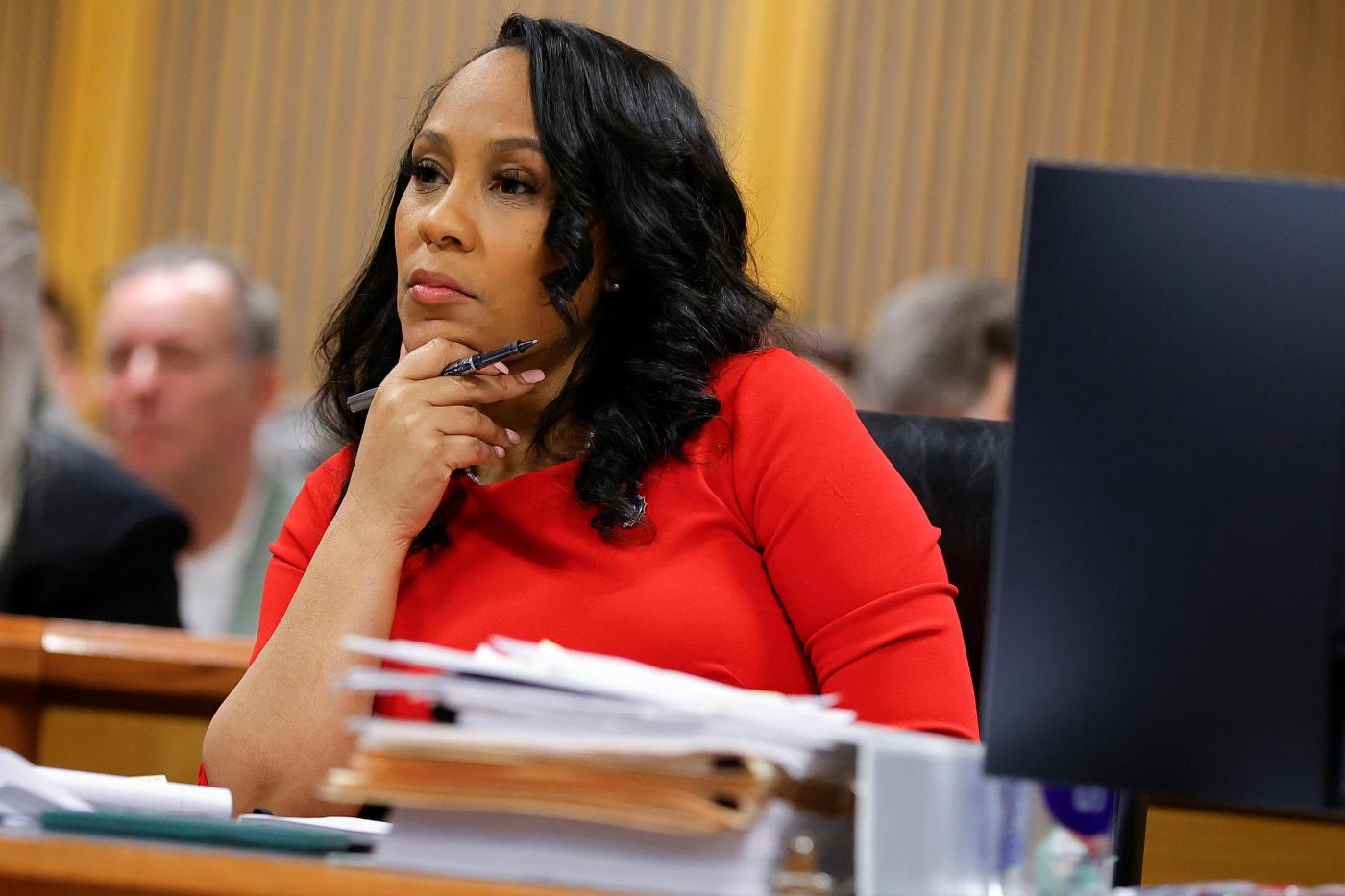
ATLANTA (AP) — The judge overseeing the Georgia 2020 election interference case cleared the way Wednesday for Donald Trump and other defendants to appeal a ruling allowing Fulton County District Attorney Fani Willis to remain on the prosecution.

Superior Court Judge Scott McAfee granted a request by defense attorneys seeking permission to ask the Georgia Court of Appeals to review the judge’s decision. It will be up to the appeals court to decide whether to hear it.

McAfee in a ruling last week denied the defense’s request to disqualify Willis from the case or dismiss the indictment over her romantic relationship with special prosecutor Nathan Wade. The judge said Willis can remain on the case as long as Wade resigns, which Wade did on Friday.

But the judge also rebuked Willis for her “tremendous” lapse in judgment and questioned the truthfulness of Wade’s and her testimony about the timing of their relationship.

Attorneys for Trump and the other defendants had said a failure to remove Willis could imperil any convictions and force a retrial if an appeals court later finds it was warranted.

Trump attorney Steve Sadow called the judge’s decision to allow the appeal “highly significant.”

“The defense is optimistic that appellate review will lead to the case being dismissed and the DA being disqualified,” Sadow said in an email.

Related Articles

National Politics |


How Texas’ plans to arrest migrants for illegal entry will work

National Politics |


Trump asks Supreme Court to dismiss case charging him with plotting to overturn 2020 election

National Politics |


Eight House races to watch in Tuesday’s primaries

National Politics |


Trump is making the Jan. 6 attack a cornerstone of his bid for the White House

National Politics |


Trump says Jews who vote for Democrats ‘hate Israel’ and their religion

Wade offered his resignation in a letter to Willis, saying he was doing so “in the interest of democracy, in dedication to the American public and to move this case forward as quickly as possible.”

“I will always remember — and will remind everyone — that you were brave enough to step forward and take on the investigation and prosecution of the allegations that the defendants in this case engaged in a conspiracy to overturn Georgia’s 2020 Presidential Election,” Willis wrote.

In a social media post, Trump said the “Fani Willis lover” had “resigned in disgrace,” and Trump repeated his assertion that the case is an effort to hurt his campaign to reclaim the White House in November. Trump has denied doing anything wrong and pleaded not guilty.

Opinion: Affordable Housing for ALL New Yorkers

posted in: Politics | 0

“It is time Albany meets the urgency of this moment and comes together with a real plan that will meet and sustain the housing needs of all New Yorkers, across every income level, and throughout every corner of our city and state.”

Mike Groll, Don Pollard, Darren McGee/Office of Governor Kathy Hochul

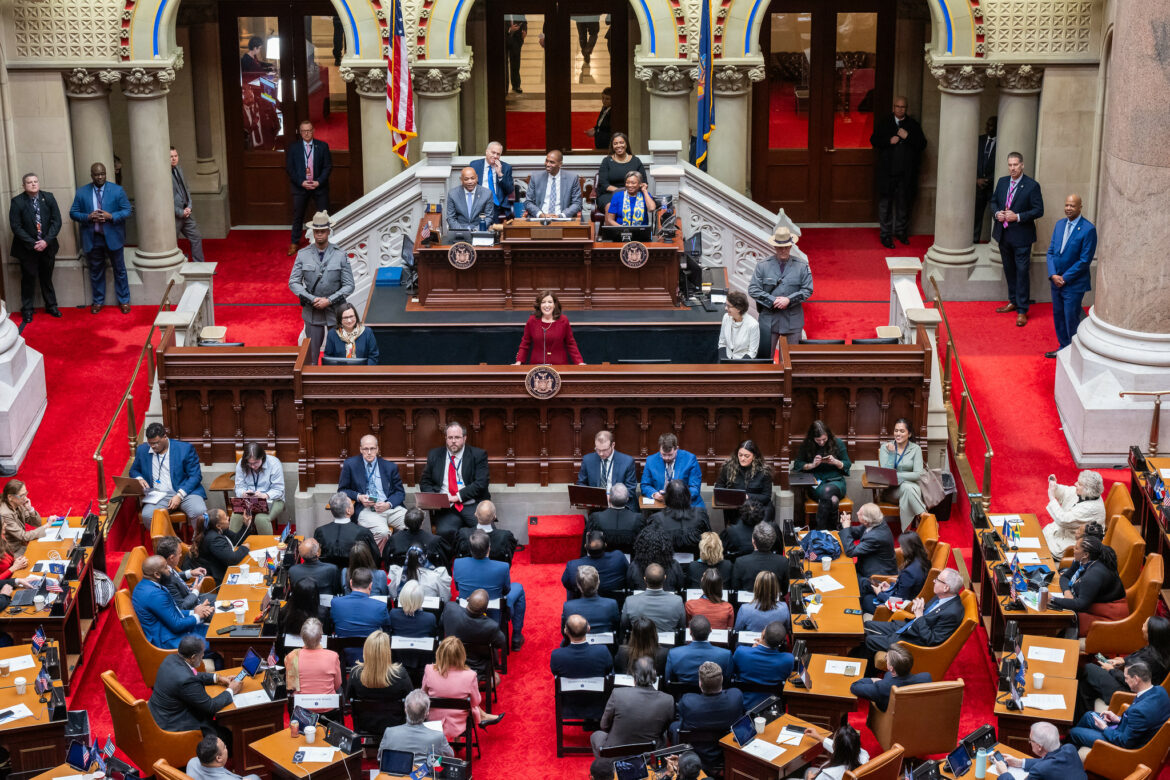
Gov. Kathy Hochul and lawmakers gathered for the annual State of the State address at the start of the 2024 session in Albany.

CityViews are readers’ opinions, not those of City Limits. Add your voice today!

In a moment of extreme and extended crisis, where hundreds of thousands of New York City residents struggle to pay their rent, find an affordable place to live or sometimes just keep their families from falling into homelessness, access to affordable housing is not just a right all New Yorkers should enjoy. It is also a responsibility that those in New York State government must take on.

It is time Albany meets the urgency of this moment and comes together with a real plan that will meet and sustain the housing needs of all New Yorkers, across every income level, and throughout every corner of our city and state. Years of population growth colliding with insufficient housing supply has led to an explosion in the affordability crisis.

Whether it’s housing insecurity due to limited availability, the threat of eviction because of inability to pay rent, or having to commute unreasonably long hours to your job because there is no affordable housing in neighborhoods near where you work, we have seen our housing crisis threaten the stability of New York families, from those who’ve been here for generations to those in their first. 

The problem we face is clear. More than 150,000 New Yorkers are without a home and an additional 175,000 are at risk of eviction. That doesn’t even capture the neighborhoods full of working families that are struggling to find affordable housing because the city needs to build hundreds of thousands of new housing units to meet the projected half a million unit shortfall.

The people who are experiencing homelessness, living in fear of eviction or constantly struggling with finding affordable housing are more than just statistics. In fact, the housing shortage affects everyone. From moms and dads, to children and seniors, to newly arrived immigrants and longtime residents alike, we’ve seen people’s lives turned upside down because rents keep going up and available housing remains way down.

And we must also recognize that while this crisis affects everyone, many of our most vulnerable New Yorkers—like people of color, new immigrants, and single parents—face the greatest challenges because they often live in neighborhoods with the most acute housing shortage.

It’s through their experience that we can most clearly see the urgent need for Albany to take immediate and comprehensive action by coming to an agreement on a new housing plan in this year’s budget. And it must be one that meets the distinct needs of our diverse communities and families. We believe that the governor and legislators can find the solution to our housing crisis by taking a middle ground approach.

What exactly does that mean? It’s really three simple principles: First, is massively increasing supply with smart tax incentives coupled with strong obligations to build affordable units that can meet the needs of various income levels. Here, government can’t do it alone, we need the private sector fully invested to build the accessible and affordable housing New York needs. Couple that with programs to make better use of unused commercial space that can be converted into residential housing stock, and we can finally start to build enough supply to meet the urgent demand.

Second, we have to make it easier to afford rent. Part of that solution will come from just increasing supply to bring down demand, and lower rents will naturally follow. But it also means establishing and investing in initiative like a Housing Access Voucher Program (HAVP) to provide immediate rental assistance and avoid homelessness. Combined with programs that provide a pathway to homeownership and investing more in the transition from our overburdened shelter system to permanent housing, we can begin to bring down the costs of housing and increase housing stability for New York families regardless of immigration status.

Lastly, strong tenant protections are an absolutely essential piece of the housing puzzle. We must provide a right to counsel that will increase access to legal representation—especially for our most vulnerable low income and immigrant community members—and help guard against unwarranted evictions, the price gouging of rent, and abusive conditions. Residents need to feel —which isn’t possible until we secure the right to legal representation, from housing to immigration court, for all.

We also must include fair wages and labor standards in any housing policy passed by Albany. Good jobs go hand-in-hand with affordable housing and it’s our job to ensure no one works for less than a livable wage either in the construction or servicing of our housing developments.

Whether you’re among the thousands of new arrivals who have settled in New York or one of the many long-time residents who have and continue to struggle because of the long-standing affordability and housing availability crisis, we believe all will benefit from Albany finally coming to an agreement on a plan that brings affordable, stable and sustainable housing.

For all New Yorkers, regardless of income bracket or immigration status, we hope this is the year Albany can finally get the job done.

Manny Pastreich is the president of 32BJ SEIU. Murad Awawdeh is the president & CEO of the N.Y. Immigration Coalition.

A Bittersweet Portrait of a Photographer, Obsessed

posted in: News | 0

Good photography and good cinema are cousins. So a new documentary about legendary Austin photographer Dan Winters has a built-in advantage. It can weave Winters’ own striking pictures into the telling of his backstory; it can show us a master of the form arranging and taking a shot, then reveal the photo itself, braiding the moving with the still and exposing the gulf between—where the magic happens.

Part of a National Geographic series, the hour-long documentary titled “Life Is Once. Forever.” premiered earlier this month in Austin at South by Southwest (SXSW) and is available March 19 on Disney+/Hulu and March 25 on the National Geographic channel. Part biopic, part behind-the-scenes explainer, part visual candy, the documentary explores a familiar but moving theme: the luminary, beset by certain demons, consumed by his work, reckons with himself.

“Life Is Once” begins with footage of Iceland from the sky. The 61-year-old Winters, with white beard and glasses, camera on his lap, speeds along a remote road in the passenger seat of a vehicle driven by an assistant. “Photography has just been this search for magic, this search for wonder, and there’s a masterpiece everywhere,” Winters narrates. The mountainous fingers of the Westfjords peninsula jut into what must be the Denmark Strait. As the car rounds a bend, a beached ship—hulking and rusted-out—comes into view. “Oh my God,” Winters exclaims.

Even if you’ve never heard of Winters, who’s shot regularly for Texas Monthly, you may well know his work. His portraits of the likes of Michael Jordan, Barack Obama, and Angelina Jolie (covered in bees) are the sort of images you might remember even if you never check photo credit lines. Beyond celebrity portraits, Winters is known for his photojournalism and his work focusing on science and machines. 

We see Winters arranging multiple cameras to capture a rocket launch, part of documenting NASA’s Artemis program. He’s planned out each angle in advance, even hand-drawing what the photos are going to look like, a method he began deploying at a young age. Winters is possessed of “a neurodiversity,” as one commenter somewhat oddly puts it. 

“He is in another reality, kinda,” says Kathryn Winters, Dan’s wife. “Being with him, it’s like you start to realize things about the world that you would definitely not be paying attention to.”

NASA Shuttle Endeavor passes through the cloud ceiling after launching from Kennedy Space Center. Dan Winters

As Kathryn’s character is fleshed out, a less flattering aspect of Winters emerges: a Peter Pan-ishness that both burdens her with the logistical details of his life and, in earlier decades, caused him to misapprehend the core responsibility of fatherhood. “I manage a lot of things for him,” Kathryn says, understating the matter. When they met long ago, his life was one of artistic chaos and years of unfiled taxes. Today, she says, he does not even know what all medications he’s on—crucially for the treatment of bipolar disorder, a diagnosis he received in adulthood after a traumatic bike accident.

During their son Dylan’s early childhood, Winters’ career was skyrocketing. “He was not there; all he did was work,” Kathryn says. And when he was there, he often kept working in a way, constantly photographing their son in what became his longest-running project. “He became my muse,” Winters says at one point.

But children are not muses. They’re children. About halfway through, the documentary pivots on a scene of Winters and Dylan examining rows of photos of the latter arrayed on a wall. “Sometimes, it sort of felt like the priority was like I was an art project—more than a kid,” Dylan says, choking back a sob.

Kathryn helps Dan adjust his shirt for his interview. National Geographic/Gene Gallerano

Throughout the film, Winters is chasing a childhood memory of a ship. Specifically, a “massive ocean liner literally on its side on the beach … like it was this beached whale,” which he saw in California a half-century ago. Strangely, that image—which he had no camera to capture—sunk a hook in him. Something about it would not let him go.

Back in Iceland, he exits the car with his assistant. Night falls. Winters delays his shutter for a long exposure, and the assistant flashes a pale green light on the rusty beached ship. The wide-angle shot that results is a transformation, a beauty beyond the bounds of the natural eye.

Winters is a lucky man. Each time his wife considered whether her load was too heavy, she wound up recommitting to the relationship. “I just accept him the way he is,” Kathryn says. And, with time and a belated reprioritization, he’s grown extremely close with his adult son. In the scene where Dylan cries, he soon calms. “I think the main thing is it’ll just be cool to have [these photos] to show my kids,” Dylan says. And Winters, as an artist and father, responds the best he can: “Sorry it made you feel sad, Dyl’.” 

The documentary’s title is a quote from Henri Cartier-Bresson, the great French pioneer of street photography. That “Life is once, forever” captures the fragile task of picture-taking just as well as it captures the now-or-never labor of childrearing. But Winters’ family, essentially, has given him a second shot at their one shared life. 

Near the film’s end, Winters makes it to Bangladesh, where he’s going to photograph laborers at a shipyard. The situation looks a touch awkward: this big white man who can’t speak the language having these hardscrabble Bangladeshi men, all lean muscle and bones, pose for him. Through a translator, he instructs them not to smile. They hold bamboo and ropes and stand next to propellers; he calls one man “amazing” before directing him atop a pile of chains.

Yet we, the viewers, are shown the photos that he’s taking—as are the subjects, first on his camera display screen and later on prints that he hands out. The images are, of course, arresting. They’re art. Everyone sees it.

A shipyard worker holds a bamboo pole in a ship-repair yard in Bangladesh. Dan Winters