Ready to MOOV? Alternatives to Uber, Lyft face a long road ahead

posted in: News | 0

When Uber and Lyft announced they’d be pulling out of Minneapolis on May 1, Murid Amini saw his chance. Amini, a Woodbury-based startup consultant and Carlson School of Management alum, set about to launch the platform MOOV, a rideshare app that he says will ensure drivers receive 80% of each fare, effectively outbidding the two leading ride-hailing companies for labor.

So far, he’s got his sights set on registering about 50 drivers within the next week or two who have signed up online, and he hopes to kick that up to 1,000 drivers when marketing starts in earnest in April.

“I expect to be on the ground by mid-to-late April, actually having drivers on the ground making money,” said Amini, an Afghan refugee who grew up in the Cedar-Riverside neighborhood of Minneapolis, where his father still lives.

He believes he’s off to a promising start, but even if he’s successful, MOOV won’t come close on its own to filling the void left by 8,000 Uber and Lyft drivers suddenly ejected from the Minneapolis market, if the two companies actually retrench at all. Uber has said it will leave the Twin Cities metropolitan area entirely. Uber confirmed Friday that it will close its Richfield service center, where drivers have their cars inspected, on April 15.

Lyft maintains it will stick around, but not service trips beginning or ending in Minneapolis.

What’s next for Uber, Lyft?

Some have likened Uber and Lyft’s saber-rattling to a game of chicken, with both San Francisco-based companies making bold threats in order to exact concessions from the city of Minneapolis, whose city council recently voted to impose sizable wage increases on each service.

The state could, in theory, step in and override that decision, and some Minneapolis City Council members are already calling for a reconsideration vote next month.

“If the state does not pre-empt them, I think they will leave the market, just to prove a point,” predicted Amini, a former consultant with McKinsey & Co. whose clients have included a transportation logistics company. “I think eventually the (state) will step in, but I don’t know that it will happen before May 1.”

Otherwise, the Minneapolis wages, based on per-minute and per-mile rates, would be even higher than those laid out in a recent state study of what it would take to ensure a $15.57-per-hour minimum wage for each driver with benefits, and they surpass a compromise proposal offered by Minneapolis Mayor Jacob Frey.

Amini acknowledged that the higher wages would be a hardship for MOOV, too, though they won’t be a deal breaker. His app would have to record the time and mileage spent by each driver when even a portion of a MOOV trip travels through Minneapolis, and compensate the driver accordingly.

Amini, an electrical engineer by training, believes he can tackle the dual rates, but not every rideshare company may be equipped to.

Speaking of which, how many rideshare “transportation network companies” have applied to the city of St. Paul for licensing in the week or so since Uber and Lyft announced their upcoming departure from Minneapolis?

As of late last week, the answer was officially none.

“We haven’t seen any new TNC applications come in,” said Casey Rodriguez, a spokesman for the St. Paul Department of Safety and Inspections, on Thursday morning.

Amini said he’s now submitted his paperwork to get licensed with both Minneapolis and St. Paul, and he’s nailing down insurance and just about ready to test the MOOV app in real time.

Steve Wright, chief executive officer of Wridz, said his Austin, Texas-based ridesharing app could have upwards of 1,500 drivers in the Twin Cities market by mid-May, whether Uber leaves or not.

“We’re coming there regardless,” said Wright, noting the subscription service charges drivers a flat monthly fee of $100, allowing them to keep 100% of their own fares.

But so far, only Uber and Lyft are officially licensed in Minneapolis.

Startups sprang up in Austin — then disappeared

Some may ask who needs new startups when taxi cab companies have been around for years?

Uber and Lyft’s utility isn’t just in offering rides. Their technology bypasses phone calls, language barriers and the uncertainty of not knowing when or even if a cab driver will arrive by allowing online hailing and vehicle tracking, as well as app-based payments, tips and customer ratings.

For over a decade, they’ve made having to pick up a phone or walk the block to solicit cab company after cab company for a semi-anonymous driver a thing of the past.

When Uber and Lyft left Austin, Texas, for a year, a number of rideshare companies rolled in with hopes of taking their place. The result, according to widespread reports, was a bit of a patchwork quilt of startups, as well as informal, unlicensed alternatives like those advertised on the “Austin Underground Rideshare Community” Facebook page.

Some drivers reportedly copied and pasted their old bios, complete with customer ratings, from their Uber and Lyft pages onto Facebook, creating an ad-hoc “verification” system. Uber and Lyft still serviced areas just outside the city, so some passengers reportedly hired their drivers to get them to the Austin city limits, and then tipped them cash on the sly to take them farther into Austin proper.

The two ride-hailing companies veered back into the market in 2017 after Texas Gov. Greg Abbott overruled Austin’s driver fingerprinting requirements with statewide regulations. Unable to compete, many of the startups gradually disappeared, according to KUT Radio, Austin’s National Public Radio station.

Does that bode badly for Twin Cities ride-hailing startups?

“My guess is they got bought out and they decided to take a profitable exit,” Amini said. “It doesn’t really give me pause. Even if Uber and Lyft stick around, I can still meet those numbers and give drivers more money.”

Compared to Uber and Lyft, “I would assume most competitors have lower operating costs, just because they’re not multibillion-dollar companies and they’re not publicly traded,” he added. “Most of the investors I’m working with are not putting any kind of pressure on me to be profitable any time soon, even though I plan to be. The funny thing is, (Uber and Lyft) created that opening by threatening to leave.”

How much do they make?

How much do Uber and Lyft drivers rake in, anyway? The answer lands somewhere between less than $10.54 an hour and upwards of $50 an hour, depending upon how you figure it. For continuous service, according to the recent state study, a driver could stand to make $53 an hour in the metro before expenses, but most spend a fair amount of time fare-less each hour while waiting for or driving to their next passenger. During that time, they’re not making money.

So average gross hourly earnings are actually closer to $30 an hour. Now subtract for expenses, which can be considerable given the price of gas, wear-and-tear on vehicles, insurance, cellphone/GPS and cleaning. The hourly average then drops to $14.48 in the metro — and that’s just an average.

The state study found that one-fourth of drivers took home net, after-expense earnings, of $10.54 or less, while one-fourth took home $17.51 or more. The net median, which is calculated differently than the average, was $13.63 in the metro. In Greater Minnesota, the net was even lower.

Minneapolis maintains a minimum wage of $15.57 per hour. To reach that level of reimbursement, the study found a driver would need to earn 49 cents per minute and 89 cents per mile. To also cover benefits such as sick time, health insurance, retirement and unemployment insurance, the per-mile rate would have to rise to $1.20.

On March 7, the day before the state study was published, the Minneapolis City Council chose not to wait for the results and approved a much higher driver reimbursement rate of 51 cents per minute and $1.40 per mile, well above the figures outlined by the state study.

Some critics have questioned why a part-time “gig” job would merit a living wage with benefits if it’s primarily supplemental income. The authors of the state study found that almost 70% of all trips were conducted by drivers logging in for 20 hours or more. Drivers who logged in at least 32 hours provided 41% of all trips.

Nearly half of all registered Uber and Lyft drivers worked fewer than 10 hours per week, but those casual drivers accounted for just 11% of all trips, according to the state study.

Related Articles

Local News |


Older Boeing plane found to have missing panel after flight from California to southern Oregon

Local News |


Will they stay or will they go? Uber threatens to quit all of Twin Cities — including St. Paul, MSP

Local News |


Uber, Lyft say they will pull out of Minneapolis after council overrides veto of minimum wage rule

Local News |


Pressure on Boeing grows as Buttigieg says the company needs to cooperate with investigations

Local News |


Melvin Carter’s State of the City address: Housing, hiring and plowing on the agenda

Rudy Gobert’s size the difference as Minnesota out-lasts Golden State

posted in: News | 0

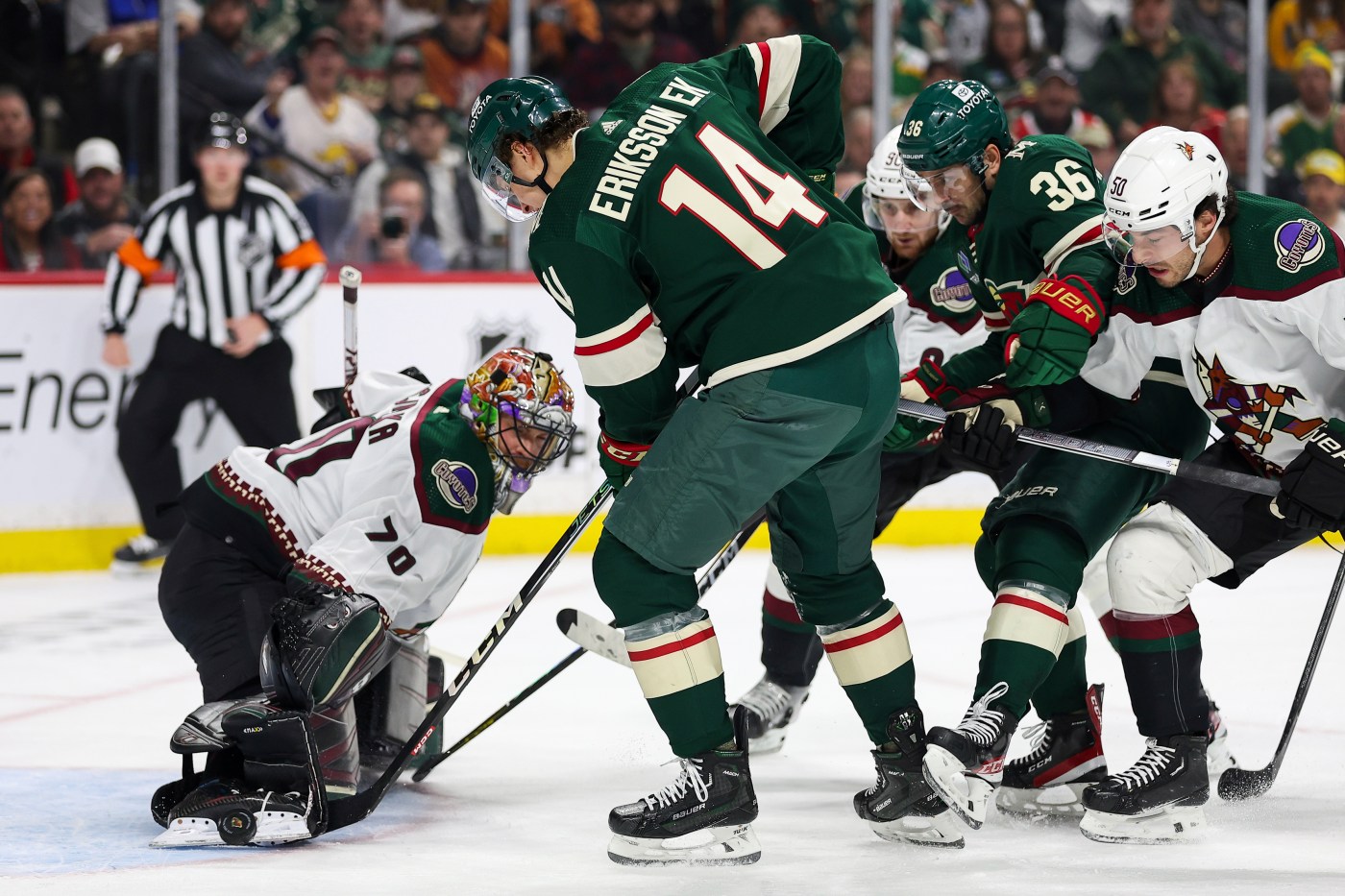
Anthony Edwards is the best player on the Timberwolves’ roster, hands down.

But, on different nights, different players throughout the squad may proved to be Minnesota’s most valuable player.

And, against Golden State, Minnesota’s most valuable player might just be Rudy Gobert.

The Warriors played hard and well Sunday in Minneapolis. They had a strong defensive game plan designed to make life difficult on Anthony Edwards. They were sharp offensively.

Those are all things Golden State — an aging team that still sports a strong championship pedigree — can bring on any given night, which might make the Warriors a scary potential first-round playoff opponent for some teams, should they slither through the play-in round.

But as well as Golden State plays on any night against Minnesota, there isn’t much it can do to compensate for Rudy Gobert.

Gobert dominated numerous facets of Minnesota’s 114-110 home victory Sunday over the Warriors.  The big man finished with 17 points and 12 rebounds.

He was a massive player in the team’s clutch-time offense, from a tip dunk off a Mike Conley miss to put the team up three with 3 minutes, 42 seconds to play to, on the ensuing possession, blocking out Conley’s defender so he could bury an open triple.

“He’s going to get us open when we need it late in the game,” Conley said. “We talked about it after the game, but I had a layup where I just tried to get it up on the rim. Either it goes in or it doesn’t, it’s like an alley oop. We’ve done that a lot, and we’re getting back to it, lately.”

Gobert’s size is something Golden State has to try to overcompensate for, which leaves Golden State exposed in other areas. On Sunday, his mere presence helped free up shooters, and Minnesota capitalized by going 21 for 40 from deep.

Naz Reid hit six triples, Edwards his four, and Conley and Nickeil Alexander-Walker each hit three.

“He is the offense,” Conley said of Gobert. “For the most part, guys don’t recognize that. But the gravity he has from just not even setting a screen, just rolling down the middle of the floor creates a 2 on 1 for us.”

Defensively, Minnesota held Golden State to just 48 percent shooting in the paint. Golden State was hyper aggressive getting into the paint, but Gobert — per usual — was a major deterrent.

Minnesota completed a season sweep of Golden State with the victory.

Sunday’s certainly didn’t come easily. Minnesota was chasing for much of the night. The Wolves started the game sloppy against a desperate Warriors team clinging to the final play-in spot in the West. That led to 13 first-half turnovers.

“We started that game trying to fight the way they were guarding us,” Timberwolves coach Chris Finch said. “It didn’t work.”

But Reid’s early offense kept Minnesota within striking distance while the Wolves waited to calm down. Eventually, the Wolves found their composure and raised their intensity to match Golden State’s. Minnesota trailed by eight late in the third quarter, but the Wolves pounced once Steph Curry went to the bench.

The Wolves outscored Golden State by 12 in the 11 minutes in which Curry sat and held an eight-point advantage when the star guard re-entered. But the Warriors hung around long enough to make it an execution contest in the closing minutes.

Neither team has proven particularly adept in clutch time this season, but Minnesota’s defense stood up, generating some key stops, including a forced miss on a potential tying attempt from Klay Thompson with five seconds to play.

Edwards, who led Minnesota with 23 points, sealed the game with a free-throw on the other end.

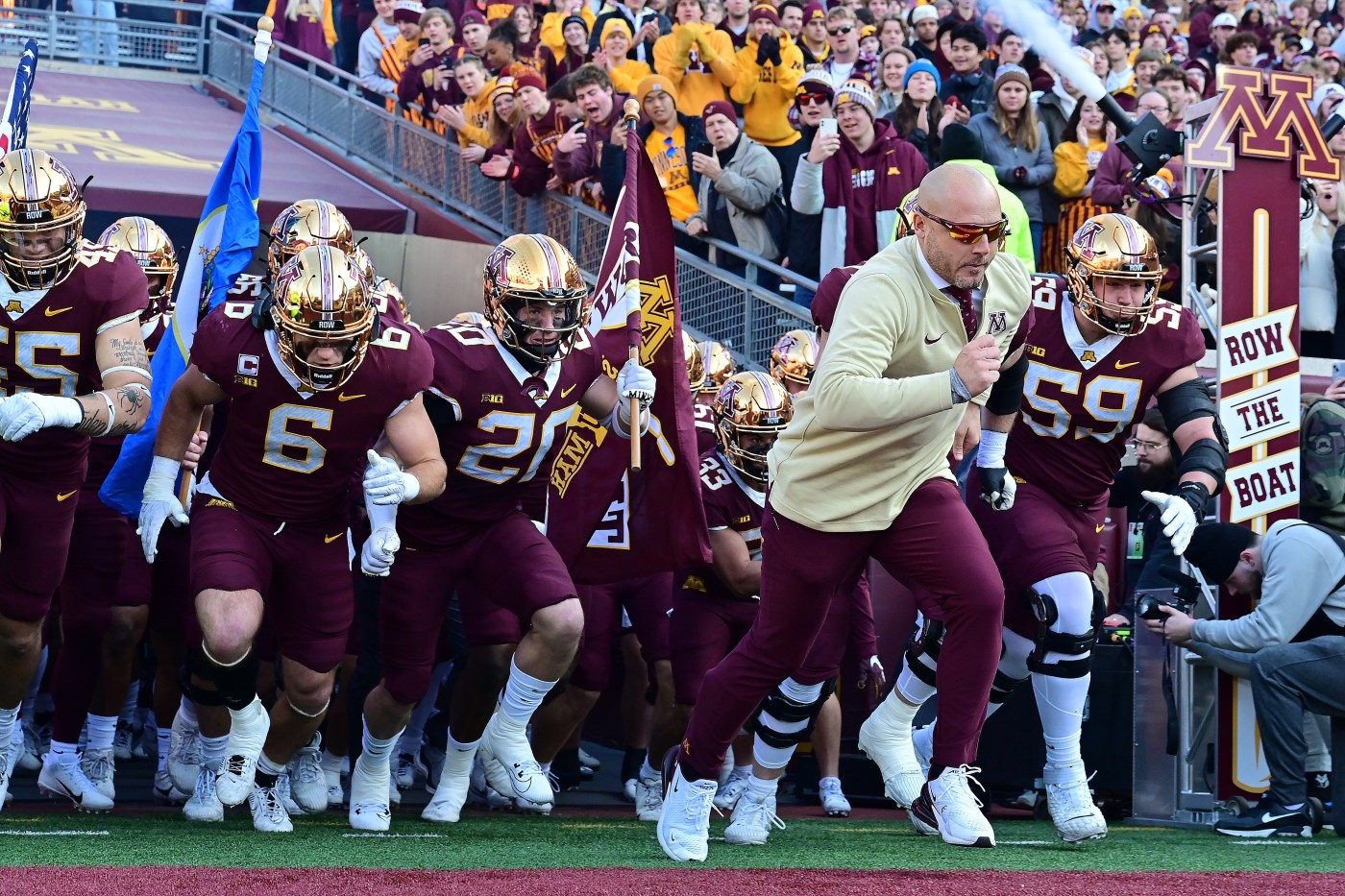
Gophers happy to get out of town as they head to Sioux Falls for NCAA tournament

posted in: News | 0

The Minnesota Gophers learned on Sunday that, as expected, they are among 16 men’s hockey teams trying to earn a trip to the Twin Cities a few weeks from now, for the 2024 NCAA Frozen Four in St. Paul. But in the meantime, Bob Motzko just wants to get out of town.

“We’ve been home for a month and a half,” Motzko noted, after the Gophers’ first-round matchup versus Omaha in the Sioux Falls Regional was announced on Sunday afternoon. “When you do a three-week (Big Ten) playoff, it’s two years in a row that we haven’t left home. We had a bye and then we were at home to end the regular season. That’s a long time.”

Indeed, the Gophers last played a game anywhere other than 3M Arena at Mariucci on Feb. 17, when they won in overtime at Notre Dame.

So their low-key trip to a northern Minnesota resort last weekend served as some team bonding time and some important time away from campus for Motzko’s team. The Gophers (22-10-5) will try to earn a third consecutive Frozen Four trip starting on Thursday evening when they face Omaha, which is coming off a runner-up finish in the NCHC tournament, played last weekend in St. Paul.

The Mavericks are 23-12-4 overall and are making their first NCAA tournament appearance since a lopsided loss to the Gophers in the 2021 first round, at the Loveland (Colo.) Regional. Omaha is the host school in Sioux Falls, which is less than three hours drive from its campus and a good contingent in black and red is expected.

Motzko has some history in Sioux Falls, where he coached the USHL team two decades ago, and where he coached his final game at St. Cloud State in 2018, when the Huskies were upset by Air Force in round one of the NCAA tournament. For a coach whose only focus is winning two games and getting to St. Paul, the venue and the history are of little importance.

“We love the fact that we’re one of 16 teams. There are a whole bunch of folks who would like to switch with us. So just to be in the tournament is great,” Motzko said. “I learned a long time ago I don’t care where it’s at or who we’re playing, we’ve just got to be playing our best hockey. Going to Sioux Falls is great, and I think we can get some fans there.”

The Gophers and Omaha are scheduled for a 7:30 p.m. CT faceoff on Thursday, March 28. Boston University and RIT will clash in the opener at 4 p.m. CT Thursday. Both games will be televised by ESPNU.

PWHL: Minnesota extends win streak to five with shootout triumph over Montreal

posted in: News | 0

Minnesota faced its biggest game to date on Sunday afternoon at Xcel Energy Center, and before the announced crowd of 7,268 could get settled, the home team found itself down to Montreal 2-0 after a pair of unfortunate breaks.

Not the start Minnesota was looking for as it aimed to extend its winning streak to five games.

Not the start it wanted in the final game before a nearly month-long break for the Women’s World Championship.

Not the start it wanted in its quest to pick up the three points needed to tie Toronto for first place in the Professional Women’s Hockey League standings and put some distance between it and third-place Montreal.

But the finish was just about perfect.

Minnesota beat Montreal 3-2 in a shootout, with Grace Zumwinkle scoring twice in the shootout to secure the victory that leaves Minnesota one point out of first place at the break.

Zumwinkle, who was buzzing the Montreal net all game but had nothing to show for it until the shootout, said the early deficit did not diminish the confidence the team has built up during its winning streak.

“As a team, coming off a week off, it was a key emphasis to come out and start hard,” Zumwinkle said. “And, going into a long break, It was give it all you’ve got for one game. So that’s something I tried to focus on.”

Minnesota center Taylor Heise, who also scored in the shootout, reiterated that there was no panic among the players when facing the early deficit.

“We’ve been in those situations before,” Heise said. “We didn’t really need to say anything. We literally had a whole game left, so you know you have time.”

Montreal took a 1-0 lead at 2:36 of the first period. A shot from the right point pin-balled around in the slot and onto the stick of Kati Tabin, who beat goaltender Nicole Hensley from in tight.

Montreal’s lead grew to 2-0 at 5:53. Minnesota’s Sophia Kunin lost the puck in the neutral zone when she fell to the ice, setting up a two-on-one for Montreal. Maureen Murphy beat Hensley from in right for her fourth goal of the season.

Minnesota scored twice early in the second period within a span of 24 seconds to tie the game. Natalie Buchbinder scored her second of the season on a wrist shot from the right point that found its way through traffic.

Lee Stecklein scored her second of the season at 6:04 on a wrist shot from the left-wing circle.

“It was kind of awkward the way they scored the two goals,” Minnesota coach Ken Klee said. “But we knew if we stuck with it that we could score.”

The third period and overtime had a playoffs-like feel to it, with both teams coming close on good scoring chances. Hensley made a handful of big saves down the stretch to keep Minnesota alive.

“For me, it’s exciting because we’ve been fortunate to have been able to play with the lead,” Klee said. “In hockey, you’re going to have to be able to come from behind.”

With five games remaining in the regular season, Minnesota is all but assured a spot in the postseason as one of the league’s top four finishers. The top two teams will have home-ice advantage in the best-of-five series, and Minnesota wants to be one of them.

It did all it could do leading into the break by sweeping a four-game homestead.

“It was kind of pivotal for us, where we kind of solidified that we’re a team to contend with,” Klee said. “We have multiple players who can contribute on any given night.

“That way we don’t get pigeon-holed, where we have to rely on certain players. That’s a great feeling.”