Lisa Jarvis: Biden’s $12 billion for women’s health should be just a start

posted in: Politics | 0

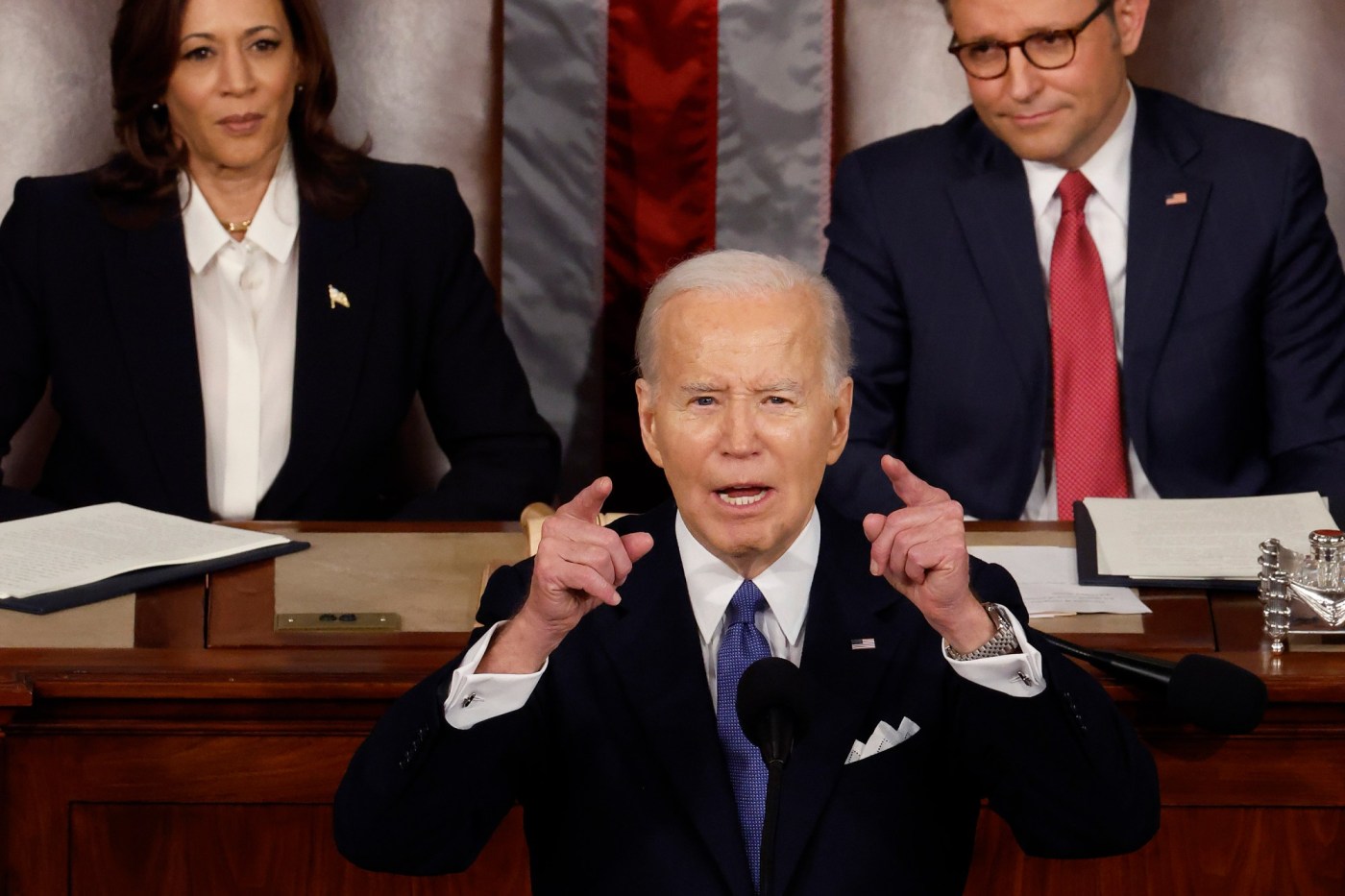
On Monday, President Joe Biden signed an executive order that will create a $12 billion fund to improve our understanding of — and ideally treatments for — women’s health. It’s a welcome, if egregiously belated investment by the U.S. government. And although it sounds like a big amount, there’s a lot of catching up to do.

For example, one analysis found that conditions that overwhelmingly affect women, like migraines, headaches, endometriosis, anxiety disorders and chronic fatigue syndrome, are severely underfunded compared to conditions that predominantly affect men. (Anyone following the long COVID story knows that condition could easily be added to this list.)

Researchers call this the health gap, and it has serious societal and economic consequences: A recent report from McKinsey & Company found that reducing the time women spend in poor health by 25% could be worth $1 trillion, in large part because health disparities disproportionately hit women during their working years.

The funds allocated by this executive order, which cut across a wide swath of agencies and areas of health, begin to address the problem. The next step will be for Congress to approve Biden’s larger budget for 2025, thereby funding the order. The ultimate test will be whether foundational research in women’s health can attract more interest from industry, which has not given the area enough attention.

“My hope is that we’re at the beginning of a fundamental shift in the recognition of the importance of this necessary funding and research,” says Lisa Larkin, president of The Menopause Society. “It’s not enough yet, but I really am excited.”

It’s no secret that women have been historically gotten the short end of the stick when it comes to medical research. For decades, women were left out of clinical trials entirely. That’s a situation the National Institutes of Health has made strides in remedying, but disparities linger.

A recent report from the RAND Corporation, commissioned by the nonprofit WHAM (Women’s Health Access Matters), found that a relatively small investment in studying women and Alzheimer’s disease, cardiovascular disease and rheumatoid arthritis would pay economic and societal dividends, says WHAM’s president, Lori Frank. Doubling the modest portion of women-focused research dollars in those three conditions — an investment that would amount to about $300 million — could increase lifespan and productive time in the workforce, while saving society some $13 billion, the report estimated.

Of note, Biden’s women’s health initiative pays special attention to the midlife period, an area where the health gap feels most critical. “The most important time for me to evaluate a woman is between 40 and 60,” Larkin says, and yet that’s when they are most often lost in the healthcare system. They’re past their childbearing years and have yet to show up with symptoms of serious diseases. But that’s exactly when early signs of serious diseases start to emerge. Men, for example, start to show signs of heart disease in their 40s, but many women aren’t aware that their risk of a cardiovascular event — the number one killer of women in the US — rises sharply in their 50s.

Midlife is also a time where the lack of clear information about menopause means so many women fall prey to unproven and often expensive solutions. The lack of good, evidence-backed information and supportive care from the medical community has pushed many women to look for answers on their own.

Companies are more than happy to fill the void. But that means that instead of evidence-backed care, we get at-home menopause tests that most experts think aren’t actually helpful. Rather than clear guidelines and support about hormone replacement therapy, we get sketchy supplements from Drew Barrymore. Instead of sound advice on sexual health, we get Gwyneth Paltrow’s jade eggs. (To be clear, I’m all for celebrities normalizing aging. But they are not medical experts and don’t always elevate experts who offer evidence-based advice. And we ought to be very skeptical when their efforts to destigmatize also line their pockets.)

Yes, there are reasons to be hopeful about women’s health. The last year has brought several important advances, including a new treatment for postpartum depression, the first drug for hot flashes associated with menopause, and a rare biotech startup focused on a treatment for preeclampsia. There’s been a palpable sense among physicians focused on women’s health that momentum is building around conditions that have for too long gone ignored. Biden’s $12 billion is could build on that success.

But forgive me if my excitement is tempered by a deep frustration, given the long history of neglect. It’s also unclear whether this Congress will actually approve the funds and how soon they would be spent. (For comparison’s sake, the annual budget for the National Institutes of Health is $48 billion.)

When I look around at what’s happening in the rest of the biomedical universe — like the deep investments that have led to astounding new technologies like Crispr or that have changed the course of certain types of cancer — it can feel like I’m celebrating getting the crumbs of a three-tiered cake.

Lisa Jarvis is a Bloomberg Opinion columnist covering biotech, health care and the pharmaceutical industry. Previously, she was executive editor of Chemical & Engineering News.

Related Articles

Opinion |


Adam Minter: March Madness as we know it faces extinction

Opinion |


Murphy, Sperling: How a California climate win could end up destroying rainforests — and what to do about it

Opinion |


David French: America’s most overlooked political divide is also its most revealing

Opinion |


Joe Soucheray: Reckless car thieves, streetlamp wreckers … we’re tired of this

Opinion |


Jane Eisner: How should we read the texts of Purim and Passover this year?
 

Hawaii Travel: 21 fantastic poke bars and markets — and a poke festival this June

posted in: News | 0

There are so many things to love about the Hawaiian islands — the beaches, the rainforests, the mai tais and food. And especially the poke.

As soon as I arrive on Kauai or Maui, I hightail it to a local market, poke stand or food truck to get my two scoops of raw, marinated ahi tuna over brown rice. The velvety smooth chunks of freshly caught fish, sometimes topped with strands of dried seaweed, melt in your mouth. And the savory seasonings add just the right amount of kick to make these little bowls of joy “off da hook”, as the locals say.

Poke, which means “to cut” in native Hawaiian, is usually ahi, marinated and topped with a wide variety of flavors, from limu (seaweed) to California (with avocado, of course), shoyu and spicy. Poke can be made with other seafood too, such as kimchee shrimp, furikake salmon or miso tako (octopus).

It’s typically served in bowls over white or brown rice or greens and dashed with favorite toppings, but poke can assume other forms too: poke nachos, tacos, tostadas, even poke musubi.

If you’re hooked on poke like me, make plans to head to the islands soon for the fourth annual Kauai Poke Fest in June. The festival, held at the Koloa Landing Resort on the island’s South Shore, was named one of the top five food festivals in the U.S. last year by USA Today’s 10Best — and it’s up for that honor among specialty food festivals again this year.

This popular one-day event invites professional and amateur chefs to dish out their favorite creations in a competition that seasons and serves more than 500 pounds of fresh ahi. Hosted by James Beard award-winning chef Sam Choy, the so-called Godfather of Poke, the festival celebrates Hawaii’s most famous dish with live entertainment, food and drinks and poke demonstrations, in addition to the poke competition.

The poke fun runs from 3 to 7 p.m. on June 8, with a farmers marketplace that opens at 2 p.m. All proceeds from the event will be donated to the Hawaii Community Foundation’s Maui Strong Fund, whichsupports the needs of those displaced by the devastating Maui wildfires last summer. Find tickets ($90 to $115, ages 21 and up only) and more details at KauaiPokeFest.com.

Want to find the best year-round poke in Hawaii? Ask the locals about their favorite spots, then set your sails for a foodie quest that leads to authentic Hawaiian hole-in-the wall shops, friendly local markets and family-run outfits whose quality poke offerings will surprise you.

You’ll find plenty of suggestions below, but before we get to that, let’s talk fish.

Two of the best-known types of tuna are bluefin and ahi, which is the species typically used for poke bowls. Ahi is the common name for yellowfin (Thunnus albacares) and bigeye tuna (Thunnus obesus). If you love scientific names, there are three species of bluefin tuna – Atlantic (Thunnus thynnus), Southern (Thunnus maccoyii), and Pacific (Thunnus orientalis).

A fascinating way to see ahi and other tuna fresh off the boat is to take a guided tour of the world-famous Honolulu Fish Auction, which takes you from dockside to auction floor. (Ben Davidson Photography)

These tuna are among the most powerful fish in the ocean and have torpedo-shaped bodies built for speed;  some species can even reach 47 miles per hour. They are hugely popular with sport fishing charters and a lucrative catch for commercial fishermen — a bluefin tuna sold in Japan in January for nearly $800,000 and individual fish prices can reach into the millions for this prized fish.

A fascinating way to see ahi and other tuna fresh off the boat is to take a guided tour of the world-famous Honolulu Fish Auction — the only fresh tuna auction in the United States. You’ll see how Pacific tuna gets from the dock to restaurants and retail markets in the islands and back on the mainland, and you’ll find out what auction buyers look for in fish quality and the art of tuna grading.

The tour begins dockside with the fishing vessels and a discussion of how the fish are harvested and handled to preserve quality and safety. After learning about daily life on a fishing vessel, you’ll head for the auction floor to learn about how the fish are inspected to insure seafood safety and how a fish auction works.

A fascinating way to see ahi and other tuna fresh off the boat is to take a guided tour of the world-famous Honolulu Fish Auction, which takes you from dockside to auction floor. (Ben Davidson Photography)

Tours ($25-$35) are held from 6 to 7:30 a.m. on select Saturday mornings by reservation. Find details and reserve your spot at hawaii-seafood.org/auctiontour.

Meanwhile, here are some insider tips on where to find some of the best poke in the islands:

Foodland, Hawaii, Kauai, Maui, Oahu

You’ll find 34 locations of this supermarket across the Hawaiian islands. It’s popular among locals for its no-frills poke counter, which serves up generous portions of ahi, mussel and octopus poke at very reasonable prices. Find Foodland locations at shop.foodland.com.

Ono Seafood, Oahu

This hole-in-the-wall spot in Honolulu is famous for its classic shoyu ahi and spicy ahi bowls. It’s very popular so be prepared for lines. It’s open from 9 a.m. to 4 p.m. daily at 747 Kapahulu Ave. in Honolulu; onoseafood.site.

Off the Hook Poke Market, Oahu

Build your own ahi poke bowl with distinctive flavors like Japan Deluxe (miso sauce with ginger and shisho leaf), Kilauea Fire (chili miso sauce, jalapeño, crushed red pepper) and cold ginger poke. Their miso ginger tako (octopus) poke is also tasty — and popular. It’s open from 10 a.m. to 6 p.m. Monday-Saturday at 2908 E. Manoa Road in Honolulu; www.offthehookpokemarket.com

Tamashiro Market, Oahu

This fish market features a poke counter with incredible variety, including spicy kajiki scallop poke and limu poke. It’s open from 8 a.m. to 1 p.m. Sunday-Wednesday and until 5 p.m. Thursday-Saturday at 802 N. King St. in Honolulu; tamashiro-market.weeblyte.com.

Poke Fix Hawaii, Oahu

This tiny, off-the-beaten-path spot is known for its creative poke combinations and Instagram-worthy presentations. Open from 11 a.m. to 7 p.m. daily (closed Wednesdays) at 334 Seaside Ave. #108 in Honolulu; instagram.com/pokefixhawaii.

Tamura’s, Oahu and Maui

A popular spot for local poke-lovers, this chain has three markets on Oahu and Maui. For nineyears running, Tamura’s has been named the best spot for poke in Hawaii Magazine’s readers choice awards. The markets — in Wailuku on Maui and Wahiawa and Hau’ula on Oahu — open at 8 a.m., but poke hours vary by location; tamurasmarket.com.

Kahuku Superette, Oahu

Located a few miles from Turtle Bay Resort on Oahu’s famous North Shore, this little local market serves up some of the best shoyu and limu poke bowls on the island. Portions are hefty and the prices are reasonable. The market is open from 6:30 a.m. to 10 p.m. weekdays and 7 a.m. to 10 p.m. weekends at 56-505 Kamehameha Highway in Kahuku.

Fort Ruger Market, Oahu

This deli/market near Honolulu’s Kapiolani Community College has been around since 1935. It’s known for its delicious, sashimi-grade poke and other Hawaiian-style snacks. The market is open from 6 a.m. to 6 p.m. Monday-Saturday and 7 a.m. to 6 p.m. Sunday at 3585 Alohea Ave. in Honolulu.

Alicia’s Market, Oahu

This market offers a wide variety of poke bowls, including wasabi masago, sweet onion shoyu and limu ahi. Open from 10 a.m. to 2 p.m. Monday-Saturday at 267 Mokauea St. in Honolulu; aliciasmarket.com.

Redfish Poke Bar by Foodland, Oahu

This poke bar has two Honolulu locations, both offering sizable signature bowls and custom poke bowls with 10 styles of ahi, two of hamachi and three of salmon. The Kaka’ako location at 685 Auahi St. opens at 11 a.m. daily, while the poke bar at the Wayfinder Waikiki, 2375 Ala Wai Blvd., opens at 6 a.m.; redfishpoke.com.

Nico’s Pier 38, Oahu

The fish market’s restaurant, which is open for breakfast and lunch only, offers ahi poke “nachos” with kabayaki, green onions and spicy aioli. Marlin is the featured fish in the au poke bowl (shoyu or spicy), in addition to more than a dozen different poke selections. The poke counter opens at 9 a.m. Monday-Saturday and 10 a.m. Sunday at 1129 N. Nimitz Highway in Honolulu; nicospier38.com.

Poke on da Run, Oahu

The “mauka to makai” (mountain to sea) nachos combine freshly fried won ton chips topped with twin scoops of kalua pig and ahi poke topped with spicy aioli and green onions. Open from 10 a.m. to 4 p.m. weekdays at 909Lehua Ave. in Pearl City.

Related Articles

Travel |


Sound Advice: USB charger an ideal travel accessory

Travel |


Driving to Mexico? Make sure you have the right car insurance

Travel |


Column: Think small when packing your self-care products

Travel |


8 of the best ways to use points and miles for travel

Travel |


Travel: 3 bachelorette party destinations for nature lovers

Kaohu Store, Maui

This small convenience store serves up arguably the best poke on Maui. Buy poke by the pound or grab a bowl of their poke specialties, like chili pepper poke or lipoa poke, made with a local seaweed that tastes like cucumber. Opens at 6:30 a.m. weekdays at 1833 Kaohu St. in Wailuku; instagram.com/kaohustore.

Like Poke?, Maui

This popular food truck — so popular, you’ll want to arrive early, before they sell out — is in a new location in Wailuku. Opens at 10:30 a.m. Monday-Saturday; facebook.com/like.poke.1.

Kilauea Market, Kauai

Poke is just one of the rainbow of offerings at this fresh fish eatery and fish market. Chose from sesame or spicy ahi, tako poke and sesame aku or brown or jasmine rice. Open from 11 a.m. to 8 p.m. Monday-Saturday at 4270 Kilauea Road in Kilauea; kilaueafishmarket.com.

Koloa Fish Market, Kauai

This very popular South Shore market is famous for poke bowls and offers more than half a dozen varieties, from wasabi ahi to smoked marlin. Get here early and be prepared to wait in line for a great lunch. Open from 10 a.m. to 3 p.m. Monday-Wednesday and Friday-Saturday at 3390 Poipu Road in Koloa; koloafishmarket.com.

Hanalei and Kealia Poke, Kauai

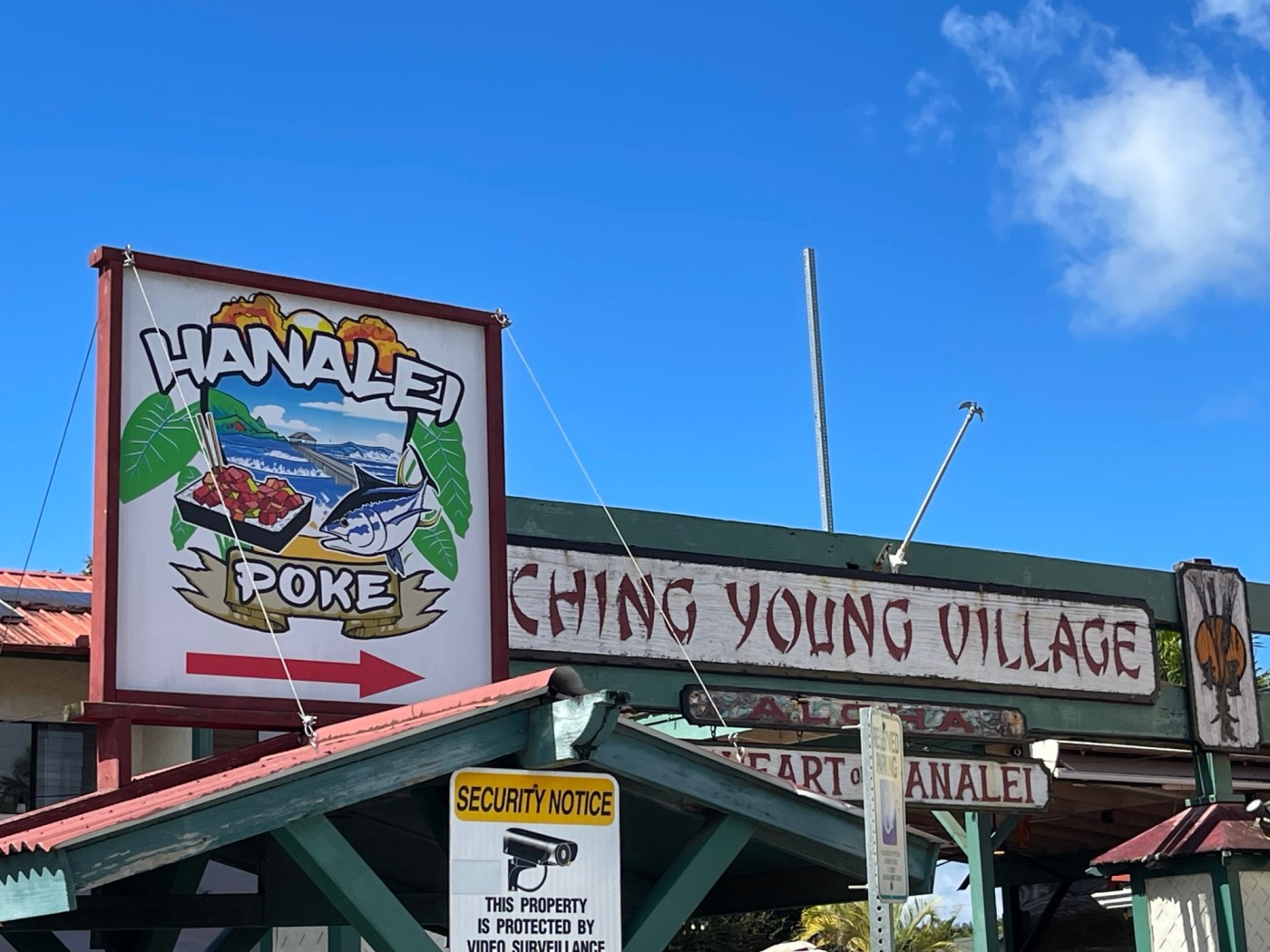
This poke shop is located in the historic Ching Young Village in the funky surf town of Hanalei on Kauai’s North Shore. They also operate the Kealia poke food truck next to the town’s Big Save market, featured on Guy Fieri’s “Diners, Drive-Ins and Dives” TV show. The Hanalei poke shop opens at 11:30 a.m. Sunday-Friday and noon on Saturday at 5-5190 Kuhio Highway in Hanalei.

Da Poke Shack, Island of Hawaii 

This Anthony Bourdain and Andrew Zimmern-approved shack offers a wide selection of poke flavors from spicy garlic sesame to sweet miso and honey with roasted seaweed. Open from 10 a.m. to 4 p.m. daily at 76-6246 Ali‘i Drive in Kailua-Kona; https://dapokeshack.com/

Poke Market, Island of Hawaii 

This Hilo poke shop offers upscale poke bowls with untraditional poke ingredients, such as salmon poke with unagi truffle sauce, and sides that include sweet potato salad. Open from 10 a.m. to 3 p.m. Monday-Saturday at 41 Waianuenue Ave. in Hilo; pokemarkethi.com.

Suisan Fish Market, Island of Hawaii

A longtime Hilo fish market, Suisan serves up traditional Hawaiian poke, kimchee tako poke and lemon shoyu scallop poke. Open from 9 a.m. to 3 p.m. Monday-Tuesday and Thursday-Saturday at 93 Lihiwai St. in Hilo; www.suisan.com/our-services/fish-market-fish/.

Umekes Fish Market Bar & Grill, Island of Hawaii

This popular restaurant offers poke flights, poke nachos and poke lettuce cups with avocado poke and a unagi drizzle. Or you can go all in with a Makai platter with three poke choices, four ahi cakes, four raw oysters, sashimi, furikake sashimi, ahi katsu and four shrimp with garlic or spicy aioli with unagi. Open from 11 a.m. to 9 p.m. daily at 74-5599 Pawai Place in Kailua-Kona; umekesrestaurants.com.

Percival Everett’s new novel reworks Mark Twain. But ‘James’ has a different mission

posted in: News | 0

Earlier this month, author Percival Everett put on a tuxedo to attend the Academy Awards with his wife, novelist Danzy Senna.

First-time filmmaker Cord Jefferson, who adapted Everett’s 2001 novel “Erasure” to make the film “American Fiction,” won for best adapted screenplay and delivered a rousing acceptance speech that was one of the evening’s highlights.

“I like the film quite a bit, and I appreciate the fact that it is not my novel. Cord Jefferson mined my novel and took what he needed to make his film,” says Everett. “And that’s what he’s supposed to do.”

Just don’t expect to see Everett, who is not known for seeking the spotlight, appearing at the Hollywood event in the future.

“We did go, and there’s no need to ever go again,” he laughs, adding that he had a “fine” time. “The attention to the work is nice, but … it was hard to sit through. But at least in between during the commercial breaks, you can wander outside.”

(L-R) Percival Everett and Danzy Senna attend the 96th Annual Academy Awards on March 10, 2024 in Hollywood, California. (Photo by JC Olivera/Getty Images)

One of the nation’s most acclaimed novelists as well as the Distinguished Professor of English at the University of Southern California, Everett’s work ethic is legendary: He’s published more than 30 books, and his most recent novels — “Dr. No,” “The Trees,” and “Telephone” — have landed on various shortlists including for the Pulitzer Prize, the Booker Prize, the NBCC Award for Fiction and more. (And he still finds time to paint, fish and play guitar.)

When we meet up on Zoom to discuss his just-published new novel, “James,” Everett is dressed casually and seated in his South Pasadena home office surrounded by books, assorted gear and stringed instruments. In the book, which may be his best yet, the story of Mark Twain’s “Adventures of Huckleberry Finn” is narrated by the enslaved character Jim rather than Huck Finn.

In Everett’s version, Jim — or as the character writes when he puts pencil to paper, “James” — reveals himself to be a richer, more complex character: He’s a considerate and loving parent, a teacher and thinker, a builder and fixer of most anything and a self-taught reader and writer (through his surreptitious visits to Judge Thatcher’s library). He is also a determined man wary of the ways in which slavery not only robs the enslaved of their physical freedom and personal safety, but also how the barbaric practice aims to stifle intellectual and emotional freedom, too.

Throughout our conversation, Everett provided thoughtful, wryly humorous responses as we discussed the novel, Twain, “The Andy Griffith Show” and more. (And full disclosure: While this was our first-ever conversation, our spouses were once employed at the same college and know each other.)

This conversation has been edited for length and clarity.

Q. Was ‘Adventures of Huckleberry Finn’ a book you had strong feelings about? What drew you to writing your own version?

Well, you know, it has an iconic stature in the literary culture. It’s a novel we know even if we don’t know it. I read it as a little kid in an abridged version, which didn’t do anything for me. 

I love Twain. I didn’t like ‘Tom Sawyer’ at all, but I loved ‘Roughing It,’ I loved ‘Life on the Mississippi,’ and there was another one that was just crazy, ‘The Mysterious Stranger,’ that no one talks about, ‘The Diaries of Adam and Eve.’ Hilarious stuff.

And so, much of my humor was shaped by Twain, and then when I was older, I did read the unabridged ‘Huck Finn’ and even as a teenager, the depiction of Jim, naively on my part, is problematic. It’s not until I was a little more mature and understood Twain and his position in the culture that I could understand that depiction. Maybe not excuse it completely, but understand it.

Q. Can you talk a little more about that?

The novel really is America wandering through this landscape, trying to figure itself out. That’s what Huck is. Huck is the quintessential adolescent American. And I don’t mean 12-year-old American; I mean, 12-year-old America, that young country trying to come to grips with race. And so it really is an important text. 

It’s the first novel where it’s about a person who is subjected to slavery and not about slavery. And so with that in my head, I just wondered if anyone had written it from Jim’s point of view. Since then, I found out that there is a short story — I still haven’t seen it – about Jim after the novel. But I was shocked to find out that no one had written one — and then I realized I hadn’t thought of it either, so I couldn’t really blame anybody. 

Q. One of the most striking things about the character Jim is how you evoke his concern for his family, for others, and for Huck.

Even in ‘Huck Finn,’ the only positive father figure — well, maybe Judge Thatcher, peripherally — that Huck has is Jim. I suppose in some readings it can be reduced to ‘companion,’ but the only positive male role model for him is Jim.

Q. People — like Tom Sawyer, Pap or other adults in his life — are often telling Huck things that aren’t true, but Jim, who is narrating and relating his own story, is possibly the only person telling the truth. 

I hadn’t thought about that so much, but I like that take on it. For Jim, there’s something at stake in his being able to explore ideas in a literary way. At the other end of that, for him, is a freedom that he can’t physically enjoy.

Q. Can you talk about the elements you introduced to the story and what you decided to leave out?

Well, since in the novel, Jim and Huck are separated a lot of the time, those were easy. And since it’s from Jim’s point of view, the dangers inherent in any of those scenes where they are together are different, as well as that it’s through the eyes of an adult rather than a child.

This is not a complaint at all about Twain, but I’m thinking less to entertain than I am to interrogate. And so when I have a chance to work with [con men characters] the duke and the dauphin, my mission is different from Twain’s.

Q. Your novel is affecting, harrowing and, it has to be said, often extremely funny. How did you navigate all those elements?

I’m pathologically ironic, and I think any humor that I employ is a result of that irony. I would be a terrible comedian. I’m no good at making up jokes, but just observing an absurd world.

Do you remember “The Andy Griffith Show”? They can wear on you if watch them, but one of the things that I found great about that show — and I found out later that Griffith worked hard on this — is that there’s not a single joke in it. It’s all story-generated — all the humor is story-generated, except for Don Knotts’ physical humor. That was kind of an object lesson to see that.

Q. Jim has hallucinations in which he debates the philosophers Locke and Voltaire. What made you decide to do that?

Well, again, irony: The Declaration of Independence, being penned by the gnostic Thomas Jefferson, a figure of the Enlightenment like Voltaire and Locke who can espouse equality among men but yet find ways to rationalize slavery.

Q. You’ve mentioned that you have a tradition where you will write a book in the place you first started it. Where did you start this book and write it?

I was at the coffee table. Yeah, that’s pretty much where it happened.

Q. Earlier, you said you don’t remember your books, and I wonder if that’s similar to a reader’s experience — how we can be invested in a book only to find later that it’s hard to recall details of what happened in the story. Is that like what you’re describing?I think that’s probably close to it. I know that sometimes when people remind me of things in my novels, it takes me a while to catch up. Sometimes it’ll be vivid, other times it’ll be completely new, and I kind of like that. I especially like when they have ideas about what it means that I never thought of. I immediately take credit for it: “This is a great idea; of course, I meant that.” [laughs]

Q. Is that disorienting?

Oh, no. It’s just fascinating. People see their own worlds; the work doesn’t exist without a reader and meaning can’t happen without a reader. I wasn’t writing it to convince myself of anything. Lord knows why I was writing it, but there it is.

Q. So after you’ve written it, you no longer need to try to control it.

I can’t control it, so why worry about it? I suppose I could go hang out in front of bookstores and explain things to the six people who leave with my book. [laughs]

Q. If you do, please call me. That sounds great.

Anything I say about one of my works can be completely disregarded.

Related Articles

Things to Do |


Springtime in Georgia: Go for the Masters, stay for Augusta

Things to Do |


Hawaii Travel: 21 fantastic poke bars and markets — and a poke festival this June

Things to Do |


Have $500,000 lying around? Eat in a ‘SpaceBalloon’ miles above Earth

Things to Do |


Gretchen’s table: Spicy lamb stir-fry makes for a quick and easy Ramadan meal

Things to Do |


Do you want fries with that? Krispy Kreme doughnuts are coming to McDonald’s

Biden said Medicare drug price negotiations cut the deficit by $160B. That’s years away

posted in: Politics | 0

Amy Sherman | (TNS) KFF Health News

We cut the federal deficit by $160 billion because Medicare will no longer have to pay those exorbitant prices to Big Pharma.

President Joe Biden in his State of the Union address, March 7, 2024

____

President Joe Biden has been making his case for reelection to voters by telling them he is good for their pocketbooks, including at the pharmacy counter.

During his State of the Union address, Biden said legislation he signed gave Medicare the power to negotiate lower prescription drug prices.

“That’s not just saving seniors money and taxpayers money,” Biden said, a reference to the Inflation Reduction Act, which passed in 2022. “We cut the federal deficit by $160 billion because Medicare will no longer have to pay those exorbitant prices to Big Pharma.”

Biden added, “This year, Medicare is negotiating lower prices for some of the costliest drugs.” He called for giving Medicare the power to negotiate prices for 500 drugs over the next decade.

In August, the federal government announced the first 10 drugs that it will negotiate for lower prices as part of the Inflation Reduction Act. A respected source of legislation analysis projects the change will save the government a lot of money, but those dollars haven’t been realized.

There is a reason Biden touted this legislation during his address: Polling by KFF shows that people, regardless of their political leanings, overwhelmingly support the idea of allowing Medicare to negotiate drug prices. But most people don’t know that such negotiations are underway.

Impact of Inflation Reduction Act Will Take Many Years

In August 2022, Biden signed the Inflation Reduction Act, which will allow the federal government to negotiate prices with drugmakers for Medicare. Biden kept his promise to repeal the law that barred Medicare from negotiating prices.

The nonpartisan Congressional Budget Office projects a 10-year cumulative savings of $161.7 billion from two provisions of the Iaw: a phased-in effort to negotiate with drugmakers for lower prices and a rebate for price increases above the overall inflation rate. (The White House has previously pointed to this analysis.)

However, not all the savings will be permanent. About $44.3 billion over 10 years will be funneled into related provisions that expand access and lower out-of-pocket costs for Medicare beneficiaries.

“Negotiations are still ramping up, so the savings generated by the Inflation Reduction Act negotiation provisions are still in the future,” said Matthew Fiedler, a Brookings Institution expert on the economy and health studies. “The Congressional Budget Office did expect the inflation rebate provisions of the IRA (which are encompassed in the $160 billion) to begin generating modest savings during 2023 and 2024, but there, too, most of the savings are in the future.”

The legislation involves price negotiations for 10 brand-name medications that lack generic equivalents. Those drugs include the blood thinners Eliquis and Xarelto; the diabetes drugs Januvia, Jardiance, and NovoLog; Enbrel, for rheumatoid arthritis; the blood-cancer drug Imbruvica; Entresto, for heart failure; Stelara, for psoriasis and Crohn’s disease; and Farxiga, a drug for diabetes, heart failure, and chronic kidney disease.

The CBO has estimated that the negotiated prices will translate to nearly $100 billion in federal savings from 2026 to 2031.

“Biden is jumping the gun on claiming savings for seniors,” said Joe Antos, an expert on health care at the conservative American Enterprise Institute. “Price negotiations haven’t been completed; the new prices for selected drugs aren’t in place until 2026.”

Biden said the legislation is “saving seniors money and taxpayers money,” which could be interpreted to mean it is saving them money now on prescription drugs. But the negotiations for these drugs would define the prices to be paid for prescriptions starting in 2026. For 2027 and 2028, 15 more drugs per year will be chosen for price negotiations. Starting in 2029, 20 more will be chosen a year.

That said, other provisions in the legislation have already led to savings for seniors, said Tricia Neuman, a senior vice president at KFF:

Certain recommended adult vaccines covered under Medicare Part D, such as shingles, are covered at no cost.
The act established a cap on Part D spending that begins phasing in this year. This year, Part D enrollees will pay no more than $3,300 on brand-name drugs. In 2025, the cap for all covered Part D drugs drops to $2,000.
The Inflation Reduction Act included the $35-a-month insulin cap, improvements in coverage for low-income beneficiaries, and the inflation rebate.

When we pressed the White House to provide examples of savings that have already occurred, a spokesperson pointed to the insulin cap.

Meanwhile, Antos said that although the Part D rebate has kicked in, the savings come from a small subset of Part D drugs taken by older Americans and that the government reaps the savings, not older Americans.

“There is no reason to expect that seniors will see significant savings since there’s no obligation for the feds to distribute savings to Part D enrollees,” Antos said.

Our Ruling

Biden said, “We cut the federal deficit by $160 billion because Medicare will no longer have to pay those exorbitant prices to Big Pharma.”

Biden’s statement omits the time frame; the savings have not been realized. The CBO projected 10-year cumulative savings of $161.7 billion from two provisions of the legislation. And as for saving older Americans money on their prescriptions, that hasn’t happened yet. The federal government is negotiating the first 10 drugs with the new prices set to take effect in 2026.

We rate this statement Half True.

(KFF Health News is a national newsroom that produces in-depth journalism about health issues and is one of the core operating programs of KFF — the independent source for health policy research, polling and journalism.)

©2024 KFF Health News. Distributed by Tribune Content Agency, LLC.