HAITI’S PRESIDENTIAL COUNCIL IS DEAD ON ARRIVAL – WHITE HOUSE REPORTEDLY CONSIDERING PLAN B

posted in: News | 0

BY: EMMANUEL ROY

Forty years of failed leadership, corruption, and sheer incompetence have turned Haiti into a failed state controlled by criminal gangs financed by Haitian businessmen.

While Haiti burns, West Africa is experiencing the emergence of young, vibrant, and progressive leadership. A new axis of resistance is spanning the Sahel region of Africa, from west to east, from Burkina Faso, Mali, and Niger to Chad, Sudan, Eritrea, and now Senegal; these young leaders, which include Ibrahim Traore, 36, of Burkina Faso, Aby Ahmed, 46, of Ethiopia, Andry Rajoelina, 48, of Madagascar, as well as Julius Malema, 44, of South Africa are part of the new, young Pan-African generation focused on sovereignty, and the fight against corruption, exploitation and incompetence. This young generation is not only reclaiming its independence from its former colonial masters but also divorcing itself from the politics of the past.

As Haiti struggles to create a transitional government to reclaim control of the country from criminal gangs, it can learn some essential lessons from Burkina Faso and Senegal – a complete breakaway from traditional politicians to a new emerging generation of progressive leaders.
Four weeks ago, criminal gangs took over the local international airport in Port-au-Prince and the local prison, freeing over four thousand prisoners, and threatened a civil war if the sitting prime minister Ariel Henry were to return. Henry was on a trip to Kenya to sign an agreement with Kenyan President William Ruto to allow a thousand Kenyan police officers to come to Haiti.

Ibrahim Traoré, Burkina Faso

CARICOM, a regional Caribbean organization under the dicta of the international community, has been working with local political parties (Lavalas, PHTK, Pitit Dessalines, RED, and others) to develop a negotiated power-sharing agreement. Two weeks later, they devised a Presidential Council comprising seven voting members and two observers. This Presidential Council of former politicians from the same political parties that led Haiti to where it is today was dead on arrival.

From the Haitian Diaspora on all seven continents to Haiti, the people overwhelmingly rejected the Presidential Council in favor of one President from the nation’s Highest Court. Article 149 of the 1987 Haitian Constitution stipulates that the most senior judge on the bench shall become President in the absence of a president. The Presidential Council is, therefore, illegal both in form and substance and should not be installed.

Prime Minister Ariel Henry is at an undisclosed location in Puerto Rico and has yet to sign power over to the Presidential Council. Meanwhile, three groups of lawyers in Haiti hired by the Haitian Diaspora have filed lawsuits in Port-au-Prince against the Presidential Council, Caricom, and Prime Minister Henry, seeking to enjoin him and the government from transferring power to the Presidential Council.
The Biden administration seems to favor the Presidential Council. Still, the Haitian Diaspora has provided the White House with Plan B, which includes appointing a judge from Haiti’s Highest Court to lead the transitional government, a choice applauded by the people of Haiti.

The Haitian Diaspora is flexing its political muscle for the first time in history. First, the Diaspora organized the Louisiana Unity Summit in January 2022 at Southern University in Baton Rouge, Louisiana, which brought over 11 Haitian groups together to negotiate a settlement. After three days of negotiations, the delegates of these groups selected Fritz Jean, a former Governor of the Haiti Central Bank, as Prime Minister to lead the transitional government. As Montana’s lobbyists were pushing the seven-member Presidential Council, the Haitian Diaspora was quietly working, pushing the White House to consider a judge from Haiti’s Supreme Court.

The Presidential Council would never work, and the international community and CARICOM knew that. The Montana Accord initiated the proposal to usurp power. Given the overwhelming opposition to the Presidential Council, the Haitian Diaspora’s Plan B can save the day and move Haiti in the right direction.
Karl W. Smith: Raising Social Security’s retirement age is the least bad option

posted in: News | 0

Republicans in Congress have proposed a plan to shore up the Social Security Trust Fund, mainly by slowly increasing the retirement age from 67 to 69. Despite an immediate objection from President Joe Biden and top Democrats, raising the retirement age is crucial to the long-term health of Social Security.

As recently as 2020 Social Security took in more revenue than it paid in benefits. But the tables have turned, and the federal government expects the program take in $1.17 trillion this year and pay out $1.32 trillion. The $150 billion shortfall will be made up by drawing down on the program’s $2.63 trillion trust fund.

That $150 billion may seem manageable, but the problem grows larger each year. By 2032, the government expects benefits to exceed revenues by about $500 billion annually. If we do nothing, the Social Security Trust Fund will be exhausted by 2034. If it gets to that point, the law requires a 23% cut in benefits across the board to ensure money coming into the program equals that flowing out.

No one wants to see benefits cut. The financial shock to seniors would be enormous. Yet, unless some radical measures are taken, cuts will be almost impossible to avoid. Raising the retirement age to 69 would bring the annual growth of Social Security costs in line with the annual increase in revenue by 2030, according to an analysis by the Committee for a Responsible Federal Budget.

It’s not like such a move would be unprecedented. When Social Security last faced an insolvency crisis, in 1983, Congress passed a bipartisan solution that included raising the retirement age from 65 to 67 in recognition of increasing lifespans. The same rationale remains true today. Between 1950 and 1980, the life expectancy of 65-year-olds increased by 2.5 years from 78.9 to 81.4. From 1980 to 2019, it increased an additional 3.2 years to 84.6.

Critics argue that raising the retirement age unfairly punishes the poor because the life expectancy of lower-income Americans has risen far less than that of higher-income Americans. However, life expectancy is only one part of the picture. What also must be considered is the total amount retirees can expect to receive.

Under the Republican proposal, the lowest-quintile group by income could expect to receive more in benefits than they pay in contributions, while it’s the opposite for the highest-quintile group. Consider an analysis of rising life expectancies by the Social Security Administration in 2009 that found the lowest-income quintile participating in the Social Security system saw their lifetime benefits boosted by about 12%. On the other hand, the highest-income quintile saw their lifetime incomes fall by 1.3%.

Moreover, this gap has grown over time. Over the past 25 years, the highest quintile has seen its net benefits shrink by 2.6 percentage points, while the net benefits for the lowest quintile have remained steady. So, even as higher-income Americans live longer, their Social Security return is declining.

There are a few reasons for this. First, Social Security benefits are taxable for higher income Americans. Second, much of the reduction in life expectancies for poor Americans is related to the opioid crisis, which primarily impacts Americans under 65. Finally, the program is fundamentally designed to provide a greater return on contributions from lower-income Americans.

Rather than raising the retirement age, Biden would seek to extend the life of Social Security through tax increases on those making more than $400,000 a year, in effect repealing the Trump administration tax cuts for that group of Americans, a move that would boost revenues by about $125 billion annually. Yet, that would still not cover even this year’s shortfall, and would only extend solvency by a few years. In contrast, raising the retirement age would create savings that grow over time.

Stabilizing Social Security’s finances has long been one of Congress’s most challenging tasks. The sole major successful effort, the 1983 reform, was predicated on recognizing that longer lifespans necessitated an increase in the retirement age. Biden and leading Democrats must accept that the same reality holds true today even if it jeopardizes his re-election campaign. It’s the least bad option.

Karl W. Smith is a Bloomberg Opinion columnist. Previously, he was vice president for federal policy at the Tax Foundation and assistant professor of economics at the University of North Carolina.

Related Articles

Opinion |


Ludwig, Miller: We are seeing a lethal shift in America’s shooting crisis

Opinion |


Allison Schrager: What are the odds of enjoying March Madness now?

Opinion |


Lisa Jarvis: Parents alone can’t protect kids from social media

Opinion |


David Brooks: The great struggle for liberalism

Opinion |


Trudy Rubin: ISIS terror attack in Moscow and GOP obstructionists play into Putin’s hands

World Central Kitchen charity halts Gaza operations after Israeli strike kills 7 workers

posted in: Society | 0

By WAFAA SHURAFA and SAMY MAGDY (Associated Press)

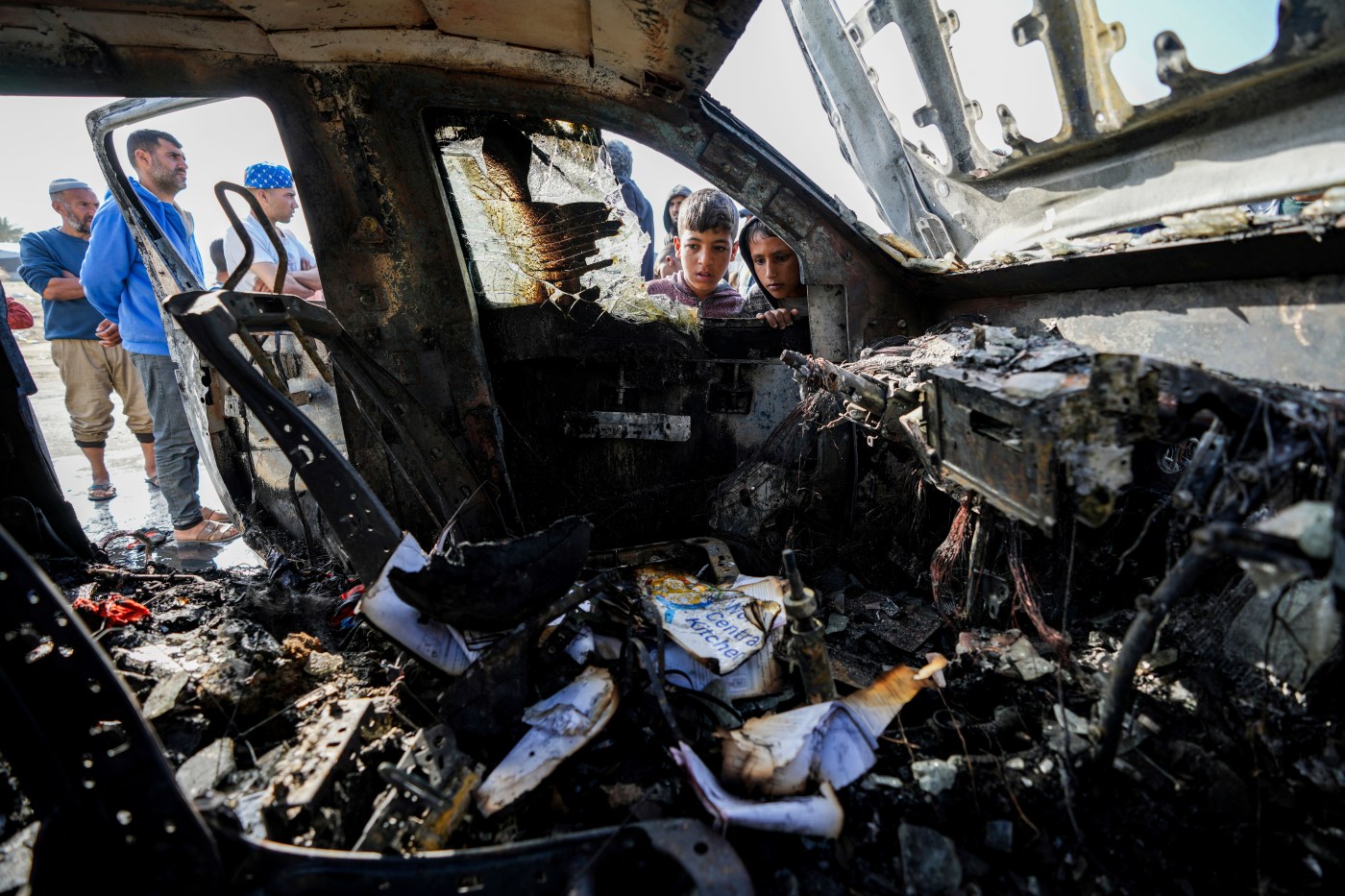
DEIR AL-BALAH, Gaza Strip (AP) — An Israeli airstrike killed seven aid workers with World Central Kitchen, leading the charity to suspend delivery Tuesday of vital food aid to Gaza, where Israel’s offensive has pushed hundreds of thousands of Palestinians to the brink of starvation.

Cyprus, which has played a key role in trying to establish a sea route to bring food to the territory, said ships that recently arrived were turning back — with some 240 tons of undelivered aid.

Israeli Prime Minister Benjamin Netanyahu acknowledged that the country’s forces had carried out the “unintended strike” on “innocent people in the Gaza Strip.” He says officials are looking into the strike and would “do everything for this not to happen again.”

Footage showed the bodies, several wearing protective gear with the charity’s logo, at a hospital in the central Gaza town of Deir al-Balah. Those killed include three British nationals, an Australian, a Polish national, an American-Canadian dual citizen and a Palestinian, according to hospital records.

World Central Kitchen, a food charity founded by celebrity chef José Andrés, was key to the recently opened sea route, which offered some hope for northern Gaza — where the U.N. says much of the population is on the brink of starvation, largely cut off from the rest of the territory by Israeli forces.

Andrés — whose charity has operated in several countries wracked by wars or natural disasters, including Israel after the attack that triggered the current conflict — said he was “heartbroken” by the deaths of his colleagues.

“The Israeli government needs to stop this indiscriminate killing. It needs to stop restricting humanitarian aid, stop killing civilians and aid workers, and stop using food as a weapon,” he wrote on X, formerly Twitter.

The charity said the team was traveling in a three-car convoy that included two armored vehicles, and its movements had been coordinated with the Israeli army.

Rear Adm. Daniel Hagari, the top military spokesman, said earlier that officials have been “reviewing the incident at the highest levels.” He said an independent investigation will be launched that “will help us reduce the risk of such an event from occurring again.”

Erin Gore, the CEO of the charity, said “this is not only an attack against WCK, this is an attack on humanitarian organizations showing up in the most dire of situations where food is being used as a weapon of war. This is unforgivable.”

UNRWA, the main U.N. agency in Gaza, said in its latest report that 173 of its workers have been killed in the territory since the war began.

Hamas-led militants stormed into southern Israel in a surprise attack on Oct. 7, killing some 1,200 people and abducting around 250 hostages. Israel responded with one of the deadliest and most destructive offensives in recent history.

In the face of a growing humanitarian disaster in Gaza’s north, several countries worked to open a sea route, hoping it would allow more aid to enter the territory, where supplies have only trickled in through the land routes controlled by Israel. The United States and other countries have also airdropped aid, but humanitarian workers say such efforts are far from sufficient to meet mounting needs.

Israel has barred UNRWA from making deliveries to the north, and other aid groups say sending truck convoys north has been too dangerous because of the military’s failure to ensure safe passage.

Three aid ships from the Mediterranean island nation of Cyprus arrived earlier Monday carrying some 400 tons of food and supplies organized by World Central Kitchen and the United Arab Emirates following a pilot run last month.

Cypriot Foreign Ministry spokesman Theodoros Gotsis said Tuesday that around 100 tons of aid had been unloaded before the charity suspended operations, and that the remaining 240 tons of aid would be transported back to Cyprus.

The United States, which has provided key military and diplomatic support for Israel’s offensive, has touted the sea route and plans to build its own floating dock, with construction expected to take several weeks.

Nael Eliyan, a displaced Palestinian, was in his tent about 100 meters (yards) away when he heard the explosion late Monday and raced to the scene. “Their injuries were serious, and they died quickly,” he said, describing them as “heroes, martyrs, brave people.”

The bodies of the aid workers were taken to a hospital in the southern city of Rafah on the Egyptian border, according to an Associated Press reporter at the hospital.

The U.S., Britain, Poland and Australia called for an investigation or an explanation from Israel and expressed dismay.

National Security Council spokesperson Adrienne Watson said the U.S. was “heartbroken and deeply troubled” by the strike, while British Foreign Secretary David Cameron called it “deeply distressing.”

“It is essential that humanitarian workers are protected and able to carry out their work,” Cameron wrote on X, saying his country was working to verify reports of the deaths of U.K. nationals.

Australian Prime Minister Anthony Albanese confirmed that Zomi Frankcom, 44, of Melbourne, was among those killed. Damian Soból was also among the victims, according to a post on Facebook by Wojciech Bakun, the mayor of the southeastern Polish city of Przemysl, where Soból was from.

At least 32,916 Palestinians have been killed in the war, around two-thirds of them women and children, according to Gaza’s Health Ministry, which does not distinguish between civilians and combatants in its count. Israel blames the civilian toll on Palestinian militants because they fight in dense residential areas but the army rarely comments on individual strikes.

Two other apparent Israeli strikes late Monday killed at least 12 Palestinians, including five children, in Rafah, where Israel has vowed to expand its ground operation despite the presence of some 1.4 million Palestinians, most of whom have sought refuge from fighting elsewhere.

One of the strikes hit a family home, and a father and his three children, ages 7, 13 and 19, were among those killed, according to hospital records. Another hit a gathering near a mosque, killing at least six people, including three children.

Aid groups have repeatedly called for a humanitarian cease-fire, saying it’s the only way to reach people in need. The United States, Qatar and Egypt have spent months trying to broker such a pause and a hostage release but the indirect talks between Israel and Hamas remain bogged down.

Hamas is believed to be holding some 100 hostages and the remains of 30 others after freeing most of the rest during a cease-fire in November in exchange for the release of Palestinians imprisoned by Israel.

___

Magdy reported from Cairo. Associated Press writer Monika Scislowska in Warsaw, Poland, Rod McGuirk in Melbourne, Australia, and Menelaos Hadjicostis in Nicosia, Cyprus, contributed.

Related Articles

World News |


Israelis stage largest protest since war began to increase pressure on Netanyahu

World News |


Israeli troops withdraw from Shifa Hospital, Gaza’s largest, after 2-week raid

World News |


Doctors visiting a Gaza hospital are stunned by the war’s toll on Palestinian children

World News |


Israel-Hamas talks stall as Netanyahu balks at ‘extreme’ demands

World News |


UN demand for Gaza cease-fire provokes strongest clash between US and Israel since war began

St. Paul police investigating fatal shooting in Merriam Park area

posted in: Society | 0

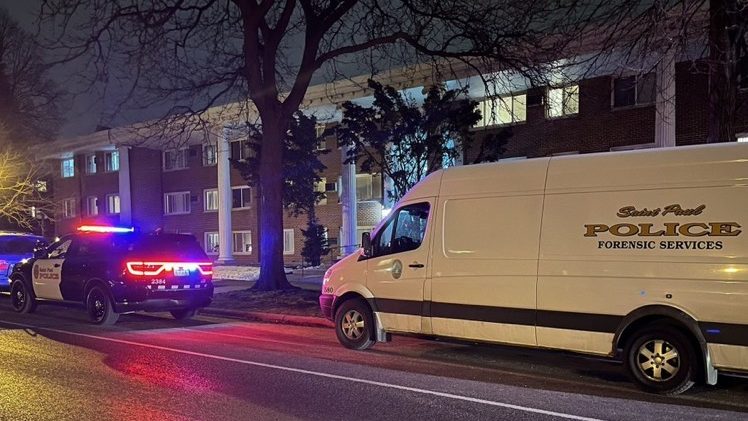
St. Paul police are investigating a fatal shooting in the Merriam Park neighborhood Monday night.

The homicide happened in the 1900 block of Marshall Avenue.

Police plan to release additional information later Monday night.

Related Articles

Crime & Public Safety |


Pair found fatally shot in car are identified as Blaine residents

Crime & Public Safety |


Indiana felon sentenced to 10 years in prison for Inver Grove Heights bank robbery

Crime & Public Safety |


Apple River stabbing trial begins, with two starkly different views of the fatal confrontation

Crime & Public Safety |


St. Paul girl, 13, told police she was playing with gun, didn’t know it was loaded when she shot boy, 11

Crime & Public Safety |


St. Paul teen pleads guilty to fatally shooting peer in East Side alley