NAIA all but bans transgender athletes from women’s sports. NCAA vows to ensure ‘fair competition’

posted in: News | 0

By ERIC OLSON, AP Sports Writer

The National Association of Intercollegiate Athletics, the governing body for mostly small colleges, announced a policy Monday that all but bans transgender athletes from competing in women’s sports.

The NAIA’s Council of Presidents approved the policy in a 20-0 vote. The NAIA, which oversees some 83,000 athletes at schools across the country, is believed to be the first college sports organization to take such a step.

According to the transgender participation policy, all athletes may participate in NAIA-sponsored male sports but only athletes whose biological sex assigned at birth is female and have not begun hormone therapy will be allowed participate in women’s sports.

A student who has begun hormone therapy may participate in activities such as workouts, practices and team activities, but not in interscholastic competition.

Related Articles

Sports |


Twins recall infielder Jose Miranda, place reliever Daniel Duarte on IL

Sports |


Timberwolves top star-less Lakers

Sports |


Wild stave off elimination with 4-0 victory at Chicago

Sports |


South Carolina finishes perfect season with NCAA championship, beating Clark and Iowa 87-75

Sports |


Twins-Guardians series finale washed out by rain

“With the exception of competitive cheer and competitive dance, the NAIA created separate categories for male and female participants,” the NAIA said. “Each NAIA sport includes some combination of strength, speed and stamina, providing competitive advantages for male student-athletes. As a result, the NAIA policy for transgender student-athletes applies to all sports except for competitive cheer and competitive dance, which are open to all students.”

There is no known number of transgender athletes at the high school and college levels, though it is believed to be small. The topic has nonetheless become a hot-button issue among conservative groups and others who believe transgender athletes should not be allowed to compete on girls’ and women’s sports teams.

At least 24 states have laws barring transgender women and girls from competing in certain women’s or girls sports competitions. Last month, more than a dozen current and former college athletes filed a federal lawsuit against the NCAA, accusing the sports governing body for more than 500,000 athletes of violating their rights by allowing transgender women to compete in women’s sports.

The Biden administration originally planned to release a new federal Title IX rule — the law forbids discrimination based on sex in education — addressing both campus sexual assault and transgender athletes. But earlier this year, the department decided to split them into separate rules, and the athletics rule now remains in limbo even as the sexual assault policy moves forward.

Hours after the NAIA announcement, the NCAA released a statement: “College sports are the premier stage for women’s sports in America and the NCAA will continue to promote Title IX, make unprecedented investments in women’s sports and ensure fair competition for all student-athletes in all NCAA championships.”

The NCAA has had a policy for transgender athlete participation in place since 2010, which called for one year of testosterone suppression treatment and documented testosterone levels submitted before championship competitions. In 2022, the NCAA revised its policies on transgender athlete participation in an attempt to align with national sport governing bodies, following the lead of the U.S. Olympic and Paralympic Committee.

The three-phase implementation of the policy included a continuation of the 2010 policy, requiring transgender women to be on hormone replacement therapy for at least one year, plus the submission of a hormone-level test before the start of both the regular season and championship events.

The third phase adds national and international sport governing body standards to the NCAA’s policy and is scheduled to be implemented for the 2024-25 school year on Aug. 1.

There are some 15.3 million public high school students in the United States and a 2019 study by the CDC estimated 1.8% of them — about 275,000 — are transgender. The number of athletes within that group is much smaller; a 2017 survey by Human Rights Campaign suggested fewer than 15% of all transgender boys and transgender girls play sports.

The number of NAIA transgender athletes would be far smaller.

Trump says he’ll jail his opponents. Members of the House Jan. 6 committee are preparing

posted in: Politics | 0

Sarah D. Wire | (TNS) Los Angeles Times

WASHINGTON — Members of the House committee that investigated the Jan. 6 attack on the U.S. Capitol have warned America for three years to take former President Donald Trump at his word.

Now, as Trump is poised to win the Republican presidential nomination, his criminal trials face delays that could stall them past election day, and his rhetoric grows increasingly authoritarian, some of those lawmakers find themselves following their own advice.

In mid-March, Trump said on social media that the committee members should be jailed. In December he vowed to be a dictator on “day one.” In August, he said he would “have no choice” but to lock up his political opponents.

“If he intends to eliminate our constitutional system and start arresting his political enemies, I guess I would be on that list,” said Rep. Zoe Lofgren. “One thing I did learn on the committee is to pay attention and listen to what Trump says, because he means it.”

Lofgren added that she doesn’t yet have a plan in place to thwart potential retribution by Trump. But Rep. Adam B. Schiff, who has long been a burr in Trump’s side, said he’s having “real-time conversations” with his staff about how to make sure he stays safe if Trump follows through on his threats.

“We’re taking this seriously, because we have to,” Schiff said. “We’ve seen this movie before … and how perilous it is to ignore what someone is saying when they say they want to be a dictator.”

The bipartisan Jan. 6 select committee, which included Schiff and Lofgren, spent months investigating the attack that left five people dead and more than 150 police officers injured as Trump supporters stormed the Capitol while Congress was certifying Joe Biden’s victory in the 2020 presidential election. The committee’s blockbuster broadcast hearings and an 845-page final report set the narrative that Trump knew he had fairly lost the election but pursued a scheme to keep himself in power anyway.

A Justice Department investigation by special counsel Jack Smith was expected to be the legal confirmation of what the committee found, setting up the potential for a criminal conviction against Trump for attempting to subvert the election.

But the process has faced numerous delays. The Justice Department didn’t indict Trump until August 2023, charging him with four felony counts. The Supreme Court then dealt a severe blow to Smith’s plans for a spring trial by agreeing to take up a question of presidential immunity at the end of April. The court’s decision is not expected to be released until mid-summer, and then Trump’s team will likely be allowed an additional 90 days to prepare for trial.

“I’m fearful that the Supreme Court is deliberately slow-walking this,” Schiff said in an interview, adding that the court should never have taken up the immunity question after trial Judge Tanya Chutkan and appeals courts ruled that presidential immunity did not apply in the case.

“The claim is borderline frivolous … they’re drawing it out just enough to make it almost infeasible to try [the cases] before the election,” Schiff said.

“It’s still possible to get it done,” he added. “And I think voters deserve to have that information.”

Schiff and other committee members say that the Justice Department was too slow to focus on Trump’s role, while the committee had quickly pivoted its investigation to Trump and the mechanics of the plan to have some states’ electors be thrown out by Vice President Mike Pence in order to deny Biden the Oval Office.

“This was the first time in which the Congress was so far out ahead of the department, and given how slowly we move here there was no reason for that to happen,” Schiff said.

He said while it appears the Justice Department wanted to reestablish its independent reputation and not embroil itself in controversy, “it nonetheless delayed accountability for a year, year and a half. And so the case could have been over by now.”

Former Rep. Liz Cheney, who was vice chair of the select committee, called Trump’s legal moves “a delaying tactic.”

“It cannot be the case that a president of the United States can attempt to overturn an election and seize power and that our justice system is incapable of holding a trial, of holding him to account, before the next election,” she told a crowd at Iowa’s Drake University recently.

Lofgren said it would be best for the federal trial to conclude before the election “just so American voters would know whether they were voting for a convicted felon or not.”

Trump also faces election racketeering charges in Fulton County, Georgia, along with a cadre of co-defendants. That trial has not yet been scheduled, and the breadth of the case and number of co-defendants could mean it won’t take place before November.

Committee member Rep. Jamie Raskin was still optimistic that one of the election obstruction cases might conclude before the election.

“I’ve got faith in the American people and … in American democracy. So it’s not remotely over yet,” Raskin said.

Meanwhile, a House Republican probe into the causes of the Jan. 6 insurrection is underway to shift away from the narrative that Trump was to blame for the Capitol attack. The House Administration Committee’s oversight panel is expected to hold several hearings before the election, and recently released a report that pushed back against the Democratic-led select committee’s focus on Trump.

Much of the new investigation has focused on whether the select committee had hidden information that may have exonerated Trump. House Republicans have repeatedly alleged that information, such as some transcripts, is missing.

Cheney has asserted that Trump’s legal team had all of the transcripts from the select committee, including those that the committee has had to return to the White House and the Secret Service since August of 2023.

Cheney “should go to Jail along with the rest of the Unselect Committee!” Trump posted on social media March 17.

Cheney replied the same day, “Lying in all caps doesn’t make it true, Donald. You know you and your lawyers have long had the evidence.”

Trump has referred to locking up his political enemies before, in increasingly authoritarian rhetoric. In August conservative broadcaster Glenn Beck asked Trump on his BlazeTV show, “Do you regret not locking [Clinton] up? And if you’re president again, will you lock people up?”

Trump said: “The answer is you have no choice, because they’re doing it to us.”

It’s the kind of talk that has Rep. Peter Aguilar, who served on the Jan. 6 committee, answering “yes” when asked whether he’s preparing for the possibility of Trump following through on threats to punish political rivals.

Aguilar wasn’t willing to provide details, saying only that “all of us have to be prepared for what Donald Trump could do if he ever gets ahold of power again.”

©2024 Los Angeles Times. Visit at latimes.com. Distributed by Tribune Content Agency, LLC.

Biden and Trump’s main challenge? The apathetic voters who could decide the election

posted in: News | 0

Faith E. Pinho | (TNS) Los Angeles Times

Although Haley Fox, 30, frequently chats politics with friends and family, she said, the moment the phrase “election 2024” comes up she feels her body fill with dread.

“There hasn’t been anything that has represented me for a really long time,” said Fox, a San Diego-based photographer. “So, like, 2024, just seeing what we have to choose from — it just feels so bleak.”

For Fox and many other Americans, election-year ennui is setting in. President Biden and former President Trump became their parties’ presumptive nominees weeks ago, capping one of the shortest primary seasons in U.S. history and beginning the long runway to the general election.

“It’s essentially two incumbents running against each other, is how it feels,” said Jared Sichel, a GOP strategist and co-founder of the Costa Mesa-based Republican marketing firm Winning Tuesday. “It’s kind of just Groundhog Day for a lot of people.”

Voters who don’t want either option — “double haters,” as they’re dubbed — make up about 15% of the electorate, according to polling last month from USA Today and Suffolk University. Other polls show their share to be closer to one-fifth of the electorate. In a neck-and-neck race between Trump and Biden, the bloc will be crucial in November.

But whether they will turn out to vote is the million-dollar question. Most Californians are not looking forward to voting for president this year, according to a February report from the Public Policy Institute of California.

Although 84% of Californians agreed that the 2024 election is “very important,” fewer than 4 in 10 said they are “extremely” or “very” enthusiastic about voting for president. Democrats are less enthused than Republicans, and independents are more apathetic than either party, the study found.

The palpable apathy among voters has played out in low turnout in primaries across the country. Elections in presidential years typically get a boost from all of the national media attention. But the Washington Post found that just 10% of voters nationwide had cast their ballots in primaries through mid-March.

California saw just 34% of registered voters cast ballots on Super Tuesday, according to the secretary of state — the second-lowest presidential year primary turnout in the state’s history. (Just 31% of the state’s registered voters cast primary ballots in 2012, then-President Obama’s reelection year.)

Despite having more options for voting than ever, Los Angeles County was among the five California counties with the lowest voter turnouts in the March 5 primary, with 29% of registered voters casting ballots, the secretary of state reported. The low turnout came despite California moving its primary day to Super Tuesday, to align with 14 other states and American Samoa and encourage more voters to participate.

The Biden campaign, which was mostly quiet through Super Tuesday, launched its big push after the president’s State of the Union address two days later. His fiery speech, which pundits widely labeled as his way to fight against the narrative that he’s too old at 81 for another four years as president, kicked off a multiweek tour through key swing states.

Biden, Vice President Kamala Harris, First Lady Jill Biden and Second Gentleman Doug Emhoff made stops in Nevada, Arizona and even California. Biden and his surrogates headlined multiple fundraisers, racking up more cash to add to the campaign’s burgeoning coffer of $155 million, according to the latest finance reports. His financing far outpaces the $42 million that Trump’s campaign had at the end of February.

“The stakes of this election couldn’t be higher, and our campaign is investing our historic resources in reaching voters where they are, earning every vote, and making sure the American people know how much is on the line this November,” senior Biden campaign spokesperson Sarafina Chitika said in a statement.

“As Donald Trump promises to be a dictator on day one, rip away women’s freedom to choose, and rig the economy for himself and his wealthy friends at the expense of the middle class,” she continued, “it’s clear his toxic agenda and lack of resources mean he’s got nothing to win over the voters who will decide this election.”

Trump, meanwhile, has been busy with court appearances for his multimillion-dollar civil fraud judgment and preparations for the first of his four criminal trials, scheduled for April 15. He has also continued to be active on Truth Social, his social media platform, blasting Biden and independent candidate Robert F. Kennedy Jr.

The Trump campaign did not respond to requests for comment.

“The more that Trump is able to stay out of the news, or at least [if] what he’s saying is focused on Biden, he will be able to probably turn out some of the more independent voters,” Sichel said. “I think the Biden campaign’s turnout is much more going to be based on alarm about Trump than excitement about Biden.”

But while the dueling campaigns fight for relevance among apathetic voters, their messages are not always cutting through the noise.

“It’s the boy who cried wolf,” Fox said. “OK, here we go again — democracy is at stake.”

“That was the theme of the campaign in 2020 … battling for the soul of the nation,” said Mark Gonzalez, chair of the Los Angeles County Democratic Party. “Every time we say this, it’s the most important election of our lifetime. But this one, in particular, is showcasing in [Trump’s] presidency all of the damage he had done.”

The county parties share a rare moment of unity in their messaging to encourage turnout and combat apathy: Vote local.

“Our message as a county party is to say there is no election more important than that for city council, board of supervisors, state Assembly and state Senate,” said Roxanne Hoge, a volunteer for the Republican Party of Los Angeles County.

Hoge’s challenge is making disgruntled Republicans living in majority-Democratic Los Angeles County understand that the best way to channel their frustration is through voting.

“You miss 100% of the shots you don’t take. So don’t complain. You know things aren’t great,” Hoge said. “You got a ballot; you’ll get one in October — turn it in.”

Breanne Deam, 34, didn’t vote in 2020 or 2016. And though the Yucaipa resident said she complains about politics with friends and family members regularly, she said she’s likely not to vote again this year.

“I know voting makes a difference. I think it does,” said Deam, an independent. “But those are just not my candidates.”

Biden hasn’t delivered on his campaign promises, Deam said, and she worries about his age. Trump brings too much baggage to please enough voters, she added, making this election feel particularly tense. She finds supporters of both candidates angry, and thinks America needs a candidate who can unite voters.

“It feels like a divorce. It seems like one is the mom and one’s the dad and we’re the kid,” Deam said. “At the end of the day, they don’t care about anyone but themselves.”

Fox, the San Diego photographer, voted unenthusiastically for Biden in 2020, deeming him a better choice than Trump. But she has watched in dismay his handling of the Israel-Palestinian crisis.

“For somebody whose grandparents emigrated here from Palestine, I cannot vote for Biden,” she said.

But Trump is also a no-go for the registered Democrat — and she couldn’t remember the name of the third-party candidate who had once piqued her interest. (She later recalled that it was Claudia De la Cruz of the Party for Socialism and Liberation.)

Fox was once an enthusiastic follower of politics, tuning in to presidential election debates and keeping up with current events. Even though she wants to stay informed, Fox said, she has taken a step back from keeping up with the daily rigmarole of politics.

“Now it’s become something that feels like this really depressing chore,” Fox said. “Like, ‘Well, I guess I’m gonna figure out what’s going on for the election that I don’t want to vote in.’”

The most she can do now, she said, is consume a few videos or op-eds about the Middle East conflict before tuning out and playing some easygoing TikTok videos to lighten the mood.

But the road from primaries to November’s general election is long, and much can change over the next seven months.

“I don’t know how much the candidates or the campaigns are going to be able to drive turnout as much as events that are outside of their control,” said Sichel, the Republican strategist. “Because, you know, who doesn’t already know where they stand on Trump and Biden?”

When Lynne, a 70-year-old voter in Long Beach who declined to give her last name, cast her ballot on Super Tuesday, she encouraged her fellow voters to stay focused.

“We can’t think about the president so much; we’ll go crazy,” Lynne said. “Just focus on your own little part of the world. Make your own little part of the world better.”


Plans for sustainable eco-community townhomes to be built on West Seventh Street in St. Paul

posted in: News | 0

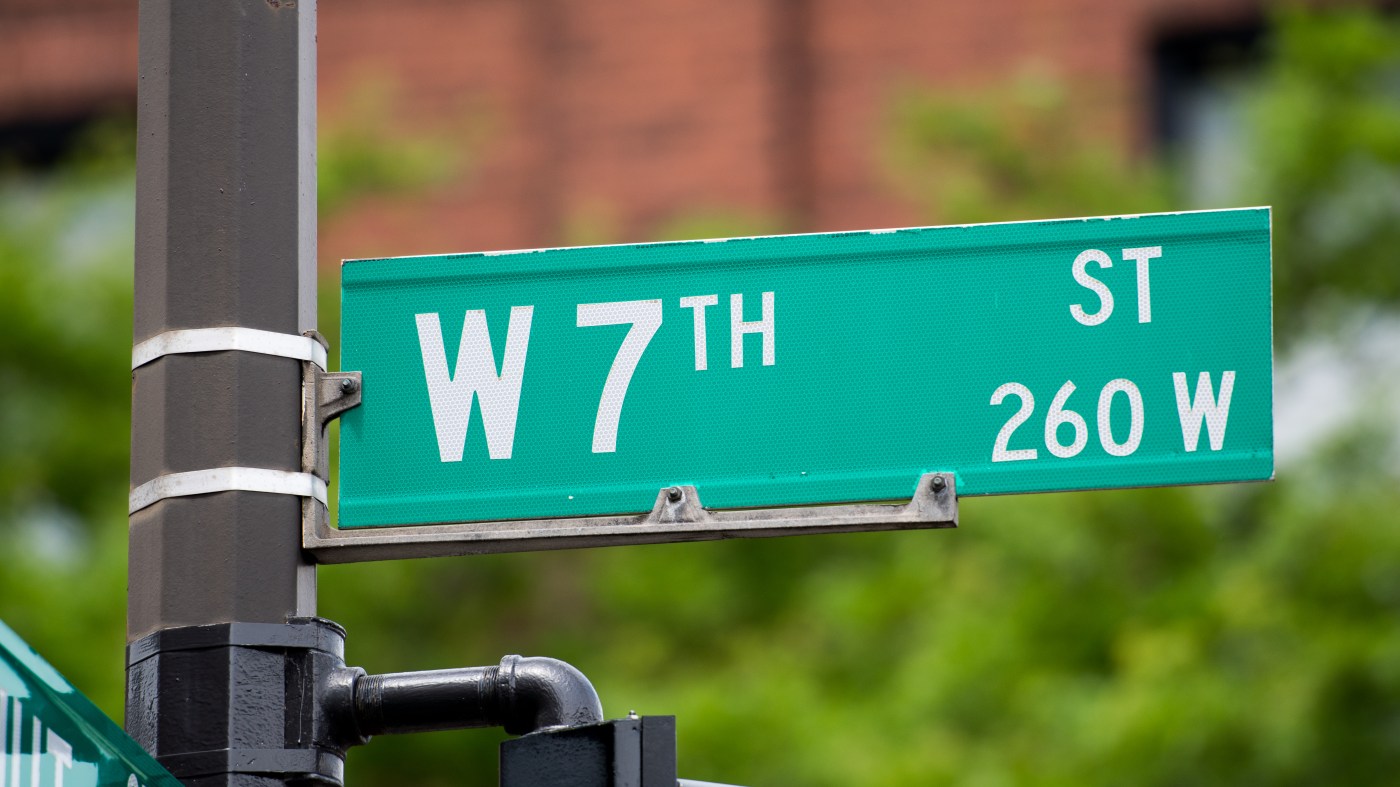
Local real estate investors are launching a new eco-friendly urban townhome complex at 1164 West Seventh Street in St. Paul. The sustainable townhome project is set to begin building later this year as long as more buyers are interested.

The eco-community homes will start at about $499,900 with two bedrooms and two and a half bathrooms. Two of the 1,403-square-foot units have tentatively been sold, leaving five remaining for sustainable-seeking homebuyers to sign onto. The project construction has not begun yet, however once more buyers are secured, the team is tentatively planning to get a permit for construction next August.

Realtor Tom Distad says with the property being located at 1164 West Seventh Street, the seven-unit complex would offer proximity to downtown dining, attractions, close transportation, and easy access to biking and walking trails.

Each townhome within the complex is to meet the standards of Minnesota Green Path certification. Key features include electric vehicle charging stations in every garage, high-efficiency HVAC systems, water conservation mechanisms, and even arranging the townhomes to be properly faced for solar panel use.

“We are trying to add value past what you see in the regular Twin Cities market but at a similar price,” said Distad, “this development is intended to marry sustainability and the local community.”

Distad has been a local to the St. Paul community and said he has worked in the West Seventh Street area since he was 17-years-old. In his personal life, Distad said he enjoys a wide range of eco-friendly amenities on his personal residence but says he understands that “there has always been that blue collar incentive to the West Seventh neighborhood.”

Distad says it is unusual that this development seems to be one of the first of it’s kind in that neighborhood because “not only does the state incentivize sustainable development, but locally the zoning regulations have drastically changed to prompt these types of developments.”

For more information contact the Distad team.

Related Articles

Local News |


For ‘public safety crisis’ of copper wire theft, MN legislators proposing licenses for sellers

Local News |


Letters: Just a suggestion for a lunch special in Duluth

Local News |


An urban farm on the edge: Nonprofit Frogtown Farm sends out emergency alert

Local News |


Former St. Paul City Council, Ramsey County Board member Ruby Hunt marks 100th birthday

Local News |


Spring and summer concert calendar includes Foo Fighters, Metallica, Nicki Minaj