3 months after launch, sales of Minnesota blackout plates near 50,000

posted in: Politics | 0

Just three months after they first went on sale, nearly 50,000 of Minnesota’s new blackout license plates are on vehicles traveling the state’s highways.

Predictions of high demand for the plates — which feature a simple design of white letters and numbers on a black background — have held true since they became available on Jan. 1.

As of the end of March, the state’s Driver and Vehicle Services Division reported 46,710 of the blackout plates had been sold. Hundreds more have been sold since then.

DVS officials said they expect to sell about 160,000 of the plates this year, which would make it the state’s most popular specialty license plate.

‘They look cool’

Greg Loper, vehicle services program director for DVS, said he heard from people excited to get the new plates months before they officially went on sale.

“They look cool. A lot of people really like for their car to have that look,” he said. “There’s a lot of black cars out there, there’s a lot of white cars out there right now. And so I think that the blackout plate looks cool on cars and it goes with the color scheme of a lot of cars. People are excited that this is just one more way that they can make their car look cool.”

The blackout plates are among eight new designs that have launched so far this year.

Five of the designs celebrate Minnesota sports teams — the Lynx, Timberwolves, Twins, Vikings and Wild. Of those, the Vikings plates have been most popular so far, with 1,801 sold as of the end of March, according to DVS statistics.

The Wild are next at 830, followed by the Twins at 714, the Timberwolves at 373 and 39 for the Lynx.

Loper said plates for NFL teams have tended to be the most popular in other states that have introduced sports team plates.

He also said it’s hard to fully gauge popularity until a full year has passed, and each team has completed a full season when sales likely would pick up. In the case of the Lynx, the WNBA season doesn’t begin until next month.

Charitable causes

The state also introduced the Missing and Murdered Indigenous Relatives Office plate earlier this year, with 608 sold as of the end of March. The eighth design launched so far this year was a Lions Club International plate, with 67 sold through the end of March.

Each of the new specialty plates costs $15.50, with a required additional minimum annual contribution.

Annual $25 contributions accompanying the Missing and Murdered Indigenous Relatives Office plate benefit the Gaagige-Mikwendaagoziwag Reward Account to raise attention about cases of missing and murdered Indigenous people.

Money raised by Lions Club and sports team plates go toward the charitable foundations set up by each organization. The sports team plates require minimum annual contributions of $30.

120 specialty plates offered

And for blackout plates — Loper said the minimum $30 annual contribution goes back to support the operations of DVS, which is self-funded.

“That money goes into the pot of money that the Legislature is able to use to fund Driver and Vehicle Services,” he said. “So this is a way that Driver and Vehicle Services is able to continue to do the great things that we’re doing without having to raise filing fees.”

DVS now offers more than 120 specialty license plates. Loper said the success of the blackout plate launch is a point of pride for his office and colleagues.

“We’re excited about the opportunity that we’ve been given to be able to provide something that the people of Minnesota really want,” he said. “The excitement that’s out there for the blackout plate is something that we enjoy seeing. And it’s kind of fun to look out on the roads when we’re driving along, see that plate and go, ‘Hey, that’s something that we’re doing.’”

Related Articles

News |


Marijuana law modifications are on tap before legal sales take root in Minnesota

News |


For ‘public safety crisis’ of copper wire theft, MN legislators proposing licenses for sellers

News |


Corrections officials, inmates say MN prison conditions a matter of public safety

News |


Letters: ‘Little money to work with’? What the heck?

News |


MN Legislature may pass gun bills on straw purchases, safe storage, reporting stolen weapons this session


Review: ‘The First Omen’ is a prequel with style, plus borderline NC-17 body horror

posted in: News | 0

I hate to call “The First Omen” unexpectedly well-crafted and a little bit surprising, even. But for an essentially unnecessary prequel to “The Omen,” the 1976 hit about one satanically-minded child, two unfortunate parents and three sixes, its virtues point to an auspicious feature debut from director and co-writer Arkasha Stevenson, a former Los Angeles Times photojournalist with an eye for sinister beauty.

That word “unexpected” doesn’t speak well of my occasional pre-judginess. I try not to pre-judge any movie, except an Eli Roth movie, and look where that got me: “Thanksgiving” turned out to be worthwhile! In a more considered vein, so has “The First Omen,” full of splurchy callbacks to various hangings, impalings and characters from the Richard Donner hit but with a visual confidence and personality of its own.

Rome doesn’t hurt, although in “The First Omen” it certainly doesn’t help young Margaret (Nell Tiger Free of the M. Night Shyamalan Showtime series “Servant”). An American with a troubled childhood, she’s a novitiate soon to take the veil thanks to her American sponsor, the high-ranking cardinal played by Bill Nighy. Much of the narrative, written by Stevenson, Tim Smith and Keith Thomas, unfolds in the confines of the orphanage to which Margaret has been assigned. The fearsome and very obviously secretive Sister Silva runs the place, and with that role taken by the great, gravel-voiced Sonia Braga, and with the disgraced Irish priest (introduced in the first “Omen”) played by Ralph Ineson, that’s a helluva pair of basso profundo voices, nicely suited to unholy menace.

The story’s 1971 setting introduces a host of societal upheavals that have hurt church attendance worldwide. Without giving the game away, “The First Omen” imagines what a powerful subset of Catholic leadership might resort to in order to get lapsed believers back into the pews and praying for their lives. Haunted by visions of demons, Margaret keeps an eye on the orphanage’s designated problem child, Carlita (Nicole Sorace), a similarly plagued loner. Is she the devil’s child?

“The First Omen” underwent some trims involving graphic footage of childbirth, of a sort, filmed forthrightly by director Stevenson but in ways, at least as recut to avoid an NC-17 rating, that aren’t the usual sort of horror movie fodder. Never mind the double standard: I’ve seen far more disgusting screen violence in R-rated movies made by men, in male-driven stories. Gynecological body horror remains a final frontier for some viewers. Roman Polanski did a lot with inference and suggestion in “Rosemary’s Baby,” five years before “The Exorcist” married crassness with piety and made a dubiously influential fortune.

“The First Omen” hardly qualifies for landmark or pantheon status. But it’s a movie that maximizes all its elements with some panache. Stevenson, editors Amy E. Duddleston and Bob Murawski and cinematographer Aaron Morton save the explicit gore for crucial sequences. Not everything tracks or comes together in “The First Omen”: Father Brennan’s expository dump regarding the church’s plans to retain power feels rushed and confused; some of the narrative and visual references to the ’76 film don’t do much for the one we’re watching. Even so, it’s a pretty tense experience.

It also has an off-center way into the main narrative, involving Margaret’s initiation, before taking the veil, into Rome’s nightlife. Her impishly sexy roommate and novitiate plays host and Maria Caballero, who plays her, is spectacularly expressive in close-up. As Margaret, Free works more unassumingly, but effectively, and there’s a pretty stunning moment when she undergoes a physical transformation (certainly mostly) without any digital effects assistance. It’s a long take, without cutting for shock emphasis. It works. And that kind of directorial instinct is most welcome.

“The First Omen” — 3 stars (out of 4)

MPA rating: R (for violent content, grisly/disturbing images, and brief graphic nudity)

Running time: 2:00

How to watch: Premieres in theaters April 4

Michael Phillips is a Tribune critic.


Minneapolis Mayor Jacob Frey, hospitality industry urge compromise on Uber, Lyft wages

posted in: News | 0

When Corbb O’Connor’s school-age son has a medical appointment, he has two choices as a visually-impaired parent — a 20-minute ride in a ridesharing vehicle like Uber, or a nearly two-hour trip on public transit in each direction to transport his child to and from school.

If Uber leaves the market, “my life’s not going to be over with,” said O’Connor, a Highland Park resident and president of the National Federation for the Blind. Still, “that’s a whole day off.”

With Uber threatening to roll out of the Twin Cities metro on May 1, Minneapolis Mayor Jacob Frey joined dozens of representatives of the hospitality industry and advocates for the elderly and disabled on Monday to urge the Minneapolis City Council to compromise on recently-mandated wage increases. “When we do this policy, we have to do it right,” Frey said. “These decisions have consequences.”

The Minneapolis council could take up a reconsideration vote on Thursday, the results of which may have deep implications for St. Paul and the eastern suburbs.

Impact of losing rideshare services

Uber has said that unless the wage increases are overturned, the company will pull out of the metro area entirely next month, which would be a particularly hard blow to restaurants and concert-goers, sports fans and members of the disability community, who in many cases rely on ride-hailing apps to access medical appointments and other services.

Lyft, the other major player in the ride-hailing market, has said it will maintain drivers in the Twin Cities after May 1, without completing trips that begin or end in Minneapolis.

Among more than 50 attendees at Frey’s press event in downtown Minneapolis on Monday was Jonathan Weinhagen, president and chief executive officer of the Minneapolis Regional Chamber of Commerce, who said he’s receiving questions from major event planners and site selectors on a daily basis.

Some have told him they’ll likely focus instead on Indianapolis, Austin, Texas, Boston and other competing markets until the transportation turmoil settles down.

“We’re being told we may not be considered: ‘You’re being taken off the shortlist,’” he said.

Concerns about visitor confusion and the potential impact on concerts, conventions and sporting events were echoed by officials with the Metropolitan Airports Commission, Hospitality Minnesota and the Intercontinental Hotel, as well as counterparts across the Mississippi River.

“This is an unfortunate example of local government action having negative implications outside its borders,” said B Kyle, president and chief executive officer of the St. Paul Area Chamber, in a written statement on Monday. “I hope the Minneapolis City Council will compromise before May 1, but if they do not, the state should step in. As we work to revitalize downtown St. Paul, we can’t allow these fantastic destinations — from the Science Museum to the Ordway to Wild and Saints games — to become more difficult to access.”

Compromise

Frey said he has presented the Minneapolis council with a range of wage options based on a new state study that found that raising wages to $1.20 per mile and $0.34 per minute would bring driver earnings in line with the Minneapolis citywide minimum wage of $15.57 per hour while also covering added benefits.

Lyft, in a recent letter to the Minneapolis City Council, has said it was open to compromise at an even lower level outlined in the study — $0.89 per mile and $0.49 per minute — which would cover the minimum wage and expenses like vehicle maintenance. The Minneapolis council last month overrode Frey’s veto and stuck to newly-adopted minimums of $1.40 per mile, $0.51 per minute.

“It wasn’t close,” said Frey on Monday. A call to Minneapolis Council President Elliott Payne was not immediately returned on Monday.

“The mayor has been clear and consistent in his push to both increase driver pay and ensure rideshare services continue operating in Minneapolis,” reads a written statement from Frey’s office. “The mayor would support a rate of pay increase in line with the recently released statewide study and is asking the city council to send him an ordinance that he can sign into law – one that reflects the data in the state’s study.”

Some skeptics believe the two ridesharing companies are bluffing and are unlikely to roll out of Minneapolis, which is likely their largest Midwest market after Chicago. However, the companies once pulled out of Austin, Texas for a year until the state governor stepped in to create uniform statewide rules around driver credentials.

Lyft, Uber alternatives

A handful of start-up ridesharing companies, including some that have established a footprint in other states, are gearing up to offer services in Minneapolis and St. Paul, but Frey noted it’s unlikely that any of them will soon bring the volume of Uber and Lyft, which employed some 8,000 drivers in the metro.

And, finding drivers may be the easy part. Uber and Lyft built up their services over more than a decade, getting around language barriers and other uncertainties of the traditional cab industry with state-of-the-art satellite mapping technology, driver rating systems, driver background checks, contactless payment and other consumer guarantees.

None of that has come cheap. As of December, Uber is said to have more than $9 billion in debt on its balance sheet, according to industry analysts.

O’Connor, of the National Federation for the Blind, noted that unlike Uber and Lyft, some start-up rideshare apps have been developed without input from the blind and disabled, and without sufficient testing, making them incompatible with smartphone apps for the visually impaired.

Among possible new entries into the Twin Cities market, a Woodbury entrepreneur hopes to launch MOOV, and the chief executive officer of Austin, Texas-based Wridz said his company will roll into the market, whether Uber and Lyft depart or not.

Driver-owned platform

A coalition of drivers has formed the Minnesota Uber-Lyft Driver Association, which is using online fundraising to launch a driver-owned rideshare platform with support from the team that built Co-op Ride in New York City.

“Let Uber and Lyft leave,” reads a statement from the association, which announced on Saturday it had signed up more than 1,500 drivers in the previous week.

“At this point the major barrier is funds,” wrote labor organizer and co-founder Erik Forman, in an email to supporters this weekend. “If we can get to $35k in donations, I think we can inspire foundations or investors to provide the rest of what we need.”

In an interview last month, Randy Wang, founder of San Francisco-based Wingz, said his company had not previously considered the Twin Cities market. Wingz, which launched in California as an airport service, has transitioned to the “NEMT” market — non-emergency medical transportation — focused on bringing customers to and from medical appointments, often backed by Medicare and Medicaid reimbursements.

Wingz, which has a sizable presence in Georgia’s NEMT market, plans to expand into Arkansas and Tennessee.

“These would all be on the medical side, exclusively,” Wang said. “Minnesota hasn’t been on our radar, but we’re definitely eyeing the news. If we had to meet the new requirements, we probably could pull it off, but haven’t really looked into it yet.”

Related Articles

Local News |


Justus Ramsey Stone House could rise again — with $500,000 in proposed Legacy Act backing

Local News |


Lime, Spin to roll scooters, electric-assist bike-sharing back to St. Paul

Local News |


Metro Transit to debut St. Paul-to-Woodbury Gold Line on March 22, 2025

Local News |


Metro Transit expands Northstar service to Twins, Vikings games

Local News |


Millions of recalled Hyundai and Kia vehicles with a dangerous defect remain on the road

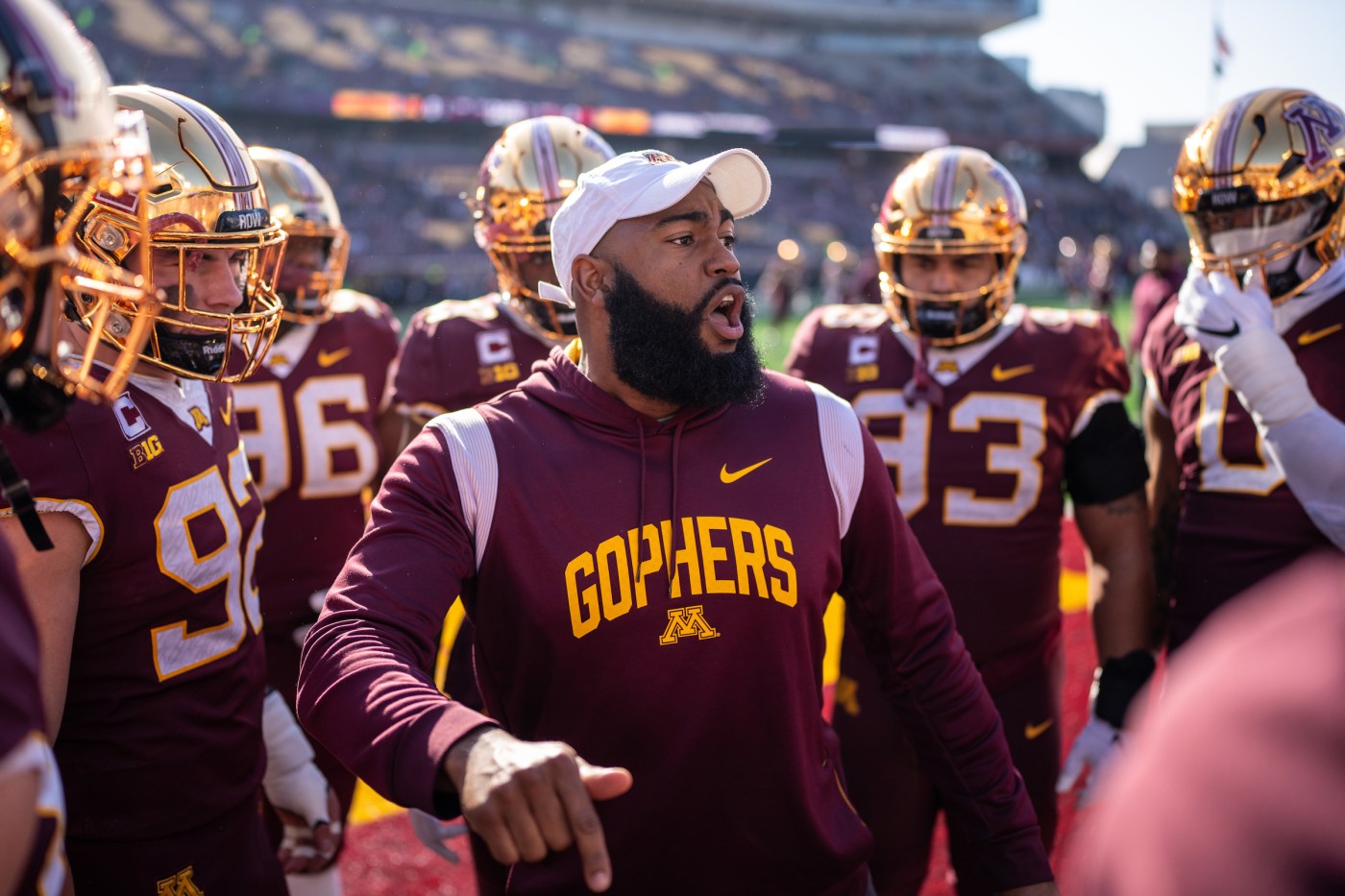
Gophers football coach draws laughter on NBC game show appearance

posted in: News | 0

Winston DeLattiboudere was in front of bright lights and cameras again on Monday, but a group interview with local media members paled in comparison to his March appearance on the NBC game show “Password.”

The Gophers assistant football coach was partnered with late-night host Jimmy Fallon versus Jimmy Kimmel and another guest player, with Keke Palmer as host.

DeLattiboudere, a former Gophers defensive lineman, had played the word-association game at home with friends, but after advancing through a few rounds of video auditions, he got a little star struck when filming across from the comedians and in front of a studio audience in Los Angeles.

“I’m looking at them like, ‘OK, don’t mess up, don’t mess up, don’t mess up,’ ” DeLattiboudere shared Monday from the Gophers’ Larson Football Performance Center.

DeLattiboudere and Fallon lost, but they did provide some comic relief. In one online promo, Fallon says “bread” in a supposed French accept, looking for the word “baguette.” But Winston appeared to get hung up on the impression and answers “Dracula.”

In the edited cut-up, Kimmel turns to his female parter and says, “I think we are going to be OK.”

“It was an awesome experience overall, but I wish I would have came home with the win,” DeLattiboudere said. “That’s what I’ll say: I’m competitive by nature.”

DeLattiboudere’s wife, Shelby, saw a social media plug asking if people wanted to be on TV. She commented, “of course.”

Someone with NBC direct messaged her asking if she knew any coaches; she didn’t have to look far.

“All of a sudden she tells me I need you to be on this Zoom,” DeLattiboudere said. “OK. I will be on this Zoom and you are going to be playing ‘Password’ against these people.

“I thought it was a scam — whole entire time. … But my wife is asking me to do it. I don’t want to argue with her right now, so I’m just going to keep on going. The first round (audition) turned to the second round turned to the third round.”

Then he got the call to be on the TV show, but he was instructed to keep it quiet. “The one person I did have to tell was coach (P.J.) Fleck, but he kept that secret for me,” DeLattiboudere said. “He held it down.”

DeLattiboudere, 26, has climbed the coaching ranks since playing for the U from 2015-19. After stops at Charlotte, Oregon and Akron, He was hired as the U’s defensive line coach in January 2023. The Baltimore native has been named to best young coaches’ lists, and in January, he was promoted to Gophers’ assistant head coach.

“Coach Fleck called me into the office; we had a very long discussion and conversation,” DeLattiboudere said of his offseason promotion.. “Right before I walked out, after he let me know the good news, he was like, ‘Look at you. You were just running around out there in pads, now you are the assistant head coach.’ … It was a really cool mentor-mentee, kind of like a father-son moment.”

Related Articles

College Sports |


Gophers add California quarterback Jackson Kollock to 2025 recruiting class

College Sports |


Gophers snag Badgers football commitment in Wisconsin defensive lineman Torin Pettaway

College Sports |


Gophers season ends in NIT second-round loss to Indiana State

College Sports |


Gophers defense simplifying scheme to play faster

College Sports |


Charley Walters: Futures of Kwesi Adofo-Mensah and Kevin O’Connell hinge on picking right quarterback