Speaker Johnson will delay sending Mayorkas impeachment to Senate as Republicans push to hold trial

posted in: Politics | 0

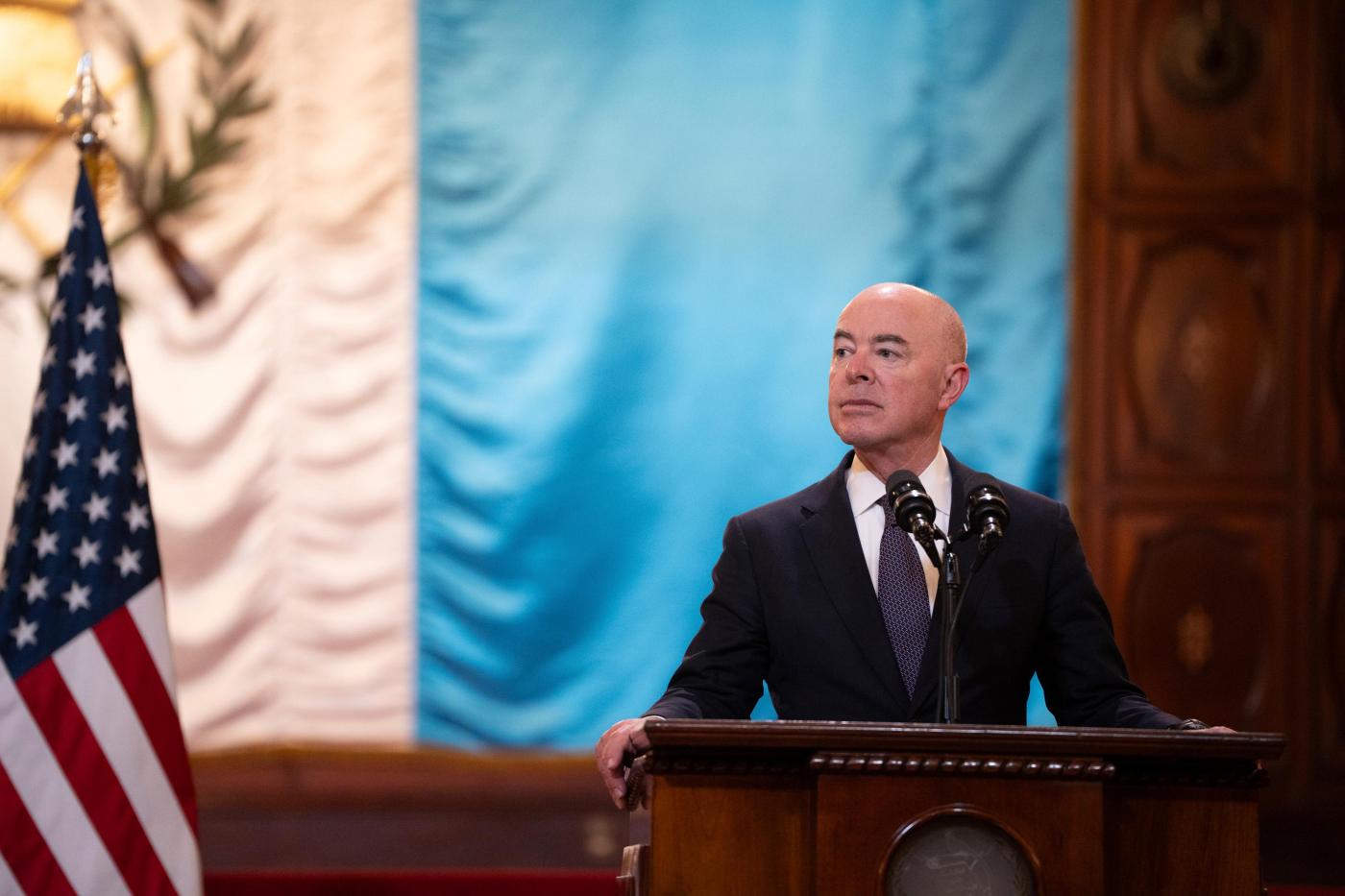
WASHINGTON (AP) — Speaker Mike Johnson will delay sending the House’s articles of impeachment against Homeland Security Secretary Alejandro Mayorkas to the Senate this week as planned, after Republican senators requested more time Tuesday to build a case for a full trial.

The sudden change of plans cast fresh doubts on the proceedings, the historic first impeachment of a Cabinet secretary in roughly 150 years. House Republicans impeached Mayorkas over the Biden administration’s handling of security and immigration at the U.S.-Mexico border.

Senators were expected to swiftly dismiss the House-passed charges against Mayorkas. Democrats, who hold majority control of the chamber, argue the charges do not rise to the constitution’s bar of high crimes and misdemeanors.

Johnson was planning to have the House impeachment managers transmit the articles against Mayorkas on Wednesday evening. Under procedural rules, that would require senators to convene the next day as jurors for a trial to decide whether to convict or acquit the secretary of charges.

Thursday’s trial was expected to be over quickly after some procedural votes to table or dismiss the charges.

But Republicans intent on holding Mayorkas accountable for border security are pushing for a full trial. Republican senators spoke during a private GOP lunch Tuesday about using a delay to build the case.

“To ensure the Senate has adequate time to perform its constitutional duty, the House will transmit the articles of impeachment to the Senate next week,” said Johnson’s spokesman, Taylor Haulsee. “There is no reason whatsoever for the Senate to abdicate its responsibility to hold an impeachment trial.”

Twins acquire relief pitcher Michael Tonkin in trade with Mets

posted in: News | 0

As their bullpen struggles with a injuries, the Twins added an extra arm on Tuesday afternoon, acquiring relief pitcher Michael Tonkin in trade with the New York Mets. All it cost the Twins was cash considerations after the the Mets recently designated Tonkin for assignment amid a slow start to this season.

This is a full circle moment for Tonkin after he broke into the majors with the Twins more than a decade ago. He pitched for the Atlanta Braves last season.

It remains to bee seen how the Twins plan to deploy Tonkin on the mound. He will certainly be used at some point considering the Twins are currently without middle relievers Caleb Thielbar, Justin Topa, and Daniel Duarte, as well as star closer Jhoan Duran.

Related Articles

Minnesota Twins |


Shohei Ohtani puts on a show to lead Dodgers past Twins

Minnesota Twins |


Twins recall infielder Jose Miranda for some added offensive firepower

Minnesota Twins |


Twins-Guardians series finale washed out by rain

Minnesota Twins |


Twins bullpen an early bright spot as team awaits return of trio of arms

Minnesota Twins |


Slow-starting Twins’ offense held to just two hits in loss to Guardians

Mercury emissions from cremation rise in Minnesota

posted in: News | 0

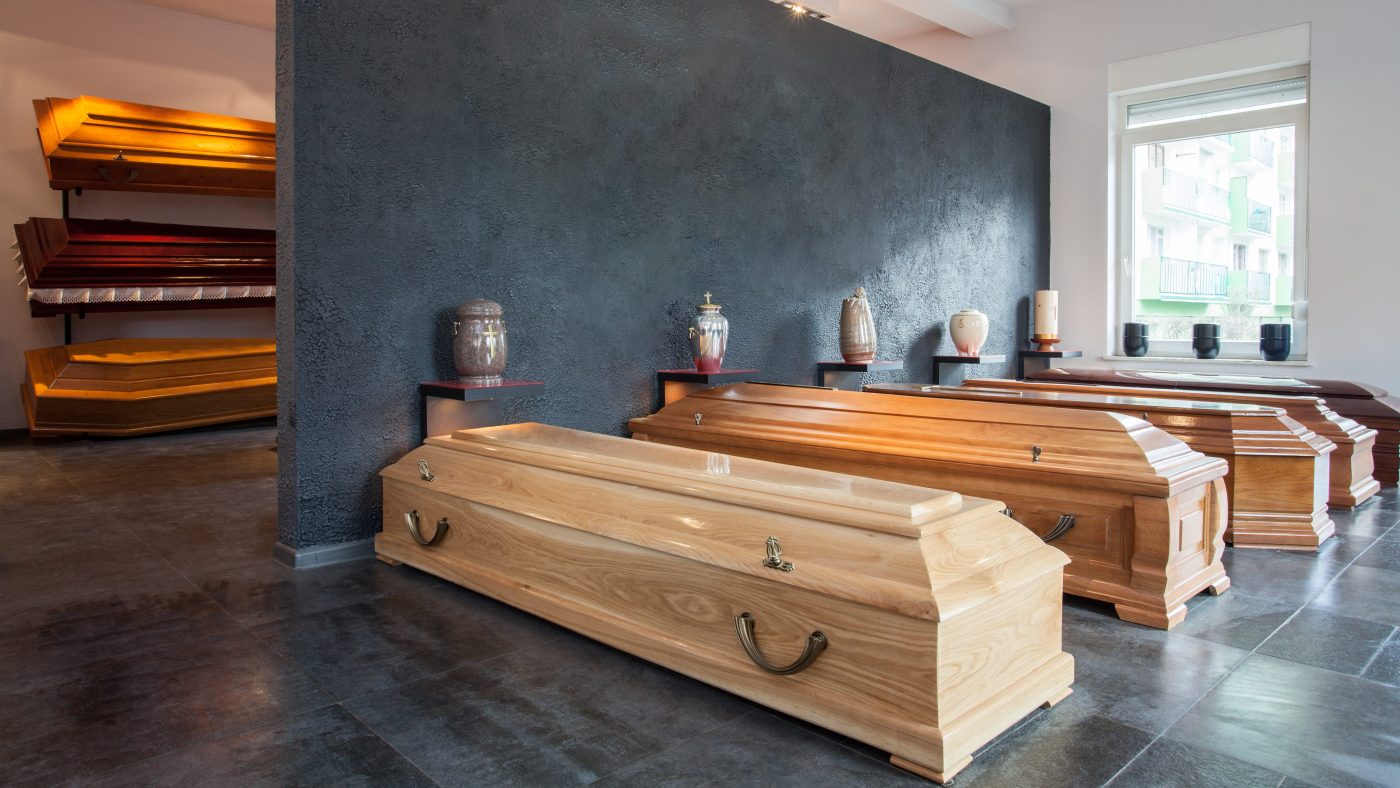
DULUTH — Ashes to ashes, dust to dust, dental fillings to mercury emissions.

As Minnesotans increasingly choose cremation, mercury pollution from the practice has risen, too, even as mercury emissions from other industries have fallen dramatically.

While Minnesota’s total mercury emissions dropped by 60% from 2005 to 2022, mercury emissions from cremation almost doubled — from 80 pounds in 2005 to 149.6 pounds in 2022, according to the Minnesota Pollution Control Agency.

According to the Cremation Association of North America, 72.7% of the state’s more than 51,100 deceased were cremated in 2022, up more than 6 percentage points in four years.

When dental amalgam — a tooth filling made up of elemental mercury, silver, copper, tin and zinc — is exposed to extremely high cremation temperatures, the mercury volatilizes and enters the atmosphere as vapor. It can then return to earth, converting to toxic methylmercury as it enters the food chain.

“You’re gonna have pretty close to 100% release of mercury from fillings through the stack into the atmosphere,” said John Gilkeson, principal planner at the Minnesota Pollution Control Agency.

(Gary Meader / Duluth Media Group)

Lack of regulations

In 2022, mercury emissions from cremation made up nearly 11.3% of the state’s mercury emissions.

The state has made massive reductions in mercury emissions, namely from coal-fired power plants and even from the wastewater of dentist offices that perform dental amalgam, but the state is not on pace to meet a goal of reducing cremation emissions to 32 pounds of mercury by next year, a goal set in the MCPA’s 2009 statewide mercury total maximum daily load implementation plan.

The state’s overall goal of 789 pounds of mercury emissions per year across all sectors will also be missed, largely due to the taconite industry’s resistance to installing mercury-reduction systems.

It’s not that smaller mercury reduction systems for crematoriums don’t exist — it’s the lack of regulations.

According to Gilkeson, who has worked on mercury product issues for more than 30 years, European crematoriums are being retrofitted with emission-reducing systems, but Minnesota does not require crematoriums to reduce mercury emissions.

“We do not have any regulations here — through our air quality rules or through health department rules — to address these emissions,” he said. “So there’s no drivers, I guess, to install the equipment.”

It’s also expensive.

The University of Minnesota School of Dentistry studied the issue a decade ago and determined scrubbers “are too costly for the majority of small crematoria, which perform low numbers of cremations.”

Hassan Bouchareb, an engineer in the MPCA’s air policy group, said Minnesota’s lack of regulations around mercury from cremation is not unique.

“As far as we know, there’s nothing like that in the United States,” he said.

But there have been attempts at preventing mercury from entering an incinerator in the first place.

From at least 2005 to 2007, bills introduced at the Minnesota Legislature would have required the removal of fillings from corpses before cremation, but the bills never became law.

The U of M School of Dentistry described pre-cremation tooth extraction as “problematic” because rigor mortis — the stiffening of a body after death — and embalming restrict access to the back teeth. Ceramic crowns may also cover the fillings, while dental records and X-rays may not be available before cremation, the school said.

Gary Meader / Duluth Media Group)

Demographic decrease

In 2014, the MPCA and University of Minnesota estimated that a cohort of Minnesotans ages 63-79 had, on average, 2.3 grams of mercury in fillings. But that decreases with subsequent generations, Bouchareb said.

In response to the News Tribune’s request for comment, the American Dental Association, or ADA, pointed to a 2023 study by Epic Research, an arm of the Wisconsin-based health care software company Epic, which found less than 6% of dental fillings of back teeth in 2022 were made of amalgam, down from 21% in 2017. Resin and composite fillings make up an increasing share of dental fillings.

Related Articles

Health |


3 months after launch, sales of Minnesota blackout plates near 50,000

Health |


Total solar eclipse wows North America

Health |


Corrections officials, inmates say MN prison conditions a matter of public safety

Health |


DNR expands burning restrictions as wildfire risk increases in northwest Minnesota

Health |


Wisconsin loon decline spurred by more rain, less water clarity, study finds

Bouchareb said even if cremations continue to increase, their mercury emissions will eventually decrease.

“People take better care of their teeth,” he said. “There’s less mercury used in dental applications.”

That’s how Barbara Kemmis, executive director of the Cremation Association of North America, sees it.

“This is a demographic issue, as generally speaking, (the) Silent Generation and baby boomers are likely to die before their crowns and fillings are replaced with porcelain implants,” she said in an email to the News Tribune. “Younger generations will not have mercury amalgam in their mouths at all.”

Kemmis proposed replacing amalgam with other mercury-free materials.

“A solution within our control is to replace silver fillings and crowns with porcelain,” she said.

But in October 2022, the ADA’s House of Delegates adopted a policy that said advocating the removal of amalgam for the sole purpose of replacing it with a material that doesn’t have mercury is “unwarranted” and violates the organization’s code of ethics and principles of professional conduct.

The policy suggests clinicians should “review the risks and benefits of all restorative options with their patients, and that dental amalgam restorations continue to be used when appropriate for patient care.”

While the ADA maintains the material is safe for patients, it supports a phase-out of dental amalgam.

Mercury in the environment

Nathan Johnson, a professor at the University of Minnesota Duluth’s civil engineering department who studies how mercury moves and transforms through waterbodies and wetlands, said some 90% of mercury in the state comes from elsewhere.

“It’s more of a global pollutant than a regional pollutant,” he said. “Mercury just spends a long time in the atmosphere. So a lot of the mercury that ends up in the precipitation that falls on Minnesota, some of it is from Minnesota … but it comes from other parts of the country or the world as well.”

After it falls as inorganic mercury, bacteria can convert it into the toxic form methylmercury.

The Northland’s wetlands are ripe for that transformation.

“Those are the places that are the most efficient at producing methylmercury from inorganic mercury,” Johnson said. “So watersheds or waterbodies that have a lot of wetlands or a lot of goopy sediment at the bottom of the lake, that’s where the conversion to the bio-accumulative form happens.”

It builds up in fish and then anything that eats the fish. That’s the main way it reaches people, Johnson said.

For fetuses, infants and children, the U.S. Environmental Protection Agency says the primary health effect of methylmercury is impaired neurological development.

In 2011, the Minnesota Department of Health found that 10% of Minnesota infants born in the Lake Superior basin had mercury levels above the U.S. Environmental Protection Agency’s reference dose for methylmercury.

Johnson said emissions and mercury concentrations in the atmosphere have been declining, but it will take time for the amount accumulated on the landscape to either wash away or be buried.

Research is also trying to determine the effect of climate and land-use changes on the efficiency of converting inorganic mercury to methylmercury.

“Eventually, the source reductions will become realized as lower mercury everywhere,” Johnson said. “But until that happens, the rate of mercury accumulation may depend largely on this conversion rate, not necessarily the sources.”

Related Articles

Health |


Burden of getting medical care can exhaust older patients

Health |


How do wildfires affect mental health? A new study examines the connection

Health |


Menstrual cycles can affect day-to-day suicide risk, study finds

Health |


Four years after shelter-in-place, COVID-19 misinformation persists

Health |


Hospitals cash in on a private equity-backed trend: concierge physician care

‘Franklin’: What Michael Douglas learned about democracy in new series

posted in: News | 0

Apple TV+’s eight-part series on Benjamin Franklin does a bang-up job of depicting chess-like political maneuvering and landmark bargaining sessions that helped shape the course of history.

But “Franklin” doubly serves as a warning that democratic systems like the one the series namesake helped create are under attack across the globe.

At least that’s how Michael Douglas, who brings decades of acting prowess to the series’ titular role, views it.

Douglas adds another quiver to his impressive acting cap as the nimble-witted, immensely quotable inventor, author, publisher and founding father. “Franklin” hones in on how the publisher of the annual “Poor Richard’s Alamanack” voyaged to France in 1776 where he served as the pivotal dealmaker who shrewdly convinced France to join the Colonies’ fight for independence against the British.

“I think that it really shares with us the fragility of a democracy and just how fragile this concept is, and how it has to be nourished and protected,” said the award-winning actor and producer during an interview to promote “Franklin,” which debuts on Apple TV+ on April 12.

“That becomes clear and evident (during the series) and has echoes of what’s going on in our contemporary times,” Douglas added. “For democracies are endangered species. They are being overrun by autocracies around the world. And I think (democracies are) an extraordinary system. And when you get into a show like this and realize how brilliant this concept was, it’s something that we should be protecting.”

The final episode of this intelligently scripted series from screenwriters Kirk Ellis (“John Adams”) and Howard Korder (“Boardwalk Empire”) particularly coalesces around that theme.

“Franklin” was adapted from the 2005 nonfiction book “The Great Improvisation: Franklin, France, and the Birth of America,” by Pulitzer Prize winner Stacy Schiff. The book covers an oft-overlooked chapter from American history.

Tim Van Patten directed all eight episodes, and the 79-year-old Douglas served as an executive producer along with Schiff and others. Three episodes of the miniseries drop April 12 with one episode following every Friday through May 17.

Douglas admits he was in the dark about the critical role that Franklin played in wooing France to help fund, arm and fight for the fledgling United States’ freedom. Franklin stayed in France for eight years and was joined part of that time by the more stern John Adams (Eddie Marsan), with whom he sparred often, but who also played an instrumental role in making the Treaty of Paris of 1783 happen.

“Unbelievably,” Douglas added, “I was not aware of the most important part, which was after all that Franklin accomplished, at 70 years old, he goes over to France to really save America because we we were in a war with the British and we didn’t have any weapons’ or money or army … nothing. So he went over to this monarchy to try to talk them into it, with all the intrigue and spies. I didn’t know that part and found it really fascinating and ultimately realized that if it weren’t for France we would not have an America.”

While in France, Franklin dodged double agents while receiving a celebrity greeting — due, in part, to his experiments with electricity — and wooed women all around him, as he known to do.

Douglas was joined in this interview by co-star Noah Jupe (“A Quiet Place” and its sequel) who portrays Franklin’s ambitious grandson Temple in the miniseries. He knew zip about Franklin.

“I’m from the U.K.,” the 19-year-old actor explains. “In my high school history class, we didn’t even talk about the American Revolution. So for me, I had a big learning curve in the sense of learning about the entire history of America.”

Temple gets swept up in his grandfather’s mission and while in France served as his secretary. His father was a British loyalist, and estranged from Benjamin Franklin.

Jupe hopes “Franklin” encourages more people into becoming involved in striving for the common good.

“As a society today, I think we’re all very comfortable in our lives and it’s very difficult to change the way things are. I think that this (series) really shows how much work and bravery you have to put in to make things change and to stand for what you believe in and make your country or the world a better place … . That’s important and rare in today’s world.”

Jupe was impressed by Temple’s youth and how he participated in something monumental.

“You’re getting on a ship for 60 days sailing across the sea to a world where everyone speaks a different language (and) everyone is dressing in a different way. Temple’s there for the purpose of America and that’s the priority. But also he’s trying to grow up.”

Douglas grew up as the son of the late Hollywood legend Kirk Douglas. The actor turned heads and won hearts — especially in the Bay Area — as homicide inspector Steve Keller in the hit 1972-77 series “The Streets of San Francisco.” His career caught fire from there. But it was as producer on 1975’s “One Flew Over the Cuckoo’s Nest,” with Jack Nicholson and the late Louise Fletcher, that nabbed him his first of two Oscars — as a producer.

He also took home the best actor Oscar for his unscrupulous moneymaker Gordon Gekko in 1987’s “Wall Street.” Numerous other iconic roles have bookended his long career, which have included him even appearing in Marvel superhero films. In addition to his Oscars, he’s won five Golden Globes, an Emmy and has received the Cecil B. DeMille Award and the AFI Lifetime Achievement Award.

“Franklin” marks a bit of a change for Douglas — an historical period piece. He enjoyed this new direction.

“I think there’s been a big shift to historical pieces,” Douglas said. “I think a lot of it had to do with ‘Bridgerton’ quite honestly.”

To research his role, Douglas dove into Schiff’s biography as well as Walter Isaacson’s 2003 “Benjamin Franklin: An American Life.”

Both Jupe and Douglas appreciate how this story gets told in a series not a stand-alone film.

“It’s accessible all over the world on this platform,” Jupe said.

Douglas sees the length as being beneficial to the intricacies of the material.

“It’s a story to be told in eight hours, not just two hours,” he said, adding he’s proud of the production design and Van Patten’s direction.

“It takes place over eight years and it needs that amount of time,” he said.