Karl W. Smith: The Trump tax cuts were neither panacea nor rip-off

posted in: Politics | 0

Back in 2017, the debate around President Donald Trump’s tax cuts was a case study in how quickly a discussion around legitimate policy can descend into partisan nonsense. On one side, Republicans spouted unfounded claims that the tax cuts would pay for themselves. On the other, Democrats spouted equally unfounded claims that only big business and the wealthy would benefit.

As usual, the truth landed somewhere in the middle. No, the Tax Cuts and Jobs Act of 2017 didn’t pay for itself but at this moment reversing the marquee part of the legislation — lower tax rates for companies — to help narrow the bulging budget deficit is the last thing we should do. And while the cuts yielded benefits to Americans up and down the income scale, the benefits could best be described as modest.

Understanding what the legislation did and didn’t do is relevant now because they expire in 2025, and whoever wins this year’s presidential election will have to decide whether to extend them. What’s not in dispute is that the act represented the most sweeping overhaul of the tax system since the Reagan administration. For businesses, it aimed to spur capital spending by slashing the corporate tax from 35% to 21%. For individuals, it lowered rates across the board and simplified the code by limiting itemized deductions, increasing the standard deduction taken by those who don’t itemize and expanding access to the child tax credit.

The problem now is that largely because of fiscal spending to support the economy through the pandemic, the federal budget deficit has expanded to 6.44% of gross domestic product from 4.67% at the end of 2019, which at the time was the biggest shortfall since 2013. Also, the cost of servicing the deficit by borrowing has soared along with benchmark interest rates the last two years. For this reason alone, it’s possible some, but not all, the cuts will reversed. But which ones?

Whatever is decided, the corporate cuts are probably the last thing we want to repeal.

Despite the insistence of Republicans, who point to the rise in federal revenue following 2017, we can’t shrink the deficit by further reducing taxes. In 2022, federal revenue came in at $4.9 trillion, far higher than the $4.2 trillion predicted by the bi-partisan Congressional Budget Office before the tax cuts. Two factors are responsible for the outperformance. One, capital gains tax revenue jumped following the stock market’s big rally in 2020 and 2021. Two, a worker shortage during the pandemic caused wages to rise by almost 5% over the course of 2021. Higher wages not only led to higher incomes but also pushed many Americans into higher tax brackets, thereby increasing revenue.

Democrats have described the tax cuts as only benefiting the wealthy. This is also a gross distortion of the facts. Between 2017 and 2019, taxpayers at both the bottom and top of the income scale saw their average tax rate decline by a little less than 1%. Those in between saw more significant reductions, with the upper middle class — defined as those making $200,000 to $500,000 a year — seeing their tax rates decline by 2.5%. This reflects the fact that many of them are small business owners who, along with big corporations, received additional tax cuts designed to encourage economic growth.

In theory, cutting taxes on businesses encourages them to expand production because it increases their after-tax profit margins. Hence, companies are more willing to hire workers and invest in new technology or equipment to boost sales, spurring economic growth.

In practice, many Democrats and even some Republicans were concerned that businesses would use those higher profits to fund stock buybacks or higher dividend payouts to investors. Indeed, buybacks did increase sharply after 2017. For example, Apple Inc. doubled stock buybacks as its investment in the US declined. That was a bad look, but it doesn’t necessarily mean tax cuts didn’t work. If there had been none, Apple might have decided to decrease investment even more to fund stock buybacks.

Teasing out precisely what effect the Trump tax cuts had on a particular company’s investment decisions requires a deep dive into financial and tax records. Four economists from Harvard University, Princeton University, the University of Chicago and the US Treasury Department conducted a detailed analysis of more than 12,000 companies. The results released last month found that companies which experienced larger increases in their return on investment as a result of the tax cut, boosted their investment spending by larger amounts.

With their results, the economists calculated the effect lower tax rates had on the broad economy. Their estimates show that from 2018 to 2023, the Trump tax cuts raised annual investment by a little more than 7%. That equates to an additional $265 billion in private investment in 2023. They also estimated that increased business investment raised the average worker’s wages by about 1% — an income boost roughly equal to what millions of Americans got directly from the tax cuts. Yet, the corporate tax cuts cost $450 billion in the form of decreased federal revenue, compared with $1.1 trillion for individual tax cuts.

The Trump tax cuts were neither an economic panacea nor a rip-off. They produced a modest but meaningful increase in income for working Americans, both by reducing their tax burdens and increasing their wages. Lawmakers should keep this in the front of their minds as they debate how much, if any, of those tax cuts to keep.

Karl W. Smith is a Bloomberg Opinion columnist. Previously, he was vice president for federal policy at the Tax Foundation and assistant professor of economics at the University of North Carolina.

Related Articles

Opinion |


Trudy Rubin: Will Speaker Mike Johnson stand up to Trump and allow House vote on Ukraine aid?

Opinion |


Sarah Green Carmichael: The ‘Great Wealth Transfer’ is a delusion

Opinion |


Thomas Friedman: Israel: Cease-fire, get hostages, leave Gaza, rethink everything

Opinion |


Steven Hill: Financial literacy is good for Americans, and for the country

Opinion |


Other voices: The U.S. still owes a debt to its Afghan allies
Manhattan court must find a dozen jurors to hear first-ever criminal case against a former president

posted in: Politics | 0

By JENNIFER PELTZ (Associated Press)

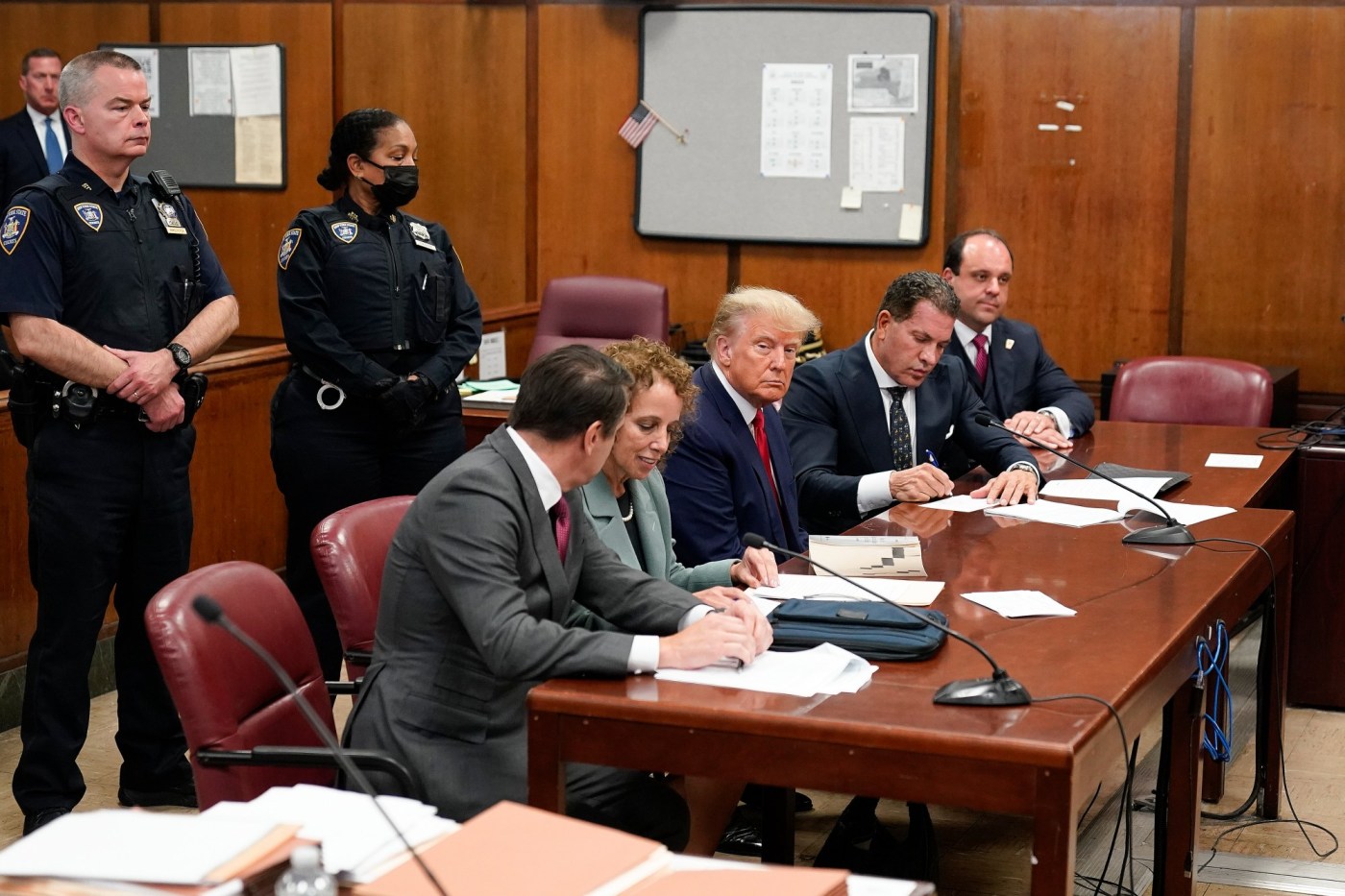
NEW YORK (AP) — Of the 1.4 million adults who live in Manhattan, a dozen are soon to become the first Americans to sit in judgment of a former president charged with a crime.

Jury selection is set to start Monday in former President Donald Trump’s hush money case — the first trial among four criminal prosecutions of the presumptive Republican presidential nominee. The proceedings present a historic challenge for the court, the lawyers and the everyday citizens who find themselves in the jury pool.

“There is no question that picking a jury in a case involving someone as familiar to everyone as former President Trump poses unique problems,” one of the trial prosecutors, Joshua Steinglass, said during a hearing.

Those problems include finding people who can be impartial about one of the most polarizing figures in American life and detecting any bias among prospective jurors without invading the privacy of the ballot box.

There’s also the risk that people may try to game their way onto the jury to serve a personal agenda. Or they may be reluctant to decide a case against a politician who has used his social media megaphone to tear into court decisions that go against him and has tens of millions of fervent supporters.

Still, if jury selection will be tricky, it’s not impossible, says John Jay College of Criminal Justice psychology professor Margaret Bull Kovera.

“There are people who will look at the law, look at the evidence that’s shown and make a decision,” says Kovera, whose research includes the psychology of juries. “And the job of the judge and the attorneys right now is to figure out who those people are.”

Judge Juan Merchan’s Manhattan courtroom sits empty between proceedings, Tuesday, March 12, 2024, in New York. A dozen Manhattan residents are soon to become the first Americans ever to sit in judgment of a former president charged with a crime. Jury selection is set to start Monday in former President Donald Trump’s hush-money trial. (AP Photo/Seth Wenig)

Trump has pleaded not guilty to fudging his company’s books as part of an effort to conceal payments made to hide claims of extramarital sex during his 2016 campaign. He denies the encounters and contends the case is a legally bogus, politically engineered effort to sabotage his current run.

He will go on trial in a criminal court system where juries have decided cases against a roster of famous names, including mob boss John Gotti, disgraced film mogul Harvey Weinstein and Trump’s own company.

Over the last year, writer E. Jean Carroll’s sex assault and defamation civil suits against Trump went before juries in a nearby federal courthouse. New York state’s fraud lawsuit against the ex-president and his company went to trial without a jury last fall in a state court next door.

But the hush-money case, which carries the possibility of up to four years in prison if he’s convicted, raises the stakes.

Trump lived for decades in Manhattan, where he first made his name as a swaggering real estate developer with a flair for publicity. As Steinglass put it, “There is no chance that we’re going to find a single juror that doesn’t have a view” of Trump.

Related Articles

National Politics |


Manhattan District Attorney Alvin Bragg says Trump’s hush money criminal trial isn’t about politics

National Politics |


Trump is about to go on trial in New York. Here’s what to expect

National Politics |


New York appeals court rejects Donald Trump’s third request to delay Monday’s hush money trial

National Politics |


Trump says leave abortion to the states. That’s where it gets complicated

National Politics |


As medical perils from abortion bans grow, so do opportunities for Democrats in a post-Roe world

But the question isn’t whether a prospective juror does or doesn’t like Trump or anyone else in the case, Judge Juan M. Merchan wrote in a filing Monday. Rather, he said, it’s whether the person can “set aside any personal feelings or biases and render a decision that is based on the evidence and the law.”

The process of choosing a jury begins when Merchan fills his New Deal-era courtroom with prospective jurors, giving them a brief description of the case and other basics. Then the judge will excuse any people who indicate by a show of hands that they can’t serve or can’t be fair and impartial, he wrote.

Those who remain will be called in groups into the jury box — by number, as their names won’t be made public — to answer 42 questions, some with multiple parts.

Some are standard inquiries about prospective jurors’ backgrounds. But the two sides have vigorously debated what, if anything, prospective jurors should be asked about their political activities and opinions.

Merchan emphasized that he won’t let the lawyers ask about jurors’ voting choices, political contributions or party registration.

But the approved questionnaire asks, for example, whether someone has “political, moral, intellectual or religious beliefs or opinions” that might “slant your approach to this case.” Another query probes whether prospective jurors support any of a half-dozen far-right or far-left groups, have attended Trump or anti-Trump rallies, and have worked or volunteered for Trump or for organizations that criticize him.

Potential jurors also will be quizzed about any “strong opinions or firmly held beliefs” about Trump or his candidacy that would cloud their ability to be fair, any feelings about how Trump is being treated in the case and any “strong opinions” on whether ex-presidents can be charged in state courts.

The process of choosing 12 jurors and six alternates can be chesslike, as the opposing sides try to game out whom they want and whom their adversaries want. They must also weigh which prospective jurors they can challenge as unable to serve or be impartial and when it’s worth using one of their limited chances to rule someone out without giving a reason.

“A lot of times you make assumptions, and arguably stereotypes, about people that aren’t true, so it’s important to listen to what they say” in court and, if possible, online, says Thaddeus Hoffmeister, a University of Dayton law professor who studies juries.

FILE – Former President Donald Trump speaks before entering the courtroom at Manhattan criminal court, Thursday, Feb. 15, 2024, in New York. A dozen Manhattan residents are soon to become the first Americans ever to sit in judgment of a former president charged with a crime. Jury selection is set to start Monday in former President Donald Trump’s hush-money trial. (AP Photo/Mary Altaffer, File)

In prominent cases, courts and attorneys watch out for “stealth jurors,” people trying to be chosen because they want to steer the verdict, profit off the experience or have other private motives.

Conversely, some people might want to avoid the attention that comes with a case against a famous person. To try to address that, Merchan decided to shield the jurors’ names from everyone except prosecutors, Trump and their respective legal teams.

The six jurors and three alternates in each of Carroll’s federal civil cases against Trump were driven to and from court through an underground garage, and their names were withheld from the public, Carroll, Trump, their attorneys and even the judge.

Carroll’s lawyer, Roberta Kaplan, says that if she were involved in the hush-money case, she would ask the court to do everything possible to ensure that jurors stay anonymous and don’t fear being singled out online or in the media.

“The main concern, given the world we live in, has to be the potential for juror intimidation,” Kaplan said.

Jurors were chosen within hours for both trials of Carroll’s claims, which Trump denies. Carroll’s lawyers later tried midtrial to boot a juror who had mentioned listening to a conservative podcaster who criticized Carroll’s case. The judge privately queried the juror, who insisted he could be fair and impartial.

He remained on the panel, which unanimously found Trump liable for sexual abuse and defamation and awarded Carroll $5 million. Eight months later, the second jury awarded Carroll an additional $83.5 million for defamation.

Associated Press journalists Joseph B. Frederick and Michael R. Sisak contributed to this report.

In death, O.J. Simpson and his trial verdict still reflect America’s racial divides

posted in: News | 0

By GRAHAM LEE BREWER and AARON MORRISON (Associated Press)

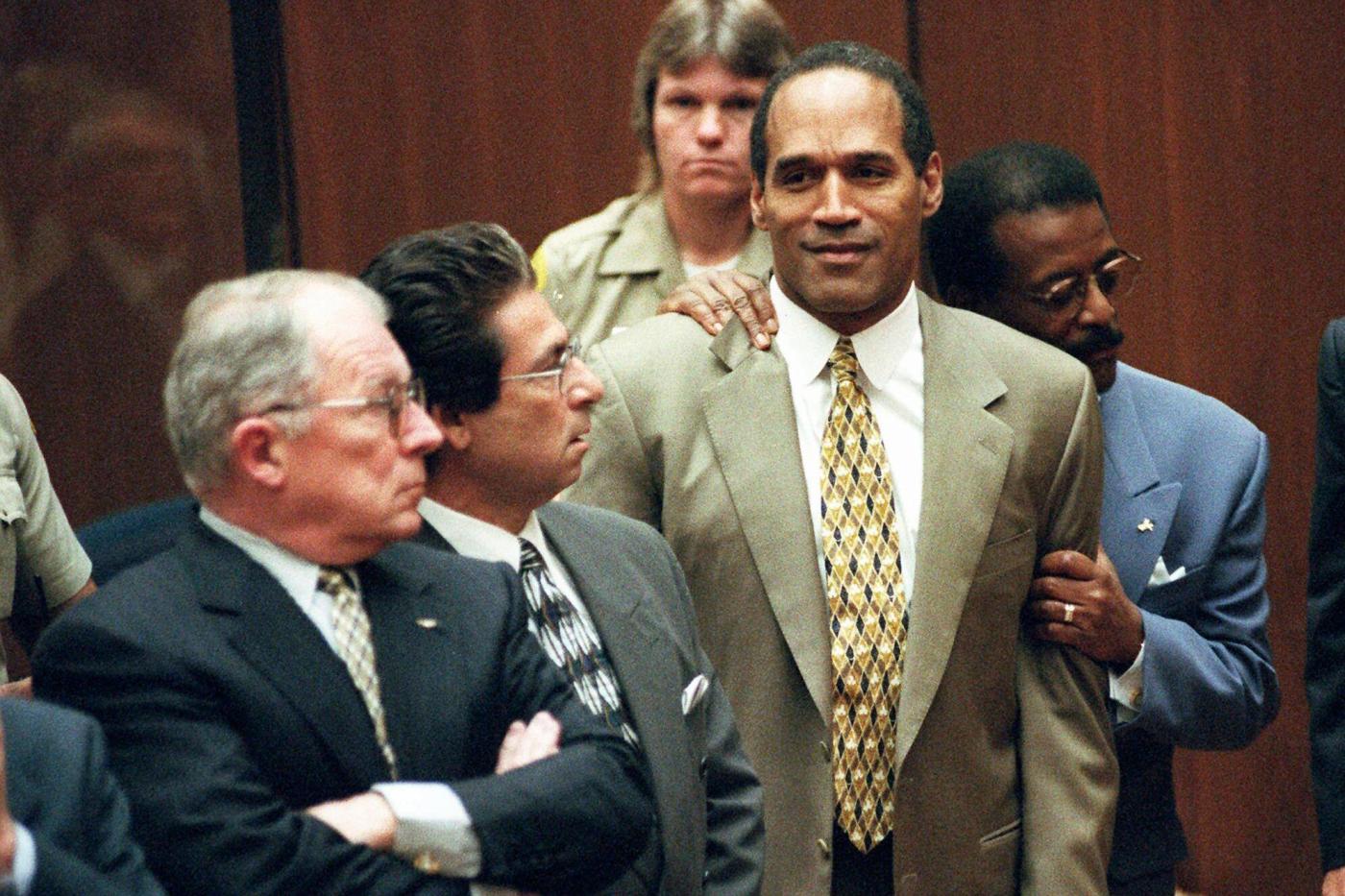
For many people old enough to remember O.J. Simpson’s murder trial, his 1995 exoneration was a defining moment in their understanding of race, policing and justice. Nearly three decades later, it still reflects the different realities of white and Black Americans.

Some people recall watching their Black co-workers and classmates erupting in jubilation at perceived retribution over institutional racism. Others remember their white counterparts shocked over what many felt was overwhelming evidence of guilt. Both reactions reflected different experiences with a criminal justice system that continues to disproportionately punish Black Americans.

Simpson, who died Wednesday, remains a symbol of racial divisions in American society because he is a reminder of how deeply the inequities are felt, even as newer figures have come to symbolize the struggles around racism, policing and justice.

“It wasn’t really about O.J. Simpson the man. It was about the rest of the society and how we responded to him,” said Justin Hansford, a Howard University law professor.

Simpson died of prostate cancer in Las Vegas, his family announced Thursday. He was 76.

His death comes just a few months before the 30th anniversary of the 1994 killings of his ex-wife, Nicole Brown Simpson, and her friend Ron Goldman. Much like the trial, the public’s reaction to the verdict was largely shaped by race.

Today, criminal justice reforms that address racial inequities are less divisive. But that has been replaced by backlash against diversity, equity and inclusion programs, bans of books that address systemic racism, and restrictions around Black history lessons in public schools.

“The hard part is we’re going to keep cycling through this until we learn from our past,” said University of Pennsylvania sociologist and Africana Studies professor Camille Charles. “But there are people who don’t want us to learn from our past.”

During the trial, African Americans were four times as likely to presume Simpson was innocent or being set up by the police, said UCLA Executive Vice Chancellor and Provost Darnell Hunt, who at the time was a young sociologist writing a book about the different ways Black and white Americans saw the trial.

“The case was about two different views of reality or two different takes on the reality of race in America at that point in history,” he said.

Simpson’s trial came on the heels of the 1992 acquittal of police officers in the beating of Rodney King in Los Angeles, which was caught on video and exposed America’s deep trauma over police brutality. For many African Americans in 1995, Simpson’s acquittal represented a rebuke of institutional racism in the justice system. But many white Americans believed Simpson and his defense team played the race card to get away with murder.

The difference could also be seen in the ways Black media outlets covered the trial compared to mainstream publications, Hunt said. Those outlets tended to raise questions about whether the justice system was really fair in terms of “what might be called the Black experience,” he said.

Polling in the last decade shows most people still believe Simpson committed the murders, including most African Americans, but the racial and historical dynamics at play in the trial made it about more than the murders.

Hansford, the Howard University law professor who is Black and was 12 years old at the time of the Simpson verdict, said he remembers the differences in white and Black reactions even in liberal environments like Silver Spring, Maryland, the Washington suburb where he grew up.

“When he was acquitted, all the Black students celebrated and ran into the hallways, jumping up and down,” he said. “And the white teachers were crying.”

One of Hansford’s white teachers said something about Simpson that he didn’t agree with, and when he responded, the teacher rebuked him.

“It was one of the worst ways a teacher has ever talked to me,” Hansford said. “The O.J. Simpson trial created a situation where people were dug into their sides.”

The racial turmoil embedded in the court case was at the center of the 2016 Oscar-winning documentary “OJ: Made in America.” Instead of focusing on the murders and the evidence presented at trial, director Ezra Edelman placed the crimes within the context of the Civil Rights struggle, from which Simpson was largely insulated by the warm embrace of the white mainstream.

“All O.J. had to do to get recognized is to run a football,” Edelman told the AP in 2016. “And almost concurrent to that you have a community of people whose only way to get recognized is to burn their community down during the (1965 Watts) riots. Those were the two tracks I was trying to home in on, knowing that they will intersect 30 years later.”

Simpson had married a white woman in a nation that had historically punished Black men who dared to explore mixed-race relationships. But Simpson also was a former football star, a wealthy Hollywood actor and brand spokesman whose money and privilege distinguished him from impoverished Black men that the criminal justice system punished.

“I’m not Black, I’m O.J.,” he liked to tell friends.

He had been admired as a one-of-a-kind celebrity whose transgressions, including a pattern of spousal abuse, were overlooked as incompatible with his All-American persona.

“He actually seemed to go to quite a bit of trouble to distance himself from Black folks,” but the Black support for him wasn’t about that, said Charles, the University of Pennsylvania sociologist. “I think it was about seeing the system work the way we were told it was supposed to.”

Even as systemic racism in criminal justice systems remains an issue, Charles thinks Black Americans have grown less likely to believe in a famous defendant’s innocence as a show of race solidarity.

“The one thing that has changed is that you didn’t see the same kind of getting behind (R&B singer) R. Kelly or Bill Cosby,” Charles said.

“There was much more open conflict about them, and many more Black people were willing to say publicly, ‘Nah, he did that.’ I think it also could represent a better understanding of celebrity and wealth,” she said.

___

Graham Lee Brewer reported from Oklahoma City, and Aaron Morrison from New York. They are members of AP’s Race and Ethnicity team.

Chef-driven eatery opens in former No Neck Tony’s in Lake Elmo

posted in: News | 0

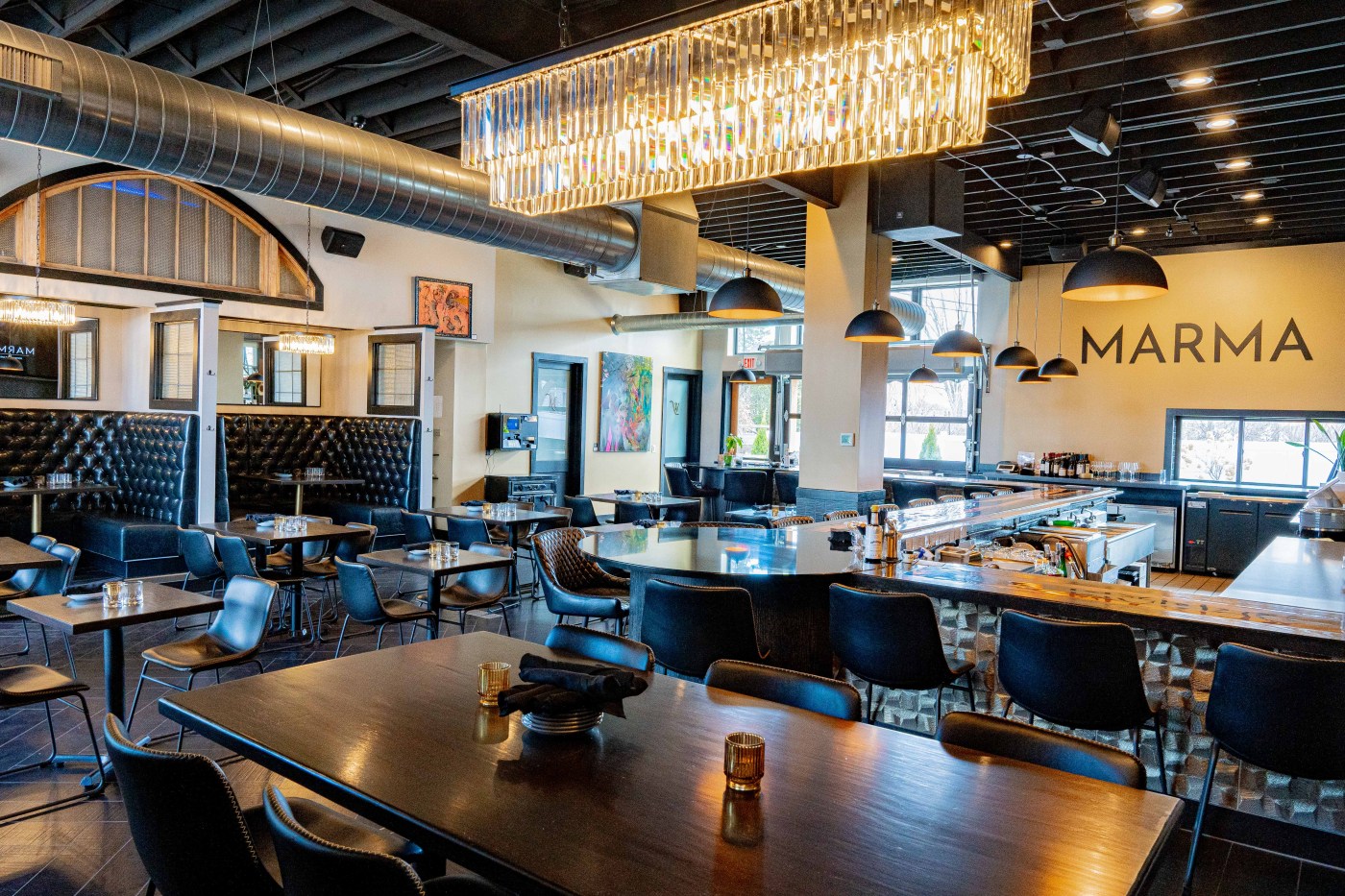
The former No Neck Tony’s in Lake Elmo has found new life as Marma — a chef-driven restaurant that features a range of global cuisine.

Chefs Max Basaker and Marcus Clark, who worked together at Marx Fusion Bistro and Wine Bar, have remade the space, which had previously been a gas station, with new lighting, seating and a new color scheme and art.

The ribeye at Lake Elmo’s new Marma features a chimichurri sauce. (Courtesy of Marma)

The name Marma started as a portmanteau of the chefs’ first names, but when they were researching the name, they discovered that the word means “meeting place” or “essence” in Sanskrit, which seemed just about perfect.

The scratch-made menu ranges from Asian to Latin to a very American burger, and the chefs are aiming to please not just those looking for a date-night spot, but those who are just looking for a good, affordable sandwich.

“The menu is really fresh, really fun, with lots of bold flavors,” Clark said. “There’s not crazy amounts of spice, but we’re also not afraid of spice.”

Clark, who spent the past eight years working for The Velveteen and Wild Hare in Stillwater, said the building, which had only been No Neck Tony’s for three years, is nice and new and the staff is eager to provide the east metro with something new.

The restaurant seats 65 or 70 guests. There’s a full bar, with 10 original craft cocktails, and a patio when the weather warms.

Marma: 11127 Stillwater Blvd., Lake Elmo; marmamn.com

Related Articles

Restaurants, Food and Drink |


Time for tea in London? Top hotels show how it’s made to perfection

Restaurants, Food and Drink |


Nacho mania: Seven of our favorite plates of chips, cheese and more in the east metro

Restaurants, Food and Drink |


Crepes with asparagus, ricotta and lemon give the taste of spring

Restaurants, Food and Drink |


A quick skillet turkey dinner you’ll make over and over again

Restaurants, Food and Drink |


A sneak peek of Diane’s Place, now open in Northeast Minneapolis