Huge winter storm to bring crippling snow, sleet and ice from Texas to Boston

posted in: All news | 0

By EMILIE MEGNIEN, SEAN MURPHY and JEFFREY COLLINS

ATLANTA (AP) — Bread was flying off the shelves, salt was being loaded into trucks and utility workers were nervously watching forecasts Thursday as a huge winter storm that could bring catastrophic damage, widespread power outages and bitterly cold weather was barreling toward the eastern two-thirds of the U.S.

The massive storm system is expected to bring a crippling ice storm from Texas through parts of the South, potentially around a foot of snow from Oklahoma through Washington, D.C.; New York and Boston and then a final punch of bitterly cold air that could drop wind chills to mius-50 degrees Fahrenheit in parts of Minnesota and North Dakota.

Forecasters are warning the damage, especially in areas that get a large amount of ice, could rival a hurricane. About 140 million people were under winter storm or cold weather watches or warnings — and in many places both.

When will it start?

The storm was expected to begin Friday in New Mexico and Texas and then the worst of the weather will move east into the Deep South before heading up the coast and thumping New England with snow.

Cold air streaming down from Canada caused Chicago Public Schools to cancel classes Friday. Wind chills predicted to be as low as minus-35 degrees Fahrenheit (minus-37 Celsius) could cause frostbite within 10 minutes making it too dangerous to walk to school or wait for the bus.

The cold punch coming after means it will take a while to thaw out, an especially dangerous prospect in places where ice and snow weighs down tree branches and powerlines and cuts electricity, perhaps for days. Roads and sidewalks could remain icy well into next week.

Freezing temperatures are expected all the way to Florida and lows in the North and Midwest will get about as cold as possible, even down to minus 25 or 30 degrees Fahrenheit, forecasters said.

A severe cold snap five years ago took down much of the power grid in Texas, leaving millions without power for days and resulting in hundreds of deaths. Gov. Greg Abbott said Thursday that won’t happen again.

The power system “has never been stronger, never been more prepared and is fully capable of handling this winter storm,” he said. “There is no expectation whatsoever that there is going to be any loss of power from the power grid.”

The difficulty of predicting winter storms

Winter storms can be notoriously tricky to forecast — one or two degrees can mean the difference between a catastrophe or a cold rain — and forecasters said the places with the worst weather can’t be pinned down until the event starts.

Georgia Gov Brian Kemp declared a state of emergency in his state like many other governors while acknowledging Thursday morning some forecasts have disastrous levels of wintery weather in Atlanta while others have the Deep South’s largest city mostly spared.

“That line could move north or south depending on what the temperatures do and what that could throw at us,” Kemp said.

All 275 of ice-melting salt sold out at Bates Ace Hardware in Atlanta in one morning, manager Lewis Pane said. He has made special trips to the warehouse to restock but it’s selling out everywhere.

Related Articles


Inflation fears are high. A new poll shows one group is particularly worried


Vance lands in Minneapolis blaming the ‘far left’ for turmoil over White House deportation efforts


Texas leads the nation in supplying new residents to other states


Prices ticked up in November as Americans keep spending a key inflation measure shows


Homicide rate declines sharply in dozens of US cities, a new report shows

Wendy Chambers stopped by the store to pick up batteries and flashlights in case there is a power outage.

“We’re gonna be prepared, aren’t we? We’re going to be able to read, do things, play games,” she said before heading to church choir with her granddaughter.

Brine trucks were already treating roads from Oklahoma to Tennessee with more states expected to begin treating roads as the start of the storm gets closer.

Virginia Gov. Abigail Spanberger told her residents to prepare for days without power or the ability to get out of their neighborhoods. And in a nod to the politics of the time, the newly inaugurated Democrat said people should not be scared to call 911 in an emergency just because of the immigration crackdowns going on in places like Minnesota.

“If someone needs to call police, having a health emergency needs to call first responders, please do so and ensure the safety of your friends, neighbors and family. And, stay warm,” Spanberger said.

College sports teams moved up or postponed games, and the Texas Rangers canceled their annual Fan Fest event.

The city of Carmel, Indiana, canceled its Winter Games out of fear residents could get frostbite and hypothermia competing in ice trike relay and “human curling” in which people slide down a skating rink on inner tubes.

But in Charleston, West Virginia, organizers said the annual West Virginia Hunting and Fishing Show will go on after more than 150 exhibitors signed up for the sold-out event that is expected to draw about 12,000 people Friday through Sunday.

The forecast calls for rain, freezing rain and snow, but with outfitters coming from all over the U.S. as well as Canada and South Africa, the show must go on, said Glen Jarrell, a spokesperson for the West Virginia Trophy Hunters Association, the event’s promoter.

“We’re not thinking about stopping. We don’t care if it’s rain, snow or high water,” Jarrell said.

Murphy reported from Oklahoma City and Collins reported from Columbia, South Carolina. Associated Press writers around the country contributed to this report.

Trial of Chicago man accused of putting bounty on top Border Patrol leader sent to jury

posted in: All news | 0

By SOPHIA TAREEN

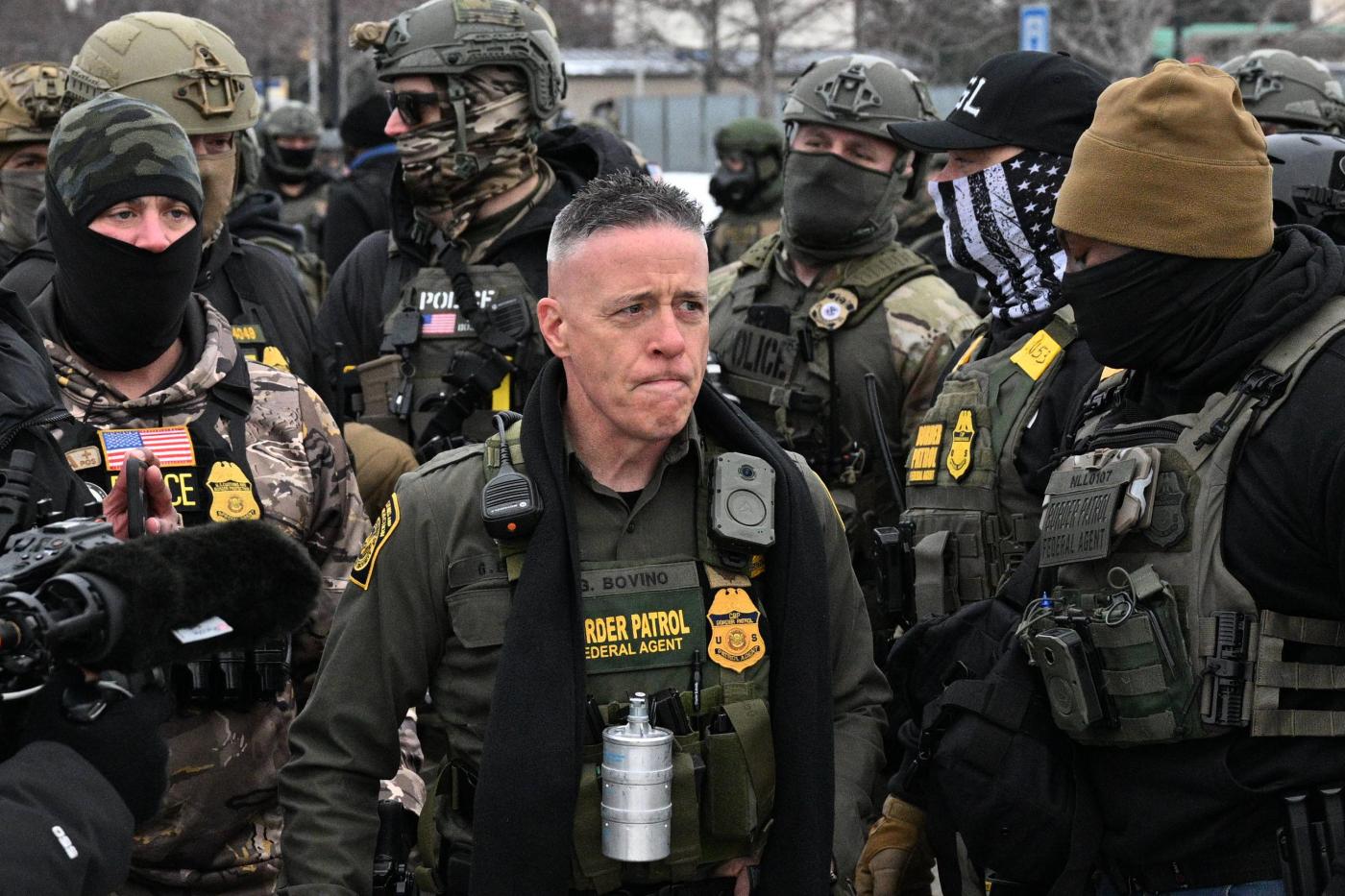
CHICAGO (AP) — The fate of a Chicago man accused of using Snapchat to offer a $10,000 bounty on the life of a top Border Patrol commander rested in a federal jury’s hands Thursday.

Juan Espinoza Martinez, a 37-year-old carpenter, was charged with a single count of murder-for-hire in the first criminal trial out of the Chicago area immigration crackdown. Testimony lasted mere hours in the federal trial that’s the latest test of the Trump administration’s credibility on federal surges that have played out from Minnesota to Maine.

At the heart of the government’s case are Snapchat messages sent from Espinoza Martinez to his younger brother and a friend who turned out to be a government informant. One read in part “10k if u take him down,” along with a picture of Gregory Bovino, a Border Patrol official who has led aggressive crackdowns nationwide, including last year in the Chicago area.

“Those words do not indicate that this was a joke,” First Assistant U.S. Attorney Jason Yonan told jurors during closing arguments. “Those words have meaning. They are not innocent and harmless words.”

But defense attorneys said the government didn’t show any evidence against Espinoza Martinez who sent the messages as “neighborhood gossip” after coming home from work and unwinding with beers. He didn’t follow up on the exchanges and had only a few dollars in his bank account.

“Sending a message about gossip that you heard in the neighborhood, it’s not murder for hire,” his defense attorney Dena Singer told jurors. “It’s not a federal crime.”

If convicted, Espinoza Martinez faces up to 10 years in prison.

Prosecutors accused Espinoza Martinez of being “fixated and obsessed” with Bovino and cited other messages where he criticized the crackdown.

Espinoza Martinez was arrested in October as the Chicago area was in the federal spotlight. Protests, arrests and tense standoffs with immigration agents were common throughout the city of 2.7 million and surrounding suburbs, especially in the city’s heavily Mexican Little Village neighborhood where Espinoza Martinez lived.

He did not testify at his trial.

Related Articles


Inflation fears are high. A new poll shows one group is particularly worried


Vance lands in Minneapolis blaming the ‘far left’ for turmoil over White House deportation efforts


Texas leads the nation in supplying new residents to other states


Prices ticked up in November as Americans keep spending a key inflation measure shows


Homicide rate declines sharply in dozens of US cities, a new report shows

But attorneys played clips of his interview with law enforcement where he said he was confused about the charges and that he sent the messages without much thought while scrolling social media after work.

“I didn’t threaten anyone,” he told investigators, interchanging English and Spanish at times in the interview. “I’m not saying that I was telling them to do it.”

Born in Mexico, he’s lived in Chicago for years but doesn’t have citizenship.

The Department of Homeland Security touted Espinoza Martinez’s arrest on social media with unredacted photos of his face, referring to him as a “depraved” gang member. Bovino has held the case up as an example of the increasing dangers faced by federal agents. Prosecutors included Yonan, the second-highest ranking federal prosecutor in the Chicago region.

But several federal lawsuits in Chicago have fueled skepticism about DHS’s narratives. Of the roughly 30 criminal cases stemming from Operation Midway Blitz, charges have been dismissed or dropped in about half. In a notable lawsuit that forced Bovino to sit for depositions, a federal judge found he lied under oath including about alleged gang threats.

Nationwide, dozens of criminal cases tied to immigration operations have also crumbled.

Bovino did not testify at the trial.

Federal prosecutors initially referred to Espinoza Martinez as a “ranking member” of the Latin Kings, but their lack of evidence led U.S. District Judge Joan Lefkow to bar testimony on the Chicago street gang at trial. According to the criminal complaint, Espinoza Martinez allegedly sent messages on behalf of the gang to other gang members.

At trial, there were minor mentions of the gang, including Espinoza Martinez saying in his interview that he had nothing to do with the Latin Kings. His brother, Oscar, testified that he took the Snapchat messages as a joke and something he’d already seen on Facebook.

Singer pointed out holes in the government’s case, including in the testimony of their first witness Adrian Jimenez.

The 44-year-old owns a construction company and had been in touch with Espinoza Martinez over Snapchat about work. Unknown to Espinoza Martinez, he had also worked as a paid government informant over the years and shared the Snapchats with a federal investigator.

Jimenez, who suffers from back problems, walked slowly with a limp to the witness chair and needed help getting up.

“Would you solicit for hire an individual that was in that much pain and could barely walk?” Singer said to jurors. “That doesn’t make any sense.”

Trump sues JPMorgan for $5 billion, alleges bank closed his accounts for political reasons

posted in: All news | 0

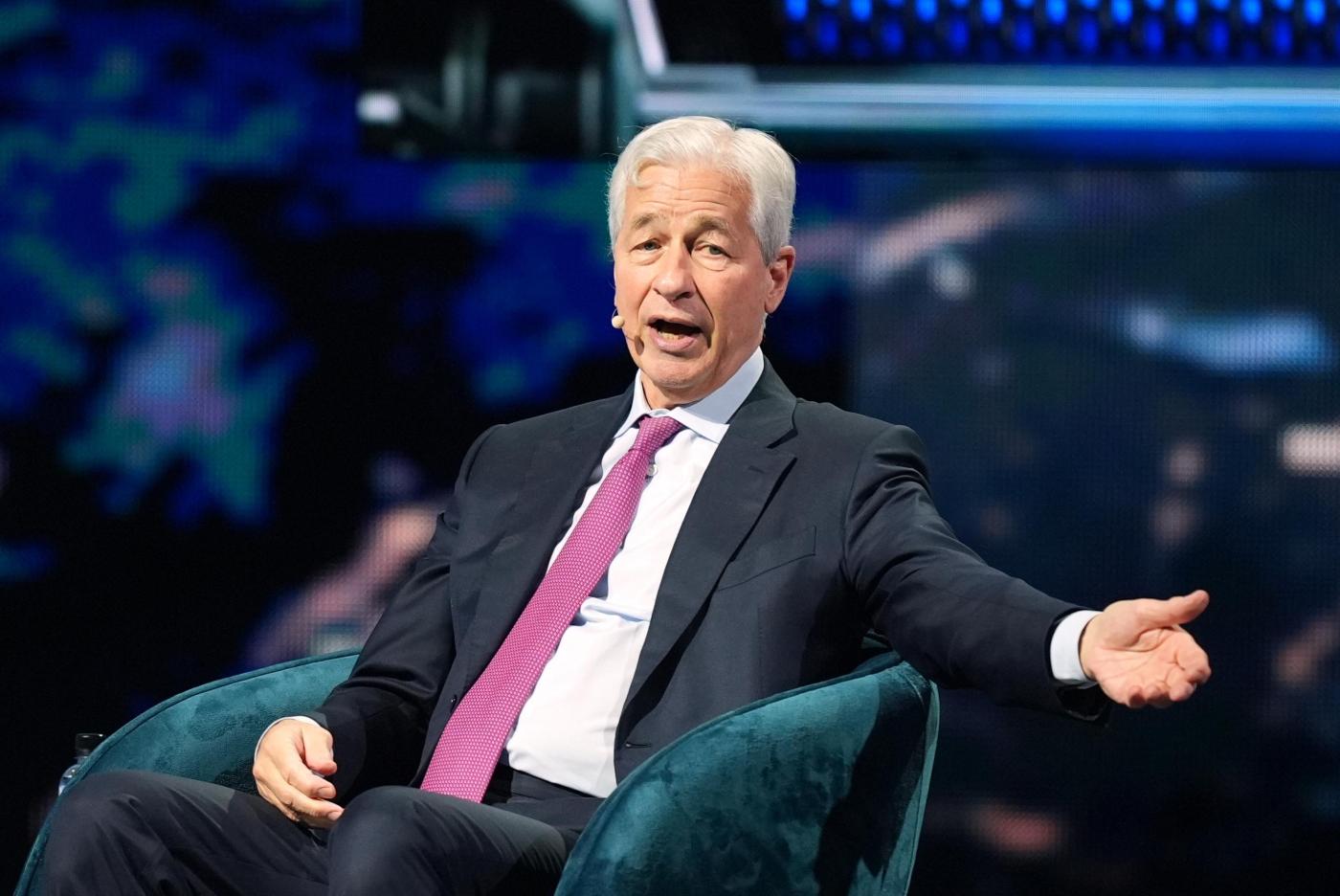
NEW YORK (AP) — President Donald Trump sued banking giant JPMorgan Chase and its CEO Jamie Dimon for $5 billion on Thursday over allegations that JPMorgan debanked him and his businesses for political reasons after he left office in January 2021.

The lawsuit, filed in Miami-Dade County court in Florida, alleges that JPMorgan abruptly closed multiple accounts in February 2021 with just 60 days notice and no explanation. By doing so, Trump claims JPMorgan and Dimon cut the president and his businesses off from millions of dollars, disrupted their operations and forced Trump and the businesses to urgently open bank accounts elsewhere.

“JPMC debanked (Trump and his businesses) because it believed that the political tide at the moment favored doing so,” the lawsuit alleges.

Debanking occurs when a bank closes the accounts of a customer or refuses to do business with a customer in the form of loans or other services. Once a relatively obscure issue in finance, debanking has become a politically charged issue in recent years, with conservative politicians arguing that banks have discriminated against them and their affiliated interests.

Debanking first became a national issue when conservatives accused the Obama administration of pressuring banks to stop extending services to gun stores and payday lenders under “Operation Choke Point.”

Trump and other conservative figures have alleged that banks cut them off from their accounts under the umbrella term of “reputational risk” after the Jan. 6, 2021, attack on the U.S. Capitol. Since Trump came back into office, the president’s banking regulators have moved to stop any banks from using “reputational risk” as a reason for denying service to customers.

“JPMC’s conduct … is a key indicator of a systemic, subversive industry practice that aims to coerce the public to shift and re-align their political views,” Trumps lawyers wrote in the lawsuit.

Related Articles


Trump appointees ask about White House ballroom’s design and scale — and want to see models


Trump administration to expand ban on foreign aid for abortion providers to add groups promoting DEI


Trump administration scraps multimillion-dollar solar projects in Puerto Rico as grid crumbles


Trump’s European threats could cause lasting damage to US standing in the world


Vance lands in Minneapolis blaming the ‘far left’ for turmoil over White House deportation efforts

Trump accuses the bank of trade libel and accuses Dimon himself of violating Florida’s Unfair and Deceptive Trade Practices Act.

In a statement, JPMorgan said that it “regrets” that Trump sued the bank but insisted it did not close the accounts for political reasons.

“We believe the suit has no merit,” a bank spokesperson said. “JPMC does not close accounts for political or religious reasons. We do close accounts because they create legal or regulatory risk for the company.”

Uvalde Trial Raises Question of Whether Police Stop School Shootings

posted in: All news | 0

Earlier this month, a few dozen police officers, school district representatives, and one pro-Trump candidate for Congress crowded together in a room above the cafeteria at Samuel V. Champion High School in Boerne. School was cancelled for the day, but there was activity in the hallways, which was being shown on large TV screens at the front of the room. Viewers opened up their phone cameras in anticipation of the demonstration. 

Three drones whirred loudly in a gray metal box in the corner, the fans kicking up enough wind to rustle notebooks. Then, the drones zipped away, down a labyrinth of hallways, toward a mock school shooter.

The technology on display was the product of the Austin-based Campus Guardian Angel, which posits that drones could be the missing piece of this country’s response to school shootings. If a school district buys the tech, drones are placed throughout each campus, ready to fly at speeds of up to 50 miles per hour toward a threat. Once there, the drones can distract the potential shooter, buzzing around like flies, flashing strobe lights and blaring sirens. They can also shoot pepper balls and, if all else fails, ram directly into the person. 

“We talk about Uvalde a lot because in Texas, everybody’s very familiar with it, but that kid crashed his car into a culvert. … It took him [several] minutes to get into the school,” said Bill King, the company’s chief tactical officer. “We would have worn him out. There’s no way he ever would have gotten in.”

About 175 miles away from the drone presentation, the first week of trial was wrapping up for Adrian Gonzales, a former Uvalde CISD officer and the first cop to face potential criminal legal consequences for the botched police response to the deadliest school shooting in Texas history. 

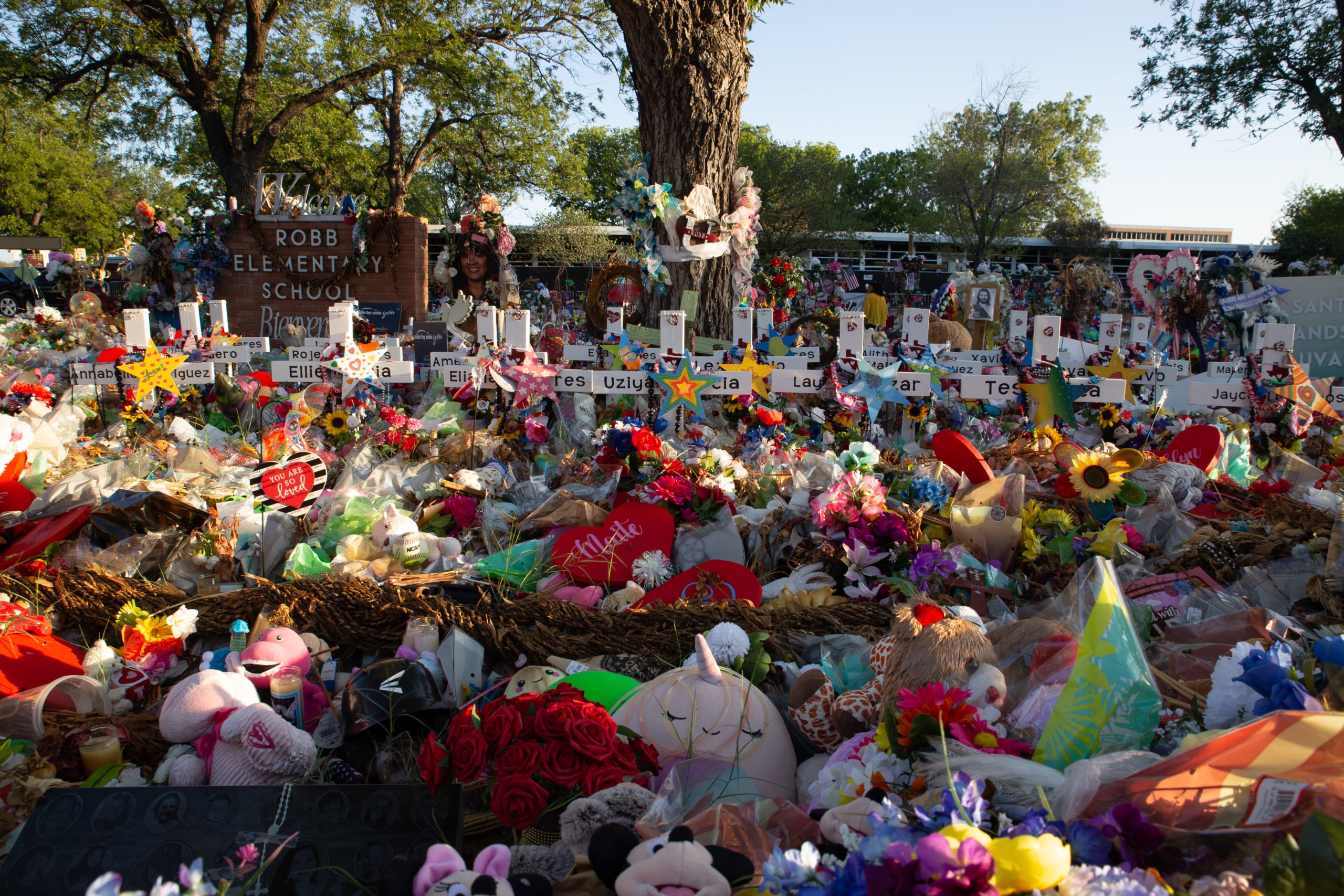
The Robb Elementary memorial in Uvalde in July 2022 (Gus Bova)

On May 24, 2022, 18-year-old Salvador Ramos shot and killed 19 students and two teachers in a pair of adjoined classrooms at Robb Elementary School, where he had been a student years before. A small army of police from various agencies, including 149 Border Patrol agents and 91 state troopers, quickly assembled, but more than 70 minutes passed before officers finally breached the classroom and killed Ramos. 

This now-infamous police inaction hasn’t been the only target of blame for the tragedy. There’s the gun shop that armed a troubled teen with two assault-style rifles, for example, and there were issues with door locks in the school. The shooter had also been giving off warning signs for quite some time before the massacre. But the police response in particular has fueled intense national attention to the tragedy, in addition to inflaming the Uvalde families’ grief—even as the questions of whether any officer was in a position to realistically avert the shooting, and of how many lives would have been saved had officers taken the shooter out more quickly, remain open and painful.

In 2022, Uvalde CISD fired its police chief and then suspended its entire police force. The school district’s superintendent resigned under pressure, and a number of civil lawsuits have been filed. The U.S. Department of Justice investigated the police response to the shooting and issued a scathing report in 2024. But there’s been nothing approaching widespread accountability. The trial of Gonzales was the long-awaited result of a criminal investigation that the local district attorney used as a reason to fight the release of records related to the shooting, to the dismay of many of the families who lost their kids.

Of the nearly 400 law enforcement officers who responded to the shooting scene, only two have been charged criminally for their part in the response: Gonzales and the former Uvalde CISD police chief, Pete Arredondo. Gonzales, one of the first officers on scene the day of the shooting, was indicted by a Uvalde County grand jury in 2024 on 29 counts of child endangerment, after prosecutors argued he failed to distract or delay Ramos despite knowing where he was. Arredondo was indicted on 10 counts of child endangerment. They both pleaded not guilty, and Arredondo’s trial date has yet to be set. 

Although the DOJ investigation found that there were “cascading failures of leadership, decision-making, tactics, policy, and training,” prosecutors have not clarified why none of the other officers have been charged for their actions that day. Early efforts to hold other agencies accountable seem to have been stymied by politics. For example, Texas Ranger Christopher Ryan Kindell was reinstated after being fired for his role in the Uvalde response after the DA, Christina Mitchell, requested it. 

It’s extremely rare for officers to be held criminally responsible for not protecting someone on the job, especially during mass shootings. Though the case against Gonzales has some precedent: In 2023, a former sheriff’s deputy in Broward County, Florida, was tried and acquitted of child neglect and negligence after being charged for not confronting the shooter at Marjory Stoneman Douglas High School in Parkland in 2018. 

Gonzales’ defense team, led by former Bexar County District Attorney Nico LaHood, argued during trial that Gonzales did actively respond to the threat. He and several other officers entered the school shortly after arriving, but retreated when they heard gunfire and one of the officers appeared to be grazed by a bullet. After that, he helped students and teachers in other classrooms where the shooter was not located escape through windows.

LaHood argued that Gonzales never actually saw the teen and therefore didn’t have the chance to stop him. 

More than 400 prospective jurors were called on January 5 for Gonzales’ trial, which was moved out of Uvalde to Nueces County due to fairness concerns. Even with the large pool, it took only one day to seat 12 jurors and four alternates. 

Over nine days of witness testimony, the jury heard emotional recountings from former teachers, some of whom were shot, victims’ family members, and other officers who responded to the scene. Texas Rangers from the Department of Public Safety—who had been tapped by Mitchell to investigate the police response—recreated a timeline of that morning and compared Ramos’ movements to Gonzales’. The timeline showed Gonzales stayed by his patrol car for nearly four minutes, according to trial testimony, during which the shooter entered the school.

Melodye Flores, a former teacher’s aide, said that she saw a man with a gun outside and told Gonzales multiple times, over the course of those minutes, where he was headed. “He just stayed there,” she testified last week. “He was pacing back and forth.” 

Flores and the witnesses brought by the state largely supported the prosecution’s core argument: that Gonzales could have and should have done more to stop Ramos from taking 21 lives. 

In the courtroom, the jury decides what’s true in a legal sense; to the broader public, the question is a moral and ethical one, too.  

“You must assume that unless you stop that shooter, more people are going to die or be seriously injured,” Mo Candy, executive director of the National Association of School Resource Officers (NASRO) told the Texas Observer. “In most instances, it’s going to be one officer on campus. So it’s not like you’re going to have a whole [armed] team there with you to respond. So you are the person that this depends on now, to find the shooter and to stop it.”

Candy said school officers should be “carefully selected, specifically trained, and properly equipped in order to be able to be effective in the job.” 

School district police departments are becoming more common in Texas, often increasing after a mass shooting. Many districts that don’t have their own police force have city police officers stationed at schools. Since 1999, the year of the Columbine shooting in Colorado, the federal government has devoted an estimated $1 billion to putting sworn police officers in schools. 

But the efficacy of these officers remains unproven, especially in the case of mass shootings.

Research is relatively scarce on the subject, but one study found that on campuses with officers present, more people died in shootings than at schools without police. The study didn’t look at cases where the shooter was stopped before firing, but cases of officers or even armed bystanders thwarting potential shooters are rare

Neal McCluskey, director of the CATO Institute’s Center for Educational Freedom, said that school police officers face a reality that’s messier than policies and training often prepare them for. 

“I think the Uvalde situation is kind of illustrative of that,” McCluskey told the Observer. “You can have somebody who is called a school resource officer, you can have lots of police present, but that doesn’t necessarily mean they’re going to be able to stop a shooter.”

In Uvalde, district officers had completed an active shooter training just two months before Ramos opened fire at Robb Elementary. Yet, in a report released in 2022, investigators from the Texas House of Representatives found that officers on the scene at Robb Elementary “failed to prioritize saving the lives of innocent victims over their own safety.” 

Dr. Lisa Ross, author of the book “School Shootings in American Culture,” said this gap between expectations—promoted by police leaders themselves as well as those counting on their protection—and reality represents a profound problem. 

After the 1999 Columbine mass shooting, which involved a Uvalde-esque period of police inaction, it became the expectation and standard practice for any cop to immediately confront the shooter, rather than waiting for backup or more tactically trained units to arrive. 

“Columbine broke the mold,” Ross said. “The next thing is, ‘Well, what do we do?’ And the answer was, ‘There’s no time to get a team together.’ So the first person on the scene needs to do what we would have done.” In other words, it would no longer be accepted, at least theoretically, to let the death count rise inside a school while waiting for SWAT to arrive.

“The public expects you to sacrifice your life for the innocent children and staff,” Ross said. “That’s the public’s expectation, but that’s different than what actually goes on in law enforcement.” 

In the shooting’s wake, some bereaved Uvalde family members have expressed their own doubts about the abilities of heroic police officers to save kids like theirs, opting to prioritize what many consider the real root issue: the easy availability of highly lethal assault-style rifles. These families engaged in intense advocacy during the 2023 legislative session for a bill to raise the age for buying such weapons of war from 18 to 21, a measure that would have legally barred Ramos from acquiring his guns. The bill made it through a House committee, but no further.

Jesse Rizo, whose 9-year-old niece Jackie Cazares was killed at Robb and who’s been at the forefront of calls for accountability, was elected last year to the Uvalde CISD school board. On Wednesday, he was in the courtroom in Corpus Christi when the jury foreman read the verdict in Gonzales’ trial: not guilty.

“It was like a kick in the gut,” Rizo told the Observer. He watched Gonzales reacting to the acquittal, hugging his wife and daughter. 

“I’m thinking, ‘Man, it’s incredible how you failed … but you get to embrace your wife, you get to embrace your daughter,” Rizo said. “And these parents can’t embrace their kids anymore.”

Javier Cazares, father of Jackie, at the Governor’s Mansion in November 2022 after marching from the Capitol to demand gun control legislation (Gus Bova)

Rizo said, despite the disappointment of a not-guilty verdict, he’s glad he was in the courtroom. Hearing the evidence, he got “answers to a lot of questions that were lingering for a long time.” He’s awaiting the trial of Arredondo and hoping for a different outcome for the ex-police chief, and he said he’d like to see more officers prosecuted, if only so they or their lawyers must get in front of a jury to answer questions. 

“It’s important,” he said. “What grounds me is there’s little children that can’t speak for themselves anymore, and you have to—as painful as it is—you have to see it through.”

The post Uvalde Trial Raises Question of Whether Police Stop School Shootings appeared first on The Texas Observer.