House holding war powers vote to direct Trump to remove troops from Venezuela

posted in: All news | 0

By STEPHEN GROVES, Associated Press

WASHINGTON (AP) — The House was voting Thursday on a resolution that directs President Donald Trump to remove U.S. military forces from Venezuela as Democrats pressed the Republican-controlled Congress to curb the president’s aggression in the Western Hemisphere.

The Trump administration told senators last week that there are no U.S. troops on the ground in Venezuela and committed to getting congressional approval before launching major military operations there. But Democrats argued that the resolution is necessary after the U.S. raid to capture Venezuelan leader Nicolás Maduro and since Trump has stated plans to control the country’s oil industry for years to come.

Thursday’s vote was the latest test in Congress of how much leeway Republicans will give a president who campaigned on removing the U.S. from foreign entanglements but has increasingly reached for military options to impose his will in the Western Hemisphere. So far, almost all Republicans have declined to put checks on Trump through the war powers votes.

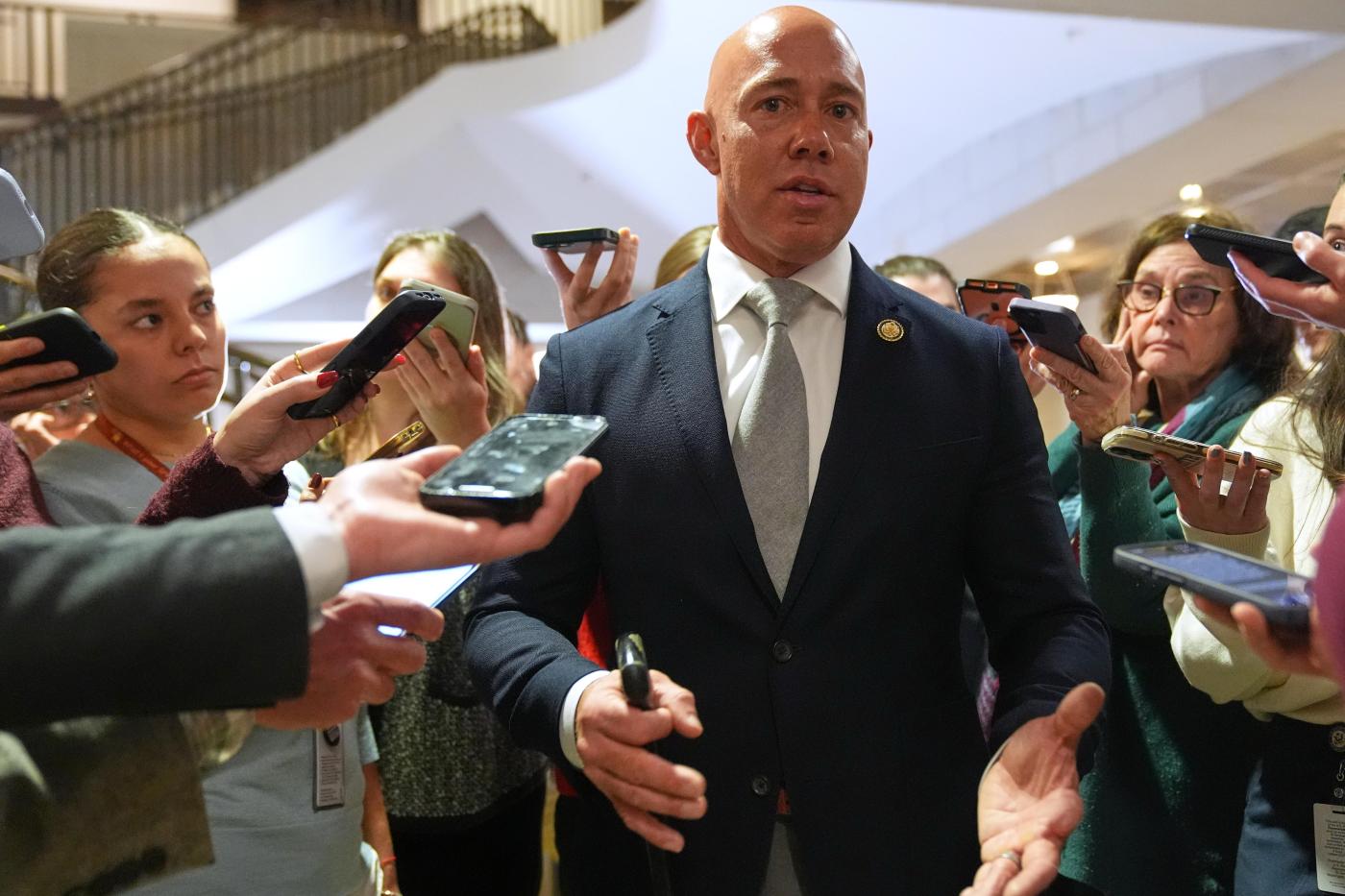
Rep. Brian Mast, the Republican chair of the House Armed Services Committee, accused Democrats of bringing the war powers resolution to a vote out of “spite” for Trump.

“It’s about the fact that you don’t want President Trump to arrest Maduro, and you will condemn him no matter what he does, even though he brought Maduro to justice with possibly the most successful law enforcement operation in history,” Mast added.

Still, Democrats stridently argued that Congress needs to assert its role in determining when the president can use wartime powers. They have been able to force a series of votes in both the House and Senate as Trump in recent months ramped up his campaign against Maduro and set his sights on other conflicts overseas.

“Donald Trump is reducing the United States to a regional bully with fewer allies and more enemies,” Rep. Gregory Meeks, the top Democrat on the House Foreign Affairs Committee, said during a floor debate. “This isn’t making America great again. It’s making us isolated and weak.”

Last week, Senate Republicans were only able to narrowly dismiss a Venezuela war powers resolution after the Trump administration persuaded two Republicans to back away from their earlier support. As part of that effort, Secretary of State Marco Rubio committed to a briefing next week before the Senate Foreign Relations Committee.

Related Articles


Could a president deploy wartime law against the Beatles? Trump administration says ‘yes’


Trump administration halts use of human fetal tissue in NIH-funded research


Trump administration tells agencies to compile data on money sent to Democratic states


Trump sues JPMorgan for $5 billion, alleges the bank closed his accounts for political reasons


Trump appointees ask about White House ballroom’s design and scale — and want to see models

The response to Trump’s foreign policy

When the House voted on a similar Venezuela war powers resolution last month, three Republican House members — Reps. Don Bacon of Nebraska, Thomas Massie of Kentucky and Marjorie Taylor Greene, who has since resigned from Congress — joined Democrats in voting for the legislation. Trump has since carried out the attack on Venezuela to seize Maduro, as well as turned his ambitions to possessing Greenland.

Trump’s insistence that the U.S. will possess Greenland over the objections of Denmark, a NATO ally, has alarmed some Republicans on Capitol Hill. They have mounted some of the most outspoken objections to almost anything the president has done since taking office.

Trump this week backed away from military and tariff threats against European allies as he announced that his administration was working with NATO on a “framework of a future deal” on Arctic security.

But Bacon still expressed frustration with Trump’s aggressive foreign policy and planned to vote for the war powers resolution, even though it only applies to Venezuela.

“I’m tired of all the threats,” he said.

Trump’s recent military actions — and threats to do more — have reignited a decades-old debate in Congress over the War Powers Act, a law passed in the early 1970s by lawmakers looking to claw back their authority over military actions.

The war powers debate

The War Powers Resolution was passed in the Vietnam War era as the U.S. sent troops to conflicts throughout Asia. It attempted to force presidents to work with Congress to deploy troops if there hasn’t already been a formal declaration of war.

Under the legislation, lawmakers can also force votes on legislation that directs the president to remove U.S. forces from hostilities.

Presidents have long tested the limits of those parameters, and Democrats argue that Trump in his second term has pushed those limits farther than ever.

The Trump administration left Congress in the dark ahead of the surprise raid to capture Maduro. It has also used an evolving set of legal justifications to blow up alleged drug boats and seize sanctioned oil tankers near Venezuela.

Democrats question who gets to benefit from Venezuelan oil licenses

As the Trump administration oversees the sale of Venezuela’s petroleum worldwide, Senate Democrats are questioning who is benefitting from the contracts.

In one of the first transactions, the U.S. granted Vitol, the world’s largest independent oil broker, a license worth roughly $250 million. A senior partner at Vitol, John Addison, gave roughly $6 million to Trump-aligned political action committees during the presidential election, according to donation records compiled by OpenSecrets.

“Congress and the American people deserve full transparency regarding any financial commitments, promises, deals, or other arrangements related to Venezuela that could favor donors to the President’s campaign and political operation,” 13 Democratic senators wrote to White House Chief of Staff Susie Wiles Thursday in a letter led by Democratic Sen. Adam Schiff of California.

The White House has said it is safeguarding the South American country’s oil for the benefit of both the people of Venezuela and the U.S.

Trump administration halts use of human fetal tissue in NIH-funded research

posted in: All news | 0

By The Associated Press

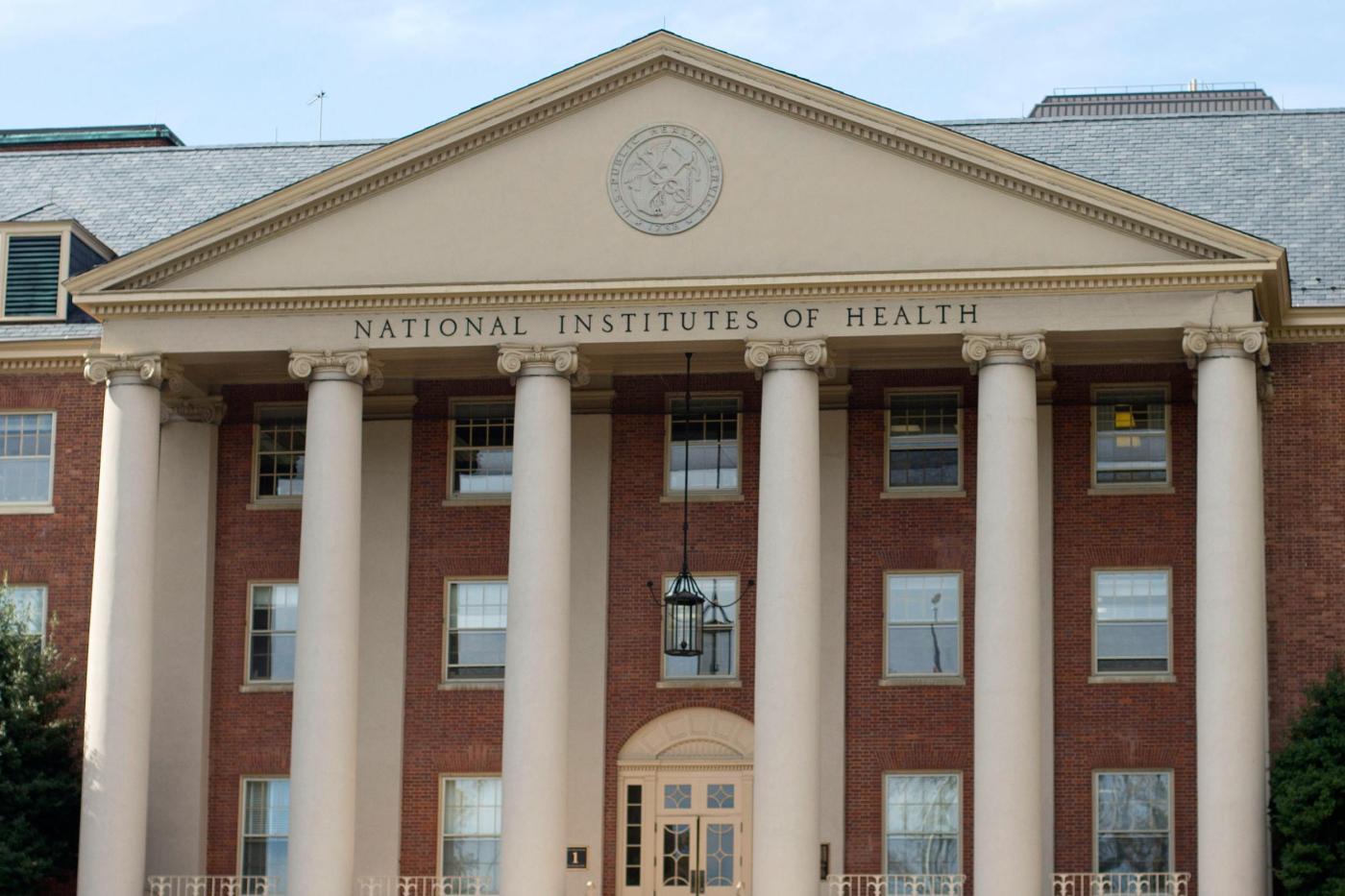
The Trump administration announced Thursday that human fetal tissue derived from abortions can no longer be used in research funded by the National Institutes of Health.

The policy, long urged by anti-abortion groups, expands restrictions issued during President Donald Trump’s first term.

The government has funded research involving fetal tissue for decades, under both Republican and Democratic administrations. The tissue, which otherwise would be thrown away, has been critical for certain research, including ways to fight HIV and cancer. Opponents of fetal tissue use say there are now alternatives, although many scientists say there aren’t always adequate substitutes.

In a statement Thursday, NIH Director Jay Bhattacharya acknowledged the agency “has long maintained policies governing the responsible and limited use of human fetal tissue in biomedical research.”

Its use has declined since 2019. The $47 billion agency counted just 77 projects funded in 2024 that included fetal tissue.

Related Articles


What to know about FDA’s review of new Zyn advertising proposal


Guinea-Bissau suspends Trump-backed hepatitis B vaccine study for ethical review


States race to launch rural health transformation plans


States go their own way as RFK Jr. shifts federal vaccine policy


MN physicians describe ‘chaos and fear’ due to immigration actions

The first Trump administration ended the use of fetal tissue on NIH’s campus and set up additional hurdles for non-government scientists seeking NIH funding, restrictions that were subsequently lifted by the Biden administration. Thursday’s new policy covers all NIH-funded research.

NIH documents say the policy doesn’t end the use of “cell lines” created years ago from fetal cells. Those are cloned copies of cells, such as embryonic stem cells, adapted to grow continuously in labs. Bhattacharya’s statement said NIH will soon seek comment about potential ways “to reduce or potentially replace reliance on human embryonic stem cells.”

The Associated Press Health and Science Department receives support from the Howard Hughes Medical Institute’s Science and Educational Media Group and the Robert Wood Johnson Foundation. The AP is solely responsible for all content.

Some Timberwolves’ season-ticket renewal price hikes spike north of 30%

posted in: All news | 0

The sticker shock on Timberwolves’ season tickets for the 2026-27 campaign was a little more drastic than originally thought for many when renewals were sent out Wednesday.

Fans on social media reported rate increases from this year’s prices of up to 38% to maintain the same seats next season. That’s a massive jump, and part of what was described by the organization as a “pricing reset.” But the top level of that reset was higher than initially expected.

Some fans on social media said the price increase will cause them to opt out of season ticket renewal for next season.

Announced attendance is down by roughly 1,500 fans per game at Target Center this season.

In the last year, Minnesota has upgraded its in-arena lighting system, made a financial commitment to Kevin Garnett to bring the legend back into the organizational fold, as well as sporting a roster that’s over the salary cap. The team says its average season-ticket price prior to the freshly announced increase ranked 29th in the NBA out of 30 teams.

Related Articles


Chris Finch usually sticks with struggling Timberwolves’ vets. Will he do the same with Mike Conley?


Timberwolves season-ticket renewal prices are rising. Here’s why


Timberwolves give up double-digit fourth-quarter lead, lose to Jazz


Frederick: With the game is on the line, opposing defenses can’t stop Ant


Edwards scores 55, but Spurs hold off Timberwolves

How Norway’s ski jumping scandal led to new rules in place for the Winter Olympics

posted in: All news | 0

By BRIAN MELLEY

The difference between winning an Olympic medal in ski jumping or being disqualified could come down to a bit of fabric.

Related Articles


Laila Edwards prepares to make Olympic debut as USA Hockey’s first Black female


Leonardo da Vinci’s legacy lights up the Milan Cortina Olympics with two cauldrons


Ilia Malinin: The 20-year-old American figure skater redefining the sport


IOC president says no contact yet with Trump’s White House, will meet Vance at Winter Olympics


Rivals US and Canada could put North American dominance on display at the Olympics in Milan

A larger suit can extend a ski jumper’s flight by several meters but it could violate rules that have become more stringent after the Norwegian team was caught cheating at last year’s world championships by manipulating the crotch area in the uniforms of its top two male jumpers.

Regulators added new measures this season before the Milan Cortina Winter Games to ensure all competitors play by the same rules after the scandal rocked the sport in March.

“There have been disqualifications in the past, many. It’s part of the sport,” said Bruno Sassi, spokesman for the international ski federation, FIS, the sport’s regulatory body. “But there had never been that kind of a brazen attempt to not only bend the rules, but like downright do something … to cheat the system in a way that it is very different from simply having a suit that is a tad too long or a tad too loose.”

Ski jumping is as much a science as an art. Teams of experts test skis and clothing in wind tunnels to maximize the aerodynamics at play long before jumpers try to achieve the perfect takeoff, flying form and landing.

A study published in October in the journal Frontiers in Sports and Active Living showed that adding 1 cm (0.4 inches) of fabric to the circumference of the suit could increase a jump by 2.8 meters (9.2 feet) — enough to separate a winner from an also-ran.

“In most cases, enlargement of the suit is beneficial,” said co-author Sören Müller, who heads ski jumping research at the Institute for Applied Training Science in Leipzig, Germany. “However, the area stretched by the V-position of the legs in the crotch area is the most noticeable and also offers the greatest advantage.”

The scandal

Ski jumpers have often pushed the limits on the size of their suits but video shot by a whistleblower was stunning because it captured Norwegian team officials in the act of cheating.

Head coach Magnus Brevik, assistant coach Thomas Lobben and staff member Adrian Livelten were recently banned from the sport for 18 months for tampering with the suits before the men’s large hill event. Extra material had been sewn into the crotch to stiffen and add surface area that would help during takeoff.

The alterations could not be spotted and were only found when the seams were examined after the contest.

“We regret it like dogs, and I’m terribly sorry that this happened,” Brevik said at the time.

FILE – Marius Lindvik, of Norway, poses in the ski jumping men’s large hill individual competition at the Nordic World Ski Championships in Trondheim, Norway, March 8, 2025. (AP Photo/Matthias Schrader, file)

The violation cost defending Olympic large hill ski jump gold medalist Marius Lindvik a world championship silver medal and brought shame to the team from Norway, the nation that invented ski jumping and has historically dominated the sport.

Lindvik and teammate Johann André Forfang, a two-time Olympic medalist, accepted three-month suspensions that allowed them to compete in this season’s events. Neither was charged with knowing about the stitch witchery but FIS said they “should have checked and asked questions about the night-time adjustments.”

The discovery caused outrage in the tight-knit ski jumping community.

“This is doping,” former German Olympic champ Jens Weissflog told German newspaper Bild, “just with a different needle.”

The scandal led Norway to sack its men’s team leadership.

FILE – Johann Andre Forfang, left, and Marius Lindvik, both of Norway, celebrate after the final round at the second stage of the 68th four hills ski jumping tournament in Garmisch-Partenkirchen, Germany, Jan. 1, 2020. (AP Photo/Matthias Schrader, File)

New Rules

In the wake of the cheating, FIS has modified its rules and brought in a coordinator to oversee screening of gear and hired former Austrian ski jumper Mathias Hafele to work as equipment expert.

“He used to make a make a living off of trying to make the most out of the rule book,” Sassi said. “Now he’s on our side putting together the new rule book.”

Before ski jumping events, two FIS controllers and a doctor will use improved 3-D measurements to evaluate athletes in their uniforms. The shape of the suits will make it harder to tamper with arm and leg cuffs and more difficult to lower the crotch to provide more surface area.

After suits pass the control checkpoint, tamper-proof microchips are affixed throughout the suit to prevent manipulation. Scanners will be able to tell before and after the jump if the chips are all in place.

A system like in soccer will also be applied so that anyone disqualified for an equipment violation will get a yellow card. A subsequent violation will lead to a red card and disqualification from the next event and a team will also lose a slot for a skier in the competition.

Eyes on Norway

After the scandal, Rune Velta, a former Norwegian team ski jumper, took over as head coach in June and was given the difficult task of restoring Norway’s reputation.

“It’s the hardest thing I’ve ever done,” Velta said. “We are building everything around the athletes from scratch. We started five months ago with zero and now we have a team around them to make them perform.”

Velta, who as Swiss coach last year had publicly criticized the cheating, feels that Norway is under more scrutiny this season.

During the summer ski jumping season when competitors slide down ceramic or porcelain tracks and land on bristly plastic mats, the team tried to adjust to the new ski suit dimensions.

“Acceptance for a kind of minor error and mistakes are really low,” Velta said. “We needed this summer to understand the standards and to learn kind of the line of the control and execution of the rules.”

AP Olympics coverage: https://apnews.com/hub/milan-cortina-2026-winter-olympics