Why didn’t any teams interview Vikings defensive coordinator Brian Flores?

posted in: News | 0

The carousel went round and round and not once did Vikings defensive coordinator Brian Flores receive a call. Though that much was pretty much assumed given the reports that surfaced throughout the process, Flores confirmed Tuesday at TCO Performance Center that he did not interview to be a head coach at any point this offseason.

“I don’t really have control over that situation,” he said. “I will say I’m very happy where I am.”

The fact that Flores did not garner any interest came as a surprise to Vikings head coach Kevin O’Connell. Talking to reporters a couple of months ago at the NFL Combine in Indianapolis, O’Connell admitted he was expecting some teams to ask for permission to interview Flores.

“I thought maybe there would be some slips turned in,” O’Connell said. “It just never came to fruition.”

In the end, the Atlanta Falcons hired Raheem Morris, the Carolina Panthers hired Dave Canales, the Las Vegas Raiders hired Antonio Pierce, the Los Angeles Chargers hired Jim Harbaugh, the New England Patriots hired Jerod Mayo, the Seattle Seahawks hired Mike Macdonald, the Tennessee Titans hired Brian Callahan,and the Washington Commanders hired Dan Quinn.

All the while, Flores was left to wonder why he wasn’t considered as an option. Asked if he thought his active lawsuit against the NFL played a role in how everything went down this offseason, Flores responded, “There’s no way to know.” He sued the NFL in February 2022, alleging racial discrimination in hiring practices when it comes to minority candidates.

“I try to be where my feet are, and that’s here with the Vikings,” Flores said. “I try not to worry about things I have no control over and focus on the things I do have control over.”

In the meantime, Flores is excited to get back to work, knowing he has a lot to look forward to after the Vikings added so many players this offseason

“I’m in a great spot,” Flores said. “I’m very happy, and I’m excited to work with our guys right now.”

It’s safe to say his players are excited to have him back.

“I’m kind of blown away that he wasn’t poached,” defensive tackle Harrison Phillips said. “That was my biggest fear.”

After enjoying the best stretch of his career with Flores calling the shots, Phillips returned for voluntary workouts this week excited to hit the ground running. The same goes for safety Josh Metellus after Flores unlocked another dimension in his game.

“It’s really good for the team and selfishly really good for me as well,” Metellus said. “To have that comfortability with a guy and be able to learn and build off the stuff we’ve done in the past is really nice.”

Now, if Flores continues to get the most out of his players on defense, it seems like only a matter of time before he gets another chance to be a head coach. At least that’s what he is telling himself.

“All I can do is prepare the right way and do the best that I can do and help this team as much as I can,” Flores said. “I’ll let the chips fall where they fall.”

Related Articles

Minnesota Vikings |


Vikings tight end T.J. Hockenson calls for change after low hit that took him out

Minnesota Vikings |


Vikings star receiver Justin Jefferson not in attendance for voluntary workouts

Minnesota Vikings |


If Vikings trade up in NFL draft, here are the quarterbacks they could take

Minnesota Vikings |


Dane Mizutani: It’s impossible for Vikings to overpay in pursuit of their next quarterback

Minnesota Vikings |


Will Vikings trade up for a quarterback in the 2024 NFL Draft?

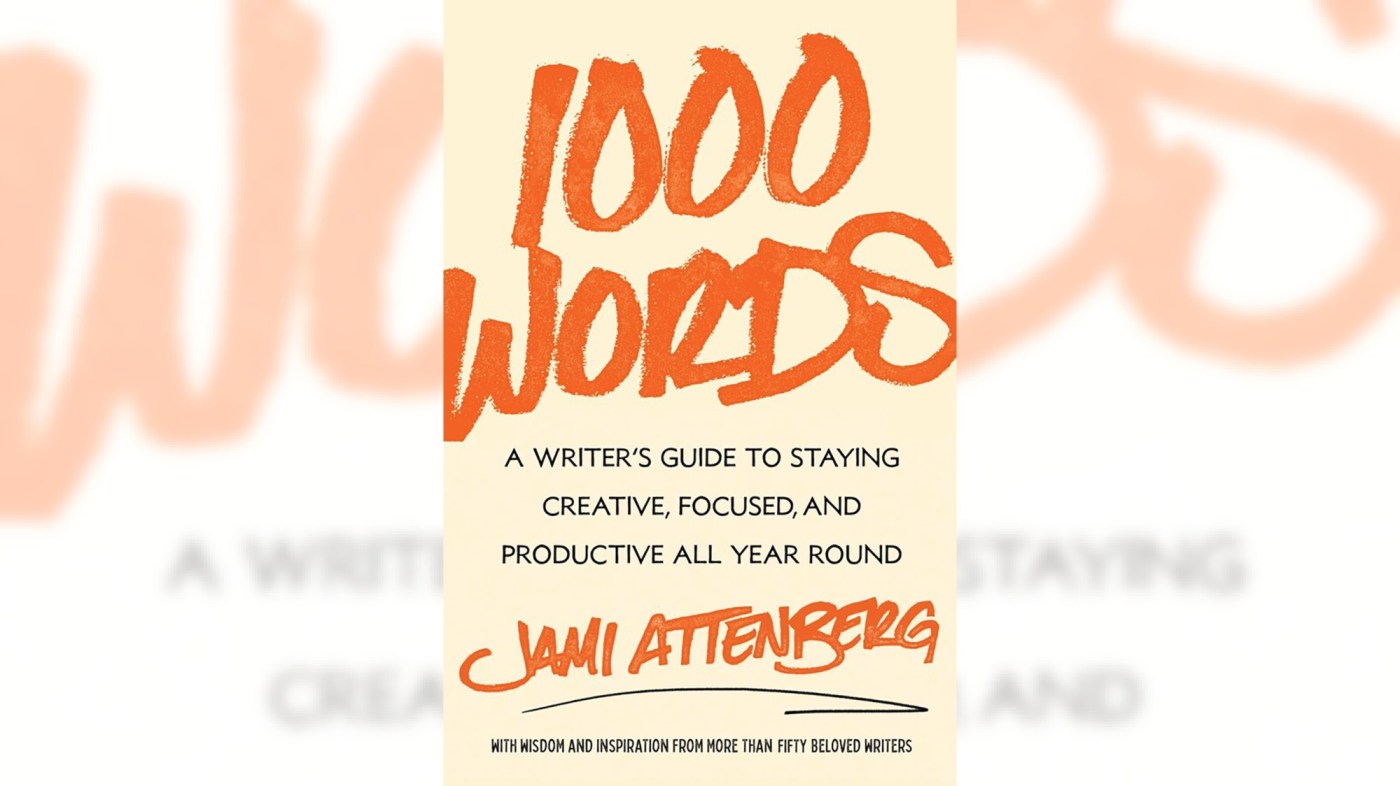
Jami Attenberg on her book ‘1000 Words: A Writer’s Guide to Staying Creative, Focused, and Productive All Year Round’

posted in: News | 0

Writing this sentence was hard.

There were so many other things I could have gone with. That set of words seemed right at the time, roughly 90 seconds ago. Now I’m not so sure. Joan Didion once said that writing the first sentence of anything is difficult but by the time you’ve written two, you’re committed and should just keep plowing ahead. The problem is, self-doubt is part of the process. If you began January certain this would be the year you finally wrote a book, and now it’s late March and you’re still frozen in fear, you understand. You need motivation. You need someone like Jami Attenberg, of Chicago suburb Buffalo Grove, in your head. She has this new book, “1000 Words: A Writer’s Guide to Staying Creative, Focused and Productive All Year Round,” which is sort of the advice book equivalent of that friend who cheers beside a marathon route, tossing out enthusiasm and Gatorade.

It’s intended that way, Attenberg told me. She imagines people leaving her book on their desks and, whenever they can’t get started, reaching for words of unabashed support.

Better her than me.

“1000 Words: A Writer’s Guide to Staying Creative, Productive and Focused All Year Round,” by Jami Attenberg. (Simon & Schuster/TNS)

I hate writing. I mean, I do it for a living, and I love it much of the time; there are those days when it brings a buoyant flush of confidence. But I also hate writing much of the time, too. Because it never gets easier. I once assumed it would. Years ago, when I was in college, on a whim, eager for advice, I called Roger Ebert at the Sun-Times and he answered his phone and I asked him how he was able to write so much, and he said he had a deadline right now and he didn’t have time to talk — which itself was an answer.

Writing advice arrives in many forms. The diaries of famous authors are windows into the struggle. Biographies, too. Chicago’s popular StoryStudio offers classes that guide you through finishing a book in one year. Rebecca Makkai, the acclaimed Chicago-based novelist, is its artistic director. During one of the many pitstops in Attenberg’s book, Makkai notes that her own first book took 10 years to finish, partly because she had children, and partly because she lost faith in what she was writing. Which is less than comforting. There are also classics on writing, full of practical advice both comforting and harrowing — Stephen King’s “On Writing,” William Zinsser’s “On Writing Well,” Anne Lamott’s “Bird by Bird.”

Attenberg, though, has never read a book of writing advice. When she began this one, she imagined she was writing something motivational and repetitive, like the self-help book she once read to stop smoking. Sometimes you need encouragement. So six years ago, Attenberg was sitting with a writer friend, talking about the difficulty of staying motivated. They decided to put themselves through a self-invented two-week boot camp of sorts. The goal was to write 1,000 words a day. After two weeks they’d have 50 pages of a book. Attenberg went online, tweeted about the project and soon, hundreds of strangers were joining them, committed to finishing 1,000 words every day for two weeks. Understand: At this point in her career, Attenberg had already written six books, including the bestselling novel “The Middlesteins.” She still needed motivation.

That’s how awful writing is.

Yet — get this — she loves writing.

“It’s fun,” she said. “I always felt this way. When you don’t have a lot of friends as a kid, it’s a way of making them. In Illinois, growing up, I was a nerdy bookworm. It felt natural to create playgrounds in my head. I’m 52 now and it’s still the most joyful thing — a great way to know yourself. I am writing books I want to read. I don’t hate writing like you say.”

In my defense: The euphoria you get from writing something you can stand is fleeting. James Baldwin, who said many smart things about so many things, has one of the smartest lines ever about the pain of writing: “Beyond talent lie all the usual words: discipline, love, luck, but most of all, endurance.” He said the most important thing for a writer starting out is having someone who reads their work and says, “The effort is real.”

But how do you start?

Arthur Miller skipped spring break at the University of Michigan to write a play in six days. Norman Mailer flexed his skills by writing sci-fi that starred a shameless stand-in for Buck Rogers. Eudora Welty would dive right in, knocking out terrible first lines such as: “Monsieur Boule inserted a delicate dagger in Mademoiselle’s left side and departed with a poised immediacy.”

Attenberg was editor of the school newspaper at Buffalo Grove High School and a member of an after-school creative writing workshop. And like any writer at any age who is worth their stuff, she read constantly. (“I don’t know how far you can go if you don’t.”) She created story-filled zines and released them, one by one. These became her first book, a story collection. “I didn’t realize I was writing a book for a while there. I was just writing about dark visions of modern romance and putting them out, then a friend said I should do a book. But I struggled with what it meant to be a writer, and finding time to be one. Learning (story) structure was hard. I’m character driven and would happily have characters chit-chat. I struggled figuring out how to ‘make things happen.’

“The thing is, to start, you don’t go out Friday night. Write at lunch. Bring a notebook on public transportation. This writer, Deesha Philyaw, said be prepared to disappoint people. She meant her family. You carve from your life to support your creative self.”

And what if you suspect your idea is dumb?

Take heart. Dostoevsky said, “There is no subject so old that something new cannot be said about it.” When beginning a new book, John le Carré would remind himself: “‘The cat sat on a mat’ is not the first line… But ‘The cat sat on the dog’s mat’ could work.”

Attenberg knows she has something if she wants to go back to something she wrote. If she is hearing her characters days later, that’s a positive sign. “Usually, I will start to see scenes in the future. So I will write towards those scenes. I will see an ending and write towards it. But the ending is never the real ending, and it becomes a north star. I also have friends and editors who are great advisors, but you should never write towards a marketplace. It always changes. Write the thing you love and it’ll come across to others.

“I also don’t keep a list of ideas. I keep a list of titles. There’s always an idea in a great title. I keep tons of notebooks but I rarely go back to them. For new ideas, I might go to a mall and eavesdrop. You probably won’t find a great story on Twitter, but I do look at vintage clothing on Etsy. You imagine: Who might have owned this clothing? It’s a start.”

Terrific, now how do I stay focused?

Silence is helpful, but, you know, a lot of silence becomes distractingly surreal.

Attenberg listens to music, “but only sung in a foreign tongue or all instrumental.” I can’t write if there are lyrics at all in a piece of background music. Brian Eno’s dreamy soundscapes, such as the perfectly titled “Ambient 1: Music For Airports,” are ideal.

“Good one,” Attenberg said. “Movie soundtracks, too.”

Maya Angelou would rent a hotel room for a few months and leave her home at 6 a.m. every day and write on the hotel bed until 1:30 p.m. or so, then return the next day. Tennessee Williams would wake up before dawn and write with a glass of wine.

Yeah, but that sounds like people with money and time to stay focused.

I asked Attenberg how she figured out how to make money and stay a writer.

“I don’t know if I did,” she said.

Dear reader, if you still have dreams of being a writer but have a weak constitution for humility and struggle, stop reading here. Attenberg worked some in advertising, she was a temp, she would take off more time than allowed. “I went broke a bunch of times. For the first books, I was basically going back and forth between writing and another job. My family worried about me, but they also thought I made these decisions myself. I’d decided to focus on writing even if I didn’t become a bestseller. My fourth book was my breakthrough (“The Middlesteins”), but right before, I had no money in a bank, I had a lot of credit card debt, I didn’t have another career to go into and I had just been dropped by my publisher. Also, I was now 40 and couch surfing for long periods of time.”

For many, sleeping on couches at 40 would be a hard out.

Entire finished novels were scrapped. Advice from agents was left unheeded. None of this is remarkable or unusual for this profession. “Yet all along, I was making decisions to get me to this place,” she said. All of it — good, bad, soul-crushing — was part of becoming a writer. “It didn’t feel like a waste,” she said about the junked books, though the words sounded broader. “Sometimes you do something to get you to somewhere else. You go through the bad to get you to next thing. It’s all part of a bigger picture.”

Now start writing.

cborrelli@chicagotribune.com

Cruise demand leaves pandemic in rearview with record passengers, more construction on tap

posted in: News | 0

MIAMI BEACH — The COVID pandemic drove the cruise industry to a standstill, but numbers released Tuesday signal the years of comeback are officially over with more expansion on tap.

More than 31.7 million passengers took cruises worldwide in 2023, said Kelly Craighead, Cruise Line International Association president and CEO, speaking at the annual Seatrade Cruise Global conference at Miami Beach Convention Center.

CLIA is the lobbying group for member cruise lines, including Royal Caribbean, Disney Cruise Line, Carnival, Norwegian, MSC and most other major brands.

The pandemic shut down sailing from March 2020 with only a small number of ships coming back online 18 months later in summer 2021. Cruise lines didn’t return to full strength until partially through 2022, so it wasn’t until a full year of sailing in 2023 that the industry could get a real handle on just what the demand had grown to as people returned to vacation travel.

“We are an industry that’s resilient and thriving all around the world, breaking records in ways we might never have imagined,” she said.

The 2023 total is 2 million more than the industry had in 2019. CLIA projects 34.1 million in 2024 growing to 34.6 million in 2025. It’s still a miniscule chunk of the overall travel pie of more than 1.3 billion, but cruise’s share is growing.

She noted that surveys of travelers who would consider a cruise for a vacation are at an all-time high, noting that 82% who had previously cruised said they would cruise again, but more importantly, among those who had never sailed, 71% would consider it.

The youngest generations — Gen X, Millennials and Gen Z — are the biggest drivers.

The fleet for the growing demand continues as well, including the introduction this year of the world’s largest cruise ship, Royal Caribbean’s Icon of the Seas.

She said CLIA member lines had more than 300 ships sailing globally for the first time in 2023, with 14 new ships that began sailing in 2023 and another eight expected before the end of the year. They have 88 new ships on order through 2028.

Already this year, both Royal Caribbean Group and Carnival Corp. announced major new ship construction deals, and Norwegian Cruise Line Holdings added to that this week with its order of eight more vessels across its three brands.

The heads of those groups were on stage to discuss where the industry is headed and enjoy their recent success.

Carnival Corp.’s president and CEO Josh Weinstein put it in a way that gained plaudits from fellow panelists and others at the conference.

“The concept of pent-up demand for cruising is gone,” he said. “We have been cruising for three years, right? It’s over. This is natural demand because we all provide amazing experiences. We delivered happiness to literally 31 million guests last year. And people see it, they feel it.”

A big part of what cruising missed during the pandemic he said was that word-of-mouth promotion that is needed to convince people to try their product.

“We now have 31 million people getting off our ships and going home and telling their friends and family who have never cruised before, ‘You don’t know what you’re missing.’ ‘This is amazing.’”

All of the leaders echoed the industry line that they offer a much better value than land-based vacations, but that the experience gap between the two has now shifted in their favor coming out of the pandemic.

“The appreciation for building memories with your friends and family coming out of COVID is at extraordinarily high levels,” said Jason Liberty, president & CEO at Royal Caribbean Group. “Also wealth transfer, right? Grandparents wanting to see that wealth transfer live, watching their kids and their grandkids experience that is also at an all-time high. … We have the secular trends of people buying less stuff, they want experiences. We’re in the experience business.”

Another bright aspect to the industry has been the spillover effect of all of the new ships since the pandemic, said Harry Sommer, president & CEO at Norwegian Cruise Line Holdings Ltd.

“Their new products are so extraordinary, and so much better than what was delivered back in ’15, ’16 and ’17, that it’s driving additional excitement for the entire industry,” Somer said. “When any new ship is delivered, no matter whether it’s part of our portfolio or the other portfolios, demand improves for all of us because it adds excitement to the industry.”

‘Irena’s Vow’ review: Drama a powerful portrait of bravery during World War II

posted in: News | 0

“Irena’s Vow” is a potent reminder that the world needs heroes — those brave enough to do what’s morally right even when the risks are great.

In theaters on April 15 and 16 via Fathom Events, the consistently compelling film is based on the true story of Irena Gut OpdykeI, who, during Nazi Germany’s occupation of much of Poland, put her life on the line in an attempt to protect a group of Jewish people from extermination. Astoundingly, she hid them right under the nose — literally under the feet — of a Nazi officer.

“Irena’s Vow,” which premiered in September at the Toronto International Film Festival, first existed as a play. Years after its 2009 debut off-Broadway, its writer, Dan Gordon, has adapted it for the screen, and, under the deft direction of Louise Archambault, the film is something greater in scale than a stage work performed in front of a camera.

Related Articles


Gun supervisor for ‘Rust’ movie gets 18 months in prison for fatal shooting by Alec Baldwin on set


What ever happened to Twin Cities’ ‘Fishing Hat’ bank robber and his victims? Filmmaker takes deep look


‘The Greatest Hits’ review: Time travel-by-song hook is catchy in fantasy-romance


A look at six Minnesota films and events at the Minneapolis St. Paul International Film Festival


Review: ‘The First Omen’ is a prequel with style, plus borderline NC-17 body horror

The movie is anchored by the measured performance of Sophie Nélisse as Irena, who also goes by Irene, and whom we meet in 1939 as she’s working as a nursing student at a hospital. Word arrives that Germany and Russia have divided the country.

“Poland is no more,” someone announces — moments before an explosion rocks the hospital.

Soon, like other Poles, Irena is spending her days contributing to the German effort.

“Work hard and no harm will come to you,” a Nazi tells her and others.

Work hard she does, but she isn’t cut out for factory labor and is reassigned as a domestic house laborer. She thrives in this new setting, where, along with cooking food that impresses the Nazis who dine there, her duties include supervising 12 Jewish workers in the laundry. She suspects many of them have exaggerated their tailoring skills to seem useful, and she assures them they all must do better for their sakes, as well as hers.

Because he’s been so impressed by her, Major Rugemer (Dougray Scott) informs her she is being moved again, this time to the villa into which he is moving and where he regularly will host parties for other high-ranking Nazis. She will be in charge of running the house.

Irena Gut Opdyke, portrayed by Sophie Nélisse, impresses Nazi officer Major Rugemer, portrayed by Dougray Scott, with her work early on in “Irena’s Vow.” (Darius-Irena Productions Inc.)

Shortly before this, she overhears an intimidating SS officer, Rokita (Maciek Nawrocki), tell Rugemer that soon no Jews in the sector will remain among the living. Already shaken by witnessing an act of near-indescribable Nazi heinousness in the streets, Irena decides she will hide her friends in the villa’s cellar, planning to make use of a brief window of time between when she gains access to it and Rugemer arrives to move them there.

From that moment through most of the rest of the film, as World War II rages on, “Irena’s Vow” is a largely nerve-wracking experience, as Irena and her friends face one challenge after another. To their credit, though, Gordon (“Passenger 57,” “Wyatt Earp”) and Archambault (“Thanks for Everything,” “One Summer”) never overdo it; as a viewer, you sense that most days in the characters’ lives are largely uneventful but that you are witnessing those that are anything but that. The film even contains moments of relative joy, such as when, early on in the precarious situation, the cellar dwellers help Irena prepare a feast for a party, Irena having insisted to Rugemer she needed no extra help in the house and needing to prove that to be the case.

Nélisse, whose film credits include “The Book Thief” and “47 Meters Down: Uncaged” but who may best be known for portraying the younger version of Shauna on Showtime’s “Yellowjackets,” does her finest work as Irena must portray an increasingly complex character and the situation around her evolves.

Sophie Nélisse’s Irena most play an increasingly complex role as “Irena’s Vow” progresses.” (Darius-Irena Productions Inc.)

Because the film is told from Irena’s point of view, “Irena’s Vow” does little in the way of character development when it comes to those whom Irena is hiding; we see them only when she is interacting with them. It is both understandable and a little disappointing.

As a result, one of the few other actors who gets to make much of an impression is Scott (“Deep Impact,” “Ever After: A Cinderella Story”). In his hands, Rugemer falls somewhere in the vast space between entirely loathsome and at least vaguely sympathetic.

We are treated to a couple of nice moments courtesy of Schulz (Andrzej Seweryn), who, many years Irena’s senior, imparts upon her some advice for navigating her new reality.

“You worry about you. You take care of you. You know only what you need to know,” he says, adding that she should be like a monkey — hearing nothing, seeing nothing and speaking nothing.

Fortunately for some, the real Irena — who, according to press materials for the film, was named by the Israeli Holocaust Commission as one of the Righteous among the Nations, a title given to those who risked their lives by hiding and saving Jews during the Holocaust, and the recipient of the Israel Medal of Honor — couldn’t live that way.

“Irena’s Vow” is a stirring tribute to her bravery.

‘Irena’s Vow’

Where: Theaters.

When: April 15 and 16.

Rated: R for some strong violence and brief sexuality.

Runtime: 2 hours, 1 minute.

Stars (of four): 3.5.

Editor’s note: This article was updated at 4:58 p.m. to correct the dates the film is slated to run in theaters.