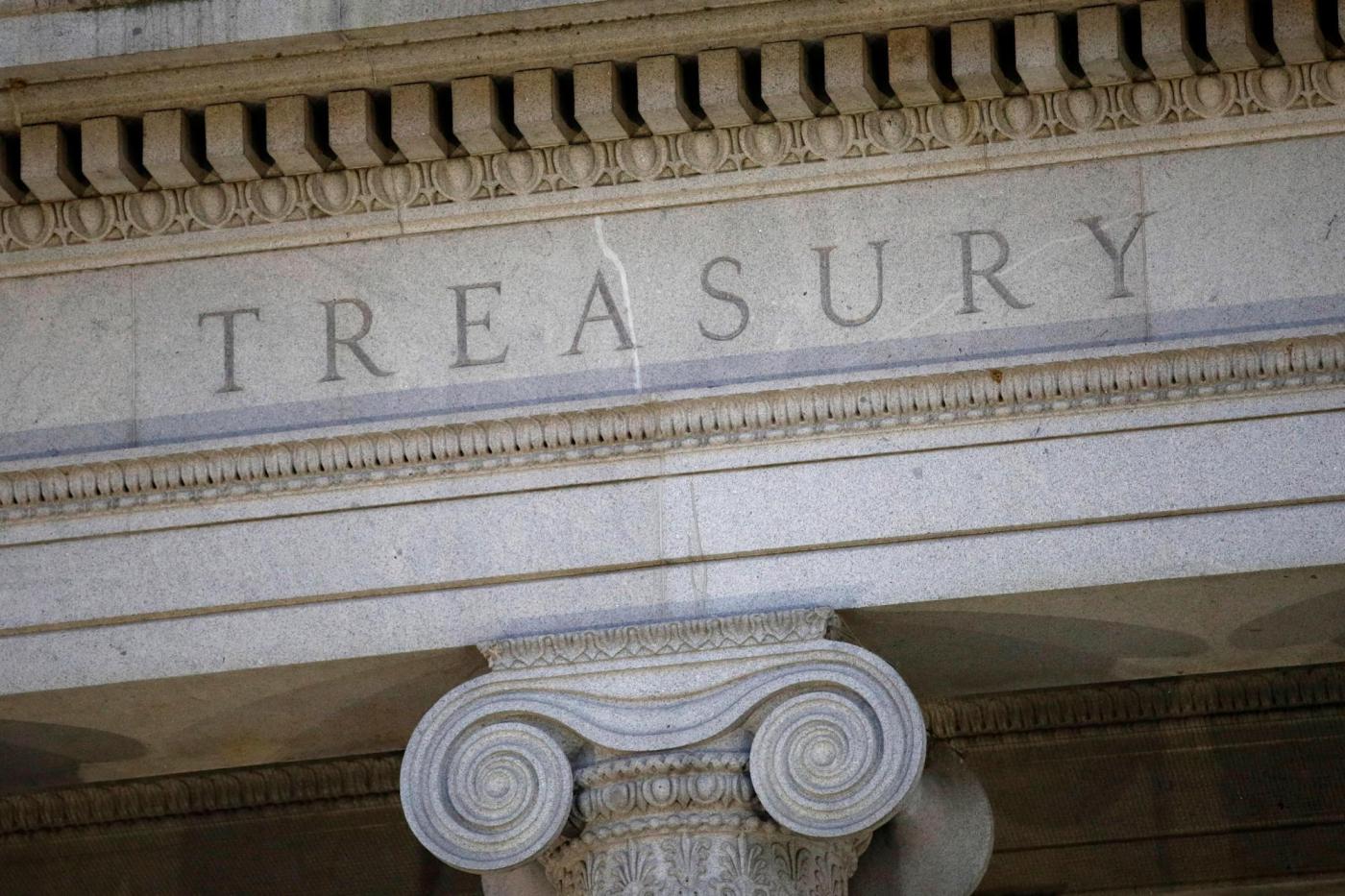
US and UK issue new sanctions on Iran in response to Tehran’s weekend attack on Israel

posted in: News | 0

By FATIMA HUSSEIN (Associated Press)

WASHINGTON (AP) — The U.S. and U.K. on Thursday imposed a new round of sanctions on Iran as concern grows that Tehran’s unprecedented attack on Israel could fuel a wider war in the Middle East.

Treasury’s Office of Foreign Assets Control targeted 16 people and two entities in Iran that produce engines that power the drones used in the April 13 attack on Israel. OFAC also sanctioned five firms involved in steel production and three subsidiaries of Iranian automaker Bahman Group — which is accused of materially supporting Iran’s military and other sanctioned groups. A representative from Bahman was not immediately available for comment.

Additionally, the U.K. is targeting several Iranian military branches and individuals involved in Iran’s drone and ballistic missile industries.

President Joe Biden said in a statement that he had directed U.S. Treasury “to continue to impose sanctions that further degrade Iran’s military industries.” “Let it be clear to all those who enable or support Iran’s attacks,” he said, “we will not hesitate to take all necessary action to hold you accountable.”

U.K. Prime Minister Rishi Sunak said in a statement that the sanctions “will further limit Iran’s ability to destabilize the region.”

In addition to Treasury’s sanctions, the U.S. Commerce Department is imposing new controls to restrict Iran’s access to basic commercial grade microelectronics, which apply to items manufactured outside the U.S. that are produced using U.S. technology.

The actions come after U.S. officials earlier this week warned that they were readying new sanctions in response to Iran’s activity in the region and to prevent future attacks. Lawmakers on Capitol Hill also have been quickly pushing forward legislation that would financially punish the Islamic Republic and its leaders.

Iran’s attack on Israel early Sunday came in response to what it says was an Israeli strike on Iran’s consulate in Syria earlier this month. Israel’s military chief said Monday that his country will respond to the Iranian attack, while world leaders caution against retaliation, trying to avoid a spiral of violence.

European Union leaders also vowed on Wednesday to ramp up sanctions on Iran, targeting its drone and missile deliveries to proxies in Gaza, Yemen and Lebanon.

EU foreign policy chief Josep Borrell said the existing EU sanctions regime would be strengthened and expanded to punish Tehran and help prevent future attacks on Israel. At the same time, he said, Israel needed to exercise restraint.

“I don’t want to exaggerate, but we are on the edge of a war, a regional war in the Middle East, which will be sending shockwaves to the rest of the world, and in particular to Europe,” he warned. “So stop it.”

The U.S. has already sanctioned hundreds of entities and people in Iran — from the central bank and government officials to drone producers and money exchangers — accused of materially supporting Iran’s Revolutionary Guard and foreign militant groups such as Hamas, Hezbollah and the Houthis.

And U.S. efforts to limit Iran’s income from oil and petroleum products span back decades.

The question remains how effective sanctions will be, and have been, in preventing Iran from ramping up its production of military equipment. American defense officials accuse Iran of supplying drones to Russia as it pursues its invasion of Ukraine, which has reached a third year.

Earlier this week, Treasury Secretary Janet Yellen said during a press conference that the U.S. has “been working to diminish Iran’s ability to export oil.”

”There may be more that we could do,” she said.

‘Forever Chemicals,’ Religion, and Family Tragedy in Texas

posted in: News | 0

Editor’s Note: This excerpt is adapted from Loose of Earth: A Memoir (April 2024) with permission from University of Texas Press. The Environmental Protection Agency announced limits on PFAS in drinking water earlier this month.

A blade of light glances off my grandparents’ white Lincoln. They park at the curb. A torque of despair turns in my stomach at the way Dad draws his mother into his arms. There’s a tumor in Dad’s colon. That’s all anyone knows. Mom has continued to say they’ve caught it early, and Dad has agreed and recovered his nonchalance. But my grandmother’s hands pass over his back and pause.

Mom buzzes with questions about my grandparents’ drive, with particular interest in the conditions of the road.

Author of Loose of Earth Kathleen Dorothy Blackburn Courtesy/UT Press

 “How long did it take you?”

“About seven hours,” my grandfather says. “What can I get you all, something to drink?”

I pray against her water monologue. Mom likes to say we have good water; she means our privately filtered system. Our water, she claims, is so pure you can taste what isn’t there. No microbes, no industry pollutants, nor, good Lord, any arsenic or fertilizer runoff. She says city water gives a tell in the skin and teeth, like cigarettes. In time I will understand she is more right than she knows. In the present, I wish that we had something more than water to offer my grandparents. Back in Universal City, they might have sipped sherry from crystal glasses. But now, they follow Dad to the guest room, each with a glass of water. It’s five o’clock somewhere. Not here.

Looking back now from the distance of twenty-five years, I imagine that once inside the guest room, Grandma downed her glass of water and said something like, “That ought to take the edge off.” Humor, rhetorical shrugs, that was the Blackburn way. She would have then set to work placing her folded slacks in the empty dresser. Perhaps her mind darted as it did when she later talked to me about the last year of her son’s life: He’d looked robust as he strode across the yard to greet her. When she took him into her arms, she thought, This has got to be some sick joke. His firm young body, a promise.

As she grappled with the looming details around my father’s health, she clung to a memory of him as boy, a promise that he would outlive her.

In 1971, when Dad was twelve, Bobby ten, my grandparents took the boys on a cross-country road trip from San Antonio to the Grand Canyon. The colonel stopped somewhere in the Southwest to fill the family’s big brown Lincoln. Always a Lincoln. Always an American-made car. Grandma fanned herself with a map in the backseat, while Bobby flipped through the pages of a comic book he’d memorized. Next to the colonel, my father sat up brightly, eyes cobalt and bright as quartz. He pointed to a diner across the highway and asked for money to buy ice cream. Those blue eyes. My grandmother’s were cut of the same crystal. Her mother’s too. Whenever people remarked on the Irish origin of Kennedy, my grandmother’s maiden name, she was quick to mention that her eyes were her mother’s. “From the Danish,” she’d say. But she didn’t tell anyone she was afraid of going blind. Her mother was losing her vision. Worn vessels had opened in her retinas and were leaking blood. Macular degeneration. The condition was hereditary.

Dusk ignited the horizon, a resin line above blacktop. A lighter snapped. Ash whisked through the open window as Grandma watched her son run across the highway to the diner. He held his elbows akimbo, but his gait was smooth, as though he were much older.

My grandmother liked to think she’d also inherited her mother’s resilience. Dorothy Kennedy was born in Racine in 1920. The oldest of five children and the only girl. Little old me, she used to say. Daughter of a salesman, an Irish immigrant, a drunk. Whenever Dorothy heard of people saying they had depression, she scoffed. Depression was using your four-foot-eleven frame to shelter your mother from your father’s vitriol after he’d spent his earnings on whiskey down at a bar called Nick’s. It was lying awake at night in a house in Mansfield, Ohio, just praying you wouldn’t hear his feet stumble up the steps. Drinking wasn’t an addiction. It was a personality, and AA couldn’t cure that. Her father was what they call recovered by the time she brought my grandfather home in 1946 to meet him, but she knew he was still the same man. You don’t recover from who you are. When her father died in 1956, she didn’t attend his funeral.

My grandmother thought of herself as the kind of woman who knew enough to know when you had it good. When, in 1966, Grandpa got stationed at Randolph Air Force Base and they found a place in a suburb outside of San Antonio called Universal City, it sounded right—universal signifying to her not the cosmos but a modern system of highways and underground pipes. Places like Universal City were under development everywhere, their green lawns, strip malls, and good schools manifesting the standardized American dream come true—for a white man with a salary and a family. Twenty miles from downtown San Antonio, Universal City was only 2.7 miles from Randolph Air Force Base, my grandfather’s last station before retirement in 1969. But Universal City could have been anywhere in the United States.

Not everything came up rosy. The war in Vietnam threw its shadow over those early years in Texas. In 1967, a year after they moved to Universal City, a fire consumed the USS Forrestal. The aircraft carrier was stalking Vietnam’s north shore, preparing to attack. Aboard the vessel, young Navy ensign John McCain readied for combat in an A-4 Skyhawk fighter jet. Then a parked F-4 Phantom launched an errant Zuni rocket that struck the Skyhawk’s 400-gallon fuel tank. Petroleum slapped the deck a few feet away from where the future US senator stood. The leaked fuel lit up a path of fire that, in ninety seconds, reached parked jets with pilots strapped inside. Officers on foot scrambled for hand-held extinguishers. The CO2 did little more to stop the fire than their own breath would have done. Inferno trapped the pilots inside their planes. Then the flames detonated at least one 1,000-pound bomb, killing the men who were chasing them. The explosion set off a chain of combustions that blew through the length of the 1,091-foot flight deck and sent half the supercarrier to hell. The conflagration burned for at least seventeen hours, killing 134 sailors and injuring hundreds more.

Never again. The Navy joined forces with the company 3M to develop a new aqueous film-forming foam (AFFF) that could stop petroleum fires.

The magic ingredients for the foam were a group of chemicals that had a carbon-fluorine bond—the strongest bond in organic chemistry. Perfluoroalkyl and polyfluoroalkyl chemicals (PFAS) had high electronegativity, low polarizability, and long carbon backbones. These properties made PFAS ideal ingredients for non-stick products. My grandmother didn’t know about PFAS, but she did own Teflon pans and Scotchgard, some of the more famous household items in which PFAS were present.

Though other formulations of AFFF existed, the foam that 3M exclusively developed and sold between the 1960s and 2002 dominated the market. It was created using an electrochemical fluorination process to produce a long carbon chain that reinforced the strong carbon-fluorine bond. Among PFAS, this group, called perfluoroalkyl acids (PFAAs), were a powerhouse substance. They were highly chemically and thermally stable. They would become some of the most environmentally persistent, bioaccumulative, and toxic PFAS on the planet.

Over fifty years later, certain PFAAs, including perfluorooctane sulfonate (PFOS), perfluorooctanoate (PFOA), and perfluorohexane sulfonate (PFHxS), would constitute three of the six forever chemicals targeted for regulation in drinking water by the Environmental Protection Agency (EPA) in 2023 because of their hazardous health impacts. But in the 1960s, 3M branded its foam “Light Water,” as though its presence on the planet would be just as ephemeral and life-giving as those elements.

Petroleum fire had no effect on light water. It was the other way around. Light water spread through fire without disintegrating. The foam resisted heat and every other type of chemical bond. It spread through petroleum fire like a blanket. In some drills, the foam could snuff out flames in less than thirty seconds.

The response to the Forrestal disaster was distilled to acronyms: the DOD contracted with the manufacturer 3M to produce AFFF. Light water was distributed across the nation’s military sites, and PFAS entered the environment on a global scale.

In the decades to come 3M would create so many variants of carbon chains that future toxicologists would only be able to test for a fraction of them. The Department of Defense and 3M would go on to claim there was no way to tie exposure to PFAS to disease, and the EPA would not begin to take steps to set maximum contaminant levels for “forever chemicals” in drinking water sources until 2023. What actually endangered lives? Fuel-fed fire. Now that was an obvious cause and effect, at least to the DOD and industries like 3M. Internal reports on PFAS were locked away in a box.

But the PFAS released into the environment couldn’t be sealed up. They became euphemized as “forever chemicals,” a term one can at least pronounce if not comprehend. The ability of PFAS to repel oil and fire is also what endows them with their durability. The chemicals are described as “forever” because they do not break down but rather persist indefinitely, accumulating in water, sand, soil, and blood. The groundwater surrounding some Air Force sites abounds with PFAS amounts that are three thousand times higher than the federal health limit. It is possible that Dad drank carcinogenic water for most of his life.

Back on the interstate in the Southwest in 1971, a foreboding nudged Grandma to look across the highway.

My father was holding an ice cream cone and waving from the other side of the interstate. He looked far away. Something inside her reached for him. The asphalt between them stretched too wide. The highway swayed, distant and thin, like a telephone wire, and her son perched on it no larger than a bird. His waving hand was a flame flickering on the time line of his life. Sometimes a woman is given God’s view but no power to do anything about it.

A blood vessel ruptured in Grandma’s periphery. A cloud of crimson. A red car careened toward her son with the silence and intent of a meteorite. How long had that rock flown through space before gravity turned it into a four-cylinder bullet? Red is the last color you see before you lose all sight. She leapt from the car and ran toward the highway. She shrieked. To look? To back away? A horn. Her son turned to face it, and she couldn’t help herself: She closed her eyes. There are some things you see but can’t watch. Don’t look at the sun or the dying.

When my grandmother’s eyelids lifted, my father’s hair was dancing in the car’s red wake.

Thomas Friedman: How to be pro-Palestinian, pro-Israeli and pro-Iranian

posted in: News | 0

Iran’s missile and drone attack on Israel over the weekend was a game-changing escalation that requires some game-changing rethinking on the part of Israel and its most important ally, the United States. I call it “the three-state solution.”

It begins with the recognition that there is probably zero hope for any resolution of the Israeli-Palestinian conflict or the Israel-Iran conflict without leadership change in Tehran, Jerusalem and Ramallah.

Starting with Tehran: I don’t favor any Western attempt to topple the Islamic Republic of Iran from outside, but I pray that one day the Iranian people will do so from inside.

“This region won’t see any meaningful peace or stability so long as this current government is in power in Tehran,” explained Karim Sadjadpour, an Iran expert at the Carnegie Endowment for International Peace. “Because Iran’s vast resources and training are funding the 5% of fanatics who are making life hell for the 95% of Palestinians, Lebanese, Syrians, Yemenis and Iraqis who just want to live in peace. To paraphrase Shimon Peres about prospects for change in Iran, the good news is there is light at the end of that tunnel. The bad news is that today there is no tunnel.”

Given how many times Iranians have challenged their theocratic regime only to be crushed by its iron fist, it’s clear that there is a will. We just have to hope they find a way one day soon.

Because Iran and Israel once were natural allies — the two major non-Arab powers in the Middle East. That changed with the Islamic Revolution in 1979. It put in place in Tehran a regime that prioritized spreading its Islamic ideology — and the destruction of the Jewish state of Israel — over the welfare of Iranians. If Iran were just a normal state prioritizing the advance of its own people over the destruction of another, it would be a huge change for the region.

It was good to see that the Tehran regime did not get much of a popularity boost in the region from firing over 300 drones and missiles at Israel on Saturday — almost all of which were intercepted or crashed before doing any damage. In fact, social media accounts in the Arab world have been rife with jokes ridiculing the Iranian regime for basically being 0-for-300, and suggesting that the only people who died did so from laughter.

Keystone: A strong Palestinian Authority

When I say we need regime change in Ramallah, I am referring to the corrupt and inept Palestinian Authority, led by the 88-year-old Mahmoud Abbas. Why is the Palestinian Authority so important? Because it still embraces living in peace with Israel and the Oslo framework meant to lead to two states for two Indigenous peoples. That is what makes a strong Palestinian Authority the keystone of any Israeli-Palestinian peace and of sustainable Arab-Israeli-Western alliance to deter or confront Iran.

So if you want to be pro-Palestinian today — as well as pro-Israel, pro-U.S.-Saudi-Israel agreement, pro-Abraham Accords, or anti-Iranian regime — the single most meaningful thing you can push for, demonstrate for or volunteer to contribute to is the transformation of the Palestinian Authority into a professionally led, noncorrupt, accountable-to-donors, effective governing institution.

That kind of Palestinian Authority can be a partner for a two-state solution with Israel and replace Israeli forces, along with friendly Arab armies, and govern the Gaza Strip in place of the pro-Iranian, Israel-hating Hamas — if it can be dismantled.

I give the Biden team generally high marks for the job that it has done responding to the hugely fraught and complex war between Israel and Hamas — and, over the weekend, helping Israel deal with the Iranian missile attack. One key mistake it has made, though, was staying passive as Abbas appointed a “new” government led by a longtime crony as prime minister, businessman Muhammad Mustafa, in March. That was not the government of change that many Palestinians were hoping for, that the moderate Arabs were demanding and that the Palestinian people so badly needed.

As anyone who has reported from the West Bank knows, there is abundant leadership talent among Palestinians there, not to mention abroad — highly educated and able men and women. But too few have been tapped for the Palestinian Authority, which needs to have the best and the brightest of Palestinians at this key moment.

Countries like the United Arab Emirates are ready to come in and advise, train and fund a transforming Palestinian Authority, and even stand alongside it in Gaza with armed forces, but that is not going to happen until Abbas retires. The authority needs a proven, noncorrupt institution builder in the mold of former Prime Minister Salam Fayyad, the best Palestinian leadership role model ever.

Which leads to why we need leadership change in Israel today, too.

Netanyahu’s approach: Not in Israel’s interest

No one has done more to frustrate and prevent the emergence of an effective Palestinian Authority than Prime Minister Benjamin Netanyahu, who spent years making sure that Hamas had enough resources from Qatar to stay in power in Gaza, and prevent any unified Palestinian decision-making body — while, at the same time, denigrating the Palestinian Authority for every fault it had. Netanyahu never praised the authority for sticking to nonviolence (unlike Hamas) and for the way its security services helped Israel keep the West Bank from exploding despite the huge expansion of Israeli settlements. Netanyahu’s approach was shameful and, we now see, not in Israel’s interest.

A lot of Palestinians, and their supporters abroad, are saying today, “Well, if Israel says there is no difference between the Palestinian Authority and Hamas, maybe we should all just be with Hamas.” How is that in Israel’s interest?

Moreover, in October, Israel invaded Gaza under Netanyahu’s leadership with no exit strategy, no plan for the morning after and no Palestinian partner that can govern Gaza, along with friendly Arab armies, if Israel can bring down the Hamas government.

Netanyahu will not partner with the Palestinian Authority because he is on trial for corruption and needs to hold onto his office to plea bargain, in the event of any conviction. The only way he can do that is to rely on far-right Jewish supremacist/settler parties in his coalition, which refuse to see the Palestinian Authority become an effective governing body because that would mean it is a legitimate partner for a two-state solution that would force Israel to relinquish all or part of the West Bank.

This is not only incredibly dangerous for Israel in terms of the future of Gaza, but also — one can now clearly see — for the confrontation with Iran, which is going to a whole new level.

Israel needs a regional alliance

Israel, as was demonstrated over the weekend, could not have effectively dealt with Iran’s missile attack without a regional alliance — without tight coordination with Jordan and Arab Gulf states, which provided both early warning detection and, in the case of Jordan, actually shot down Iranian missiles and drones heading for Israel. Israel also relied on the help of the U.S., British and French air forces, and the U.S. Navy.

Attention, attention, attention: It is a complete fantasy to believe that the U.S., Jordan, and Israel’s Arab and NATO allies will be able to maintain a long confrontation with Iran — openly defending Israel — if Israel has a government determined to annex the West Bank and populate every sector there with settlements as well as remain in Gaza without any legitimate Palestinian partner.

Israel’s popularity has been eroding across the Western world since Oct. 7 — not to mention the Arab Muslim world. The support Israel garnered last weekend against Iran is not sustainable, unless Israel evinces a changed attitude toward the Palestinian Authority and plans a way out of Gaza.

But let’s fantasize in a different direction for a moment. Imagine if Israel tomorrow announced a freeze on new settlements, a willingness to transfer more governing and security responsibilities to the Palestinian Authority in the West Bank and Gaza — as soon as it has built the capacity — and a willingness to invite in the U.S., the United Arab Emirates and Saudi Arabia to help bring the Palestinian Authority up to that level and fund its institutions, what would immediately happen?

More than any missile strike

Both Iran and Hamas would be deflated — more than any Israeli missile strike could accomplish.

“Oh my God,” Iran’s Revolutionary Guard and Hamas would say, “that is a disaster. It means we cannot continue to easily delegitimize Israel in the West. It means conditions have been created for the U.S.-Israeli-Palestinian-Saudi security treaty. And it means the Arab governments will be able to much more comfortably and openly collaborate with Israel against Iran and its proxies. That is a disaster.”

It would also mean that Iran would no longer be able to pose as the great defender of the Palestinian cause — a pose that simply disguises its venomous desire to destroy the Jewish state and deflects attention from its crushing of its own people, particularly women and girls, and their democratic aspirations.

At the same time, in America and Western capitals, collaboration with Israel would no longer be so politically toxic. And in Russia and China, their collaboration with Iran would look as cynical as it is — pro-Hamas, not pro-Palestinian.

Yes, I can assure you: Nothing could be more to Israel’s strategic benefit.

But it cannot and will not happen as long as Netanyahu is in power.

Iran’s ‘Palestine card’

We are in a chaotic moment in the Middle East right now. All I know for certain is that an effective, credible, legitimate Palestinian Authority is the keystone for every decent outcome — a sustainable two-state solution, a sustainable Arab-Israeli alliance against Iran, a sustainable U.S. and NATO Middle East policy to protect a democratic Israel from theocratic Tehran and a sustainable removal of the “Palestine card” from Iran’s hands.

But it will take leadership transformations in Tehran, Ramallah and Jerusalem (and not Washington) to happen.

Thomas Friedman writes a column for the New York Times.

Related Articles

Opinion |


Andreas Kluth: Even Republicans are now calling out Putin’s lies

Opinion |


Alison Schrager: The 4-day work week is decades away

Opinion |


James Stavridis: Putin’s new front in the Ukraine war is in the Balkans

Opinion |


Thomas Friedman: Iran made a big mistake. Israel shouldn’t follow. Now, isolate Iran.

Opinion |


Jamelle Bouie: When politicians invoke the Founding Fathers, remember this

Jordan Rodell: Proposed social media legislation would undermine First Amendment protections

posted in: News | 0

A new Minnesota proposal stands poised to follow Texas and Florida in violating centuries of First Amendment protections against government compelling or blocking speech. The proposed legislation raises similar concerns to cases the Supreme Court heard last month to block Texas and Florida social media laws on constitutional grounds. These bills (HF 4400/SF 4696) put Minnesotans at risk of more government control over online speech.

Many people forget that the First Amendment not only safeguards private individuals or companies from having the government intrude on their speech – it also protects them from being compelled to speak or publish content.

The Minnesota bills would put a layer of government control over the decisions a variety of websites make about what content people see. It also would require covered services to implement a ranking system for “high” or “low” quality content, a feature many companies already use to curb dangerous content, from hate speech to foreign propaganda to spam.

Additionally, the bills would restrict social media access through daily engagement limits on new or “highly active” account holders, potentially cutting off isolated individuals who rely on these platforms as a crucial connection to the outside world.

This could threaten Minnesotans’ ability to access publicly available information online, potentially impeding their right to freely obtain and share knowledge. Information from local safety alerts to updates about natural disasters could be blocked if someone exceeded their time limit.

Additional issues are posed by the provision to prohibit contact from an account holder not already within a user’s existing extended network — unless the user initiates and welcomes the contact. While perhaps well-intended, these restrictions raise questions about how, for example, LinkedIn users could reach out to new prospective employers or employees. This would conflict with the very purpose that platform provides — career networking and recruiting.

Further, the provision raises questions about how a user could “initiate” and “welcome” contact if the default settings mandated under the bill would prohibit most interactions, including messages and requests from those beyond a user’s existing network.

These bills are politicians saying they know better what people can see and share online. That’s not just concerning, it’s unconstitutional.

While the communications medium may be new, our founders considered this issue more than 200 years ago and established protections aimed at preserving democracy. As such, the First Amendment is designed to allow people to communicate through a marketplace of ideas, and to prevent government intervention regarding what ideas people can view.

Instead of government-mandated or forced speech, our organization seeks to encourage online discourse and let users themselves choose from the different content policies based on what fits their needs. This will mean some sites will be stronger in removing dangerous content, such as cyberbullying, terrorism, or animal cruelty. Others will tend to allow all lawful speech.

To have the government instead insist on uniformity at its discretion poses a threat to all Minnesotans.

Many questions surrounding compliance and enforcement remain. How can a social media company comply with this law once a Minnesota citizen crosses state lines or someone from out of the state or country visits Minnesota? How will forced uniform speech apply if there is a political party change?

We commend Minnesota legislators for their commitment to fostering a safe digital environment for all Minnesotans, particularly younger users, and encourage them to provide educational resources to teach parents about the tools and settings they can use to enhance privacy protections on their children’s devices. Currently, four active bills in the Legislature would provide digital well-being and media literacy education for students and parents. We urge lawmakers to pursue this objective while preserving supportive online communities and access for younger users. Ultimately, it is imperative that any legislation respects and upholds their fundamental rights under the First Amendment.

The proposed heavy-handed legislation does not respect the rights guaranteed to all Americans.

Minnesota legislators and leaders must recognize the dangers of implementing such an extreme piece of legislation — with provisions that are vague, impossible to implement at scale, and would take away a vital resource for numerous state residents while violating their First Amendment rights.

HF 4400/SF 4696 creates more dangers to democracy than the issues they purport to solve for Minnesotans, and they should be rejected.

Jordan Rodell of Washington, D.C., is the state policy manager for the Computer & Communications Industry Association. CCIA is a plaintiff in the cases against Texas and Florida social media laws currently before the Supreme Court this session.

Related Articles

Opinion |


Real World Economics: Econ 101 explains district budgeting dilemmas

Opinion |


Skywatch: The lion has the hunter on the run

Opinion |


Your Money: Train your brain to make better money decisions

Opinion |


Working Strategies: Getting experience in your new career path

Opinion |


Real World Economics: Flu in the coop – should the Fed worry?