Why adult children are finding benefits to traveling with their parents

posted in: News | 0

Nancy Clanton | (TNS) The Atlanta Journal-Constitution

Hannah Johnson first went to Walt Disney World with her mother while still in college. After a brief break because of COVID, the Ringgold, Ga., resident has resumed their trips together as an annual event.

“I decided (the annual trip) was going to be what I did for her,” Johnson said, “kind of as a payback for all the things she did for me. I could just see how happy she was and how much it meant.”

According to Meghan Hayes, an independent travel adviser, adults taking trips with their parents is a growing trend.

“This trend specifically is growing because less people are deciding to have children, or they’re deciding to have children later on,” Hayes told Yahoo Life, “but they’re still ready to go on bucket list-style trips and want to include their family in these trips.”

Hayes said adult children traveling with their parents has grown to be nearly 25% of her business, up from about 5% to 10% before the pandemic.

Yahoo Life talked to people who said they believe it’s important to travel with their parents, and how they think it benefits them.

“My mom loves the Germany pavilion (at EPCOT) so we spend like an hour there,” Johnson said. “Then at Magic Kingdom, we go to Casey’s Corner (a quick-service hot dog restaurant inside the park), then sit and people watch. We like to do the PeopleMover (a tram-style attraction that gives park guests a tour of the Tomorrowland area) and more chill things, because (my mom) is not a huge thrill person.”

How do these trips help her mom?

“My mom has anxiety, so just learning how to navigate and deal with a crowd and not just freak out and shut down is a huge deal,” she said.

Megan duBois, who wrote the Yahoo Life article, said she takes a few trips each year with her parents, who are in their late 50s and early 60s.

The author and her mother, 63, recently traveled to Machu Picchu. Although the older woman needed a little help reaching the top, she nevertheless made it to the spot overlooking the ruins.

“(M)y mom and I sat together and I leaned over to tell her how proud I was of her and that she can still do anything that she sets her mind to, even if it’s scary,” duBois wrote.

For Carly Caramanna, traveling with her mother is a way to connect. “It’s exciting,” she told Yahoo Life, “because instead of visiting each other’s homes, we explore new destinations.”

The pair head to a domestic destination every other month, with a European trip each winter. “It’s like payback in the best kind of way,” she said.

_____

©2024 The Atlanta Journal-Constitution. Visit at ajc.com. Distributed by Tribune Content Agency, LLC.

What to stream: A guide to the ‘Planet of the Apes’ film franchise

posted in: News | 0

Katie Walsh | Tribune News Service

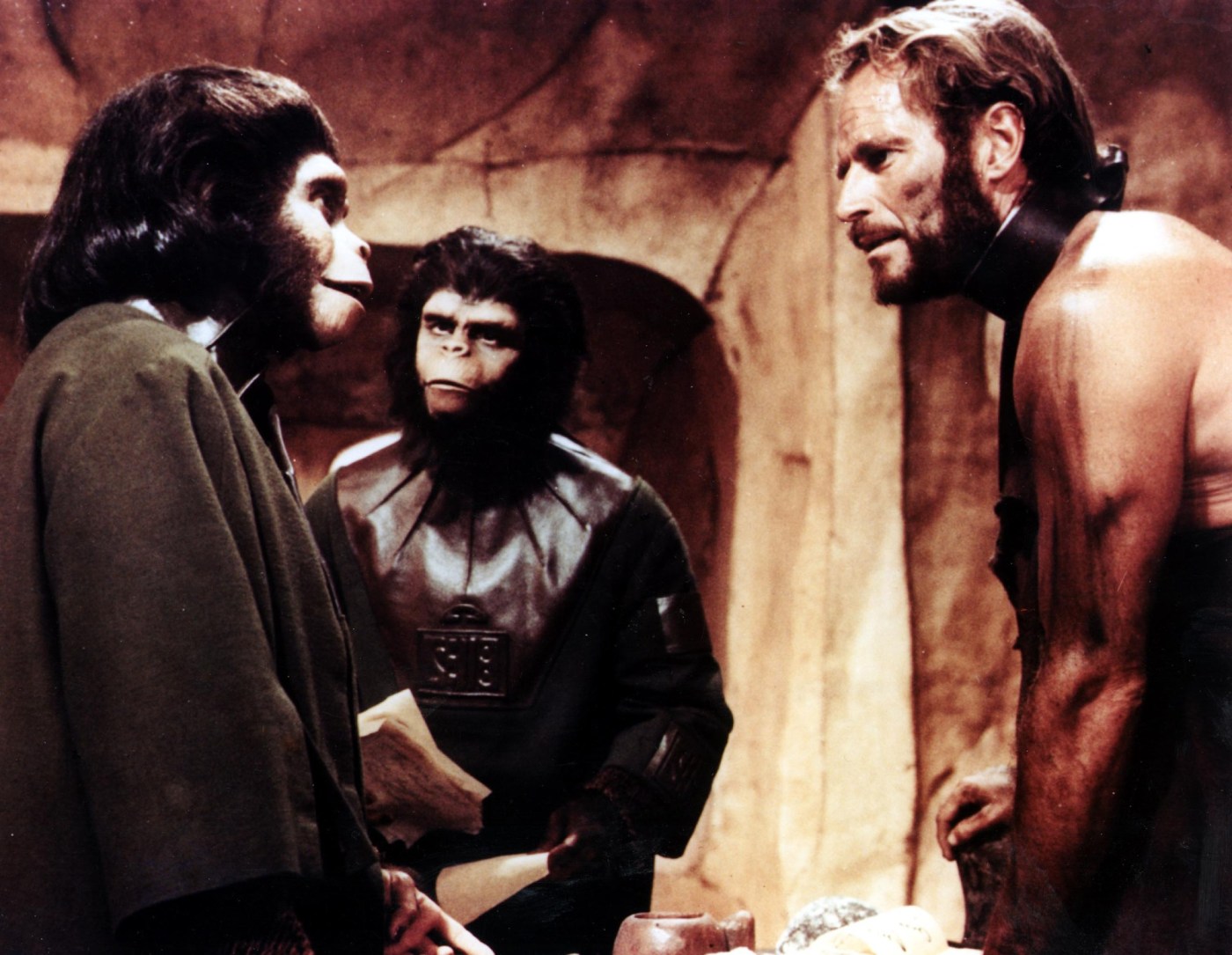
It’s been over five decades since the first “Planet of the Apes” movie premiered in 1968, and this week, the 10th “Planet of the Apes” film bows in theaters, “The Kingdom of the Planet of the Apes,” seven years since the last “Apes” film. A franchise filled with sequels, remakes and reboots, here’s your guide to all things “Planet of the Apes” to get you ready for the new movie.

Based on a 1963 sci-fi novel by French author Pierre Boulle (he also wrote the novel “The Bridge Over the River Kwai”), the original “Planet of the Apes” films were produced by 20th Century Fox. Since that studio now resides under the Disney corporate umbrella, all nine previous films are available to stream on Hulu (owned by Disney). The five original franchise films, made between 1968 and 1973, and the 2001 Tim Burton remake are also all available on Starz (or for rent on iTunes, Prime Video, etc.), while the four franchise reboot films (2011-2017) are also available on Max (or for rent elsewhere). But a Hulu subscription will get you access to all the “Apes” movies you can stand.

The 1968 “Planet of the Apes,” directed by Franklin J. Schaffner and starring Charlton Heston, was written by “Twilight Zone” creator Rod Serling and “Kwai” screenwriter Michael Wilson. Heston stars as an astronaut who travels to a strange planet ruled by apes (then realizes he was on Earth all along). The film was a smash success and earned Oscar nominations for the score and costumes, and an honorary Oscar for its makeup effects, the first given to a makeup artist.

Capitalizing on the success, the producers moved quickly on a sequel, “Beneath the Planet of the Apes” (1970), in which Heston only appeared in a few scenes before his character was killed off. In the film, another astronaut travels into the future and finds Heston’s character imprisoned by a group of subterranean human mutants. The film was not a critical success but it was a box-office hit nonetheless. More apes!

“Escape from the Planet of the Apes” (1971), “Conquest of the Planet of the Apes” (1972) and “Battle for the Planet of the Apes” (1973) brought the story back to Earth and used the sci-fi story of the apes as an allegory for contemporary social issues, including racial injustice. The character of Caesar, played by Roddy McDowall, who leads an ape rebellion, was introduced in “Conquest” — more on him later.

In the 1970s, there was also a live-action CBS TV series, and an animated series, but the franchise died out throughout the ‘80s and ‘90s, despite efforts to reboot it. They finally succeeded in 2001 with Tim Burton’s remake starring Mark Wahlberg, Helena Bonham Carter and Paul Giamatti. Wahlberg stars as an astronaut who travels through a wormhole to an ape planet where humans are enslaved and ultimately leads a human rebellion. It was a difficult production and not well-received, but still did well at the box office, which is why they keep making these movies.

Ten years later, husband-wife screenwriting duo Rick Jaffa and Amanda Silver relaunched the “Apes” franchise with their concept for “Rise of the Planet of the Apes,” focusing on our old pal Caesar from “Conquest” and “Battle.” “Rise” was directed by Rupert Wyatt, and Caesar was portrayed by motion-capture king Andy Serkis. The film was a critical and financial success, earning an Oscar nomination for visual effects. Because this is “Planet of the Apes,” that meant one thing: sequels.

Future “The Batman” director Matt Reeves took over directing on “Dawn of the Planet of the Apes” (2014) and “War for the Planet of the Apes” (2017), following Caesar’s journey as an ape leader, from uprising to armed clashes with humans. The films were great successes with critics, fans and moviegoers, and “War” brought Caesar’s story to a fitting conclusion. The latest film, “Kingdom of the Planet of the Apes,” takes place 300 years after the events of “War,” introducing a new cast of characters.

Hopefully that brings you up to speed with a brief overview of all things “Planet of the Apes,” one of the most enduring, and popular, film franchises in cinema history.

———

(Katie Walsh is the Tribune News Service film critic and co-host of the “Miami Nice” podcast.)

©2024 Tribune Content Agency, LLC

Quick Fix: Mac and Cheese Primavera

posted in: Adventure | 0

Linda Gassenheimer | Tribune News Service

Do you love mac and cheese? It’s a favorite dish for many of us. Here’s a light version with springtime vegetables: asparagus, yellow squash and zucchini.

Sharp cheddar cheese finishes this colorful and tasty dish. It’s a quick, vegetarian meal. Frozen chopped or diced onion is used for speed. I keep a package on hand to use in quick recipes.

HELPFUL HINTS:

If using thick asparagus, cook the dish 2 minutes longer.

Any type of onion can be used instead of frozen chopped onion.

COUNTDOWN:

Prepare ingredients.

Make the recipe.

SHOPPING LIST:

To buy: 1 container fat-free, fat-free, no-salt-added vegetable broth, 1 onion, 1 small yellow squash, 1 small zucchini, 1 bunch asparagus 1 box elbow macaroni, 1 package shredded reduced-fat sharp Cheddar cheese, 1 container nonfat ricotta cheese, 1 piece Parmesan cheese, 1 bottle cayenne pepper and 1 bottle smoked paprika.

Staples: salt and black peppercorns.

Primavera Mac and Cheese

Recipe by Linda Gassenheimer

2 1/2 cups fat-free, no-salt-added vegetable broth

1 cup diced onion

1 cup yellow squash cubes

1 cup zucchini cubes

1 cup elbow macaroni

1 cup shredded reduced-fat sharp cheddar cheese

1/4 cup nonfat ricotta cheese

4 spears asparagus cut into 1-inch pieces

1/4 teaspoon cayenne pepper

2 teaspoons smoked paprika

Salt and freshly ground black pepper

1/4 cup freshly grated Parmesan cheese

Add vegetable broth to a large nonstick skillet and place skillet over medium-high heat. When liquid comes to a boil, add the onion, yellow squash, zucchini and macaroni. Bring back to a boil and cook 5 minutes. Stir in the cheddar cheese, ricotta cheese and asparagus. Continue to boil 5 minutes stirring to scrape cheese from the bottom of the skillet. Check macaroni to make sure it is cooked. Add cayenne and smoked paprika, salt and pepper to taste. Divide between two dinner plates and add parmesan cheese on top.

Yield 2 servings.

Per serving: 482 calories (16 percent from fat), 8.4 g fat (4.4 saturated, 2.1 g monounsaturated), 21 mg cholesterol, 33.5 g protein, 70.6 g carbohydrates, 6.3 g fiber, 981 mg sodium.

(Linda Gassenheimer is the author of over 30 cookbooks, including her newest, “The 12-Week Diabetes Cookbook.” Listen to Linda on www.WDNA.org and all major podcast sites. Email her at Linda@DinnerInMinutes.com.)

©2024 Tribune Content Agency, LLC

Fact check: Robert F. Kennedy Jr. is wrong about a ban on NIH research about mass shootings

posted in: News | 0

By Louis Jacobson | KFF Health News (TNS)

“Congress prohibits the NIH from researching the cause of mass shootings.”

Robert F. Kennedy Jr. in an April 21 post on X

____

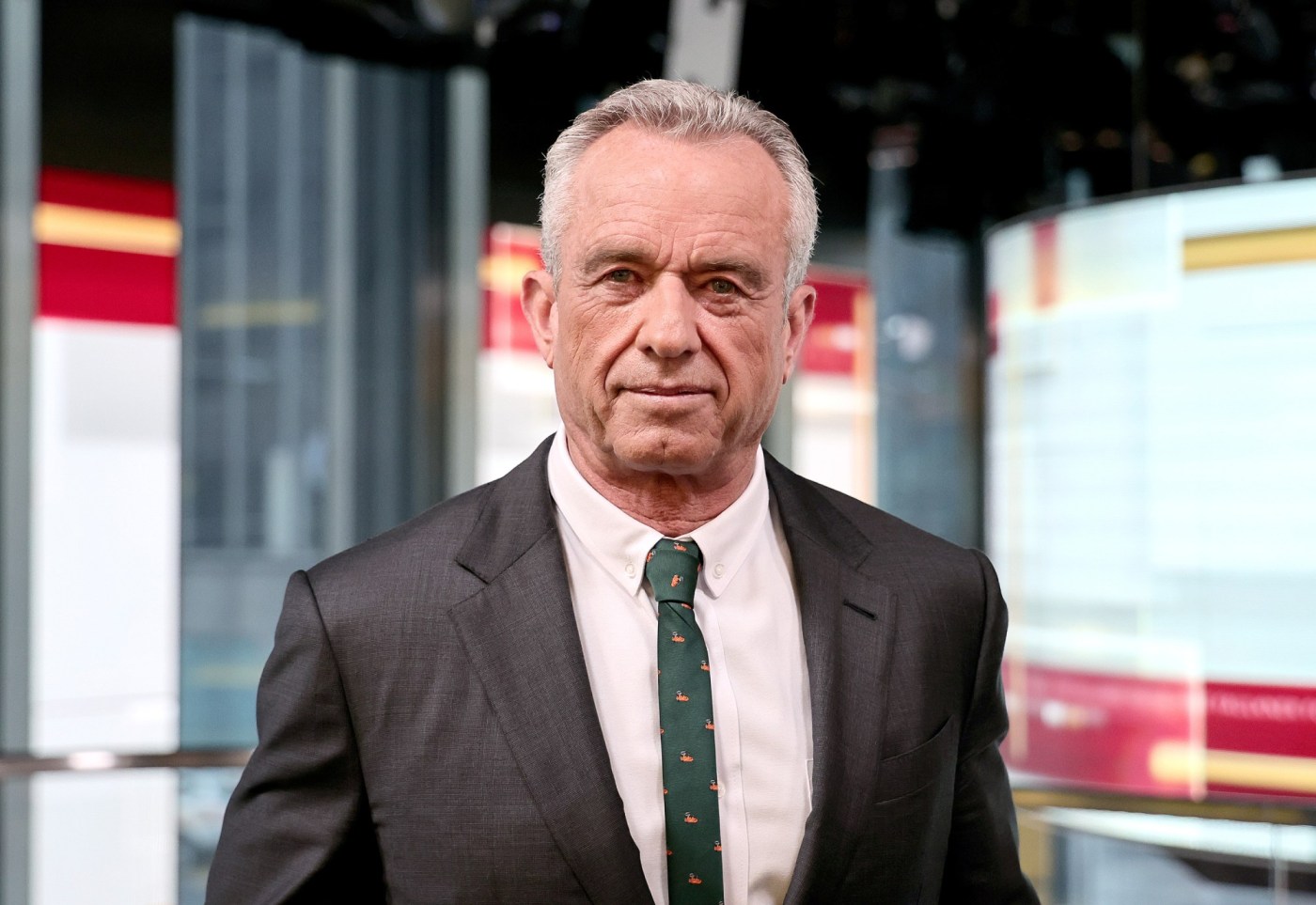
The National Institutes of Health is the federal government’s main agency for supporting medical research. Is it barred from researching mass shootings? That’s what presidential candidate Robert F. Kennedy Jr. said recently.

Kennedy, whose statements about conspiracy theories earned him PolitiFact’s 2023 “ Lie of the Year,” is running as an independent third-party candidate against President Joe Biden, the presumptive Democratic candidate, and the presumptive Republican nominee, former President Donald Trump.

On April 21 on X, Kennedy flagged his recent interview with conservative commentator Glenn Beck, which touched on gun policy. Kennedy summarized his gun policy views in the post, writing, “The National Institutes of Health refuses to investigate the mystery; in fact, Congress prohibits the NIH from researching the cause of mass shootings. Under my administration, that rule ends — and our kids’ safety becomes a top priority.”

But this information is outdated.

In 1996, Congress passed the “ Dickey Amendment,” an appropriations bill provision that federal officials widely interpreted as barring federally funded research related to gun violence (though some observers say this was a misinterpretation). Congress in 2018 clarified that the provision didn’t bar federally funded gun-related research, and funding for such efforts has been flowing since 2020.

Kennedy’s campaign did not provide evidence to support his statement.

What Was the Dickey Amendment?

After criticizing some federally funded research papers on firearms in the mid-1990s, pro-gun advocates, including the National Rifle Association, lobbied to halt federal government funding for gun violence research.

Related Articles

National Politics |


Stormy Daniels tells jury about sexual tryst with Trump at hush money trial; his lawyers’ request for mistrial is denied

National Politics |


Inside the far-right plan to use civil rights law to disrupt the 2024 election

National Politics |


Donald Trump calls Joe Biden weak on antisemitism, ignoring his own rhetoric

National Politics |


In Holocaust remembrance, Biden condemns antisemitism sparked by college protests and Gaza war

National Politics |


Donald Trump to visit St. Paul for Republican fundraising dinner

In 1996, Congress approved appropriations bill language saying that “none of the funds made available for injury prevention and control at the Centers for Disease Control and Prevention may be used to advocate or promote gun control.” The language was named for one of its backers, Rep. Jay Dickey (R-Ark).

But the Dickey Amendment, as written, did not ban all gun-related research outright.

“Any honest research that was not rigged to produce results that helped promote gun control could be funded by CDC,” said Gary Kleck, a Florida State University criminologist. But CDC officials, experts said, interpreted the Dickey Amendment as banning all gun-related research funding.

This perception meant the amendment “had a chilling effect on funding for gun research,” said Allen Rostron, a University of Missouri-Kansas City law professor who has written about the amendment. Federal agencies “did not want to take a chance on funding research that might be seen as violating the restriction” and so “essentially were not funding research on gun violence.”

Also, the Dickey Amendment targeted only the CDC, not all other federal agencies. Congress expanded the restriction to cover NIH-funded research in 2011.

Although the Dickey Amendment didn’t bar gun-related research, federal decision-makers acted as though it did by not pursuing such research.

Moving Past the Dickey Amendment

Over time, critics of the gun industry made an issue of the Dickey Amendment and gathered congressional support to clarify the amendment.

In 2018, lawmakers approved language that said the amendment wasn’t a blanket ban on federally funded gun violence research. By 2020, federal research grants on firearms began to be issued again, starting with $25 million to be split between the CDC and NIH.

By now, the CDC and NIH are funding a “ large portfolio” of firearm violence-related research, said Daniel Webster, a professor at the Johns Hopkins Bloomberg School of Public Health.

Also, the Justice Department’s National Institute of Justice has funded the largest study of mass shootings to date, Webster said, and is seeking applications for studies of mass shootings.

Our Ruling

Kennedy said, “Congress prohibits the NIH from researching the cause of mass shootings.”

Although the Dickey Amendment, a provision of appropriations law supported by the gun industry, didn’t prohibit all federally supported, gun-related research from 1996 to 2018, decision-makers acted as though it did.

However, in 2018, Congress clarified the provision’s language. And since 2020, CDC, NIH, and other federal agencies have funded millions of dollars in gun-related research, including studies on mass shootings.

We rate Kennedy’s statement False.

(KFF Health News is a national newsroom that produces in-depth journalism about health issues and is one of the core operating programs of KFF — the independent source for health policy research, polling and journalism.)

©2024 KFF Health News. Distributed by Tribune Content Agency, LLC.