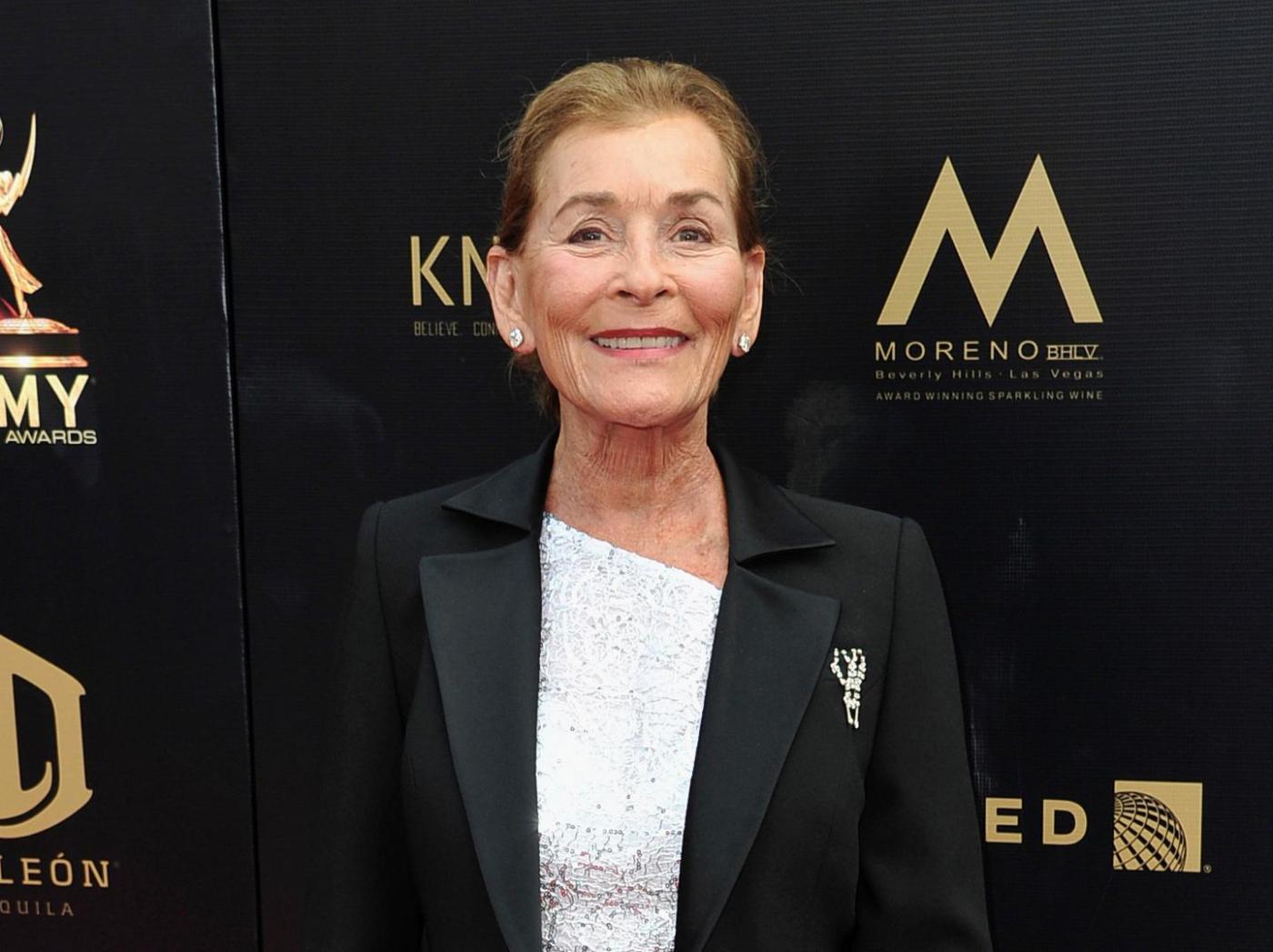
Minnesota Gov. Tim Walz has appointed two women to fill judge vacancies in the Second Judicial District, which covers Ramsey County.
On Friday, the governor announced that Veena Iyer and Jennifer Verdeja would fill those roles.
The two will fill the vacancies created when JaPaul Harris moved up to the Minnesota Court of Appeals and Elena Ostby retired, according to a news release.
Verdeja is assistant director of the Trial and Pretrial Justice Division in the Ramsey County Attorney’s Office. She was previously an assistant public defender in the Second Judicial District , a community corrections worker for Ramsey County, and served on the Minnesota Bureau of Criminal Apprehension’s Human Trafficking Investigators Task Force and the Second District Ethics Committee.
Iyer is the executive director of the Immigrant Law Center of Minnesota. She was previously a shareholder at Nilan Johnson Lewis, an Equal Justice Works fellow at Legal Aid Chicago, a law clerk for Minnesota Court of Appeals Judge Natalie Hudson, Fourth Judicial District Judge Susan Burke and U.S. District Court for the Northern District of Illinois Judge Matthew Kennelly.
Historically, investing and retirement planning have been especially challenging for women. Women live longer than men, highlighting the risk of women outliving their money. Plus, career interruptions from having children can sideline women from their most productive earning years. Furthermore, wage disparities persist — in 2022, American women typically earned 82 cents for every dollar earned by men, according to a 2023 Pew Research Center study.
That said, women are taking less of a backseat regarding their family’s wealth management and investing decisions. In 45% of American households, women now earn as much or more than their male partner. Women start more businesses than men, and single women are more likely to own their own home than their single male counterparts. And perhaps most tellingly, the share of wealth controlled by American women is expected to increase to $30 trillion by 2030.
One opportunity for women to explore goes beyond these numbers to present a new, values-based approach to accumulating and managing wealth that captures the way that women tend to view the subject of wealth and money. Values-based planning is a holistic approach that integrates your core values into the planning process.
Unlike traditional financial planning, which can focus primarily on numbers and financial targets, values-based planning emphasizes the importance of aligning financial strategies with your life’s values and aspirations. By intertwining personal values, life goals and financial strategies to craft a retirement plan that’s unique as a fingerprint, values-based planning favors the way that most women think.
How to identify your core values
At Wealth Enhancement Group, we’ve been strong proponents of the Values Exercise developed by Think2Perform, a leadership coaching, consulting and business development services firm. The Values Exercise is a card-sorting activity anyone can do to identify their values (find it online at think2perform.com/values). The Values Exercise takes you through four steps, beginning with sorting 51 cards into two piles — one whose cards fit you well, and those that don’t. (Examples of values cards include Health, Family, Wealth, Autonomy and so on.) Through the process of elimination, you whittle down your keep pile until you have just five that remain. These final five represent your core values, which you then use to guide the remainder of your values-based planning exercise.
You don’t have to do this work on your own! Collaborate with an adviser
If you work through the exercise, you’ll discover that the identification of personal values is a bit of a journey, but it can be transformative. Working with an experienced financial adviser can help you along the path. Advisers bring a wealth of knowledge and experience to the table — and can help you translate your values and vision into concrete investment and planning strategies, no matter where you are along that personal path.
You need to have a plan and a guide
Even if you think you already have a plan that considers your beliefs, values and goals, you may need help with some of the finer points related to tax, investments and legal, such as:
— How can you align what’s important to you with money?
— How will you generate sustainable income in retirement?
— How will you plan ahead for tax liabilities?
— What do you want to leave behind as a legacy for your heirs, or causes you believe in?
If you believe that working with a financial adviser could be helpful, it makes sense to interview at least two candidates before you make the hiring decision. If you know a trusted friend or family member who uses one and has had a good experience, ask for a referral. As part of your research, seek answers to these questions: Can you have a conversation with this person? Did they seem to care about you? What is the adviser’s experience and expertise? Has she been through at least one recession? Does she focus on one specialty, such as retirement planning, or is she more of a generalist? What are their training and credentials? Are they a certified financial planner (CFP), certified financial analyst (CFA) or certified public accountant (CPA)?
A great fiduciary adviser should be able to demonstrate their worth many times over in several important areas of your financial life, including marrying your values to your investments.
The opinions voiced in this material are for general information only and are not intended to provide specific advice or recommendations for any individual.
Bruce Helmer and Peg Webb are financial advisers at Wealth Enhancement Group and co-hosts of “Your Money” on WCCO 830 AM on Sunday mornings. Email Bruce and Peg at yourmoney@wealthenhancement.com. Securities offered through LPL Financial, member FINRA/SIPC. Advisory services offered through Wealth Enhancement Advisory Services LLC, a registered investment adviser. Wealth Enhancement Group and Wealth Enhancement Advisory Services are separate entities from LPL Financial.
Second Sunday Series – Editor’s Note: This is the ninth of 12 columns on making a career change which appear the second Sunday of each month, from September through August. Last month’s column discussed getting experience in your new career, while the months before focused on LinkedIn for career-changers; résumé strategies; the back-to-school decision; career change steps in your 60s; 10 ideas for choosing a new career; a sample timeline; and questions to consider when changing careers.
If you’re changing careers, you might not know very many people yet in the new field. In that case, perhaps you feel the advice to network into your next job isn’t going to work for you. Au contraire, Pierre!
Amy Lindgren
For anyone not up on their Franglais, I’m trying to say: That’s not true. The actual truth is pretty much the opposite. When you’re entering a new field, networking becomes more important than ever. That’s because a) you don’t yet have experience or lengthy credentials to impress the hiring manager and, b) with less experience on your résumé, online application systems may pass you over.
Networking to the rescue. By talking to people in the new field now, you’ll build a set of acquaintances and relationships that can blossom into substantial help for your job search later on.
By the way, if you don’t like the word “networking” (I mostly don’t), you can change the term. Instead of networking, what if we call this a process of making connections? To make a connection means someone has to reach out to someone else. In job search, that’s naturally going to be the job seeker, so that leads us back to today’s question: How do you make connections in a new field? Here are three ideas to get you started.
Talk to your instructors
Career changes are often preceded by training programs, whether that’s a skills certificate or a full degree. If that’s true for you, your instructors may be “adjunct,” meaning they teach part time but perhaps work in their field as well. Even if your instructor is a full-time professor, he or she undoubtedly knows people in your new vocation.
Talk with your other contacts
Friends, family, insurance agent … these are all people who may know someone in your new field. In this case, however, you’ll want to be clear in your request or you may find yourself in an awkward meeting with someone who can’t help you.
Here’s an example. Suppose you say to your well-connected insurance agent, “Randy, can you introduce me to anyone in the nonprofit world? I’m making a career change there.” Next thing you know, you’re having lunch with Randy’s sister who started a one-person dog rescue operation last year. Not that she’s not going to be helpful, but is she?
What if you said to Randy instead, “Do you know anyone in a medium-sized nonprofit that focuses on housing or food issues? That’s the kind of place I’d like to work next and I need to start meeting people.”
Join/attend a related professional association
I saved my favorite for last. The great thing about professional associations is that they exist, by their very charter in most cases, to serve people in a specific field of work. Don’t be fooled by the term “professional,” by the way. These groups are not specific to only elite professions. There are associations for truck drivers, social workers, restaurant chefs, health care workers, software engineers, plumbers and any other work you can think of.
Every group is a little different, even in the same field, so you’ll want to conduct research online before identifying one that fits. For career changers, the best features of an association would include a job board specific to the field, in-person events, a newsletter or blog, a member list so you can reach out and meet people, and perhaps class offerings that help you stay up to date.
To find a suitable group, start with a simple online search pairing your new work with the words “professional association” in the search box. Or you can ask your instructors or others you’ve already met in the field for their recommendations. In most cases, you’ll be able to attend a meeting or two without obligation before needing to make a decision about joining.
So there you have three ways to make connections (or network if you prefer) as you enter your new career. Be sure to keep track of those you meet because you’ll want to refresh the connection later when you start your job search.
CAPE CANAVERAL, Fla. (AP) — An unusually strong solar storm hitting Earth produced stunning displays of color in the skies across the Northern Hemisphere early Saturday, with no immediate reports of disruptions to power and communications.
Minnesota saw a beautiful northern lights show, and viewing was even possible in the heart of the Twin Cities where light pollution is the strongest.
The U.S. National Oceanic and Atmospheric Administration issued a rare severe geomagnetic storm warning when a solar outburst reached Earth on Friday afternoon, hours sooner than anticipated. The effects of the Northern Lights, which were prominently on display in Britain, were due to last through the weekend and possibly into next week.
Many in the U.K. shared phone snaps of the lights on social media early Saturday, with the phenomenon seen as far south as London and southern England.
There were sightings “from top to tail across the country,” said Chris Snell, a meteorologist at the Met Office, Britain’s weather agency. He added that the office received photos and information from other European locations including Prague and Barcelona.
NOAA alerted operators of power plants and spacecraft in orbit, as well as the Federal Emergency Management Agency, to take precautions.
“For most people here on planet Earth, they won’t have to do anything,” said Rob Steenburgh, a scientist with NOAA’s Space Weather Prediction Center.
The storm could produce northern lights as far south in the U.S. as Alabama and Northern California, NOAA said. But it was hard to predict and experts stressed it would not be the dramatic curtains of color normally associated with the northern lights, but more like splashes of greenish hues.
“That’s really the gift from space weather: the aurora,” Steenburgh said. He and his colleagues said the best aurora views may come from phone cameras, which are better at capturing light than the naked eye.
Northern lights glow in the sky near Kroschel, Minn., late Friday, May 10, 2024. (Owen Caputo Sullivan via AP)
The northern lights glow in the sky over St. Croix State Forest near Markville, Minn., late Friday, May 10, 2024. (AP Photo/Mark Vancleave)
Snap a picture of the sky and “there might be actually a nice little treat there for you,” said Mike Bettwy, operations chief for the prediction center.
The most intense solar storm in recorded history, in 1859, prompted auroras in central America and possibly even Hawaii. “We are not anticipating that” but it could come close, NOAA space weather forecaster Shawn Dahl said.
This storm poses a risk for high-voltage transmission lines for power grids, not the electrical lines ordinarily found in people’s homes, Dahl told reporters. Satellites also could be affected, which in turn could disrupt navigation and communication services here on Earth.
An extreme geomagnetic storm in 2003, for example, took out power in Sweden and damaged power transformers in South Africa.
Even when the storm is over, signals between GPS satellites and ground receivers could be scrambled or lost, according to NOAA. But there are so many navigation satellites that any outages should not last long, Steenburgh noted.
The sun has produced strong solar flares since Wednesday, resulting in at least seven outbursts of plasma. Each eruption, known as a coronal mass ejection, can contain billions of tons of plasma and magnetic field from the sun’s outer atmosphere, or corona.
The flares seem to be associated with a sunspot that’s 16 times the diameter of Earth, NOAA said. It is all part of the solar activity ramping up as the sun approaches the peak of its 11-year cycle.
NASA said the storm posed no serious threat to the seven astronauts aboard the International Space Station. The biggest concern is the increased radiation levels, and the crew could move to a better shielded part of the station if necessary, according to Steenburgh.
Increased radiation also could threaten some of NASA’s science satellites. Extremely sensitive instruments will be turned off, if necessary, to avoid damage, said Antti Pulkkinen, director of the space agency’s heliophysics science division.
Several sun-focused spacecraft are monitoring all the action.
“This is exactly the kinds of things we want to observe,” Pulkkinen said.