The year’s biggest summer travel trends, according to Pinterest

posted in: News | 0

Lacey Pfalz | (TNS) TravelPulse

Pinterest is home to over 1 billion travel-related searches and 10 billion travel saves in one year, making it an interesting playground for discovering the year’s new trends.

A new report by Pinterest identified the new summer travel trends that travelers — and especially younger Gen Z travelers — are seeking out more than ever before.

Adventure travel is here to stay

Travelers are seeking out ways to satisfy a craving for adventure. Searches for adventure activities on Pinterest increased 45 percent from 2023, and the natural world is once again top-of-mind for many travelers. Adventure travel also brings a sense of personal growth and presents a different sort of challenge for many, making it a fun, bucket-list travel experience.

Luxury safari lodge interest has grown 110%, with trending adventure travel destination Tanzania growing 60% year over year, largely in part due to its safari adventures. Water park rides rose 170 percent, while train journeys and hiking trails also rose 900 and 94 percent, respectively. Additionally, activities like mountaineering, trekking, adventure camping and caving grew in interest by around 40 percent.

Travelers are also more interested in traveling to the Amazon rainforest: Searches for travel within the Amazon grew 120% from 2023.

Travelers are seeking quiet wellness escapes

Travelers on Pinterest are getting more and more interested in leaving behind the hustle and bustle culture for something quieter and more serene. Searches for “quiet life” skyrocketed 530% year over year, and searches for quiet travel have also shown an increase in interest.

Quiet places and calm places have risen 50% and 43% each. Travel journal pages increased by 155%, showing a greater interest in recording travel experiences and in wellness travel and activities.

Additionally, travelers are seeking out more information on village vibes (145% increase), cabins in the mountains (180%), countryside (60%), national parks (250%) and glamping aesthetics (260%) than they did last year.

Trending quiet life destinations include Okinawa, Japan (35% increase) and the English countryside (31% increase).

Travelers are seeking out the unexplored

Along with an interest in slower, less crowded travel experiences also comes a different sort of travel inspiration: seeking out mysterious places that provide a sense of wonder and exploration.

Interest in places on Earth that don’t feel real grew 240% year over year. Additionally, calming nature grew 340%; exploring abandoned places grew 230%; beautiful places in the world grew 150%; ancient cities grew 75% and haunted places grew 155%.

Top trending mysterious destinations that are seeing newfound popularity include Machu Picchu, which saw 190% growth in searches, and Edinburgh, Scotland, which saw a 56% growth.

Trending Gen Z summer destinations

Jasper, Canada, is this summer’s hottest destination for Gen Z travelers, who desire greater connection with the world around them, outside of their phones. Home to Jasper National Park, it’s a breathtaking place that promises ample exploration and adventure travel opportunities, along with great photography opportunities. Searches for Jasper grew 155% year over year.

Interest in learning about other destinations also grew from last year. London lifestyle grew 340%; South African food in particular rose 320%; Santorini party grew 300%; Goa nightlife grew 270%; and summer in Brazil rose 250%.

________

©2024 Northstar Travel Media, LLC. Visit at travelpulse.com. Distributed by Tribune Content Agency, LLC.

Column: About that ‘SNL’ student protest sketch — and a lousy time for political satire

posted in: News | 0

Political satire, it wasn’t. The headlines from CNN, The Hollywood Reporter and many other media outlets — “‘SNL’ Takes Aim at Pro-Palestine Campus Protesters in Cold Open” reported The Daily Beast — framed it all wrong. It’s not political satire if you leave politics as well as satire out of it.

The sketch presented a community affairs panel TV show on NY1, featuring worried, conflicted parents talking about their confusion regarding the protests, police and administration retaliation, and encampments nationwide on higher-ed campuses.

“SNL” veteran Kenan Thompson, playing the father of a Columbia University undergrad senior, was the Black exception to the white panelists, busting his Uber-driving hump to cover the near-$70,000 in tuition charged by his daughter’s school. “Nothing makes me prouder than young people using their voices” for dissent, Thompson’s character said. Then, the punchline: Not his daughter, of course! Protesting the war on Gaza, or the Hamas assault on Israel, or anything, really — those are white-people problems, which of course they’re not, but …

Topical humor? Sort of. Satire? AWOL. And in 2024 America, says Anne Libera, associate professor of comedy writing and performance at Columbia College Chicago and Second City’s director of comedy studies, “satire is not a useful tool. When we create comedy, we’re using recognition; pain; and some form of psychic or temporal distance.”

Libera told me Monday that with student protests preceded by the worst of a pandemic, preceded by the first of potentially two Trump administrations, “what we have is the pain. But no distance.”

Our conversation has been edited for clarity and length.


Q: Anne, about that “SNL” cold open — I don’t know if it’s even possible to find anything funny in Gaza or Israel or even campus responses right now.

A: That is correct (laughs). The sketch wasn’t particularly good. If I had to guess, I’d guess that Kenan’s character was originally going to be part of  “Weekend Update,” and then they thought, huh, maybe we could do something with this for the cold open. The frame for it, and the way people weren’t quite on their lines, suggests to me they rewrote it as a cold open after it was conceived as just a monologue.

Related Articles

Entertainment |


‘Interview with the Vampire’ review: One of the best shows on TV is back for Season 2

Entertainment |


Walz signs ‘Taylor Swift bill’ … at First Avenue nightclub in Minneapolis

Entertainment |


Anna Wintour apologizes for 2024 Met Gala’s theme ‘confusion’

Entertainment |


An ode to failure: Some classic movies were flops when they first came out

Entertainment |


Photos: Best and worst looks from the 2024 Met Gala

I’m directing one of the Second City touring shows right now, and we’ve got a lot of original material. So I’m in the theater, watching comedy being improvised in front of audiences on a regular basis. I can tell you these audiences respond really strongly to absurdity and silliness, and when we become a little more direct about things that are happening in the world, they just seem a little exhausted.

Steve Martin has talked about when he started to change his standup act, and got into the ridiculous, wild-and-crazy persona. It came out of a feeling that the audience was getting really tired of the world (after Vietnam), which was serious and complicated and dark. People were ready for absurdity.

Right now, for better or worse, I don’t know if “SNL” is doing political satire particularly well. It’s a difficult time for that. We’re exhausted from the last few years. And let’s be really clear on this: Trump is in fact a satire of himself. It’s no use exaggerating Trump behaving like a mafioso because he’s already the exaggerated version of a mafioso as president.

The real American heyday of political satire happened earlier than the Vietnam War era. We didn’t have great political satire during Vietnam for the same reasons we don’t have it now. Lenny Bruce, Mort Sahl, Nichols and May, they all came up in the late ’50s and early ’60s, when there was this tremendous focus on conformity in America, and on what everybody was afraid to talk about. And now? There’s so much talking.

Satire is meant to afflict the comfortable. And I don’t know if any of us are comfortable.

Q: Back to the “SNL” sketch: To me it felt closer to some generation-gap father/daughter comedy from the ’60s like “The Impossible Years.” Thompson is skillful enough to have gotten every available laugh he could. But was there any satire?

A: If there was, it was very faint. I suppose there’s a satiric point to be made about the space white privileged children and parents have that allows them to protest, versus students of families of color, where the idea is there’s no room or time for them to protest in a student encampment. But that element wasn’t teased out at all.

Q: The film critic Pauline Kael wrote this back in 1970, after the major Hollywood studios flopped with campus revolt movies like “The Strawberry Statement” and “R.P.M.” and one success in that sub-genre, Elliott Gould in “Getting Straight.” She wrote that student unrest “should have been a great subject: the students becoming idealists and trying to put their feelings about justice into practice; their impatience at delays; the relationship between boredom and activism; and what Angus Wilson has called ‘the mysterious bond that ties gentleness to brutality.’ To your point, Anne, about audiences feeling beaten down by the news, every time one of those films got to its campus riot/police assault climax, it must’ve felt like: Another one?

A: And think about this: Around the same time, on TV you had “The Carol Burnett Show,” “Laugh-In” and “The Smothers Brothers Comedy Hour.” Carol Burnett just ignored (the issues of the day) in favor of parodies of movies from the 1940s and ’50s. ‘Laugh-In’ is just cringe-y now. The attempt to make jokes about ‘what’s happening,’ Goldie Hawn, in a bikini, dancing with PROTEST NOW! written on her midriff — that’s not satire. That’s not even parody!

Q: Just referencing.

A: Right. The Smothers Brothers did actually address what was going on, and their show was the most popular of those three. And then they got taken off the air because they wouldn’t censor their material (at the CBS network’s demand). It really comes down to who’s making the movies, or the TV shows, and why. In TV they’re making it for the customer, which means the advertiser. Not the viewer.

Q: Is that another way of saying “SNL” guru Lorne Michaels has every reason to offend as few people as possible?

A: In many ways he has the one last spot available for semi-topical sketch comedy. And he’s not going to rock that boat. He is the establishment.

There was space for satire in the student protest sketch we’re talking about. But they couldn’t find it, or couldn’t get there. It was comedy. But no teeth. Maybe because these days, everyone’s teeth are already bared.

Anne Libera’s book “Funnier: A Theory of Comedy with Practical Applications” will be published by Northwestern University Press in early 2025.

Michael Phillips is a Tribune critic.

‘Interview with the Vampire’ review: One of the best shows on TV is back for Season 2

posted in: News | 0

“Interview with the Vampire” might be one of the best TV shows of the decade in part because it understands certain basic tenets of solidly crafted television in a way that too many series (especially those based on books) simply do not.

Related Articles

Entertainment |


Walz signs ‘Taylor Swift bill’ … at First Avenue nightclub in Minneapolis

Entertainment |


Anna Wintour apologizes for 2024 Met Gala’s theme ‘confusion’

Entertainment |


An ode to failure: Some classic movies were flops when they first came out

Entertainment |


Photos: Best and worst looks from the 2024 Met Gala

Entertainment |


What to know about the Met Gala: time, theme, guests, broadcast

It’s also probably one of the most under-watched by Emmy voters; the first season received zero nominations. That’s one of the more head-shaking omissions I’ve seen in recent memory, because AMC’s adaptation of the Anne Rice novels is just so richly written, so thrillingly inhabited by its cast, so effortlessly funny. The first season premiered two years ago and if you missed it and want to catch up, it’s worth subscribing to AMC+ for this show alone. I don’t even like vampire stories and I’m in the bag for this one.

A key choice at the outset by show creator Rolin Jones was to shift Rice’s timeline forward, beginning the story in 1910 rather than 1791, when Louis de Pointe du Lac (a wonderfully miserable Jacob Anderson) is turned into a vampire by Lestat de Lioncourt (the equally wonderful and louche Sam Reid).

Their toxic affair falls apart viciously 30 years later — the homoerotic subtext of the book is no longer merely hinted at — which is where Season 2 picks up, with Louis and his quasi-spawn Claudia (Delainey Hayles, ably replacing Season 1’s Bailey Bass) traveling through Europe during World War II in search of other vampires. They haven’t been human for decades, but their human needs and compulsions remain. They’re looking for community, driven by the desire to be known and to be understood.

Eventually, the pair settle in Paris after the war and find their way to Théâtre des Vampires, where the grand guignol on stage is all too real. Everyone in the troupe is a vampire, but the audience is blissfully unaware, which is why these nightly performances are such a handy way to hide in plain sight. Claudia is instantly drawn to this world. Louis is mildly disgusted (he really has not come around to the whole vampire thing!) so he keeps a respectful distance while she immerses herself in this twisted little community where “Who’s your maker?” passes for small talk the same way someone might ask, “Where are you from?”

Assad Zaman as Armand in Season 2 of “Interview with the Vampire.” (Larry Horricks/AMC/TNS)

Beneath the cheery, circus-like surface of the theater troupe, power plays and schisms abound, some of them fueled by the sly, dangerous and excitingly diva-esque Santiago (Ben Daniels), whose over-the-top ego is only matched by his opportunism. He’s a riveting, hilarious menace! Louis finds him lacking: “I nodded off one night while Santiago was hamming it up. Apparently that made me persona non grata with the leading man.”

Overseeing the theater company’s operations is the elegantly serene Armand (Assad Zaman), whose romance with Louis creates yet more tension within the troupe — tension that will ultimately come to a head. But before all that can happen, there’s a quiet moment of flirtation between the two as they stand outside a sprawling country villa. Inside, havoc is on the menu as the theater troupe feasts on humans who likely deserved it, not that these vampires seem concerned about such distinctions. But the contrast — romance in the foreground, chaos in the background — is emblematic of the show’s sense of humor.

Where is Lestat during all of this? Vanquished — or so we’re meant to believe. But he haunts Louis’ psyche like an invasive thought, always showing up at inopportune moments, because Louis can be tedious and self-pitying if left to his own devices, leading you to wonder: Can a vampire be a nihilist?

The story’s framing device — the interview of the title — is just as thick with that blend of intrigue and comedy, as journalist Daniel Molloy (an amusingly sour Eric Bogosian) tries to wrangle something approximating the truth from both present-day Louis and Armand, who live together in expensive domestic bliss. Their penthouse in Dubai is where the interview takes place. Cranky as always, Daniel is impatient and unimpressed with Louis’ ramblings and Armand’s polite reticence. But eventually he gets at something messier than expected: The real story about his first attempt to interview Louis in San Francisco back in 1973, when both were fried on coke and quaaludes.

The show understands how to build emotional stakes that make all this timeline jumping so gripping. Other small nuances stand out, like the way a couple can fight and then somehow also bicker within said fight, like a nesting doll of anger and frustration. “Interview with the Vampire” is always atmospheric, whether it’s the calming concrete and right angles of the modernist Dubai abode, or the ancient catacombs of the theater’s bowels. The show’s minimalist title sequence is such a stroke of genius, mimicking the sound of an orchestra tuning its instruments. The performance is about to begin. And what a performance it is.

“Interview with the Vampire” Season 2 — 4 stars (out of 4)

Where to watch: 8 p.m. Sundays on AMC (and streaming on AMC+)

Nina Metz is a Tribune critic.

Many states are eager to extend Medicaid to people soon to be released from prison

posted in: News | 0

Nada Hassanein | (TNS) Stateline.org

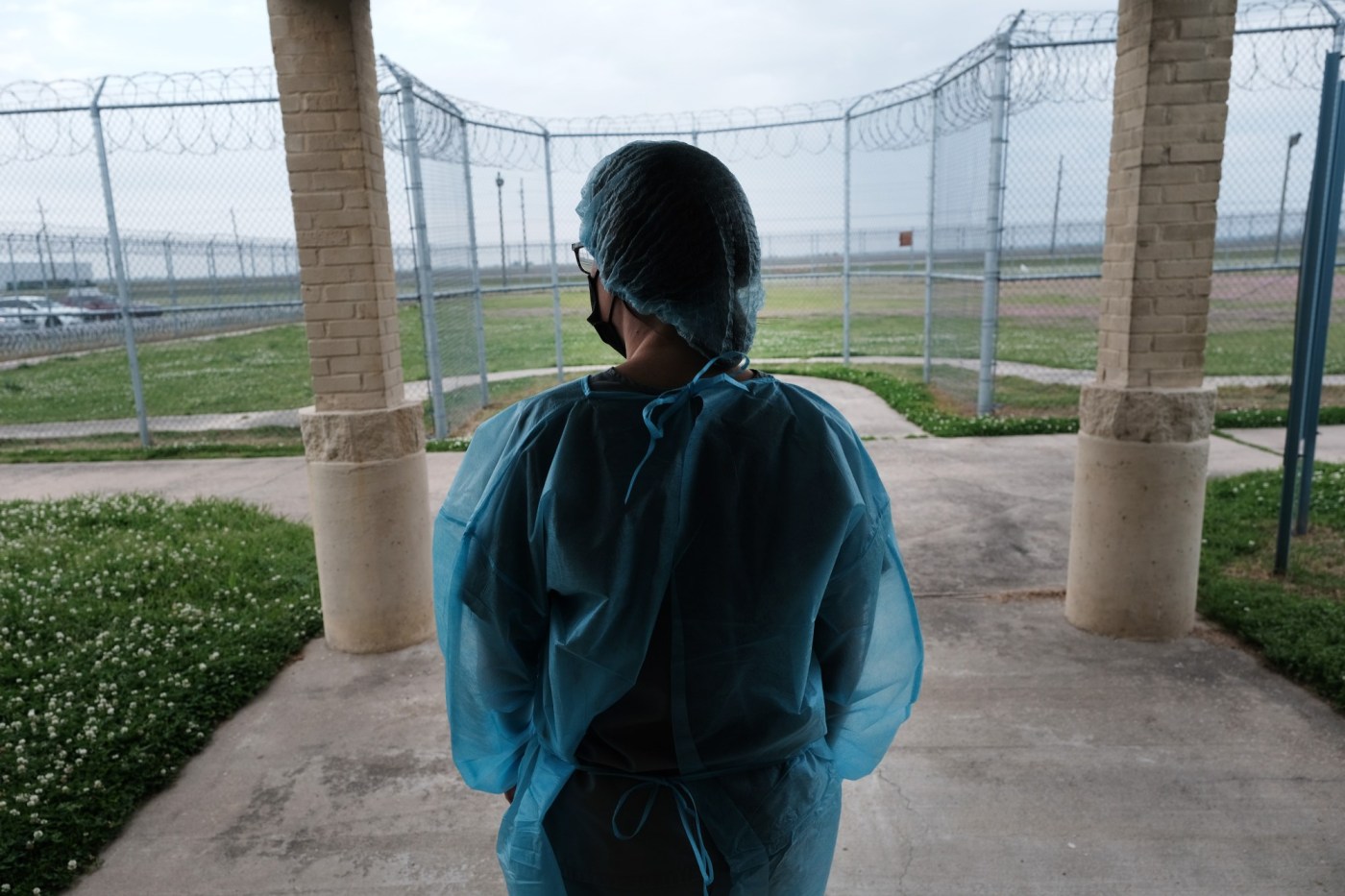
A new policy that allows states to provide Medicaid health care coverage to incarcerated people at least a month prior to their release has drawn bipartisan interest and a slew of state applications.

Federal policy has long prohibited Medicaid spending on people who are incarcerated in jails or prisons, except for hospitalization. As a result, when people are released, they typically don’t have health insurance and many struggle to find health care providers and get needed treatment. In a population that is disproportionately likely to have chronic conditions such as heart disease and substance use disorders, that can be deadly.

Some states terminate residents’ Medicaid coverage when they’re incarcerated, while others just suspend it. Either approach can cause delays in seeking health care for people recently released from incarceration, with sometimes disastrous outcomes: A seminal 2007 study found that former prisoners in Washington state were 12 times more likely to die from all causes within two weeks of release, compared with the general population. The leading causes were drug overdoses, cardiovascular disease, homicide and suicide.

Because a disproportionate number of Black, Native and Hispanic people are incarcerated, lowering their death risk after release might reduce racial health disparities in the overall population.

In 2022, about 448,400 people were released from prison, according to the federal Bureau of Justice Statistics.

Under federal guidance released a year ago, states can connect prisoners with case managers 30-90 days before they are released to develop plans based on their health needs. The case manager can help the person make post-release appointments with primary care doctors, mental health counselors, substance use programs, and housing and food assistance.

States that want to extend Medicaid coverage to people in prison or jail must request a federal waiver to do so. At a minimum, participating states must provide case management, medication-assisted treatment for people with substance use disorders and a month’s supply of medication upon release, though states are free to do more.

The Health and Reentry Project, a policy analysis organization focused on health care for former prisoners, called the new policy “ groundbreaking.”

“What these waivers enable states to do is build a bridge to access to health care — a bridge that starts before someone’s released and continues after their release,” said Vikki Wachino, executive director of the Health and Reentry Project and a former deputy director of the Centers for Medicare & Medicaid Services.

“It’s about starting the process before they leave prisons and jails, so that they can have stronger connections to health care providers and treatment providers after they leave prison and jail.”

As of last month, federal officials had approved waiver applications from four states — California, Massachusetts, Montana and Washington. Nearly 20 other states are waiting for approval, according to health research organization KFF.

Jack Rollins, director of federal policy at the National Association of Medicaid Directors, said states that want to participate are focusing on different incarcerated populations and medical conditions. Some would start with jails, others with state prisons or youth detention facilities. Some states would provide coverage to all inmates, others just to those with a substance use disorder.

Washington, for example, will cover people incarcerated in jails, prisons and youth correctional facilities beginning three months before they are released, an estimated 4,000 people each year. It will connect them to community health workers, bring in doctors and counselors for consultations, and provide lab services and X-rays.

Montana will limit its program to people in state prisons who have a substance use disorder or mental illness and will provide services beginning a month before release. It did not give an estimate of how many people would receive help each year.

California, where an estimated 200,000 people will be covered each year, also included community health workers in its plan. Dr. Shira Shavit, executive director of the Transitions Clinic Network, a California-based national network of clinics focused on formerly incarcerated people, said ex-prisoners are especially well suited for that role.

Shavit said her group consults them on where to locate new clinics and on strategies to reach recently released inmates, because the workers are adept at “knowing where people are when they come out into the community and finding them there.”

Research suggests that connecting recently released people with others who know what it’s like to be incarcerated makes it less likely that they will end up in the emergency room.

“They know how to connect with people, and people trust them, and will follow them to come to clinic and feel comfortable coming,” Shavit said.

Alfonso Apu, director of behavioral health services at Community Medical Centers Inc., a California network of neighborhood health centers that serves patients in San Joaquin, Solano and Yolo counties, said it’s easy to “lose” people once they are released.

“The complexity of these patients is so intense that they are going to need three, four, five hours of encounters with primary care every month, at least,” Apu said.

“Imagine if we had three months to prepare,” he said. “Having a plan of action and even having appointments already scheduled for their needs — it’s going to be game changing.”

Dr. Evan Ashkin is a physician who founded the Formerly Incarcerated Transition Program at the University of North Carolina, a network of community health centers that works with local health departments, clinics and community health workers to connect former inmates with health care. He agreed that employing community health workers who share the experience of previous incarceration is essential.

“I’m hoping we’ll be able to expand this workforce,” Ashkin said. “In our state, North Carolina, there’s not a lot of folks focusing on access to health care for people post-release.”

North Carolina is awaiting word on its application.

Ashkin added that “racial equity issues are really important.”

“We have to have our eyes wide open on the type of services we provide, that they are set up to bring in the communities most impacted,” he said.

____

Stateline is part of States Newsroom, a national nonprofit news organization focused on state policy.

©2024 States Newsroom. Visit at stateline.org. Distributed by Tribune Content Agency, LLC.