Their first baby came with medical debt. These parents won’t have another

posted in: News | 0

Noam N. Levey | (TNS) KFF Health News

Heather Crivilare was a month from her due date when she was rushed to an operating room for an emergency cesarean section.

The first-time mother, a high school teacher in rural Illinois, had developed high blood pressure, a sometimes life-threatening condition in pregnancy that prompted doctors to hospitalize her. Then Crivilare’s blood pressure spiked, and the baby’s heart rate dropped. “It was terrifying,” Crivilare said.

She gave birth to a healthy daughter. What followed, though, was another ordeal: thousands of dollars in medical debt that sent Crivilare and her husband scrambling for nearly a year to keep collectors at bay.

The Crivilares would eventually get on nine payment plans as they juggled close to $5,000 in bills.

“It really felt like a full-time job some days,” Crivilare recalled. “Getting the baby down to sleep and then getting on the phone. I’d set up one payment plan, and then a new bill would come that afternoon. And I’d have to set up another one.”

Crivilare’s pregnancy may have been more dramatic than most. But for millions of new parents, medical debt is now as much a hallmark of having children as long nights and dirty diapers.

About 12% of the 100 million U.S. adults with health care debt attribute at least some of it to pregnancy or childbirth, according to a KFF poll.

These people are more likely to report they’ve had to take on extra work, change their living situation, or make other sacrifices.

Overall, women between 18 and 35 who have had a baby in the past year and a half are twice as likely to have medical debt as women of the same age who haven’t given birth recently, other KFF research conducted for this project found.

“You feel bad for the patient because you know that they want the best for their pregnancy,” said Eilean Attwood, a Rhode Island OB-GYN who said she routinely sees pregnant women anxious about going into debt.

“So often, they may be coming to the office or the hospital with preexisting debt from school, from other financial pressures of starting adult life,” Attwood said. “They are having to make real choices, and what those real choices may entail can include the choice to not get certain services or medications or what may be needed for the care of themselves or their fetus.”

Best-laid plans

Crivilare and her husband, Andrew, also a teacher, anticipated some of the costs.

The young couple settled in Jacksonville, in part because the farming community less than two hours north of St. Louis was the kind of place two public school teachers could afford a house. They saved aggressively. They bought life insurance.

And before Crivilare got pregnant in 2021, they enrolled in the most robust health insurance plan they could, paying higher premiums to minimize their deductible and out-of-pocket costs.

Then, two months before their baby was due, Crivilare learned she had developed preeclampsia. Her pregnancy would no longer be routine. Crivilare was put on blood pressure medication, and doctors at the local hospital recommended bed rest at a larger medical center in Springfield, about 35 miles away.

“I remember thinking when they insisted that I ride an ambulance from Jacksonville to Springfield … ‘I’m never going to financially recover from this,’” she said. “‘But I want my baby to be OK.’”

For weeks, Crivilare remained in the hospital alone as COVID protocols limited visitors. Meanwhile, doctors steadily upped her medications while monitoring the fetus. It was, she said, “the scariest month of my life.”

Fear turned to relief after her daughter, Rita, was born. The baby was small and had to spend nearly two weeks in the neonatal intensive care unit. But there were no complications. “We were incredibly lucky,” Crivilare said.

When she and Rita finally came home, a stack of medical bills awaited. One was already past due.

Crivilare rushed to set up payment plans with the hospitals in Jacksonville and Springfield, as well as the anesthesiologist, the surgeon, and the labs. Some providers demanded hundreds of dollars a month. Some settled for monthly payments of $20 or $25. Some pushed Crivilare to apply for new credit cards to pay the bills.

“It was a blur of just being on the phone constantly with all the different people collecting money,” she recalled. “That was a nightmare.”

Big bills, Big consequences

The Crivilares’ bills weren’t unusual. Parents with private health coverage now face on average more than $3,000 in medical bills related to a pregnancy and childbirth that aren’t covered by insurance, researchers at the University of Michigan found.

Out-of-pocket costs are even higher for families with a newborn who needs to stay in a neonatal ICU, averaging $5,000. And for 1 in 11 of these families, medical bills related to pregnancy and childbirth exceed $10,000, the researchers found.

“This forces very difficult trade-offs for families,” said Michelle Moniz, a University of Michigan OB-GYN who worked on the study. “Even though they have insurance, they still have these very high bills.”

Nationwide polls suggest millions of these families end up in debt, with sometimes devastating consequences.

About three-quarters of U.S. adults with debt related to pregnancy or childbirth have cut spending on food, clothing, or other essentials, KFF polling found.

About half have put off buying a home or delayed their own or their children’s education.

These burdens have spurred calls to limit what families must pay out-of-pocket for medical care related to pregnancy and childbirth.

In Massachusetts, state Sen. Cindy Friedman has proposed legislation to exempt all these bills from copays, deductibles, and other cost sharing. This would parallel federal rules that require health plans to cover recommended preventive services like annual physicals without cost sharing for patients. “We want … healthy children, and that starts with healthy mothers,” Friedman said. Massachusetts health insurers have warned the proposal will raise costs, but an independent state analysis estimated the bill would add only $1.24 to monthly insurance premiums.

Tough lessons

For her part, Crivilare said she wishes new parents could catch their breath before paying down medical debt.

“No one is in the right frame of mind to deal with that when they have a new baby,” she said, noting that college graduates get such a break. “When I graduated with my college degree, it was like: ‘Hey, new adult, it’s going to take you six months to kind of figure out your life, so we’ll give you this six-month grace period before your student loans kick in and you can get a job.’”

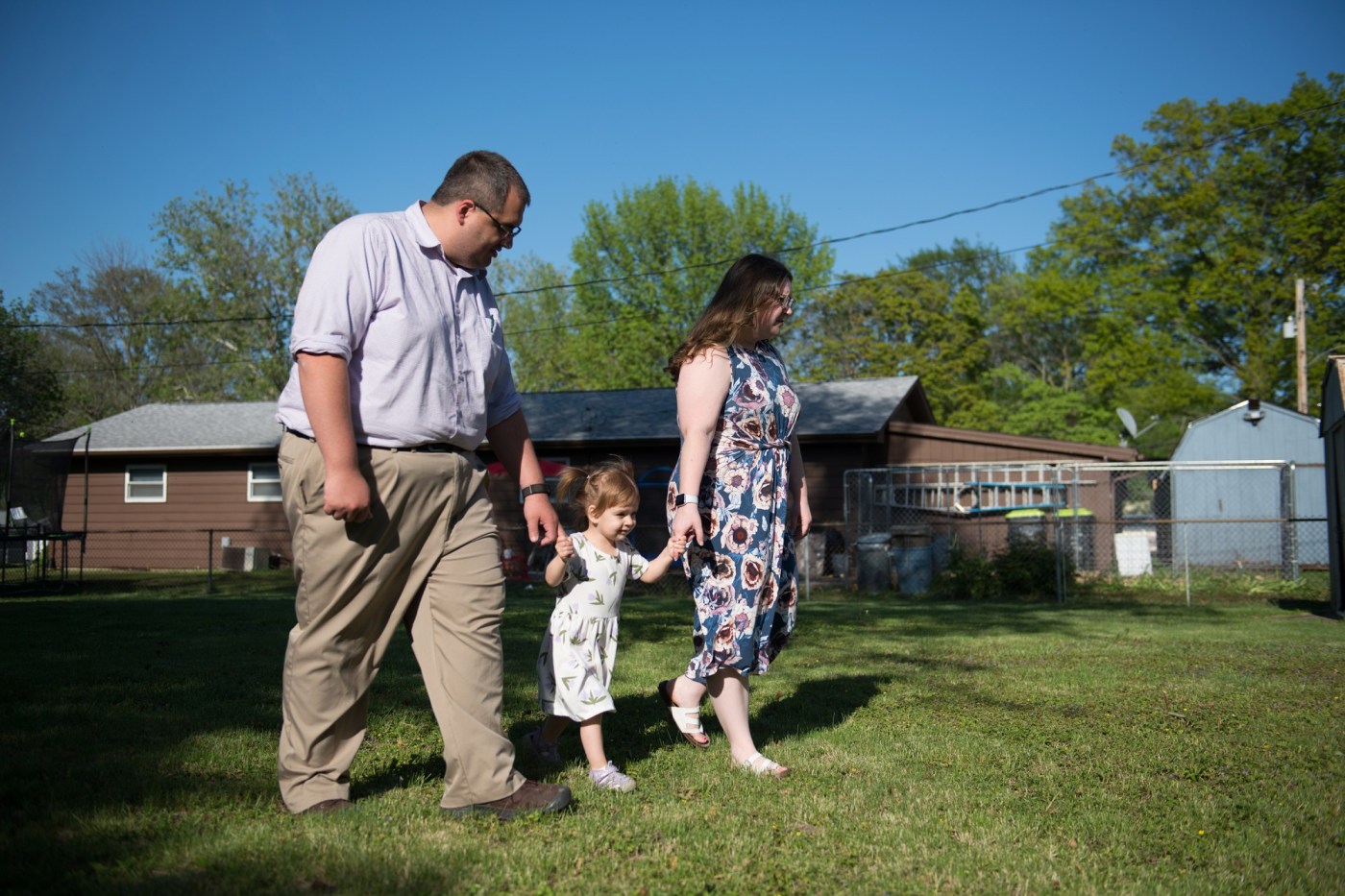
Andrew Crivilare, Heather Crivilare, and their 2-year-old daughter, Rita, sit at the dinner table at their home in Jacksonville, Illinois, on April 30, 2024. For millions of new parents, medical debt is now as much a hallmark of having children as long nights and dirty diapers. (Neeta Satam for KFF Health News/TNS)

Rita is now 2. The family scraped by on their payment plans, retiring the medical debt within a year, with help from Crivilare’s side job selling resources for teachers online.

But they are now back in debt, after Rita’s recurrent ear infections required surgery last year, leaving the family with thousands of dollars in new medical bills.

Crivilare said the stress has made her think twice about seeing a doctor, even for Rita. And, she added, she and her husband have decided their family is complete.

“It’s not for us to have another child,” she said. “I just hope that we can put some of these big bills behind us and give [Rita] the life that we want to give her.”

About this project

“Diagnosis: Debt” is a reporting partnership between KFF Health News and NPR exploring the scale, impact, and causes of medical debt in America.

The series draws on original polling by KFF, court records, federal data on hospital finances, contracts obtained through public records requests, data on international health systems, and a yearlong investigation into the financial assistance and collection policies of more than 500 hospitals across the country.

Additional research was conducted by the Urban Institute, which analyzed credit bureau and other demographic data on poverty, race, and health status for KFF Health News to explore where medical debt is concentrated in the U.S. and what factors are associated with high debt levels.

The JPMorgan Chase Institute analyzed records from a sampling of Chase credit card holders to look at how customers’ balances may be affected by major medical expenses. And the CED Project, a Denver nonprofit, worked with KFF Health News on a survey of its clients to explore links between medical debt and housing instability.

KFF Health News journalists worked with KFF public opinion researchers to design and analyze the “KFF Health Care Debt Survey.” The survey was conducted Feb. 25 through March 20, 2022, online and via telephone, in English and Spanish, among a nationally representative sample of 2,375 U.S. adults, including 1,292 adults with current health care debt and 382 adults who had health care debt in the past five years. The margin of sampling error is plus or minus 3 percentage points for the full sample and 3 percentage points for those with current debt. For results based on subgroups, the margin of sampling error may be higher.

Reporters from KFF Health News and NPR also conducted hundreds of interviews with patients across the country; spoke with physicians, health industry leaders, consumer advocates, debt lawyers, and researchers; and reviewed scores of studies and surveys about medical debt.

___

(KFF Health News is a national newsroom that produces in-depth journalism about health issues and is one of the core operating programs of KFF — the independent source for health policy research, polling and journalism.)

©2024 Kaiser Health News. Visit khn.org. Distributed by Tribune Content Agency, LLC.

Dane Mizutani: This version of the Timberwolves is different.

posted in: News | 0

You could hear it from the Twin Cities to the Iron Range as tipoff of Game 6 neared on Thursday at Target Center, that fatalistic voice of the Minnesota Sports Fan screaming that the Timberwolves couldn’t do it.

There was no chance they were going to extend the series against the defending NBA champion Denver Nuggets in an elimination game. Those things don’t happen around here.

That mindset has been drilled into the Minnesota Sports Fan for generations. Your grandma and grandpa watched the Vikings go 0 for 4 in the Super Bowl. Your mom and dad watched the North Stars leave town. You watched the Twins lose 18 straight playoff games in a span that stretched nearly 20 years.

Not many places in the country have experienced heartbreak to the same degree. It’s become a way of life for the Minnesota Sports Fan. You’re always waiting for the other shoe to drop.

Now, as the Timberwolves prepare for a decisive Game 7 against the Nuggets on Sunday at Ball Arena, there might be an urge to prepare for the worst. Let’s agree not to do that, OK?

It’s time for Minnesota Sports Fan to let go of the past. This version of the Timberwolves is different.

This group of players has stared down the ineptitude that preceded it and never once blinked. They have risen to occasion time and time again. That has helped to completely change the narrative of the franchise in short order.

The evidence is woven into the fabric of this season, in particular.

Initially, when the Timberwolves started out on fire, the Minnesota Sports Fan assumed it was only a matter of time before a big bucket of water doused the flames. That wasn’t the case as the Timberwolves remained in contention for the No. 1 seed in the Western Conference until the very end.

Then, when the Timberwolves hooked the Phoenix Suns in the first round, the Minnesota Sports Fan went through the mental gymnastics of convincing themselves that it was the worst possible matchup. That clearly wasn’t the case; the Timberwolves imposed their will on the Suns on their way to a stunning sweep.

Finally, when the Timberwolves got punked by the Nuggets while squandering a series lead, the Minnesota Sports Fans concluded that a funeral procession was in order. That wasn’t the case as the Timberwolves rose from the dead with a 45-point blowout win.

No longer are the Timberwolves the butt of the joke. They are a legitimate contender to win the NBA championship largely because this version of the Timberwolves is unlike any team that has come before it. There’s a toughness built into this group of players by head coach Chris Finch that allows them to push through adversity and keep going.

It starts and stops with Anthony Edwards, the future face of the league, who has endeared himself to the masses throughout the playoffs with his killer instinct on the court. He’s aided by a perfectly constructed starting lineup that includes Karl-Anthony Towns serving as a secondary scorer, Rudy Gobert controlling the paint, Jaden McDaniels holding it down on the perimeter, and Mike Conley making sure everything runs smoothly. There’s also a bench unit led by fan favorites Naz Reid and Nickeil Alexander-Walker.

The vibes have been immaculate, and even when they have taken a dip, like they did last week, the Timberwolves haven’t let things spiral out of control like they may have once upon a time.

This team has proved it’s OK to believe. It has shown the Minnesota Sports Fan that it is up for the challenge regardless of circumstance.

Why can’t that continue in Game 7?

Related Articles

Minnesota Timberwolves |


Dane Mizutani: When the Timberwolves needed him most, Mike Conley showed up for Minnesota

Minnesota Timberwolves |


Timberwolves trounce Denver to force decisive Game 7

Minnesota Timberwolves |


Timberwolves’ Kyle Anderson hasn’t thought about free agency yet

Minnesota Timberwolves |


Nuggets selling out to stop Anthony Edwards. And Timberwolves guard isn’t getting much help.

Minnesota Timberwolves |


Life without Mike Conley is awfully difficult for Timberwolves, who may have to save their season without their point guard

Minnesota United vs. Portland Timbers: Keys to the match, projected starting XI and a prediction

posted in: News | 0

Minnesota United vs. Portland Timbers

When: 7:30 p.m. Saturday
Where: Allianz Field
Stream: Apple TV Season Pass
Radio: KSTP-AM 1500 ESPN
Weather: 76 degrees, sunny, 10 mph east wind
Betting line: MNUFC plus-135; draw plus-300; Portland plus-295

Form: MNUFC (6-2-3, 21 points) ran its unbeaten stretch to four straight with a 2-2 draw with Galaxy on Wednesday. Portland (3-6-4, 13 points) ended a nine-match unbeaten skid with a 4-2 win over San Jose on Wednesday. Timbers scored three goals after Earthquakes’ Bruno Wilson received a red card in the 71st minute.

Quote: “I don’t want to be in any way lulled into complacency against them because obviously they are not on a good run at all,” Loons manager Eric Ramsay said Friday. “… I want to try to look behind the table (Timbers are 11th in West) … and encourage the players to do so. They’ve got some very good players.”

Absences: Emanuel Reynoso (return-to-play protocol), Hugo Bacharach (knee) are out. Jordan Adebayo-Smith (ankle) and Moses Nyeman (tight) are presumed out. Kervin Arriaga (hamstring) did not train Friday and is questionable. Hassani Dotson (hamstring) trained Friday, but after missing three matches, it’s likely too soon for the midfielder to be involved Saturday.

Connection: Loons goalkeeper Dayne St. Clair hung out with Portland Timbers Kamal Miller and Eryk Williamson on Thursday night. St. Clair grew up and played at a youth level with Miller in Canada; St. Clair played with Williamson at the University of Maryland.

Rumor: Reynoso has been linked in a move to Mexican club Juarez this week. The Loons is exploring a potential offloading of its Designated Player to Liga MX or elsewhere this summer.

Projected XI: In a 5-2-3 formation, LW Sang Bin Jeong, CF Tani Oluwaseyi, RW Bongi Hlongewane; CM Robin Lod, CM Wil Trapp; LB Joseph Ropsales, CB Devin Padelford, CB Micky Tapias, CB Michael Boxall, CB DJ Taylor; GK Dayne St. Clair.

Player to watch: Evander. The one-named Brazilian has five goals and four primary assists this season, including a penalty kick goal, an assist and six shot-creating actions on Wednesday.

Context: Ramsay said he would look at “micro” details that went into Loons losing control of the Galaxy draw. On Friday, he was asked for an example and pointed to how MNUFC defended the goal kick that led to Riqui Puig being able to go on a long 60-yard run to set up the go-ahead goal in the 68th minute. It appeared, for one element that Robin Lod was caught on the left half-space, opening up the middle for Puig to sprint foward.

Tidbit: A large contingent of MNUFC players and staff were at Target Center for Wolves’ Game 6 win over Denver. Boxall, Lod, Oluwaseyi, Tapias and more. Ramsay was there, too. The Welshman said he has watched YouTube videos to learn some basics of the sport and was intrigued to know what coaches said during the first-quarter timeout before the Wolves’ huge run.

Prediction: The Timbers have allowed 27 goals this season — second-worst in MLS — and MNUFC will add a pair to that total. Here’s to Teemu Pukki ending his 420-minute scoring drought since early March. Minnesota wins 2-1.

After blaming his 2020 loss on mail balloting, Trump tries to make GOP voters believe it’s OK now

posted in: News | 0

By NICHOLAS RICCARDI and MARGERY BECK (Associated Press)

Marta Moehring voted the way she prefers in Nebraska’s Republican primary Tuesday — in person, at her west Omaha polling place.

She didn’t even consider taking advantage of the state’s no-excuse mail-in ballot process. In fact, she would prefer to do away with mail-in voting altogether. She’s convinced fraudulent mailed ballots cost former President Donald Trump a second term in 2020.

“I don’t trust it in general,” Moehring, 62, said. “I don’t think they’re counted correctly.”

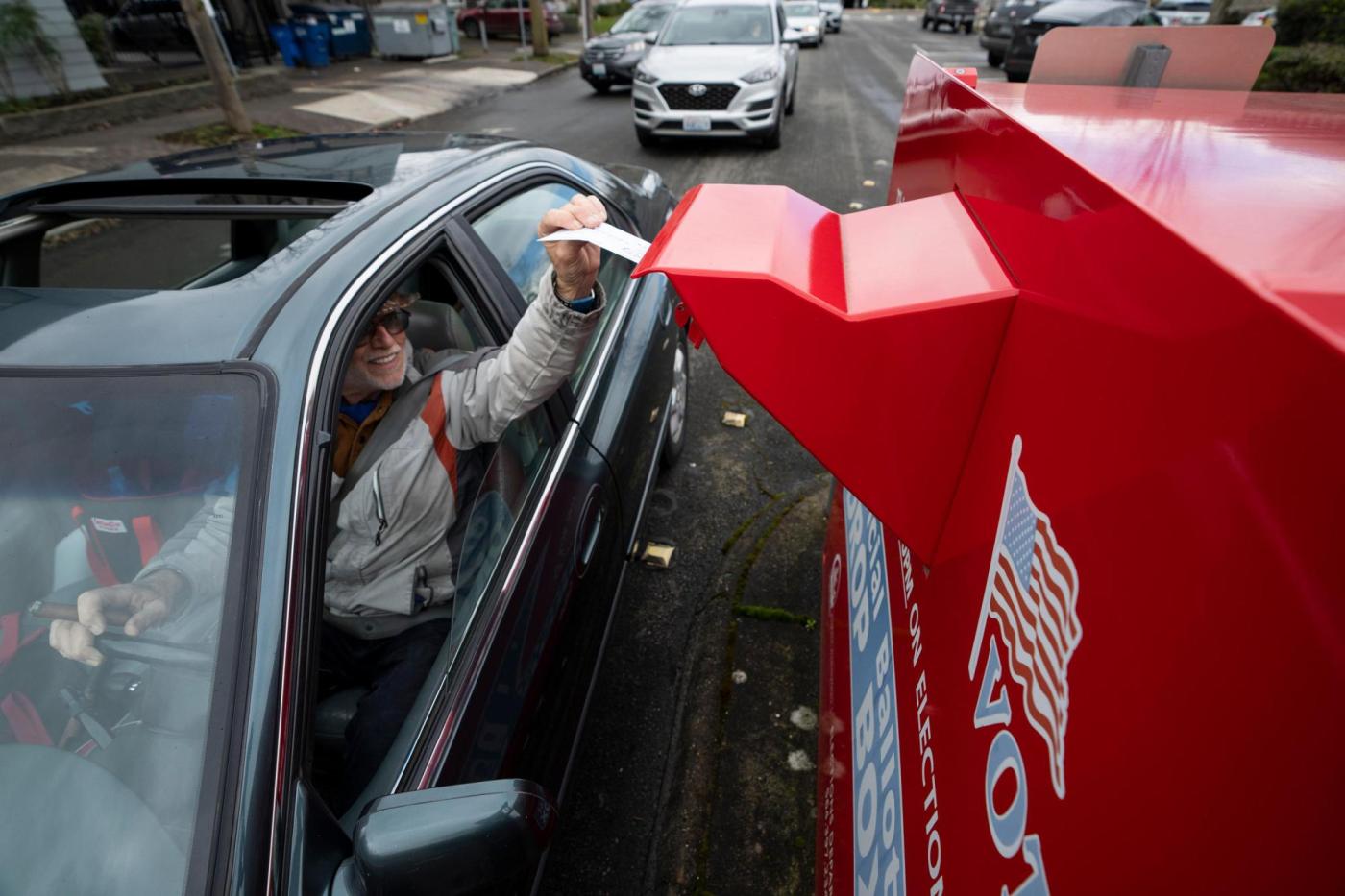
But now Republican officials — even, sometimes, Trump — are encouraging voters such as Moehring to cast their ballots by mail. The GOP has launched an effort to, in the words of one official, “correct the narrative” on mail voting and get those who were turned off to it by Trump to reconsider for this year’s election.

The push is a striking change for a party that amplified dark rumors about mail ballots to explain away Trump’s 2020 loss, but it is also seen as a necessary course correction for an election this year that is likely to be decided by razor-thin margins in a handful of swing states.

“We have to get right on using these mail-in ballots for the people who can’t get there on Election Day,” Rep. Scott Perry, one of Trump’s strongest congressional allies in his push to overturn the 2020 election, said at a conservative gathering in his home state of Pennsylvania.

Republicans once were at least as likely as Democrats to vote by mail, but Trump changed the dynamics in 2020. He preemptively began to argue that mail balloting was bad months before voting began in the presidential race.

That alarmed GOP strategists who saw mail voting as an advantage in campaigns because it lets them “bank” unreliable votes before Election Day and lowers the risk of turnout plummeting because of bad weather or other unpredictable factors at the polls. Trump’s own campaign tried to sell Republicans on casting ballots by mail, but his voters listened to the then-president. In 2020, amid the COVID-19 pandemic, Democrats were vastly more likely to cast ballots by mail than Republicans.

The trend continued in 2022, and its costs were starkly illustrated in Arizona.

Three top-of-the-ticket Republican candidates there who echoed Trump’s lies about the unreliability of mail ballots encouraged their supporters to vote in person on Election Day. An election machine meltdown that day in one-third of the polling places in the state’s most populous county led to huge lines and some would-be voters departing in frustration.

The three top Republicans all lost, including falling 17,000 votes short in the governor’s race and 500 votes short in the one for attorney general.

Related Articles

National Politics |


Biden’s upcoming graduation speech roils Morehouse College, a center of Black politics and culture

National Politics |


The Commission on Presidential Debates faces an uncertain future after Biden and Trump bypassed it

National Politics |


Now armed with AI, America’s adversaries will try to influence election, security officials warn

National Politics |


Stormy Daniels wore bulletproof vest to Trump trial, lawyer says

National Politics |


70 years ago, school integration was a dream many believed could actually happen. It hasn’t

This time, Republicans say they’re not going to risk leaving ballots behind. Trump’s handpicked chair of the Republican National Committee, his daughter-in-law Lara Trump, has vowed to embrace all sorts of legal election methods to boost turnout that Trump falsely blamed for his 2020 loss, including so-called “ballot harvesting” — letting people turn in mail ballots on the behalf of other voters.

“In this election cycle, Republicans will beat Democrats at their own game, by leveraging every legal tactic at our disposal based on the rules of each state,” Lara Trump said in an interview with The Associated Press.

Turning Point Action, a prominent, pro-Trump group, is launching a $100 million campaign to reach infrequent voters in the swing states of Arizona, Michigan and Wisconsin. That will include offering mail voting as one way to make casting a ballot easier, spokesman Andrew Kolvet said.

“We’d love for elections to be run the way they were before,” Kolvet said. “We can spend our time complaining about it or we can get in gear and play by the rules that Democrats, or largely Democrats, used.”

Even Trump himself has started to recommend mail voting, though he frequently bashes it during campaign events and blames it for his 2020 loss. The RNC is also continuing to file lawsuits against various aspects of mail voting around the country.

Nonetheless, Trump recorded a short video telling his supporters that “absentee voting, early voting and Election Day voting are all good options.”

One recent push to publicize mail voting came during last month’s Pennsylvania primary, when the Republican State Legislative Committee teamed up with a committee supporting the party’s Senate candidate and the state GOP. The goal, said RSLC political director Max Docksey, was “to correct the narrative among Republican voters on mail voting.”

The effort was inspired by what the RSLC saw as a successful effort to increase mail voting among Republicans in the battle for control of the Virginia Legislature in 2023, a fight ultimately won by the Democrats.

The group sent mail ballot applications to 1.5 million GOP voters, sent 475,000 text messages encouraging mail voting and touted the benefits of mail voting at party gatherings.

But at the same time, Pennsylvania Republicans have sued to force the state’s mail ballots to be counted at polling places rather than the county election offices, which have the equipment and space to do the job, That’s among many lawsuits targeting mail voting filed by Republicans around the country since 2020.

The conflicting messages could make it challenging to swiftly reverse the drop-off in mail voting among Republicans.

In Pennsylvania, Republican operatives were pleased with their effort, which they said led to them adding nearly twice as many voters to the state’s mail ballot list as Democrats did during the primary. But the overall share of Pennsylvania mail ballots sent by Republicans remained about the same as in 2020, at only one-quarter of overall ballots, according to data from the secretary of state’s office.

Bill Bretz, chairman of the Westmoreland County Republican Party in the western side of the state, said he’s noticed voters in his conservative area slowly but steadily warming up to mail voting.

“People understand the consequences of this election,” he said. “There’s a lot of buy-in to vote by any method available, and the vote-by-mail bogeyman is beginning to fade.”

Riccardi reported from Denver and Beck from Omaha, Nebraska. Associated Press writers Marc Levy in Harrisburg, Pennsylvania, Martha Mendoza in Santa Cruz, California, and Leah Willingham in Charleston, West Virginia, contributed to this report.