Remember last year’s Memorial Day travel jams? Chances are they will be much worse this year

posted in: News | 0

By DAVID KOENIG (AP Airlines Writer)

You didn’t think summer travel would be easy, did you?

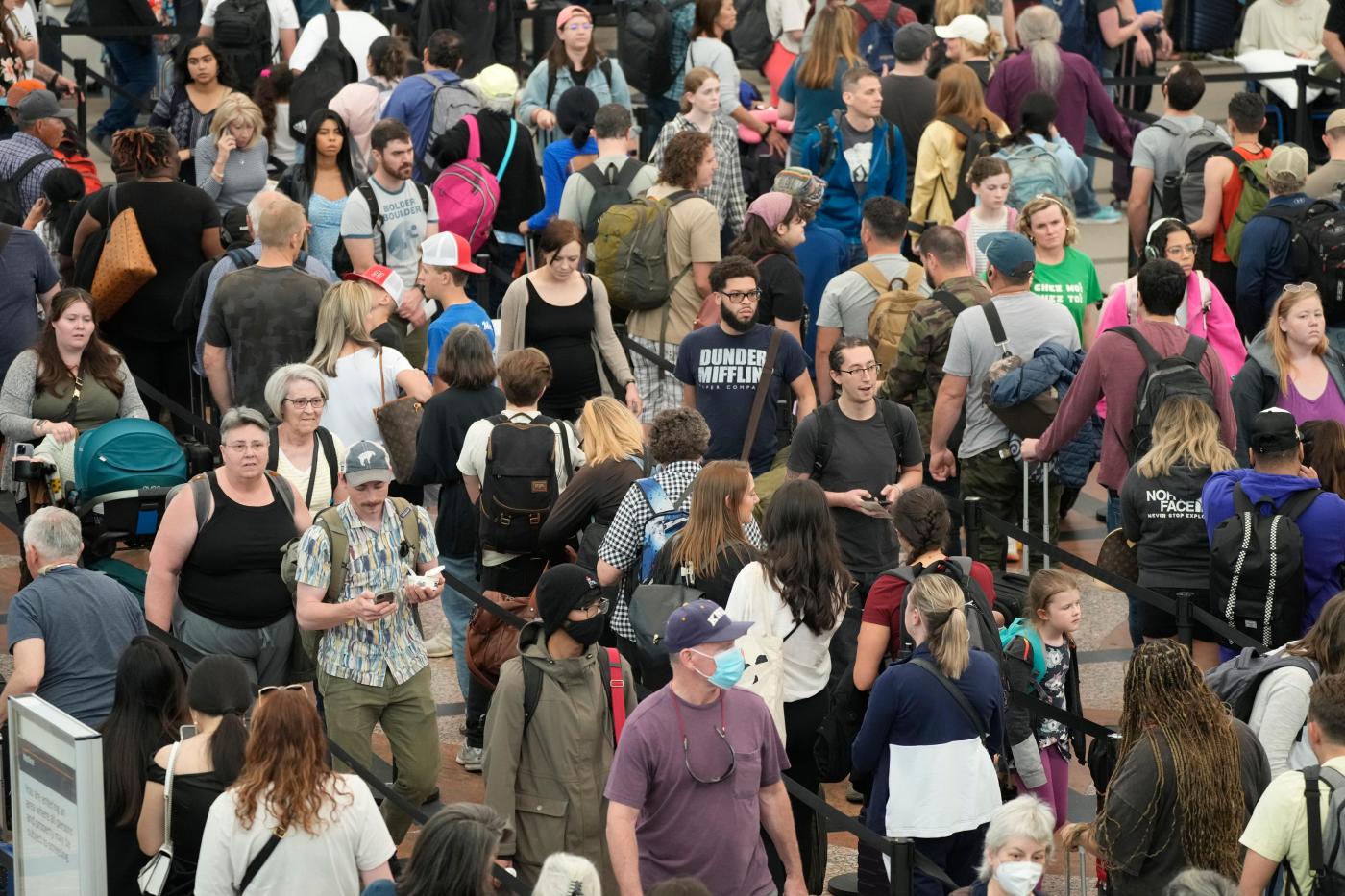
Highways and airports are likely to be jammed the next few days as Americans head out for Memorial Day weekend getaways and then return home.

AAA predicts this will be the busiest start-of-summer weekend in nearly 20 years, with 43.8 million people expected to travel at least 50 miles from home between Thursday and Monday. The Transportation Security Administration says up to 3 million might pass through airport checkpoints on Friday alone.

And that is just a sample of what is to come. U.S. airlines expect to carry a record number of passengers this summer. Their trade group estimates that 271 million travelers will fly between June 1 and August 31, breaking the record of 255 million set – you guessed it – last summer.

The annual expression of wanderlust is happening at a time when Americans tell pollsters they are worried about the economy and the direction of the country.

A slowdown, and in some cases a retreat, from the big price increases of the last two years may be helping.

Airfares are down 6% and hotel rates have dipped 0.4%, compared with a year ago, according to government figures released last week. Prices for renting a car or truck are down 10%. The nationwide price of gas is around $3.60 a gallon, about 6 cents higher than a year ago, according to AAA.

Johannes Thomas, CEO of the hotel and travel search company Trivago, said he thinks more customers are feeling the pinch of prices that have plateaued but at much higher levels than before the pandemic. He said they are booking farther in advance, staying closer to home, taking shorter trips, and compromising on accommodations — staying in three-star hotels instead of five-star ones.

Many travelers have their own cost-saving strategies, including combining work and pleasure on the same trip.

“I have largely been able to adapt by traveling at strange hours. I’ll fly out late at night, come in early in the morning, stay longer than I intended, and work remotely,” said Lauren Hartle of Boston, an investor for a clean-energy venture firm.

Hartle, who flew from Boston to Dallas on Wednesday for a work conference, plans to attend a summer family gathering in North Carolina but is otherwise considering trips closer to home — and maybe by train instead of plane.

Catey Schast, a nanny and piano teacher in Maine, said her Boston-Dallas flight cost $386 round trip. “It wasn’t terrible,” but it was higher than the $200 to $300 she paid in the past to visit family in Texas, she said.

Schast plans a beach vacation in Florida in July. High prices could discourage her from taking other trips, but “if I really want to go somewhere, I’m more of a how-can-I-make-this-happen type of person, as long as I have the time off work.”

As in past years, most holiday travelers are expected to travel by car – more than 38 million of them, according to AAA. The organization advises motorists hoping to avoid the worst traffic to leave metropolitan areas early Thursday and Friday and to stay off the roads between 3 p.m. and 7 p.m. Sunday and Monday.

“We haven’t seen any pullback in travel since the pandemic. Year after year, we have seen these numbers continue to grow,” AAA spokesperson Aixa Diaz said. “We don’t know when it’s going to stop. There’s no sign of it yet.”

Related Articles


Prepare for a change in your US travel with this visa waiver. It involves a selfie


What is in-flight turbulence, and when does it become dangerous for passengers and crews?


Montreal Jazz Festival a treat for music fans of multiple genres — and a bargain, with 150-plus free concerts


Travel: Take a hike through ancient history in rural, mountainous Japan


Family travel 5: Summer vacation spots for both playing and learning

There’s certainly no slowdown at airports. The number of people going through security checkpoints is up 3.2% this year. The TSA said it screened 2.85 million people last Friday and nearly as many on Sunday — the two busiest days of the year so far.

TSA predicts it will screen more than 18 million travelers and airline crew members during the seven-day stretch that begins Thursday, up 6.4% from last year. Friday is expected to be the busiest day for air travel, with nearly 3 million people passing through checkpoints. The TSA record is 2.91 million, set on the Sunday after Thanksgiving last year.

“We’re going to break those records this summer,” TSA Administrator David Pekoske said.

The agency, which was created after the 9/11 terror attacks, has struggled at times with peak loads. Pekoske told The Associated Press that pay raises for front-line screeners have helped improve staffing by reducing attrition from more than 20% to less than 10%.

Airlines say they also have staffed up since being caught short when travel began to rebound from the COVID-19 pandemic in the spring and summer of 2022.

With any luck from the weather, travelers could see fewer canceled flights than in recent summers. So far this year, U.S. airlines have canceled 1.2% of their flights, according to FlightAware data, compared with 1.4% at this point last year and 2.8% in 2022 — a performance so poor it triggered complaints and increased scrutiny from Transportation Secretary Pete Buttigieg.

Even before the holiday weekend started, however, storms caused widespread cancellations at Dallas-Fort Worth International Airport, the biggest hub for American Airlines. The carrier dropped more than 200 flights, or 5% of its schedule, by late afternoon.

Stranded travelers were not happy.

“Our flight got canceled right before the check-in. And now there’s no flights here until Friday because (open seats on other flights) went really quickly. We might wind up driving. Isn’t that terrible?” said Rosie Gutierrez of Allen, Texas, who was trying to get to Florida along with her son, daughter-in-law and granddaughter.

American’s chief operating officer, David Seymour, said the airline has beefed up its staffing and technology in preparation for the seasonal rush.

“It’s a long summer, but we’re ready for it. We have the right resources,” he said.

American is offering its most ambitious summer schedule ever — 690,000 flights between May 17 and Sept. 3.

United Airlines forecasts its biggest Memorial Day weekend, with nearly 10% more passengers than last year. Delta Air Lines expects to carry 5% more passengers this weekend, kicking off its heaviest summer schedule ever of international flights.

According to AAA, the top domestic and international destinations are familiar ones. They include Orlando, Las Vegas, London, Paris and Rome.

So what about nervousness over the economy?

It’s important to note that people often say their own finances are better than average. In an AP survey from February, 54% said their personal situation was good — but only 30% felt the same about the nation’s economy.

That could explain why they can afford to splurge on travel.

Rebecca Santana and Rick Gentilo in Washington contributed to this report.
White House pushes tech industry to shut down market for sexually abusive AI deepfakes

posted in: Politics | 0

By MATT O’BRIEN and BARBARA ORTUTAY (AP Technology Writers)

President Joe Biden’s administration is pushing the tech industry and financial institutions to shut down a growing market of abusive sexual images made with artificial intelligence technology.

New generative AI tools have made it easy to transform someone’s likeness into a sexually explicit AI deepfake and share those realistic images across chatrooms or social media. The victims — be they celebrities or children — have little recourse to stop it.

The White House is putting out a call Thursday looking for voluntary cooperation from companies in the absence of federal legislation. By committing to a set of specific measures, officials hope the private sector can curb the creation, spread and monetization of such nonconsensual AI images, including explicit images of children.

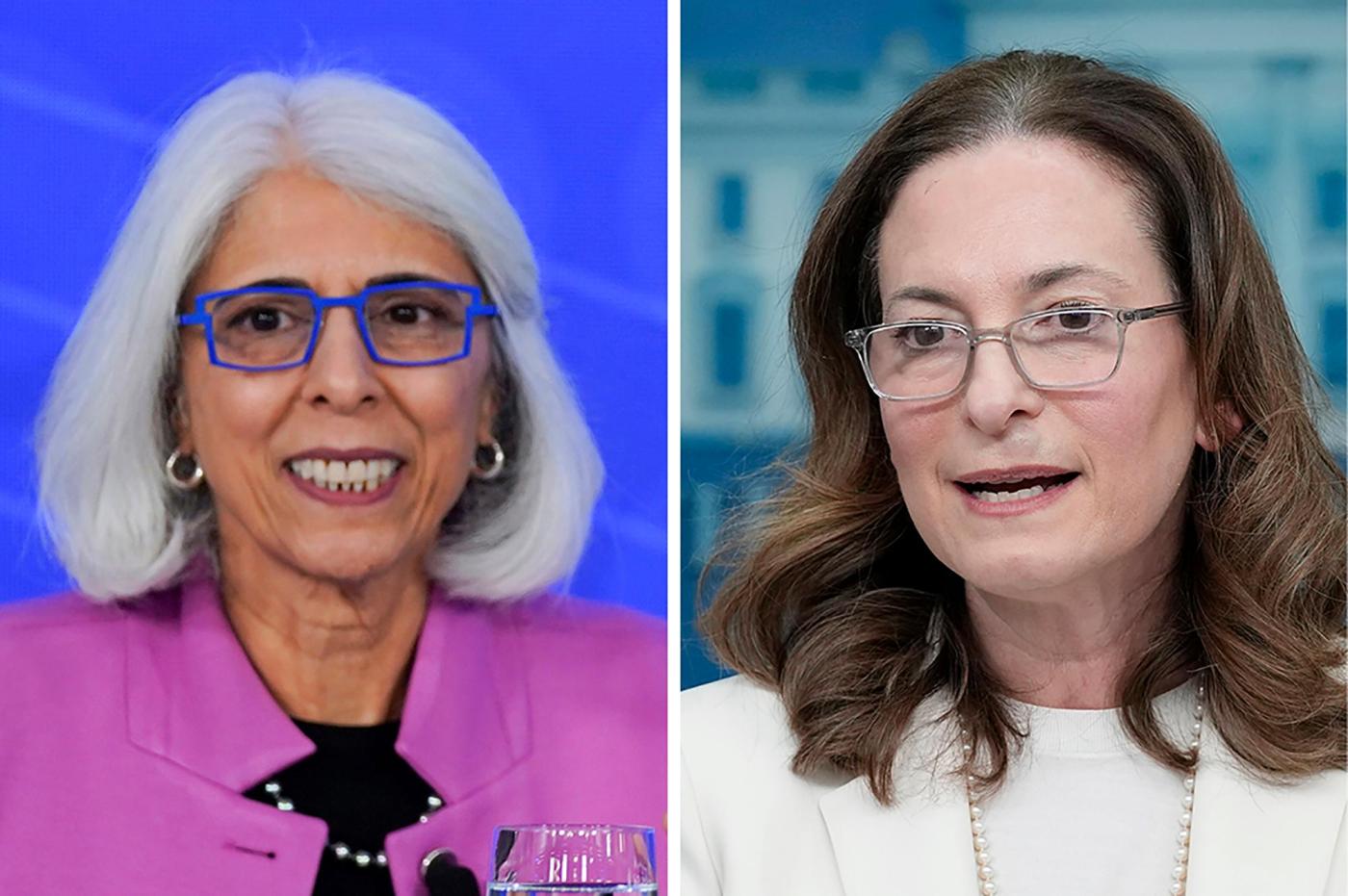
“As generative AI broke on the scene, everyone was speculating about where the first real harms would come. And I think we have the answer,” said Biden’s chief science adviser Arati Prabhakar, director of the White House’s Office of Science and Technology Policy.

She described to The Associated Press a “phenomenal acceleration” of nonconsensual imagery fueled by AI tools and largely targeting women and girls in a way that can upend their lives.

“If you’re a teenage girl, if you’re a gay kid, these are problems that people are experiencing right now,” she said. “We’ve seen an acceleration because of generative AI that’s moving really fast. And the fastest thing that can happen is for companies to step up and take responsibility.”

A document shared with AP ahead of its Thursday release calls for action from not just AI developers but payment processors, financial institutions, cloud computing providers, search engines and the gatekeepers — namely Apple and Google — that control what makes it onto mobile app stores.

The private sector should step up to “disrupt the monetization” of image-based sexual abuse, restricting payment access particularly to sites that advertise explicit images of minors, the administration said.

Prabhakar said many payment platforms and financial institutions already say that they won’t support the kinds of businesses promoting abusive imagery.

“But sometimes it’s not enforced; sometimes they don’t have those terms of service,” she said. “And so that’s an example of something that could be done much more rigorously.”

Cloud service providers and mobile app stores could also “curb web services and mobile applications that are marketed for the purpose of creating or altering sexual images without individuals’ consent,” the document says.

And whether it is AI-generated or a real nude photo put on the internet, survivors should more easily be able to get online platforms to remove them.

The most widely known victim of pornographic deepfake images is Taylor Swift, whose ardent fanbase fought back in January when abusive AI-generated images of the singer-songwriter began circulating on social media. Microsoft promised to strengthen its safeguards after some of the Swift images were traced to its AI visual design tool.

A growing number of schools in the U.S. and elsewhere are also grappling with AI-generated deepfake nudes depicting their students. In some cases, fellow teenagers were found to be creating AI-manipulated images and sharing them with classmates.

Last summer, the Biden administration brokered voluntary commitments by Amazon, Google, Meta, Microsoft and other major technology companies to place a range of safeguards on new AI systems before releasing them publicly.

That was followed by Biden signing an ambitious executive order in October designed to steer how AI is developed so that companies can profit without putting public safety in jeopardy. While focused on broader AI concerns, including national security, it nodded to the emerging problem of AI-generated child abuse imagery and finding better ways to detect it.

But Biden also said the administration’s AI safeguards would need to be supported by legislation. A bipartisan group of U.S. senators is now pushing Congress to spend at least $32 billion over the next three years to develop artificial intelligence and fund measures to safely guide it, though has largely put off calls to enact those safeguards into law.

Encouraging companies to step up and make voluntary commitments “doesn’t change the underlying need for Congress to take action here,” said Jennifer Klein, director of the White House Gender Policy Council.

Longstanding laws already criminalize making and possessing sexual images of children, even if they’re fake. Federal prosecutors brought charges earlier this month against a Wisconsin man they said used a popular AI image-generator, Stable Diffusion, to make thousands of AI-generated realistic images of minors engaged in sexual conduct. An attorney for the man declined to comment after his arraignment hearing Wednesday.

But there’s almost no oversight over the tech tools and services that make it possible to create such images. Some are on fly-by-night commercial websites that reveal little information about who runs them or the technology they’re based on.

The Stanford Internet Observatory in December said it found thousands of images of suspected child sexual abuse in the giant AI database LAION, an index of online images and captions that’s been used to train leading AI image-makers such as Stable Diffusion.

London-based Stability AI, which owns the latest versions of Stable Diffusion, said this week that it “did not approve the release” of the earlier model reportedly used by the Wisconsin man. Such open-sourced models, because their technical components are released publicly on the internet, are hard to put back in the bottle.

Prabhakar said it’s not just open-source AI technology that’s causing harm.

“It’s a broader problem,” she said. “Unfortunately, this is a category that a lot of people seem to be using image generators for. And it’s a place where we’ve just seen such an explosion. But I think it’s not neatly broken down into open source and proprietary systems.”

AP Writer Josh Boak contributed to this report.

During roller coaster of a season, Twins try to maintain consistent attitude

posted in: News | 0

There’s streaky teams and then there’s the 2024 Minnesota Twins.

Rocco Baldelli has been around plenty of streaky teams. But this one?

“This is next-level stuff,” the Twins manager said. “We’re taking this to the next level.”

There was a five-game losing streak. There was a 12-game winning streak. And now they’ve won two straight games after dropping seven in a row, the franchise’s longest losing streak since 2018.

But while the results have been about as inconsistent as they come, the Twins have been trying to keep things consistent in their preparation and attitude. You hear a lot of phrases like “even-keeled” and “not getting too high and not getting too low,” around these Twins.

Exhibit A:

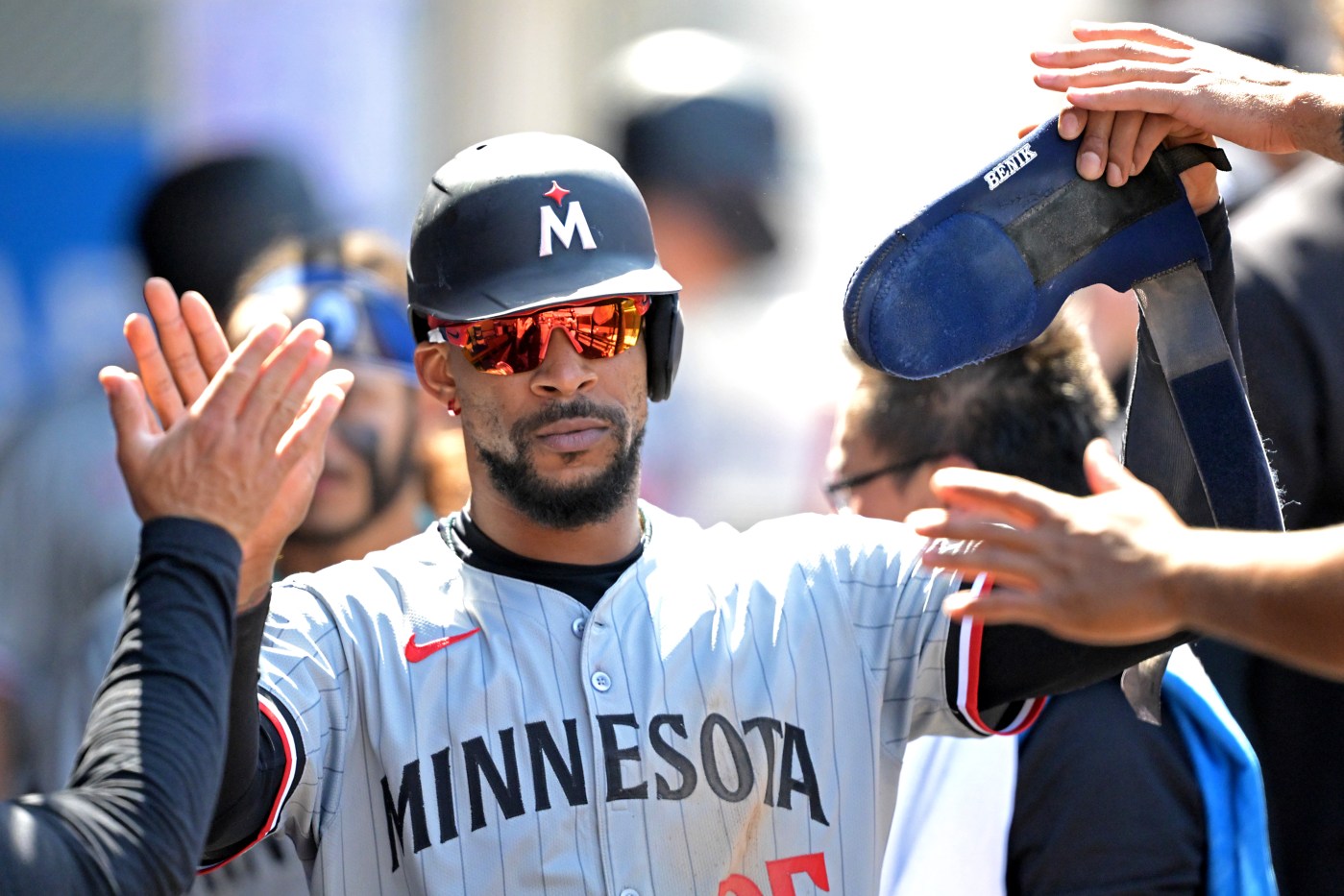
“It is a roller coaster, something that I haven’t experienced in my career,” center fielder Byron Buxton said. “… It’s just going with the ups and downs, but making sure you stay even-keeled.”

The latest run of poor results was in large part a result of an offensive slump that had consumed the team. The Twins scored 12 runs over the course of seven games. They snapped out of that losing streak by scoring 10 runs in one game.

“It feels like it’s the perfect storm of when we’re playing good, we’re doing every facet of the game right, and on these streaks, when we’re not, we’re kind of not doing anything right,” catcher Ryan Jeffers said. “So far this year, it’s been all or nothing on all sides.”

And when that’s happening, it can be a struggle to maintain the same consistent attitude.

The Twins held a players-only meeting after Monday night’s loss, a 12-3 drubbing by the Washington Nationals.

That player leadership, Baldelli said, is what helps a team maintain the attitude necessary to pull through difficult stretches.

Baldelli specifically pointed out two team leaders — shortstop Carlos Correa, whom he said is the same whether the team is winning or losing, and Kyle Farmer, whom he said is “out there yelling and doing his normal stuff that he does with all the guys” — as helping keep the clubhouse in a good mental space.

“What you don’t like to see is when guys are all changing and acting funny and timid and sitting in their lockers and things like that,” Baldelli said. “I don’t see really much of (that). I think our guys have handled everything pretty well. … It has not been the … smoothest first two months of the season for us, but the guys have been — they’ve been OK.”

And it’s important, too, starting pitcher Pablo López said, to keep the confidence level up. That can be hard to do in the midst of longer losing streaks because winning is what breeds confidence.

But as much of a struggle as their latest losing streak was, López said they still knew they had the talent within the clubhouse that “is good enough to go against any team.”

“When you lose, that confidence starts dropping down and down, but you can’t change who you are, you can’t change what you believe in,” López said. “If you believe that this is what you need to do to get ready, regardless of the results, that’s what you need to be doing.”

Related Articles

Minnesota Twins |


Twins’ Edouard Julien trying to rule again

Minnesota Twins |


Twins salvage road trip with win over Nationals

Minnesota Twins |


Offense breaks out, Joe Ryan solid as Twins snap losing streak with 10-0 win against Nationals

Minnesota Twins |


Twins star Royce Lewis takes important step in rehab

Minnesota Twins |


Twins have player meeting after seventh straight loss

A comment from Trump and GOP actions in the states put contraceptive access in the 2024 spotlight

posted in: Politics | 0

By CHRISTINE FERNANDO and GEOFF MULVIHILL (Associated Press)

CHICAGO (AP) — Republican lawmakers in states across the U.S. have been rejecting Democrats’ efforts to protect or expand access to birth control, an issue Democrats are promoting as a major issue in this year’s elections along with abortion and other reproductive rights concerns.

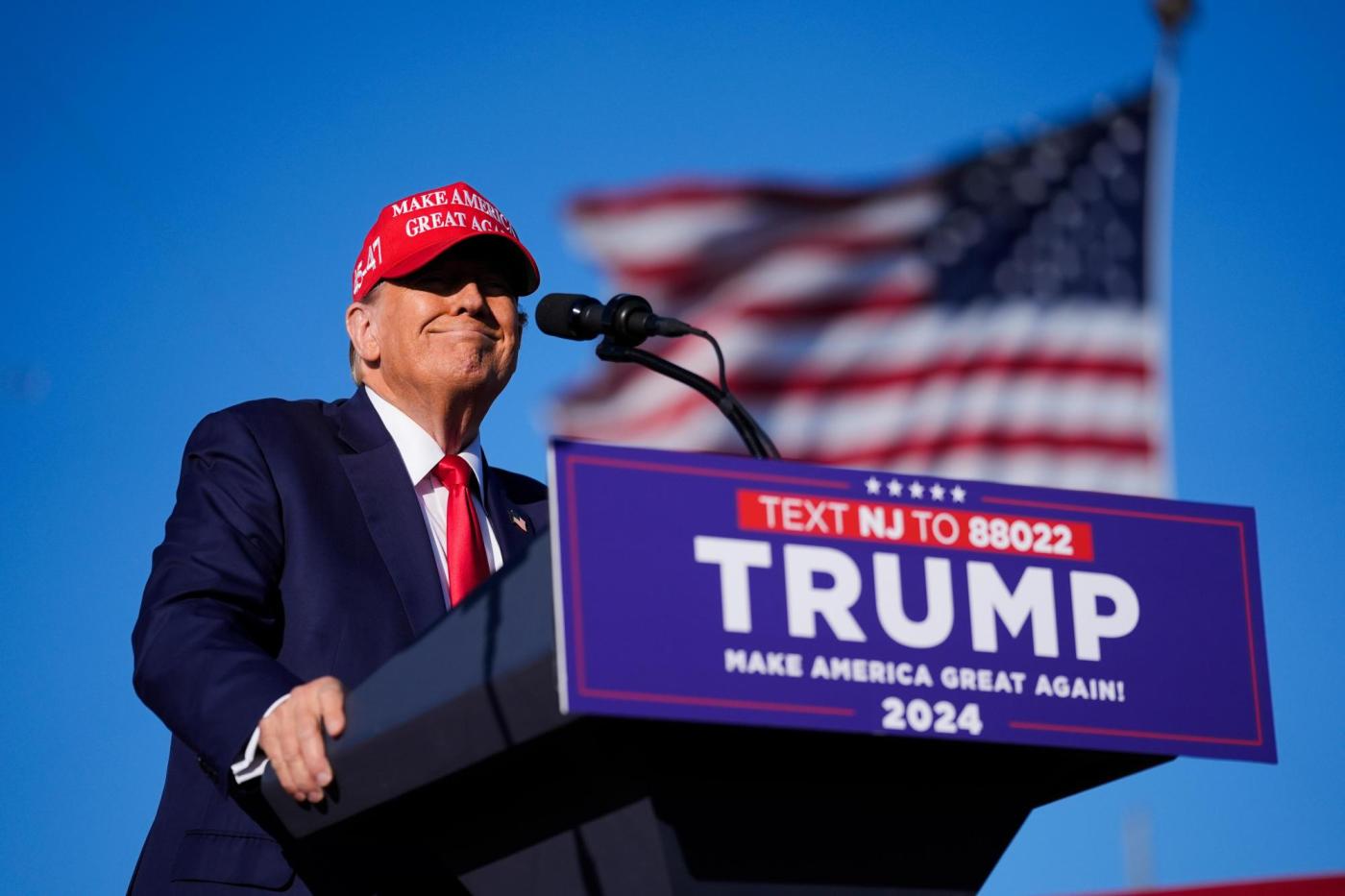
Former President Donald Trump, the presumptive GOP nominee, pushed the issue into the political spotlight this week when he said in an interview that he was open to supporting restrictions on contraception before he reversed course and said he “has never and never will” advocate to restrict access to birth control. He went further in the post on his social media platform, saying “I do not support a ban on birth control, and neither will the Republican Party.”

But recent moves in governor’s offices and state legislatures across the country tell a more complicated story about Republicans’ stances on contraception amid what reproductive rights advocates warn is a slow chipping away of access.

“Contraception is not as straightforward an issue for the GOP as Trump’s statement suggests,” said Mary Ruth Ziegler, a law professor at the University of California, Davis School of Law and a leading abortion politics scholar. “That’s why a lot of right-to-contraception bills have been failing in both Congress and the states. Contraception is more contested than most people understand it to be.”

Trump’s remarks this week and the increasing intensity of fights over contraceptives at the state level provide an opening for Democrats, who are seeking to capitalize on the issue as a potent driver of voter turnout in the fall — just as abortion has been since the U.S. Supreme Court overturned a constitutional right to the procedure two years ago.

Senate Majority Leader Chuck Schumer, D-N.Y., has said he wants a vote as soon as next month on a bill to protect access to contraception that is similar to one the U.S. House passed in 2022 when Democrats controlled the chamber. Even if that legislation fails to surmount the Senate’s 60-vote filibuster hurdle, it will put Republicans on record on an issue that resonates personally with a wide swath of the electorate.

Voters already have shown they broadly support abortion rights, even in conservative states such as Kansas, Kentucky and Ohio where they have sided with abortion rights advocates on ballot measures over the past two years. Legislative tangling over contraception access has been less visible, but that has begun to change as the abortion debate begins to branch off to other areas of reproductive rights.

Earlier this month, Virginia Gov. Glenn Youngkin, a Republican, vetoed bills from the Democratic-controlled Legislature that would have protected the right to contraception, saying he supports the right to it but that “we cannot trample on the religious freedoms of Virginians.” He also said in his veto message that the measure would have interfered with the rights of parents.

A Missouri women’s health care bill was stalled for months over concerns about expanding insurance coverage for birth control after some lawmakers falsely conflated birth control with medication abortion. In March, Arizona Republicans unanimously blocked a Democratic effort to protect the right to contraception access, and Tennessee Republicans blocked a bill that would have clarified that the state’s abortion ban would not affect contraceptive care or fertility treatments.

Indiana adopted a law that requires hospitals to offer women who receive Medicaid coverage long-term reversible implantable contraceptives after giving birth — but only after stripping IUDs from the bill. That move was made over objections from Democrats and some healthcare providers.

Related Articles

National Politics |


NAACP fund seeks to close Black voter registration and turnout gaps ahead of the November election

National Politics |


TikTok ban is popular with voters as AI stirs privacy fears, poll shows

National Politics |


Election year politics roil the EV transition

National Politics |


Key results from primaries in Kentucky, Georgia, Oregon and Idaho

National Politics |


Former Republican presidential candidate Vivek Ramaswamy takes a 7.7% stake in Buzzfeed

Oklahoma’s Republican-controlled legislature advanced legislation many reproductive rights advocates warned could ban emergency contraception and IUDs. And on Tuesday, the same day Trump made his statements to a Pittsburgh television station, Louisiana lawmakers advanced a measure that would make it a crime to possess two abortion-inducing drugs without a prescription, although pregnant women would be exempted.

“If you look at the policies that have been moving in states since the fall of Roe, we are seeing Republicans dismantle reproductive rights, including contraceptives,” said Heather Williams, president of the Democratic Legislative Campaign Committee.

Dr. Gabriel Bosslet, an associate professor of clinical medicine at the Indiana University School of Medicine, raised concerns about some Republican arguments in favor of restricting access to contraceptives. He said, for example, that some anti-abortion groups have called on lawmakers to treat emergency contraception — such as IUDs — differently from barrier methods of contraception such as condoms by falsely labeling them as “abortifacients,” claiming that they induce abortions.

Emergency contraception also is referred to as an “abortifacient” in the GOP’s Project 2025 playbook, which is a blueprint for ways to reshape the federal government in the event of a Republican presidential win this year.

“This is part of a slow chipping away of contraception access,” said Bosslet, who testified against the Indiana bill.

In Wisconsin, Democrats introduced a bill that was intended to protect contraception access last year, but it never got so much as a hearing in either the GOP-controlled state Assembly or state Senate before the two-year session ended in March. Senate Democrats tried to pull the bill from committee in February and force a floor vote, but all the chamber’s 22 Republicans voted against the move.

Asked Wednesday why the bill never got traction, Senate Majority Leader Devin LeMahieu, a Republican, said his caucus would rarely let Democrats make such a move regardless of the topic, though he also said he wasn’t familiar with the details of the measure. After a reporter read parts of the bill to him, LeMahieu said the legislation seemed redundant.

“People can already get contraception,” he said. “Not sure why we’d need to pass that bill.”

About half the states have had legislation this year to establish a legal right to contraception, according to the Guttmacher Institute, which supports reproductive rights. As of May 1, the group found, the only state where one of those measures passed either legislative chamber was Virginia — though the bill was ultimately vetoed by the Republican governor.

Parental involvement in teens’ birth control access also has become a point of contention since an April ruling upheld a Texas law requiring teens to get parental consent. Reproductive rights advocates have warned the ruling could open the door for other states to restrict teens’ ability to access contraception. Meanwhile, efforts to place emergency contraceptives or “morning after” pill vending machines on college campuses also have sparked outrage from anti-abortion groups.

While Trump has sent mixed messages on reproductive rights, President Joe Biden has attacked his positions and highlighted their potential consequences. The Biden campaign this week warned that Trump, in light of the comments his campaign later walked back, would support other states taking similar action to restrict access to contraceptives.

“If Donald Trump returns to office, this terrifying agenda could spread across the country,” Ellie Schilling, a Tulane Law School professor, said on a conference call with reporters.

On that same call, Biden supporters noted that when the Supreme Court overturned the 1973 Roe v. Wade decision, Justice Clarence Thomas issued a concurring opinion that troubled reproductive freedom advocates. He suggested that the court also reconsider previous opinions that prohibited bans on contraceptives, sodomy and same-sex marriage.

Ziegler, the UC Davis law school professor, said the same legal reasoning behind the decision to overturn Roe could be used against contraception access. If anti-abortion groups make the false argument that certain contraception methods induce abortion, she said they might be able to use the Comstock Act to try to restrict the distribution of materials related to contraception. The 19th-century law has been revived by anti-abortion groups seeking to block the abortion drug mifepristone from being sent through the mail.

“We’re seeing a borrowing of the anti-abortion playbook and seeing incremental attacks on contraception,” she said.

Mulvihill reported from Cherry Hill, New Jersey. Associated Press writers Todd Richmond in Madison, Wisconsin, and Isabella Volmert in Indianapolis contributed to this report.

The Associated Press receives support from several private foundations to enhance its explanatory coverage of elections and democracy. See more about AP’s democracy initiative here. The AP is solely responsible for all content.