6 do’s and don’ts when using CDs for retirement

posted in: News | 0

The investing information provided on this page is for educational purposes only. NerdWallet, Inc. does not offer advisory or brokerage services, nor does it recommend or advise investors to buy or sell particular stocks, securities or other investments.

By Spencer Tierney | NerdWallet

Certificates of deposit work as a short-term savings vehicle for goals such as upcoming home or car purchases. If you’re near or in retirement, you might wonder if CDs fit there too.

For risk-averse folks, CDs can be appealing. Safety is central to them: CDs offer predictable returns, federal deposit insurance and no volatility in value such as in the stock market.

“CDs are like that big, comfortable hug in the investing world,” says Noah Damsky, chartered financial analyst and founder of Marina Wealth Advisors in Los Angeles.

But CDs aren’t the most flexible among low-risk savings options. Here are some quick tips for what to do and not do when using CDs for retirement.

Do: Focus on short-term excess funds for CDs

Whether you’re near retirement or not, an emergency fund is a primary goal for short-term savings. Having three to six months’ worth of living expenses, or more, in a regular savings account tends to be a common recommendation.

CDs aren’t best for emergency cash because they require locking up a fixed sum for a period, typically ranging from three months to five years. But preserving extra cash reserves, beyond savings for emergencies, in CDs can make sense, especially since their yields are traditionally higher than in other bank accounts.

“CDs play an important role as an emergency fund supplement in retirement,” says Daniel Masuda Lehrman, certified financial planner and founder of Masuda Lehrman Wealth in Honolulu.

Do: Consider a CD ladder

Having a CD’s fixed rate during a high-rate environment can mean steady, solid returns for years. But in exchange, you lose access to funds for the term.

One workaround to preserve some access is a CD ladder. Instead of one CD, you divide an investment into equal amounts and put them into CDs of staggered term lengths, such as one year, two years and three years. Shorter terms work, too: three months, six months and nine months. The idea is that you can access some cash each time a CD matures, while letting the rest of an investment grow.

Do: Compare rates at banks or a brokerage

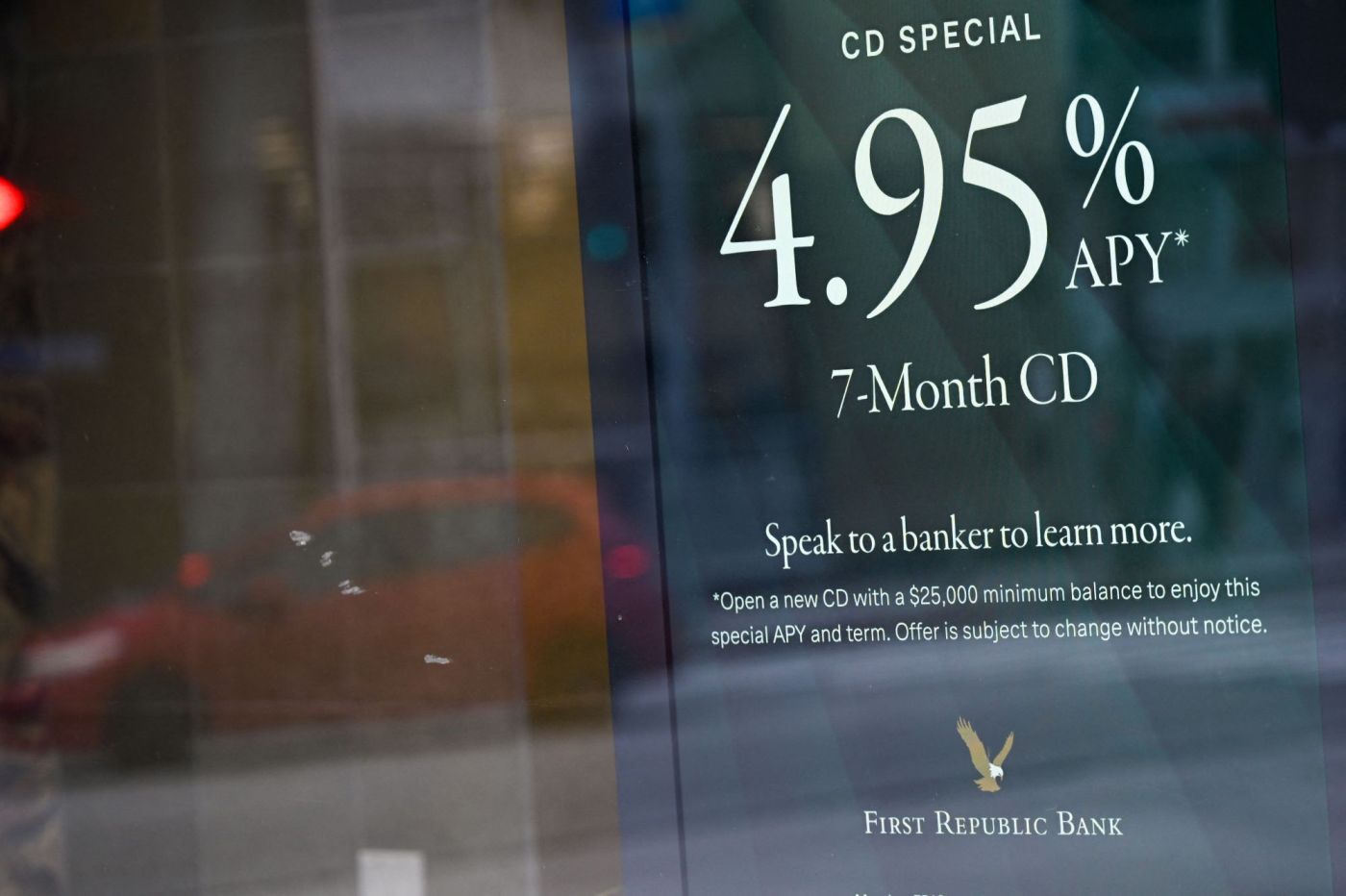
Your bank’s CDs might be convenient but not always the best deal. Online banks and credit unions tend to have some of the best CD rates, and their opening minimum deposits are often low, such as $1,000 or less. Current high-yield rates remain near or above 5% annual percentage yield for six-month and one-year terms, while longer-term rates such as for three and five years are closer to 4%, according to NerdWallet analysis in April.

You can also find competitive yields with brokered CDs, which are issued by banks and available at a brokerage. You need a brokerage account and some understanding of how these CDs work, though.

“A brokered CD is going to be most valuable to somebody who has a substantial amount of assets,” says David John, senior strategic policy advisor at the AARP Public Policy Institute. John cites a brokerage’s ability to spread funds across multiple financial institutions to ensure customers don’t hit the $250,000 cap for federal deposit insurance, which protects your money if a bank fails.

Don’t: Withdraw early

You generally can’t redeem CDs early without hassle or cost. At banks, CDs’ early withdrawals often come with a penalty, such as months to years’ worth of interest earned. A bank may let you withdraw interest early from a CD, but you’d lose out on the full amount a CD can earn from compounding interest.

At brokerages, you can leave a CD early by selling, but you risk losing some of the original value if current rates are higher than your CD’s rate.

Once a CD ends, there’s a grace period, typically seven to 10 days long, when you can withdraw the full amount without a penalty. Alternatively, you can consider a no-penalty CD, though rates tend to be lower than high-yield CDs at the same bank.

Don’t: Forget to pay taxes on interest

For most of the last decade or so, CD rates were at rock-bottom lows and the tax burden for CD interest was minimal. But that’s changed with higher rates in recent years.

“Sometimes folks forget that you can have a meaningful tax impact having this money in a CD,” Damsky says.

CD interest gets taxed at the same rate as regular income for the year you earned that interest. Having $10,000 in a one-year CD at 5% APY, for example, means you’re taxed on that $500 in interest. However, you can reduce your tax burden with IRA CDs, which are tax-advantaged accounts invested in CDs.

Don’t: Put too much money in CDs

One of the biggest mistakes Damsky sees for retirees is getting too averse to risk when investing, especially by overusing CDs. Sometimes the pitfalls with CDs, such as the lack of flexibility and access to funds compared with other low-risk alternatives, can outweigh the pros, he says.

Low-risk investment alternatives to CDs, such as money market funds, can have comparable returns with easier access to cash for brokerage customers. And within an investment portfolio, stocks and bonds play bigger roles than cash investments such as CDs do over time. Stocks historically have provided the greatest likelihood for strong returns while bonds balance out stocks’ volatility with more stability. As John points out, CDs often can’t completely protect against inflation the way other investments can.

Don’t rule out CDs for retirement savings — just know when to use them.

Spencer Tierney writes for NerdWallet. Email: spencer.tierney@nerdwallet.com.

Woodbury to hold open house on new $400M water treatment plant

posted in: News | 0

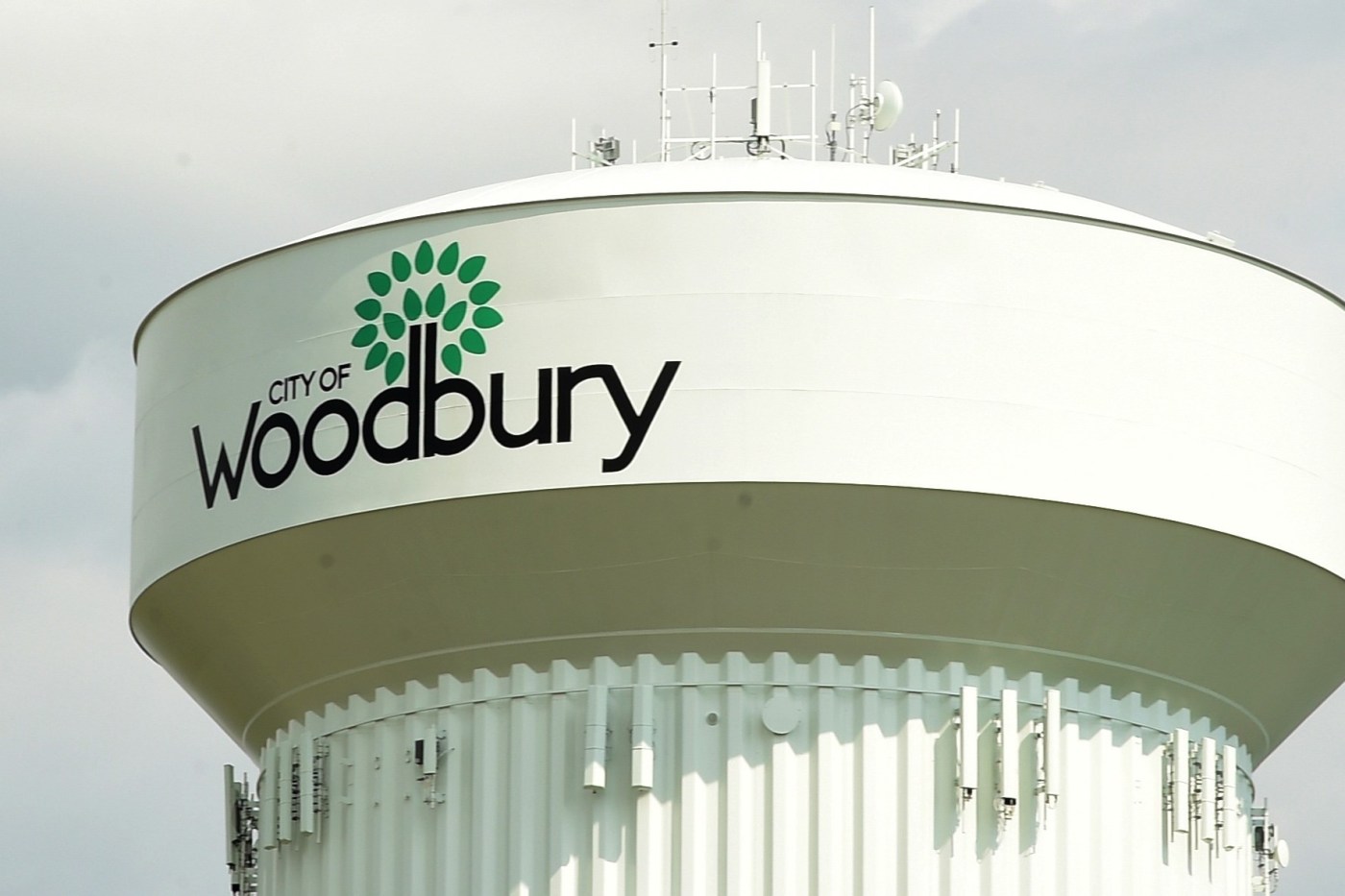
Woodbury residents are invited to an open house on Wednesday to learn more about the largest infrastructure project in the city’s history: the construction of a new $400 million water treatment plant to permanently treat PFAS contamination and the installation of 17 new miles of water main pipe.

A project map shows the locations of Woodbury’s new water treatment plant and new water main pipes. To treat the water supply for PFAS, the city will need to connect existing city wells to the new treatment plant using approximately 17 miles of water main pipe. (Courtesy of the City of Woodbury)

The open house will be 5:30-7:30 p.m. Wednesday at Woodbury City Hall, 8301 Valley Creek Road.

Most of the money for the plant, which will be located on approximately 22 acres of land in the south-central part of the city, is coming from the $850 million settlement reached in 2018 between the state of Minnesota and 3M Co. for the contamination of groundwater in the east metro. The city is expected to contribute between $32 million and $40 million; final cost will be determined by public bids and the market, city officials said.

To treat the water supply, the city will need to connect the existing wells spread across the city to the new plant. This will require approximately 17 miles of water main pipe to be installed through existing roadway corridors over the next four years.

Pipeline construction is expected to begin this fall; construction of the water treatment plant will begin in 2025. The plant is expected to be operational in 2028.

There is no formal presentation planned at the open house; participants can arrive and leave as their schedules allow.

For more information, call the project information line at 651-448-7127, email watertreatment@woodburymn.gov or go to woodburymn.gov/watertreatment.

Related Articles

Local News |


Obituary: For Denny Seefeldt, Scandia’s first mayor, civic duty was a way of life

Local News |


Stillwater: Sunday’s historic homes tour features property designed by Frank Lloyd Wright

Local News |


McDonald’s MVP Alice Kane marks 35 years at Stillwater restaurant

Local News |


Have a great idea for Stillwater? You could win $10,000 to make it happen.

Local News |


Bison return to Afton’s Belwin Conservancy this weekend

Nikki Haley faces a murky path forward and a key decision on whether or not to endorse Trump

posted in: News | 0

By STEVE PEOPLES, MEG KINNARD and THOMAS BEAUMONT (Associated Press)

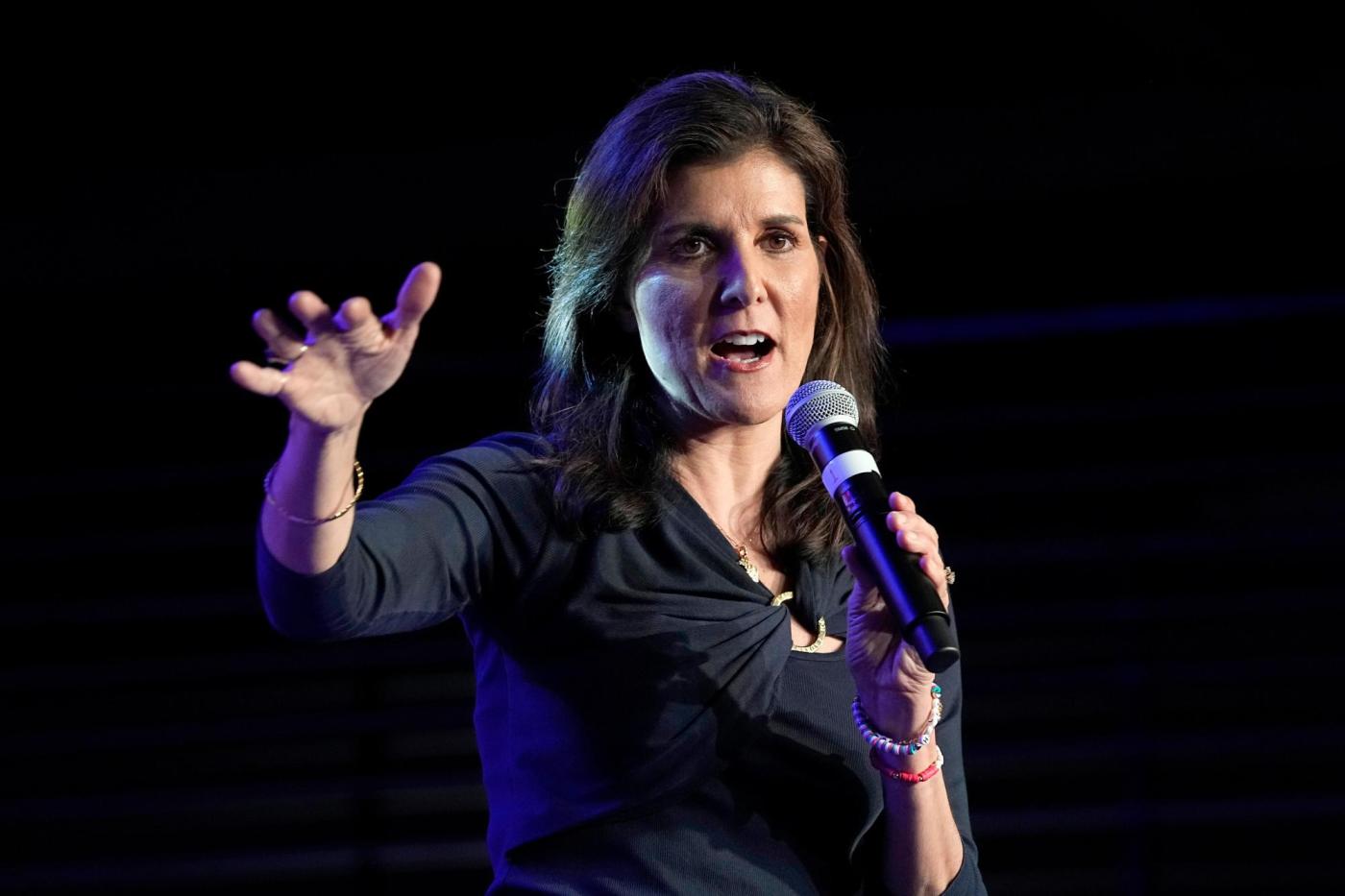
COLUMBIA, S.C. (AP) — Nikki Haley is perhaps the highest-profile Republican in the nation who has refused to fall in line and endorse Donald Trump’s presidential bid.

It’s unclear how long that might last.

Some allies believe she may be forced to endorse him before the November election to avoid permanently alienating the Republican Party base. Some even suspect that Haley will re-emerge on Trump’s short list of vice presidential contenders in the coming months, despite Trump’s recent statement to the contrary.

But if Haley submits to Trump, as so many of his GOP critics have done, she also risks destroying her own coalition of independents, moderates and anti-Trump Republicans, who are still showing up to support her in low-profile primary contests from deep-red Indiana to deep-blue Maryland. On Tuesday, she gets another chance to demonstrate her sustained strength in Kentucky’s presidential primary contest, which comes more than two months after she suspended her campaign.

Haley’s decision on Trump in the coming months will be closely watched not just by her supporters, but by allies of Trump and President Joe Biden. What she decides to do — and whether her coalition follows — could have a profound impact on this year’s general election and her future as a top-tier Republican whose brand appeals to many people outside her party.

“Nikki Haley could be the person that unites us,” said Thalia Floras, a 62-year-old retail manager from Nashua, New Hampshire, who was a lifelong Democrat before casting a ballot for Haley in her state’s January primary.

But Floras also has a warning: “Nikki Haley has a good place with me now. But if she goes with Trump, I’m done.”

Those close to Haley, a 52-year-old former governor and U.N. ambassador, say it’s unclear what she’ll do.

HALEY VOTERS UP FOR GRABS, BUT ONLY BIDEN TRYING

Haley and Trump haven’t spoken in months. That includes the period after she bowed out of the GOP primary campaign in early March, according to a person with direct knowledge of Haley’s private conversations who was not authorized to speak about them publicly.

And while some Republicans who supported Haley will certainly drift back to Trump organically, the Biden campaign is working to win over her supporters, whom they view as true swing voters.

Biden’s team is quietly organizing a Republicans for Biden group, which will eventually include dedicated staff and focus on the hundreds of thousands of Haley voters in each battleground state, according to people familiar with the plans but not authorized to discuss them publicly.

The Democratic president hasn’t kept his intentions a secret.

Biden issued a statement thanking Haley for her courage to challenge Trump just minutes after she bowed out of the primary race in March.

“Donald Trump made it clear he doesn’t want Nikki Haley’s supporters. I want to be clear: There is a place for them in my campaign,” Biden said at the time.

Related Articles

National Politics |


Jesus is their savior, Trump is their candidate. Ex-president’s backers say he shares faith, values

National Politics |


Noncitizen voting, already illegal in federal elections, becomes a centerpiece of 2024 GOP messaging

National Politics |


Here’s how Robert F. Kennedy Jr. could make the first debate stage under stringent Biden-Trump rules

National Politics |


Michael Cohen says he stole from Trump’s company as defense presses key hush money trial witness

National Politics |


Biden tells Morehouse graduates that scenes in Gaza from the Israel-Hamas war break his heart, too

Trump, meanwhile, said in late January that Haley donors would be permanently banned from his “Make America Great Again” camp. While he has refrained from attacking her since she left the race, Trump hasn’t offered public statements of goodwill either as he has for other vanquished rivals like Florida Gov. Ron DeSantis.

As part of Biden’s sustained outreach to Haley’s coalition, his campaign released a digital ad late last month highlighting Trump’s often-personal attacks against Haley, including his primary nickname of her as “birdbrain” and suggestion that “she’s not presidential timber.”

Asked about Trump’s lack of outreach to Haley and her supporters, senior adviser Jason Miller avoided any mention of her and instead cast doubt on the strength of Biden’s coalition of Black Americans, Latinos and young voters.

“The reality is the Republican Party is united behind President Trump while the Democrat Party has shattered to pieces because of Joe Biden’s disastrous policies on issues like inflation and the border,” Miller said.

Few expect Haley to endorse the Democratic president outright. Such a decision would make it difficult, if not impossible, for her to win a future GOP presidential primary if she decides to run again.

Instead, Biden’s allies are hopeful that Haley, among other high-profile Republican Trump critics, may either stay silent or offer an endorsement focusing on the stakes of the election for democracy rather than direct praise for Biden.

If and when Biden’s team does secure high-profile Republican supporters, it’s likely to wait several more weeks to unveil them to help maximize their impact when voters are paying closing attention to the November election.

A PRO-BIDEN REPUBLICAN SPEAKS

Former Georgia Lt. Gov. Geoff Duncan, a Republican who had backed Haley in the GOP primary, formally endorsed Biden earlier in the month. In an interview, he said he made the decision before talking to Biden’s campaign, although Biden personally called to thank him after Duncan announced his decision.

Duncan didn’t rule out playing a prominent role in the Republicans for Biden group or even speaking at the Democratic National Convention this summer, just as former Ohio Gov. John Kasich did four years ago.

Duncan hopes Haley doesn’t ultimately endorse Trump as so many of Trump’s high-profile Republican critics have done.

“I feel like that would be a short-term sugar high to just gain favor inside the Republican Party,” Duncan said of a potential Haley endorsement of Trump. “She has the right to do what she wants to do. Obviously everybody’s playing the political calculus. But at some point, where do we draw the line?”

The list of high-profile Republicans willing to stand up to Trump in 2024 is extraordinarily small.

Even those who described Trump as a dangerous threat to democracy, like New Hampshire Gov. Chris Sununu, have ultimately endorsed him. Sununu, who was among Haley’s top national surrogates during the campaign, declined repeated requests to comment on her political future. And DeSantis, once Trump’s chief primary rival and another early 2028 prospect, now plans to raise money for Trump’s general election campaign.

HALEY STEPS BACK INTO PUBLIC SPOTLIGHT

Haley has only just begun to emerge from a period of post-campaign seclusion, where she took time to reconnect with family, especially her husband, a military serviceman who recently returned from a nearly yearlong tour overseas.

She plans to deliver a speech on foreign policy later this week — her first public address since ending her 2024 campaign — at the Hudson Institute, a Washington-based conservative think tank where she’s agreed to serve as the Walter P. Stern Chair.

And last week, Haley huddled with dozens of donors and allies behind closed doors in South Carolina, where she thanked her coalition, while largely ignoring Trump. She did not encourage attendees to support his campaign.

Simone Levinson, a Haley bundler who attended the private gathering, said there remains an appetite among Republicans for a next-generation figure who can communicate well and build consensus.

“There is a very strong indication that she has struck a chord that is still continuing to resonate with millions of Americans,” said Levinson, who is based in Florida.

HER COALITION SENDS A MESSAGE

Indeed, without any formal organization, advertising or even private encouragement, the Haley voters continue to show up in low-profile presidential primaries, which will run through the end of June even though Trump is the only candidate still in the running.

Haley earned more than 21% of the vote in Maryland’s presidential primary last week. That’s after hitting similar marks the week before in Indiana and Arizona just weeks after leaving the race.

“She’s articulate and intelligent, which are things that Trump isn’t,” said retired school psychologist Kathy Showen, an independent voter from Cross Lanes, West Virginia, who cast a primary ballot for Haley last week.

Meanwhile, in New Hampshire, Floras said she’ll begrudgingly vote for Biden this fall because she can’t stomach Trump. But she’s hopeful that Haley will run again in 2028.

Her feelings might change, however, if Haley gives in and endorses Trump before the fall election.

“It would really disappoint me if she doesn’t stand up to him,” Floras said. “That would do her in.”

Peoples reported from New York. Beaumont reported from Des Moines, Iowa. Associated Press writer John Raby in Charleston, West Virginia, contributed to this report.

Jesus is their savior, Trump is their candidate. Ex-president’s backers say he shares faith, values

posted in: News | 0

By PETER SMITH (Associated Press)

As Donald Trump increasingly infuses his campaign with Christian trappings while coasting to a third Republican presidential nomination, his support is as strong as ever among evangelicals and other conservative Christians.

“Trump supports Jesus, and without Jesus, America will fall,” said Kimberly Vaughn of Florence, Kentucky, as she joined other supporters of the former president entering a campaign rally near Dayton, Ohio.

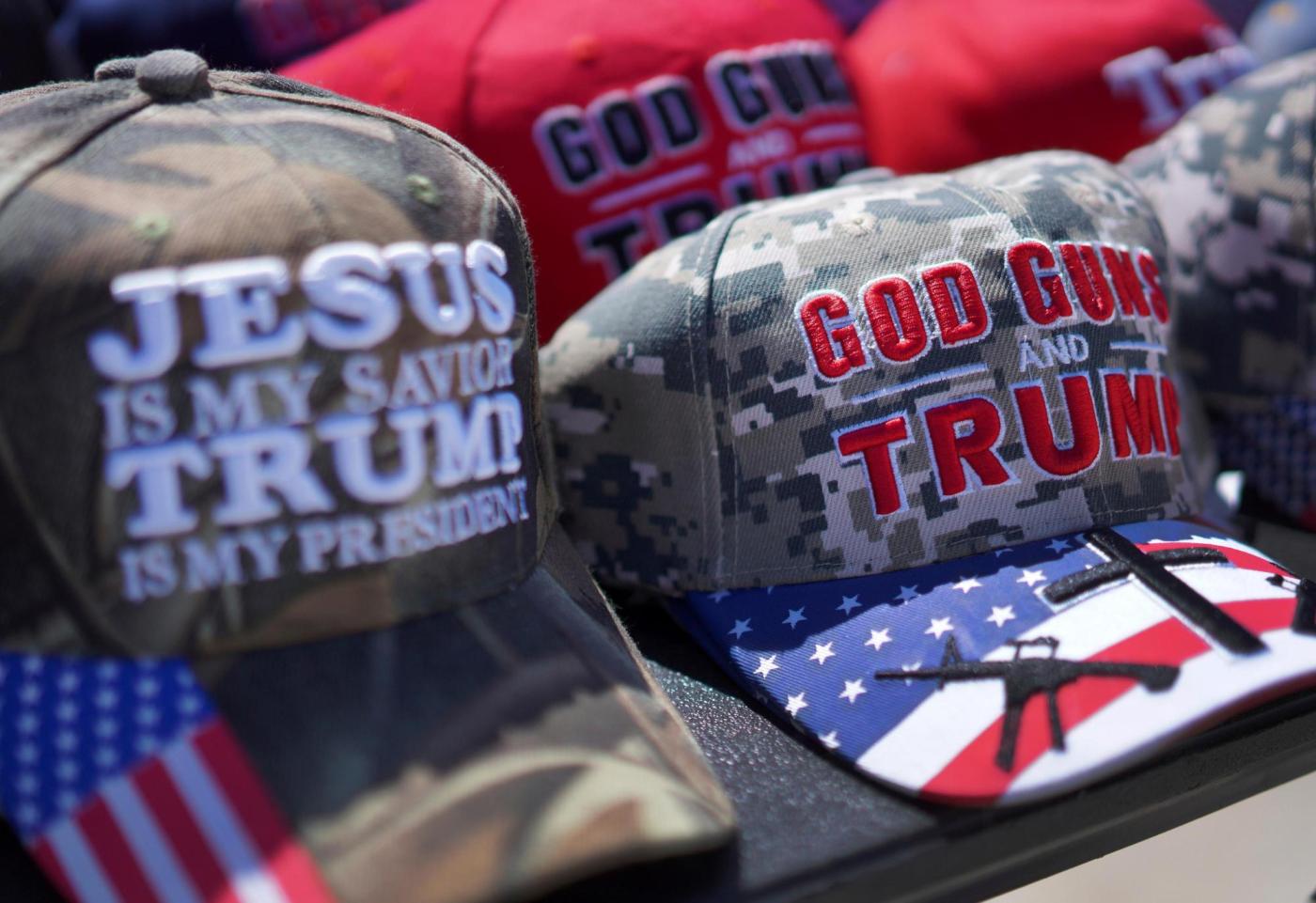
Many of the T-shirts and hats that were worn and sold at the rally in March proclaimed religious slogans such as “Jesus is my savior, Trump is my president” and “God, Guns & Trump.” One man’s shirt declared, “Make America Godly Again,” with the image of a luminous Jesus putting his supportive hands on Trump’s shoulders.

Many attendees said in interviews they believed Trump shared their Christian faith and values. Several cited their opposition to abortion and LGBTQ+ rights, particularly to transgender expressions.

Nobody voiced concern about Trump’s past conduct or his present indictments on criminal charges, including allegations that he tried to hide hush money payments to a porn actor during his 2016 campaign. Supporters saw Trump as representing a religion of second chances.

And for many, Trump is a champion of Christianity and patriotism.

“I believe he believes in God and our military men and women, in our country, in America,” said Tammy Houston of New Lexington, Ohio.

“I put my family first, and on a larger scale, it’s America first,” said Sherrie Cotterman of Sidney, Ohio. “And I would any day of the week, take a president that openly knows he needs the strength from God over his own.”

In many ways, this is a familiar story.

About 8 in 10 white evangelical Christians supported Trump in 2020, according to AP VoteCast. Pew Research Center’s validated voter survey found that a similar share supported him in 2016.

But this is a new campaign, and that support has remained durable — even though Republican voters in the early primaries had several conservative Christian candidates to choose from, none of whom faced the legal troubles and misconduct allegations that Trump does. In the Iowa, New Hampshire and South Carolina Republican primaries, Trump won between 55% and 69% of white evangelical voters, according to AP VoteCast.

Trump even criticized one competitor, Florida Gov. Ron DeSantis, for signing strict abortion curbs into law.

Trump was the only Republican candidate facing scores of criminal charges, ranging from allegations that he conspired to overturn his 2020 election defeat to his current trial on allegations he falsified business records in seeking illegally to sway the 2016 election with hush money to porn actor Stormy Daniels.

Trump was also the only GOP candidate with a history of casino ventures and two divorces, as well as allegations of sexual misconduct — one of them affirmed by a civil court verdict.

Republican primary voters still overwhelmingly chose Trump.

This has frustrated a minority of conservative evangelicals who see Trump as an unrepentant poser, using the Bible and prayer sessions for photo props. They see him as lacking real faith and facing credible, serious misconduct allegations while campaigning with incendiary rhetoric and authoritarian ambitions.

Karen Swallow Prior, a Christian author and literary scholar who criticized fellow evangelicals’ embrace of Trump, said this support in 2024 is familiar but “intensified.”

In the past, she said Trump supporters hoped but weren’t certain that he shared their Christian faith.

“Now his supporters believe themselves,” she said. “Despite the fact that Trump clearly wavers on abortion and he wavers on LGBTQ issues, those things are just ignored, they’re just erased out of the narrative.”

Related Articles

National Politics |


Nikki Haley faces a murky path forward and a key decision on whether or not to endorse Trump

National Politics |


Noncitizen voting, already illegal in federal elections, becomes a centerpiece of 2024 GOP messaging

National Politics |


Here’s how Robert F. Kennedy Jr. could make the first debate stage under stringent Biden-Trump rules

National Politics |


Michael Cohen says he stole from Trump’s company as defense presses key hush money trial witness

National Politics |


Biden tells Morehouse graduates that scenes in Gaza from the Israel-Hamas war break his heart, too

At the Ohio rally, several attendees cited their belief that Trump has followed the Christian path of repenting and starting a new life.

“We’ve all come from sinning. Jesus sat with sinners, so he’s going to sit with Trump,” Vaughn said. “It’s not about where Trump came from, it’s about where he’s going and where he’s trying to take us.”

The Ohio rally, like other Trump events, featured a recording of the national anthem sung by some of those convicted for crimes related to the Jan. 6, 2021, attack on the Capitol, whom Trump called “patriots.”

At the rally’s entrance, one group handed out pamphlets urging attendees both to “trust in Jesus Christ for your salvation” and to support the “J6 patriots.”

Jody Picagli of Englewood, Ohio, said her Catholic faith and views on abortion are central.

“I’m a big right-to-life person,” she said. “That’s huge for me. And just morals. I think the moral compass is so out of whack right now. And we need religion and church back in here.”

She acknowledged that, with the Supreme Court turning the abortion issue over to the states, a future President Trump may not impact abortion law.

“But I know he’ll never go to an abortion clinic and visit it, like our vice president did,” she said, alluding to Kamala Harris’ tour of a Planned Parenthood clinic in Minnesota in March.

Robert Jones, president of the Public Religion Research Institute and an author of books on white supremacy in American Christianity, said the strong evangelical support for Trump isn’t surprising. But he said that in a 2023 PRRI poll, less than half of white evangelicals said that abortion was a critical issue to them personally. More than half said that five others were a critical issue, including human trafficking, public schools, rising prices, immigration and crime.

“One of the biggest myths about white evangelical support for Trump is this idea that it’s really about abortion and they’re holding their nose and voting for Trump,” Jones said.

He added that Trump’s rhetoric about immigrants “invading the country and changing our cultural heritage” resonates with his audience.

The slogan “Make America Great Again” echoes an “ethno-religious vision of a white Christian America, just barely underneath the surface,” Jones said.

He acknowledged the racial lines aren’t absolute, with Trump attracting Black supporters such as South Carolina Sen. Tim Scott.

The Ohio rally included a vast majority of white attendees but with some Black and other ethnic groups represented.

Trump’s rallies take on the symbols, rhetoric and agenda of Christian nationalism, which typically includes a belief that America was founded to be a Christian nation and seeks to privilege Christianity in public life.

Trump endorsed a Bible edition that includes U.S. founding documents and the lyrics to Lee Greenwood’s “God Bless the USA.”

“This is a Bible specifically for a kind of white evangelical audience that sees themselves as the rightful inheritors of the country,” Jones said, citing a 2023 PRRI poll in which about half of white evangelicals agreed that God intended America as a promised land for European Christians.

At the Ohio rally, some attendees said they believed the nation or its founding documents, such as the Bill of Rights, had Christian origins, though historians dispute such assertions.

Some Trump supporters voiced hope for a more Christian America.

Thomas Isbell of Greensboro, North Carolina, who has set up vending booths at many Trump rallies, said his “God, Guns & Trump” shirts are a top seller.

“It’s a Christian country,” he said, adding that if he were president, he would only allow public worship by Christians.

“We’re not going to set up a temple to no other gods in our land,” he said.

Associated Press religion coverage receives support through the AP’s collaboration with The Conversation US, with funding from Lilly Endowment Inc. The AP is solely responsible for this content.