
Nevada abortion-rights measure has enough signatures for November ballot, supporters say

posted in: Society | 0

LAS VEGAS — Abortion access advocates in Nevada said Monday that they have submitted almost twice the number of petition signatures needed to qualify a measure for the November ballot that would enshrine reproductive rights in the state constitution.

Supporters collected and submitted more than 200,000 signatures, Nevadans for Reproductive Freedom President Lindsey Harmon told reporters. Proponents need 102,000 valid signatures by June 26 to qualify for the ballot.

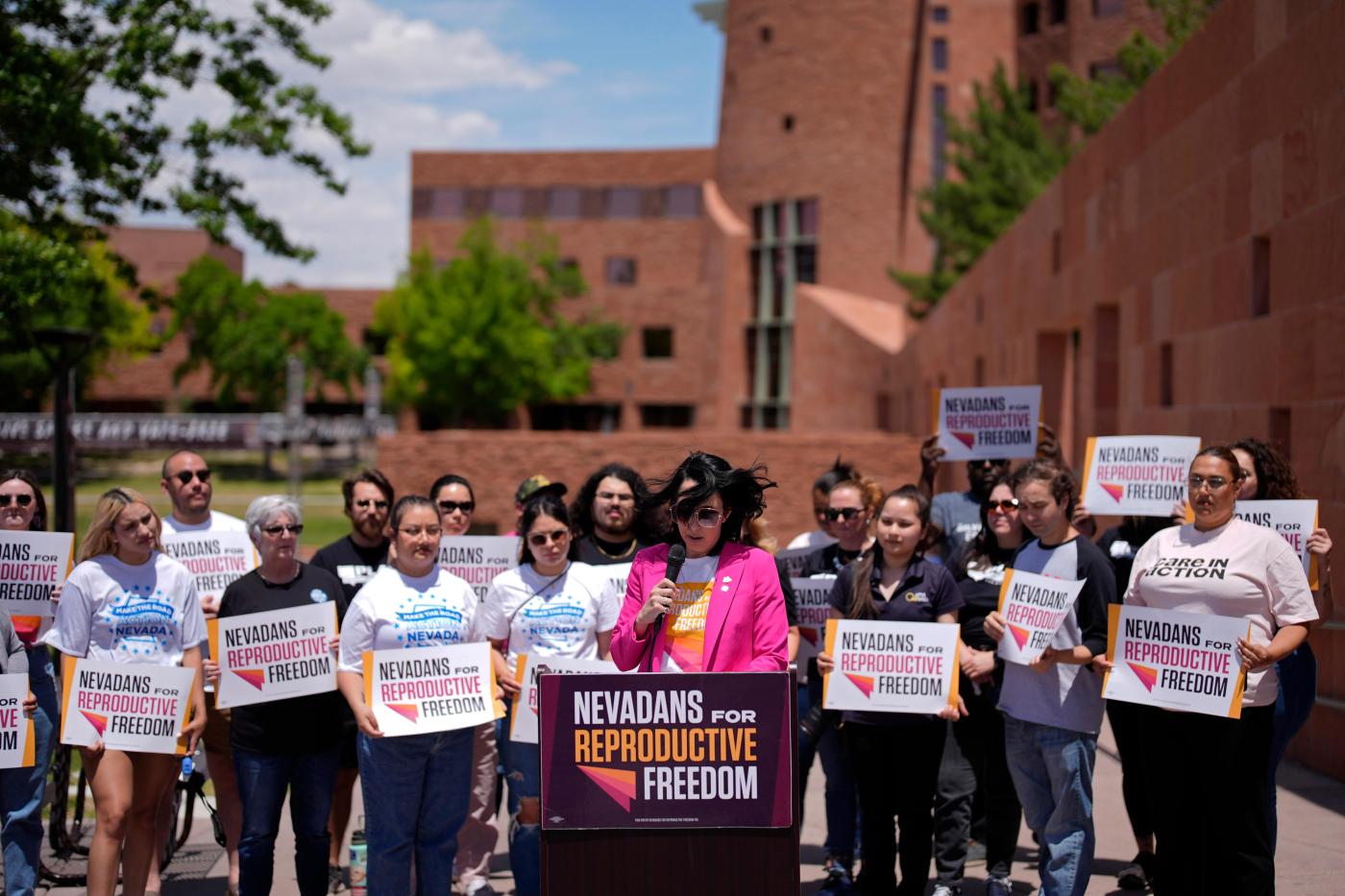
“The majority of Nevadans agree that the government should stay out of their personal and private decisions … about our bodies, our lives and our futures,” Harmon said at a rally with about 25 supporters outside the Clark County Government Center in Las Vegas.

Elections officials in Nevada’s 17 counties still must verify signatures and it’s not clear how long that will take.

In Washoe County, spokeswoman Bethany Drysdale said advocates delivered several boxes of signatures to the registrar’s office in Reno. Boxes also went to officials in Clark County, the state’s most populous and Democratic-leaning area, which includes Las Vegas.

Nevada voters approved a law in 1990 that makes abortion available up to 24 weeks of pregnancy, a point considered a marker of fetal viability. But Nevada is one of several states where backers are pressing to strengthen abortion access after the U.S. Supreme Court overturned Roe v. Wade.

Since then, several Republican-controlled states have tightened abortion restrictions or imposed outright bans. Fourteen states currently ban abortions at all stages of pregnancy, while 25 allow abortions up to 24 weeks or later, with limited exceptions.

Harmon said the effort to collect signatures was “very expensive” but declined to give an exact figure. She noted that the neighboring states of Idaho,Arizona and Utah have stricter abortion rules than Nevada.

Most states with Democratic legislatures have laws or executive orders protecting access. Voters in California, Kansas, Kentucky, Michigan, Montana, Ohio and Vermont have sided with abortion rights supporters on ballot measures. Supporters of abortion rights have qualified measures for ballots in Colorado and South Dakota, and Nevada is among nine other states where signature drives have been underway.

The measure would ensure “a fundamental, individual right to abortion” while allowing Nevada to regulate “provision of abortion after fetal viability … except where necessary to protect the life or health of the pregnant individual.”

Melissa Clement, Nevada Right to Life director, told The Associated Press her organization will continue to fight the proposed amendment in courts and at the ballot box.

“As a woman, nothing makes me angrier than Democrats taking one of the most difficult and traumatic decisions a woman can make and using it for political fodder,” Clement said. “Scaring women. It’s despicable.”

Signature-gathering is one of two tracks being taken in Nevada to get the measure on the ballot.

To amend the Nevada Constitution, voters must approve a measure twice. If the abortion amendment qualifies and is approved by voters this year, they would vote on it again in 2026.

In the Legislature, Nevada’s Democratic-majority lawmakers passed a 24-week right-to-abortion measure last year along party lines, teeing the issue up for another vote when lawmakers return next year for their next every-two-years session in Carson City. If approved then, the proposed constitutional amendment would be put on the 2026 statewide ballot.
St. Paul, native community break ground on Wakan Tipi Center in Dayton’s Bluff

posted in: News | 0

For a decade or more, organizers of the Lower Phalen Creek Project eyed the century-old Standard Oil warehouse as a potential home for a new nature and cultural interpretative center within the 27-acre Bruce Vento Nature Sanctuary at the base of Dayton’s Bluff. And then came the realization that the dream was not to be, at least not in that facility.

The walls came crashing down off the vacant but longstanding warehouse in 2015, as the nonprofit’s organizers — including then-executive director Dan McGuiness — decided the aged building was too pricey to preserve and retrofit into a public-facing nature center. Its demolition that year ignited hope that a new $5 million structure could be built in its place.

With the pandemic playing no small role in disrupting planning, the past nine years have been full of fundraising stops and starts. Nevertheless, St. Paul Mayor Melvin Carter and a who’s who of city, county, parks and indigenous leaders came together Monday afternoon for the groundbreaking of the future Wakan Tipi Center, a $14.3 million, city-owned nature center slated to open its doors in late 2025 beneath the Kellogg Boulevard/Third Street bridge.

Preservation of nature, culture

To say that plans had evolved in the past 20 years or more would be putting it lightly.

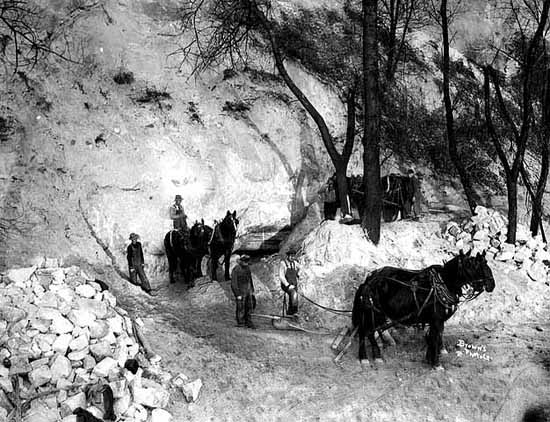
The Lower Phalen Creek Project was renamed last year Wakan Tipi Awanyankapi. It was refashioned as a native-led nonprofit organization dedicated to the preservation of nature and culture within the area surrounding Wakan Tipi, a sacred cave that many St. Paul residents grew up referring to as Carver’s Cave after the European explorer who befriended the native community there.

The nonprofit will be the building’s primary tenant.

The 7,500-square-foot center, which will be constructed by Versacon contractors off Fourth and Commercial street, is intended to showcase the history, language and values of the Dakota tribes with an exhibit hall, classrooms, ceremony space, a community gathering area, teaching kitchen and teaching gardens.

Funding

A capital campaign launched in earnest in 2018, raising more than $6.5 million from the state, as well as upwards of 60 grants, with some approaching $1 million or more from the Bush Foundation, the Katherine B. Andersen Fund of the St. Paul Foundation, the Margaret A. Cargill philanthropies and the National Endowment for the Humanities.

Fundraising for the building and gardens is complete, said Maggie Lorenz, executive director of Wakan Tipi Awanyankapi, but the goal remains to raise another $2 million or so for a second phase of construction once the Kellogg Boulevard/Third Street bridge is replaced in 2027. That second phase would entail landscaping, trail connections, expansion of the permanent parking lot, construction of a multi-vehicle garage that would house a youth transportation van, a truck and a utility terrain vehicle to enable land stewardship.

Katherine Beane, who chairs the nonprofit and directs the Minnesota Museum of American Art, said she appreciated the willingness of the founders of the Lower Phalen Creek Project to transition to a Dakota-oriented initiative.

“They were allies who were willing to let go and make sure the decision-making and the direction would be under the leadership of the community,” she said. “At the point our organization became a native-led organization, we knew it was going to be a success.”

Related Articles

Local News |


Violent Crime unit teaming BCA agents with local cops to focus on guns, drugs

Local News |


Charges dismissed in attempted murder case outside St. Paul store

Local News |


Hey Charles Barkley: Forgetting your Minneapolis visits? Here’s where to find a more memorable meal in St. Paul.

Local News |


MnDOT to host virtual meeting on U.S. Hwy. 52/Lafayette Bridge on Tuesday

Local News |


St. Paul: Luther Seminary cancels Safe Space shelter deal with Ramsey County

Opinion: New Yorkers Most in Need Were Left Behind By State Budget

posted in: News | 0

“Once again, the needs of the poor have been especially shut out of the state’s moral conscience, with our government refusing to include an increase to cash assistance grants in the budget.”

Adi Talwar

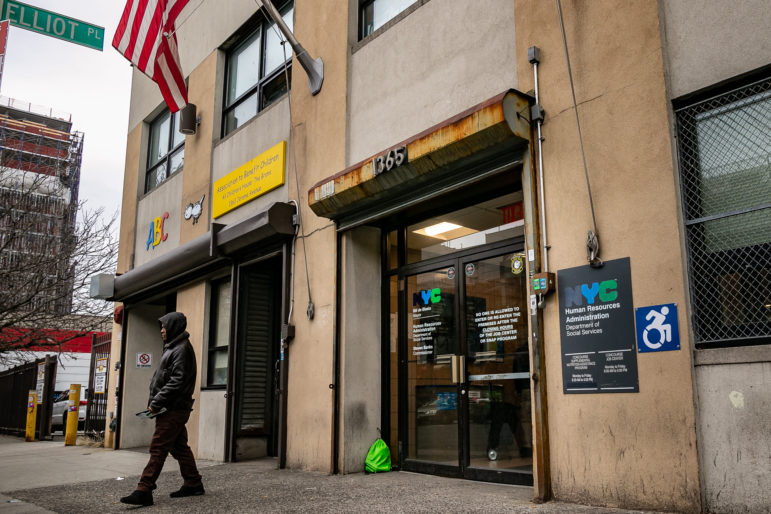
A since-shuttered public benefits office in the Bronx.

CityViews are readers’ opinions, not those of City Limits. Add your voice today!

The New York State Budget for Fiscal Year 2025 arrives as New Yorkers across all incomes are struggling to afford necessities like rent, food, and childcare. Once again, the needs of the poor have been especially shut out of the state’s moral conscience, with our government refusing to include an increase to cash assistance grants in the budget. This is the grant that covers what we would more commonly refer to as “public assistance” or “welfare.”

Representing a membership of nearly 170 faith and community-based organizations across New York, we at FPWA say it’s time to uphold our state’s values of equity and justice. We must confront pervasive stereotypes, including the racist “welfare queen” trope from the 1970s and the offensive “workfare” notions of the 1990s, which perpetuate harmful attitudes towards the poor. It’s time to reshape the narrative around cash assistance and who is deemed deserving of help.

Cash assistance provides direct cash aid to over 600,000 New York individuals and families with the lowest incomes—many with disabilities, health challenges, or caregiving responsibilities. Often, New Yorkers turn to cash assistance as a last resort after hardships like separation, domestic violence, homelessness, illness, or losing a family member.

Having grown up in a family that relied on cash assistance, I know this reality all too well. Shortly after my birth, my father lost his job as a NYC Transit police officer and left our family a few years later. My mother, left to raise three children on an unlivable income as a family day care provider, went on public assistance so that we could survive as a family.

Before we went on public assistance, my sisters attended “Prep for Prep”—a program dedicated to moving underserved children from public to independent schools. They received scholarships to attend a very prestigious private school. After we went on assistance, I received financial aid to attend the same school. For my mother, having all three of her children graduate from private school was an opportunity for economic advancement.

Unfortunately, the small amount of tuition she was asked to contribute to our education put us at risk of losing our public assistance. My mother made the difficult decision to prioritize our education, a choice that had a devastating financial impact on our family for many years but ultimately yielded lasting economic and social benefits.

My story may seem unique. Yet it echoes what we at FPWA hear from many cash assistance recipients today. We hear about the impossible choices recipients face, who feel “stuck” between pursuing full-time employment and losing their benefits. They want to open businesses, pursue higher education, and give back to families like theirs, but face real barriers from a system meant to provide support.

Archaic eligibility criteria and endless administrative hurdles make it difficult to access these benefits, which remain completely detached from economic reality. The maximum benefit for a New York City family of three, for example, is just $789 a month. A true cost of living measure will reveal how far below economic security this falls. Clearly, it’s insufficient for a family to survive on, much less live with dignity.

In March, statewide advocates anticipated movement on this issue when the Assembly proposed a partial grant increase in their budget, raising the monthly basic needs subsidy from $389 to $614 for a family of three. While not fully tackling economic deprivation, it would have helped alleviate deep poverty and assist New Yorkers in need.

The benefits not only fall short of stabilizing families but also fail to meet basic needs. We’ve heard countless stories of recipients going without food and essentials. For instance, a mother had to quit her job due to unaffordable childcare for her disabled son, often skipping meals and going without basic hygiene items to ensure he’s fed. A formerly homeless 27-year-old, grappling with PTSD and depression, explained the challenges of making ends meet even with careful budgeting, often having to skip meals when funds run low. Similarly, a mother of two teenage girls, a survivor of domestic violence currently residing in an emergency shelter, described the difficulty of providing enough food for her growing children, illustrating the harsh reality faced by many cash assistance recipients.

Like mine, these are stories of resilience. Despite the narratives perpetuated in political discourse and the media, cash assistance recipients aren’t exploiting others’ efforts. They’re our friends, neighbors, parents, children, aspiring professionals, and future leaders striving to improve their lives and those of their families.

In one of the richest states in one of the richest countries in the world, it is morally unjustifiable for so many to struggle meeting basic needs. We have the power to eradicate deep poverty and provide all New Yorkers with the means to attain economic security, pursue aspirations, and live with dignity. It’s past time for the state budget to reflect this vision.

That’s why FPWA has launched an ambitious new project to amplify the voices of those marginalized by media and public perception. Through our Cash Assistance Story Collection Series, we’ll spotlight recipients’ experiences, shedding light on the impact of our moral shortcomings in aiding the poor. It also presents an opportunity to hear stories of strength, dreams, and progress.

We hope that this work will catalyze change, urging our state to fulfill the promise of its motto— “Excelsior,” or ever upward—for all its residents.

Rev. Dominique C. Atchison is FPWA’s director of membership and strategic partnerships.

Trump Media and Technology Group posts more than $300 million net loss in first public quarter

posted in: News | 0

SARASOTA, Fla. (AP) — Trump Media and Technology Group, the owner of former President Donald Trump’s social networking site Truth Social, lost more than $300 million last quarter, according to its first earnings report as a publicly traded company.

For the three-month period that ended March 31, the company posted a loss of $327.6 million, which it said included $311 million in non-cash expenses related to its merger with a company called Digital World Acquisition Corp., which was essentially a pile of cash looking for a target to merge with. It’s an example of what’s called a special purpose acquisition company, or SPAC, which can give young companies quicker and easier routes to getting their shares trading publicly.

A year earlier, Trump Media posted a loss of $210,300.

Trump Media said collected $770,500 in revenue in the first quarter, largely from its “nascent advertising initiative.” That was down from $1.1 million a year earlier.

“At this early stage in the Company’s development, TMTG remains focused on long-term product development, rather than quarterly revenue,” Trump Media said in its earnings news release.

Earlier this month, the company fired an auditor that federal regulators recently charged with “massive fraud.” The former president’s media company dismissed BF Borgers as its independent public accounting firm on May 3, delaying the filing of the quarterly earnings report, according to a securities filings.

Trump Media had previously cycled through at least two other auditors — one that resigned in July 2023, and another that was terminated its the board in March, just as it was re-hiring BF Borgers.

Shares of Trump Media climbed 36 cents to $48.74 in after-hours trading. The stock, which trades under the ticker symbol “DJT,” began trading on Nasdaq in March and peaked at nearly $80 in late March.