
Amtrak launches the daily Borealis, a noon-time trip from St. Paul to Chicago

posted in: News | 0

It was Galileo in the early 1600s who is said to have first dubbed the seemingly supernatural northern lights the aurora borealis, combining the name Aurora, goddess of the dawn, and Boreas, the personification of the northern wind. On Tuesday, following decades of advocacy and speculation by rail fans, a passenger train rolled into Ramsey County’s Union Depot transit hub in downtown St. Paul, launching Amtrak’s Borealis service, a second-daily round-trip between Minnesota’s capital city and Chicago.

The train, which will originate in St. Paul at 11:50 a.m., will make the same stops as the longstanding Empire Builder between the capital city and Milwaukee, and then mirror Amtrak’s Hiawatha service from Milwaukee to Chicago, arriving in the Windy City around 7:15 p.m.

Another Borealis train is scheduled to leave Chicago at 11:05 a.m. and roll into downtown St. Paul each evening at 6:29 p.m.

After opening its doors to the public at 9 a.m. Tuesday for photos and walk-throughs, the Borealis was scheduled to depart downtown St. Paul shortly before noon on Tuesday, with stops in Red Wing, Minn., Winona, Minn., LaCrosse, Wis., Tomah, Wis., the Wisconsin Dells, Portage, Wis., Columbus, Wis., Milwaukee, the Milwaukee International Airport, Sturtevant, Wis., Glenview, Ill. and Chicago.

Views of Mississippi River

Amtrak officials noted that the Borealis offers the opportunity to sit in the cafe car — or coach or business class — and enjoy the view of the Mississippi River between St. Paul and LaCrosse during daylight hours in both directions, while still arriving at either major terminus in time for dinner.

It also offers wide reclining seats, no middle seats, free Wi-Fi and one-way coach fares starting at $41 to traverse the 13 stations.

Scheduled speakers during a 10:45 a.m. program at the downtown St. Paul Union Depot were to include Amit Bose, administrator of the Federal Railroad Administration, Minnesota Lt. Gov. Peggy Flanagan, Ramsey County Commissioner Rafael Ortega and Stephen Gardner, the chief executive officer of Amtrak.

Transportation officials in Minnesota, Wisconsin and Illinois said key funding fell into place with the federal Bipartisan Infrastructure Law of 2021, which authorized some $550 billion in spending on roads, bridges and mass transit, as well as water and broadband infrastructure, from 2022 to 2026. The train follows

In 1993, a business writer for the St. Paul Pioneer Press opined that the fortunes of St. Paul, Chicago and stops in between would be boosted by better rail connections, namely a three-hour high-speed train from Minnesota’s capital city to the Windy City. High-speed rail, which is common in Europe, China and Japan, remains largely elusive in the United States, though one line — Amtrak’s Acela Express — reaches speeds of up to 150 miles per hour as it traverses the 450-mile northeast corridor from Washington, D.C. to Boston in three and a half hours.

Reopening Union Depot

While the Borealis is no Japanese bullet train, officials in cities along the route have high hopes that improving passenger rail connections will boost commerce and tourism. Ramsey County officials, through the Regional Railroad Authority, have spent much of the past decade or more advocating for Amtrak’s second train, spending some $243 million to begin a two-year restoration of the downtown St. Paul Union Depot in 2011.

After decades in proverbial mothballs, the county reopened the Union Depot’s long-shuttered waiting room and concourse and relaunched interstate passenger rail service there in 2011. The last passenger train prior to then — Burlington’s Afternoon Zephyr — left the Union Depot on April 30, 1971. The Union Depot’s head house was placed on the National Register of Historic Places in 1974.

The Amtrak’s Empire Builder has long offered passenger rail service through St. Paul from Seattle and Portland to Chicago, but passengers have long complained about delays due to weather and travel conflicts with freight trains that use the same tracks or crossings.

Related Articles

Local News |


Open house for Riverview Corridor rapid bus, modern streetcar options on Tuesday

Local News |


Amtrak to add second daily train between Twin Cities and Chicago, via Milwaukee

Local News |


Choo Choo Bob’s Train Store returning to St. Paul, with a new home in Union Depot

Local News |


Streetcar options down St. Paul’s West Seventh could cost $2.1 billion — and roll slower than existing Route 54 bus

Teen killed in three-vehicle Rochester crash that involved Minnesota State Patrol squad car

posted in: News | 0

ROCHESTER, Minn. — As the investigation of a weekend fatal crash involving a Minnesota State Patrol squad car continues, the Rochester Police Department named the victims of the crash that killed an Owatonna teen. The department also released additional details about how the crash occurred.

The crash, which happened around 5:45 p.m. Saturday, occurred at the intersection of Memorial Parkway and 12th Street Southwest, near the Apache Mall.

Three vehicles, including a Minnesota State Patrol squad car, were involved in the crash, and seven people were inside the vehicles. The other vehicles included a Ford Focus and a Toyota Rav4.

According to forensic mapping by Rochester police, preliminary information indicates the State Patrol car was traveling east on 12th Street and the Ford Focus was traveling west on 12th Street, turning south into Apache Mall. The vehicles collided and the Ford Focus was pushed into the Toyota RAV4, which was leaving Apache Mall and waiting to turn east on 12th Street.

The Toyota ended up in the ditch.

A passenger in the Ford, Olivia Flores, 18, of Owatonna, was transported from the scene to St. Marys Hospital. She died of her injuries on Sunday.

Others involved in the crash include Minnesota State Trooper Shane Roper, 32, of the Rochester district office; Peter Meyer, a ride-along passenger in the State Patrol vehicle, 20, of Zumbrota; Angelina Bartz, 21, driver of the Ford, of Owatonna; Katarina Bartz, 19, a passenger in the Ford, of Owatonna; Emie Pasco, 36, driver of the Toyota, of Owatonna; and Gabriella Parker, 12, of Owatonna, a passenger in the Toyota.

In addition to Flores, the driver and other passengers in the Ford, plus the driver and passenger in the State Patrol vehicle, were transported to Saint Marys. The conditions of those transported to Saint Marys have not been released.

Pasco and Parker were both treated at the scene of the crash for minor injuries but not taken to the hospital.

Rochester police continue to investigate the crash.

A GoFundMe account has been set up for Flores’ family.

“Olivia’s life was cut short due to injuries she sustained in a tragic car accident,” the GoFundMe page says. “This past weekend the Flores family received a text message that is every parents worst nightmare. That their child has been in a horrible car accident. The amazing team of doctors and nurses did everything they could to save Olivia. But unfortunately she did not survive.”

Related Articles

Local News |


Violent Crime unit teaming BCA agents with local cops to focus on guns, drugs

Local News |


Lino Lakes man among 2 missing in BWCA after canoes go over treacherous waterfalls

Local News |


‘Not Afraid to Look’ sculpture arrives in Park Rapids to be a part of this summer’s sculpture trail

Local News |


Troy Renck: With everything on line, Nuggets choke away 20-point lead in Game 7 loss

Local News |


Minneapolis-born Dolores Rosedale, sidekick on ‘Beat the Clock,’ dies at 95

Graceland is not for sale, Elvis Presley’s granddaughter Riley Keough says in lawsuit

posted in: Society | 0

By ADRIAN SAINZ (Associated Press)

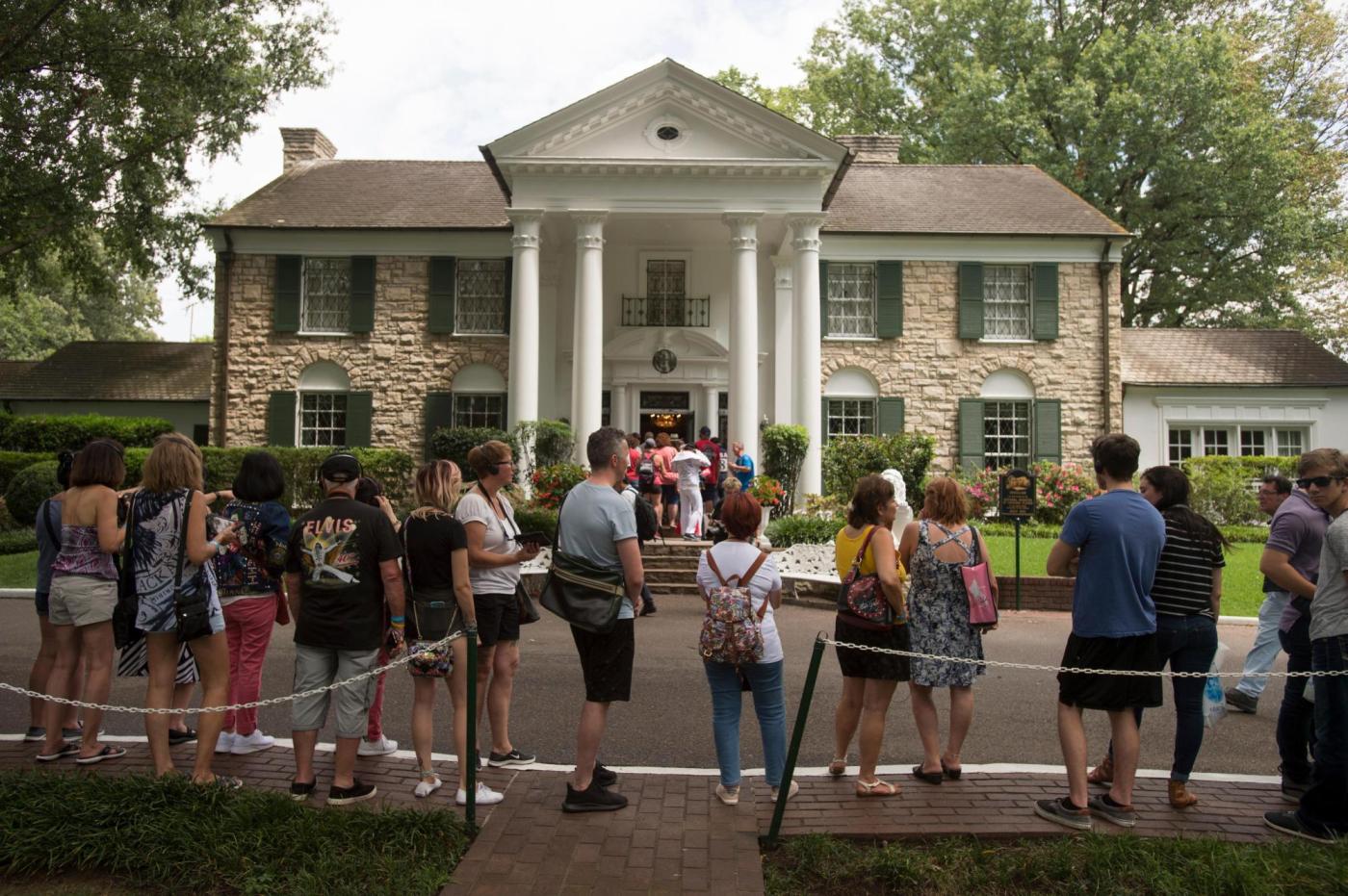
MEMPHIS, Tenn. (AP) — Actor Riley Keough, the granddaughter of Elvis Presley, is fighting plans to publicly auction his Graceland estate in Memphis after a company tried to sell the property based on claims that a loan using the king of rock ’n’ roll’s former home as collateral was not repaid.

A public auction for the estate had been scheduled for Thursday this week, but a Memphis judge blocked the sale after Keough sought a temporary restraining order and filed a lawsuit, court documents show.

A public notice for a foreclosure sale of the 13-acre estate posted earlier in May said Promenade Trust, which controls the Graceland museum, owes $3.8 million after failing to repay a 2018 loan. Keough inherited the trust and ownership of the home after the death of her mother, Lisa Marie Presley, last year. Lisa Marie Presley had used Graceland as collateral for the loan, the lawsuit said.

Naussany Investments and Private Lending said Lisa Marie Presley failed to pay back the loan and sought to sell the estate on the courthouse steps, according to the foreclosure sale notice. Keough, on behalf of the Promenade Trust, sued last week, claiming that Naussany presented fraudulent documents regarding the loan and unpaid sum in September 2023.

“Lisa Maria Presley never borrowed money from Naussany Investments and never gave a deed of trust to Naussany Investments,” Keough’s lawyer wrote in a lawsuit.

Kimberly Philbrick, the notary whose name is listed on the documents, indicated that she never meet Lisa Marie Presley nor notarized any documents for her, the court filing said. The Associated Press texted Philbrick at numbers believed to be hers, but she didn’t immediately respond.

W. Bradley Russell, a lawyer for Keough, declined comment Tuesday.

Kurt Naussany, who was identified in court documents as a defendant, directed questions in an email to Gregory Naussany. Gregory Naussany told the AP in an email: “The attorneys can make comment!”

An injunction hearing is scheduled for Wednesday in Shelby County Chancery Court.

“Elvis Presley Enterprises can confirm that these claims are fraudulent. There is no foreclosure sale. Simply put, the counter lawsuit has been filed is to stop the fraud,” Elvis Presley Enterprises Inc. said in a statement Tuesday.

Graceland opened as a museum and tourist attraction in 1982 as a tribute to Elvis Presley, the singer and actor who died in August 1977 at age 42. It draws hundreds of thousands of visitors each year.

___

Associated Press reporters Sarah Brumfield in Silver Spring, Maryland, and Heather Hollingsworth in Mission, Kansas, contributed to this story.

___

This story has been corrected to reflect that Russell is a lawyer for Keough, not Naussany Investments.

Want to Build a Wall? Don’t Try It in Her Town.

posted in: Society | 0

On a Wednesday evening last February, Tricia Cortez stood before a crowd gathered for an emergency meeting at a community center in the tiny South Texas border town of El Cenizo. “How many of you have heard about the border wall in general?” Cortez asked. Almost everyone raised their hand. “How many of you have heard that the Texas governor wants to build a wall here? No los federales, este es el gobernador de Tejas.” Only a few hands were raised.

That was understandable. Cortez herself had only recently learned the state awarded contracts to build several miles of 30-foot-tall steel fencing along the Rio Grande in Webb and Zapata counties, cutting through towns downriver of Laredo like El Cenizo and Rio Bravo. Shocked, Cortez did what she does best: get organized. 

Cortez, 49, grew up in downtown San Antonio, raised by a single mother who was a Chicana activist. A high achiever, Cortez went on to study public policy at Princeton University and later took a job in journalism. In the early aughts, she moved to Laredo to report for the Laredo Morning Times and fell in love with the city, its binational culture, quirky politics, and complex policy issues. 

Since 2010, Cortez has helmed the Rio Grande International Study Center (RGISC), a scrappy environmental nonprofit founded 30 years ago by two biology professors to clean up the Rio Grande—Laredo’s lifeblood.

Under Cortez’s leadership as executive director, RGISC (pronounced “risk”—the group’s informal motto: “The ‘G’ may be silent, but we aren’t”) has expanded its focus to include clean air, land conservation, and climate change adaptation.

Cortez has put down deep roots in Laredo, where she’s raising two young children with her husband. She’s built a network of friends, allies, and sources—from city hall to Congress, within Border Patrol and local businesses—whom she won’t hesitate to ply, prod, or pressure to advance RGISC’s mission. “I know I can be a pain in the ass,” Cortez told the Texas Observer. “You have to be tenacious to do this work; you have to have a little bit of crazy.” 

Tom Vaughan is one of the former biology professors who co-founded RGISC in 1994 and first hired Cortez. “I don’t know very many people that work harder and longer than Tricia,” he said. “I don’t know if she sleeps at night—I don’t think so.”

As the Western hemisphere’s largest land port, Laredo is an international trade boomtown. A Democratic stronghold, the 95-percent Hispanic city of 250,000 has long been controlled by a conservative political machine with levers pulled by big business, wealthy ranchers, U.S. Border Patrol, and the oil and gas industry. That machine hasn’t naturally worked on behalf of the city’s working-class Latino population—and certainly not on behalf of the environment. 

(Courtesy/Tricia Cortez)

But, with Cortez at the helm, RGISC has become a mighty organizing vehicle and trusted voice because “we’re not beholden to any interests,” she said.

Cortez and RGISC have been at the forefront of the city’s biggest policy battles for years, including a campaign a decade ago to enact a municipal plastic bag ban (since struck down in state court) against opposition from powerful retail lobbyists. More recently, RGISC mobilized against a commercial sterilizer plant that was spewing toxic chemicals into the air.

But Cortez’s most high-profile work has come since ex-President Donald Trump’s border wall came knocking in Webb County five years ago. With RGISC as the catalyst in the Laredo area, the No Border Wall Coalition assembled a motley crew of environmentalists, birders, immigration activists, and artists—along with wealthy riverfront ranch owners, often big GOP donors—who found common cause in battling the wall. 

“[Cortez] is a force of nature,” said Melissa Cigarroa, who served as the board president of RGISC before getting elected in 2022 to the Laredo City Council. “She’s very politically savvy in the sense of drawing [together] different people in different sectors of our community by looking for shared interests. That’s why the No Border Wall movement was so successful.” 

Though she likely wouldn’t take credit (Cigarroa called her “ego-less”), it was Cortez’s idea to enlist well-heeled landowners in the coalition, helping bring funding and national media attention. 

Trump at one point planned about 70 miles of wall for Webb and neighboring Zapata County. But unlike farther south in the Rio Grande Valley, he never managed to build a foot in Cortez’s backyard. By October 2021, President Joe Biden’s administration canceled the last wall contracts in the area. (As of May, a legal battle was still playing out over the unspent funding.)

Groups like RGISC are often dismissed by politicians as gadflys. But Cortez favors a honey-over-vinegar approach that gets her group in the door, and at the table, without selling out the mission. “We may not always align,” she said, “but they know we’re always gonna be straight about how we’re assessing things.”

Take her relationship with the powerful Laredo Congressman Henry Cuellar, a contact since her reporting days. The conservative Democrat and border security hawk has long rankled environmental and immigration advocacy groups, along with liberals in his own party. He also has a mixed record on wall funding in South Texas. But with some diplomatic pressure, he became a firm ally of RGISC against the Trump wall in the Laredo area. 

Cortez attributes Cuellar’s position to repeated primary challenges from his left but also to the strength of the No Wall coalition. “I think he had to evolve on this issue,” Cortez said. “He ended up playing an important role.” 

In a statement to the Observer, Cuellar said: “I’ve had the pleasure of working with Tricia Cortez and RGISC for years in advocating against a border wall. … Tricia is a good friend and a great leader.” 

RGISC’s win over border fencing, however, would prove short-lived. Starting in 2021, Governor Greg Abbott made finishing Trump’s wall part of his sprawling border militarization scheme, Operation Lone Star. Unlike the feds, who often use eminent domain to seize land for the wall, the state of Texas pledged only to buy property from willing owners. 

“It’s clear they pick on the little guy. They go after places where they think people aren’t smart enough, or [aren’t] gonna talk back.”

In the weeks before that town hall back in El Cenizo, Cortez had heard state agents were offering significant sums to landowners. The coalition urged residents, “¡No firmen nada!” and offered free legal consultations. Cortez and Cigarroa also secured a meeting with Abbott’s newly appointed border czar to express concerns.

In the year since, the state has not acquired much land for its wall in El Cenizo and Rio Bravo—a testament to the rapid response that Cortez’s coalition organized. But the wall has continued elsewhere, mainly on big remote ranches and farmland, including a riverfront stretch in Zapata County popular among birders. 

At some point, Cortez knows, the state will turn back to residential areas near Laredo—likely with ever-more enticing offers. But Cortez and her coalition won’t be caught sleeping, she said, and they won’t be used as political pawns. 

“It’s clear they pick on the little guy. They go after places where they think people aren’t smart enough, or [aren’t] gonna talk back, or … where people should know their place,” Cortez said. “Well, that ain’t Laredo.”