

Election deniers moving closer to GOP mainstream, report shows, as Trump allies fill Congress

posted in: Society | 0

By NICHOLAS RICCARDI and LISA MASCARO (Associated Press)

WASHINGTON (AP) — In the hours after the attack on the U.S. Capitol on Jan. 6, 2021, Ohio’s then-Republican senator, Rob Portman, voted to accept President Joe Biden’s win over the defeated former president, Donald Trump, despite Trump’s false allegations that Biden only won because of fraud.

But as Trump charges toward his rematch with Biden in 2024, Portman has been replaced by Sen. JD Vance, a potential vice presidential pick who has echoed Trump’s false claims of fraud and said he’ll accept the results this fall only “if it’s a free and fair election.”

South Carolina Sen. Tim Scott and Florida Sen. Marco Rubio, other possible VP picks, also declined to object to Biden’s victory over Trump, but have been less committal this year. Rubio said recently if “things are wrong” with November’s election, Republicans won’t stand by and accept the outcome.

And the new speaker of the House, Mike Johnson, helped organize Trump’s failed legal challenge to Biden’s win. He demurred when asked if he believed the 2020 election was legitimate during an event with other Trump allies about the upcoming election.

As Trump makes a comeback bid to return to power, Republicans in Congress have become even more likely to cast doubts on Biden’s victory or deny it was legitimate, a political turnaround that allows his false claims of fraud to linger and lays the groundwork to potentially challenge the results in 2024.

A new report released Tuesday by States United Action, a group that tracks election deniers, said nearly one-third of the lawmakers in Congress supported in some way Trump’s bid to overturn the 2020 results or otherwise cast doubt on the reliability of elections. Several more are hoping to join them, running for election this year to the House and Senate.

“The public should have a real healthy dose of concern about the real risk of having people in power who’ve shown they’re not willing to respect the will of the people,” said Lizzie Ulmer of States United Action.

The issue is particularly stark for Congress given its constitutional role as the final arbiter of the validity of a presidential election. It counts the results from the Electoral College, as it set out to do on Jan. 6, 2021, a date now etched in history because of the violent assault on the U.S. Capitol by a pro-Trump mob.

In its report, States United found that in Congress, 170 representatives and senators out of 535 lawmakers overall can be categorized as election deniers. Heading into the fall elections, two new Senate candidates and 17 new House candidates already are on the ballot this fall seeking to join them.

It’s not just Congress that has been seeded with people who supported trying to overturn Trump’s 2020 loss, but the highest ranks of the Republican Party.

“This is deeply alarming,” said Wendy Weiser, the vice president for democracy programs at the Brennan Center for Justice at New York University. “A democracy can only function if the participants commit to accepting the results of popular elections. That is it. That’s the entire political system.”

The former president picked Michael Whatley, who has echoed Trump’s election lies, to become co-chairman of the Republican National Committee, with his daughter-in-law, Lara Trump. Christina Bobb, who was recently indicted for her alleged involvement in a scheme to recruit fake electors in Arizona, has been named the RNC’s head of “election integrity.”

Under Trump’s direction, the RNC is making the elections process its top priority, bringing in the new personnel and adding resources, said Danielle Alvarez, an adviser to both the Trump campaign and the party committee.

“Biden is in the White House, that’s true,” Alvarez said, “but there were issues in the election.”

To be clear, there was no widespread fraud in the 2020 election that cost Trump reelection. Recounts, audits and reviews in the battleground states where he contested his loss all affirmed Biden’s victory, and courts rejected dozens of lawsuits filed by Trump and his allies.

States United’s report details how successful election deniers have been in bolstering their congressional ranks. It examines the results of congressional party primaries in the 13 states that have held them this year and found that in each state, at least one election denier has made it to the general election for a House or Senate seat.

Related Articles

National Politics |


Trump Media and Technology Group posts more than $300 million net loss in first public quarter

National Politics |


Michael Cohen testifies he stole from Trump Org at hush money trial

National Politics |


Nikki Haley faces a murky path forward and a key decision on whether or not to endorse Trump

National Politics |


Jesus is their savior, Trump is their candidate. Ex-president’s backers say he shares faith, values

National Politics |


Noncitizen voting, already illegal in federal elections, becomes a centerpiece of 2024 GOP messaging

The report defines election deniers as people who falsely claimed Trump won in 2020, spread misinformation about that election or took steps to overturn it, or refused to concede a separate race. It finds that at least 67 will be on the ballot in the House in November, including 50 incumbents. Three will be running for the Senate — one of whom, Republican Sen. Ted Cruz of Texas, is an incumbent.

There have been high-profile losses among election deniers, as well. Last week in West Virginia, Republican Rep. Carol Miller, who also voted against accepting Biden’s victory, successfully fended off a primary challenge from Derrick Evans, who was convicted of a felony civil disorder charge after storming the Capitol on Jan. 6. Numerous election deniers in 2022 lost bids for swing state offices such as governor or secretary of state that would have given them direct power over voting in 2024.

Still, the movement has grown by dominating Republican primaries. In the race for the nomination to challenge Democratic Sen. Sherrod Brown in Ohio, businessman Bernie Moreno, who has previously said Trump was “right” to call 2020 “stolen,” won his primary. In Indiana, Republican Sen. Mike Braun voted to certify Biden’s win, but he will step down this year to run for governor and is poised to be replaced by Rep. Jim Banks, a prominent election denier who easily won the GOP primary in that state.

The report classifies neither Rubio or Scott as election deniers, but skepticism about the trustworthiness of voting has become an organizing GOP principle, particularly for the Republican-controlled House of Representatives.

Before becoming the House speaker, Johnson recruited colleagues to support a lawsuit, which ultimately failed, filed by Trump’s allies to overturn his 2020 loss.

More recently Johnson met with Trump at the former president’s Mar-a-Lago resort to shore up his own political support amid a far-right rebellion seeking to oust him as speaker. He emerged promising House legislation that would be designed to stop immigrants in the country illegally from voting.

During a press conference on the Capitol steps to announce the bill, the speaker acknowledged it’s hard to prove that certain immigrants are wrongfully casting ballots. Election experts say it is extremely rare for immigrants who are ineligible to vote to break federal law to do so.

While Congress passed legislation putting in safeguards to better protect against interference after the Capitol attack, it’s lawmakers who will ultimately be asked to accept the 2024 results from their states.

Vance stood by his recent remarks. And Rubio said he expects there will be lawsuits in jurisdictions where the final tallies are close, as sometimes happens.

“When people ask me, ‘Are you going to accept the outcome?’ I think what some people are arguing is if there’s things wrong with this election, we’re going to point it out,” Rubio said in a short interview.

Riccardi reported from Denver.

This story has been corrected to fix the spelling of the last name of the States United spokeswoman, Lizzie Ulmer.
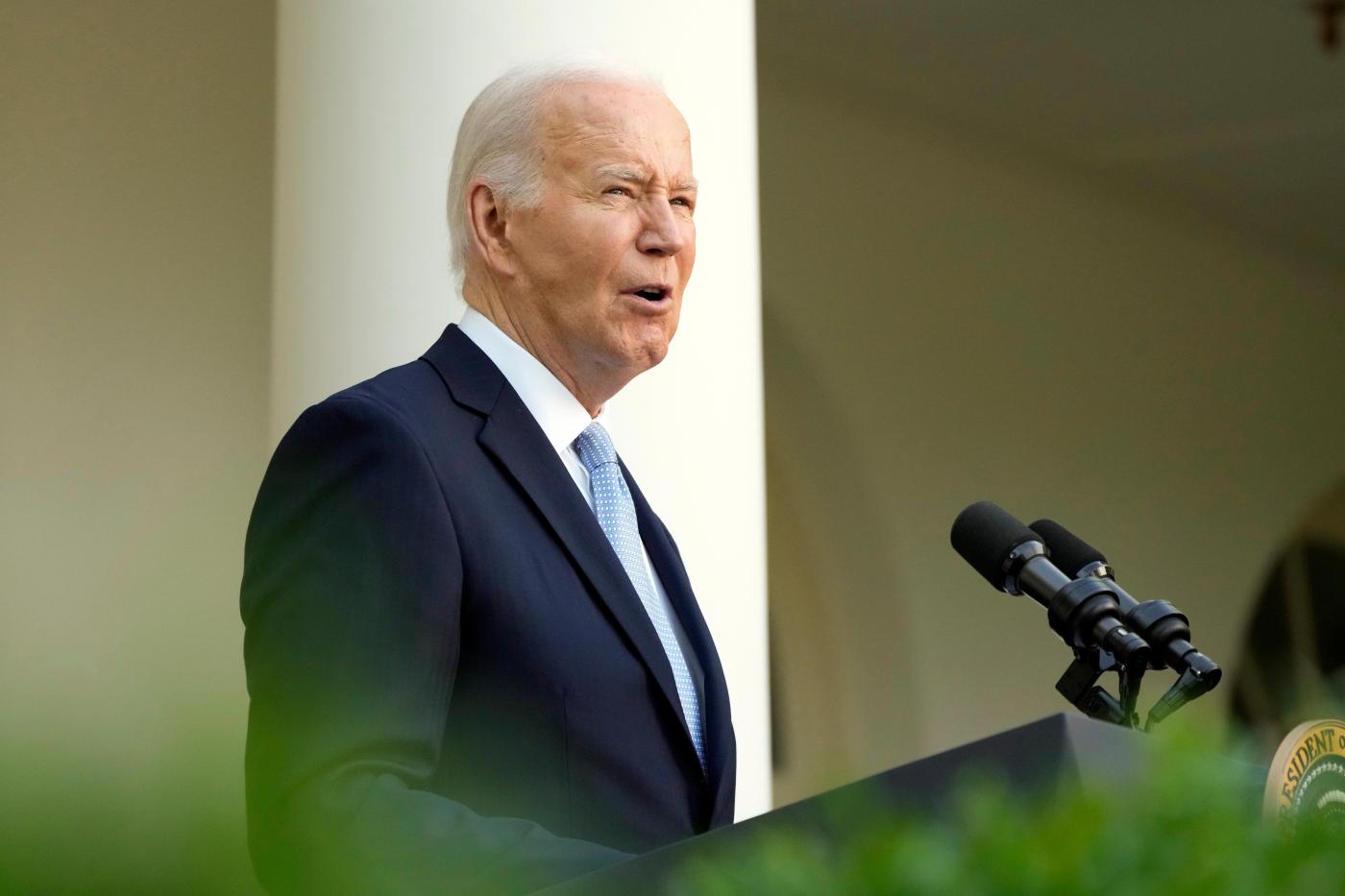
Biden releasing 1 million barrels of gasoline from Northeast reserve in bid to lower prices at pump

posted in: Politics | 0

By MATTHEW DALY (Associated Press)

WASHINGTON (AP) — The Biden administration said Tuesday that it is releasing 1 million barrels of gasoline from a Northeast reserve established after Superstorm Sandy in a bid to lower prices at the pump this summer.

The sale, from storage sites in New Jersey and Maine, will be allocated in increments of 100,000 barrels at a time. The approach will create a competitive bidding process that ensures gasoline can flow into local retailers ahead of the July 4 holiday and sold at competitive prices, the Energy Department said. The move is intended to help “lower costs for American families and consumers,″ the department said in a statement.

Gas prices average about $3.60 per gallon nationwide as of Tuesday, up 6 cents from a year ago, according to AAA. Tapping gasoline reserves is one of the few actions a president can take by himself to try to control inflation, an election year liability for the party in control of the White House.

“The Biden-Harris administration is laser-focused on lowering prices at the pump for American families, especially as drivers hit the road for summer driving season,″ Energy Secretary Jennifer Granholm said in the statement. “By strategically releasing this reserve in between Memorial Day and July 4th, we are ensuring sufficient supply flows to the tri-state (area) and Northeast at a time hardworking Americans need it the most.”

White House Press Secretary Karine Jean-Pierre said release of gas from the Northeast reserve builds on actions by President Joe Biden, a Democrat, “to lower gas and energy costs — including historic releases from the Strategic Petroleum Reserve and the largest-ever investment in clean energy.″

Biden significantly drained the Strategic Petroleum Reserve in 2022 following Russia’s invasion of Ukraine, dropping the stockpile to its lowest level since the 1980s. The election year move helped stabilize gasoline prices that had been rising in the wake of the war in Europe but drew complaints from Republicans that the Democratic president was playing politics with a reserve meant for national emergencies.

The Biden administration has since begun refilling the oil reserve, which had more than 364 million barrels of crude oil as of last month. The total is lower than levels before the Russia-Ukraine war but still the world’s largest emergency crude oil supply.

The Northeast sale will require that fuel is transferred or delivered no later than June 30, the Energy Department said.

“While congressional Republicans fight to preserve tax breaks for Big Oil at the expense of hardworking families, President Biden is advancing a more secure, affordable, and clean energy future to lower utility bills while record American energy production helps meet our immediate needs,” Jean-Pierre said.

Alcaldía empieza a evaluar “circunstancias atenuantes” de migrantes que piden más tiempo en refugios

posted in: News | 0

Los inmigrantes adultos sin hijos que deseen prolongar su estancia en un refugio deberán demostrar que reúnen una de varias “circunstancias atenuantes” para poder optar por una cama más allá de los 30 o 60 días iniciales.

Emma Whitford

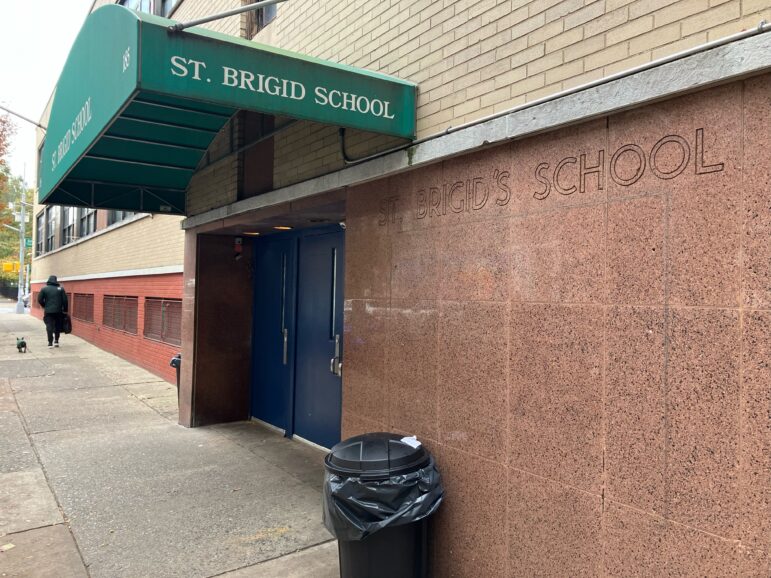
El antiguo edificio de la escuela St. Brigid, cerca de Tompkins Square Park, funciona desde el año pasado como Centro de remisión de pasajes para inmigrantes y solicitantes de asilo (Reticketing Center) gestionado por la Oficina de Manejo de Emergencias de la ciudad (NYCEM por sus siglas en inglés).

 Este artículo se publicó originalmente en inglés el 17 de mayo. Traducido por Daniel Parra. Read the English version here.

La alcaldía ha empezado a emitir decisiones provisionales para los inmigrantes adultos sin hijos que deseen prolongar su estancia en el albergue más allá de los 30 o 60 días iniciales, y que deben demostrar que cumplen una de varias “circunstancias atenuantes” para poder optar a otra cama.

Las nuevas reglas forman parte de un acuerdo de conciliación alcanzado en marzo, tras meses de negociaciones entre la administración de Eric Adams y los defensores de las personas sin hogar en torno a la política neoyorquina de décadas de antigüedad sobre el derecho a refugio, que el alcalde trató de modificar alegando la llegada de casi 200.000 nuevos inmigrantes en los dos últimos años, de los cuales unos 65.000 se encuentran actualmente en el sistema de refugios de la ciudad.

Según el acuerdo de conciliación, los inmigrantes adultos cuyos plazos de estadía expiren no podrán prorrogar sus estancias a menos que cumplan ciertos criterios, como tener discapacidad, estarse recuperando o preparando para un procedimiento médico, o haber “hecho esfuerzos significativos para salir del sistema de alojamiento y/o salir de la ciudad de Nueva York pero necesitan tiempo adicional para salir”. Las familias inmigrantes con hijos no están sujetas a estas reglas.

Desde el miércoles 15 de mayo, el primer grupo de inmigrantes que han recibido la nuevas cartas y cuyas estancias terminan pronto han podido llevar sus documentos al Centro de remisión de pasajes para inmigrantes y solicitantes de asilo (Reticketing Center) en el East Village para que los revisen, antes de darles una evaluación final.

Funcionarios de la ciudad dijeron que 29 personas han presentado sus casos hasta ahora, 15 de los cuales se les dijo que no cumplían los criterios para una extensión, mientras que otros 14 fueron aprobados para más tiempo. Según Kayla Mamelak, portavoz de la alcaldía, los rechazados seguían en sus refugios el viernes porque aún no había vencido el plazo de salida. Y todavía pueden volver a presentar una solicitud con información adicional antes de ser expulsados, añadió.

Durante una rueda de prensa en mayo 17, la jefa de gabinete del alcalde Eric Adams, Camille Joseph Varlack, explicó que hay dos caminos para obtener prórrogas. Pueden obtener una prórroga automática si cumplen una de las siguientes condiciones: firmar un contrato de alquiler que comienza en el plazo de un mes; tener un cita de inmigración, procedimiento médico grave o planes para abandonar la ciudad programados en el plazo de un mes; estar recuperándose de un procedimiento médico que afecta a su capacidad para abandonar el refugio; o tener entre 18 y 20 años y estar matriculados en bachillerato.

La segunda vía consiste en demostrar que se han hecho “esfuerzos significativos” para abandonar el sistema de refugios, que se considera caso por caso: contará a favor del solicitante, por ejemplo, si ha solicitado el Estatus de Protección Temporal, asiste a la universidad o a clases de inglés, puede documentar su búsqueda de empleo o vivienda, entre otros posibles documentos expuestos en una carta de notificación de la ciudad.

Josh Goldfein, abogado de la Legal Aid Society que negoció el acuerdo sobre el derecho al refugio junto con la Coalition for the Homeless, dijo que la ciudad utilizó un sistema de 20 puntos para evaluar los casos de los menos de 30 inmigrantes que han solicitado evaluaciones hasta ahora, en el que las personas ganar puntos por cada esfuerzo que demuestren para abandonar el refugio. Pero el sistema aún se está afinando y negociando, añadió, y podría cambiar.

“Nuestros equipos designados revisarán la información proporcionada por los huéspedes, indicando por qué necesitan permanecer en el refugio durante más tiempo y para ayudarles con la planificación de la salida”, escribió Mamelak a City Limits por correo electrónico.

“Aunque estos nuevos cambios requerirán cierta adaptación, confiamos en que ayudarán a los inmigrantes a pasar a la siguiente etapa de sus viajes, reducirán la importante carga que soporta nuestro sistema de albergues y nos permitirán seguir prestando servicios esenciales a todos los neoyorquinos”, añadió.

Según los términos del acuerdo de conciliación, la ciudad también debería haber despejado una lista de espera para los inmigrantes recién llegados que buscan una cama en un refugio, asegurándoles una nueva ubicación el mismo día en que la solicitan. Pero, según Goldfein, desde el 8 de abril, fecha en que debía entrar en vigor este cambio, la alcaldía se ha esforzado por reducir el tiempo de espera a menos de 24 horas.

“Hay días en que se cumplen todos los requisitos, y otros en los que ha habido personas que no han conseguido cama”, explicó.

Aun así, es una mejora con respecto a la situación anterior al acuerdo, cuando los inmigrantes esperaban días o semanas para ser reubicados, pasando las noches en una de las cinco abarrotadas “salas de espera” que funcionaban entonces.”Antes no daban plaza a nadie el mismo día”, dijo Goldfein.

Según los nuevos términos, algunos centros de acogida para inmigrantes, destinados a atender a quienes rechazan otras ofertas de alojamiento, llegan tarde por la noche o simplemente necesitan un espacio temporal para permanecer bajo techo, pueden seguir funcionando. Pero estas instalaciones, que no disponen de camas, no pueden utilizarse como centros de acogida a largo plazo.

City Limits hizo un seguimiento del tiempo que tardaron varios inmigrantes en encontrar una nueva cama tras una visita al Centro de remisión de pasajes para inmigrantes y solicitantes de asilo el 7 de mayo. Varios de ellos fueron reubicados en menos de 24 horas.

A Mary, de 42 años, le llevó un poco de tiempo: llegó a reaplicar a las 9 a.m el 7 de mayo, luego de que expirara su estancia de 30 días en el refugio en las carpas de Randall’s Island, y fue reubicada en el mismo lugar sobre las 3 p.m del 8 de mayo.

Sin embargo, a una pareja de Venezuela le llevó tres días. Mirla y Lirio, quienes pidieron ser identificados sólo por sus nombres de pila, dijeron que pasaron las noches del 7, 8 y 9 de mayo en un centro de acogida con sede en Church of God de East Flatbush, Brooklyn. Como en otros centros de acogida sobre los que City Limits ha informado, se pide a los inmigrantes que no duerman en el suelo.

“Juntamos sillas para hacer algo como una cama”, explica Mirla, de 52 años.

Durante el día, volvían al Centro de remisión de pasajes a esperar. La tarde del 7 de mayo, Lirio salió a la entrada a tomar el aire, con una camiseta que decía en inglés “Never stop the hustle” (Nunca dejes de luchar). Su esposa seguía haciendo fila adentro.

“Está haciendo amigos adentro”, dijo el hombre de 55 años. “A ver adónde nos mandan hoy”, añadió, antes de volver a entrar a esperar. Finalmente, la pareja fue ubicada en Randall’s Island sobre las 9 a.m del viernes 10 de mayo.

La ciudad se refirió a estos casos, en los que los tiempos de espera superan el día, como “muy raros”, y explicó que esto podría haber ocurrido “porque la gente abandona el edificio antes de que una cama esté disponible”, escribió por correo electrónico Aries Dela Cruz, portavoz de New York City Emergency Management (NYCEM por sus siglas en inglés). La pareja, sin embargo, refutó esta afirmación asegurando que no abandonaron el edificio mientras reaplicaban.

Ninguna de las personas con las que City Limits habló a principios de este mes que volvían a solicitar refugio en el Centro de remisión de pasajes había recibido información sobre los nuevos términos del acuerdo de conciliación y las limitadas circunstancias en las que podrían extender sus estancias en el refugio.

Joseph Varlack dijo el viernes que unos 6.500 migrantes han recibido estas nuevas cartas.

“Si al ser dados de alta los inmigrantes consideran que tienen una circunstancia atenuante que requiere una prórroga de su estancia en el refugio, se les animará a hablar con su planificador de salidas y con los responsables de su centro HERRC o Respite Center”, dijo un portavoz de NYCEM.Una de las grandes incógnitas que quedan por resolver es cómo se reevaluará a quienes cumplan los criterios para una prórroga en caso de que soliciten otra una vez transcurrido ese tiempo.

“Todavía no tienen una respuesta para eso”, dijo Goldfein.

“La alcaldía dice que no quiere ver gente en la calle. Su objetivo es animar a la gente y trabajar con ellos para que hagan lo que crean que tienen que hacer para tratar de salir”, dijo. “Pero vamos a hacer un seguimiento muy de cerca para asegurarnos de que la gente recibe la consideración adecuada a todos los esfuerzos que están haciendo”.

Para ponerse en contacto con el reportero de esta noticia, escriba a Daniel@citylimits.org. Para ponerse en contacto con la editora, escriba a Jeanmarie@citylimits.org.

Council Pushes for More Housing Funds As City Budget Negotiations Enter Final Weeks

posted in: Society | 0

The City Council is pushing for an additional $3.66 billion for affordable housing over the next five years, building on the $10.5 billion the mayor earmarked in his executive budget in April.

Ayman Siam/Office of NYC Comptroller

The Council’s Progressive Caucus, along with the city comptroller and public advocate, announced the “Homes Now, Homes for Generations” campaign in March to push for more housing funding.

The City Council isn’t giving up on its demand for additional housing funds in the city’s next budget—a boost its members say would preserve or build an extra 60,000 affordable homes in the city over the next half decade.

In their response to Mayor Eric Adams’ preliminary budget released in January, councilmembers had sought an additional $3.66 billion in capital funds over the next five years for the Department of Housing, Preservation and Development (HPD), which lawmakers say would fulfill Adams’ campaign promise of providing $2.5 billion annually for housing development.

But the mayor’s executive budget, unveiled in April, failed to include that $732 million-per-year bump. Adams and the Council have until July 1 to pass a final spending plan.

“With the mayor’s moonshot pledge for 500,000 new homes built over the next decade, we were disappointed to see the administration did not add any new money for affordable housing capital,” said Councilmember Justin Brannan to a panel of HPD officials, including Commissioner Adolfo Carrión Jr., at an executive budget hearing last week. 

HPD’s five-year capital plan, for fiscal years 2024 to 2028, totals $10.5 billion in the mayor’s executive budget proposal, a more than 3 percent increase from the preliminary budget plan he released in January. But that bump, the Council noted in its HPD budget report, wasn’t from new mayoral investments but from applied federal grant funds.

“[We] can’t recognize the city’s in a housing crisis and not invest our resources accordingly to resolve [it], neither can we expect our economy to grow,” said Brannan. “New Yorkers that make that economy don’t have the stability and affordable home to come back to when the day is done.”

Carrión told lawmakers that HPD is “committed to continuing the rate of production,” noting that the agency’s work to finance affordable construction and preservation represents “only a thin slice of a very large housing market.”

He pointed to the recent state budget deal, which included tax breaks for buildings with income-restricted apartments as well as the mayor’s City of Yes for Housing Opportunity proposal, which aims to ease zoning restrictions to make it easier to build residential, and is currently under public review.

“I think we’re going to unleash a tremendous amount of housing in New York City’s future, and it’s around the corner,” Carrión said.

Mayor Adams’ executive proposal for fiscal year 2025 alone, which starts July 1, includes $2.15 billion for HPD’s capital budget, a 23 percent decrease from the current fiscal year 2024.

NYC Council

HPD’s proposed capital budget.

Adding fuel to the Council’s fire, a recent report by the New York Housing Conference (NYHC), citing that decline, projects a 32 percent decrease in the number of affordable housing units financed with capital subsidy next year.

That could translate to less than half the amount of new construction and special needs housing—like supportive and senior apartments—compared to previous years, the report says. The city completed more than 21,000 affordable units during the last two fiscal years, up from 15,232 in fiscal year 2021, according to the Mayor’s Management Report.

The report further notes that despite the modest increase in proposed funding for preservation finance programs, it fails to match escalating construction expenses that have risen by 26 percent since 2020. The report calls for the city to allocate an additional $1 billion for HPD for the upcoming fiscal year, on top of the mayor’s proposed $2.1 billion.

“Simply put, $2.1 billion is not enough to maintain historic housing production levels,” Brendan Cheney, director of policy and operations at NYHC, told City Limits. 

New York Housing Conference

A chart from a New York Housing Conference recent analysis which projected a drop in housing production based on the current budget proposal.

The additional housing funds the Council seeks would include $2.5 billion over the next five years for HPD’s neglected Neighborhood Pillars and Open Door programs.

Members of the Council’s Progressive Caucus are rallying for that investment, having formed the “Homes Now, Homes for Generations” Coalition in March to press for the two affordable housing initiatives.

Created under the de Blasio Administration, Neighborhood Pillars helped nonprofits and community organizations buy and renovate unregulated or rent-stabilized housing for low- to moderate-income households by providing low-interest loans and tax exemptions. However, this program’s budget was slashed to zero in 2020, so only 400 apartments were ever preserved under it.

The Open Door program helps fund the construction of coops and condos for moderate- and middle-income households, though lack of funding has led to fewer than 500 homes being built under the initiative in the last decade, according to the Coalition.

“We really just have a tale of a New York City that is moving toward not being a place of opportunity, not being a place for low-income New Yorkers,” Councilmember Pierina Sanchez, who chairs the Committee on Housing and Buildings, said during an interview with City Limits after the coalition formed in March.

Their effort came in the wake of the New York City Housing and Vacancy Survey (HVS) released in February, which revealed an alarming 1.4 percent vacancy rate in 2023—the lowest on record in over half a century. Worse still, what little housing was available was generally unaffordable to the average New Yorker.

For instance, according to HPD, the median asking rent for available units in 2023 was $3,000, meaning that a family would need to have an income of at least $120,000 to afford it, while the median income of New York City renters is only $70,000.

With the extra funds they’re asking for, the Caucus says, the city could create an additional 3,100 new homes for families under the Open Door program and rehabilitate and preserve 9,000 rent-stabilized units through the Neighborhood Pillars program.

“We believe and want to see the promise of this program of Neighborhood Pillars realized,” said Sanchez. “We had some success, but we never funded it fully.” 

At last week’s hearing, Carrión said that Neighborhood Pillars remains a “priority” for the department but that they needed to do some “re-engineering” of the program. He later confirmed they hoped to relaunch Neighborhood Pillars before year’s end.

“We definitely know there is demand from nonprofit…housing developers and those who end up stewarding and holding property that needs to be below market,” said Brooklyn Councilmember Sandy Nurse, one of the Caucus’ members pushing to see the program revived. “They are asking for this.”

For Councilmember Sanchez, it all comes back to the mayor’s pledge when he ran for office. 

“We are a far cry from that,” she said at a rally following the Council hearing. “If we are able to approach that number that the mayor has promised as a candidate, we would be able to have the resources to produce affordable housing and subsidized affordable housing at the levels that the city needs.” 

To reach the reporter behind this story, contact Chris@citylimits.org. To reach the editor, contact Jeanmarie@citylimits.org

Want to republish this story? Find City Limits’ reprint policy here.