Nursing homes wield pandemic immunity laws to duck wrongful death suits

posted in: News | 0

Fred Schulte | (TNS) KFF Health News

In early 2020, with reports of COVID-19 outbreaks making dire headlines, Trever Schapers worried about her father’s safety in a nursing home in Queens.

She had delighted in watching her dad, John Schapers, blow out the candles on his 90th birthday cake that February at the West Lawrence Care Center in the New York City borough. Then the home went into lockdown.

Soon her father was dead. The former union painter spiked a fever and was transferred to a hospital, where he tested positive for COVID, his daughter said, and after two weeks on a ventilator, he died in May 2020.

But when Trever Schapers sued the nursing home for negligence and wrongful death in 2022, a judge dismissed the case, citing a New York state law hastily passed early in the pandemic. It granted immunity to medical providers for “harm or damages” from an “act or omission” in treating or arranging care for COVID. She is appealing the decision.

“I feel that families are being ignored by judges and courts not recognizing that something needs to be done and changed,” said Schapers, 48, who works in the medical field. “There needs to be accountability.”

The nursing home did not return calls seeking comment. In a court filing, the home argued that Schapers offered no evidence that the home was “grossly negligent” in treating her father.

More than four years after COVID first raged through many U.S. nursing homes, hundreds of lawsuits blaming patient deaths on negligent care have been tossed out or languished in the courts amid contentious legal battles.

Even some nursing homes that were shut down by health officials for violating safety standards have claimed immunity against such suits, court records show. And some families that allege homes kept them in the dark about the health of their loved ones, even denying there were cases of COVID in the building, have had their cases dismissed.

Schapers alleged in a complaint to state health officials that the nursing home failed to advise her that it had admitted COVID-positive patients from a nearby hospital in March 2020. In early April, she received a call telling her the facility had some COVID-positive residents.

“The call I received was very alarming, and they refused to answer any of my questions,” she said.

About two weeks later, a social worker called to say that her father had a fever, but the staff did not test him to confirm COVID, according to Schapers’ complaint.

The industry says federal health officials and lawmakers in most states granted medical providers broad protection from lawsuits for good faith actions during the health emergency. Rachel Reeves, a senior vice president with the American Health Care Association, an industry trade group, called COVID “an unprecedented public health crisis brought on by a vicious virus that uniquely targeted our population.”

In scores of lawsuits, however, family members allege that nursing homes failed to secure enough protective gear or tests for staffers or residents, haphazardly mixed COVID-positive patients with other residents, failed to follow strict infection control protocols, and brazenly misled frightened families about the severity of COVID outbreaks among patients and staff.

“They trusted these facilities to take care of loved ones, and that trust was betrayed,” said Florida attorney Lindsey Gale, who has represented several families suing over COVID-related deaths.

“The grieving process people had to go through was horrible,” Gale said.

A Deadly Toll

KFF Health News found that more than 1,100 COVID-related lawsuits, most alleging wrongful death or other negligent care, were filed against nursing homes from March 2020 through March of this year.

While there’s no full accounting of the outcomes, court filings show that judges have dismissed some suits outright, citing state or federal immunity provisions, while other cases have been settled under confidential terms. And many cases have stalled due to lengthy and costly arguments and appeals to hash out limits, if any, of immunity protection.

In their defense, nursing homes initially cited the federal Public Readiness and Emergency Preparedness Act, which Congress passed in December 2005. The law grants liability protection from claims for deaths or injuries tied to vaccines or “medical countermeasures” taken to prevent or treat a disease during national emergencies.

The PREP Act steps in once the secretary of Health and Human Services declares a “public health emergency,” which happened with COVID on March 17, 2020. The emergency order expired on May 11, 2023.

The law carved out an exception for “willful misconduct,” but proving it occurred can be daunting for families — even when nursing homes have long histories of violating safety standards, including infection controls.

Governors of at least 38 states issued COVID executive orders, or their legislatures passed laws, granting medical providers at least some degree of immunity, according to one consumer group’s tally. Just how much legal protection was intended is at the crux of the skirmishes.

Nursing homes answered many negligence lawsuits by getting them removed from state courts into the federal judicial system and asking for dismissal under the PREP Act.

For the most part, that didn’t work because federal judges declined to hear the cases. Some judges ruled that the PREP Act was not intended to shield medical providers from negligence caused by inaction, such as failing to protect patients from the coronavirus. These rulings and appeals sent cases back to state courts, often after long delays that left families in legal limbo.

“These delays have been devastating,” said Jeffrey Guzman, a New York City attorney who represents Schapers and other families. He said the industry has fought “tooth and nail” trying to “fight these people getting their day in court.”

Empire State Epicenter

New York, where COVID hit early and hard, is ground zero for court battles over nursing home immunity.

Relatives of residents have filed more than 750 negligence or wrongful death cases in New York counties since the start of the pandemic, according to court data KFF Health News compiled using the judicial reporting service Courthouse News Service. No other area comes close. Chicago’s Cook County, a jurisdiction where private lawyers for years have aggressively sued nursing homes alleging poor infection control, recorded 121 COVID-related cases.

Plaintiffs in hundreds of New York cases argue that nursing homes knew early in 2020 that COVID would pose a deadly threat but largely failed to gird for its impact. Many suits cite inspection reports detailing chronic violations of infection control standards in the years preceding the pandemic, court records show. Responses to this strategy vary.

“Different judges take different views,” said Joseph Ciaccio, a New York lawyer who has filed hundreds of such cases. “It’s been very mixed.”

Lawyers for nursing homes counter that most lawsuits rely on vague allegations of wrongdoing and “boilerplate” claims that, even if true, don’t demonstrate the kind of gross negligence that would override an immunity claim.

New York lawmakers added another wrinkle by repealing the immunity statute in April 2021 after Attorney General Letitia James noted the law could give nursing homes a free pass to make “financially motivated decisions” to cut costs and put patients at risk.

So far, appeals courts have ruled lawmakers didn’t specify that the repeal should be made retroactive, thus stymying many negligence cases.

“So these cases are all wasting the courts’ time and preventing cases that aren’t barred by immunity statutes from being resolved sooner and clogging up the court system that was already backlogged from COVID,” said attorney Anna Borea, who represents nursing homes.

Troubled Homes Deflect Suits

Some nursing homes that paid hefty fines or were ordered by health officials to shut down at least temporarily because of their inadequate response to COVID have claimed immunity against suits, court records show.

Among them is Andover Subacute and Rehabilitation nursing home in New Jersey, which made national headlines when authorities found 17 bodies stacked in a makeshift morgue in April 2020.

Federal health officials fined the facility $220,235 after issuing a critical 36-page report on COVID violations and other deficiencies, and the state halted admissions in February 2022.

Yet the home has won court pauses in at least three negligence lawsuits as it appeals lower court rulings denying immunity under the federal PREP Act, court records show. The operators of the home could not be reached for comment. In court filings, they denied any wrongdoing.

In Oregon, health officials suspended operations at Healthcare at Foster Creek, calling the Portland nursing home “a serious danger to the public health and safety.” The May 2020 order cited the home’s “consistent inability to adhere to basic infection control standards.”

Bonnie Richardson, a Portland lawyer, sued the facility on behalf of the family of Judith Jones, 75, who had dementia and died in April 2020. Jones’ was among dozens of COVID-related deaths at that home.

“It was a very hard-fought battle,” said Richardson, who has since settled the case under confidential terms. Although the nursing home claimed immunity, her clients “wanted to know what happened and to understand why.” The owners of the nursing home provided no comment.

No COVID Here

Many families believe nursing homes misled them about COVID’s relentless spread. They often had to settle for window visits to connect with their loved ones.

Relatives of five patients who died in 2020 at the Sapphire Center for Rehabilitation and Nursing in the Flushing neighborhood in Queens filed lawsuits accusing the home’s operators of keeping them in the dark.

When they phoned to check on elderly parents, they either couldn’t get through or were told there was “no COVID-19 in the building,” according to one court affidavit.

One woman grew alarmed after visiting in February 2020 and seeing nurses wearing masks “below their noses or under their chin,” according to a court affidavit.

The woman was shocked when the home relayed that her mother had died in April 2020 from unknown causes, perhaps “from depression and not eating,” according to her affidavit.

A short time later, news media reported that dozens of Sapphire Center residents had died from the virus — her 85-year-old mother among them, she argued in a lawsuit.

The nursing home denied liability and won dismissal of all five lawsuits after citing the New York immunity law. Several families are appealing. The nursing home’s administrator declined to comment.

Broadening Immunity

Nursing home operators also have cited immunity to foil negligence lawsuits based on falls or other allegations of substandard care, such as bedsores, with little obvious connection to the pandemic, court records show.

The family of Marilyn Kearney, an 89-year-old with a “history of dementia and falls,” sued the Watrous Nursing Center in Madison, Connecticut, for negligence. Days after she was admitted in June 2020, she fell in her room, fracturing her right hip and requiring surgery, according to court filings.

She died at a local hospital on Sept. 16, 2020, from sepsis attributed to dehydration and malnutrition, according to the suit.

Her family argued that the 45-bed nursing home failed to assess her risk of falling and develop a plan to prevent that. But Watrous fired back by citing an April 2020 declaration by Connecticut Gov. Ned Lamont, a Democrat, granting health care professionals or facilities immunity from “any injury or death alleged to have been sustained because of the individual’s or health care facility’s acts or omissions undertaken in good faith while providing health care services in support of the state’s COVID-19 response.”

Watrous denied liability and, in a motion to dismiss the case, cited Lamont’s executive order and affidavits that argued the home did its best in the throes of a “public health crisis, the likes of which had never been seen before.” The operators of the nursing home, which closed in July 2021 because of COVID, did not respond to a request for comment. The case is pending.

Attorney Wendi Kowarik, who represents Kearney’s family, said courts are wrestling with how much protection to afford nursing homes.

“We’re just beginning to get some guidelines,” she said.

One pending Connecticut case alleges that an 88-year-old man died in October 2020 after experiencing multiple falls, sustaining bedsores, and dropping more than 30 pounds in the two months he lived at a nursing home, court records state. The nursing home denied liability and contends it is entitled to immunity.

So do the owners of a Connecticut facility that cared for a 75-year-old woman with obesity who required a lift to get out of bed. She fell on April 26, 2020, smashing several teeth and fracturing bones. She later died from her injuries, according to the suit, which is pending.

“I think it is really repugnant that providers are arguing that they should not be held accountable for falls, pressure sores, and other outcomes of gross neglect,” said Richard Mollot, executive director of the Long Term Care Community Coalition, which advocates for patients.

“The government did not declare open season on nursing home residents when it implemented COVID policies,” he said.

Protecting the Vulnerable

Since early 2020, U.S. nursing homes have reported more than 172,000 residents’ deaths, according to Centers for Medicare & Medicaid Services data. That’s about 1 in 7 of all recorded U.S. COVID deaths.

As it battles COVID lawsuits, the nursing home industry says it is “struggling to recover due to ongoing labor shortages, inflation, and chronic government underfunding,” according to Reeves, the trade association executive.

She said the American Health Care Association has advocated for “reasonable, limited liability protections that defend staff and providers for their good faith efforts” during the pandemic.

“Caregivers were doing everything they could,” Reeves said, “often with limited resources and ever-changing information, in an effort to protect and care for residents.”

But patients’ advocates remain wary of policies that might bar the courthouse door against grieving families.

“I don’t think we want to continue to enact laws that reward nursing homes for bad care,” said Sam Brooks, of the Coalition for the Protection of Residents of Long-Term Care Facilities, a patient advocacy group.

“We need to keep that in mind if, God forbid, we have another pandemic,” Brooks said.

Bill Hammond, a senior fellow at the Empire Center for Public Policy, a nonpartisan New York think tank, said policymakers should focus on better strategies to protect patients from infectious outbreaks, rather than leaving it up to the courts to sort out liability years later.

“There is no serious effort to have that conversation,” Hammond said. “I think that’s crazy.”

___

(KFF Health News is a national newsroom that produces in-depth journalism about health issues and is one of the core operating programs of KFF — the independent source for health policy research, polling and journalism.)

©2024 KFF Health News. Distributed by Tribune Content Agency, LLC.
UN halts all food distribution in Rafah after running out of supplies in the southern Gaza city

posted in: News | 0

By SAMY MAGDY, LEE KEATH and TIA GOLDENBERG (Associated Press)

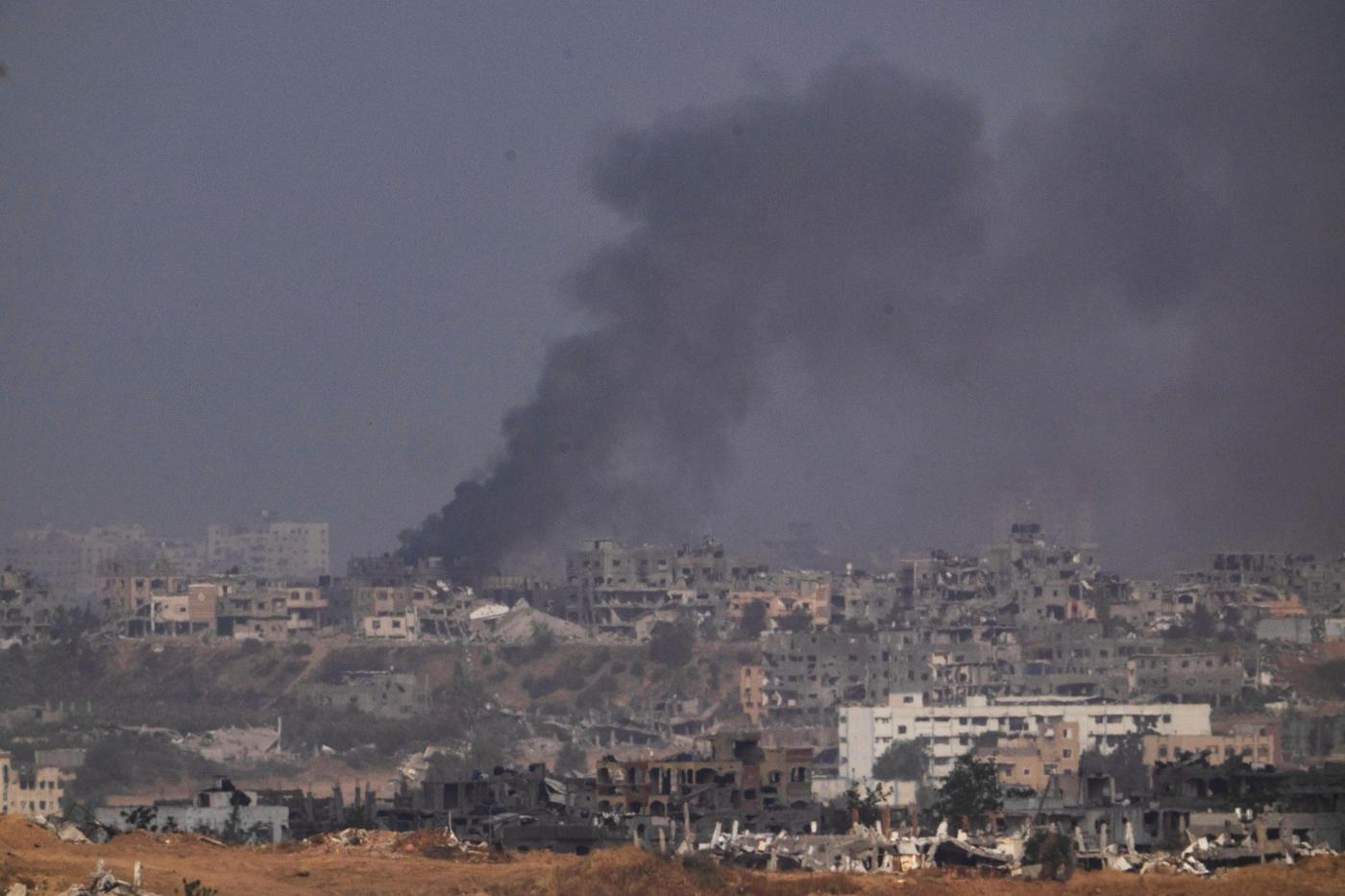
CAIRO (AP) — The United Nations says it has suspended food distribution in the southern Gaza city of Rafah due to lack of supplies and insecurity. It also said no aid trucks entered in the past two days via a floating pier set up by the U.S. for sea deliveries.

The U.N. has not specified how many people remain in Rafah after the Israeli military launched an intensified assault there on May 6, but there appears to be several hundred thousand people.

Abeer Etefa, a spokesperson for the U.N’s World Food Program, warned that “humanitarian operations in Gaza are near collapse.” If food and other supplies don’t resume entering Gaza “in massive quantities, famine-like conditions will spread,” she said.

The warning came as Israel seeks to contain the fallout from a request by the chief prosecutor of the world’s top war crimes court for arrest warrants for Israeli and Hamas leaders, a move supported by three European countries, including key ally France. The prosecutor at the International Criminal Court cited Israeli Prime Minister Benjamin Netanyahu and Defense Minister Yoav Gallant for alleged “use of starvation as a method of warfare,” a charge they and other Israeli officials angrily deny. The prosecutor accused three Hamas leaders of war crimes over killings of civilians in the group’s Oct. 7 attack.

Hamas has been designated as a terrorist organization by the United States, Canada and the European Union.

The crisis in humanitarian supplies has spiraled in the two weeks since Israel launched an incursion into Rafah on May 6, vowing to root out Hamas fighters. Troops seized the Rafah crossing into Egypt, which has been closed since. As of May 10, only about three dozen trucks made it into Gaza via the nearby Kerem Shalom crossing from Israel because fighting makes it difficult for aid workers to reach it, the U.N. says.

The main agency for Palestinian refugees, UNRWA, announced the suspension of distribution in Rafah in a post on X, without elaborating beyond citing the lack of supplies.

Etefa said the WFP had also stopped distribution in Rafah after exhausting its stocks. It continues passing out hot meals in central Gaza and “limited distributions” of reduced food parcels in central Gaza, but “food parcel stocks will run out within days,” she said.

Etefa said 10 trucks entered through the U.S.-made pier on Friday and were taken to its warehouse in central Gaza. But a delivery Saturday of 11 trucks was stopped by crowds of Palestinians who took supplies, and only five trucks made it to the warehouse. No further deliveries came from the pier on Sunday or Monday, she said.

The U.N says some 1.1 million people in Gaza – nearly half the population — face catastrophic levels of hunger and that the territory is on the brink of famine.

Until early May, some 1.3 million people were crowded into Rafah after fleeing Israel’s offensive elsewhere in the territory. At least 810,000 of those have fled since Israel launched its incursion into the city. Those fleeing have scattered across southern Gaza, erecting sprawling tent camps or crowding into U.N. schools already heavily damaged from Israel’s previous offensives.

While no one faces imminent arrest from the ICC move, the announcement deepens Israel’s global isolation at a time when it is facing growing criticism from even its closest allies over the war in Gaza.

Belgium, Slovenia and France each said Monday they backed the decision by ICC prosecutor Karim Khan. Their support exposes divisions in the West’s approach to Israel.

Israeli Foreign Minister Israel Katz headed to France on Tuesday in response, and his meetings there could set the tone for how countries navigate the warrants — if they are eventually issued — and whether they could pose a threat to Israeli leaders.

Israel still has the support of its top ally, the United States, as well as other Western countries that spoke out against the decision. But if the warrants are issued, they could complicate international travel for Netanyahu and Israeli Defense Minister Yoav Gallant, even if they do not face any immediate risk of prosecution because Israel itself is not a member of the court.

Related Articles


Trudy Rubin: Netanyahu moves toward military reoccupation of Gaza with no exit strategy


Helicopter crash that killed Iran’s president and others could reverberate across the Middle East


War crimes prosecutor seeks arrest of Israeli and Hamas leaders, including Netanyahu


Biden tells Morehouse graduates that scenes in Gaza from the Israel-Hamas war break his heart, too


David Brooks: The authoritarians have momentum, and here’s partly why

The prosecutor also requested warrants for Hamas leaders Yahya Sinwar, Mohammed Deif and Ismail Haniyeh. Hamas is already considered an international terrorist group by the West. Both Sinwar and Deif are believed to be hiding in Gaza. But Haniyeh, the supreme leader of the Islamic group, is based in Qatar and frequently travels across the region. Qatar, like Israel, is not a member of the ICC.

As Israeli leaders came to grips with the prosecutor’s decision, violence continued in the region, with an Israeli raid in the occupied West Bank killing at least seven Palestinians, including a local doctor, according to Palestinian health officials.

In a statement Monday night about the warrant requests, France said it “supports the International Criminal Court, its independence, and the fight against impunity in all situations.”

“France has been warning for many months about the imperative of strict compliance with international humanitarian law and in particular about the unacceptable nature of civilian losses in the Gaza Strip and insufficient humanitarian access,” said the statement from France, which has a large Jewish community and close trade and diplomatic ties with Israel.

The war between began on Oct. 7, when Hamas-led terrorists crossed into Israel and killed some 1,200 people, mostly civilians, and took 250 hostage. Khan accused Hamas’ leaders of crimes against humanity, including extermination, murder and sexual violence.

Israel responded with an offensive, which has killed more than 35,000 Palestinians, according to Gaza’s Health Ministry, which does not distinguish between noncombatants and fighters in its count. The war has sparked a humanitarian crisis that has displaced much of the coastal enclave’s population and driven parts of it to starvation, which Khan said Israel used as a “method of warfare.”

Belgian Foreign Minister Hadja Lahbib said Monday in a post on social media platform X that “crimes committed in Gaza must be prosecuted at the highest level, regardless of the perpetrators.”

Netanyahu and other Israeli leaders condemned the prosecutor’s move as disgraceful and antisemitic. U.S. President Joe Biden also lambasted the prosecutor and supported Israel’s right to defend itself against Hamas. The United Kingdom called the move “not helpful,” saying the ICC does not have jurisdiction in the case, while Israeli ally Czech Republic called Khan’s decision “appalling and completely unacceptable.”

panel of three judges will decide whether to issue the arrest warrants and allow a case to proceed. The judges typically take two months to make such decisions.

Experts warned that any warrants could complicate relations between Israel and even allies that condemned the move.

Yuval Kaplinsky, a former senior official in Israel’s Justice Ministry, said countries that are party to the court would be obliged to arrest Netanyahu or Gallant if they visit, although he said some of those countries might find legal loopholes that could help them avoid that.

“They would prefer (that) Netanyahu does not visit rather than have him visit in London and have the entire world watch him avoid extradition,” Kaplinsky said.

Since the war began, violence has also flared in the occupied West Bank.

On Tuesday, an Israeli raid into the Jenin refugee camp and the adjacent city of Jenin killed at least seven Palestinians, according to the Palestinian Health Ministry.

The military said its forces struck militants during the operation while the Palestinian Islamic Jihad militant group said its fighters battled the Israeli forces.

However, according to Wissam Abu Baker, the director of Jenin Governmental Hospital, the medical center’s surgery specialist, Ossayed Kamal Jabareen, was among the dead. He was killed on his way to work, Abu Baker said.

Jenin and the refugee camp, seen as a hotbed of militancy, have been frequent targets of Israeli raids, long before Israel’s war with Hamas in Gaza broke out.

Since the start of the war, nearly 500 Palestinians have been killed in West Bank fighting, many of them militants, as well as others throwing stones or explosives at troops. Others not involved in the confrontations have also been killed.

Israel says it is cracking down on soaring militancy in the territory, pointing to a spike in attacks by Palestinians on Israelis. It has arrested more than 3,000 Palestinians since the start of the war in Gaza.

Israel captured the West Bank in the 1967 Mideast war, along with east Jerusalem, which it later annexed, and the Gaza Strip, which it withdrew troops and settlers from in 2005. Palestinians seek those territories as part of their future independent state, hopes for which have been dimmed since the war in Gaza erupted.

Goldenberg reported from Jerusalem. Associated Press journalists Majdi Mohammed in the Jenin refugee camp, West Bank, Jack Jeffery in Jerusalem, John Leicester in Paris, and Jill Lawless in London contributed to this report.

Trump campaign calls ‘The Apprentice’ ‘blatantly false,’ director offers to screen it for him

posted in: News | 0

By JAKE COYLE (AP Film Writer)

CANNES, France (AP) — Donald Trump’s reelection campaign called “The Apprentice,” a film about the former U.S. president in the 1980s, “pure fiction” and vowed legal action following its premiere at the Cannes Film Festival. But director Ali Abbasi is offering to privately screen the film for Trump.

Following its premiere Monday in Cannes, Steven Cheung, Trump campaign spokesperson, said in a statement that the Trump team will file a lawsuit “to address the blatantly false assertions from these pretend filmmakers.”

“This garbage is pure fiction which sensationalizes lies that have been long debunked,” Cheung said.

“The Apprentice” stars Sebastian Stan as Trump. The central relationship of the movie is between Trump and Roy Cohn (Jeremy Strong), the defense attorney who was chief counsel to Joseph McCarthy’s 1950s Senate investigations of suspected communists.

Asked about the Trump campaign’s statement Tuesday in Cannes, Abbasi told reporters: “Everybody talks about him suing a lot of people — they don’t talk about his success rate though, you know?”

But the Iranian Danish director also struck a less combative tone as he discussed the film at its festival press conference. He offered to screen “The Apprentice” for Trump and talk it over.

“I don’t necessarily think that this is a movie he would dislike,” said Abbasi. “I don’t necessarily think he would like it. I think he would be surprised, you know? And like I’ve said before, I would offer to go and meet him wherever he wants and talk about the context of the movie, have a screening and have a chat afterwards, if that’s interesting to anyone at the Trump campaign.”

In the film, Cohn is depicted as a longtime mentor to Trump, coaching him in the ruthlessness of New York City politics and business. Early on, Cohn aided the Trump Organization when it was being sued by the federal government for racial discrimination in housing.

“The Apprentice,” which is labeled as inspired by true events, portrays Trump’s dealings with Cohn as a Faustian bargain that guided his rise as a businessman and, later, as a politician. Stan’s Trump is initially a more naive real estate striver, soon transformed by Cohn’s education.

The film notably contains a scene depicting Trump raping his wife, Ivana Trump (played by Maria Bakalova). In Ivana Trump’s 1990 divorce deposition, she stated that Trump raped her. Trump denied the allegation and Ivana Trump later said she didn’t mean it literally, but rather that she had felt violated.

That scene and others make “The Apprentice” a potentially explosive big-screen drama in the midst of the U.S. presidential election. The film is for sale in Cannes, so it doesn’t yet have a release date.

Related Articles

National Politics |


Trump or Biden? Either way, US seems poised to preserve heavy tariffs on imports

National Politics |


Election deniers moving closer to GOP mainstream, report shows, as Trump allies fill Congress

National Politics |


Trump Media and Technology Group posts more than $300 million net loss in first public quarter

National Politics |


Michael Cohen testifies he stole from Trump Org at hush money trial

National Politics |


Nikki Haley faces a murky path forward and a key decision on whether or not to endorse Trump

After the premiere, Abbasi addressed the Cannes audience, saying “there is no nice metaphorical way to deal with the rising wave of fascism.”

“The good people have been quiet for too long,” he said. “So I think it’s time to make movies relevant. It’s time to make movies political again.”

Listing wars in Gaza, Ukraine and Sudan, Abbasi, whose previous film ” Holy Spider ” depicted a serial killer murdering women in Iran, warned of trouble ahead.

“In the time of turmoil, there’s this tendency to look inwards, to bury your head deep in the sand, look inside and hope for the best — hope for the best, hope for the storm to get away,” Abbasi said. “But the storm is not going to get away. The storm is coming. The worst times are coming.”

The film’s premiere unfolded while Trump’s hush money trial continued in New York.

Trump or Biden? Either way, US seems poised to preserve heavy tariffs on imports

posted in: News | 0

By PAUL WISEMAN (AP Economics Writer)

WASHINGTON (AP) — As president, Donald Trump imposed a 25% tariff on foreign steel, which hurt Clips & Clamps Industries, a Michigan auto supplier — raising its materials prices, making it harder to compete with overseas rivals and costing it several contracts.

Jeff Aznavorian, the company president, thought he might enjoy some relief once Joe Biden entered the White House. Instead, Biden largely preserved Trump’s tariffs — on steel, aluminum and a mass of goods from China.

“It was a little surprising that an ideologically different administration would keep the policies so intact,’’ Aznavorian said, recalling how a previous Democratic president, Bill Clinton, had fought for freer trade. “That’s just so different from a 2024 Biden administration.’’

Trump and Biden agree on essentially nothing, from taxes and climate change to immigration and regulation. Yet on trade policy, the two presumptive presidential nominees have embraced surprisingly similar approaches. Which means that whether Biden or Trump wins the presidency, the United States seems poised to maintain a protectionist trade policy — a policy that experts say could feed inflation pressures.

Last week, in fact, Biden announced some new tariffs, on Chinese electric vehicles, advanced batteries, solar cells and other products, that he said would keep Beijing from flooding the United States with cheap imports.

The protectionist tilt of the two presidential contenders reflects the widespread view that opening the nation to more imports — especially from China — wiped out American manufacturing jobs and shuttered factories. It’s an especially potent political topic in the Midwestern industrial states that will likely decide who wins the White House.

“If you look at the election, it’s obvious,’’ said William Reinsch, a former trade official now at the Center for Strategic and International Studies. “Where are the deciding states? Pennsylvania, Michigan, Wisconsin — right there, you can see that trade is going to have an outsize role.’’

In their own ways, the two candidates have ditched a U.S. commitment to relatively frictionless trade — low barriers and scant government interference — that were a bedrock of American policy for decades after World War II. The idea was that free trade would hold down costs and aid consumers and businesses across the world.

In recent years, though, the perception grew that while free trade benefited households and companies, it hurt workers, with American jobs falling victim to cheaper foreign labor.

“The once nearly unanimous Washington consensus on free trade is dead,” Robert Lighthizer, who was Trump’s lead trade negotiator, crowed in his 2023 book, “No Trade Is Free.’’

Yet like free trade, trade protectionism carries its own economic price. It can raise costs for households and businesses just as the nation is struggling to fully tame inflation. It tends to prop up inefficient companies. It spurs retaliation from other nations against American exporters. And it typically sours relations with allies and adversaries alike.

Trump, who brazenly labeled himself “Tariff Man,’’ tried to pummel America’s trading partners with import taxes, vowing to shrink America’s trade deficits, especially with China.

He did pressure Mexico and Canada into rewriting a North American trade deal that Trump insisted had destroyed U.S. manufacturing jobs. He also persuaded China to agree to buy more American farm goods. But his efforts didn’t revive the manufacturing base — factory jobs make up a smaller share of U.S. employment than they did before his presidency — or shrink America’s trade deficits.

Trump has vowed more of the same in a second term. He’s threatening to impose a 10% tariff on all imports — and a 60% tax on Chinese goods.

“I call it a ring around the country,’’ Trump said in an interview with Time magazine.

Mark Zandi, chief economist at Moody’s Analytics, warns that the consequences would be damaging. Trump’s tariff plans, Zandi said, “would spark higher inflation, reduce GDP and jobs and increase unemployment, all else equal.”

Related Articles

National Politics |


Election deniers moving closer to GOP mainstream, report shows, as Trump allies fill Congress

National Politics |


Trump Media and Technology Group posts more than $300 million net loss in first public quarter

National Politics |


Michael Cohen testifies he stole from Trump Org at hush money trial

National Politics |


Nikki Haley faces a murky path forward and a key decision on whether or not to endorse Trump

National Politics |


Jesus is their savior, Trump is their candidate. Ex-president’s backers say he shares faith, values

A year after the import taxes were imposed, Zandi estimates, average consumer prices would be 0.7 percentage points higher than they would otherwise be. A report out Monday, from Kimberly Clausing and Mary Lovely of the Peterson Institute for International Economics, estimates that for families in the middle of the U.S. income distribution, Trump’s tariff proposals would amount to a tax of at least $1,700 a year.

For his part, Biden favors subsidizing such key industries as chipmaking and EV manufacturing to give them a competitive edge. It’s a stance that reflects worry that China’s rising military and technological might imperils America’s national security. As last week’s announcement showed, Biden isn’t averse to new tariffs, either. His top trade negotiator, Katherine Tai, has opened an investigation into Chinese trade practices in the shipbuilding industry, likely a prelude to imposing further sanctions on Beijing.

“The laissez-faire economic model of trade wasn’t working for the United States,’’ said Elizabeth Baltzan, a senior adviser to Tai. “We want to correct for that. The measures you take in order to get a fairer (economy) may involve measures that could be labeled protectionist. But I think you have to ask what you’re protecting” — notably working-class communities.

Dani Rodrik, a Harvard economist who was an early critic of the globalization of the 1990s and 2000s, views Biden trade policies more favorably than he does Trump’s approach.

“Trump’s was knee-jerk and incoherent; there is little evidence that his trade restrictions on China did any good to workers or the middle class in the U.S.,’’ Rodrik said.

By contrast, he said, “Biden’s approach is strategic and based on rebuilding U.S. manufacturing capacity and investing in the green transition, so fundamentally strengthening the U.S. economy rather than crass protectionism.”

Either way, a consensus formed in recent years that U.S. trade policy had to change. Moving factories to low-wage countries like Mexico and China in the 1990s and early 2000s, critics say, fattened corporate profits and enriched executives and investors but devastated American factory towns that couldn’t compete with cheap imports.

David Autor, a leading economist at the Massachusetts Institute of Technology, and two colleagues concluded in a 2016 paper that from 1999 to 2011, cheap Chinese imports wiped out 2.4 million American jobs.

More recently, China’s rise as America’s No. 1 geopolitical rival has created a bipartisan effort to reduce America’s reliance on Beijing for supplies of everything from pharmaceuticals to “rare earth’’ minerals for electric cars and cellphones.

Though this sea change in policy may have started with Trump, discontent with free trade and with an increasingly combative China had been building for years. One of Trump’s first presidential acts was to dump a free trade agreement the Obama administration had negotiated with 11 Pacific Rim countries.

Then Trump really got going. He imposed taxes on foreign washing machines and solar panels. Next, he labeled steel and aluminum imports a threat to national security and hit them with tariffs.

Finally, he started perhaps the biggest trade war since the 1930s: He hammered $360 billion of Chinese products with tariffs for Beijing’s efforts to surpass U.S. technological supremacy through illicit tactics, including cybertheft. China lashed back with retaliatory taxes of its own: It targeted American farmers, in particular, to try to hurt Trump’s constituency in rural America.

Did Trump’s tariff war achieve anything?

A study by Autor and colleagues at the University of Zurich, Harvard and the World Bank concluded that Trump’s import taxes failed in their goal to return jobs to the American heartland. The tariffs, the study found, “neither raised nor lowered U.S. employment’’ where they were supposed to protect jobs.

Worse, the retaliatory taxes imposed by China and other nations on U.S. goods had “negative employment impacts,’’ especially for farmers. These were only partly offset by billions in government aid that Trump bestowed on farmers to cushion their pain.

The Trump tariffs also damaged companies that relied on supplies that were affected by the tariffs. In Plymouth, Michigan, Clips & Clamps doesn’t even use much imported steel. Yet it was still hurt by the tariffs because they allowed American steel producers to raise their prices.

“Our raw material prices here in the United States tend to be 20% higher than Europe and Mexico and 40% to 60% higher than China,’’ Aznavorian said. His overseas rivals, he said, enjoy “significantly cheaper’’ costs.

If Trump’s trade war fizzled as policy, though, it succeeded as politics. Autor’s study found that support for Trump and Republicans running for Congress rose in the areas most exposed to the import tariffs — the industrial Midwest and manufacturing-heavy Southern states like North Carolina and Tennessee.

After entering office, Biden retained many of Trump’s trade policies and made no effort to revive Obama’s old Pacific Rim trade pact. He kept Trump’s steel and aluminum tariffs, while letting some trading partners avoid it until they reached a quota. He also retained China tariffs. Biden even turned up the heat on Beijing by restricting its access to advanced computer chips and the equipment to make them.

“Trade and national security have been combined into one thing,’’ Reinsch said. “This is the first time we’ve had an adversary that posed both an economic and a security challenge. The Soviet Union was a security challenge, but it was never an economic threat. Japan was an economic threat in the ’80s, but it was never a security threat; they were an ally. China is both, and it’s been complicated trying to figure out how to deal with that.’’

Biden’s China policies are “grounded in national security,’’ said Peterson’s Lovely. “That makes it harder to critique because national security is always this black box that only those with the highest security clearance get to see.’’

The Biden administration has rankled some U.S. allies by offering subsidies to encourage U.S. companies to manufacture goods in America. Under Biden’s 2022 Inflation Reduction Act, for instance, auto buyers can receive a $7,500 tax credit for purchasing an electric vehicle. But the credit applies only to EVs assembled in North America. And the full credit goes only to EVs in which at least 60% of battery parts are made in North America and 50% of the “critical minerals’’ used in the vehicle — like cobalt, copper and lithium — come from the United States or a country with which the U.S. has a free trade deal.

“It’s important that the United States develop its own clean energy sector, in collaboration with its allies and partners, thereby not becoming dependent on Chinese technologies,” said Wendy Cutler, a former U.S. trade negotiator who is vice president of the Asia Society Policy Institute. “When trade is increasingly being weaponized, it’s important that the U.S. does not become overly dependent on China for strategic products.’’

Biden’s initiatives — including incentives to produce green technology and computer chips in the United States — have spurred what looks like a surge of investment in manufacturing. Karen Dynan of the Peterson Institute has reported that investment in U.S. factories surged at an 80% annual rate in the January-March period compared with the final three months of 2023, helping fuel the economy’s unexpectedly strong performance.

The United States seems unlikely to reverse its tilt toward protectionism anytime soon. China, struggling to revive its own economy, is trying to export its way out of trouble, threatening to overwhelm world markets with cheap EVs and other products.

As for Aznavorian, he hopes the U.S. mends trade relations with its allies.

“We need friendly trade partners in order to compete against China,’’ he said.

Yet when it comes to China and other U.S. adversaries, Aznavorian said, he’s convinced that protectionist trade policies are “definitely here to stay.’’