TV Tinsel: National Memorial Day Concert to mark 35 years of honoring those who died in service to country

posted in: News | 0

Luaine Lee | Tribune News Service

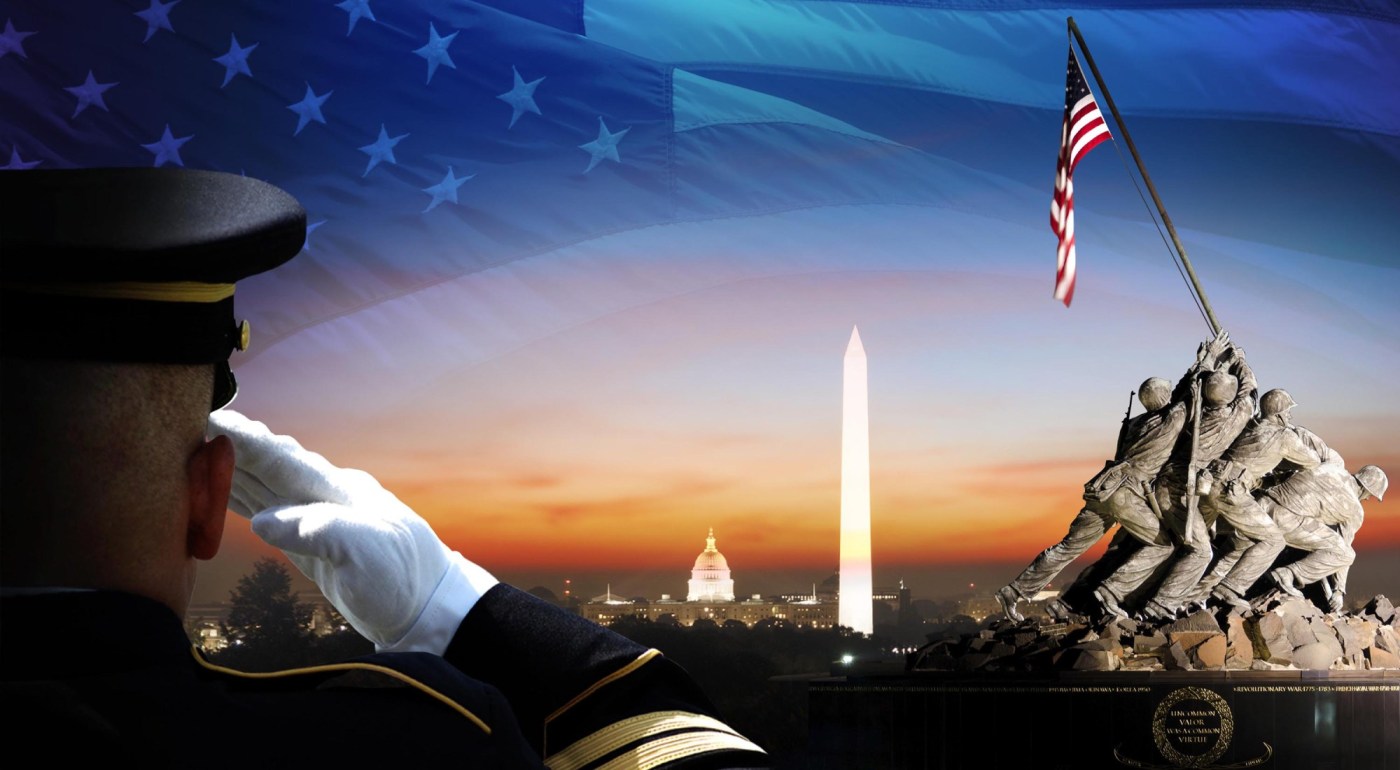
PBS will strike a blow to the idea that America is hopelessly divided when it presents its annual National Memorial Day Concert on Sunday.

The 90-minute show, which starts 8 p.m. (ET), features an abundance of top stars honoring those who have sacrificed their lives for their country.

Reporting for duty will be “Breaking Bad” star Bryan Cranston; two-time Oscar nominee Cynthia Erivo; country music stars Gary LeVox and Jamey Johnson; actors Jena Malone, BD Wong, Mary McCormack of “West Wing”; and Patina Miller, as well as the National Symphony Orchestra.

Unabashed patriots Joe Mantegna and Gary Sinise will return as co-hosts of the special, which is broadcast from the nation’s capital.

This marks Mantegna’s 20th year as host of the event and the concert’s 35th anniversary. The star of “Criminal Minds: Evolution,” which returns to Paramount+ June 6, says it was the late actor Charles Durning who first approached him to emcee the special.

“I was like anybody else I just thought of Memorial Day weekend as a three-day weekend,” says Mantegna. “Well, all I can say is that weekend changed my life because it just brought into focus how important that holiday is.

“On Sunday, the night of that performance, when I walked on that stage, there were 300,000 people watching — so you’re talking Woodstock. In front of you is all this mass of humanity and the Capitol building with flags flying. The next thing are these huge movie screens and they’re showing films from 9/11. Behind me, the Washington Philharmonic is playing Mozart’s requiem. And I have to – for about 10 minutes – read the words of four New York firemen who lost their sons in the World Trade Center,” he recalls.

“And they’re sitting in the front row. Next to them is Colin Powell and the Joint Chiefs of Staff and hundreds of thousands of people. And I’ve been an actor for over 40 years, but I’d never done anything like that. It took all I had to get through it because I realized this is not an acting job. This is not a fictional story I’m talking about on these screens, these planes are flying into the buildings and people died. So when I got through it, I walked off the stage. I literally was weak in the knees. I had to sit down. I thought anything that can move me that much, there’s something to this. And getting to know some of those firemen. To this day I’m in contact with some of them. It made me realize this is an important thing.”

Though he never served himself, many members of Mantegna’s family were part of the armed forces. “I have a lot of military in my family but luckily they all came back,” he says. “So I never had that thing of going to the cemetery to lay a wreath over Uncle Willie. There actually is an Uncle Willie who was a World War II vet. And his three brothers, plus my wife’s father, plus my dad’s father. The only reason my dad wasn’t there was he was in the hospital during the entire war with tuberculosis.

“So I had a lot of military in my family. But I got lucky. Then I realized the ones who weren’t so lucky. It all came into focus. So at the end of the day, I realized I’d do this again if they want me to. Of course, they asked me back the next year and I did that. And Ossie Davis was the host that year and he was wonderful, just an incredible human being. He passed before the third year,” recalls Mantegna.

“When Ossie passed, they asked me if I’d host. I was flattered. This was a monumental job. So I did it. I asked my friend Gary Sinise if he’d like to come in with his band and perform. I knew Gary would react exactly the same way I did. And he did. He was so blown away by the whole weekend. He said, ‘I’ll do this as long as you want me to.’”

PBS will present its 35th annual National Memorial Day Concert on Sunday at 8 p.m. (ET). The event will feature Bryan Cranston, Jena Malone, BD Wong, Mary McCormack and Jamey Johnson in the salute to those who have given their lives for this country. (Handout/PBS/TNS)

Among the specials will be Bryan Cranston’s tribute to those who performed in the field and at home during World War II’s raging battles both in the Pacific and in Europe.

Jena Malone will honor the generation that served in Iraq and Afghanistan and returned with crippling injuries. One of those is Marine Corps veteran and amputee Kirstie Ennis, who inspires others with her spirit and optimism in encouraging veterans to seek help when they need it.

BD Wong will commemorate the Gold Star families – those who’ve lost loved ones in service. Featured is Vietnam veteran Allen Hoe, whose two sons served in the military, one of whom was killed in Iraq.

A fan favorite is the Salute to Services introducing the Joint Chiefs of Staff and Service Color teams. Also participating are the musical members from The U.S. Army Herald Trumpets, The U.S. Army Chorus, The Soldiers’ Chorus of the U.S. Army Field Band, The U.S. Navy Band Sea Chanters, The U.S. Air Force Singing Sergeants, and the Armed Forces Color Guard provided by the Military District of Washington, D.C.

The concert will also be streaming on http://www.pbs.org/national-memorial-day-concert and on YouTube and available as Video on Demand, Sunday to June 9.

Irish actress costars in ‘IF”

The partially animated movie “IF” opened in theaters Friday. It’s the work of John Krasinski (who would have thought the laid-back Jim from “The Office” would turn into a film tycoon?). The show is about a girl who can see people’s imaginary friends.

Among the glittering cast is the Irish actress Fiona Shaw, who plays Grandmother. Shaw, so memorable in “Killing Eve,” is one of those actresses they hire for everything because she can literally play everything.

She tells me that she thinks that her Irish people are great storytellers and inveterate liars. “I’ve had a fair amount of stories told to me when you’re expecting to be paid or a contract to be done or a promise to be kept. ‘Oh, yes, well the thing was, the dog ran off with it.’ Is it (this ability) something to do with the fact that if you take everything away from people it’ll heighten what they have got? And the Irish were not allowed wealth and weren’t allowed opportunity or language, to speak their own language, and they weren’t allowed religion. But of course, nobody could stop them talking,” she smiles.

“They’re not a sober race. There’s something about the English tradition of argument that of course became diplomacy and gave the English great strength,” she says.

So you have lines like ‘To be or not to be, that is the question,’ and you go on discussing that … line. The Irish would never write or speak like that. They’d say, ‘To be or not to be, one way or the other.’ They’ll invert something and stop it before it has meaning. But in doing that, they make a sort of mini- bomb, an explosion of wit. Whereas the English will genuinely try and structure their thought. The English are descended from the Romans, and it’s dialectic. The Irish are full of confusions but not thesis and antithesis; they’re full of opposites. They love nonsense. Except for ‘Alice in Wonderland,’ the English are otherwise a very reasonable race.”

Trio packs up for ‘Summer Camp’

That tectonic trio Kathy Bates, Diane Keaton and Alfre Woodard costar in the effervescent seasonal romp “Summer Camp,” opening in theaters May 31. Three friends who have not seen each other since childhood reunite at a summer camp to watch the sparks fly.

Bates, who will be filling the size 10s of the old “Matlock” detective series this fall on CBS, says, “I was born late to my mom and dad. And when I wanted to go off to New York and be in the theater, I think it was tough for them at first, but they gave me the money to go and were really supportive of it afterward. After I did my first play, they said, ‘Are you ready to come home now? Haven’t you gotten it out of your system?’ ‘No, I’m just getting going.’ But I think they were very pleased.”

She says she had trouble establishing herself as an actress. “I was discouraged the first few years in New York because it’s tough getting known, and it’s tough finding ways to practice your craft. And I wasn’t sure what being an actor did for society. It took me a while to realized that one could make a contribution through theater and film.”

Bates certainly has made a contribution through her memorable roles in “Misery,” “Primary Colors” and “Titanic.”

From Aaron Burr to pastor in ‘Purlie’

Leslie Odom Jr. heads the cast of Ossie Davis’ play “Purlie Victorious,” being resurrected by PBS for television on “Great Performances” Friday. The show is about a pastor who’s determined to win back his church from a plantation owner. “This is a play that hadn’t been done commercially for 62 years, a comedy,” says Odem.

“We invited people into the room, small audiences … into our rehearsal process to really get that feedback,” says the star who played Aaron Burr in “Hamilton.”

“We didn’t want to be surprised by New York audiences. And I had had that experience with ‘Hamilton.’ By the time we made it (“Hamilton”) to Broadway, I had done hundreds of performances off-Broadway and in development.

“And so we brought that to this (project). And we had small performances, so we knew that this writing — really at the end of day, it is about the writing. We knew that the writing still crackled, the writing still surprised, it still sang. … I could feel it, I could feel it every night,” he says.

“I could feel it from those early performances. My training has taught me how to feel that thing. And this play, this Ossie Davis American classic, this gem of the American theater still worked, and it worked well.”

_______

(Luaine Lee is a California-based correspondent who covers entertainment for Tribune News Service.)

©2024 Tribune Content Agency, LLC
Election year politics roil the EV transition

posted in: News | 0

Mike Magner and Valerie Yurk | CQ-Roll Call (TNS)

WASHINGTON — The U.S. auto industry faces a triple threat on the road to cleaner cars and trucks: lagging consumer demand for electric vehicles, a potential glut of cheap electric vehicles from China and the possible rollback of Biden administration moves if Donald Trump becomes president again.

All of that is raising questions about whether the EV revolution in the United States could end before it really begins, especially if a victorious Trump follows through on promises to rescind regulations and financial incentives for zero-emission vehicles.

Still, many industry analysts are confident the transition will continue even in a new Republican administration because so many billions of dollars have been invested and the global market is shifting rapidly toward EVs in response to climate change.

A slower pace for EVs in America would further the lead for China, which dominates the global market at 60 percent of worldwide EV sales, according to the International Energy Agency.

“If we don’t continue to incentivize both the purchase of the vehicles domestically and the creation of the infrastructure, the charging stations, we run the risk of falling behind in the technology,” said Alan Taub, a former auto executive who now heads the Electric Vehicle Center at the University of Michigan.

The stakes are too high to let that happen, said Ellen Hughes-Cromwick, senior resident fellow in the climate and energy program at the left-center think tank Third Way and a former chief economist at both Ford Motor Co. and the U.S. Department of Commerce. She noted that there are 4 million jobs in the U.S. auto industry and the local economic impact of workers who make around $100,000 a year is enormous.

“What’s going to happen if the politics shifts to Republicans after November? Are they going to say, ‘OK, (China) can have our auto industry?’ Who’s going to want to see the industry move?” Hughes-Cromwick said.

Trump has made clear his animosity toward EVs, telling advocates for the technology to “ROT IN HELL” in a Christmas message on Truth Social. This month he told oil executives that he would end the EV transition and asked them to donate $1 billion to his presidential campaign, according to The Washington Post.

The message from Trump is ominous, said Troy Stangarone, senior director and fellow at the Korea Economic Institute, a Washington-based organization promoting U.S. ties to South Korea, which shipped more than 1.2 million vehicles to the U.S. in 2023.

“The most likely outcome of a Trump presidency would be to slow or stall a transition to EVs in the United States,” Stangarone said via email. “There is a clear strategy by China to become the global leader in EVs and EV battery technology and the Trump campaign’s approach to this would only help China expand its lead on the United States.”

Scott Paul, president of industry nonprofit Alliance for American Manufacturing, said in an interview that major disruptions in the EV transition could also further empower China’s dominance over the U.S. in the EV supply chain.

“What concerns me about the politicization of this and what Trump has said is that — yeah, he doesn’t like cars coming from China, but he’s perfectly willing to let those companies come into the United States and set up operations, which, in so many ways, would be even worse,” Paul said.

The Biden administration announced last week it will hike tariff rates on Chinese EVs and batteries, which Paul called an important move to provide U.S. automakers more market certainty. But Chinese-owned and -affiliated auto companies have taken to setting up shop in Mexico, creating concern that Chinese autos could enter the North American market via that country.

“Because of all the state support and state connections that (Chinese automakers) have, it’s just not a level playing field,” Paul added.

Election year pause?

There have been few announcements of new EV plans by automakers this year, leading to some speculation that companies are pausing their efforts until the outcome of the election is known.

“While companies are committed to the transition, they are definitely slowing investment,” said Daniel Sperling, director of the Institute of Transportation Studies at the University of California, Davis, in an email. “They are counting on an easing of policies — such as the 100% tariff imposed today on Chinese EVs. It’s a risky strategy, which could backfire on them if Trump is not elected.”

Another industry expert, David L. Greene of the Department of Civil and Environmental Engineering at the University of Tennessee, said EV sales are slowing down in the U.S. and Europe amid consumer concerns about the cost and reliability of the vehicles.

“There’s a lot of unfamiliarity with the technology, even a certain amount of misinformation,” he said. “Where do I charge? Do charging stations work? And there’s the cost problem.”

Frank Maisano, senior principal with a focus on energy and environment at law firm Bracewell LLP, added that many automakers have already built out the bulk of their investments in EVs. There are plenty of cars on the lot, he said, but they’re not selling as fast as the manufacturers thought they would.

The supply-and-demand trends for EVs happen to fall on an election year where there’s uncertainty about policy, Maisano said, and so it’s in automakers’ best interest to “slow down and see what happens.”

“Consumers are not all-in yet on this,” he said. “Electric vehicles are not going away. But there are still lots of other questions that have to be addressed.”

Related Articles

Elections |


Judge in Trump’s hush money trial threatened to remove witness from court for behavior on stand

Elections |


Familiar playbook as GOP tries to break DFL trifecta in MN

Elections |


Democratic ad campaign tries to chip away at Trump support among rural swing voters in 3 key states

Elections |


Jurors in Trump hush money trial hear recording of pivotal call on plan to buy affair story

Elections |


DFL disavows local endorsement of northwestern Minnesota candidate with assault conviction

As far as a slowdown by the auto companies in the face of a possible policy shift in Washington, Greene said that is to be expected. “Manufacturers have always hedged to some extent,” he said. “That doesn’t mean they’re not really committed to transitioning to electric drive. I think they are because they’re global manufacturers.”

Rep. Debbie Dingell, D-Michigan, said in an interview last week that Congress and the administration still need to provide U.S. automakers certainty of federal support, especially as the automakers are vying to compete in a global marketplace. She added that the Biden administration has provided certainty in its actions and regulations.

“Let’s hope they have the certainty they need and we don’t have to get into a legislative battle,” she said.

But Maisano said legislation may be one of the better paths to provide that certainty, like the 2021 infrastructure law, which provided investments in EV charging infrastructure and other transition needs.

“Unfortunately, in an election year, Congress and the administration who are all on the ballot are just not brave enough to make that effort,” Maisano said.

Hughes-Cromwick said it would be imprudent for automakers to change long-term strategies during an election year. “If I ever heard in an automotive company that they’re going to alter their capital plan based on a political cycle, I’d say you’ve got a problem,” she said.

Shift to hybrids

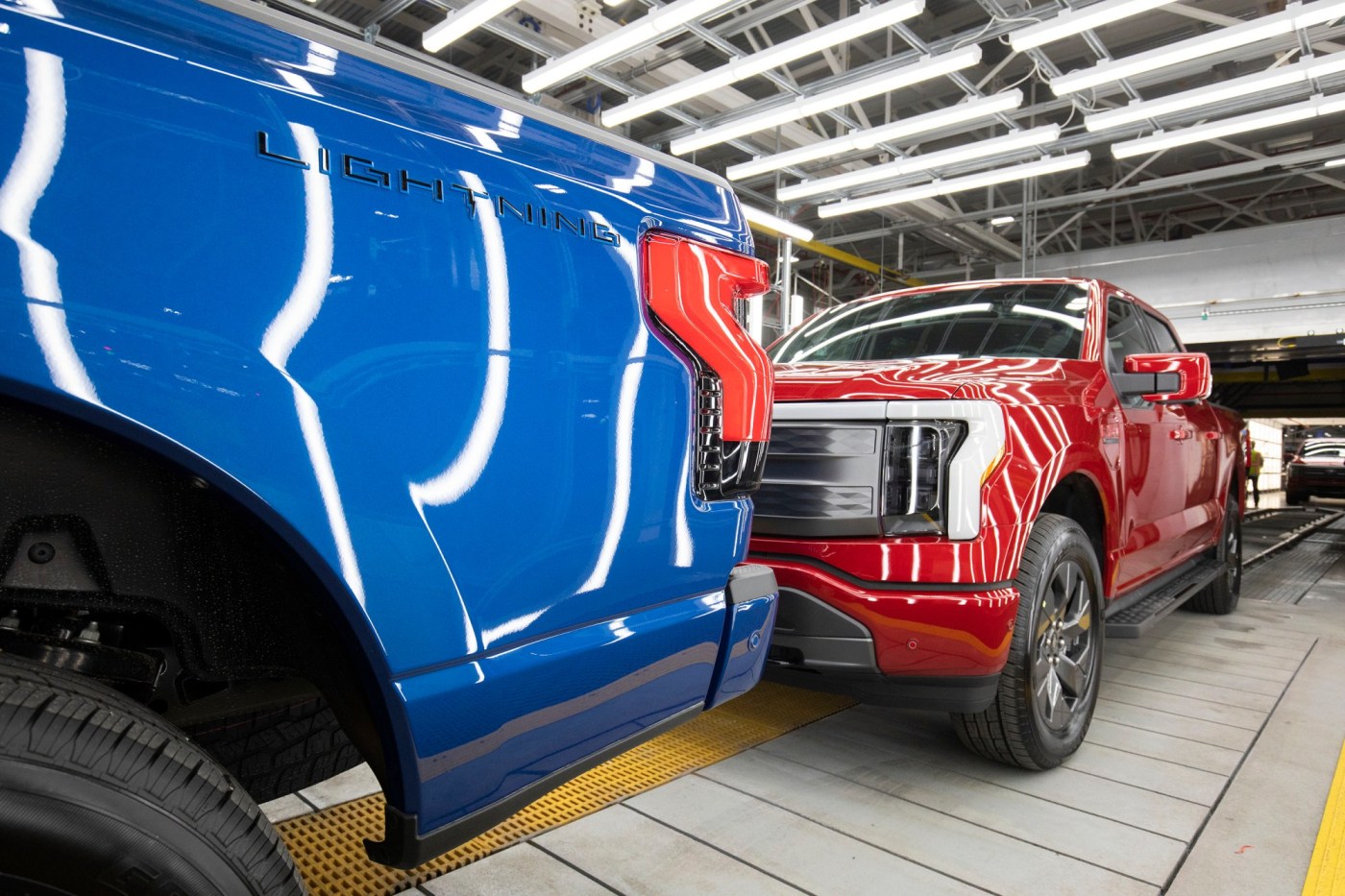
There has been some shift in strategy in response to the slowing demand for EVs. Ford and General Motors Co., for example, have said they plan to offer more hybrid gas-and-electric vehicles that come with fewer concerns about range. Ford also scaled back production of the all-electric F-150 Lightning in April after sales in 2023 were below expectations.

Stellantis, parent company of Chrysler and Jeep brands, remains fully committed to the EV transition, though spending could rise or fall depending on who gets elected in November, according to CEO Carlos Tavares. “I have no scenario for the fact that it would stop, because we need to fix the global warming issue,” he told reporters in January.

The uncertainty in the industry is reflected in the wide range of consumer views of EVs in America.

Matthew Fisher, CEO of Gridspot, told USA Today in March that he was stunned by the response when he advertised his company’s app allowing owners of EV chargers to rent them out to other drivers in their neighborhood. What he heard was a lot of vitriol about EVs.

“It was just this sentiment that ‘you take my emissions, you take my freedom,’ ” Fisher said. “It’s mind-boggling.”

At the other end of the spectrum, the University of Michigan’s Taub said he recently was on a panel on EV technology in Detroit, and at the end he told the audience of auto executives and engineers that “it’s time to rebrand the Motor City the E-Motor City.”

“It was the only time I have ever given a presentation where I got a standing ovation,” Taub said. “A few weeks later I tried it again and the same thing happened.”

©2024 CQ-Roll Call, Inc., All Rights Reserved. Visit cqrollcall.com. Distributed by Tribune Content Agency, LLC.

Hims & Hers to sell inexpensive Ozempic alternative

posted in: News | 0

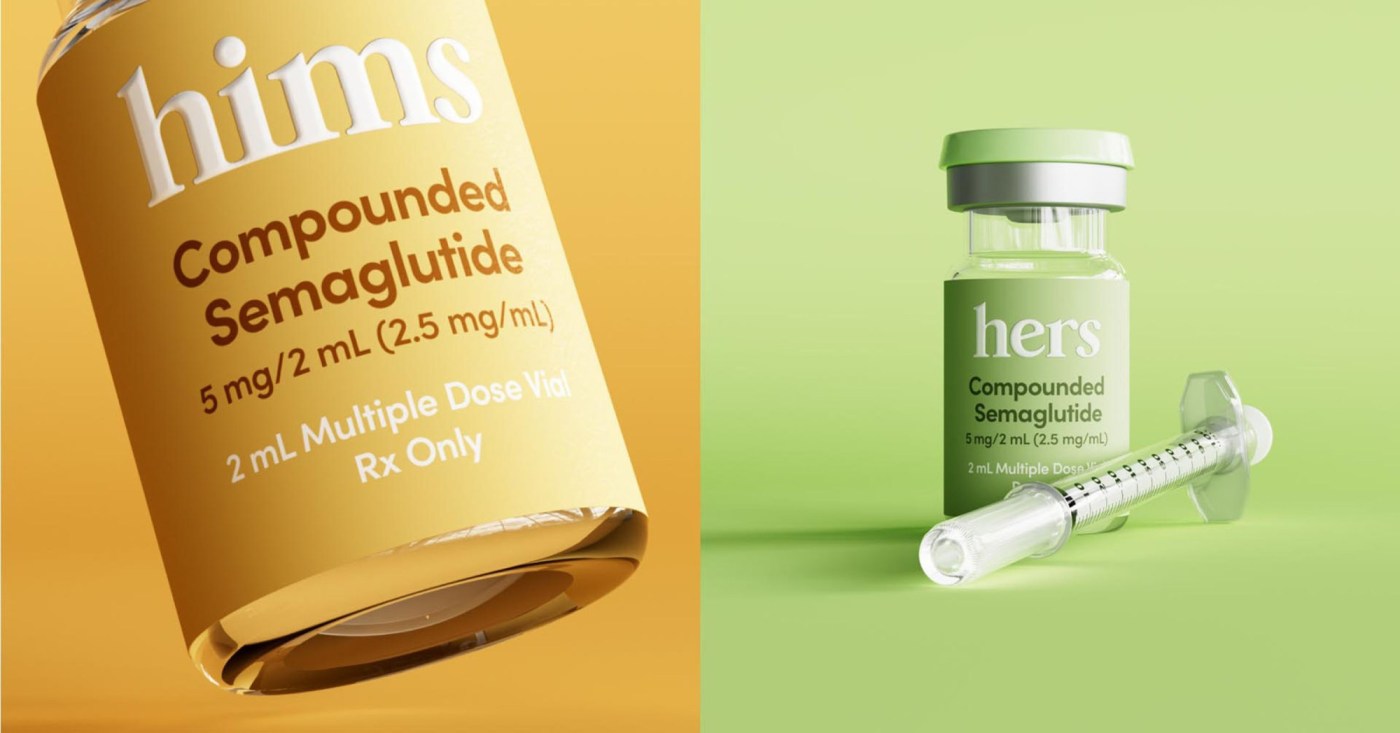
Online pharmaceutical brands Hims & Hers are introducing a weight-loss drug containing a compounded form of semaglutide, the active ingredient in Ozempic, for a fraction of the price.

Both brands, owned by the same company headquartered in San Francisco, plan to provide a one-month supply of the GLP-1 injections for $199.

That same dose of Ozempic reportedly retails for nearly $1,000. Wegovy, a comparable product, is listed at $1,349, according to Quartz.

Hims & Hers shares were up 30% following the announcement. The company intends to provide branded GLP-1 medications to customers with subscriptions once a steady supply becomes consistently available.

The Food and Drug Administration doesn’t grant approval for compounded drugs, but allows them to be distributed with fewer restrictions when shortages arise, as is the case in this situation.

Regulators recommended in January that pharmaceutical customers “should not use a compounded drug if an approved drug is available to treat a patient.”

Hims & Hers CEO Andrew Dudum told CNBC the company is working with one of the nation’s largest FDA-monitored generic manufacturers to make sure its products aren’t harmful.

“Over the last year, we have grown in our conviction — based on our medical experts’ evaluation and the strength of our infrastructure — that if done properly, compounded GLP-1s are safe and effective,” the company said in a statement.

Related Articles

Health |


Women’s heart risk spikes after menopause, study shows

Health |


Medical aid in dying bill didn’t cross finish line this MN Legislature session

Health |


Cambridge couple stranded in Brazil with premature newborn finally ‘able to get our little guy home’

Health |


St. Paul student with Down syndrome receives national anti-bullying award

Health |


Why one New York health system stopped suing its patients

Regulators describe drug compounding as “a practice in which a licensed pharmacist, a licensed physician, or, in the case of an outsourcing facility, a person under the supervision of a licensed pharmacist, combines, mixes or alters ingredients of a drug to create a medication tailored to the needs of an individual patient.”

The use of revolutionary diet drugs like Ozempic and Wegovy has skyrocketed over the past couple of years, thanks in part to celebrities including Oprah Winfrey, Tracy Morgan, Sharon Osbourne and Charles Barkley speaking publicly about losing weight with the aid of such medications.

Winfrey announced in February she was leaving the board of WeightWatchers, which she had served on since 2015, after finding success with an unspecified weight-management drug.

“The fact that there’s a medically approved prescription for managing weight and staying healthier, in my lifetime, feels like relief, like redemption, like a gift,” she told People magazine, “and not something to hide behind and once again be ridiculed for.”

©2024 New York Daily News. Visit at nydailynews.com. Distributed by Tribune Content Agency, LLC.

Women’s heart risk spikes after menopause, study shows

posted in: News | 0

At first, no one thought Nina White had a heart attack.

Every detail of that day 10 years ago, when she was just 51, is sharp in her memory. She thought the tightness in her chest was overexertion from multiple trips up the ladder to the attic in her Portsmouth home. Her husband thought it was indigestion from tacos.

But her sister, who has a medical technology background, urged her to go to the emergency room and get a blood test that can detect heart attacks for a brief period after they’ve happened. When she got there, even the doctor told her he didn’t think she’d had one.

Then, the test came back positive for troponin, a protein released when the heart is damaged.

“It was horrifying,” White said. “So many people die in the first year after a heart attack, and I was terrified. I was waiting for it to happen.”

Heart disease is the leading killer of women as well as men, but it’s often under-recognized in women, said Dr. Dena Krishnan, White’s cardiologist for the past two years. Krishnan practices at the Bon Secours-affiliated Cardiovascular Specialists clinic in Suffolk.

“What you notice is women tend to have had symptoms for longer,” Krishnan said. “It’s really bad by the time they come to seek help.”

New research may help explain the complex reasons why heart risk increases sharply after menopause. Now, there’s evidence that as their estrogen drops, women’s risk rises faster than that of men the same age. Arterial plaque increased twice as fast on average in postmenopausal women than in men with similar demographics and medical status, according to research presented last month at an American College of Cardiology conference based on a study of 579 postmenopausal women.

Doctors have long known that estrogen seems to provide protection against heart disease. But it’s hard to pinpoint how menopause interacts with other risk factors, like genetics and lifestyle, in part because its onset and length vary so significantly among women.

“What this more recent study was showing is that we have some preventative testing that we can do to look at otherwise low-risk women, say ages 40 to 70, and see, is there anything else they should be doing?” Krishnan said.

White thought she was low risk. Other than her grandmother, whose heart attack the family attributed to smoking, she wasn’t aware of any family history of heart disease. Neither of her two older siblings had been diagnosed with it then.

But White said she had a hysterectomy at age 42 due to severe endometriosis, a painful condition in which uterine tissue grows outside of the uterus. The effect a hysterectomy has on estrogen production depends on what exactly is removed; if the uterus and both ovaries are removed, “surgical menopause” begins immediately. But even if only the uterus is removed and both ovaries remain, research shows that menopause is likely to begin earlier.

“It is very complex, because we know that estrogen impacts so many things,” Krishnan said, mentioning vasodilation, or the widening of the arteries, and preventing insulin resistance, among other benefits. “So, they’re looking at all different reasons you may not have enough estrogen.”

Many women think the obvious solution would be to take estrogen, Krishnan said, but it’s not that simple. Depending on an individual’s medical history, taking estrogen could possibly increase inflammation or blood clots or even contribute to developing cancer.

“That’s what makes it so unique for every woman on how to manage their risk,” Krishnan said.

Women’s symptoms during a heart attack are more likely to include dizziness, fatigue and nausea, but women are also more likely to dismiss chest pain as indigestion or overexertion, Krishnan said.

Almost every woman who has a heart attack tells Krishnan they didn’t realize it was happening. Many have said they just thought their bra was too tight. But if women are feeling pressure or heaviness in their chest during average activities, like cleaning the house, bringing in the groceries or making the bed, that could be cause for concern, she said.

That doesn’t mean exertion should be avoided. Regular exercise is one of the best ways to protect against heart disease, Krishnan said, adding that in animal models, aerobic training has been shown to mitigate the effects of estrogen loss.

“A lot of people think, ‘It’s out of my control. It’s just what it is. Every woman in my family gets diabetes and hypertension.’ And that’s not true,” she said. “Staying physically active is so essentially important.”

Women should ask their primary care doctors about their heart health, Krishnan said, and if they’re having questionable symptoms or if they have a family history, they may need a cardiology appointment.

“You never want to feel like a ticking time bomb, and there’s many people who feel that way,” Krishnan said.

Have a health care or science story, question or concern? Call, text or email Katrina Dix, 757-222-5155, katrina.dix@virginiamedia.com