
Twins salvage road trip with win over Nationals

posted in: News | 0

WASHINGTON — The Twins got a good reminder of everything their star shortstop can do on Wednesday.

Carlos Correa’s home run loomed large in the Twins’ 3-2 win over the Washington Nationals at Nationals Park, and his diving stop and strong throw with a runner on third was directly responsible for preserving their lead.

“We’re probably still playing or could be down if he didn’t play the way he did defensively,” manager Rocco Baldelli said. “That’s big-time stuff. He showed us a lot.”

Washington Nationals starting pitcher Jake Irvin throws during the first inning of a baseball game against the Minnesota Twins, Wednesday, May 22, 2024, in Washington. (AP Photo/Nick Wass)

The Twins (26-23) walked away from the nation’s capital with two straight wins, ending their road trip on a strong note after seeing their losing streak hit seven games on Monday night.

Correa, who also homered in Monday’s game, bashed a low first-pitch curveball from Bloomington native Jake Irvin in the top of the sixth inning out to left field. Irvin’s sinker, Correa said, was carving him up so he went up looking for a curveball instead.

It was one of two home runs that Irvin (2-5), a 27-year-old Bloomington Jefferson grad in his second full season, gave up against his hometown team — Max Kepler hit the other in the second inning — in an otherwise strong 6 1/3-inning start.

Irvin dueled against Twins starter Simeon Woods Richardson, who did not allow a run in his outing. With a well-rested bullpen and an off day coming up, Woods Richardson was pulled with two outs in the fifth inning so southpaw Steven Okert could face lefty CJ Abrams.

Okert rode in on the Nationals’ baseball-shaped bullpen cart — a tradition he started on a cold day in Washington when he was playing for the Marlins — and made sure to tip his driver with a $5 bill he had been carrying all series for the occasion. He retired Abrams and then threw a flawless sixth inning to preserve the Twins’ lead.

But in the seventh, the Nationals (21-27) made some noise against rookie Kody Funderburk.

Funderburk allowed a pair of hits before striking out former Twin Joey Gallo with both runners in scoring position. Funderburk made way for Griffin Jax, who induced a groundout to Carlos Santana at first, allowing one run to score.

It looked like the game-tying run was going to score when Jacob Young sent a ball Correa’s way, but the 2021 Gold Glove Award winner made a diving stop, hopped to his feet quickly and fired a strong throw to Santana, who scooped the ball cleanly to get the speedy runner.

“I’m pretty determined to just do everything possible to finish the play,” Correa said. “I didn’t want the game to get tied at all and it was too hot to play extra innings.”

That kept the Twins’ lead 2-1, and it remained that way long enough for the Twins to tack on an insurance run — Kepler doubled and Ryan Jeffers snapped an 0-for-16 streak, driving him in — in the ninth inning.

It was an important one as Jhoan Duran gave up his third home run of the road trip before stranding a runner at second base to pick up the save and salvage the series.

“We’re playing with confidence. We’re playing with conviction. We’re taking quality ABs,” Woods Richardson said. “We’re putting the bat on the ball. We’re creating pressure. Our offense is creating pressure. We’re doing a lot of quality things for quality wins right now.”

Related Articles

Minnesota Twins |


Offense breaks out, Joe Ryan solid as Twins snap losing streak with 10-0 win against Nationals

Minnesota Twins |


Twins star Royce Lewis takes important step in rehab

Minnesota Twins |


Twins have player meeting after seventh straight loss

Minnesota Twins |


Twins walked off by Cleveland in sixth straight loss

Minnesota Twins |


Twins encountering much tougher AL Central than they’ve seen lately
Opinion: Bias Fuels Source of Income Discrimination

posted in: News | 0

“…much of the documented illegal discrimination is based on fears, bias, and stereotypes about the people who possess the rental subsidies and has less to do with the structure of the subsidy programs.”

NYC Commission on Human Rights

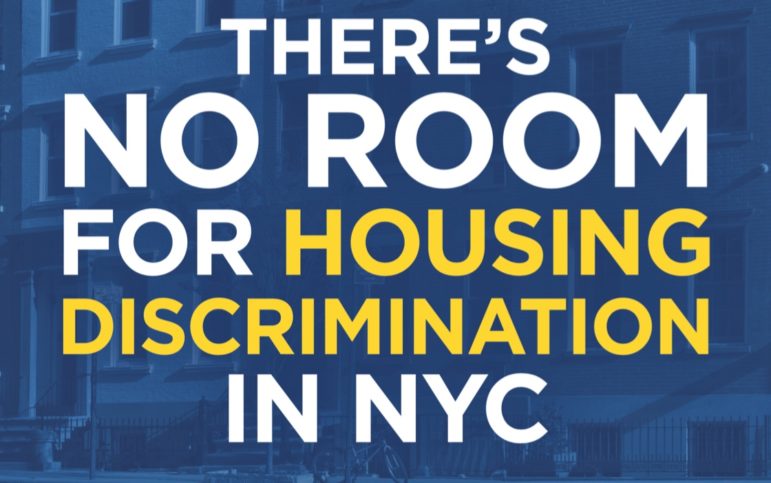
A poster aimed at curbing housing discrimination.

CityViews are readers’ opinions, not those of City Limits. Add your voice today!

Neil Garfinkel, counsel for the Real Estate Board of New York (REBNY), penned an op-ed in March and made the mendacious assertion that poorly run subsidy programs are the “main cause” for the harm inflicted on subsidy holders who encounter source of income discrimination.

Perhaps prior to writing this op-ed, he should have consulted with actual subsidy holders or people who are tasked with enforcing fair housing laws. Had he done so, he would have learned that much of the documented illegal discrimination is based on fears, bias, and stereotypes about the people who possess the rental subsidies and has less to do with the structure of the subsidy programs.

Source of income discrimination is still quite pervasive in New York City despite the passage of laws at the city and state level prohibiting it. Landlords, management companies, real estate brokers, and agents understand rental housing subsidies are provided to eligible lower income individuals and families, disproportionately tenants of color, tenants with disabilities, and single female-headed households with children. These are rent-burdened households who, absent a subsidy, might not be able to afford market rents. 

Here are some examples of what the Fair Housing Justice Center (FHJC) has seen in recorded undercover testing investigations and fair housing litigation:    

Outright refusals to rent, even when the asking rent is within rent payment standards and the tenant has a 100 percent subsidy which guarantees payment of all the rent directly to the landlord.

Segregated and unequal listings: A broker who told people with subsidies that the rental ads in their window were for “regular” people and there was a separate set of listings for “program” people. Many of the listings available to subsidy holders were not up to code and in such disrepair that they would not likely pass an inspection.

Dual and discriminatory rental processes: A major landlord maintained a dual track for prospective applicants. Tenants with subsidies were directed to an office where they spoke to an agent through a plexiglass window and were told to fill out a rental application that would allow them to be placed on a waiting list for a future available apartment. In contrast, tenants without subsidies were directed to a different leasing office and met with a leasing agent around a conference table and were immediately taken to view available apartments for rent before completing an application.

Comments from housing providers based on stereotypes about people with subsidies being lazy, contributing to increased crime, or being too poor to keep their apartments clean, making them a perceived threat to the health and safety of other tenants. Even though many households with subsidies do work, sometimes more than one job, another landlord commented that he preferred to only rent to “professional people” who work 9-5.

Not too many years ago, we saw evidence of this prejudice against people with lower incomes in some mixed-income housing developments. One developer set up a separate entrance or “poor door” for use by occupants of the affordable housing units. Other providers deemed tenants occupying affordable units as undeserving and denied them access to some of the common amenities in the buildings. So, bias against and mistreatment of lower income New Yorkers is not just felt by households with housing vouchers.

To be sure, we all want housing authorities or other agencies to modernize and become as efficient as possible for the benefit of tenants and landlords. Some have made strides in that direction. But to suggest the failure to do this accounts for the widespread discrimination against households with rental subsidies is simply not the way to begin an honest discussion about this issue. 

Housing providers must do business in the real world and comply with various regulations and laws that govern their activities. The overriding public interest and need to reduce housing insecurity for households at greatest risk of homelessness far outweighs any landlord inconvenience or insecurity about variations in housing subsidy programs. And, to the extent distinctions exist in the way local, state, and federal rental subsidy programs operate, this is another cost of doing business and certainly no reason to prevent otherwise qualified tenants from obtaining housing. 

Mr. Garfinkel also bemoans the fact that voucher holders must wait for what he terms an “unnecessary, mandated inspection process.” While we can agree that the required inspections need to be as timely, efficient, and thorough as possible, they are essential. Given the billions in taxpayer dollars spent annually on the provision of housing subsidies in this country, we need to ensure that tenants using the subsidies are able to secure decent, safe, and sanitary housing. 

As a renter, I wish there were more consistency, greater efficiencies, and standardized policies and practices among the hundreds of thousands of private rental housing providers in New York City. Renters are expected to engage in a time-consuming, costly, and anxiety-producing search process that involves navigating a confounding and complex maze of landlords, management companies, and real estate agents in the hope of finding one suitable, decent, and affordable housing opportunity.

As a friend of mine put it, “looking for an apartment in New York City is a little like Navy SEAL training, it is intense.” And he was not looking for an apartment using a rental subsidy. People with rental subsidies go through the same intense process while additionally enduring multiple acts of source of income discrimination during their search. Instead of focusing exclusively on how housing subsidy programs operate, Mr. Garfinkel and REBNY should take affirmative steps to combat the bias that drives much of the rampant source of income discrimination within the rental market. 

Fred Freiberg currently serves as the national field consultant for the New York City-based Fair Housing Justice Center (FHJC).

Families of Israeli hostages release video of female soldiers being captured by Hamas

posted in: News | 0

By JULIA FRANKEL (Associated Press)

JERUSALEM (AP) — A group representing the families of hostages held in Gaza has released new video footage showing Hamas’ capture of five female Israeli soldiers near the Gaza border on Oct. 7.

The video shows several of the young soldiers bloody and wounded. In one scene, a fighter tells one of the terrified women she is beautiful.

The footage was taken by Hamas terrorists who stormed the Nahal Oz military base, part of the group’s wider assault on southern Israel that killed roughly 1,200 people and took about 250 others hostage. Hamas has been designated a terrorist organization by the U.S., Canada, and EU.

Seven female soldiers who worked as lookouts on the border with Gaza were taken captive from Nahal Oz, said the Hostages and Missing Families Forum, which released the footage. All were 19 or 20.

The army rescued one of the women early in the war in a ground operation and said a second was killed in Hamas captivity. The five women in the video are believed to still be held by Hamas.

The Israeli army recently declassified the video and turned it over to the women’s families. The forum said the families made the footage public in an attempt to pressure the government into reaching a cease-fire deal with Hamas that would free their loved ones.

“Every new testimony about what happened to the hostages echoes the same tragic truth — we must bring them all back home, now,” the forum said in a statement. “The Israeli government must not waste another moment.”

Israel has released similar photos and videos from the Oct. 7 rampage in a campaign aimed at shoring up support for the ongoing war in Gaza.

The footage released Wednesday is roughly three minutes and edited, with some images blurred to censor what the forum said is especially sensitive material.

It shows a group of more than a dozen armed fighters binding the soldiers, two of whom had visible bloodstains on their faces.

In the video, the women try to converse with their captors. One says in English, “I have friends in Palestine.”

One yells back in English for them to be quiet. In other scenes, fighters kneel to pray in front of at least four of the female soldiers, who are handcuffed and seated on the ground. One bears visible cuts on her legs, and her blood pools onto the ground beneath her as she is bound with her hands behind her back.

At least one of the soldiers appears to be in her pajamas, with blood visible on her face. One of the fighters points at her and, in English, says, “You are beautiful.”

In a statement, Hamas called the video “a manipulated excerpt” whose authenticity “cannot be verified.” The group said the minor injuries and blood on the soldiers “is to be expected in such operations,” but denied physically assaulting the women.

Israel’s offensive on Gaza, launched in response to the Hamas attack, has killed about 35,000 Palestinians, according to the Gaza Health Ministry, which does not distinguish between combatants and civilians.

Ashley Waxman Bakshi, a cousin of Agam Berger, one of the women in the video, said that she cried the first time she saw it.

“Toward the end, I felt like I was going to throw up. I think any person who watches this video will understand that feeling, especially as a woman,” she said.

Other footage shows the fighters dragging two of the female soldiers toward a jeep as gunfire rattles. One is led to the vehicle barefoot, hopping on one foot because of an apparent leg injury.

In another scene, a group of fighters holds a hostage by their hands and feet. It is not clear whether the hostage is alive or dead. Another scene shows three of the female soldiers in the back of a moving vehicle, faces bloodied as fighters yell around them. Berger, who is wearing a brown shirt, is one of them.

“We know she’s alive. We can feel it. She has a twin sister, she feels her,” Bakshi said of her cousin. “She was taken hostage not severely injured. You can see from the video.”

Second flag carried by Jan. 6 rioters displayed outside house owned by Justice Alito, report says

posted in: Politics | 0

WASHINGTON (AP) — A second flag of a type carried by rioters during the attack on the U.S. Capitol on Jan. 6, 2021, was displayed outside a house owned by Supreme Court Justice Samuel Alito, The New York Times reported Wednesday.

An “Appeal to Heaven” flag was flown outside Alito’s beach vacation home last summer. An inverted American flag — another symbol carried by rioters — was seen at Alito’s home outside Washington less than two weeks after the violent attack on the Capitol.

News of the upside-down American flag sparked an uproar last week, including calls from high-ranking Democrats for Alito to recuse himself from cases related to former President Donald Trump.

Alito and the court declined to respond to requests for comment on how the “Appeal to Heaven” flag came to be flying and what it was intended to express. He previously said the inverted American flag was flown by his wife amid a dispute with neighbors, and he had no part in it.

The white flag with a green pine tree was seen flying at the Alito beach home in New Jersey, according to three photographs obtained by the Times. The images were taken on different dates in July and September 2023, though it wasn’t clear how long it was flying overall or how much time Alito spent there.

The flag dates back to the Revolutionary War, but in more recent years it has become associated with Christian nationalism and support for Trump. It was carried by rioters fueled by Trump’s “Stop the Steal” movement animated by false claims of election fraud.

Republicans in Congress and state officials have also displayed the flag. House Speaker Mike Johnson hung it at his office last fall shortly after winning the gavel. A spokesman said the speaker appreciates its rich history and was given the flag by a pastor who served as a guest chaplain for the House.

Alito, meanwhile, is taking part in two pending Supreme Court cases associated with Jan. 6: whether Trump has immunity from prosecution for his efforts to overturn the 2020 election results and whether a certain obstruction charge can be used against rioters. He also participated in the court’s unanimous ruling that states can’t bar Trump from the ballot using the “insurrection clause” that was added to the Constitution after the Civil War.

News of the second flag brought renewed calls for Alito to step aside from the Trump-related cases. “At this point it is difficult to make any reasonable case for Alito’s impartiality. It can and must be questioned. As a result, he must not sit on cases about the 2020 election or the insurrection he appears to have supported,” said Noah Bookbinder, president of Citizens for Responsibility and Ethics in Washington. The group represented Colorado voters in the “insurrection clause” case at the high court seeking to bar Trump from the ballot.

There has been no indication Alito would step aside from the cases.

Another conservative justice, Clarence Thomas, also has ignored calls to recuse himself from cases related to the 2020 election because of his wife Virginia Thomas’ support for efforts to overturn Trump’s loss to President Joe Biden.

Public trust in the Supreme Court, meanwhile, recently hit its lowest point in at least 50 years.

Judicial ethics codes focus on the need for judges to be independent, avoiding political statements or opinions on matters they could be called on to decide. The Supreme Court had long gone without its own code of ethics, but it adopted one in November 2023 in the face of sustained criticism over undisclosed trips and gifts from wealthy benefactors to some justices. The code lacks a means of enforcement, however.