Garland slams attacks on the Justice Department, telling lawmakers: ‘I will not be intimidated’

posted in: News | 0

By ALANNA DURKIN RICHER and ERIC TUCKER (Associated Press)

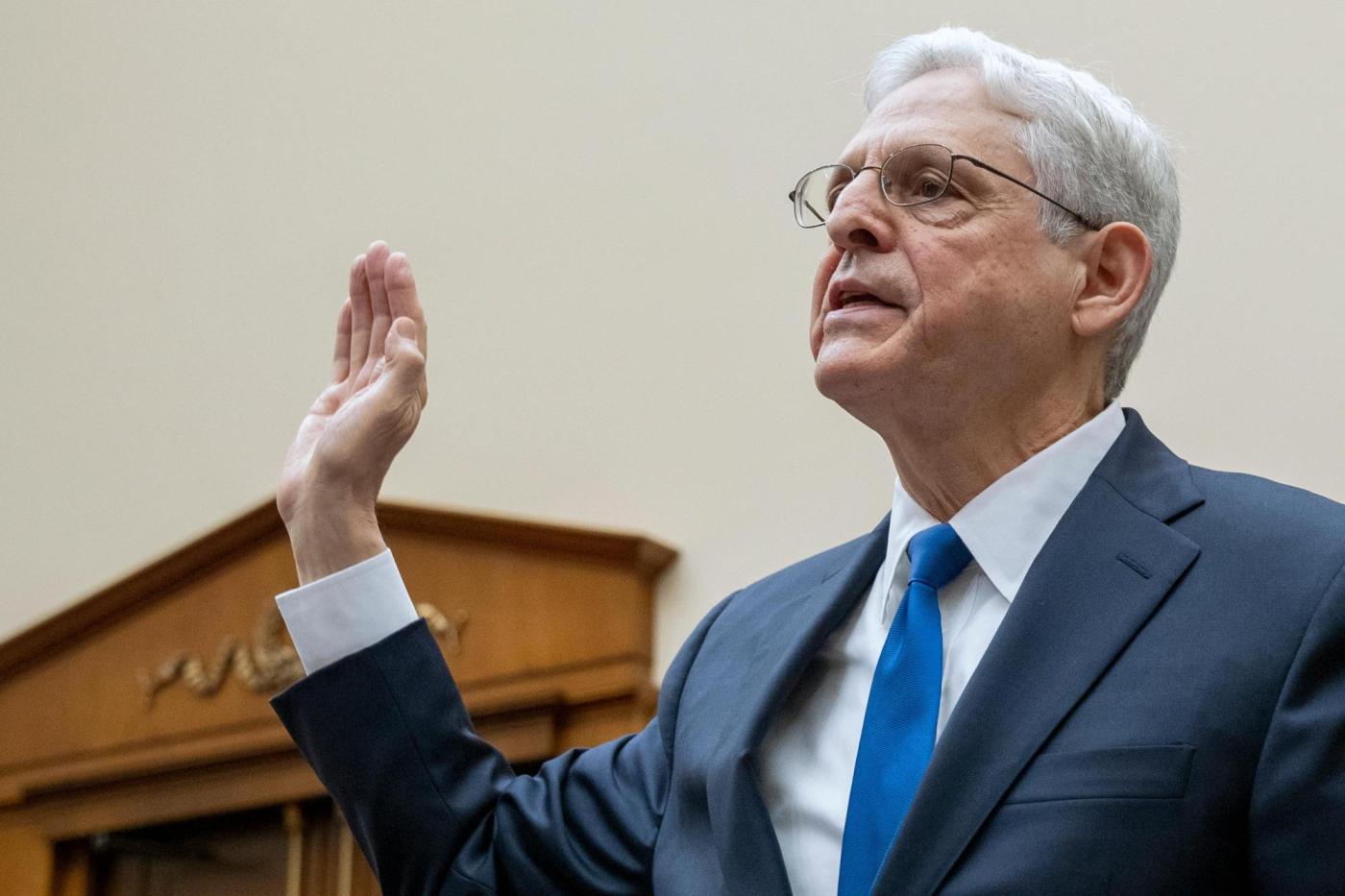
WASHINGTON (AP) — Attorney General Merrick Garland forcefully rebuked what he described as unprecedented attacks on the Justice Department Tuesday, telling Republicans who have sought to hold him in contempt that he will “not be intimidated.”

During a hearing before the the House Judiciary Committee, Garland condemned the “conspiracy theory” pushed by Donald Trump’s allies that the department was behind Trump’s state court prosecution in New York in which the former Republican president was convicted of 34 felony charges.

Garland called the unsupported claim “an attack on the judicial process itself.”

And Garland pushed back against “baseless and extremely dangerous falsehoods” being peddled about the FBI as well as threats to defund the special counsel prosecutions of former President Trump.

His appearance came as Republicans have moved to hold him in contempt for the Biden administration’s refusal to hand over audio of President Joe Biden’s interview with special counsel Robert Hur, which focused on the president’s handling of classified documents.

A transcript of Biden’s interview has been made public, but the president asserted executive privilege over the audio last month to block its release. The White House has said Republican lawmakers only want the audio so they can chop it up and use it for political purposes.

The Justice Department has argued witnesses might be less likely to cooperate if they know their interviews might become public. Garland told lawmakers he would not “jeopardize the ability of our prosecutors and agents to do their jobs effectively in future investigations.”

“I will not be intimidated,” Garland said. “And the Justice Department will not be intimidated. We will continue to do our jobs free from political influence. And we will not back down from defending our democracy.”

Rep. Jim Jordan, the committee’s top Republican, criticized Garland in his opening statement for a broad array of what he depicted as politically motivated decisions by federal law enforcement — including the conclusions by different special counsels that Trump criminally mishandled classified documents while Biden did not.

“Many Americans believe there’s now a double standard in our justice system. They believe that because there is,” Jordan said.

Rep. Matt Gaetz, who was investigated by the Justice Department but not charged in a sex trafficking inquiry, had a tense exchange early in the hearing when he demanded to know if the department would produce records related to the New York state case in which Trump was convicted last week.

Garland disputed as false allegations by Gaetz that he had “dispatched” to the Manhattan District Attorney office a Justice Department attorney who later became part of the Trump prosecution team, insisting that he had nothing to do with it.

The Return of the MOLLY

posted in: News | 0

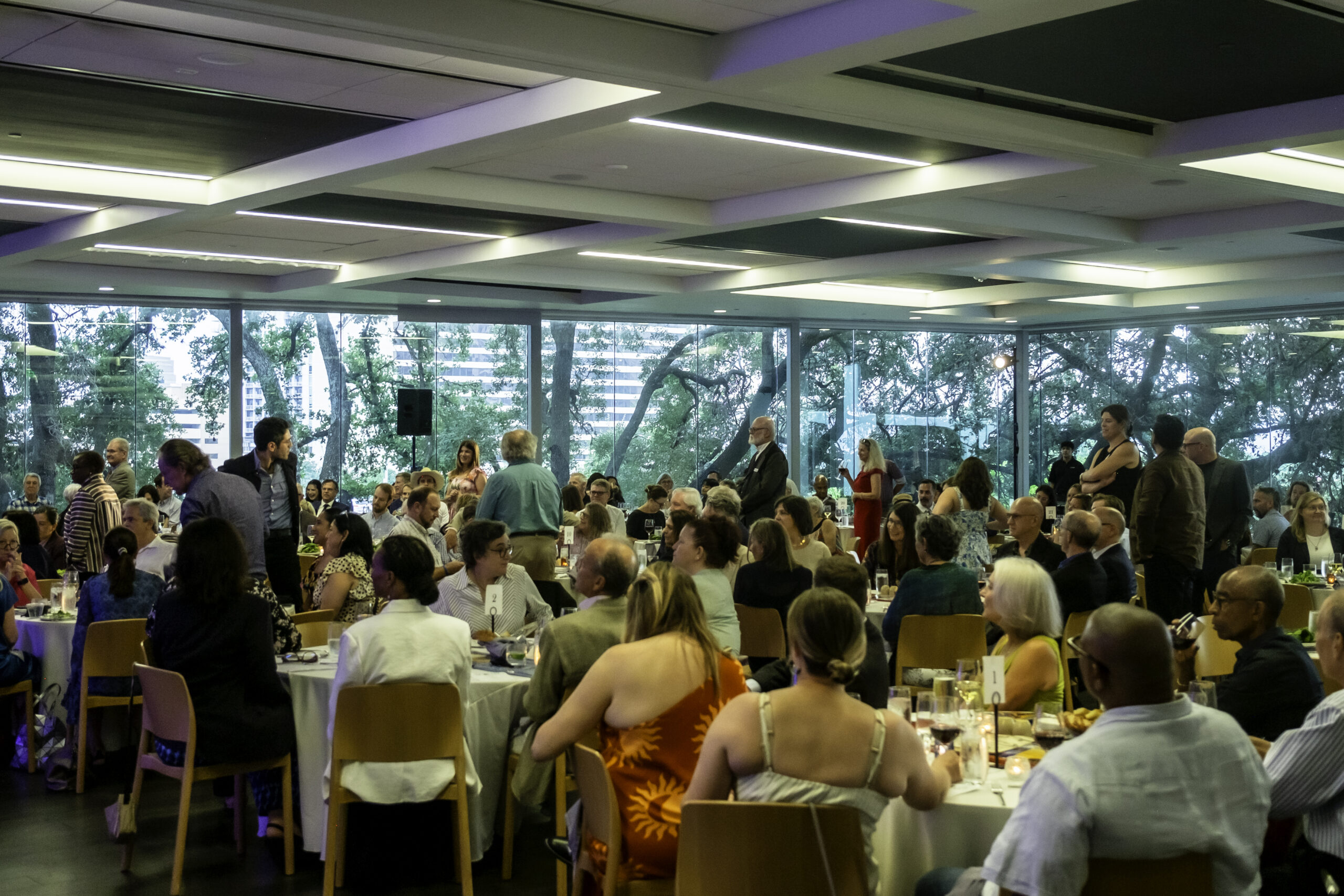
Last week, the Texas Observer held its annual MOLLY gala and fundraiser, a tradition—named, of course, for the inimitable Molly Ivins—that was briefly interrupted last year as the organization scrambled to save itself from a near-closure but that has returned in triumphant, and poignant, form this year. In its 70th year of publication, the Observer is reestablishing its financial footing, growing its community, and, as always, publishing some of the most important journalism in the state and country. Below are a few of the highlights from the 2024 MOLLY.

A video highlighting the work of the Observer‘s longtime cartoonist, Ben Sargent, was produced for the event.

Condensed remarks from the Observer’s Interim Executive Director Loren Lynch:

The MOLLYs have become a defining element of the Texas Observer, something that I know many people in this room look forward to each year. It’s an opportunity for us to come together as a community, a chance to celebrate in a moment when things worth  celebrating may feel harder and harder to find.   

Speaking of celebrating, before I get too much further, there’s actually a few people in particular I’d like to recognize. If you’re currently a staff member at the Texas Observer, could you please stand up? These folks right here are a big reason why we’re all here today to come together for the MOLLYs. And actually, I’d like to just see something here quick. I’m going to shout out a few other people. If everyone could please stay standing as we do this. If you are currently a member of the Texas Democracy Foundation board, can you please stand? Now anyone who has ever been a TDF board member? How about everyone who served on the Molly host committee, this year or any previous year please stand. And lastly, if you’ve ever worked at the Texas Observer, been a fellow or intern, if you’ve ever freelanced for the Observer at any time, please stand.

Attendees stand up at the 2024 MOLLY. (Joseph Rushmore)

Eight people are currently employed full time at the Texas Observer, and they’ve fought for us to be here. But there’s the saying, it takes a village—this is the community that makes the Texas Observer, right here standing up in this room. We’ve all benefited from the Observer continuing to publish for the last 70 years—and I’m willing to bet that if I asked anyone who isn’t already standing if you’ve felt like you’ve benefited from the Observer, this whole room might be standing.

We’re all here because this organization means something to a lot of people. The impact of reporting is felt, and, in Texas, deeply impactful reporting that “hews hard to the truth” is vital beyond words. I’m deeply grateful for all of you here tonight, helping to ensure the community we’re seeing in this room continues to expand.

None other than Lyle Lovett speaks with Texas Democracy Foundation board member Kathleen McElroy. (Joseph Rushmore)

The Observer presented its MOLLY National Journalism Prize, which honors the best in American journalism, to Alicia Inez Guzman of Searchlight New Mexico for her story “Buried Secrets, Poisoned Bodies”—a gripping literary investigation into the lingering effects of atomic bomb development and the life of a particular woman from the same tiny town as the writer. An excerpt from the story:

A kind of armor protects the lab’s nuclear secrets. For that reason alone, I have little faith that I will be able to identify her—the anonymous Trucheña with 60 times more plutonium in her body than any other New Mexican autopsied in this hair-raising study. But I keep looking. Maybe it’s that I believe finding her can reaffirm, in some small measure, her humanity...

Read the full piece here.

Lize Burr, board president of the Texas Democracy Foundation, the Observer’s parent nonprofit, addresses the crowd about the importance of the Observer‘s work. (Joseph Rushmore)

Kimberly Mata-Rubio, a mother who lost her daughter in the 2022 Uvalde school shooting, and Tamir Kalifa, a photographer who embedded in that southwest Texas town, shared powerful words about the importance of longform ethical journalism with the MOLLY audience. The pair collaborated on a photo essay in the most recent issue of the Observer. A sampling of Mata-Rubio’s essay:

Two weeks after I lost Lexi, and three days before her funeral, I agreed to testify before Congress about the effects of gun violence. I don’t recall making a conscious decision to actively join the gun violence prevention movement, but, looking back, I’ve always been a member. I have always prioritized children over some civilians’ desire to own high-powered weapons of war...

Kimberly Mata-Rubio and Tamir Kalifa (Joseph Rushmore)

Full photo essay here.

Condensed remarks from Interim Editor-in-Chief Gus Bova:

I wish I had the time to tell y’all about each member of the Observer’s small but mighty editorial team—but I understand we have a tight program and are attempting to pull off the first ever banquet in history that didn’t take way too long. So just know that these folks are some of the finest investigative and magazine journalists working in the country. Please check their bylines, come up to me after, or email me sometime, so I can rave to you about them.

Today, I’m speaking as the Observer’s interim editor-in-chief. And the feeling is surreal—mostly because, a little over a year ago, I didn’t think that I or y’all would be here at all. Just over a year ago, many of you likely heard, the Observer nearly shut down just shy of its 70th anniversary. 

The journalism industry, nonprofits included, is in crisis, and layoffs are everywhere you look these days. But the Observer is the only place I know where the workers who make the magazine that each of you has right now said, “Wait, let us try, let us really see what the people think.” And not just one big donor but thousands of small donors came together—support from across the state, nation, and world—to, along with board members who continue to serve today, save the place. Our subscriptions soared, and we made it through what was certainly not the first existential crisis the Observer has faced over seven decades.

I started at the Observer in 2016 as an idealistic intern, working part-time at a migrant shelter called Casa Marianella while trying to somehow break into journalism. Eight years later, I’m still here. It’s my first, and only, journalism job—and I’ve come to understand it’s one of the best gigs going. When you work here long enough, you start to feel a certain weight—the weight of all the people who poured their sweat and tears into this place before you, the people who averted the crises of the years and decades prior so that you could be here at all. So, when we almost folded last year, I couldn’t just think of the fact that my wife Marina and I had just bought a house—or that she was five months pregnant with our son Gino. I had to think of the Observer too.

The weight, in part, is the knowledge that should the Observer ever go away, there is no other Observer coming to take its place. The capitalist free market, and our Republican state government, do not require the existence of a progressive-minded investigative magazine in Texas. Quite the opposite. We exist because of the will and generosity of Texans like y’all, and many like Molly who’ve left us, who have persisted in the crazy belief that this state can be something else, something better. The weight that I feel, as the interim editor, is the knowledge that the Observer is irreplaceable.

To support the Observer’s work, become a member here or donate here.
Body of second canoeist recovered in Boundary Waters

posted in: Adventure | 0

The body of the second victim of a canoeing accident in the Boundary Waters Canoe Area Wilderness was found Monday morning.

The St. Louis County Sheriff’s Office said the body of Reis Melvin Grams, 40, of Lino Lakes, Minn., was discovered at about 10 a.m.

Grams and canoeist Jesse Melvin Haugen, 41, of Cambridge, Minn., were canoeing in the area of Curtain Falls between Iron and Crooked lakes when they disappeared May 18. Two other members of the party were rescued. Haugen’s body was recovered May 31.

The all-volunteer St. Louis County Sheriff’s Office Rescue Squad was using airborne drones and remotely operated underwater vehicles in addition to divers, cadaver dogs and other resources in the search along the Ontario border where Crooked Lake flows into Iron Lake, far from the nearest road or developed area.

High, fast-moving water after recent rains hampered the search that involved dozens of personnel, boats and aircraft. Part of the BWCAW has been closed to accommodate the search effort. Gram’s body was flown from the scene to the Ely seaplane base.

Most paddlers consider Curtain Falls too dangerous to attempt to paddle through, instead opting to use a land portage to carry canoes and gear around the falls. Several other incidents have happened at the site over the years.

Related Articles

Local News |


‘You should serve … because you love the city,’ longtime Stillwater city council member says in announcing retirement

Local News |


‘Eternally grateful for the kindness they’ve been shown’: Russian transgender refugee reunited with husband at MSP Airport

Local News |


St. Paul to expand electric vehicle network with East Side project

Local News |


Fraud trial juror reports getting bag of $120,000 and promise of more if she’ll acquit

Local News |


Photos: It was a ‘Grand Old Day’ in St. Paul on Sunday

Hunter Biden’s federal firearms case opens after jury is chosen, with first lady again sitting in

posted in: Politics | 0

WILMINGTON, Del. — Lawyers will make their opening statements Tuesday in the federal gun case against President Joe Biden’s son Hunter after a jury was seated for the trial.

Hunter Biden has been charged with three felonies stemming from a 2018 firearm purchase when he was, according to his memoir, in the throes of a crack addiction. He has been accused of lying to a federally licensed gun dealer, making a false claim on the application by saying he was not a drug user and illegally having the gun for 11 days.

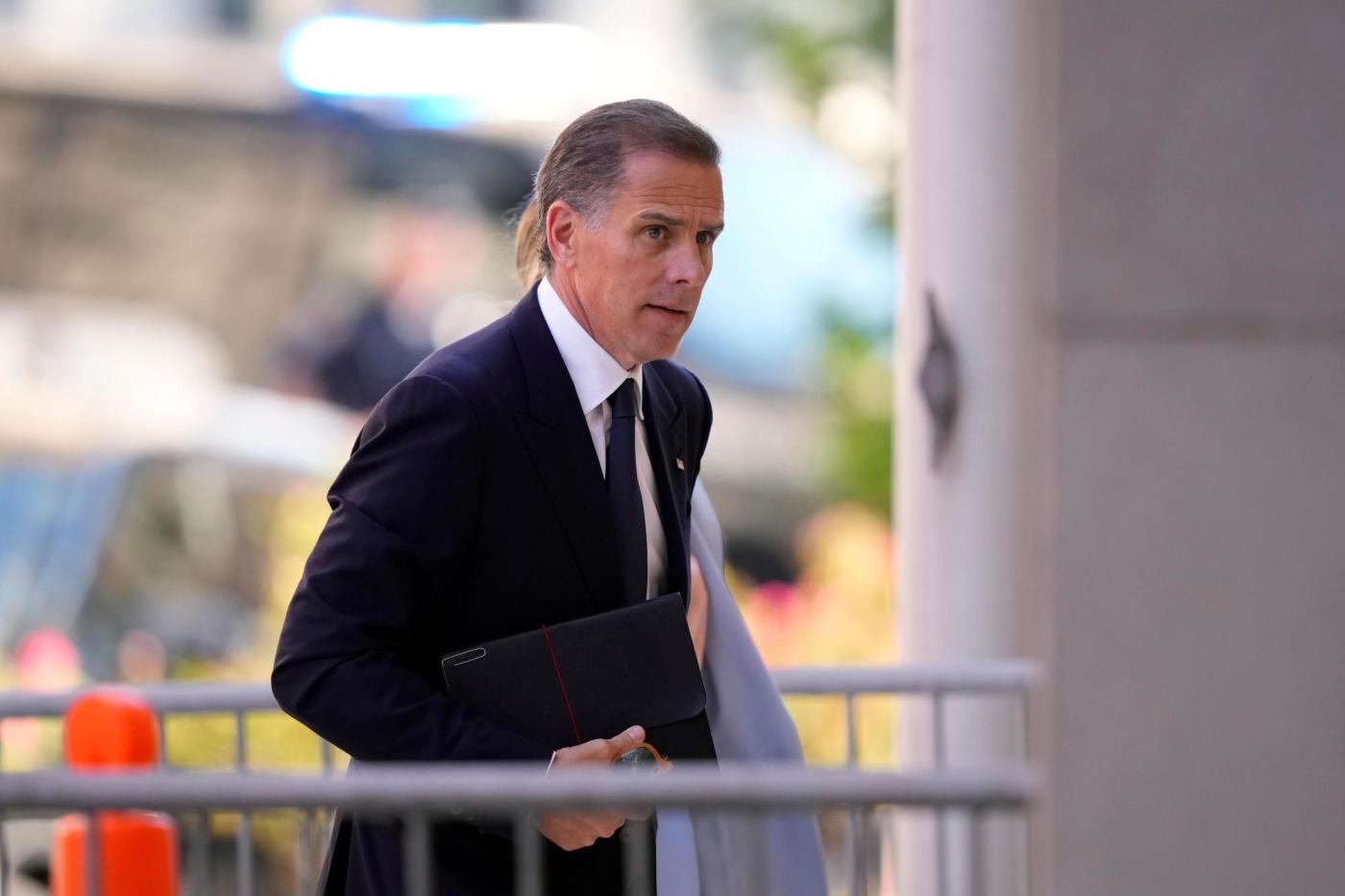
Hunter Biden arrived at the courthouse with this wife, Melissa, emerging from an SUV. First lady Jill Biden and his sister Ashley Biden joined him again in the courtroom.

The proceedings come after the collapse of a deal with prosecutors that would have avoided the spectacle of a trial so close to the 2024 election. Hunter Biden has pleaded not guilty and has argued he’s being unfairly targeted by the Justice Department after Republicans decried the now-defunct plea deal as special treatment for the Democratic president’s son.

The trial is unfolding just days after Donald Trump, the presumptive Republican presidential nominee, was convicted of 34 felonies in New York City. The two criminal cases are unrelated, but their proximity underscores how the courts have taken center stage during the 2024 campaign.

Jury selection moved at a clip Monday in the president’s home state, where Hunter Biden grew up and where, the elder Biden often says, the family is deeply established. Joe Biden spent 36 years as a senator in Delaware, commuting daily back and forth from Washington, D.C.

People just know the story of how Biden’s two young sons, Hunter and Beau, were injured in the car accident that killed his wife and baby girl in the early 1970s. And Beau Biden was the former state attorney general before he died at age 46 from cancer.

Some prospective jurors were dismissed because they knew the family personally, others because they held both positive and negative political views about the Bidens and couldn’t be impartial. Still, it took only a day to find the jury of six men and six women plus four women serving as alternates, who will decide the case.

One potential juror who was sent home said she didn’t know whether she could be impartial because of the opinion she had formed about Hunter Biden based on media reports.

“It’s not a good one,” she said.

Another was excused because he was aware of the case and said, “It seems like politics is playing a big role in who gets charged with what and when.”

But much of the questioning focused on drug use, addiction and gun ownership, as attorneys sought to test prospective jurors’ knowledge of the case, and dismiss those with strong thoughts on drug use, or who might want to regulate firearms — some of the very people Biden counts as constituents.

The panel of 12 was chosen out of roughly 65 people. Their names were not made public. They included a woman whose sister was convicted about 10 years ago of credit card fraud and drug charges in Delaware, a man whose father had been killed in a crime involving a gun, and a woman married to a former law enforcement officer who is also a licensed gun owner.

Hunter Biden also faces a trial in California in September on charges of failing to pay $1.4 million in taxes. Both cases were to have been resolved through the deal with prosecutors last July, the culmination of a yearslong investigation into his business dealings.

But Judge Maryellen Noreika, who was nominated to the bench by Trump, questioned some unusual aspects of the deal, which included a proposed guilty plea to misdemeanor offenses to resolve the tax crimes and a diversion agreement on the gun charge, which meant as long as he stayed out of trouble for two years the case would be dismissed.

The lawyers could not come to a resolution on her questions, and the deal fell apart. Attorney General Merrick Garland then appointed the top investigator, a former U.S. attorney for Delaware, David Weiss, as a special counsel in August, and a month later Hunter Biden was indicted.

Opening statements come as Garland faces members of the Republican-led House judiciary committee in Washington, which has been investigating the president and his family and whose chairman has been at the forefront of a stalled impeachment inquiry stemming from Hunter Biden’s business dealings.

The Delaware trial isn’t about Hunter Biden’s foreign business affairs, though the proceedings were likely to dredge up dark, embarrassing and painful memories.

The president’s allies are worried about the toll the trial may take on the elder Biden, who’s long been concerned about his only living son and his sobriety and who must now watch as his son’s painful past mistakes are publicly scrutinized. And the president must do so while he’s campaigning under anemic poll numbers and preparing for an upcoming presidential debate with Trump.

In a statement Monday, the president said he has “boundless love” for his son, “confidence in him and respect for his strength.”

“I am the President, but I am also a Dad,” he said, adding that he would have no further comment on the case. “Jill and I love our son, and we are so proud of the man he is today.”

The first lady sat in court all day Monday, her 73rd birthday, watching the proceedings quietly from the front row behind the defense table, as did Hunter Biden’s wife, Melissa, and his sister Ashley. The president was nearby most of the day, camped at their Wilmington home. He departed after court adjourned for a campaign reception in Greenwich, Connecticut.

Aboard Air Force One on Monday night, White House press secretary Karine Jean-Pierre was asked if the case might affect the president’s ability to do his job, and she replied, “Absolutely not.”

“He always puts the American people first and is capable of doing his job,” said Jean-Pierre, who declined to say if Biden got updates on the trial throughout the day or spoke to his son after the proceedings concluded.

Biden was traveling to France on Tuesday evening and will be gone the rest of the week. The first lady is scheduled to join him later this week.

The case against Hunter Biden stems from a period when, by his own public admission, he was addicted to crack. His descent followed the 2015 death of his brother from cancer. He bought and owned a gun for 11 days in October 2018 and indicated on the gun purchase form that he was not using drugs.

If convicted, Hunter Biden coud face up to 25 years in prison, though first-time offenders do not get anywhere near the maximum, and it’s unclear whether the judge would give him time behind bars.

Trump is set to be sentenced on July 11 by Judge Juan M. Merchan, who raised the specter of jail time during the trial after the former president racked up thousands of dollars in fines for violating a gag order.

___

Long reported from Washington. Associated Press writers Alanna Durkin Richer in Washington and Fatima Hussein aboard Air Force One contributed to this report.