House Republicans issue criminal referrals against James and Hunter Biden, alleging false testimony

posted in: Politics | 0

By FARNOUSH AMIRI (Associated Press)

WASHINGTON (AP) — House Republicans issued criminal referrals Wednesday against President Joe Biden’s son and brother, accusing them of making false statements to Congress as part of a yearlong impeachment inquiry.

The Republican chairmen of the House Oversight, Judiciary and Ways & Means committees sent a letter to the Justice Department recommending prosecution of Hunter Biden and James Biden.

A representative for Hunter Biden’s legal team and a lawyer for James Biden didn’t immediately respond to messages seeking comment. But both parties, and the White House, have dismissed the investigations into the Biden family as partisan witch hunts.

Republicans have pursued an impeachment inquiry seeking to tie the Democratic president to his son’s business dealings but have failed to uncover evidence directly implicating him in any wrongdoing. Now, the committees are accusing Hunter Biden and James Biden of providing false testimony during their hourslong sit-downs with lawmakers, claiming that it is part of a larger effort to hide the president’s involvement in the family’s overseas businesses.

“Congress cannot allow anyone, not even the president’s son or his brother, to stand in the way of its oversight of the executive branch or deny the American people the accountability they deserve,” Rep. Jason Smith, R-Mo., chair of Ways & Means, said in a statement.

The false statements in question, according to the chairmen, include references Hunter Biden made about what position he held at a corporate entity that received millions of dollars from a foreign client. The president’s son also “relayed an entirely fictious account” about text messages between him and his Chinese business partner in which he allegedly invoked his father’s presence with him as part of a negotiation tactic. There is also a focus on statements James Biden made about whether the president, during his time as a private citizen, met with a now-disgraced former business partner or not.

Hunter Biden, in a closed-door deposition on Capitol Hill in February, blasted the Republican impeachment inquiry as a “house of cards” built on “lies.”

James Biden testified earlier this year when he appeared for a voluntary private interview on Capitol Hill as part of House Republicans’ impeachment inquiry that Joe Biden “never had any involvement” in the business dealings of other members of his family.

Salmonella outbreak may be linked to recalled cucumbers, CDC says

posted in: News | 0

By JONEL ALECCIA (AP Health Writer)

Cucumbers contaminated with salmonella bacteria may have sickened and hospitalized dozens of people in at least 25 states, U.S. health officials said Wednesday.

Testing detected salmonella in a cucumber distributed by Fresh Start Produce, of Delray Beach, Florida, which last week recalled whole cucumbers shipped to certain states from May 17 to May 21, according to the Centers for Disease Control and Prevention. Further testing is underway to see if that strain of salmonella is causing the outbreak. The produce should no longer be available in stores.

The CDC received reports of 162 people sickened with salmonella potentially tied to the cucumbers in 25 states and Washington, D.C., between March 11 and May 16. At least 54 people were hospitalized, the agency said. No deaths were reported.

Consumers should not eat recalled cucumbers. People who bought cucumbers recently should check with the store where they purchased them to see if they’re part of the recall. Wash items and surfaces that may have been in contact with the produce using hot, soapy water or a dishwasher.

The CDC and the U.S. Food and Drug Administration also are investigating an outbreak of a second type of salmonella that has sickened at least 158 people in nearly two dozen states to see whether it’s connected to the same food. The outbreaks share several similarities, the agencies said.

Salmonella can cause symptoms that begin six hours to six days after ingesting the bacteria and include diarrhea, fever and stomach cramps. Most people recover without treatment within a week, but young children, people older than 65 and those with weakened immune systems can become seriously ill.

___

The Associated Press Health and Science Department receives support from the Howard Hughes Medical Institute’s Science and Educational Media Group. The AP is solely responsible for all content.

In France, D-Day evokes both the joys of liberation and the pain of Normandy’s 20,000 civilian dead

posted in: News | 0

By JOHN LEICESTER (Associated Press)

CARENTAN-LES-MARAIS, France (AP) — Shortly after D-Day in 1944, the American soldiers heading out to more fighting against Adolf Hitler’s forces couldn’t help but notice the hungry French boy by the side of the road, hoping for handouts.

One by one, the men fished fragrant, brightly-colored spheres from their pockets and deposited them in Yves Marchais’ hands. The 6-year-old boy had never seen the strange fruits before, growing up in Nazi-occupied France, where food was rationed and terror was everywhere.

Thrilled with his bounty, the young Marchais counted them all — 35 — and dashed home for his first taste of oranges.

But also seared into survivors’ memories in Normandy are massive Allied bombing raids that pulverized towns, villages and the cities of Caen, Rouen and Le Havre, burying victims and turning skies fire-red.

The 80th anniversary this week of the June 6, 1944, Allied invasion on D-Day that punched through Hitler’s western defenses and helped precipitate Nazi Germany’s surrender 11 months later brings mixed emotions for French survivors of the Battle of Normandy. They remain eternally grateful for their liberation but cannot forget its steep cost in French lives.

Marchais remembers his family’s house in Carentan, Normandy, shaking during bombardments that sounded “like thunder” and how his mother stunned him by gulping down a bottle of strong Normandy cider when they were sheltering in their basement, declaring as she finished it: “That’s another one that the Germans won’t drink!”

“The Americans, for us, were gods,” Marchais, now 86, recalled. “Whatever they do in the world, they will always be gods to me.”

RUINED NORMANDY TOWNS COUNT THEIR DEAD

Some 20,000 Normandy civilians were killed in the invasion and as Allied forces fought their way inland, sometimes field-by-field through the leafy Normandy countryside that helped conceal German defenders. Only in late August of 1944 did they reach Paris.

Allied casualties in the Normandy campaign were also appalling, with 73,000 troops killed and 153,000 wounded.

Allied bombing was aimed at stopping Hitler from sending reinforcements and at prying his troops out of the “Atlantic Wall” of coastal defenses and other strongpoints that German occupation forces had built with forced labor.

The list of Normandy towns left ruined and counting their dead grew with the Allied advances: Argentan, Aunay-sur-Odon, Condé-sur-Noireau, Coutances, Falaise, Flers, Lisieux, Vimoutiers, Vire and others. Leaflets scattered by Allied planes urged civilians to “LEAVE IMMEDIATELY! YOU DON’T HAVE A MINUTE TO LOSE!” but often missed their targets.

Some Normans were furious. Writing before being liberated, a woman in the bombarded port city of Cherbourg described Allied pilots as “bandits and assassins” in a June 4, 1944, letter to her husband who was being held prisoner in Germany.

“My dear Henri, it’s shameful to massacre the civilian population as the supposed Allies are doing,” reads the letter, which historians Michel Boivin and Bernard Garnier published in their 1994 study of civilian victims in Normandy’s Manche region.

“We are in danger everywhere.”

NORMAN LOSSES ‘SWEPT UNDER THE CARPET’

French President Emmanuel Macron paid homage to civilian victims in commemorations on Wednesday in Saint-Lo, recalling how the Normandy town became emblematic of losses from Allied bombing when it was razed on June 6 and 7, 1944. The death toll was 352, according to Boivin and Garnier’s study. Playwright Samuel Beckett dubbed Saint-Lo “The Capital of the Ruins” after working there with the Irish Red Cross.

Macron said Saint-Lo was “a necessary target” because Allied bombers were aiming to prevent German reinforcements from reaching the invasion beaches and described it as “a martyred town sacrificed to liberate France.”

Related Articles


Biden will mark D-Day anniversary in France as Western alliances face threats at home and abroad


Centenarian veterans are sharing their memories of D-Day, 80 years later


Remembering D-Day: Key facts and figures about the invasion that changed the course of World War II


With time short, veterans seize the chance to keep their D-Day memories alive for others


French children hail D-Day veterans as heroes as they arrive in Normandy for anniversary events

Those killed in Saint-Lo included Marguerite Lecarpentier’s older brother, Henri. She was 6 at the time. Henri was 19 and he’d been helping another man pull a teenage girl out from under debris when the town was bombarded again. All three were killed. Marguerite’s father later identified her brother’s body “because of his shoes, which were new,” she said.

When her family subsequently fled Saint-Lo, they crossed through what was left of the town.

“It was terrible because there was rubble everywhere,” Lecarpentier recalled. Her mother waved a white handkerchief as they walked, “because the planes were constantly flying overhead” and “so we’d be recognized as civilians.”

Still, Lecarpentier speaks without rancor of Allied bombing. “It was the price to pay,” she said.

“It can’t have been easy,” she added. “When one thinks that they landed on June 6 and that Saint-Lo was only liberated on July 18 and they lost enormous numbers of soldiers.”

University of Caen historian Françoise Passera, co-author of “The Normans in the War: The Time of Trials, 1939-1945,” says Normandy’s civilian casualties were overshadowed for decades by the exploits of Allied soldiers in combat and their sacrifices.

Although towns held remembrances locally, she noted that it wasn’t until 2014 that a French president — Macron’s predecessor, François Hollande — paid national homage to Normandy’s civilian dead.

Until then, because France had been bombed by its liberators, “this was not a subject that could be raised very easily by French authorities,” Passera said.

“Civilian victims were swept under the carpet somewhat to not offend the Americans,” she said. “And to not offend the British.”

But for Normans, D-Day and its aftermath were “a bit of a confusion of feelings,” she said. “We cried with joy because we were freed, but we also cried because the dead were all around us.”

The last WWII vets converge on Normandy for D-Day and fallen friends and to cement their legacy

posted in: News | 0

By JOHN LEICESTER, SYLVIE CORBET and DANICA KIRKA (Associated Press)

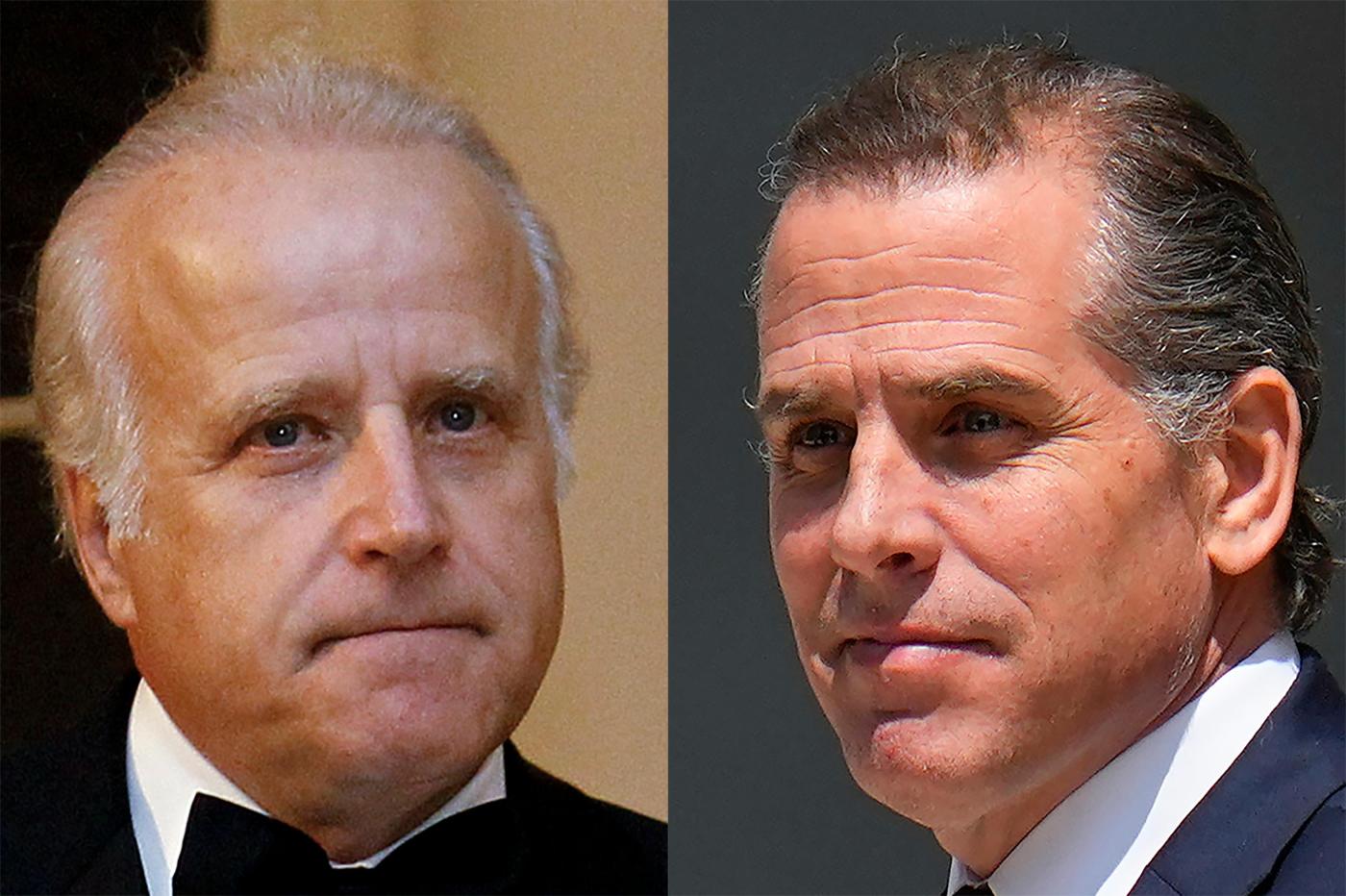
OMAHA BEACH, France (AP) — Under their feet, the sands of Omaha Beach, and in their rheumy eyes, tears that inevitably flowed from being on the revered shoreline in Normandy, France, where so many American young men were cut down 80 years ago on D-Day.

Veterans of World War II, many of them centenarians and likely returning to France for one last time, pilgrimaged Tuesday to what was the bloodiest of five Allied landing beaches on June 6, 1944. They remembered fallen friends. They relived horrors they experienced in combat. They blessed their good fortune for surviving. And they mourned those who paid the ultimate price.

They also bore a message for generations behind them, who owe them so much: Don’t forget what we did.

“They probably wouldn’t be here if we hadn’t be successful,” said Llilburn “Bill” Wall, who flew bombers in WWII and will celebrate his 101st birthday this week as world leaders gather in France to pay homage to the D-Day generation.

As decades pass, D-Day anniversaries in Normandy have become increasingly fun-fair like, clogging the region’s leafy roads with WWII-era fans dressed in the uniforms and driving restored vehicles of the time. But the presence of an ever-dwindling number of veterans keeps the commemorations real, inevitably raising questions about whether the memories, pathos and lessons of WWII will fade when they are gone.

“There are things worth fighting for. Although I wish there was another way to do it than to try to kill each other. But sometimes you’re called upon to do something and you just do it. You know? That’s it. These people looked death in the face and just kept right on coming,” said Walter Stitt, who turns 100 in July and fought in tanks — surviving the destruction of three.

“All those young men that never had a chance to go home and find a love of their life and hold their children in their arms,” he said on Omaha, wiping away a tear.

On the bluffs above Omaha, at the Normandy American Cemetery with 9,387 immaculately tended graves, 100-year-old Bob Gibson paid tribute to comrades who fell on D-Day, when he landed on the other, less-bloody American landing beach, code-named Utah.

“You don’t want other people to go through the same thing,” he said. “Because I’ve seen a lot of these boys that never even made the beach, believe me. And we were all 18, 19 years old.”

“I’m glad I made it. The old boy upstairs took care of me,” he said, gesturing skyward.

Across the Normandy coast where the largest-ever land, sea and air armada punctured Adolf Hitler’s defenses in western Europe on D-Day and helped precipitate his downfall 11 months later, Allied veterans are the VVIPs of this week’s 80th anniversary celebrations.

Related Articles


Biden will mark D-Day anniversary in France as Western alliances face threats at home and abroad


Centenarian veterans are sharing their memories of D-Day, 80 years later


Remembering D-Day: Key facts and figures about the invasion that changed the course of World War II


With time short, veterans seize the chance to keep their D-Day memories alive for others


French children hail D-Day veterans as heroes as they arrive in Normandy for anniversary events

More veterans were on their way Tuesday, traveling by ferry from southern England across the English Channel that 23,000 Allied airborne troops flew over to drop on D-Day into Normandy and which more than 132,000 others crossed aboard thousands of ships that stretched as far as eyes could see, landing on Utah and Omaha and three other code-named beaches: Gold, Juno and Sword.

“It looked like you could walk across the Channel using boats as stepping stones,” recalled 100-year-old Robert Pedigo, who was a nose gunner aboard a B-24 bomber that flew over the landing beaches on D-Day to pound German forces from the air. He was part of the veteran group that visited Omaha on Tuesday, brought to France for the 80th anniversary by American Airlines.

Back at base on D-Day night, he was told the Allies had suffered thousands of casualties.

“Overwhelming,” he recalled. Although his bombing mission that day proved to be among the “easiest” of 30 he flew over occupied France and Nazi Germany, “the emotional impact was the greatest.”

More than 4,400 Allied troops were killed on D-Day, including more than 2,500 Americans. The Allied toll grew appallingly in the Battle of Normandy that ensued, with 73,000 killed and 153,000 wounded.

Eight decades on, veterans are making more pleasant new memories to go with painful old ones.

Aboard the Mont St. Michel ferry carrying them Tuesday to France, about 20 British veterans gathered on deck and waved like rockstars to well-wishers who cheered them off.

A pipe band struck up a stirring rendition of “Brave Scotland.” Sailors stood at attention. Fireboats blasted their hoses in an arc. A military transport plane flew past twice.

RAF veteran Bernard Morgan, who worked in communications on D-Day, chuckled: “It was more pleasant coming today than it was 80 years ago.”

Danica Kirka reported from the Mont St. Michel ferry in the English Channel.