What to stream: Go behind the music with these new documentaries

posted in: News | 0

Katie Walsh | Tribune News Service

There are a few new and notable music documentaries following the lives and careers of some of the most iconic American rock musicians of the 20th century that have debuted recently on streaming and are worth checking out.

The Cyndi Lauper documentary “Let the Canary Sing,” which debuted Tuesday, June 4, on Paramount+, takes an in-depth look at the life and career of the talented Brooklyn songstress, as well as her lasting legacy as a pioneering feminist pop artist. The film follows a traditional biopic format, with interviews with Lauper and her closest family, friends and collaborators, but what makes it interesting is the granular examination of how she established her signature look and sound, and what makes it distinctive. There’s an extended sequence about the writing and arrangement of her iconic anthem “Girls Just Wanna Have Fun,” not just the unique sound of the song, and her voice, but the styling of the music video, and how she and her team managed to make it a hit thanks to professional wrestling of all things (Lou Albano played her dad in the video). Directed by Alison Ellwood, who also directed the 2020 documentary “The Go-Gos,” “Let the Canary Sing” is a rousing tribute to the singular force that is Cyndi Lauper. Stream it on Paramount+

Over on Hulu, rock out with the four-part documentary miniseries “Thank You, Goodnight: The Bon Jovi Story,” which looks at the epic rise of the enduring hair metal band from New Jersey. Framed around rehearsals for a new tour, the doc follows Jon Bon Jovi (aka Jon Bongiovi) on the cusp of his 60th birthday, reflecting on the past. Each episode chronicles a different chapter in the Bon Jovi story, their meteoric rise to fame, tensions among the band, and reaching new generations of fans. The documentary series is directed by Emmy Award-winning filmmaker Gotham Chopra. Stream all four parts on Hulu now.

Or, catch a wave with “The Beach Boys” streaming on Disney+. This documentary, directed by Frank Marshall and Thom Zimmy, features most of the members of the iconic surf rock band, who defined the fantasy of California life back in the 1960s. Scholars and famous fans including Janelle Monae and Lindsey Buckingham help to explicate the genius of the Beach Boys, who were a family band of three brothers, a cousin and a friend, singing about surfing and beach life — and going toe-to-toe with the lads from Liverpool, the Beatles. However, the documentary has been criticized for not fully exploring the famous rift between Mike Love and Brian Wilson, and dismissing some of Wilson’s more critically acclaimed experiments like “Pet Sounds” and “Smile.” Check it out for yourself on Disney+.

And for something more bite-sized, the YouTube channel Drumeo has a truly addictive series for music fans. They get famous drummers into the studio, play them a drumless track of a song they’ve never heard before, and then record what they come up with. Watch Chad Smith from the Red Hot Chili Peppers tear into a freestyle over a 30 Seconds to Mars track, or Megadeth’s Dirk Verbeuren tackle the Killers and Paramore. Once you start, it’s hard to stop, just watching incredibly talented people do what they do best. It’s spellbinding. Check it out on Drumeo’s YouTube channel.

———

(Katie Walsh is the Tribune News Service film critic and co-host of the “Miami Nice” podcast.)

©2024 Tribune Content Agency, LLC

‘The Watchers’ review: With a dark story set in Ireland, new Shyamalan comes out to play

posted in: News | 0

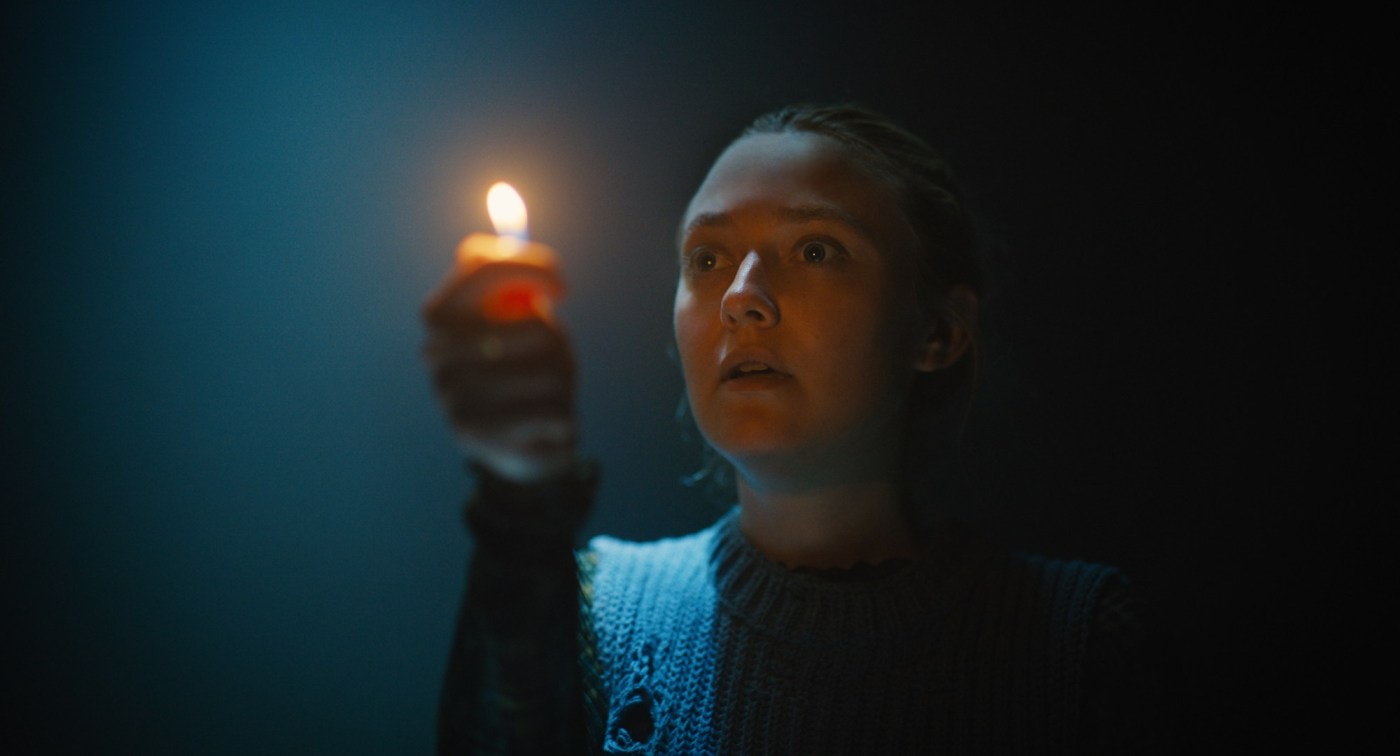
A steady, largely effective adaptation of the 2022 novel by A.M. Shine, writer-director Ishana Night Shyamalan’s “The Watchers” stars Dakota Fanning as an American working in a pet shop in Galway, Ireland, vaping her current life away.

A long-distance parrot delivery takes her (and parrot) to the Connemara region in western Ireland, through a scenic, oddly unmapped patch of forest where The Watchers reside. These creatures, barely glimpsed at first, move quickly, are prone to unsettling shrieks and, as the film proceeds, require more and more expository interludes for the four humans trapped in those woods. For now, they’re protected by a sleek concrete and glass bunker. Fanning’s character, Mina, is the fourth and latest visitor/prisoner, and the most determined to scoot.

The script follows the book’s story beats quite faithfully. The leader of the human survivors, Madeline (snow-haired beauty Olwen Fouéré, whose unblinking intensity makes every utterance stick), has been trapped in the magical forest — magical in a not-fun way — the longest. Ciara, whose husband has gone missing-presumed-dead in the woods, is played by Georgina Campbell (also good, though the role feels thin). Twitchy, slightly off Daniel (Oliver Finnegan) makes the best of things and follows all the rules for survival, dutifully.

The Watchers come out of their subterranean tunnels when the sun sets, and (no spoilers here) appear to have a great interest in simply studying the humans behind the thick but not impenetrable windows of the bunker. How’d that bunker get there? What do these Watchers look like? What do they want? What past tragedy haunts Mina? As in the novel, the answers emerge in due course.

Two lost souls (Georgina Campbell and Dakota Fanning) explore a mysterious, unmapped forest in western Ireland in “The Watchers.” (Warner Bros. Pictures)

The most insinuating elements of this debut feature (Shyamalan’s filmmaker father, M. Night Shyamalan, served as one of the producers) point to a filmmaker of legitimate promise and a knack for slow builds. The movie isn’t gory (strike one in 2024) or innately sadistic (strike two). It’s also a little sludgy in the writing. There are times in “The Watchers” when Madeline, a sometime educator, we’re told, turns into a de facto adjunct professor specializing in expository restatement.

Time and the next feature will tell if Shyamalan can further develop her visual assurance while realizing not every story turn benefits from a verbal recap or footnote. Even with its drawbacks, I found “The Watchers” worth watching, even with its odd (and perhaps too faithful to the book) final 15 minutes. The director works well with cinematographer Eli Arenson to envelop the chamber-sized ensemble in various shades of dread, or comfort.

This tale of supernatural riddles wouldn’t work at all if we couldn’t invest in Mina’s psychic burden. Fanning doesn’t have to stress it; she knows how to let it come through in small matters of body language, and in the eyes. That makes acting sound easy, which it is not. Neither is adapting a story involving a dense underlay of folklore, in this case to imperfect but absorbing results.

“The Watchers” — 3 stars (out of 4)

MPA rating: PG-13 (for violence, terror and some thematic elements)

Running time: 1:42

How to watch: Premieres in theaters June 7

Michael Phillips is a Tribune critic.

Obituary: Mike Sweeney, former Pioneer Press crime reporter and CEO of the Twin Cities Newspaper Guild

posted in: News | 0

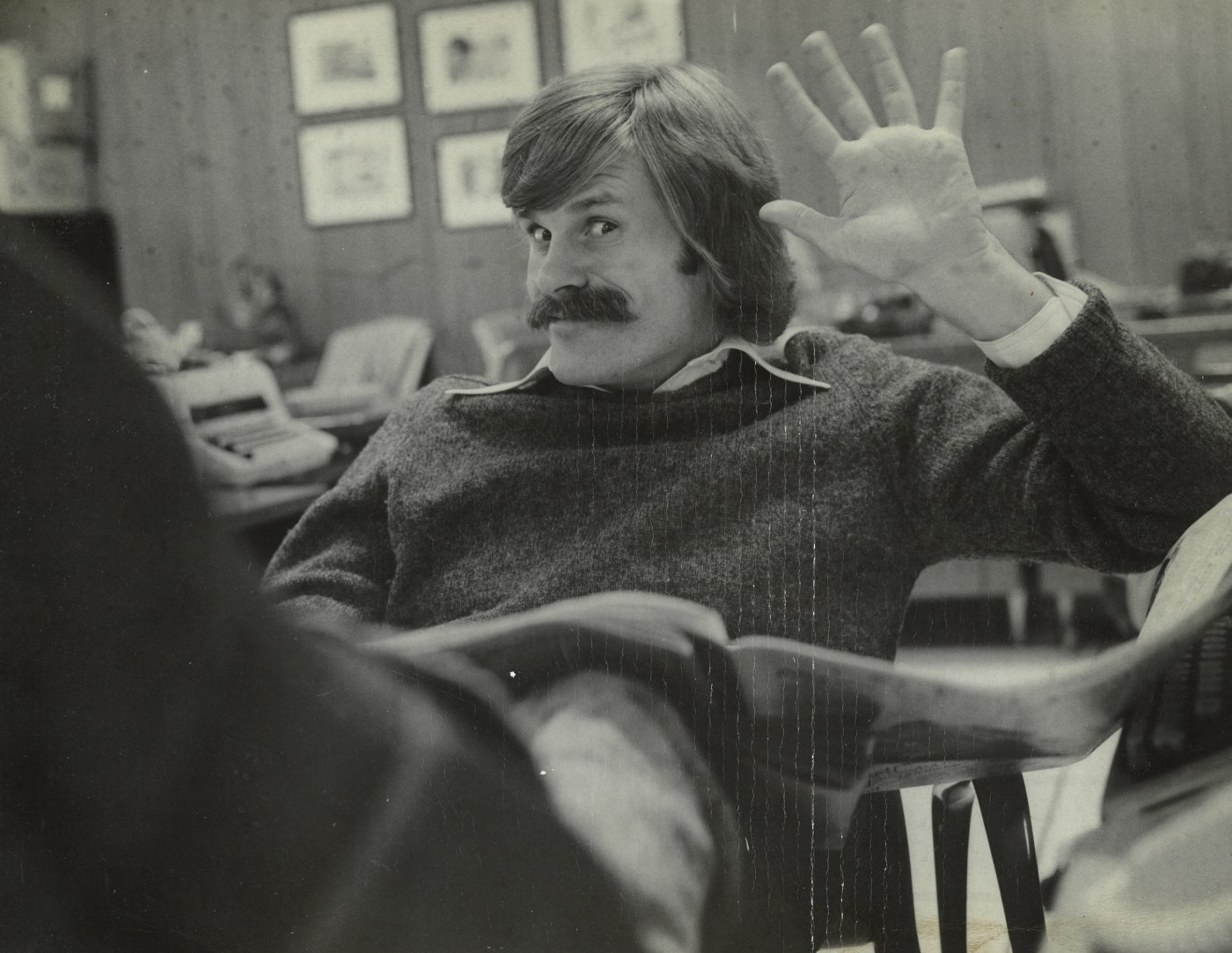
John “Mike” Sweeney joined the U.S. Marine Corps and served as a combat correspondent in the Vietnam War. When he came home, he refused to accept his “Distinguished Journalist” award from the state of Minnesota or attend his own recognition ceremony, such was his disgust with the war he covered.

Born in an army base, baptized by the news industry, Sweeney would take the same conscientious cantankerousness into the newsroom of the St. Paul Pioneer Press, where he served for 22 years, much of it as a crime and courts reporter, editor and union steward before becoming chief executive officer of the Twin Cities Newspaper Guild.

Sweeney, 80, died June 1 at the Minneapolis Veterans Home following a years-long illness. He passed away from complications of Ataxia and Parkinson’s disease, “of which he willfully fought until his last breath,” wrote his daughter, former journalist Kathleen Sweeney, in a written obituary prepared for her father.

Former newsroom colleagues remembered him as the kind of eagle-eyed advocate for journalists and journalism whom they might butt heads with while in the moment-to-moment trenches of news-making but still respect the next day.

“While we often disagreed, I knew he was a man of principle who stood up for what he believed,” wrote Walker Lundy, a former executive editor for the Pioneer Press, in an online forum this month.

Former newsroom colleague Brian Bonner, a recent editor of the Kyiv Post, recalled Sweeney as “a true blue friend, occasional golf partner and a mentor” who had no hesitation rewriting one of Bonner’s stories while editing him on a weekend shift in the early 1980s.

“He displayed the widest range of emotions, sometimes in a single work shift — funny as hell, yet he could get mad as hell, too, as everyone knows,” said Bonner, posting to an online forum this month. “He made work exciting with his passion for living. In the later years of our friendship, with me in Ukraine, his messages were uplifting and typical of the love, support, curiosity and concern he showed for his friends.”

Former newsroom colleague David Hawley recalled how Sweeney was the first person he met when he started at the Pioneer Press  in 1978.

“We had both worked at the (Associated Press) and I remember he informed me that the newspaper’s contract, unlike the AP, allowed me a day off on my birthday — which, as it turned out, was the day after my first day at the paper,” wrote Hawley, in an online forum. “I dutifully mentioned this to Don O’Grady, then the managing editor. He shot a dirty look at Mike and then turned to me and said, ‘You’re gonna fit in here.’ I got the next day off.”

Sweeney, according to his daughter, was the “first and only baby” born at the Camp Lockett Army Base in Campo, Calif. His family later relocated to Hopkins, Minn., where he was raised as the eldest of five brothers and two sisters. He attended Most Holy Trinity Elementary School and Benilde High School before joining the U.S. Marine Corps. After service in Vietnam, he completed his journalism degree at the University of Minnesota and wrote for the Fairmont Sentinel and the Associated Press in Bismarck, North Dakota.

He then spent the next two decades at the Pioneer Press, specializing in crime and courts coverage, before leading the Twin Cities Newspaper Guild until his retirement in 2006. In retirement, Sweeney partnered with novelist and former Pioneer Press colleague John Camp to write a book loosely based on a story he had written years prior for the newspaper. The novel “Bad Blood” went on to win a Thriller Writers Award.

Among his pastimes, wrote his daughter, Sweeney enjoyed “camping with his children and friends in the Boundary Waters, photographing loved ones, running marathons, studying and achieving a TaeKwonDo Brown belt, golfing, skiing and reading an endless number of books, and of course, the newspaper.”

He is survived by Angeles, his wife of 49 years, his children Kathleen, Carlo and Michael, six grandchildren and six siblings. A Celebration of Life service will be held at 11 a.m. on June 29 at the Minneapolis Veterans Home, 5101 Minnehaha Ave. South. In lieu of flowers, please donate to the Bob Allison Ataxia Research Center at the University of Minnesota or the National Ataxia Foundation.

Related Articles

Obituaries |


Bill Walton, Hall of Fame player who became a star broadcaster, dies of cancer at 71

Obituaries |


John Koerner, bluesman who inspired a young Bob Dylan, dies at 85

Obituaries |


Documentary filmmaker Morgan Spurlock, who skewered fast food industry, dies at 53

Obituaries |


Minneapolis-born Dolores Rosedale, sidekick on ‘Beat the Clock,’ dies at 95

Obituaries |


Obituary: For Denny Seefeldt, Scandia’s first mayor, civic duty was a way of life

New help for dealing with aggression in people with dementia

posted in: Society | 0

Judith Graham | (TNS) KFF Health News

Caring for older adults with dementia is stressful, especially when they become physically or verbally aggressive, wander away from home, develop paranoia or hallucinations, engage in inappropriate or repetitive behaviors, or refuse to let caregivers help them.

Upward of 95% of patients experience these neuropsychiatric symptoms of dementia, which tend to fluctuate over time and vary in intensity. They’re the primary reasons people with dementia end up in assisted living facilities or nursing homes. At some point, families and friends trying to help at home simply can’t manage.

“When people think about dementia, they usually think about forgetfulness and memory impairment,” said Mary Blazek, director of the geriatric psychiatry clinic at the University of Michigan. “But it’s behavioral and psychological disturbances that are most disruptive to patients’ and caregivers’ lives.”

Now, help is available from a first-of-its-kind website created by prominent experts in this field. It offers free training in a comprehensive approach to managing neuropsychiatric symptoms of dementia — a method known as DICE — based on several decades of scientific research as well as extensive clinical practice.

The website’s goal is to “give people tools to better manage often-distressing situations,” said Helen Kales, chair of the Department of Psychiatry and Behavioral Sciences at UC Davis Health in Sacramento, California, and one of DICE’s creators. Users learn that neuropsychiatric symptoms are caused by changes in the brain that increase people’s vulnerability. Nine video modules and two simulations provide comprehensive information and problem-solving techniques.

More than 16 million unpaid caregivers — primarily family members and friends — help people with dementia live at home. (An estimated 20% of patients live in institutional settings.) The most common form of dementia, Alzheimer’s disease, affects nearly 7 million Americans 65 and older.

DICE is also designed to help “avoid the knee-jerk prescribing of psychoactive medications” that have potentially serious side effects, Kales said. Several medical organizations recommend that non-pharmaceutical approaches to troublesome behaviors be tried before drug therapy, but, in practice, this doesn’t routinely happen.

Drugs prescribed for dementia include antipsychotic medications, such as Risperidone, which carry a black-box warning noting an increased risk of sooner-than-expected death in elderly patients; anticonvulsants, such as gabapentin, for which use has been on the rise despite concerns about safety; benzodiazepines, such as Ativan, which are associated with an increased risk of falls and, thus, fractures; and Celexa and other such antidepressants that have limited data supporting their effectiveness in easing dementia symptoms.

DICE is a mnemonic — a pattern of letters meant to serve as a memory aid — that stands for Describe, Investigate, Create, and Evaluate, the four pillars of this approach. At its core is an assumption people with dementia engage in disturbing behaviors for often-unrecognized reasons that can be addressed once they are understood.

Take an example on the website featuring Jennifer, a 55-year-old caregiver for her mother, Betty, 85, whom she tries to bathe daily in the late afternoon. When Betty resists getting into the tub, Jennifer insists, “Let’s go! I have things to do.” Betty responds by smacking her and shouting, “Leave me alone. It hurts.”

DICE asks caregivers to step back from the heat of the moment and examine issues from three perspectives: the person with dementia, the caregiver, and the environment. All can contribute to distressing situations and all need to be considered in fashioning a response.

Examining the problem by using a “who, what, when, how, why” prompt can reveal several potential issues:

The patient. Betty has arthritis and may experience pain getting in and out of the tub. She may feel tired and overwhelmed in the late afternoon.
The caregiver. Jennifer may become easily frustrated when she encounters resistance — adopting a scolding and commanding tone rather than breaking down what Betty needs to do in simple steps.
The environment. The bathroom tends to be cold, with overly bright lights, tepid bathwater, and no grab bars around the tub.

Some possible solutions discussed on the website: Offer Betty an over-the-counter pain reliever before her bath. Try baths in the morning, not the afternoon. Relax expectations that she’ll have a daily bath and offer sponge baths several times a week. Install grab bars around the tub, and make sure the water temperature is comfortable. Use a nicely scented soap and play music to help Betty relax. Speak calmly, making simple statements.

These embody strategies shown to improve neuropsychiatric symptoms associated with dementia: recognizing and addressing underlying medical issues such as pain, infections, or delirium; simplifying the tasks a person with dementia is expected to perform; and establishing daily routines that give structure to the day.

Other important steps: Engage the person in activities that are meaningful to them, including social interactions. Reduce clutter and the potential for overstimulation in the environment. Make sure the person is using hearing or vision aids, if needed. Get them outside and exposed to light.

If safety, psychosis, or major depression are urgent concerns, then consider using psychoactive medications after consulting a physician.

Of course, this isn’t a comprehensive list of recommendations. Nor is it prescriptive. What works for one person with dementia may not work for another.

Using DICE is an iterative process that involves creativity and frequent evaluation to assess whether strategies are working, Kales said. If not, new interventions should be tried.

Although this is the first time family caregivers can access the DICE toolkit, the program has been available to health care professionals for a while. Notably, all of Wisconsin’s dementia care specialists have been trained in DICE over the past few years (every county in that state has a specialist who helps families with dementia).

“It’s a really pragmatic approach that’s put together in a very thoughtful fashion,” said Art Walaszek, a professor of psychiatry and medicine at the University of Wisconsin School of Medicine and Public Health who’s been involved in that effort.

Other dementia training programs are available, some of which review behavioral and psychiatric symptoms in less depth, and they, too, are increasingly available online. Another valuable resource, Best Programs for Caregiving, launched in March, lists evidence-based programs across the country and their availability. Enter a ZIP code to find information that previously hasn’t been assembled in one place. This site, too, is very much worth consulting.

____

We’re eager to hear from readers about questions you’d like answered, problems you’ve been having with your care, and advice you need in dealing with the health care system. Visit kffhealthnews.org/columnists to submit your requests or tips.

___

(KFF Health News is a national newsroom that produces in-depth journalism about health issues and is one of the core operating programs of KFF — the independent source for health policy research, polling and journalism.)

©2024 KFF Health News. Distributed by Tribune Content Agency, LLC.