Why Robert F. Kennedy’s Jr.’s current presidential polling numbers might not hold up into November

posted in: News | 0

By LINLEY SANDERS (Associated Press)

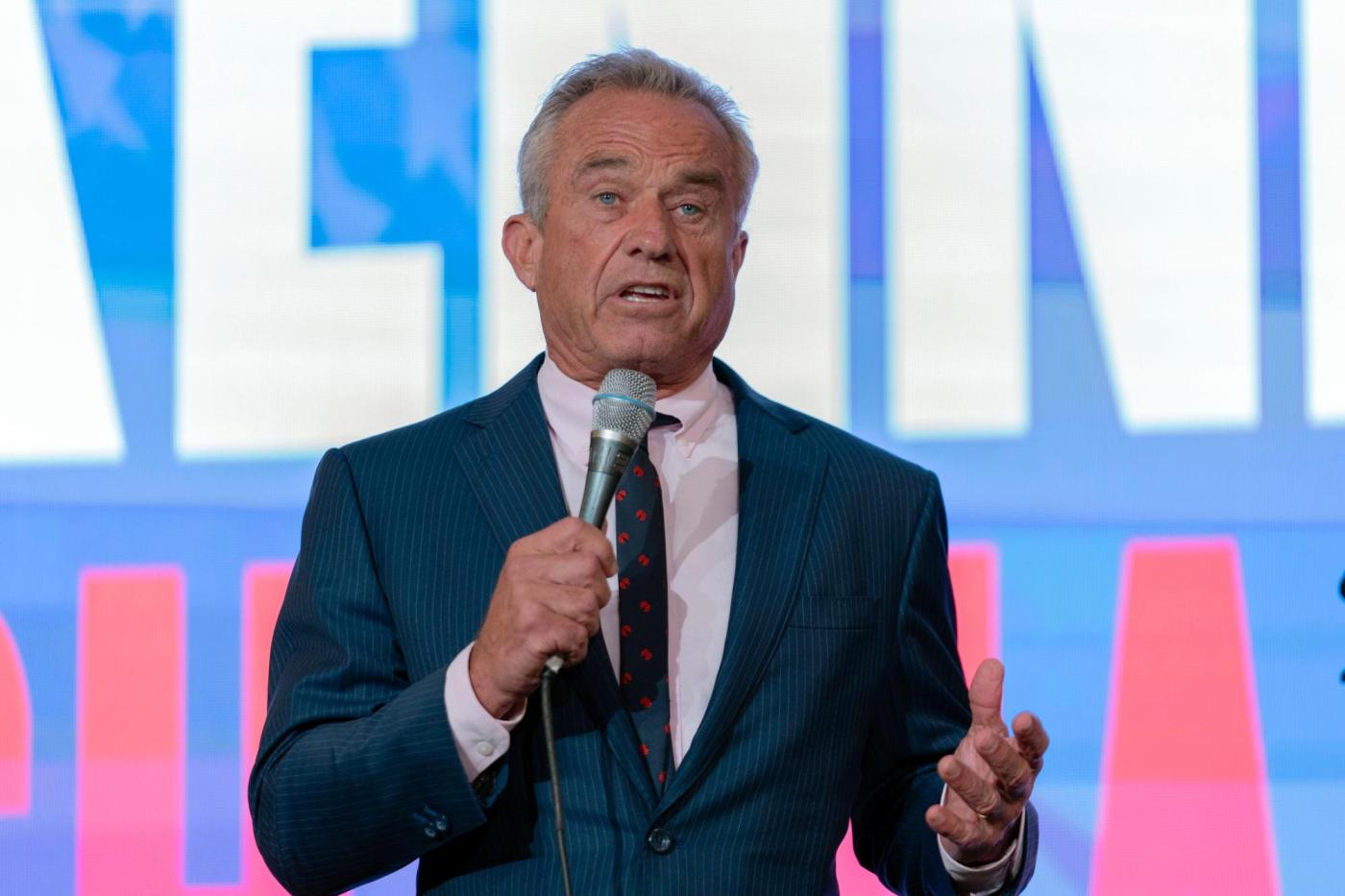
WASHINGTON (AP) — Independent presidential candidate Robert F. Kennedy Jr. has reached 15% or more in three approved national polls. One more, and he will have met one of CNN’s benchmarks to qualify for the debate June 27 with Democratic President Joe Biden and presumptive Republican nominee Donald Trump.

But Kennedy cannot count on maintaining his current level of support as the November election nears.

It is pretty common for third-party candidates to look like they have polling momentum in the months before an election, only to come up far short at the ballot box, according to an Associated Press analysis of Gallup data going back to 1980.

That is not a sign that the polls about Kennedy are wrong right now. They just are not predictors of what will happen in the general election.

Studies have shown that people are bad at predicting their future behavior, and voting is months away. And in a year with two highly unpopular candidates in a rematch from 2020, voters may also use their early support for a third-party candidate to express their frustration with the major party choices. In the end, voters may support the candidate for whom they feel their vote can make a difference or they may decide not to vote at all.

AMERICANS WANT A THIRD PARTY, IN THEORY

The concept of a third party has been popular for a long time.

A poll conducted by Gallup in 1999 found two-thirds of U.S. adults said they favored a third political party that would run candidates for president, Congress and state offices against Republicans and Democrats. (The AP analysis used Gallup data, when available, because Gallup has a long history of high-quality polling in the United States.)

About 6 in 10 U.S. adults have said in Gallup polling since 2013 that the Republican and Democratic parties do “such a poor job representing the American people” that a third major party is needed. In the latest Gallup polling, much of that enthusiasm is carried by independents: 75% say a third party is needed. About 6 in 10 Republicans and slightly fewer than half of Democrats (46%) say an alternative is necessary.

Marjorie Hershey, a professor emeritus in the political science department at Indiana University, said Americans generally like the idea of a third party until specifics emerge, such as that party’s policies and nominees.

“It’s a symbolic notion. Do I want more choices? Well, sure. Everybody always wants more choices, more ice cream choices, more fast-food choices,” Hershey said. “But if you start to get down to brass tacks and you talk about, so would it be tacos or burgers, then that’s an entirely different choice, right?”

THIRD-PARTY PRESIDENTIAL CANDIDATES RARELY GET A SUBSTANTIAL SHARE OF THE VOTE

That hypothetical support for third-party candidates often breaks down quickly.

The AP analysis looked at polling for every independent and minor party presidential candidate who received at least 3% of the popular vote nationally going back to the 1980 election.

Related Articles

National Politics |


For Trump, N.D. Gov Doug Burgum emerges as a safe option, and a wild card

National Politics |


Wins at the ballot box for abortion rights still mean court battles for access

National Politics |


‘So much death’: Lawmakers weigh stricter speed limits, safer roads for pedestrians

National Politics |


Election monitors nervously practice for the ‘big dance in November’

National Politics |


Alito’s flag controversy foreshadows contentious Supreme Court rulings

In multiple elections, including the 1980, 1992, and 2016 presidential races, third-party candidates hit early polling numbers that were much higher than their ultimate vote share. For instance, in polls conducted in May and June 1980, between 21% and 24% of registered voters said they would like to see independent candidate John Anderson, a veteran Republican congressman from Illinois, win when he ran for president against Republican Ronald Reagan and Democratic incumbent Jimmy Carter. Anderson went on to earn 7% of the popular vote.

Part of the problem is that early polls often look quite different from the actual general election vote.

Voters “don’t know what’s going to happen between now and the election,” said Jeffrey Jones, a senior editor at Gallup. “Things are going to come up in the campaign that could change the way they think.”

Decades after Anderson, polls conducted during the 2016 presidential campaign put support for Libertarian Party candidate Gary Johnson, a former New Mexico governor, at between 5% and 12% in polls of registered voters conducted from May to July. That led some people to predict that he could do better than any third-party candidate in decades. Johnson won about 3% of the vote in that election.

Johnson told the AP that he believes his name should have been included in more polls, though he was in surveys used to determine eligibility for debates.

He also contends that independent candidates struggle to match major party candidates in fundraising.

“It’s money, first and foremost. People don’t donate if they don’t think that you have a possibility of winning,” Johnson said. “I’m not excluding myself from that same equation. Look, am I going to give money to somebody that I know is going to lose? I’d rather go on a vacation in Kauai,” Johnson said in an interview while driving with his family on a trip in Hawaii.

KENNEDY’S SUPPORT MAY DROP OFF AS THE ELECTION NEARS

The American electoral system makes it hard for third parties to thrive. Still, it is possible to have a significant impact without coming close to winning.

Billionaire businessman Ross Perot is among the most successful modern-day examples. He won 19% of the vote when he ran for president in 1992. But that was substantially lower than his support in earlier polling. In polls conducted from May to July of that year, between 30% and 39% of registered voters said they would vote for Perot.

There are already reasons to believe that at least some of Kennedy’s polling support may be a mirage. (The Kennedy campaign did not respond to a request for comment.)

A CNN poll conducted last summer when he was running for the Democratic nomination found that 2 in 10 Democrats who would consider supporting him said that their support was related to the Kennedy name or his family connections. An additional 17% said they did not know enough about him and wanted to learn more, while only 12% said it was because of support for his views and policies.

“A variable that is so different from all these other people is the Kennedy name,” said Barbara Perry, an expert in presidential studies at the University of Virginia’s Miller Center. “There’s a lot of emotion around him that I would say was not there in the Anderson, Perot, (Ralph) Nader and Johnson cases.”

There also is some evidence that Americans are using support for Kennedy to express frustration with Biden and Trump.

Hershey notes that for many people, presidential elections can feel abstract until a few weeks before it happens, so it is good to take early poll numbers with a grain of salt.

Such polls “don’t necessarily reflect actual political issues,” Hershey said. “They reflect general views about life.”


African elephants call each other by unique names, new study shows

posted in: News | 0

By CHRISTINA LARSON (AP Science Writer)

WASHINGTON (AP) — African elephants call each other and respond to individual names — something that few wild animals do, according to new research published Monday.

The names are one part of elephants’ low rumbles that they can hear over long distances across the savanna. Scientists believe that animals with complex social structures and family groups that separate and then reunite often may be more likely to use individual names.

“If you’re looking after a large family, you’ve got to be able to say, ‘Hey, Virginia, get over here!’” said Duke University ecologist Stuart Pimm, who was not involved in the study.

It’s extremely rare for wild animals to call each other by unique names. Humans have names, of course, and our dogs come when their names are called. Baby dolphins invent their own names, called signature whistles, and parrots may also use names.

Each of these naming species also possesses the ability to learn to pronounce unique new sounds throughout their lives — a rare talent that elephants also possess.

For the study in Nature Ecology & Evolution, biologists used machine learning to detect the use of names in a sound library of savanna elephant vocalizations recorded at Kenya’s Samburu National Reserve and Amboseli National Park.

The researchers followed the elephants in jeeps to observe who called out and who appeared to respond — for example, if a mother called to a calf, or a matriarch called to a straggler who later rejoined the family group.

Analyzing only the audio data, the computer model predicted which elephant was being addressed 28% of the time, likely due to the inclusion of its name. When fed meaningless data, the model only accurately labeled 8% of calls.

“Just like humans, elephants use names, but probably don’t use names in the majority of utterances, so we wouldn’t expect 100%,” said study author and Cornell University biologist Mickey Pardo.

Elephant rumbles include sounds that are below the range of human hearing. The scientists still don’t know which part of the vocalization is the name.

Researchers tested their results by playing recordings to individual elephants, who responded more energetically, ears flapping and trunk lifted, to recordings that contained their names. Sometimes elephants entirely ignored vocalizations addressed to others.

“Elephants are incredibly social, always talking and touching each other — this naming is probably one of the things that underpins their ability to communicate to individuals,” said co-author and Colorado State University ecologist George Wittemyer, who is also a scientific adviser for nonprofit Save the Elephants.

“We just cracked open the door a bit to the elephant mind.”

___

The Associated Press Health and Science Department receives support from the Howard Hughes Medical Institute’s Science and Educational Media Group. The AP is solely responsible for all content.

What does Israel’s rescue of 4 captives, and the killing of 274 Palestinians, mean for truce talks?

posted in: News | 0

TEL AVIV, Israel — Israel’s dramatic weekend rescue of four hostages from the Gaza Strip, in an operation that local health officials say killed 274 Palestinians, came at a sensitive time in the 8-month-old war, as Israel and Hamas weigh a U.S. proposal for a cease-fire and the release of the remaining captives.

Both sides face renewed pressure to make a deal: The complex rescue is unlikely to be replicated on a scale needed to bring back scores of remaining hostages, and it was a powerful reminder for Israelis that there are still surviving captives held in harsh conditions. Hamas, which has been designated as a terrorist organization by the United States, Canada and the European Union, now has four fewer bargaining chips.

But they could also dig in, as they repeatedly have over months of indirect negotiations mediated by the United States, Qatar and Egypt. Hamas is still insisting on an end to the war as part of any agreement, while Israel says it is still committed to destroying the group.

Here is a look at the fallout from the operation and how it might affect cease-fire talks:

ELATION, AND MOUNTING CALLS FOR A DEAL

The rescue operation was Israel’s most successful since the start of the war, bringing home four of the roughly 250 captives seized by Hamas in its Oct. 7 cross-border attack, including Noa Argamani, who became an icon of the struggle to free the hostages.

The raid also killed at least 274 Palestinians, according to the Gaza Health Ministry, deepening the suffering of people in Gaza who have had to endure the brutal war and a humanitarian catastrophe. The ministry does not distinguish between fighters and civilians in its tallies.

Related Articles

World News |


US-built pier in Gaza is reconnected after repairs, and aid will flow soon, US Central Command says

World News |


Israeli strike kills at least 33 people at a Gaza school the military claims was being used by Hamas

World News |


House passes proposal sanctioning top war-crimes court after it sought Netanyahu arrest warrant

World News |


Famine is possibly underway in northern Gaza despite recent aid efforts, a new report warns

World News |


Biden says Hamas is sufficiently depleted. Israel leaders disagree, casting doubts over cease-fire

The rescue was met with elation in Israel, which is still reeling from the Hamas attack and agonizing over the fate of the 80 captives and the remains of over 40 others still held in Gaza. Israeli hard-liners are likely to seize on it as proof that military pressure alone will bring the rest back.

But only three other hostages have been freed by military force since the start of the war. Another three were mistakenly killed by Israeli forces after they escaped on their own, and Hamas says others have been killed in Israeli airstrikes.

“If anyone believes that yesterday’s operation absolves the government of the need to strike a deal, they are living a fantasy,” Israeli columnist Nahum Barnea wrote in the mass-selling Yediot Aharonot newspaper. “There are people out there who need to be saved, and the sooner the better.”

Even the Israeli army’s spokesman, Rear Adm. Daniel Hagari, acknowledged the limits of military force. “What will bring most of the hostages back home alive is a deal,” he told reporters.

Over 100 hostages were released during a weeklong cease-fire last year, in exchange for Palestinians imprisoned by Israel, and reaching a similar agreement is still widely seen as the only way of getting the rest of the hostages back. Hours after Saturday’s rescue, tens of thousands of Israelis attended protests in Tel Aviv calling for such a deal.

U.S. President Joe Biden last week announced a proposal for a phased plan for a cease-fire and hostage release, setting in motion the administration’s most concentrated diplomatic push for a truce.

Biden described it as an Israeli proposal, but Prime Minister Benjamin Netanyahu has publicly questioned some aspects of it, particularly its call for the withdrawal of Israeli forces from Gaza and a lasting truce. His ultranationalist coalition partners have threatened to bring down his government if he ends the war without destroying Hamas.

That appears to have only deepened suspicions on the part of Hamas, which has demanded international guarantees that the war will end. It’s unclear if such guarantees have been offered, and Hamas has not yet officially responded to the plan.

NETANYAHU SEEKS TO GAIN

The rescue operation was a rare win for Netanyahu, who many Israelis blame for the security failures leading up to the Oct. 7 attack and the failure to return the hostages despite months of grinding war.

He has reveled in the operation’s success, rushing Saturday to the hospital where the freed hostages were held and meeting with each of them as cameras rolled. The rescue operation will likely help rehabilitate his image.

But as the elation fades, he will still face heavy pressure from an American administration that wants to wind the war down and an ultranationalist base that wants to vanquish Hamas at all costs. His main political opponent, the retired general Benny Gantz, quit the emergency wartime coalition on Sunday, leaving Netanyahu even more beholden to the hard-liners.

Netanyahu is already facing criticism from some of the families of deceased hostages, who say they received no such visits and accuse him of only taking credit for the war’s successes. Israel will also likely face heightened international pressure over the raid’s high Palestinian death toll.

“The success in freeing four hostages is a magnificent tactical victory that has not changed our deplorable strategic situation,” columnist Ben Caspit wrote in Israel’s Maariv daily.

It all makes for a tough balancing act, even for someone like Netanyahu, who friends and foes alike consider to be a master politician.

The operation could provide the kind of boost with the Israeli public that would allow him to justify making a deal with Hamas. Or he might conclude that time is on his side, and that he can drive a harder bargain with Hamas as it grapples with a major setback.

HAMAS LOSES BARGAINING CHIPS

Hamas has lost four precious bargaining chips it had hoped to trade for high-profile Palestinian prisoners. Argamani, widely known from a video showing her pleading for her life as terrorists dragged her away on a motorcycle, was a particularly significant loss for Hamas.

The raid may have also dealt a blow to Hamas’ morale. In the Oct. 7 attack, Hamas managed to humiliate a country with a far superior army, and since then it has repeatedly regrouped despite devastating military operations across Gaza.

But the fact that Israel was able to mount a complex rescue operation in broad daylight in the center of a crowded urban area has at least temporarily restored some of the mystique that Israel’s security forces lost on Oct. 7.

The operation also refocused global attention on the hostage crisis at a time when the U.S. is rallying world pressure on Hamas to accept the cease-fire deal.

But Hamas has a long history of withstanding pressure from Israel and others — often at enormous cost to Palestinians. The fighters may conclude that it’s best to use the remaining hostages to end the war while they still can — or they might just look for better places to hide them.

Related Articles

World News |


US-built pier in Gaza is reconnected after repairs, and aid will flow soon, US Central Command says

World News |


Israeli strike kills at least 33 people at a Gaza school the military claims was being used by Hamas

World News |


House passes proposal sanctioning top war-crimes court after it sought Netanyahu arrest warrant

World News |


Famine is possibly underway in northern Gaza despite recent aid efforts, a new report warns

World News |


Biden says Hamas is sufficiently depleted. Israel leaders disagree, casting doubts over cease-fire

Supreme Court will take up Meta’s bid to end lawsuit over Cambridge Analytica privacy scandal

posted in: Politics | 0

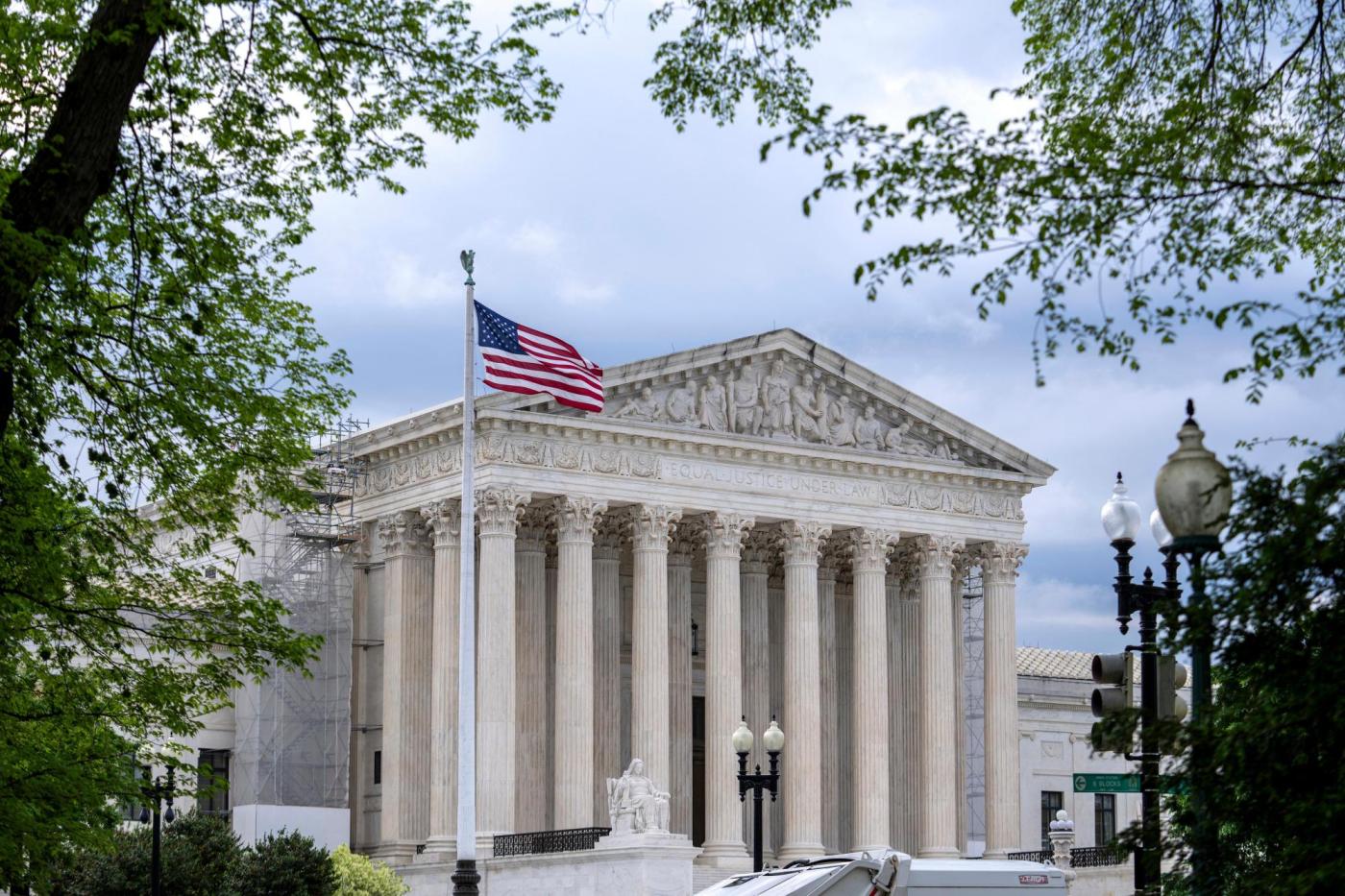
WASHINGTON — The Supreme Court said Monday it will consider shutting down a multibillion-dollar class action investors’ lawsuit against Facebook parent Meta stemming from the privacy scandal involving the Cambridge Analytica political consulting firm.

The justices agreed to hear Meta’s appeal of a lower-court ruling that allowed the class action to go forward. Investors allege that Meta did not fully disclose the risks that Facebook users’ personal information would be misused by Cambridge Analytica, a firm that supported Donald Trump’s successful Republican presidential campaign in 2016.

Inadequacy of the disclosures led to two significant price drops in the price of the company’s shares in 2018, after the public learned about the extent of the privacy scandal, the investors say.

The case will be argued in the fall.

Meta already has paid a $5.1 billion fine and reached a $725 million privacy settlement with users.

Cambridge Analytica had ties to Trump political strategist Stephen Bannon. It had paid a Facebook app developer for access to the personal information of about 87 million Facebook users. That data was then used to target U.S. voters during the 2016 campaign.

Related Articles

Business |


Congress wrestles with AI’s boost to campaigns, potential misuse

Business |


Many Americans are still shying away from EVs despite Biden’s push, an AP-NORC/EPIC poll finds

Business |


Justice Department’s ‘deepfake’ concerns over Biden interview audio highlights AI misuse worries

Business |


St. Paul to expand electric vehicle network with East Side project

Business |


Democrats wanted an agreement on using artificial intelligence. It went nowhere