States beg insurers not to drop climate-threatened homes

posted in: Society | 0

Alex Brown | (TNS) Stateline.org

In the coming years, climate change could force Americans from their homes, not just by raising sea levels, worsening wildfires and causing floods — but also by putting insurance coverage out of reach.

In places including California, Florida and Louisiana, some homeowners are finding it nearly impossible to find an insurance company that will cover their property. Others have seen their premiums climb so high that they can no longer pay. Experts say the trend is spreading throughout the country as natural disasters increase.

Most mortgage lenders require homeowners to maintain insurance. Without access to coverage, millions of Americans could find themselves forced to reconsider where they live. Consumer advocates say long-overdue conversations about development in areas prone to natural disasters are being driven by property insurers, not governments.

“Insurance companies have basically become our land-use officials,” said Doug Heller, director of insurance with the Consumer Federation of America, a research and advocacy nonprofit. “In 2023, the industry suddenly seemed to wake up and say, ‘There’s climate change, forget all those times we’ve nodded our head yes and told you that you can live there.’”

As the crisis escalates, state leaders are desperately trying to convince insurance companies to stick around. States are offering them more flexibility to raise premiums or drop certain homes from coverage, fast-tracking rate revisions and making it harder for residents to sue their insurance company.

Meanwhile, a flood of new policyholders are joining state-backed insurance “plans of last resort,” leaving states to assume more of the risk on behalf of residents who can’t find coverage in the private sector.

Industry leaders note that insurance companies have been hammered by heavy payouts — last year, 28 separate U.S. natural disasters caused at least $1 billion each in damage, according to federal figures— and say they simply can’t afford to provide coverage in the areas that face the highest risk.

Disaster costs are soaring. In the last five years, there have been 102 disaster events in the United States that caused at least $1 billion in damage. In the entire decade of the 1990s, there were 57 billion-dollar events (adjusted for inflation), and in the 1980s there were 33.

Natural disasters are increasing at the same time risk-prone areas are becoming ever more populated, and as property values are climbing. The price of repairs and replacement have skyrocketed due to inflation, workforce and supply chain issues. Insurers say costs also have been driven by an uptick in litigation and fraud.

“We’re experiencing record-breaking losses as it relates to natural disasters,” said Adam Shores, senior vice president for state government relations with the American Property Casualty Insurance Association, an industry group. “We want to be there, but when the math doesn’t work for a company, they have to make those decisions.”

While the insurance crisis is most acute in certain coastal states, climate experts say every region will face similar challenges, especially as severe storms batter the middle of the country. While some states have made marginal gains in stabilizing the insurance market, some experts say that progress may be short-lived.

“Insurers are the climate change canary in the coal mine,” said Dave Jones, the former insurance commissioner in California and director of the Climate Risk Initiative at the University of California, Berkeley’s Center for Law, Energy, & the Environment. “While these policy and regulatory interventions might help in the short run, they’re likely to be overwhelmed by the increasing risk and loss.”

‘The perfect storm’

In some hard-hit states, policymakers have focused on giving insurance companies more flexibility to adjust their rates and coverage options.

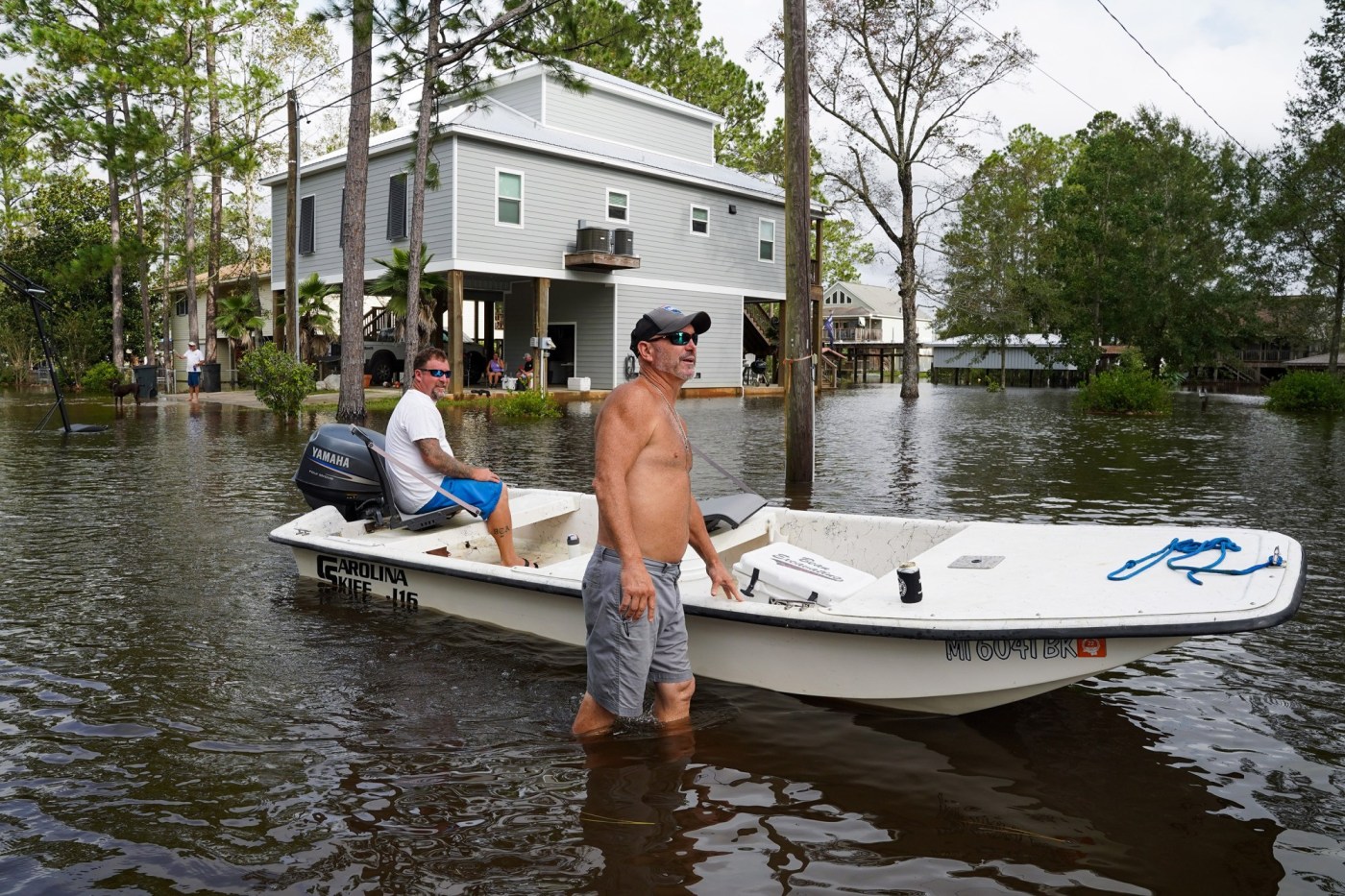
Four hurricanes walloped Louisiana in 2020 and 2021, causing $23 billion in insured losses. Twelve insurance companies became insolvent and dozens left the state. Residents in southern Louisiana especially have struggled to find coverage, and some have moved elsewhere because they couldn’t afford their premiums.

“It’s the perfect storm,” said Louisiana state Rep. Gabe Firment, a Republican. “We just do not have companies willing to write business in Louisiana right now, and you can’t blame them.”

Firment sponsored a measure, enacted this year, repealing a state rule that had blocked companies from dropping long-standing customers. Those dropped can join a state-run plan. Lawmakers hope that — given the ability to cancel the highest-risk policies — insurance companies will remain in the state and avoid massive rate hikes on their remaining customers.

Legislators passed a suite of other laws aimed at the crisis, speeding up the process for insurers to adjust their rates, extending a grant program to help residents fortify their homes and giving companies more time to pay out claims. Firment said the changes are designed to attract more companies back to the state, “but if we get two or three hurricanes this year, all bets are off.”

In California, many major insurers have canceled policies or stopped accepting new applications due to wildfire risk. Regulators there have proposed a rule that would allow companies to incorporate climate change projections into the models they use to set their rates.

“Insurers are not going to continue to write in every market if they can’t price accurately,” said Mark Friedlander, director of corporate communications with the Insurance Information Institute, an industry-backed research group.

Meanwhile, Democratic Gov. Gavin Newsom has put forth a measure that would speed up regulators’ approval of the rate revisions proposed by insurance companies. While seeking to give insurers more flexibility on rates, California leaders also have sought to protect residents by establishing a one-year moratorium on policy cancellations in disaster areas following a wildfire.

Officials at the state Department of Insurance did not respond to Stateline interview requests.

Homeowners’ insurance rates in Texas spiked 23% last year, twice the national average. The state has endured a myriad of disasters in recent years, but consumer advocates fear insurers are weaponizing climate change to jack up rates and demand looser regulations.

“[Insurance companies] are putting a gun to our heads, telling us, ‘Do it our way or we’ll pull up stakes,’” said Ware Wendell, executive director of Texas Watch, a nonprofit advocacy group. “They’re going to cherry-pick the country and only insure parts of the country that have less climate risk.”

The Texas Department of Insurance did not grant a Stateline interview request.

‘Last resort’

In several states, homeowners who can’t find private coverage are joining state-run plans. Originally intended to be a last-ditch option, because they generally offer limited coverage, these plans are seeing more and more residents signing up.

Florida has seen more than 1 million residents join the plan offered by the state-run Citizens Property Insurance Corporation. The plan, which is meant to be a “last resort” option, now stands as the largest in the state.

Insurance rates in Florida have climbed to four times the national average, following hurricanes Ian and Nicole in 2022. The state also has seen an uptick in claims lawsuits that insurance companies characterize as legal abuse.

Legislators changed state law in 2022 to disincentivize such lawsuits, ending homeowners’ ability to collect attorneys fees from insurers in claims disputes. State regulators say insurance rates have stabilized in 2024, and new companies are joining the market. The Florida Office of Insurance Regulation did not grant an interview request.

But some lawmakers say state leaders are eager to help insurance companies while ignoring the underlying issue of climate change.

“Stabilization is important, but [premiums] have stabilized at high rates,” said state Rep. Anna Eskamani, a Democrat. “Floridians can’t afford Florida anymore, and if we’re not taking climate change seriously, then we’re missing the point.”

Eskamani called for leaders to change land-use policies to limit development in high-risk areas.

Even as some Florida homeowners are now shifting from the state-run plan back to the private market, industry experts say the nationwide surge in state-backed policies is troubling. If such plans exhaust their reserves, states impose an assessment on either all insurance companies or all individual policyholders — known in Florida as the “hurricane tax.”

Jones, the former California insurance commissioner, noted that insurers there are worried that growing wildfire risk could force them to bail out the state plan. Nearly 400,000 Californians rely on the state plan for insurance, and state officials have warned that a catastrophic event could wipe out its reserves.

While Californians struggle to find insurance on the private market, Jones called out the insurers that are dropping policies even as they retain financial ties to fossil fuel companies.

“Why are insurers investing in and writing insurance for the very industry that’s making it increasingly challenging for them to write insurance in certain parts of the country?” he said.

In Colorado, lawmakers voted last year to create a state-backed insurance plan like those in more than 30 other states. State Sen. Dylan Roberts, the Democrat who sponsored the bill, said he heard from constituents who were getting dropped by their insurers following the Marshall Fire that swept through Boulder County in 2021.

“We’re going to have more and more Coloradoans every year who are unable to find insurance for their property on the private market,” he said. “To have an insurer of last resort is something we hope isn’t used widely, but it’s something we need to have.”

Some consumer advocates believe states will have to get more involved. Amy Bach, executive director of United Policyholders, a nonprofit that advocates for insurance customers, said governments face the same difficult risk calculations as private companies but are tax-exempt and don’t face the same pressures to return high profit margins to shareholders.

“Publicly supported insurance programs are here to stay,” she said. “It behooves us to build them as smart as we can.”

In Washington state, regulators say they have only a few hundred policies on the state-backed plan, a sign that residents can still access coverage on the private market. David Forte, senior property and casualty policy adviser with the Office of the Insurance Commissioner, said the agency has added actuarial staff to speed up insurers’ rate revision approvals.

He also credited the work of state leaders who have invested millions to reduce wildfire risk. But he cited a 2022 wildfire that nearly swept through the town of Index, before shifting winds changed its direction.

“If that had happened, I think our property market would be different,” he said. “Are we just one bad event away? Probably.”

Stateline is part of States Newsroom, a national nonprofit news organization focused on state policy.

©2024 States Newsroom. Visit at stateline.org. Distributed by Tribune Content Agency, LLC.
PODCAST: ¿Qué cambia la orden ejecutiva de Biden en la frontera sur y el asilo?

posted in: Politics | 0

El 4 de junio el presidente Joe Biden anunció una orden ejecutiva que suspende el procesamiento de solicitudes de asilo entre los puntos de entrada oficiales a lo largo de la frontera sur, y autoriza a los funcionarios de inmigración a deportar inmigrantes sin procesar sus solicitudes de asilo.

Foto Oficial de la Casa Blanca por Adam Schultz

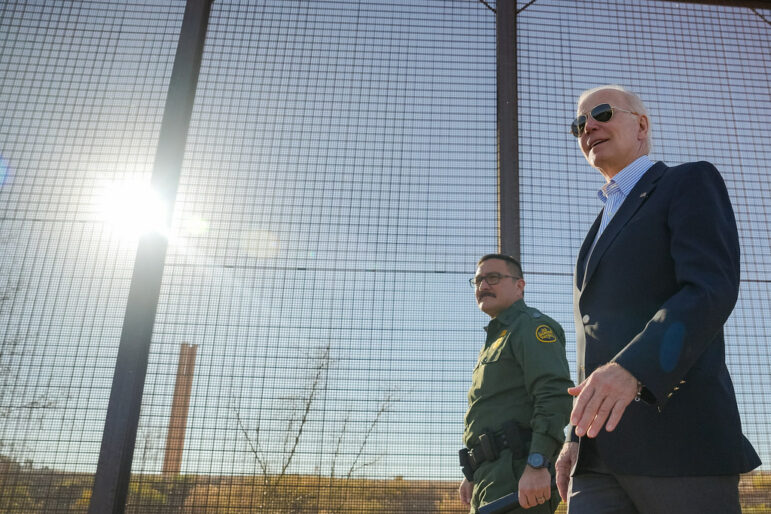
El presidente Joe Biden camina con agentes de la Patrulla Fronteriza de EE.UU. a lo largo de un tramo de la frontera entre EE.UU. y México, el domingo 8 de enero de 2023, en El Paso.

El 4 de junio el presidente Joe Biden anunció una orden ejecutiva que inicia cuando se cumplen siete días seguidos en los que la Patrulla Fronteriza de Estados Unidos aprehende a más de 2.500 personas en las fronteras terrestres y costeras del sur del país. Esto se suspenderá 14 días después de que el secretario de seguridad nacional de los Estados Unidos, Alejandro Mayorkas, determine que el promedio de siete días calendario consecutivos ha sido menor a 1.500 encuentros.

La nueva orden, bajo el título en español “Una proclamación sobre la seguridad de la frontera” entró en efecto a las 12:01 de la mañana del 5 junio.

Algo que los defensores de inmigrantes han criticado es que la orden ejecutiva transforma el sistema de asilo de forma arbitraria al negar la posibilidad a cualquiera que cruce la frontera mientras el promedio diario de cruces supere los 2.500 encuentros.

Además, los migrantes que cruzan sin autorización, salvo en circunstancias excepcionales como ser un menor no acompañados o víctimas de una forma grave de trata, no serían elegibles para asilo y estarían sujetos a una expulsión acelerada.

En 2018 la administración Trump quiso imponer restricciones similares, pero los grupos de inmigración y de derechos civiles pronto demandaron, llamándola “asylum ban” (prohibición de asilo). 

La Unión Americana de Libertades Civiles (ACLU por sus siglas en inglés), que bloqueó la prohibición de asilo de Trump en cuestión de días, ya anunció que presentará una demanda para revocar esta nueva regulación de Biden.

La administración Biden hizo uso de la autoridad de la Sección 212(f) y 215(a) de la Ley de Inmigración y Nacionalidad (INA por sus siglas en inglés), que otorga al presidente un amplio margen de maniobra. 

Desde principios de este año, varios medios de comunicación habían estado reportando sobre esta acción, y en un episodio anterior se abordó el tema de los poderes del presidente para cerrar funciones clave de la frontera

Así que para desmenuzar las distintas partes de esta acción, invitamos a César Cuauhtémoc García Hernández abogado especializado en inmigración de la Universidad Estatal de Ohio.

Más detalles en nuestra conversación a continuación.

Ciudad Sin Límites, el proyecto en español de City Limits, y El Diario de Nueva York se han unido para crear el pódcast “El Diario Sin Límites” para hablar sobre latinos y política. Para no perderse ningún episodio de nuestro pódcast “El Diario Sin Límites” síguenos en Spotify, Soundcloud, Apple Pódcast y Stitcher. Todos los episodios están allí. ¡Suscríbete!

Trump chases Latino vote as support for Biden slips among young Hispanic voters

posted in: News | 0

Former President Donald Trump has announced the formation of a new campaign coalition aimed at attracting Latino voters disillusioned with the Democratic party and the policies of the Biden Administration.

In announcing “Latino Americans for Trump,” the 45th president said he’s looking to build on past successes among the largest segment of non-white voters.

“In 2020, we got more votes from Hispanic Americans than any Republican in more than 50 years, and we won the Texas border counties that no Republican candidate had won in more than a century! In 2024, we’re going to win an even larger share of the Hispanic American vote, setting all-time records for Republicans up and down the ballot,” Trump said.

The formation of Trump’s newest coalition comes as polling suggests that voters who identify as Latino aren’t feeling nearly as enthusiastic about supporting President Joe Biden for a second term as they did during his first election, and as Biden works to shore up support among the minority voting blocks that propelled him into office in 2020.

A New York Times/Siena poll released in mid-May showed support for Biden slipping among younger Hispanic and Black voters over his continued support of Israel’s war efforts in Gaza.

Trump’s campaign, in announcing the new coalition, said that Latino families are suffering under rising inflation and higher interest rates. The campaign said that U.S. Hispanic-identifying voters prefer immigration policies that support legal immigration and that “consequently, they disapprove of how millions have been allowed to cross the border illegally. Latino voters ‘overwhelmingly’ trust President Trump over Biden on his approach to address border security and immigration.”

U.S. Sen. Marco Rubio, of Florida, and U.S. Sen. Ted Cruz, of Texas, both of whom ran against Trump in the 2016 Republican Primary, both endorsed the coalition.

“Growing up in a Cuban household taught me the importance of family, faith and the value of honest work. Under President Trump, Hispanics saw the lowest rate of unemployment in history, their small businesses boomed, prices were low, and jobs were abundant. Joe Biden has all but reversed that completely, which is why America needs to elect President Trump come November,” Cruz said in a statement shared by Trump’s campaign.

Biden’s campaign preempted Trump’s announcement with a call for Latino voters to ignore his outreach attempts and remember what life was like under a Trump presidency.

Related Articles

National Politics |


For Trump, N.D. Gov Doug Burgum emerges as a safe option, and a wild card

National Politics |


Wins at the ballot box for abortion rights still mean court battles for access

National Politics |


‘So much death’: Lawmakers weigh stricter speed limits, safer roads for pedestrians

National Politics |


Election monitors nervously practice for the ‘big dance in November’

National Politics |


Alito’s flag controversy foreshadows contentious Supreme Court rulings

“The truth is, Donald Trump failed Latinos and their families, while President Biden has actually delivered real results like lowering health care costs, creating good-paying jobs – resulting in the lowest Latino unemployment ever – and making historic investments leading to Latino small businesses opening at the fastest rate in a decade,” Biden-Harris 2024 Campaign Manager Julie Chavez Rodriguez said in a statement.

According to the Bureau of Labor Statistics, the Hispanic or Latino Unemployment Rate fell to 3.9% in September of 2019, the third year of Trump’s presidency. The unemployment rate for that segment of the population jumped to 18.9% in April of 2020 at the height of the COVID-19 pandemic.

In September of 2022, during the second year of Biden’s presidency, the Latino unemployment rate had fallen to 3.8%, “the lowest rate since 1973,” according to BLS. It currently stands at 5%, just higher than the national average of 4%.

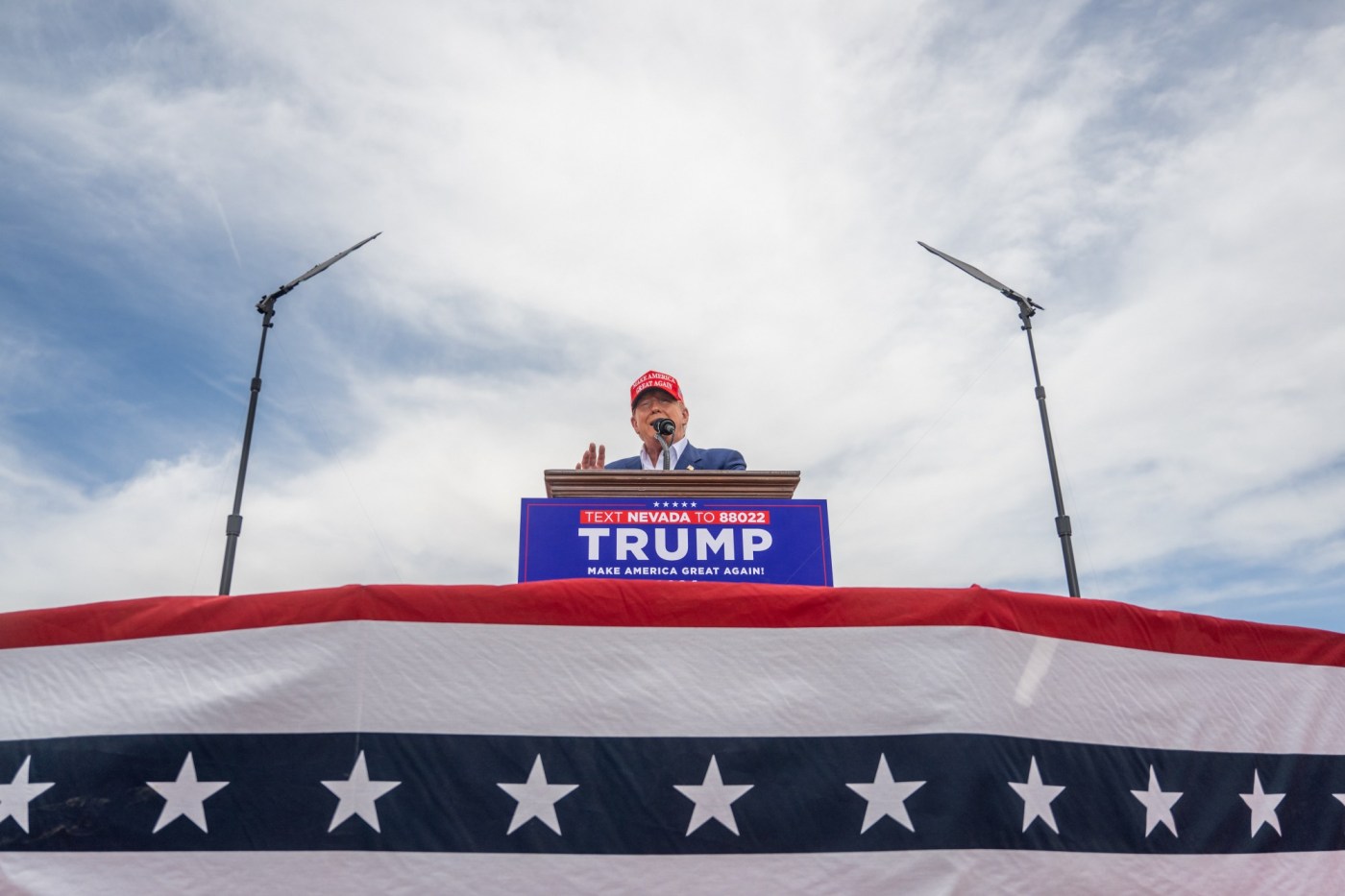
This all comes as Trump held an outdoor rally Sunday in Las Vegas, where the heat and voters were strong.

One year after Trump classified documents indictment, defense challenge of special counsel takes center stage

posted in: Politics | 0

It’s been a year since former President Donald Trump was indicted on charges of mishandling classified U.S. government documents and attempting to block its efforts to retrieve them.

But U.S. District Judge Aileen Cannon has postponed a trial she had set for May 20 indefinitely, citing a broad spectrum of legal issues to be resolved. In three weeks, one of the most prominent of those will focus on the constitutional authority of the government’s top prosecutor in the case, Special Counsel Jack Smith, to investigate and bring charges against Trump.

On June 21, in Cannon’s Fort Pierce federal courtroom, an unusual daylong series of legal arguments will unfold over Smith’s appointment. They are arguments, legal analysts say, that would rarely see the light of day in a trial court; they are usually reserved for the appellate courts.

Nonetheless, speakers representing Trump and the government won’t be the only ones appearing before Cannon.

The judge has allotted 90 minutes for third-party lawyers representing nonprofit legal groups led and supported by past U.S. attorneys general, ex-elected officials including governors, and prominent law professors. Two groups will support Trump’s position that Smith has been investigating Trump as an unauthorized prosecutor. A third will argue U.S. Attorney General Merrick Garland had the authority to name Smith to lead the classified documents probe.

The groups include the nonprofit conservative Landmark Legal Foundation of Kansas City, Missouri, which is being led in this instance by former Attorney General Edwin Meese III, and Citizens United, another conservative group based in Washington that gained prominence for winning the U.S. Supreme Court decision that political spending is a form of protected free speech under the First Amendment.

The Landmark foundation is expected to argue that Smith is not a U.S. government officer but an “employee” whose appointment fails to comport with the separation of powers under the Constitution.

“The primary purpose of the Special Counsel regulations which were modeled on the Independent Counsel statute, was to avoid conflicts of interest when the executive branch investigates itself,” the foundation wrote the court. “But here, Attorney General Garland appointed Mr. Smith not to investigate someone connected to the United States Department of Justice, the President, or the Biden Administration — as was the case with Hunter Biden — but to investigate the Biden Administration’s leading political opponent.”

The naming of Smith, who was not with the government at the time he became special counsel, violated the appointments clause of the Constitution, the Meese group argues in its brief.

“Improperly appointed, he has no more authority to represent the United States in this Court than Bryce Harper, Taylor Swift, or Jeff Bezos,” the group argues.

Attorney Gene Schaerr, a former clerk to the late U.S. Supreme Court Justice Antonin Scalia who represents Citizens, will argue that Smith required Senate confirmation to serve as special counsel.

The government is supported by a group of prominent law professors, including Harvard University’s Laurence H. Tribe, and former elected officials, including two former Northeast governors — Christine Whitman, of New Jersey, and William Weld, of Massachusetts, as well as a group known as “State Democracy Defenders Action.” Matthew Seligman, a Washington-based constitutional lawyer and fellow at Stanford Law School who clerked at the U.S. Court of Appeals for the D.C. Circuit, will argue their position.

“Defendant Donald J. Trump and his amici contend that the appointment of Special Counsel John ‘Jack’ Smith is unlawful,” Seligman wrote in his brief to the court. “That contention is demonstrably incorrect. The Appointments Clause of the Constitution authorizes Congress to vest the power to appoint ‘inferior officers’ in the Attorney General as the head of the Department of Justice. As the Supreme Court has confirmed, a special prosecutor empowered to investigate and prosecute a particular criminal matter is such an inferior officer.”

None of the groups has had any previous involvement in the Trump case.

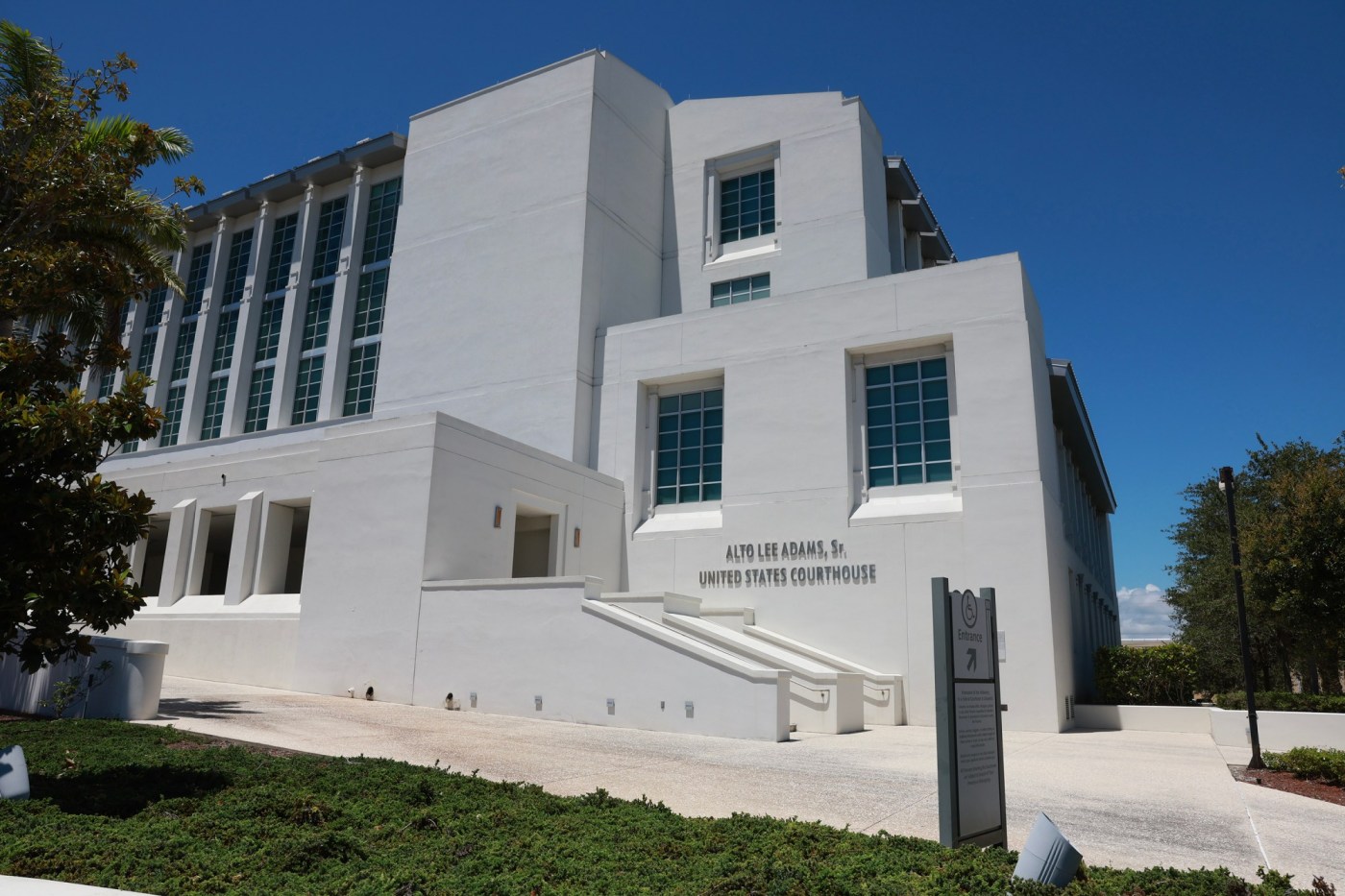
“The Court anticipates starting with argument from counsel for the parties; proceeding to hear argument from amici and rebuttal from the parties as necessary; and then accommodating any presentation of evidence, if deemed necessary by the Court,” Judge Cannon wrote in a recent order scheduling the hearing at the Alto Lee Adams Sr. U.S. Courthouse in Fort Pierce.

Outsized discretion?

Legal critics assert the exercise of allowing outside “friends of the court” to argue the issue is not only rare, but yet another act of delay by the judge to help Trump avoid a trial before the presidential election in November.

“All judges have the inherent power to control their dockets and set their calendars,” said Robert Jarvis, a law professor at Nova Southeastern University in Davie. “This principle has been reconfirmed by the U.S. Supreme Court many times. What is happening in this case — which is highly unusual, even unprecedented — is that Judge Cannon has decided to ‘slow walk’ the case to make sure that the trial cannot possibly start until after the presidential election, so as to help Donald Trump, the man who put her into office.

“This is a complete perversion of justice, but, unfortunately, the Eleventh Circuit has decided to let her proceed.”

Amicus briefs, he added, “are the province of appellate courts.“

Revised timetable of Trump hearings in Florida, New York

Cannon, citing new motions brought by the prosecution and defense, has again revised the case’s hearing schedule.

Here is a snapshot of what June and July will look like, according to court files and open court announcements. This list does not include filing deadlines for motions.

June 21: In Fort Pierce, a non-evidentiary hearing will be held before Judge Aileen Cannon on a defense motion to dismiss the indictment based on alleged unauthorized appointment and funding of special counsel. Arguments will start from lawyers for both sides. Then third parties will address the court, followed by rebuttals from the government and defense and if necessary, the court will hear any presentation of evidence.

June 24: Also in Fort Pierce, the Court will hear argument on the following:

— Morning: Trump’s motion to dismiss the indictment based on the purported unlawful appointment and funding of Smith as special counsel.— Afternoon: Special counsel’s motion to modify Trump’s conditions of release over the former president’s public remarks alleging the FBI posed a threat to him during its search for classified documents at Mar-a-Lago.

June 25: Arguments on Trump’s motion related to the FBI’s Mar-A-Lago search and an alleged unlawful piercing of attorney-client privilege. Argument will focus primarily on the privilege / work product issues raised in the motion, which will be heard in sealed session to protect potentially privileged information and grand jury material.

July 11:  In New York, Trump is to be sentenced by Acting New York State Supreme Court Justice Judge Juan Merchan after a jury convicted the former president on 34 felony counts of falsifying business records.

July 22: In the documents case, a morning status conference and a closed afternoon hearing regarding classified materials.

Unscheduled: Date for the start of the documents trial.