Commentary: As AI is embraced, what happens to the artists whose work was stolen to build it?

posted in: News | 0

Amid the hype surrounding Apple’s new deal with OpenAI, one issue has been largely papered over: The AI company’s foundational models are, and have always been, built atop the theft of creative professionals’ work.

The arrangement with Apple isn’t the only news from OpenAI. Among recent updates and controversies including high-level defections, last month the company quietly announced Media Manager, scheduled for release in 2025.

A tool purportedly designed to allow creators and content owners to control how their work is used, Media Manager is really a shameless attempt to evade responsibility for the theft of artists’ intellectual property that OpenAI is already profiting from.

OpenAI says this tool would allow creators to identify their work and choose whether to exclude it from AI training processes. But this does nothing to address the fact that the company built its foundational models using authors’ and other creators’ works without consent, compensation or control over how OpenAI users will be able to imitate the artists’ styles to create new works.

As it’s described, Media Manager puts the burden on creators to protect their work and fails to address the company’s past legal and ethical transgressions. This overture is like having your valuables stolen from your home and then hearing the thief say, “Don’t worry, I’ll give you a chance to opt out of future burglaries … next year.”

Writers, artists, journalists and other creative workers have consistently asked that OpenAI and other generative AI companies obtain creators’ consent before using their work to train artificial intelligence products, and that the organizations refrain from using works without express permission.

Last July, more than 16,000 authors signed a letter to leading AI companies demanding that the businesses obtain permission and pay for works they use to train their AI. Yet OpenAI continues to trample on artists’ rights and rebuff their appeals, as we saw recently when it launched a ChatGPT audio assistant with a voice similar to Scarlett Johansson’s despite the actor’s clear and repeated refusals.

Although Johansson won her battle — OpenAI “paused” the offending voice from its offerings after the actor threatened legal action — the best chance for the wider community of artists is to band together. AI companies’ cavalier attitude toward creators’ rights and consent extends to people at all levels of fame.

Last year the Authors Guild, along with 17 other plaintiffs, sued OpenAI and Microsoft, demanding that authors receive what they are due. That suit is ongoing and other creative professionals and copyright owners have also taken legal action. Among these are a class action filed by visual artists against Stability AI, Runway AI, Midjourney and Deviant Art, a lawsuit by music publishers against Anthropic for infringement of song lyrics, and suits in the U.S. and U.K. brought by Getty Images against Stability AI for copyright infringement of photographs.

AI companies often argue that it would be impossible for them to license all the content that they need and that doing so would bring progress to a grinding halt. This is simply untrue.

OpenAI has signed a succession of licensing agreements with publishers large and small. While the exact terms of these agreements are rarely released to the public, the compensation estimates pale in comparison with the vast outlays for computing power and energy that the company readily spends. Payments to authors would have minimal effects on AI companies’ war chests, but receiving royalties for AI training use would be a meaningful new revenue stream for a profession that’s already suffering.

Authors’ earnings have been in precipitous decline for more than a decade. In 2022, the median annual writing-related income for full-time writers was just over $20,000, down nearly 50% from 2009. And the data for 2023 look even more dire.

AI-generated books, sometimes listed as written by real authors without the writer’s permission, flood Amazon, where anyone searching might buy them instead of the creative work the human author spent months or years writing.

Meanwhile, OpenAI is valued at $80 billion, Anthropic at $18.4 billion and French AI startup Mistral at $6.2 billion. These companies claim they need our work to succeed but can’t afford to pay for it. Any human author can tell you that this narrative has blatant inconsistencies.

We cannot trust tech companies that swear their innovations are so important that they do not need to pay for one of the main ingredients — other people’s creative works. The “better future” we are being sold by OpenAI and others is, in fact, a dystopia. It’s time for creative professionals to stand together, demand what we are owed and determine our own futures.

Mary Rasenberger is the CEO of the Authors Guild. She wrote this column for the Los Angeles Times.

Related Articles

Opinion |


Joe Grogan: Access to new Alzheimer’s treatments bogged down by Medicare policy

Opinion |


Andreas Kluth: U.S. exceptionalism is dead no matter who wins the election

Opinion |


Clive Crook: You don’t have to love Trump to fear a partisan U.S. justice system

Opinion |


Bret Stephens: How capitalism went off the rails

Opinion |


Nolan Finley: Treat all gun violators the same as Hunter Biden

Literary picks for week of June 23: Native American words and music are on display this week

posted in: All news | 0

Native American words and music are on display this week, with two programs presented by Indigenous Nations Poets (IN-NA-PO) in partnership with Minnesota Humanities Center, as well as the launch of Minnesotan Teresa Peterson’s book “Perennial Ceremony,” and a program on writing about climate change.

Wednesday, June 26, 5:30 p.m., Minnesota Humanities Center, 987 E. Ivy Ave., St. Paul:

“An Evening of Haiku and Anishinaabe Song” with Kimberly Blaeser, Gordon Henry Jr. and Gerald Vizenor sharing haiku, Anishinaabe dream songs and music as well as conversing with one another and the audience on their work and inspirations. Blaeser is a former Wisconsin poet laureate and founding director of Indigenous Nations Poets, author of six poetry collections. An Anishinaabe activist and environmentalist, she is an enrolled member of White Earth Nation. She is a professor emerita at the University of Wisconsin-Milwaukee and MFA faculty member for Institute of American Indian Arts. Gordon Henry is an Anishinaabe poet and novelist, and an enrolled member of the White Earth Nation of Minnesota. A past professor in the English department at Michigan State University, he also served for many years as senior editor of the American Indian Studies series at Michigan State University Press. Vizenor is professor emeritus of American Studies at the University of California, Berkeley. A citizen of the White Earth Nation in Minnesota, he has published more than 40 books including novels, literary and cultural studies, and poetry and is one of this country’s leading Native scholars and writers. This program includes a complimentary community meal preceding the program. Free, registration required at mnhum.org.

(IN-NA-PO is a national Indigenous poetry community committed to mentoring emerging writers, nurturing the growth of Indigenous poetic practices, and raising the visibility of all Native writers. It recognizes the role of poetry in sustaining tribal sovereignty and Native languages.)

Friday, June 28, 5:30 p.m., Minnesota Humanities Center:

Gwen Westerman (Courtesy of Melanie Zacek)

Nations Poets reading with this year’s IN-NA-PO fellows sharing some of their original work. Hosts will be former Wisconsin poet laureate Kimberly Blaeser, Minneapolis poet laureate Heid Erdrich and Minnesota poet laureate Gwen Nell Westerman. A  community meal included. Free, reservations required. Go to mnhum.org.

Wednesday, June 26, 7 p.m., Birchbark Books event space, 1629 Hennepin Ave., Minneapolis:

Teresa Peterson celebrates publication of her book “Perennial Ceremony” in conversation with Diane Wilson, hosted by Birchbark Books. In this collection of prose, poetry and recipes from University of Minnesota Press, Peterson shares how she found refuge from the struggle to reconcile her Christianity and Dakota spirituality, discovering solace and ceremony in community with the Earth by observing and embracing the cycles of her garden. In this seasonal cycle, we learn how the garden becomes a healing balm, reclaiming and honoring our relationship with Mother Earth. Peterson is Sisseton Wahpeton Dakota and citizen of the Upper Sioux Community. Free.

Tuesday, June 25, 5 p.m., Open Book, 1011 Washington Ave. S., Mpls.:

Diane Wilson (Courtesy photo)

Milkweed Editions reading series presents “Beyond Guilt: Writers Reflect on Climate Change,” hosted by Diane Wilson, author of “The Seed Keeper,” She is executive director of Native American Food Sovereignty Alliance, a Mdewakanton descendant enrolled on the Rosebud reservation. She will be joined by Erin Sharkey and Halee Kirkwood. Sharkey is a writer, arts and abolition cultural worker, and film producer who was awarded the Black Seed Fellowship from Black Visions and the Headwaters Foundation. Kirkwood is a member of Indigenous Nations Poets and direct descendant of Fond du Lac Band of Lake Superior Ojibwe. Free.

Related Articles

Books |


Literary calendar for week of June 23

Books |


Literary calendar for week of June 16

Books |


Readers and writers: Young adult novels that will hook adults, too

Books |


Why Maisie Dobbs author Jacqueline Winspear says it’s time to end the series

Books |


How Stuart Woods’ character Stone Barrington lives on in Brett Battles’ ‘Smolder’

Letters: Gov. Walz’s response to the Feeding Our Future scandal? Feeble

posted in: All news | 0

The governor’s feeble response

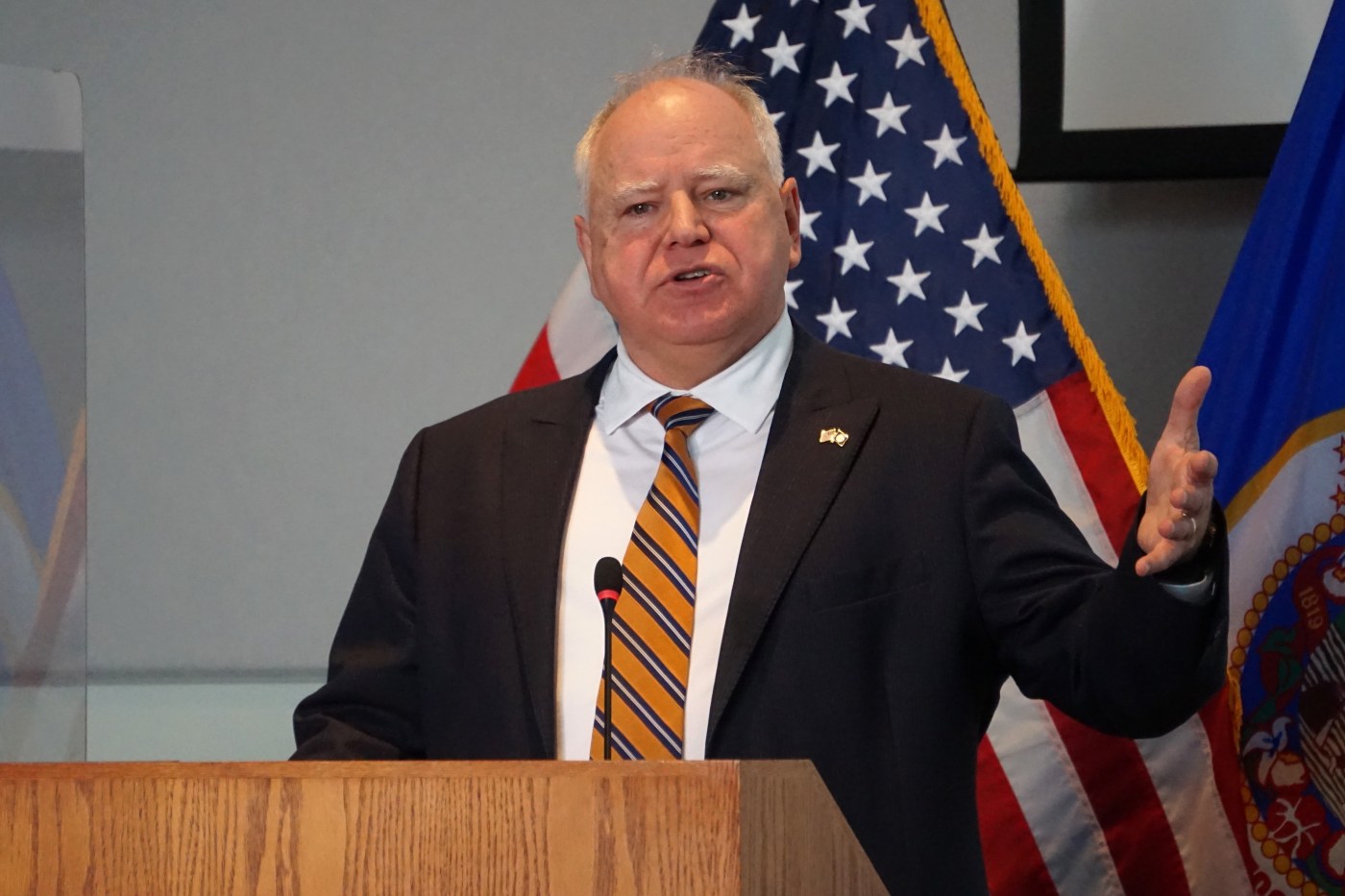
Gov. Walz’s feeble response to revelations of the state’s egregiously flawed oversight of the Feeding Our Future program was extremely disappointing.

Addressing the scathing criticism by the Legislative Auditor of his administration’s “actions and inactions” contributing to the massive $250 million fraud, the governor accepted responsibility but then shifted the blame to COVID and other features.

His declaration that “We can always do better” sounds more like a political campaign slogan than any real contrition or resolve to impose discipline or other corrective action to sanction the responsible parties, besides himself, and prevent any semblance of recurrence.

Marshall H. Tanick, Minneapolis


‘His mission for Jayson’

Sainted: Mary Divine for interviewing us and featuring our story in Sunday’s Pioneer Press (“His mission for Jayson,” June 16). This was such a good and needed experience for us. Mary brought a lot out of us that we haven’t really shared in the past.

We believe that through her article, many parents and grandparents will talk to our youth. We feel that the parents are scared of this epidemic and honestly, to some degree, they should be. We just want them to get past the “it couldn’t happen to us” for whatever reason they come up with. If they can get past that, they will at least keep a watchful eye on their loved ones.

We think Mary’s article will have all who read it thinking twice. The Pioneer Press has done a great thing in publishing it. Thank you, Mary, for bringing back the hidden memories, good and bad for us. We needed that.  Also, you are true professional and a kind-hearted person. We are sure that Jayson thanks you as well.

Jay and Vickie Pernu, Lake Elmo


Why is it so difficult to get the Twins back on TV?

My mother is 97 years old, and has been a devoted Twins fan for many years. She lives in a senior living community now where streaming services are not available, and her one enjoyment was watching the Twins on TV. She wouldn’t miss a game.

Now that the games are not available any longer, it has left a huge void in her life. I wonder how many other seniors are missing the games, just like her. This is a special group of people in our community who have stood behind the team for years and are now being let down because of bickering over money.

Why is it so difficult to figure out how to get baseball back on TV for these special fans? My mother is waiting.  Don’t continue to let her and all the rest of us down.

Andrea Wheeler, Maplewood

Related Articles

Opinion |


Skywatch: Long days, long moon shadows, and a promising comet?

Opinion |


Anthony Frattalone: My son saved my life: a cautionary boating tale

Opinion |


Your Money: Is your asset allocation applicable to today’s markets?

Opinion |


Working Strategies: Land or Launch: Should 20 somethings be living at home?

Opinion |


Joe Soucheray: Fraud after fraud, precious millions flushed, and precious little accountability in Minnesota

Literary calendar for week of June 23

posted in: News | 0

TRACY CHEVALIER: Bestselling author brings her new novel, “The Glassmaker,” to Talk of the Stacks presented by Friends of the Hennepin County Library. Chevalier, who loves Venice and wanted to get to know it better, discovered that glass has been made for centuries on Murano, an island just off the coast of Venice where for a long time beads were the only glass objects women could make, so she focuses on a fictional woman and her glassmaking family. The story moves from Renaissance-era Italy to the present day. Chevalier has written 11 novels, including “Girl With a Pearl Earring.” 6:30 p.m. Thursday, June 27, Minneapolis Central Library, 300 Nicollet Mall, Mpls. Free. In-person tickets are all taken; sign up for Zoom access at info.supporthclib.org.

DAVID HOUSEWRIGHT: Award-winning Minnesotan reads from “Man in the Water,” latest in his series featuring unofficial P.I. Rushmore “Mac” McKenzie, whose wife finds a body half in the water, frozen to a ladder at a marina on the St. Croix River. 6 p.m. Tuesday, June 25, Next Chapter Booksellers, 38 S. Snelling Ave., St. Paul.

JOSEPH KUEFLER: Minnesota author/illustrator hosts a story time celebrating “The Digger and the Dark,” fourth in his popular Digger series. In this one Digger and the other big trucks, including Crane and Sweeps, are ready to tuck themselves into bed but two wide-awake, mischievous raccoons have other ideas. 10:30 a.m. Saturday, June 29, Red Balloon Bookshop, 891 Grand Ave., St. Paul.

PATRICK NATHAN: Minnesotan discusses his new novel, “The Future Was Color,” about a Hungarian immigrant working as a studio hack in post-World War II Hollywood, navigating the McCarthy-era studio system and living the life of closeted men along Sunset Boulevard. When his friend, a famous actress, offers him a writing residency at her Malibu estate, his world is blown open. This will be a live radio interview with Josh Weber, host of Write On Radio. 6 p.m. doors open; 7 p.m. program. Tuesday, June 25, Gray Duck Tavern, 345 N. Wabasha St., St. Paul, presented by SubText Books.

POETRY AND JAZZ: Fourth annual Poetry and Jazz in the Holy Ground featuring the jazz duo of Larry McDonough and Richard Terrill, as well as the launch of the poetry chapbook “The Nations Underground: Writing With Our Ancestors” with more than a dozen area poets reading from the book along with featured poets Margaret Hasse, Patrick Cabello Hansel and Dralandra Larkins. Hands-on lantern-making workshop led by local artists from the Semilla Center for Healing and the Arts. Presented by the Semilla Center and Not Dead Yet Poets Society. Free. 2 p.m. Saturday, June 29, Pioneers and Soldiers Cemetery, 2945 Cedar Ave., Mpls.

GABRIELLE ZEVIN: Celebrates publication of the paperback edition of her novel “Tomorrow, and Tomorrow, and Tomorrow,” which sold more than a million copies since the widely praised hardcover was published two years ago. It’s the story of three young people who meet as college students and design popular video games that bring them fame, joy and tragedy in the next 30 years. In conversation with Minnesotan Antonia Angress, author of “Sirens & Muses.” 7 p.m. Friday, June 28, Parkway Theater, 4814 Chicago Ave., Mpls., presented by Magers & Quinn. $27-$37. Ticket information at theparkwaytheater.com/all-events/gabrielle-zevin.

Related Articles

Books |


Literary calendar for week of June 16

Books |


Readers and writers: Young adult novels that will hook adults, too

Books |


Why Maisie Dobbs author Jacqueline Winspear says it’s time to end the series

Books |


How Stuart Woods’ character Stone Barrington lives on in Brett Battles’ ‘Smolder’

Books |


Real or not real? New ‘Hunger Games’ book, movie prequel will tell Haymitch’s story