Minnesota officials address emergency response to ‘unprecedented’ flooding

posted in: News | 0

Gov. Tim Walz said the state has seen “unprecedented” flooding in recent weeks as parts of Minnesota have seen upwards of 18 inches of rain in recent days with more precipitation on the way.

“This event is still ongoing,” Walz said, emphasizing people to not enter the likely contaminated water and to obey traffic barriers.

Charleigh Talbot, left, and Braelynn Kean run through flood water at the Pine Island High School Baseball Field on Saturday, June 22, 2024 in Pine Island, Minn. (Lily Dozier / Post Bulletin)

Walz said thus far there haven’t been any serious or deaths as a result of this “very widespread event.”

Over the last few weeks, about 40 Minnesota counties — or nearly half the state — have been impacted by flooding. Seven counties have applied for emergency assistance, Walz said.

In areas that don’t receive federal disaster declaration funding, Walz said the state currently has $26.64 million for emergency relief. When a county applies, Walz said they assess the issue and provide funding to the county in need. This funding will replenish to $50 million in September.

“You never know what you’re going to get with Minnesota weather,” Lt. Gov. Peggy Flanagan said during the Monday conference, adding that last year the state was dealing with drought and wildfires.

Flooding has been particularly severe in southern Minnesota since the end of last week.

On Saturday, Walz declared a peacetime emergency, authorizing the Minnesota National Guard to be available to provide support for emergency flood operations.

Floodwaters from the Little Fork River obscure a portion of a street sign Thursday, June 20, 2024, in Cook, Minn. (Clint Austin / Duluth Media Group)

“Across the state, intense rain has had catastrophic effects. Flooding has left entire communities under feet of water, causing severe damage to property and numerous road closures. As flooding continues, the National Guard is ready to step up to help our neighbors,” Walz said in the declaration announcement.“Their response will provide invaluable support that will be critical in ensuring the safety of Minnesotans during this difficult time.”

In Le Sueur County, the city of Waterville and the surrounding area received around 14-18 inches of water, causing evacuations and “significant damage,” the announcement said.

Minnesota National Guard Maj. General Shawn Manke said as of Monday the National Guard will have 46 soldiers supporting Waterville and “provide critical support manning pump stations to alleviate the flooded waters in the region.”

“We are ready to work hand in hand with local incident commanders in the state of Minnesota to try and improve the situation,” he said, adding the Guard will continue to monitor the situation.

On Friday, Walz traveled to northeast Minnesota to survey damage caused by severe flooding in Cook and Biwabik.

The governor’s office said floodwaters measured in “several feet, impacting residences and businesses” in downtown Cook. Dozens of roads were closed throughout the county. The Duluth News Tribune reported on Sunday that water had receded in Cook by Sunday afternoon.

According to the DNT, St. Louis County officials recorded more than 1,000 damage incidents since June 18.

“This is the second-largest natural disaster that St. Louis County has seen in three decades,” the governor’s office said in the news release.

Daniel Hawblitzel, the meteorologist in charge for the National Weather Service Twin Cities/Chanhassen, said during Monday’s press conference that the state has seen record flood levels that may get worse.

Workers with the Minnesota Department of Transportation move barricades into place as they close the Stillwater Lift Bridge as the rain-swollen St. Croix River slowly overflows its banks in downtown Stillwater, Friday, June 21, 2024. (John Autey / Pioneer Press)

Many rivers are expected to crest later this week — and that’s without more rainfall, Hawblitzel said. According to Hawblitzel, there are storms predicted to hit some areas across the state on Monday.

“The ground is saturated,” Hawblitzel said. “(The rain) has nowhere to go. So whatever falls, as little as it may be, will only make things worse.”

As a result of the heat dome over the East Coast, Hawblitzel said there are signs this weather pattern may continue over the next few weeks.

In the event of a flash flood, Kristi Rollwagen, director of Homeland Security Emergency Management, encourages Minnesotans to abide by traffic barriers.

“We want you to turn around,” she said. “We don’t want you to drown, and we don’t want you to become part of an unfortunate event.”

As water levels rise over the next few days, Walz said resources will continue to be deployed. Sandbagging will be used as a preventative measure for certain southern regions.

“As we see these chaotic climate events due to climate change increase, we need to think about how we’re building back more resiliently,” Walz said.

Rapidan Dam

On Monday, the Rapidan Dam on the Blue Earth River in southern Minnesota  — about seven miles south of Mankato — was described as in “imminent failure condition,” according to the Blue Earth County Sheriff’s Office.

This comes after debris was spotted accumulating at the dam on Sunday, officials said.

“Anyone that is in immediate danger in regards to the Rapidan Dam have (sic) been notified,” the sheriff’s office reported in an update posted to social media late Monday morning. “The Dam is currently intact and there is not an evacuation order in place for Blue Earth County residents. The situation is being monitored closely by BEC Public Works, Emeergency Managment, and the Sheriff’s Office.”

However, a short time later, WCCO News reported that the dam had failed and nearby residents were urged to evacuate.

A flash flood warning that includes Blue Earth County is in effect until 4:30 p.m. on Monday, according to the Twin Cities office of the National Weather Service.

There is a threat for severe weather, including damaging winds, on Monday evening across central and southern Minnesota, including the Twin Cities, and into western Wisconsin.

The Pioneer Press contributed to this report.

Related Articles

News |


Minnesota falls to 19th in education in state ranking

News |


Midwest flooding collapses Iowa rail bridge, forces evacuations and kills at least 1

News |


Minnesota National Guard mobilized to assist with flooding in south-central region

News |


Literary picks for week of June 23: Native American words and music are on display this week

News |


Did you know the bald eagle is not the country’s official bird? A Minnesota effort aims to change that
 

Is Trump shielded from criminal charges as an ex-president? A nation awaits word from Supreme Court

posted in: News | 0

By MARK SHERMAN Associated Press

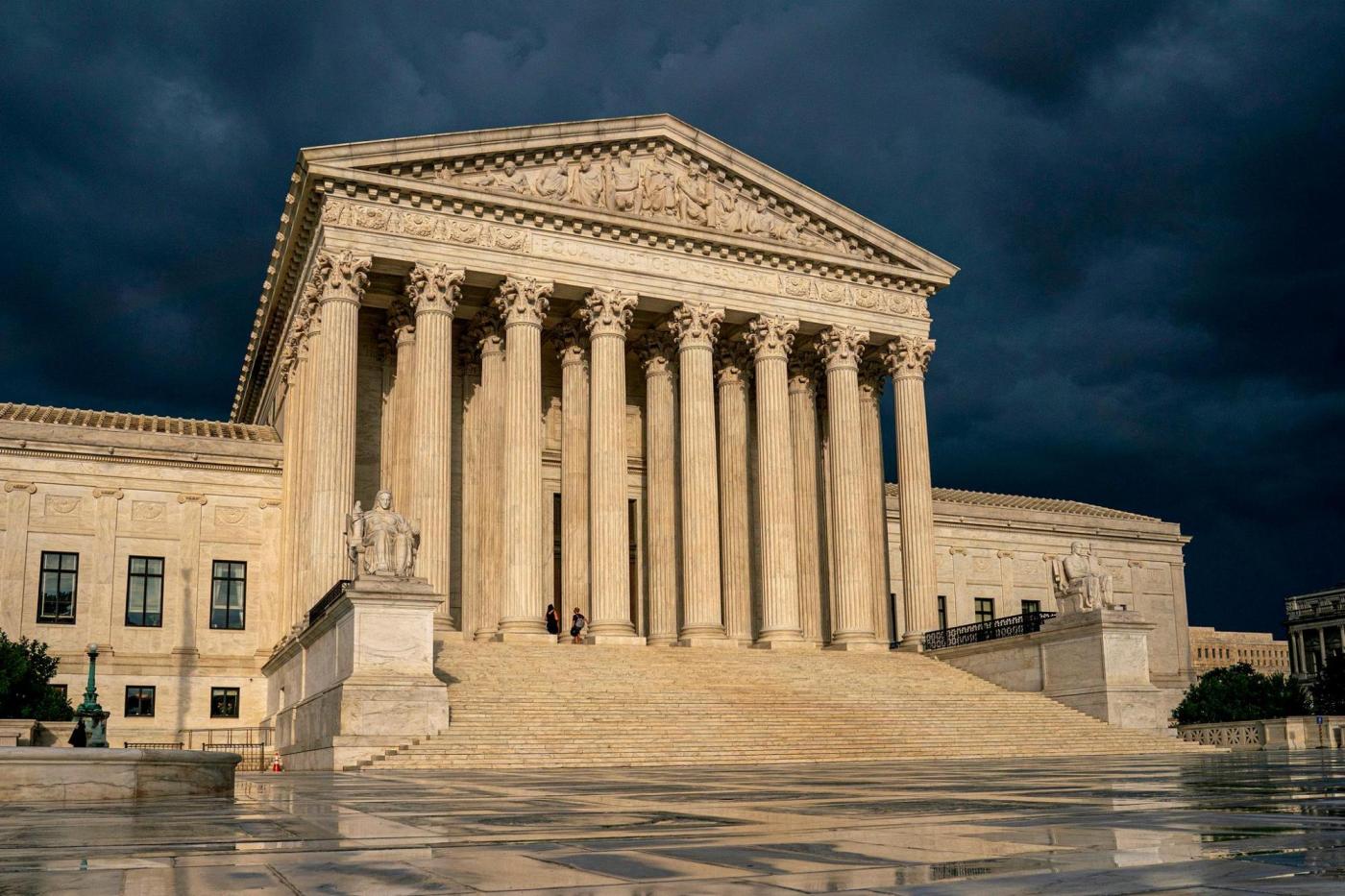
WASHINGTON (AP) — In the coming days, the Supreme Court will confront a perfect storm mostly of its own making: a trio of decisions stemming directly from the Jan. 6, 2021 attack on the U.S. Capitol.

Within days of each other, if not hours, the justices are expected to rule on whether Donald Trump has immunity from criminal charges over his efforts to overturn his 2020 election defeat and whether Trump supporters who stormed the Capitol can be prosecuted for obstructing an official proceeding.

The court also will decide whether former Trump adviser Steve Bannon can stay out of prison while he appeals his contempt of Congress conviction for defying a subpoena from the House committee that investigated the Capitol attack.

These cases are among the dozen or so major disputes dealing with abortion, homelessness, the power of federal regulators, the opioid epidemic and social media platforms that the justices have left to decide as the traditional end of their term’s work nears.

Taken together, the three cases connected to the former president could feed narratives about the court and its conservative supermajority, which includes three justices appointed by Trump and two other justices, Samuel Alito and Clarence Thomas, who have rejected calls to step away from the Jan. 6 cases because of questions about their impartiality.

Related Articles

National Politics |


Biden announces hundreds of debate watch parties while Trump hits the trail

National Politics |


In one affluent Atlanta suburb, Biden and Trump work to win over wary Georgia voters

National Politics |


Candidates seen ‘out of touch’ by young voters

National Politics |


Trump defense, prosecutors enter Round 2 in fight over legitimacy of Special Counsel Jack Smith

National Politics |


GOP targets a Biden executive order on voter registration ahead of the fall election

From the perspective of Trump and his allies, the outcomes could provide more fodder for their claims that the Justice Department has treated the Capitol riot defendants unfairly. The riots resulted in more than 1,400 criminal cases in which 200 people have been convicted and more than 850 pleaded guilty to crimes.

That has not deterred Trump and his allies from claiming the Justice Department has treated the Capitol riot defendants unfairly. The outcomes of the cases could give them more reasons to decry the prosecutions.

The court’s handling of the immunity issue already has provoked criticism, both that the justices took up the issue at all — particularly given a unanimous federal appeals court ruling that rejected Trump’s claim — and more recently that they haven’t yet decided it.

Even if the court limits Trump’s immunity, or rejects his claims altogether, allowing his trial on election interference to go forward in Washington means “it is unlikely a verdict will be delivered before the election,” University of Michigan law professor Leah Litman wrote in The New York Times.

While the court has moved more quickly than usual in taking up the immunity case, it has acted far more speedily in other epic cases involving presidential power, including in the Watergate tapes case. Nearly 50 years ago, the court ruled 8-0 a mere 16 days after hearing arguments that Richard Nixon had to turn over recordings of Oval Office conversations, rejecting his claim of executive privilege.

In March, it took the justices less than a month after arguments to rule unanimously that the Constitution’s post-Civil War “insurrection clause” couldn’t be used by states to kick Trump off the presidential ballot.

The three cases related to Trump’s effort to undo his election loss in 2020 highlight how often he has appeared in the court’s work this year, though now he is doing so as the Republican Party’s presumptive nominee for president. Trump also was a factor in two social media cases and even a trademark dispute over the phrase “ Trump too small.”

The court almost always finishes its work by the end of June, but it’s not certain that will happen this year.

The court will next issue decisions on Wednesday. Among the other cases left to decide:

— Can doctors provide abortions in medical emergencies in states that banned abortion after the court overturned Roe v. Wade? In a case out of Idaho, the Biden administration says abortions must be allowed in emergencies where a woman’s health is at serious risk, while the state argues it is enough that its strict abortion ban contains an exception to save a woman’s life.

— The most significant Supreme Court case in decades on homelessness centers on whether people can be banned from sleeping outdoors when shelter space is lacking. A San Francisco-based appeals court ruled such bans amount to cruel and unusual punishment. Leaders from California and across the West say the ruling makes it harder for them to regulate homeless encampments encroaching on sidewalks and other public places.

— The justices could overturn a 40-year-old decision that has been cited thousands of times in federal court cases and used to uphold regulations on the environment, public health, workplace safety and consumer protections. The decision colloquially known as Chevron calls on judges to defer to federal regulators when the words of a statute are not crystal clear. The decision has long been targeted by conservative and business interests who say Chevron robs judges of their authority and gives too much power to regulators.

— Three cases remain unresolved at the intersection of social media and government. Two cases involve social media laws in Texas and Florida that would limit how Facebook, TikTok, X, YouTube and other social media platforms regulate content posted by their users. In the third case, Republican-led states are suing the Biden administration over how far the federal government can go to counter controversial social media posts on topics including COVID-19 and election security.

— The Supreme Court controls the fate of a nationwide settlement with OxyContin maker Purdue Pharma that would allocate billions of dollars to combat the opioid epidemic, but also provide a legal shield for members of the Sackler family who own the company. The settlement has been on hold since last summer after the Supreme Court agreed to weigh in.

— Republican-led, energy-producing states and the steel industry want the court to put the Environmental Protection Agency’s air pollution-fighting “good neighbor” plan on hold while legal challenges continue. The plan aims to protect downwind states that receive unwanted air pollution from other states.

— Another important regulatory case could strip the Securities and Exchange Commission of a major tool in fighting securities fraud and have far-reaching effects on other regulatory agencies. The court is being asked to rule that people facing civil fraud complaints have the right to a jury trial in federal court.

Associated Press writer Lindsay Whitehurst contributed to this report.

‘Everything is at stake’ for reproductive rights in 2024, Harris says as Biden-Trump debate nears

posted in: News | 0

By AAMER MADHANI Associated Press

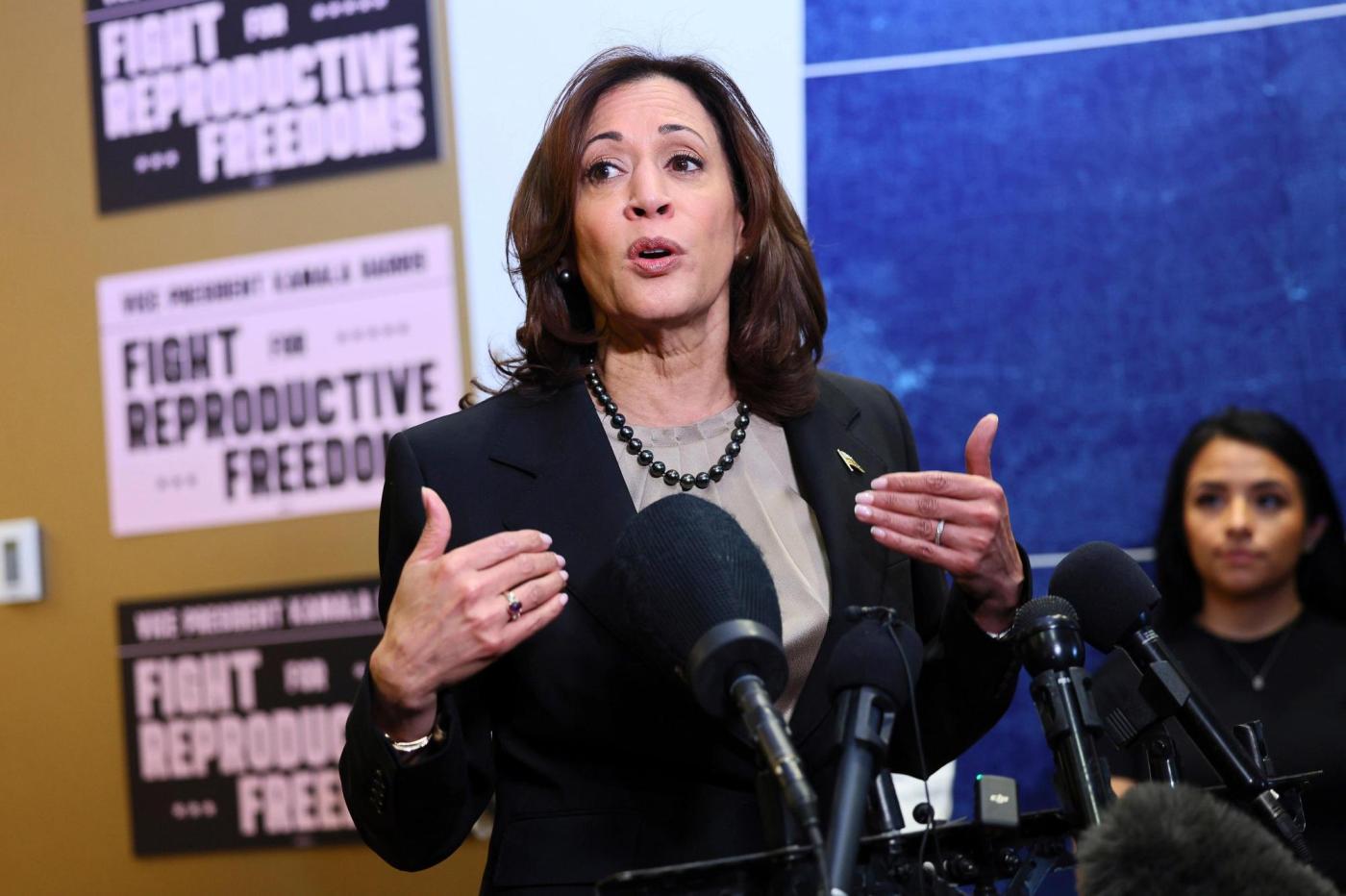
WASHINGTON (AP) — Vice President Kamala Harris says “everything is at stake” with reproductive health rights in November’s election as the Biden campaign steps up its focus on contrasting the positions taken by Democratic President Joe Biden and Republican Donald Trump on the issue before their debate this week.

Harris’ comments come as the campaign announced it would hold more than 50 events in battleground states and beyond to mark Monday’s second anniversary of the Supreme Court’s Dobbs v. Jackson Women’s Health Organization decision that overturned the federal legal right to an abortion. Biden and his allies are trying to remind voters that the landmark decision in 2022 was made by a high court that included three conservative justices nominated during Trump’s White House tenure.

“Every person of whatever gender should understand that, if such a fundamental freedom such as the right to make decisions about your own body can be taken, be aware of what other freedoms may be at stake,” Harris said in a joint MSNBC interview with Hadley Duvall, an abortion rights advocate from Kentucky who was raped by her stepfather as a child. Part of the interview aired Sunday.

The Biden campaign believes that abortion rights can be a galvanizing issue in what is expected to be a close general election.

Trump has taken credit for Dobbs with his conservative base while stopping short of supporting a national abortion ban sought by supporters on the religious right, should he return to the White House.

In April, Trump said he believed the issue should be left to the states. He later stated in an interview that he would not sign a nationwide ban on abortion if it were passed by Congress. He has declined to detail his position on women’s access to the abortion pill mifepristone.

At a campaign event Saturday, Trump said his administration did “something that was amazing” with Dobbs, while acknowledging the political peril of pressing further on the issue at the moment.

“Every voter has to go with your heart and do what’s right, but we also have to get elected,” he said.

Biden has begun private preparations at Camp David for the debate Thursday night in Atlanta. Trump is expected to hold meetings at his Florida estate this week as part of an informal prep process.

Duvall, of Owensboro, Kentucky, first told her story publicly last fall in a campaign ad during the governor’s race in her home state discussing the consequences of abortion restrictions, particularly those without exceptions for rape or incest.

Duvall also joined first lady Jill Biden at a Pittsburgh campaign rally Sunday where the two criticized Trump for supporting the Dobbs decision.

“He thinks we can be ignored,” Biden said of Trump. “He doesn’t know that when our bodies are on the line, when our daughters’ futures are at stake, we are immovable and we are unstoppable.”

Duvall’s home state of Kentucky has enacted a near-total abortion ban following the Dobbs decision. The state bans abortions except when carried out to save the mother’s life. It does not include exceptions for pregnancies caused by rape or incest.

Trump in a Fox News interview earlier this month said the way some states are enshrining abortion rights and others are restricting them was “a beautiful thing to watch.”

“I would like to ask him: What is so beautiful about telling a 12-year-old girl that she must have the baby of her stepfather who raped her?” Duvall said.

Harris is scheduled to mark Monday’s anniversary of the Dobbs decision with campaign events in Arizona and Maryland. Her husband, Doug Emhoff, is headed to Michigan on Monday.

Related Articles

National Politics |


Biden announces hundreds of debate watch parties while Trump hits the trail

National Politics |


In one affluent Atlanta suburb, Biden and Trump work to win over wary Georgia voters

National Politics |


Candidates seen ‘out of touch’ by young voters

National Politics |


Trump defense, prosecutors enter Round 2 in fight over legitimacy of Special Counsel Jack Smith

National Politics |


GOP targets a Biden executive order on voter registration ahead of the fall election

Sen. Elizabeth Warren, D-Mass., was heading to Wisconsin on behalf of the Biden campaign with Amanda Zurawski, a Texas woman who was initially denied an abortion after being told she had a condition that meant her baby would not survive. Zurawski was forced to wait until she was diagnosed with a life-threatening case of sepsis before being provided an abortion.

“If there is a woman who is in that reproductive age, then her life is at stake during this election,” Duvall said in the MSNBC interview. “And it does not matter if you have never voted Democrat in your life. It’s get off your high horse, because women, we don’t get to choose a whole lot, and you at least can choose who you can vote for.”

The Associated Press does not normally identify sexual assault victims, but Duvall, 22, chose to be identified and has spoken out publicly about her experience and its connection to the debate over abortion.

Opinion: Latino Voters Can Play Key Role in the Outcome of New York’s Most Contested Primary Race

posted in: Society | 0

“It is clear through a number of recent public polls that Latinos are mainly concerned about economic matters—specifically, the cost of living, adequate wages, and affordable housing.”

Jarrett Murphy

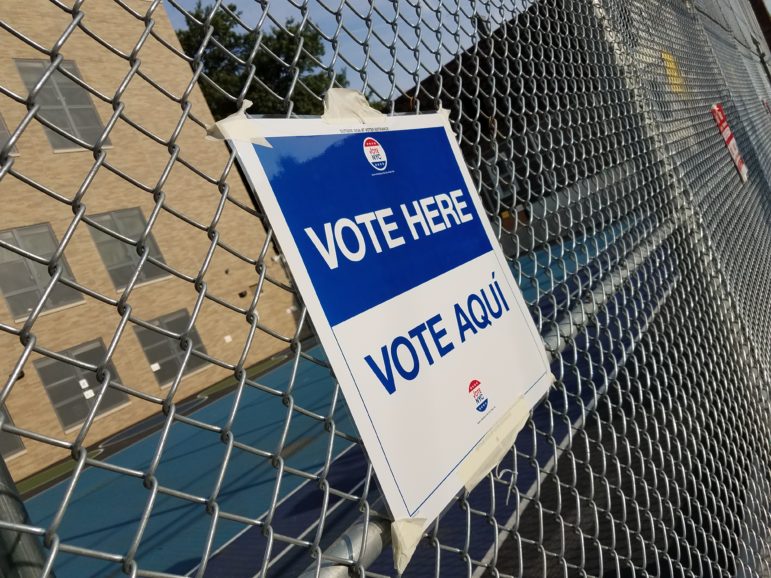
Outside a Bronx polling site on primary day.

CityViews are readers’ opinions, not those of City Limits. Add your voice today!

No matter your politics, you’ll probably agree that the NY-16 congressional primary, pitting the incumbent Congressman Jamaal Bowman against Westchester County Executive George Latimer, will be the most contested congressional primary battle this coming June.

The race thus far has been driven largely by the Israel-Gaza crisis. Bowman has been a staunch advocate of the Palestinian cause, decrying Israel’s response to the awful Hamas attack on Oct. 7. Those defending Israel have railed against Bowman, and the American Israel Public Affairs Committee (AIPAC), the largest pro-Israel lobby group, has already poured millions into the race to support Latimer’s run.

Yet while the Israel-Palestine crisis will surely be the issue that garners the most attention in this hotly contested race, Latinos could be the swing vote, contends long-time Latino commentator Howard Jordan. A close inspection of voter data, past election results, and current electoral dynamics suggest he’s right.

The 16th congressional district, covering parts of Westchester and the Bronx, has over 313,000 Democratic voters. The eventual winner of the Democratic primary will be the presumptive winner in November, since the district is heavily Democratic and thus is not in play for Republicans. Of these voters, 21 percent are Latino, 42 percent of whom live in the city of Yonkers. The bulk of the rest of Latinos in this district are in Westchester County, residing in cities like New Rochelle, Mount Vernon, and White Plains, with 13 percent in the Bronx portion.

The familiar growth of Latino communities in various sections of New York is certainly true in this mostly suburban district. While Yonkers has long had a large and mostly Puerto Rican voting population, other suburban cities in the district, like New Rochelle and Mount Vernon, have experienced significant Latino population growth over the last couple of decades. New Rochelle also recently elected the first Afro-Latino mayor in its history.

All these numbers highlight the critical role that Latino voters will play in determining the outcome of the primary. There is no doubt that, should Latimer or Bowman ignore this important base, it would be at their own peril. Interestingly, both candidates have previously represented these areas, Bowman in Congress and Latimer as Westchester County Executive. 

 As a political observer and analyst but also as a voter in this district, I note that thus far both candidates have failed to engage Latino voters adequately. Initial mailers (and there have been plenty between the candidates and the respective PACs weighing in on the race) did not articulate their messages in both Spanish and English, and it has not been Latinos who have been out canvassing, or reaching Latino voters in their homes. Latimer’s campaign, however, has recently been more intentional about utilizing bilingual messaging.

It is clear through a number of recent public polls that Latinos are mainly concerned about economic matters—specifically, the cost of living, adequate wages, and affordable housing. Bowman’s progressive stance and advocacy for marginalized communities may resonate with many Latino voters who seek representation that understands their struggles and aspirations. On the other hand, Latimer’s extensive experience in local government and his focus on practical solutions may appeal to Latino voters looking for stability and tangible results.

As Election Day approaches, both campaigns would do well to intensify their outreach efforts, focusing on the issues that matter most to Latino communities, and communicating this message in a culturally sensitive and intentional way. The candidate who successfully addresses these concerns and builds a strong rapport with Latino voters will have an added advantage come Tuesday night.

Eli Valentin is a former Gotham Gazette contributor, founder of the Institute for Latino Politics and executive director of a new Latino studies program at Virginia Union University. He lives in New York with his family.