Uber and Lyft agree to pay drivers $32.50 per hour in Massachusetts settlement

posted in: News | 0

By STEVE LeBLANC

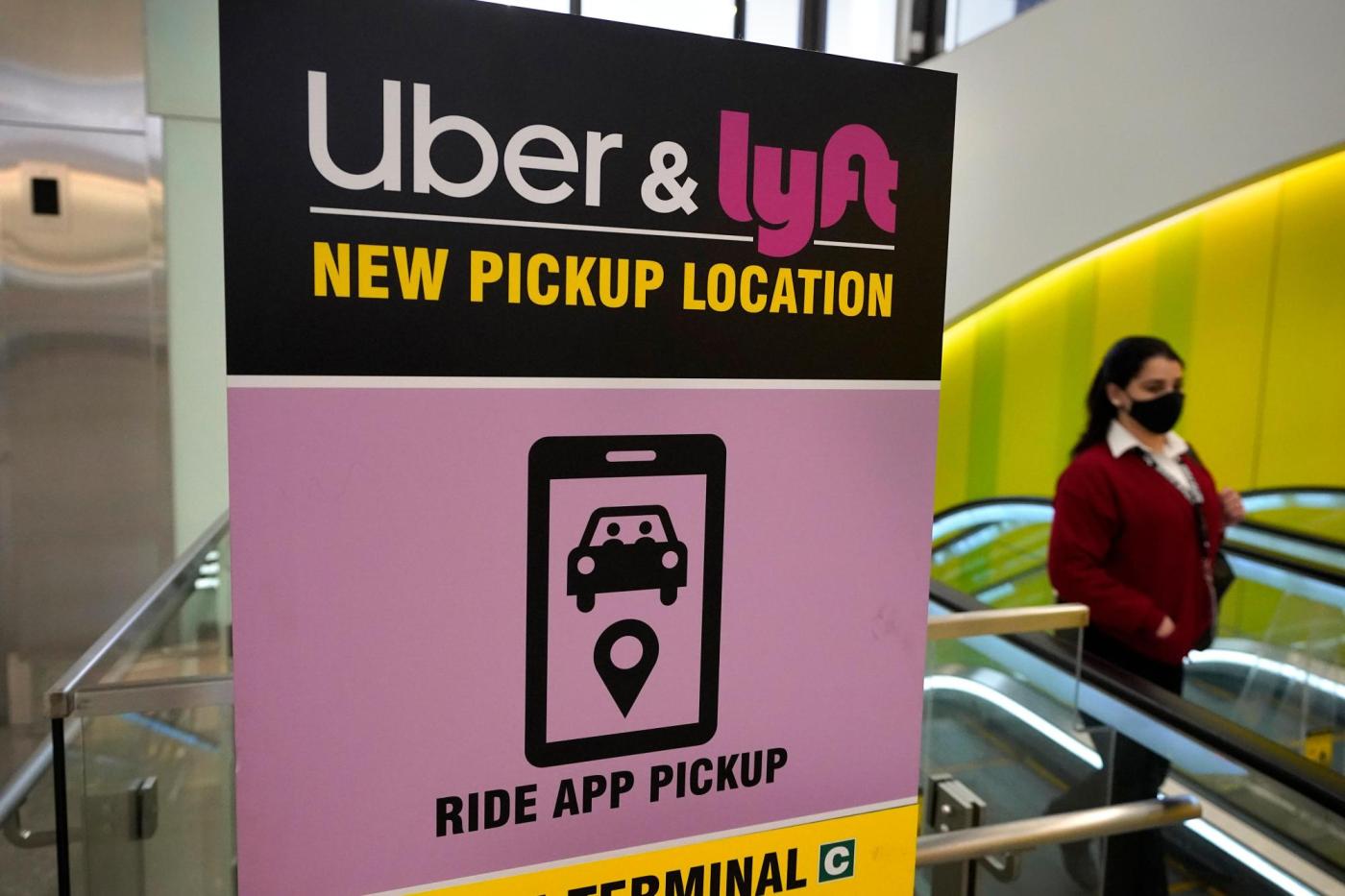
BOSTON (AP) — Drivers for Uber and Lyft will earn a minimum pay standard of $32.50 per hour under a settlement announced Thursday by Massachusetts Attorney General Andrea Campbell, in a deal that also includes a suite of benefits and protections.

The two companies will also be required to pay a combined $175 million to the state to resolve allegations that the companies violated Massachusetts wage and hour laws, a substantial majority of which will be distributed to current and former drivers.

Campbell said the settlement resolves her office’s yearslong litigation against the two companies and stops the threat of their attempt to rewrite state employment law by a proposed 2024 ballot initiative.

That question would have resulted in drivers receiving inadequate protections and an earnings standard that would not guarantee minimum wage, she said.

“For years, these companies have underpaid their drivers and denied them basic benefits,” Campbell said in a written statement. “Today’s agreement holds Uber and Lyft accountable, and provides their drivers, for the very first time in Massachusetts, guaranteed minimum pay, paid sick leave, occupational accident insurance, and health care stipends.”

Democratic Gov. Maura Healey said the settlement delivers “historic wages and benefits to right the wrongs of the past and ensure drivers are paid fairly going forward.”

In a statement Lyft said the agreement resolves a lawsuit that recently went to trial, and avoids the need for the ballot initiative campaign this November.

“More importantly, it is a major victory in a multiyear campaign by Bay State drivers to secure their right to remain independent, while gaining access to new benefits,” the company said.

Uber also released a statement calling the agreement “an example of what independent, flexible work with dignity should look like in the 21st century.”

“In taking this opportunity, we’ve resolved historical liabilities by constructing a new operating model that balances both flexibility and benefits,” the company said. “This allows both Uber and Massachusetts to move forward in a way that reflects what drivers want and demonstrates to other states what’s possible to achieve.”

The companies were pushing a ballot question that would classify drivers as independent contractors eligible for some benefits, but Campbell said the settlement stops the threat of the ballot question. A competing ballot question seeks to give drivers the right to unionize in Massachusetts.

Drivers will now earn one hour of sick day pay for every 30 hours worked, up to a maximum of 40 hours per year. As part of the agreement, Uber and Lyft must update their driver applications so drivers are able to view and claim their sick leave directly in the app. Drivers will also receive a stipend to buy into the state’s paid family and medical leave program.

Under the deal, Uber and Lyft will also allow drivers to pool together their hours driving for the two companies to obtain access to a health insurance stipend. Anyone who drives for more than 15 hours per week — for either or both companies — will be able to earn a health insurance stipend to pay for a plan on the Massachusetts Health Connector.

Drivers will be eligible for occupational accident insurance paid by the companies for up to $1 million in coverage for work-related injuries.

The agreement also requires the companies to provide drivers with key information — about the length of a trip, the destination and expected earnings — before they are expected to accept a ride.

The companies are barred from discriminating against drivers based on race, religion, national origin, sex, sexual orientation, gender identity, disability or other protected identities — and can’t retaliate against drivers who have filed a complaint about the companies with the Attorney General’s Office.

The deal also requires the companies to provide drivers in-app chat support with a live person in English, Spanish, Portuguese and French and must provide drivers with information about why they have been deactivated and create an appeals process.

Wild have a lot on their plate at this weekend’s NHL Draft

posted in: News | 0

When your team doesn’t have a Top 10 pick, the NHL Draft itself can take a backseat to the other stuff that comes with it, trades and the looming free agency period that begins Monday. The Minnesota Wild can get a good player with their No. 13 pick Friday night in Las Vegas, but he won’t be Macklin Celebrini.

Celebrini, a star center from Boston University, is the consensus No. 1 pick because he’s expected to play right away — on the first or second line — for the San Jose Sharks and be very good for a long time.

Technically a lottery pick, the Wild’s first-round slot could net them an NHL player — Matt Boldy was the 12th overall pick in 2019 — but it in all likelihood won’t start next season.

That’s why the possibility of trading goaltender Filip Gustavsson for a top six forward — or perhaps a higher draft pick — has in some ways become fans’ biggest interest heading into Friday’s first round in Las Vegas. Every general manager and personnel director in the NHL will be prowling the Sphere for the magic move that can make them immediately better.

And there is no doubt, after missing the playoffs for just the second time in 12 seasons, the Wild need to get immediately better. They were in the playoff chase in the season’s final week, but after a 5-10-2 start, the Wild (39-34-9) never held a playoff position.

“I’m open to anything — moving up, moving back, trading (trading the pick),” Wild general manager Bill Guerin said this week. “I’m open to anything, but it’s got to be right.”

This year’s draft class is considered deep, and the plethora of mock drafts reflect that. After players such as Celebrini, Russian winger Ivan Demidov — signed with a KHL team for next season — Michigan State defenseman Artyom Levshunov and CHL center Cayden Lindstrom, there are several players whose positions vary between the fifth and 15th picks.

“It’s a really exciting group, and an accomplished group,” Wild director of amateur scouting Judd Brackett said last week. “So, at our position, we have to wait and see how it unfolds. … The cross section of talent ranges from power-play defensemen to some size and strength back there, to some centers and certainly a lot of production.”

Among exciting prospects who could fall into the Wild’s slot:

OHL Beckett Sennecke, who had 68 points in 63 regular-season goals, then added 10 goals and 22 points in 16 playoff games at Oshawa; defenseman Zayne Parekh, who won the CHL’s Memorial Cup with Wild prospect Hunter Haight at Saginaw; and center Konsta Helenius, who scored 16 goals among 40 points in 57 games (regular and postseason) for Jukurit in Finland’s top professional league last season.

Or they could go higher. It’s hard to predict what the 12 teams ahead of the Wild will do. As Brackett noted, “The draft will be dictated to us in some ways, but I think it’s exciting.”

“It’s a good pick,” Guerin said. “We’re not going to devalue it. We’re not going to throw it away. If we move back or forward, or trade it, we’re going to get something of good value.”

With Marc-Andre Fleury signed for one last season, and prospect Jesper Wallstedt ready to take the next step, Minnesota has the flexibility to fill an immediate need by trading Gustavsson, 26, for a reliable scorer up front — if the “Gus Bus” can attract one.

After being acquired in the deal that sent Cam Talbot to Ottawa, Gustavsson emerged as one of the NHL’s best young goaltenders in his first full NHL season, going 22-9-7 with a 2.10 goals-against average and .931 save percentage. But he took a step back last season, 20-18-4, 3.06, .899.

Fleury will turn 40 in November, but he was the Wild’s best goaltender last season, 17-15-5 with a 2.98 GAA and .912 save percentage. Wallstedt was rocked in his NHL debut, a 7-2 loss at Dallas, but was 2-0 with a 1.01 GAA and .962 save percentage in April road starts at Chicago and San Jose.

Signed for two more seasons at $3.75 million, is Gustavsson the goalie who had the NHL’s second-best season in 2022-23, or has he settled into being an average pro? That’s the question facing potential suitors who so far have demurred.

“There’s no rush to do it,” Guerin said. “We have three good goalies, four with the kid we signed from Slovakia (Samuel Hlavaj, 22, who signed a two-way deal that starts this season). He’s good, too.”

WILD PICKS

The Minnesota Wild’s selection position heading into this weekend’s NHL entry draft at the Sphere in Las Vegas.

Friday

Round 1 — 13th overall

Saturday

Round 2 — 45th overall
Round 4 — 110th overall
Round 5 — 140th overall (from Buffalo); 142nd overall
Round 6 — 174th overall

Related Articles

Minnesota Wild |


Wild enter biggest offseason week with confidence in status quo

Minnesota Wild |


NHL draft: ‘Patient’ Wild willing to wait their turn for player they’ll be ‘thrilled with’

Opinion: NYC Can’t Solve Its Housing Crisis Without Addressing Voucher Discrimination

posted in: News | 0

“Opening the Section 8 waitlist was huge, but it only addressed part of the problem—the city must invest more resources in addressing discrimination against voucher holders by increasing funding for the City Commission on Human Rights.”

NYC Commission on Human Rights

A poster aimed at curbing housing discrimination.

CityViews are readers’ opinions, not those of City Limits. Add your voice today!

When the waitlist for Section 8, otherwise known as the Housing Choice Voucher, opened up earlier this month, over half a million households (633,808 to be exact) applied to get on the waitlist.

The overwhelming number of applicants highlights the deep need for income support that is provided by a rental assistance voucher. Section 8 vouchers are a lifeline for many families, which is why more than twice as many households than the number of available waitlist slots applied within the first 24 hours alone. In his press release announcing the re-opening of the Section 8 waitlist, the mayor said, “Addressing our city’s housing crisis means using every tool our city has, and that’s exactly what we are doing.”

However, Mayor Adams is certainly not using every tool at the city’s disposal; the ongoing understaffing of the City Commission on Human Rights (CCHR) is allowing discrimination against voucher holders to continue under-enforced, and is keeping people stuck in homelessness. 

According to research by the Furman Center, nearly 50 percent of NYCHA Section 8 voucher recipients lost their vouchers because they were unable to find housing. One of the largest barriers to accessing housing with a voucher is source of income (SOI) discrimination. This occurs when a landlord refuses to rent to people based on how they will pay their rent.

SOI remains a significant barrier for voucher recipients seeking housing because the CCHR, the government body responsible for enforcing anti-discrimination laws in New York City, is underfunded and understaffed. After years of budget cuts, vacancy reductions, and resignations from overstretched workers, only 17 staff attorneys are left to enforce the rights of over 8 million New Yorkers, compared to nearly 50 in 2018. 

The overwhelming number of applications to the Section 8 waitlist shows the immense need that exists for rental assistance vouchers. The city reopened the waitlist for Section 8, but is undercutting the effectiveness of the very same vouchers by not investing sufficient resources in the capacity of CCHR.

The city touted the additional $3 million it budgeted in fiscal year 2024 for SOI enforcement outside of CCHR, however the administration never spent the money. What’s worse, in fiscal year 2025, the mayor failed to include any funding to increase capacity at CCHR, despite voucher holders, advocates, and City Council calling for an $18 million investment in the Commission. 

Nationwide, 65 percent of voucher holders are Black and Latinx, and 78 percent are female-headed households. People reporting source of income discrimination often experience discrimination based on multiple identities—race, gender, religion, sexual orientation, disability status, and more.

New York City has one of the most robust human rights laws in the country, with over 25 protected categories. With the Fair Chance for Housing Act going into effect in January, CCHR will also be responsible for protecting New Yorkers with criminal records from housing discrimination. And yet, despite the increasing responsibilities given to the Commission, it continues to be understaffed and underfunded. 

Additionally, staff attorneys at CCHR are underpaid. Starting salaries for staff attorneys are thousands of dollars below that of attorneys at legal services nonprofits, as well as other city agencies. If the city values the work of the Commission, then it must invest in the work of the commission—salaries must be raised to competitive levels, or CCHR will not be able to attract or retain talent. 

Staffing levels at CCHR have a real and felt effect on New Yorkers’ experience of reporting discrimination to the Commission. With only 17 staff attorneys, New Yorkers who are willing to invest the time and effort into pursuing litigation through CCHR have to wait an average of three and a half months for intake with an attorney.

“I have a fully functioning Section 8 voucher, but I couldn’t obtain housing for more than three years. The city must relieve the pressure of the unjust and discriminatory systems that keep us homeless by adequately funding CCHR’s law enforcement bureau to hire enough staff. Without enough staff, there won’t be enforcement, and the lack of monitoring and accountability will allow illegal discrimination across the city to continue unpunished,” said Charisma White, a leader with Neighbors Together. 

The Commission on Human Rights’ budget is less than 0.01 percent of the city’s total budget, yet despite being a drop in the bucket compared to other spending areas, the mayor continues to subject CCHR to budget cuts. CCHR was also subject to a 2-to-1 hiring freeze, meaning that the Commission had to wait until two staff members left before being allowed to fill one position. Under the 2-to-1 hiring freeze model, the Commission will always come up short and be unable to address its staffing shortage. Even under a 1-to-1 hiring freeze, CCHR will remain short-staffed and the people of New York will suffer. 

The mayor continues to tout his efforts to address the homelessness crisis, but actions speak louder than words. It’s time for Mayor Eric Adams to stop short-shrifting his own proclaimed fixes, and take a holistic approach. 

Yes, opening the Section 8 waitlist was huge, but it only addressed part of the problem—the city must invest more resources in addressing discrimination against voucher holders by increasing funding for the City Commission on Human Rights. Investing in CCHR means protecting tenants, workers, and all vulnerable New Yorkers—without a well functioning CCHR, our city cannot be equitable.

Amy Blumsack is the director of organizing and policy at Neighbors Together.

Israel lets 19 kids leave Gaza who are sick or wounded, first medical evacuation in nearly 2 months

posted in: News | 0

By MOHAMMAD JAHJOUH, WAFAA SHURAFA and KAREEM CHEHAYEB

KHAN YOUNIS, Gaza Strip (AP) — Israeli authorities say 68 people — 19 sick or wounded children plus their companions — have been allowed out of the Gaza Strip and into Egypt in the first medical evacuation since early May, when the territory’s sole travel crossing was shut down after Israel captured it.

The nearly nine-month Israel-Hamas war has devastated Gaza’s health sector and forced most of its hospitals to shut down. Health officials say thousands of people need medical treatment abroad, including hundreds of urgent cases.

The Israeli military body responsible for Palestinian civilian affairs, known by its acronym COGAT, said Thursday that the evacuation was carried out in coordination with officials from the United States, Egypt and the international community.

The children and their companions left Gaza via the Kerem Shalom cargo crossing, and the patients were to travel to Egypt and farther abroad for medical treatment.

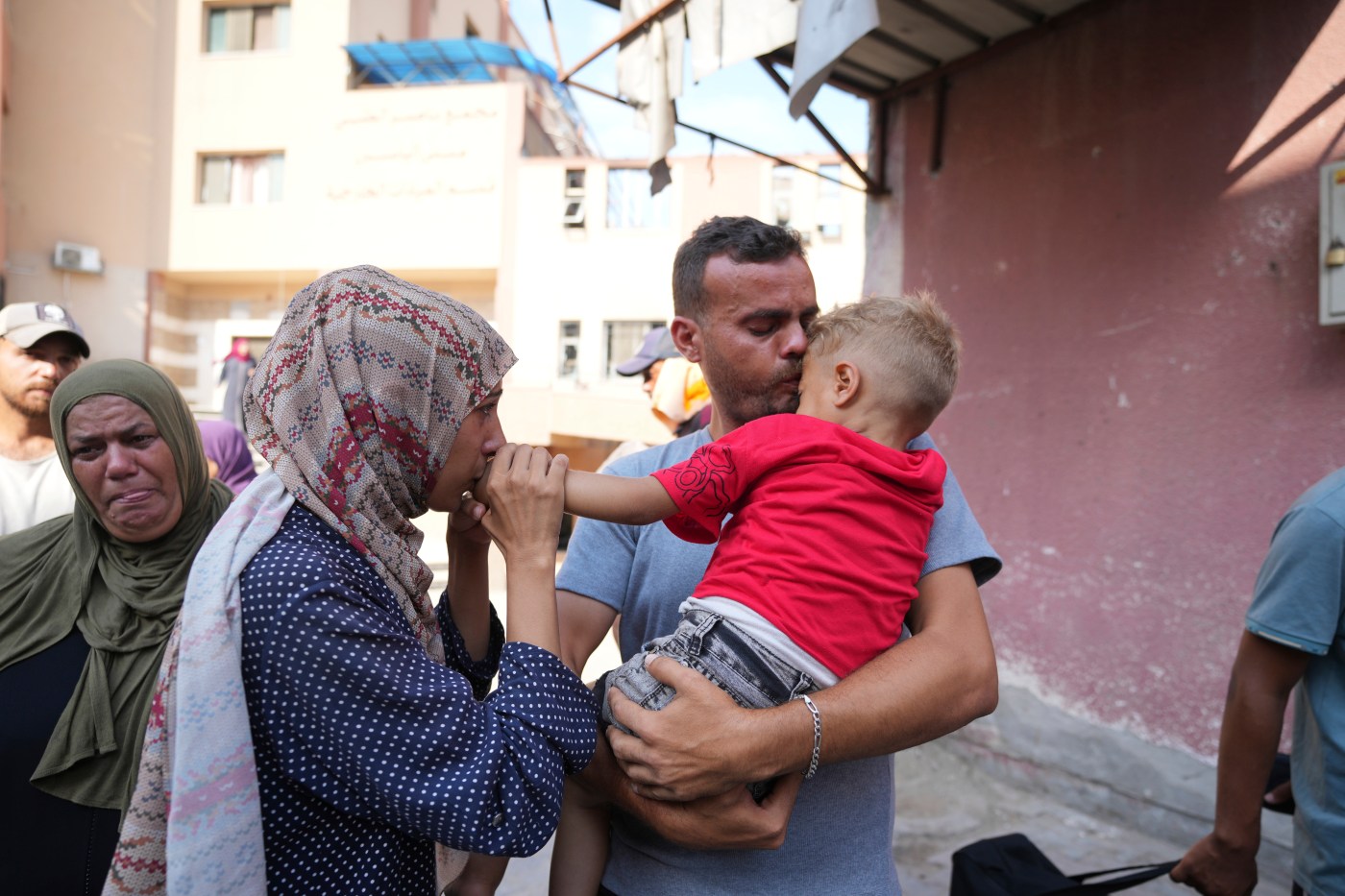
Family members bade a tearful goodbye to the kids at Nasser Hospital in the southern Gaza town of Khan Younis. Many of the families appeared anxious — most relatives had to stay behind, and even those allowed to accompany the patients did not know their final destination.

Nour Abu Zahri wept as he kissed his young daughter goodbye. The girl has severe burns on her head from an Israeli airstrike. He said he didn’t get clearance to leave Gaza with her, although her mother did.

“It’s been almost 10 months, and there is no solution for the hospitals here,” he said.

Kamela Abukweik burst into tears after her son got on the bus heading to the crossing with her mother. Neither she nor her husband were cleared to leave.

“He has tumors spread all over his body and we don’t know what the reason is. And he constantly has a fever,” she said. “I still don’t know where he is going.”

The Rafah crossing between Gaza and Egypt, the only one available for people to travel in or out, shut down after Israeli forces captured it during their operation in the city early last month. Egypt has refused to reopen its side of the crossing until the Gaza side is returned to Palestinian control.

Six of the children were transferred to Nasser Hospital from Al-Ahli Hospital in Gaza City earlier this week. Five have cancer and one suffers from metabolic syndrome. That evacuation was organized by the World Health Organization, which could not immediately be reached for comment.

At a press conference at Nasser Hospital on Thursday, Dr. Mohammed Zaqout, the head of Gaza’s hospitals, said the evacuation was being conducted in coordination with the WHO and three American charities.

Zaqout said over 25,000 patients in Gaza require treatment abroad, including some 980 children with cancer, a quarter of whom need “urgent and immediate evacuation.”

He said the cases included in Thursday’s evacuation are “a drop in the ocean” and that the complicated route through Kerem Shalom and into Egypt cannot serve as an alternative to the Rafah crossing.

Zaqout said 21 children had originally been scheduled to leave Thursday, but one arrived at the hospital too late to make the departure. It was not immediately clear what prevented the other child from joining the evacuation.

Physicians for Human Rights Israel and Gisha, an Israeli human rights organization, petitioned Israel’s Supreme Court to create a “permanent mechanism” to allow people needing medical treatment to evacuate Gaza.

Adi Lustigman, an attorney with Physicians for Human Rights Israel, said that before May 7, when the Israeli military launched their ground operation in Rafah and took control of the crossing, approximately 50 Palestinian patients per day crossed into Egypt for medical treatment abroad.

The fact that fewer than 70 people left the territory Thursday “after two months the crossing has been closed is beyond tragic,” said Tania Hary executive director of Gisha. “Our sense of it is that it’s just unsustainable in terms of a response.”

She called on the Israeli military to reopen Rafah Crossing and allow patients to exit the Erez Crossing in the northern part of the territory, which had previously been the main crossing for Palestinians entering Israel.

Israel’s Supreme Court will hold a hearing on the petition Monday.

In a post on the social media platform X, the World Health Organization regional director for the Eastern Mediterranean, Hanan Balkhy, welcomed news of the children’s evacuation, but noted that “more than 10,000 patients still require medical care outside the Strip. Of the 13,872 people who have applied for medical evacuation since 7 October, only 35% have been evacuated.”

“Medical evacuation corridors must be urgently established for the sustained, organized, safe, and timely passage of critically ill patients from Gaza via all possible routes,” she said.

Israel’s offensive against Hamas, which runs the Gaza Strip, has killed over 37,700 Palestinians, according to Gaza’s Health Ministry, which does not differentiate between civilians and fighters in its count. Thousands of women and children are among the dead.

The war began with Hamas’ surprise attack into Israel on Oct. 7, in which terrorists killed some 1,200 people and took another 250 hostage. Hamas has been designated a terrorist organization by the U.S., Canada, and European Union.

On Thursday, the Israeli military ordered new evacuations from Gaza City neighborhoods that were heavily bombed and largely emptied early in the war. The latest orders apply to Shijaiyah and other neighborhoods where residents reported heavy bombing on Thursday.

First responders with Gaza’s Civil Defense said airstrikes hit five homes, killing at least three people and wounding another six. It said rescuers were still digging through the rubble for survivors.

Gaza City was heavily bombed in the opening weeks of the war. Israel ordered the evacuation of all of northern Gaza, including the territory’s largest city, later that month. Hundreds of thousands of people have remained in the north, even as Israeli troops have surrounded and largely isolated it.

Shijaiyah residents in a messaging group shared video showing large numbers of people fleeing the neighborhood on foot with their belongings in their arms.

International criticism has been growing over Israel’s campaign against Hamas as Palestinians face severe and widespread hunger. The eight-month war has largely cut off the flow of food, medicine and basic goods to Gaza, and people there are now totally dependent on aid. The top United Nations court has concluded there is a “plausible risk of genocide” in Gaza — a charge Israel strongly denies.

___

Shurafa reported from Deir al-Balah, Gaza Strip and Chehayeb from Beirut. Associated Press writer Melanie Lidman in Tel Aviv, Israel contributed.

___