Iowa’s Supreme Court tells lower court to let strict abortion law go into effect

posted in: Society | 0

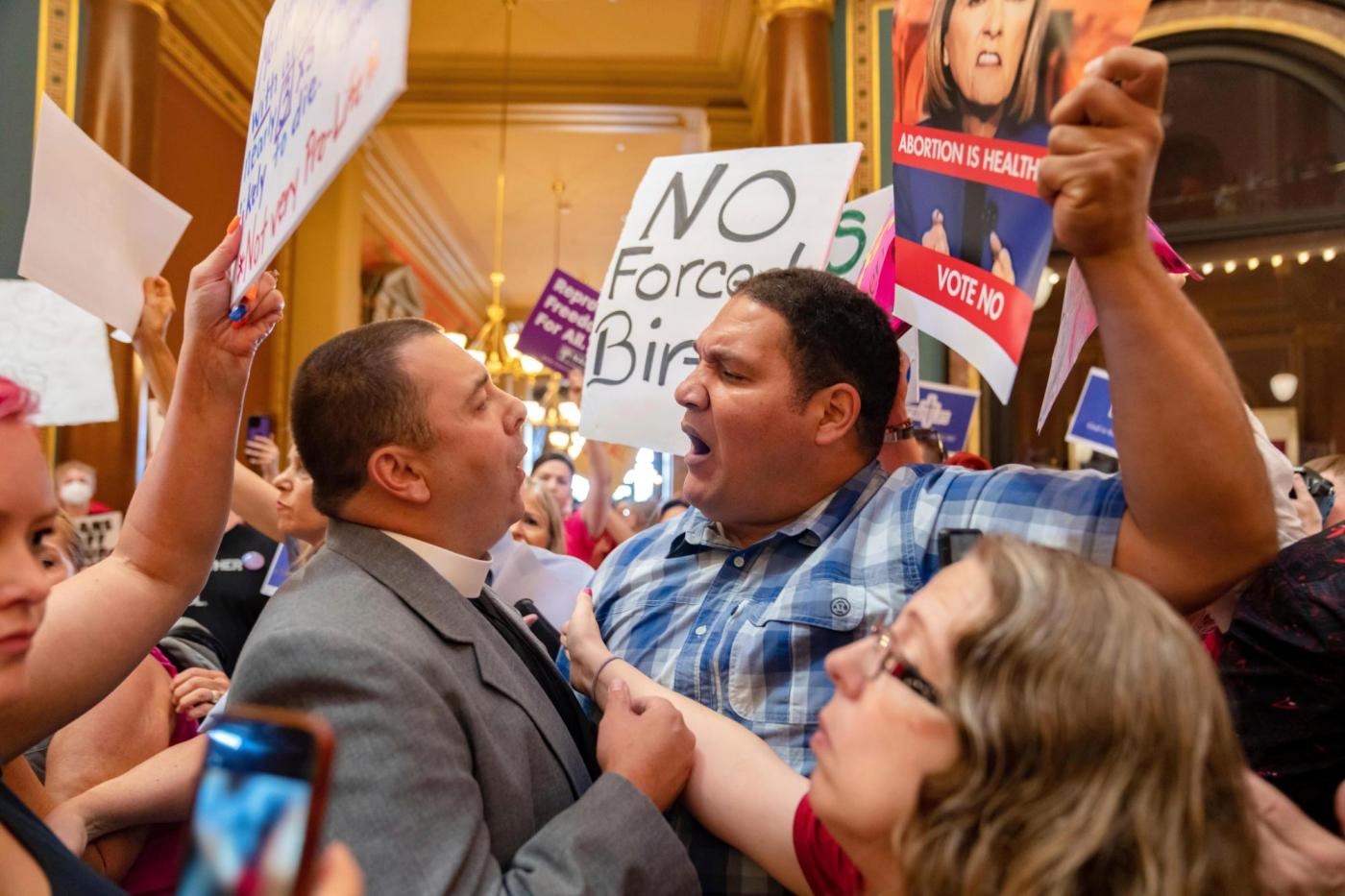
DES MOINES, Iowa (AP) — The Iowa Supreme Court said Friday the state’s strict abortion law is legal, telling a lower court to dissolve a temporary block on the law and allowing Iowa to ban most abortions after about six weeks of pregnancy — before many women know they are pregnant.

The 4-3 ruling is a win for Republican lawmakers, and Iowa joins more than a dozen other states with restrictive abortion laws following the U.S. Supreme Court’s overturning of Roe v. Wade in 2022.

Currently, 14 states have near-total bans at all stages of pregnancy and three ban abortions at about six weeks.

The Iowa Supreme Court’s majority reiterated on Friday that there is no constitutional right to abortion. Moreover, as the state requested, they instructed courts to assess whether the government has a legitimate interest in restricting the procedure, rather than whether there is too heavy a burden for people seeking abortion access.

Republican Gov. Kim Reynolds immediately released a statement celebrating the decision.

“I’m glad that the Iowa Supreme Court has upheld the will of the people of Iowa,” she said.

Chief Justice Susan Christensen emphatically delivered a dissent, writing: “Today, our court’s majority strips Iowa women of their bodily autonomy by holding that there is no fundamental right to terminate a pregnancy under our state constitution. I cannot stand by this decision.”

There are limited circumstances under the Iowa law that would allow for abortion after six weeks of pregnancy: rape, if reported to law enforcement or a health provider within 45 days; incest, if reported within 145 days; if the fetus has a fetal abnormality “incompatible with life”; or if the pregnancy is endangering the life of the patient. The state’s medical board recently defined rules for how doctors should adhere to the law.

The ruling previews the ending of a yearslong legal battle over abortion restrictions in Iowa that escalated in 2022 when the Iowa Supreme Court and then the U.S. Supreme Court both overturned decisions establishing a constitutional right to abortion.

The Iowa law passed with exclusively Republican support in an one-day special session last July. A legal challenge was filed the next day by the American Civil Liberties Union of Iowa, Planned Parenthood North Central States and the Emma Goldman Clinic.

The law was in effect for a few days before a district court judge put it on pause, a decision that Reynolds appealed.

At the time, Planned Parenthood North Central States said it stayed open late and made hundreds of phone calls to prepare patients amid the uncertainty, rescheduling abortion appointments in other states for those who wanted. Court filings showed Iowa clinics had several hundred abortion appointments scheduled over two weeks last July, with most past the six-week mark in their pregnancies.

Since then, Planned Parenthood has ceased abortion services in two Iowa cities, including one in Des Moines. The other Des Moines location doesn’t currently have the capacity to serve patients seeking an abortion, so abortion medication and the procedure are being offered about 36 miles (59 kilometers) north in Ames.

Before Friday, Planned Parenthood providers had again been communicating with people seeking upcoming appointments about the potential outcomes of the high court’s decision, Masie Stilwell, the director of public affairs, told The Associated Press in early June. That included the possibility that abortion would no longer be legal for their circumstance and they would need to work with staff to reschedule in other states.

Related Articles

National News |


‘Everything is at stake’ for reproductive rights in 2024, Harris says as Biden-Trump debate nears

National News |


The Supreme Court overturned Roe v. Wade in 2022. Here’s the state of abortion rights now in the US

National News |


Unanimous Supreme Court preserves access to widely used abortion medication

National News |


Wins at the ballot box for abortion rights still mean court battles for access

National News |


Letters: Minnesota’s medical-aid-in-dying bill was kneecapped near the finish line
Are the Ten Commandments the basis of our moral system?

posted in: News | 0

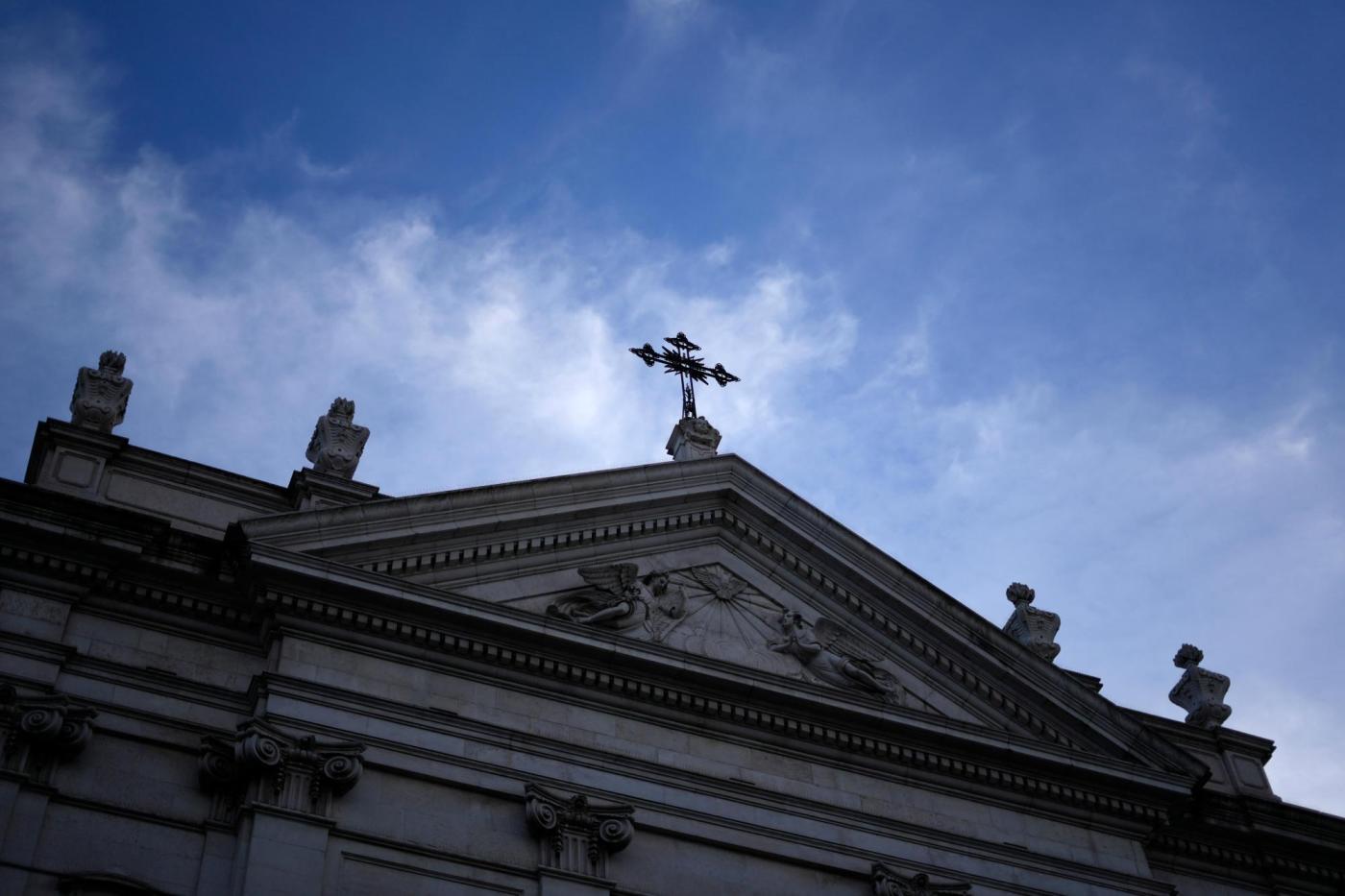
The governor of Louisiana just signed a law requiring the Ten Commandments to be displayed in public schools.

There are two problems with this. The first and most obvious is that the Constitution prohibits the government from making laws that mandate an establishment of religion. While the Ten Commandments may be central to the Judeo-Christian tradition, the government has no right to pass laws that discriminate against Buddhists, Muslims, Hindus, Taoists, Sikhs or atheists.

But there is a second problem: Whose Ten Commandments are going to be displayed? The original text does not number the commandments and contains more than 10 imperative statements. Even within the Judeo-Christian tradition, there are disagreements on how to parse them and what they mean.

The standard Jewish version holds that the first commandment is, “I am the LORD thy God,” while the second commandment is, “Thou shall have no other gods before Me.” For Christians, “I am the Lord thy God” is not a commandment but a preamble. So, the first commandment for Christians is not an identification of God but a prohibition of worshiping false gods.

Catholics and some Protestants differ on where to put the prohibition of graven images and how to interpret it.

According to the Exodus version of the commandments, observance of the Sabbath day (or in some versions the Lord’s Day) is justified because God rested on the seventh day from all the labors associated with creation. But according to the Deuteronomy version, the Sabbath day is supposed to commemorate the Exodus from Egypt. In any case, Jews celebrate the Sabbath on Saturday and Christians on Sunday.

There is still confusion on whether the text means “Thou shall not kill” or “Thou shall not commit murder.” Though most editions of the Bible have “murder,” the King James edition has “kill.”

Adultery in the ancient world involved a man sleeping with a married woman. Nothing in the original text of the Ten Commandments prohibits a married man from sleeping with an unmarried woman, concubine or enslaved person.

While there is a commandment prohibiting false testimony in court, contrary to popular belief, it does not prohibit lying, at least not explicitly. Nor does it prohibit promise breaking. One can argue that both are contained in the spirit of the commandments, but that is a matter of interpretation.

According to some versions, there are two commandments dealing with coveting: one involving your neighbor’s house and another involving your neighbor’s wife. Other traditions combine them into one commandment.

Are the Ten Commandments the basis of our moral system? If they are, then it is odd that they say nothing about slavery, rape, torture or other heinous crimes. Jesus reduced the commandments to two primary ones: love of God and love of one’s neighbor. But neither of these is mentioned in the original 10.

So which version does the governor of Louisiana want to put up in public schools and how will students be instructed about their meaning?

Your guess is as good as mine. It was disputes like these that led the Framers of the Constitution to decide that when it comes to religious matters, it is best for the government to step aside and let people make up their own minds.

In an age when many people complain about the intrusion of government into people’s private lives, wouldn’t it be better to put up the Bill of Rights, whose wording is beyond dispute, rather than the Ten Commandments?

Kenneth Seeskin is an emeritus professor of philosophy and the Philip M. and Ethel Klutznick professor of Jewish civilization at Northwestern University. He wrote this column for the Chicago Tribune.

Related Articles

Opinion |


Pamela Paul: Who you calling conservative?

Opinion |


Leonard Greene: Reggie Jackson hits a candor homer

Opinion |


Stephen L. Carter: Crime labs are drowning in work. That hurts us all

Opinion |


Noah Feldman: It just got easier to be convicted of a crime

Opinion |


Abbie E. Goldberg: As conservatives target same-sex marriage, its power is only getting clearer

Other voices: Putin’s ‘peace’ proposal for Ukraine isn’t serious

posted in: Politics | 0

Before heading off to North Korea last week, Russian President Vladimir Putin made a “peace” offering to Ukraine.

He pledged an immediate cease-fire and peace negotiations if Ukraine withdraws from four partially occupied regions and abandons its bid to join the North Atlantic Treaty Organization. His other stipulation, of course, is that the West lift sanctions. This offer was patently designed to tempt and divide Ukraine’s friends. No one should fall for it.

Sadly, wars don’t always end justly. It’s likely, however lamentable, that some form of territorial concessions will be part of a negotiated end to the war Putin started. That must be Ukraine’s decision to make.

But it’s preposterous for Putin to demand such concessions before talks can even begin. Moreover, if talks ever do get started, Putin’s offers should be viewed with utmost skepticism. Nine out of 10 Ukrainians say they don’t trust him, and they’re right: He has an unblemished record of using negotiations to regroup and plan the next assault.

The U.S. and its friends need to show they understand this. There’s been some progress. At the recent Group of 7 summit in Italy, the U.S. and Japan signed 10-year security agreements with Ukraine, signaling determination to stand by Kyiv.

The allies are working on finding responsible ways to use frozen Russian assets to bolster Ukraine’s finances. And there are belated moves to tighten sanctions, which still have far too many holes, allowing Putin to amass more resources for his war.

The Biden administration’s decision to let Ukraine use U.S.-supplied weapons against military targets inside Russia was another long-overdue shift. As French President Emmanuel Macron recently said, there’s no point in giving Ukraine weapons and then refusing to let it defend itself.

Indeed, Washington’s lifting of restrictions doesn’t go far enough: It’s limited to forces targeting Kharkiv, Ukraine’s second-largest city, which has come under heavy aerial bombardment. The same logic should be applied, at a minimum, to other frontline areas near the border.

Bolstering Ukraine’s capabilities will also require critical ammunition supplies (which are now starting to arrive) and stronger air defenses. Russia’s air force is playing a bigger role and its attacks are becoming more indiscriminate: 3,000 highly destructive glide bombs rain down on the country every month. Ukraine also needs more help in training and equipping reserves and new recruits.

Europe should give more thought to future-proofing its support. This demands changes in defense planning, coordination and production — so the Continent can serve its own defense needs, support Ukraine and deter Russia in the long term. Assisting in Ukraine’s reconstruction will be another major challenge. Efforts to repair, rebuild and demine need to get going: This work cannot wait for the war to end.

Putin has flooded the battlefield with ill-trained and badly equipped forces; nurtured alliances with Iran, North Korea and China; and launched indiscriminate attacks against civilian targets. His capacity for destruction is impressive. But the costs of his war are mounting for Russia as well, and becoming ever harder to disguise. Time isn’t necessarily on his side.

Putin’s actions speak volumes. His proposal for talks in exchange for territory should be read as just his latest attempt to divide the allies and throttle Western support. Thanks, but no thanks.

— The Bloomberg Opinion Editorial Board

Related Articles

Opinion |


Trudy Rubin: Ukraine’s head of military intelligence is behind Kyiv’s biggest victories this year. He sees no point in peace talks

Opinion |


Russia obliterates Ukraine’s front-line towns faster with hacked bombs and expanded air base network

Opinion |


Trudy Rubin: Ukraine’s volunteer spirit buoys its fight against Russia

Opinion |


78 countries at Swiss conference agree Ukraine’s territorial integrity must be basis of any peace

Opinion |


Putin offers truce if Ukraine exits Russian-claimed areas and drops NATO bid. Kyiv rejects it

Pamela Paul: Who you calling conservative?

posted in: News | 0

You know you’ve touched a nerve with progressive activists when they tell you not just that you’re wrong but that you’re on the other side.

Such is the fate of any old-school liberal or mainstream Democrat who deviates from progressive dogma. Having personally been slapped with every label from “conservative” to “Republican” and even, in one loopy rant, “fascist,” I can attest to how disorienting it is given my actual politics, which are pure blue American only when they aren’t center French.

But it’s not just me. New York magazine’s liberal political columnist Jonathan Chait was accused of lending “legitimacy to a reactionary moral panic” for critiquing political correctness. When Nellie Bowles described the excesses of social justice movements in her book “Morning After the Revolution,” a reviewer labeled it a “conservative memoir.” Meghan Daum, a lifelong Democrat, was accused of having fallen into a “right-wing trap” for questioning the progressive doctrine of intersectional oppression.

If this was just about our feelings, these denunciations could be easily brushed aside. But the goal and the effect is to narrow the focus of acceptable discourse by Democrats and their allies. If liberals are denounced for “punching left” when they express a reasonable difference of opinion, potentially winning ideas are banished.

This narcissism of small differences effectively leaves it to Republicans to claim mainstream ideals like patriotism, which Matthew Yglesias (another targeted apostate) argues still holds value for non-MAGA America, and smart politics, like attending to the concerns of the working class, as George Packer (also frequently attacked) points out.

In the run-up to a tight election with a weak Democratic candidate and a terrifying Republican opponent, pushing liberals and centrists out of the conversation not only exacerbates polarization, it’s also spectacularly counterproductive.

Take President Joe Biden’s recent executive order severely limiting asylum. The Congressional Progressive Caucus chair Pramila Jayapal accused him of trying to “out-Republican the Republicans.” Mother Jones called the action “Trump-like.”

Meanwhile, according to a recent Axios poll, even 42% of Democrats support mass deportations of immigrants in the country illegally. It’s no secret this election will be fought in the swing states and won in the middle, which makes another poll’s finding that 46% of independents in support even more concerning for the party’s electoral prospects.

Consider other liberal political positions that have been denounced by the progressive left: Criminal offenders — even those not named Donald Trump — should go to prison and a well-trained and respected police force provides community safety.

Then look at where voters stand on these issues. According to a recent Pew poll, “a majority of voters (61%) say the criminal justice system is generally ‘not tough enough on criminals’ and “overwhelming majorities of Biden and Trump supporters say it is extremely or very important for police and law enforcement to keep communities safe.”

This also holds true for certain culture-war issues. Contrary to progressive diktat, “a growing share of voters (65%) say that whether a person is a man or woman” is determined by sex.

Yet shunning anyone on the left who insists otherwise has become a progressive strategy. What better way to dismiss or delegitimize the heretics than to smear them as covert members of the opposition?

And labeling people makes it easier to avoid hearing their critiques or dealing with the actual issues in question.

Those on the left who’ve been dumbstruck as Trump has intimidated his most vociferous Republican critics (see: Chris Sununu, Nikki Haley) into falling in line might exert a little more self-awareness of similar moves by the left.

The goal of progressives may be solidarity, but their means of achieving it are by shutting alternative ideas down rather than modeling tolerance. Leah Hunt-Hendrix, a co-author of a recent book called “Solidarity,” said those liberals who critique illiberalism on the left are “falling into the right’s divide-and-conquer strategy.”

But liberal people can disagree without being called traitors. Liberals can even agree with conservatives on certain issues because those positions aren’t inherently conservative. Shouldn’t the goal be to decrease polarization rather than egg it on? Shouldn’t Democrats aim for a big tent, especially at a time when registered party members are declining and the number of independents is on the rise?

Those on the Democratic side of the spectrum have traditionally been far better at nuance, complexity and compromise than Republicans. It would be to our detriment if policies on which a broad swath of Americans agree are deliberately tanked by a left wing that has moved as far to the left as Republicans have moved to the right. Those who denounce militant fealty within the Republican Party shouldn’t enforce similar purity tests in their own ranks.

Pamela Paul writes a column for the New York Times.

Related Articles

Opinion |


Leonard Greene: Reggie Jackson hits a candor homer

Opinion |


Stephen L. Carter: Crime labs are drowning in work. That hurts us all

Opinion |


Noah Feldman: It just got easier to be convicted of a crime

Opinion |


Abbie E. Goldberg: As conservatives target same-sex marriage, its power is only getting clearer

Opinion |


Trudy Rubin: Ukraine’s head of military intelligence is behind Kyiv’s biggest victories this year. He sees no point in peace talks