St. Paul: Snelling Avenue road closure to be extended into late July

posted in: News | 0

The Minnesota Department of Transportation is extending the closure of a half-mile stretch of Snelling Avenue in St. Paul between Ford Parkway and Montreal Avenue to late July.

The extended closure was blamed on rainy weather and delays in utility relocation. MnDOT officials said they hope to have Snelling, which is also Minnesota 51, reopen sooner.

The original closure was scheduled to run from 4 a.m. June 17 through 10 p.m. on June 21 to convert four-lane Snelling Avenue into two lanes between Ford Parkway and Montreal, while adding a center median with left-turn lanes at the median breaks. A new 10-foot-wide multi-use trail will be installed along the east side of the avenue.

The traffic signal at Snelling and Montreal will be replaced. Work is expected to wrap up by late

MnDOT will also resurface a half mile of Snelling Avenue between St. Clair Avenue and Grand Avenue. The work includes replacing the signal system at Snelling and St. Clair, building bump-outs and Americans with Disabilities Act-compliant crossings at all intersections between St. Clair and Grand avenues.

Construction is anticipated to be complete in August.

For more information, visit tinyurl.com/Snelling2024.

Related Articles

Local News |


Mississippi River enters top ten recorded crests for St. Paul

Local News |


With flood protections in place, St. Paul, Stillwater await river crests

Local News |


Three charged in killing of Mounds View man at St. Paul light-rail platform

Local News |


Where to find Fourth of July fireworks and events in the St. Paul area

Local News |


Olympic Trials: The unbreakable spirit of St. Paul gymnast Suni Lee

Is there a right way to exit an airplane?

posted in: News | 0

By Sally French | NerdWallet

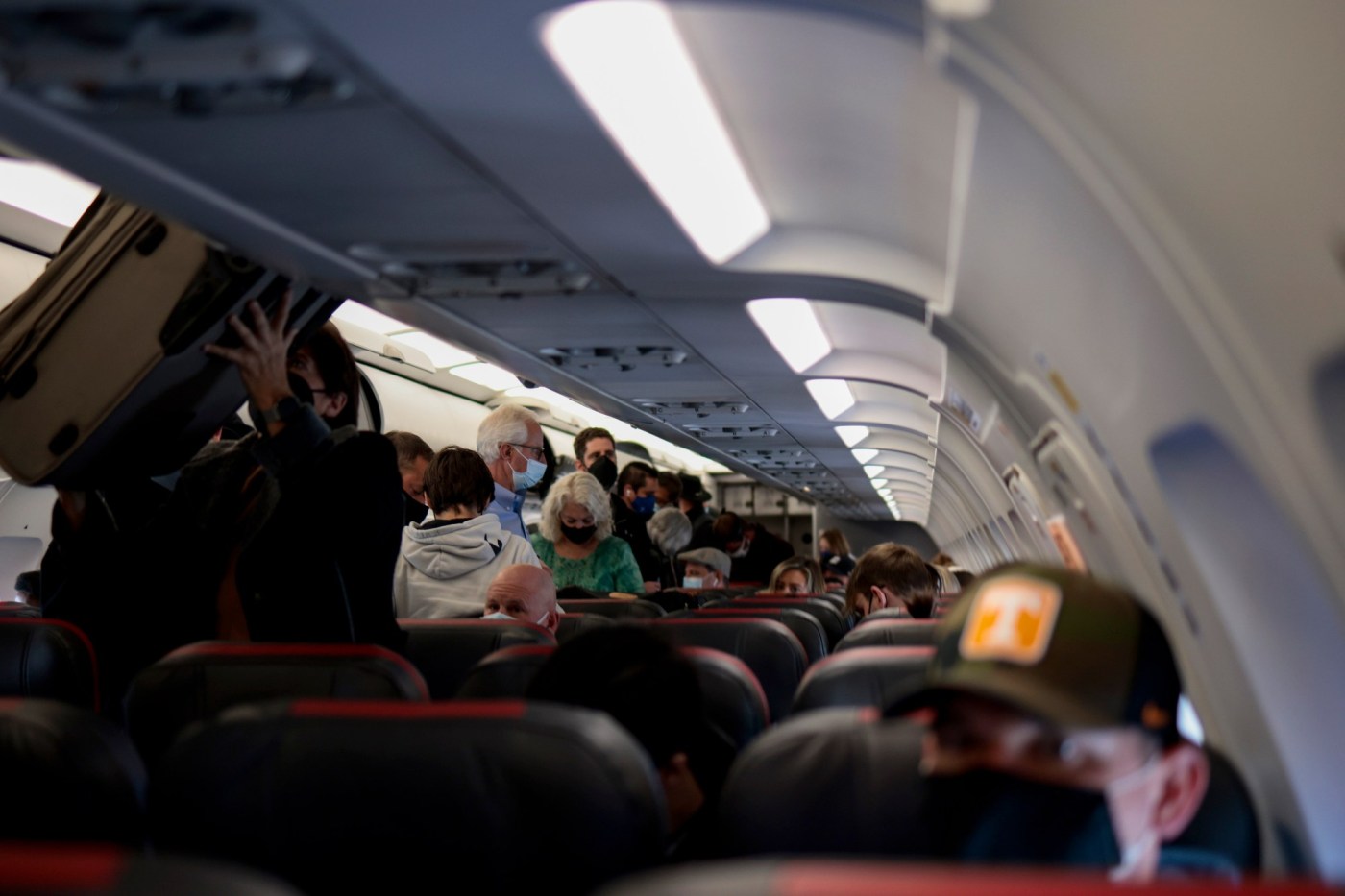
Airlines devote a lot of energy and strategy to how passengers board an aircraft. Passengers are separated into different groups — like preboarding, priority boarding, family boarding, zones 1-7, A 1-60 and so on — and embark accordingly. Some airlines have up to 10 different boarding groups.

You’d think airlines would make the exit process more structured, too, but in reality, neither experts nor passengers can agree on the right way to do it.

Imagine this: Upon arrival, passengers in the middle of the plane are slow to stand up to signal a start to disembarking. In response, a plucky flyer from a row farther back whizzes up to the front to take their turn in the queue of exiters, thereby “cutting” the line.

Is this bad or selfish behavior? Etiquette experts think so.

“It’s common courtesy to allow others to go ahead of you,” etiquette expert Jo Hayes explained in an email. “Be patient, and allow them time to get into the aisle and grab their bag from overhead.”

But just because many people consider it polite to let the people in the prior rows offboard first, is it the most efficient? Turns out, it might not be.

The most efficient way to exit a plane

A 2014 study published in the Journal of Air Transport Management from researchers at Northwestern University’s Department of Industrial Engineering and Management Sciences sought to find the optimal deplaning strategy by simulating the exit process on three types of commercial airliners and using three different algorithms.

The study concluded that deplaning in a “column style” is fastest. That means that starting from front to back, all aisle seats exit first, then all middle seats and then all window seats.

A 2007 study out of the National University of Defense Technology in Changsha, China, found similar results. Across 100 simulations, the column style was the fastest, taking just 9.9 minutes, compared to 14 minutes with the more typical front-to-back approach.

Despite its proven efficiencies for exiting aircraft, the column style might not be that practical. After all, for groups sitting in a row together, the aisle folks who deplane before their companions may end up waiting outside the gate anyway.

The most polite way to exit a plane

Alas, etiquette often trumps efficiency.

“As a general rule, the unspoken plane exit etiquette is to allow those closest to the door to exit first,” Hayes said. “It is basic good manners to wait your turn.”

For some, the rationale comes down to personal space.

“If we all wait and get up as each row in the front gets emptied, it’s easier for everyone to disembark without having to rub each other’s backs and shoulders,” says Sahana Kulur, a travel blogger who runs a website called Vacaywork.

That said, not everyone agrees that letting the slowpokes who fumble with their bags in the overhead bins off first is more polite. Some believe that common courtesy is to let others off the plane as they’re ready, even if that means letting them go in front of you.

When to let people behind you deplane first

There are some situations when it’s generally considered polite to let the people behind you deplane first.

Tight connections

Dwindling time between an arrival and another departure can be stressful, so its courteous to let passengers with tight connections exit early.

“If you have a tight connecting flight, particularly due to a delay in departing, you should let the flight attendants know,” Carrie Bradley, a former flight attendant who now runs a travel blog called Flying With A Baby, said in an email.

Flight attendants can then announce on the overhead speaker that some passengers might need to rush out, or they might reshuffle seats to put connecting passengers near the front.

If the connecting passenger is you, let people in the rows ahead of you know why you’re skipping ahead.

Your bags are stowed in overhead bins behind you

While storing your bag above your seat is ideal, stowing it toward the front of the plane is your next best bet for maximizing deplaning efficiency.

But if your bags end up in an overhead bin behind you, don’t hold up everyone so you can retrieve your bags. At the very least, let the rows between you and your bag get off before you.

You don’t want to deal with the rush to exit anyway

Hayes generally prioritizes etiquette when deplaning and says she prefers the row style, even though she sometimes strays from it to avoid the hubbub.

“If I’m in a window seat, I’ve allowed the hordes to get up and leave before disembarking,” she said. “I can spend those extra few minutes checking my phone or simply relaxing calmly.”

How to disembark better (and faster)

No matter where you’re seated, most agree on some standards that make disembarking kinder and faster for everyone.

“Be quick to offer assistance to others in getting bags down from overhead,” Hayes wrote. “Those who are shorter, or the elderly, are often supremely grateful for assistance.”

“There’s no need to leap out of your seats as soon as the seat belt signs are off,” Bradley said. “Instead, spend that time checking the seat and floor around you to make sure that you have everything.”

But she still encourages travelers to pay attention and disembark quickly.

“Be ready to go as the rows in front of you are starting to move.”

And if unstructured disembarking is too much to bear, you can always pay extra or use upgrades to sit toward the front of the plane in a higher class of service. Even within the main cabin, you can often purchase a premium economy fare for more leg room, earlier boarding and, yes — a likely earlier exit than those farther back.

Sally French writes for NerdWallet. Email: sfrench@nerdwallet.com. Twitter: @SAFmedia.

Motel drip to gourmet sip: Insider secrets to making great coffee on the road

posted in: News | 0

Robin Donovan

That delightful first cup of coffee isn’t just a sensory wake-up call – it sets the tone for the day ahead; a good cup promises a good day. As any traveler knows, finding a great cup of coffee while on the road can be a challenge. But with the right tools and a little resourcefulness, you can brew a flawless cup of coffee anywhere, whether you wake up in a plush hotel suite or a rugged campsite in the woods.

Just because you are traveling doesn’t mean you have to endure less than stellar coffee. Explore these brewing methods to ensure that every morning, wherever you are, your coffee is nothing short of perfect.

Hotel room brews

These days, it seems every hotel room comes equipped with one of those single-serve, pod-style coffee makers. But pod coffee? No, thank you. Here are a few strategies to rescue you from coffee pod misery.

Compact and easy to pack, a travel-size French press only needs coffee grounds and hot water. Some ingeniously designed travel French presses even serve as your coffee mug, too. You can use the in-room coffee maker or microwave to heat water, snag some hot water from the breakfast area or order some from room service.

Collapsible silicone drippers make for lightweight travel. Use them with your own grounds, and you’ve got your morning ritual covered. Again, the in-room coffee maker or microwave can serve to heat your water, or grab some hot water from the lobby.

Like their pod-reliant counterparts, travel-size drip coffee or espresso makersare compact, electric devices. The difference is that these let you spoon in your favorite espresso grounds. Add water, flip the on switch and watch as hot water slowly percolates through, filling your cup with that rich, familiar flavor.

Campsite java

Out in the wild, away from the convenience of electric kettles and microwaves, brewing coffee still remains a highlight of the morning. Here’s how.

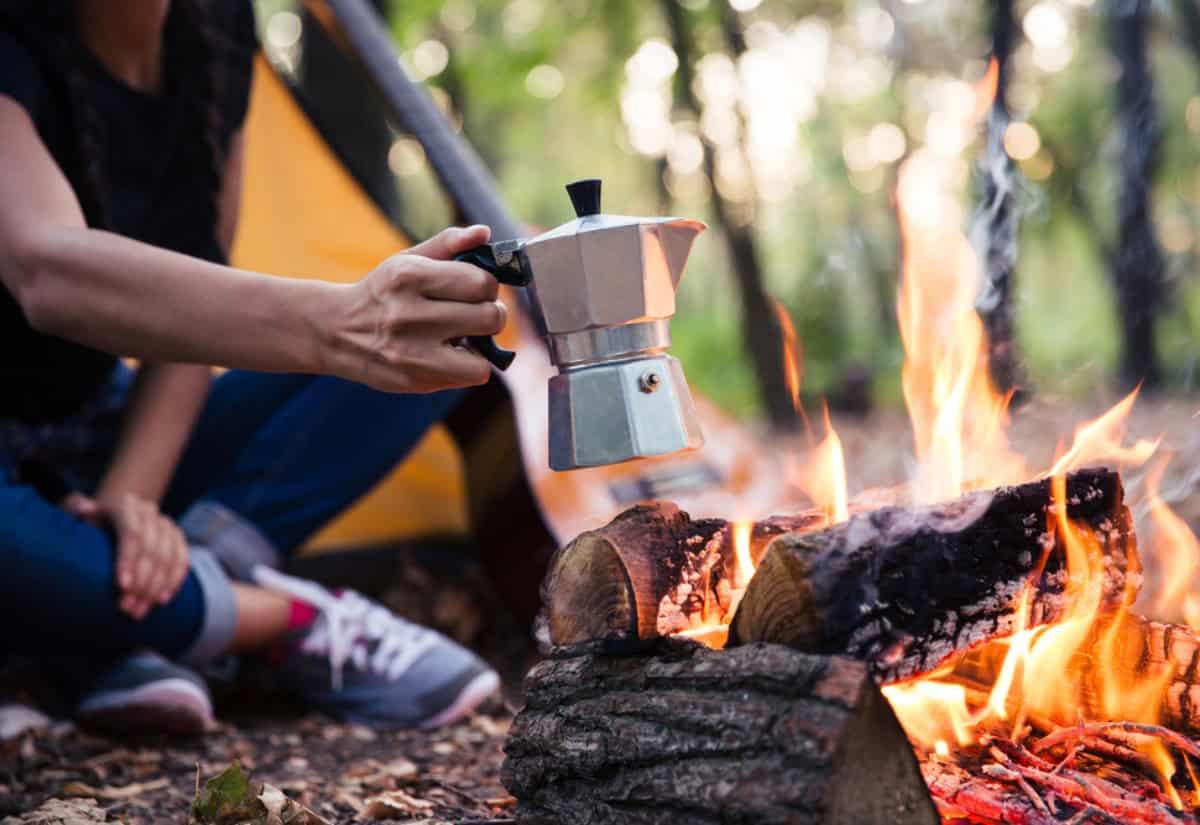
Nothing beats the aroma of coffee brewing in a Moka Pot over a gas-powered camp stove. A Moka Pot is a stovetop coffee maker that relies on heat and pressure to draw out the rich flavors of your ground coffee. The end result is an intense cup, similar in flavor, richness and punch to a classic espresso. It’s simple, efficient and makes a bracing cup of coffee that’s ideal for a brisk morning outdoors.

If you’re traveling light, cowboy coffee may be the answer. To make this rugged concoction, boil water in a pot on a camp stove or over a fire and stir your coffee grounds right into it. Let it steep for several minutes, and then let the grounds settle to the bottom before drinking. It’s rudimentary but gets the job done.

A pour-over cone dripper is a handy, easy-to-pack device and it isn’t just for hotel rooms. It’s also the ideal camping companion – simply place it over your mug, add your preferred coffee grounds and pour hot water for a barista-worthy cup even when you’re miles away from the nearest café. Look for a collapsible silicone version to save space, and be sure to pack some paper filters, too. Or use a perforated metal cone filter that doesn’t require a separate paper filter.

Modern solutions for the nomadic coffee lover

Technology and innovation have blessed us with some nifty solutions for brewing on the go. Here are a few favorite inventions that push the envelope.

Imagine sipping your brew directly from a mug through a straw that filters out the grounds. That’s what you get with the JoGo Straw. It’s lightweight, easy to clean and perfect for the minimalist traveler. And it’s so small, you can easily tuck it into your purse or slide it into a backpack pocket.

The compact and versatile Aeropress coffee maker is durable, portable and makes a fantastic cup of coffee. It’s a cylindrical chamber made air tight with a silicone seal. Coffee grounds steep in hot water inside the chamber and when you’re ready, a plunger forces the water through a filter into your cup. In just a few minutes, you can make a delicious brew that combines the full-bodied flavor you get from a French press, the smoothness you expect from pour-over and the richness of espresso.

Heating water on the go

The common thread in all these methods is the need for hot water. The good news is that there are plenty of easy ways to get hot water when you’re traveling. To start, those pod-style coffee makers you find in so many hotel rooms these days can be repurposed to heat water for your own brewing setup. Of course, if your room has a microwave, you can use that.

If you’ve got access to electricity, you can use a lightweight, travel-sized electric kettle. It’s a game changer for anyone who prioritizes their morning coffee ritual. These nifty devices boil water quickly and shut off automatically once the water boils. Choose a collapsible silicone one for easy packing.

When camping, you can use whatever heating method you’re relying on to cook grilled steaks or fishtacos for dinner. Whether that’s an open fire or a portable gas stove, all you need is a pot to boil water.

Travel-friendly coffee add-ins

While the coffee itself takes center stage, it’s the accompaniments that fine-tune it to personal taste. Here’s how to keep your favorite add-ins close so you don’t have to compromise on the personalized coffee experience you enjoy back home.

Individual creamer packets, whether dairy or non-dairy, are travel-friendly and don’t require refrigeration. They come in various flavors and can easily slip into your bag.

Packets of sugar, honey or stevia take up virtually no space in your luggage, but if you’re staying in a hotel, you can likely grab whatever you need from the coffee bar. If you want to get fancy, make your own coffee syrups and bring them along in silicone squeeze bottles.

When you can’t have your favorite avocado toast with grated egg, add a scoop of protein powder to your coffee. Buy your favorite flavors in individual serving-size packets. It adds creaminess and flavor to your coffee, and also fills you up.

With these tools and tips, the world is your coffee shop. Whether you’re waking up in a plush hotel bed or in a sleeping bag in the wilderness, a quality cup of coffee made just the way you like it is within reach. It might require a bit more effort than your home kitchen setup, but the ritual itself is part of the adventure. So, pack your bags – and your coffee gear – with confidence. After all, exploring the world shouldn’t mean sacrificing your beloved, first-thing-in-the-morning cup of delicious coffee.

Robin Donovan is the author of more than 40 cookbooks, including the bestselling Campfire Cuisine, Ramen Obsession and Ramen for Beginners. A food writer, recipe developer and food photographer, she is the creator behind the food blog All Ways Delicious, where she shares easy recipes for the best dishes from around the world.

16 LGBTQ+ love stories to stream during Pride Month and beyond

posted in: News | 0

It’s still Pride Month, so here’s a roundup of some of my favorite LGBTQ+-themed movies, from the many that I’ve reviewed in the past 20 years or so. But don’t think of them just as Pride watching; all of these titles — each of them, at their hearts, about love — make for great viewing, any time.

Beginners” (2011, rated R). The late Christopher Plummer won his only Oscar for this wise, wistful comedy about a man who comes out as gay just a few years before his death, and about his son (Ewan McGregor) coming to terms with his father’s loss. Its gentle message is that we’re all beginners at love — and all we can do is believe in it. (Streaming on Prime Video)

Blue Is the Warmest Color” (2013, rated NC-17). Yes, it’s long (watch it when you have three hours), but this French film about a young woman named Adèle (Adèle Exarchopoulos) embarking on her first romance is both sensual — the women’s bodies are lit like sculptures — and moving. Adèle has a way of gazing at the world as if it’s full of possibility; she’s not yet a fully formed person, but an intriguing beginning. (AMC+)

Brokeback Mountain” (2005, rated R). Ang Lee’s film, based on Annie Proulx’s short novel, broke all of our hearts back in 2005, with Heath Ledger and Jake Gyllenhaal as a pair of cowboys in 1960s Wyoming who know that their love is forbidden. Its central image couldn’t be more prosaic — two worn-soft Western shirts, hanging together — but its impact is huge; this movie stays with you after you’ve seen it, like a haunting love song. (Peacock)

Call Me By Your Name” (2017, rated R). Quick, name a movie as gorgeously swoony as this one. I’ll wait. Directed by Luca Guadagnino and masterfully adapted by the great James Ivory from André Aciman’s novel, this coming-of-age story is set in an exquisite villa in 1980s Italy, with Timothée Chalamet as a young man dazzled by new feelings of love and longing. (Prime Video)

Carol” (2015, rated R). I stand corrected: Todd Haynes’ glorious period drama is as swoony as movies get; this 1950s-set movie looks like a Hopper painting come to life. Cate Blanchett and Rooney Mara play forbidden lovers who find themselves falling deeply in love in a story that’s sad, poignant and the tiniest bit hopeful. But “Carol” is less about story than mood — and that mood is perfection. (Netflix, Hulu)

Related Articles

Entertainment |


After body found in crashed car on I-90, woman’s ex suspected of murdering her

Entertainment |


New documentary ‘Outrage’ covers the early days of AIDS and the story of Danny Sotomayor

Entertainment |


Young gay Latinos see rising share of new HIV cases, leading to call for targeted funding

Entertainment |


Abbie E. Goldberg: As conservatives target same-sex marriage, its power is only getting clearer

Entertainment |


Bomb threat made against weekend Pride event in Grand Marais

Disobedience” (2018, rated R). A passionate, unexpected love triangle, this vivid drama is set in a conservative Orthodox community in London, to which Ronit (Rachel Weisz) returns home after years away — to find that the woman she once loved (Rachel McAdams) is now married to a man (Alessandra Nivola). Weisz and McAdams find an electric connection, but this film has a generosity of spirit toward all three of its central characters; you leave it believing that their stories continue, somewhere. (Prime Video)

A Fantastic Woman” (2017, rated R). Winner of the 2018 Academy Award for best foreign language film, this Chilean drama is an eloquent tale of love, heartbreak and hope. Marina (Daniela Vega), a trans woman, struggles to cope with life after the loss of her beloved Orlando (Francisco Reyes), a kind man who was a safe haven for Marina in an often unwelcoming world. Filled with unexpected beauty, the film becomes a quiet triumph over adversity, and an object lesson in adjusting to life’s empty spaces. (Peacock)

Grandma” (2015, rated R). Lily Tomlin brings light and laughter to every film she’s in, but I especially loved her in this 2015 road comedy. She plays Elle, a gruff, misanthropic grandmother who doesn’t want to admit that she’s in mourning for her longtime partner, who died 18 months previously; instead, she channels that love into helping her granddaughter (Julia Garner). It’s a short, tart film — and an unexpectedly sweet one. (Prime Video)

The Half of It” (2020, rated PG-13). Alice Wu’s charmer of a rom-com dropped on Netflix just at the beginning of the pandemic, and I suspect it made a lot of us happier. In a high school spin on “Cyrano de Bergerac,” teen Ellie (Leah Lewis) is in love with popular Aster (Alexxis Lemire), a situation complicated by the fact that amiable jock Paul (Daniel Diemer) has hired Ellie to write love letters to Aster on his behalf. It’s a story that worked more than a century ago, when “Cyrano” was new, and it works now; “The Half of It” is funny, poignant, and ultimately a joy. (Netflix)

The Kids Are All Right” (2010, rated R). Annette Bening and Julianne Moore play a longtime lesbian couple in Lisa Cholodenko’s delightful comedy/drama about a family, in which a teen daughter (Mia Wasikowska) suddenly decides she wants to contact, for the first time, her biological father/sperm donor (Mark Ruffalo). Disruption in the family ensues, but you never doubt that all will be well; these actors are all so very good at creating an atmosphere of love. (Prime Video)

Love Is Strange” (2014, rated R). A pair of New Yorkers, Ben (John Lithgow) and George (Alfred Molina), are finally able to marry after being together 39 years — but quickly find that, for real estate reasons, they will have to live apart. Ira Sachs’ film shows us, artfully, what years of love look like, and Lithgow and Molina barely need words to convey their characters’ bond; you sense that neither of these men is complete without the other. A lovely, touching film. (Peacock)

Moonlight” (2016, rated R). Barry Jenkins’ beautifully poetic film about a gay Black man’s coming of age won the Academy Award for best picture in 2017; it’s less a standard narrative than a collection of moments and impressions, unfolding in three acts over two decades, that leaves its central character and its viewers moved and changed. Watching it (and listening to Nicholas Britell’s mesmerizing score) feels like spending time inside someone else’s dreams, and waking up understanding better who they are. (Max, Hulu)

Pariah” (2011, rated R). Dee Rees’ accomplished debut film is the story of a 17-year-old Brooklyn girl named Alike (Adepero Oduye) who knows that she’s gay, but doesn’t know how to tell her family. It’s not an easy journey, and doesn’t have a textbook happy ending, but the film’s emotional impact is remarkable as you suddenly realize that this sad-eyed young woman has become a quiet tower of strength before our eyes. (Prime Video)

Portrait of a Lady on Fire” (2019, rated R). This one, from French filmmaker Céline Sciamma, is another gorgeous swooner; not much happens, but everything happens. Two women meet, on an island in 1770 Brittany: an artist, Marianne (Noémie Merlant), is hired to paint a portrait of Héloïse (Adèle Haenel); they gaze at each other for a long time, then fall in love. “Do all lovers,” wonders Héloïse in a passionate moment, “feel as though they’re inventing something?” It’s a beautiful, bittersweet celebration of passion and art. (Hulu)

Taylor Zakhar Perez, left, and Nicholas Galitzine in “Red, White & Royal Blue.” (Jonathan Prime/Prime Video/TNS)

Red, White & Royal Blue” (2023, rated R). Casey McQuiston’s 2019 novel, in which two of the most famous young men in the world (the king of England’s grandson and the president of the United States’ son) meet and fall in love, is happily ever after all the way. This is frothy rom-com pleasure, right down to the enormous wedding cake that topples on our heroes, because of course it does. (Prime Video)

A Single Man” (2009, rated R). Tom Ford’s lovely, tragic drama, based on Christopher Isherwood’s novel, has a devastating premise: It takes place over one day in the life of George (Colin Firth), a middle-aged professor in 1962 whose partner Jim (Matthew Goode) has recently died. Jim’s family didn’t invite George to the funeral, and he can’t publicly mourn. It’s an unremarkable day, but Firth uncannily shows us the carefully controlled grief that George can’t bring to the surface. He goes quietly through the motions of his life, as if he’s fading away. (Netflix)

©2024 The Seattle Times. Visit seattletimes.com. Distributed by Tribune Content Agency, LLC.