Here are some reasons you get muscle cramps and what you can do about them

posted in: News | 0

A muscle cramp is an unexpected tightening or contraction of one or more muscles in the body. These involuntary episodes can be quite painful as the muscle contracts and is unable to relax. They may last for a few seconds to a few minutes or even longer. While doctors don’t know exactly what causes muscle cramps, there are some possible causes and preventive measures to be considered by those who suffer from muscle cramps.

Muscle cramps can occur anywhere in the body, but are most common in the legs and feet. While muscle cramps are typically more of a nuisance than an indication of a serious health problem, they can interfere with sleep and other daily activities.

Summer weather may be a potential trigger for heat cramps, a painful type of muscle cramp. Excess sweating, dehydration, an imbalance in electrolytes in the body — especially when performing physical activity in the hot weather — can lead to muscle cramps during or soon after physical activity. Other risk factors for muscle cramps include older age, deconditioning of the muscles, pregnancy and certain medical problems like diabetes.

While muscle cramps are not harmful, other additional severe symptoms of heat illness such as fatigue, vomiting, dizziness, headache, high fever and shortness of breath are signs of heat exhaustion that require immediate medical attention. Babies and young children as well as adults who are over 65 years old, have high blood pressure or heart concerns or take certain medications are at a greater risk of developing heat-related illness. Other vulnerable groups include people who are unhoused, those with disabilities and individuals who work outdoors.

Consuming adequate essential minerals or electrolytes from your regular diet can help stave off muscle cramps. Foods naturally rich in potassium, calcium, magnesium and sodium help support a healthy body including nerve signaling and muscle functioning. It’s common knowledge that bananas are rich in potassium, but so are nuts, seeds, melon and tomatoes and tomato products. Other mineral-rich foods include dairy products, salmon, beans and leafy green vegetables like spinach and kale.

Avoid consuming too much heavily processed foods and fast foods, which are often low in important nutrients needed for healthy muscles. Plus, alcohol consumption is associated with muscle cramps so limit or avoid alcoholic beverages.

Staying well-hydrated, especially when working or exercising in the heat for extended time periods, is important for preventing muscle cramps and preventing heat-related illness. While water is the best choice for hydration, electrolyte beverages or mixes can help replace minerals lost through sweating. Look for electrolyte hydration products without added sugar. Other good options for hydration include coconut water and broth.

Generally, studies show that warming up and stretching before and after exercise as well as stretching before bedtime appear to help reduce exercise-induced muscle cramps and nocturnal muscle cramps, respectively.

Although the cause of muscle cramps is unknown, it seems that they are multifactorial and likely more systemic in nature, not simply a problem with the affected muscle. Here are some holistic health steps you can take to help prevent muscle cramps:

1. Stay well-hydrated especially during hot summer weather and avoid drinking alcohol.

2. Do gentle stretches before and after physical activity and before bedtime.

3. Eat a whole foods diet that is rich in essential minerals including potassium, calcium, magnesium and sodium while limiting highly processed foods.

4. Be cautious when performing physical activity outdoors in extreme heat.

5. Talk to your health care provider for a personalized plan to prevent and manage muscle cramps.

LeeAnn Weintraub, MPH, RD is a registered dietitian, providing nutrition counseling and consulting to individuals, families and organizations. She can be reached by email at RD@halfacup.com.

Related Articles

Health |


Ask the Pediatrician: Tips for Fourth of July fireworks safety

Health |


Battleground Wisconsin: Voters feel nickel-and-dimed by health care costs

Health |


Therapists learn how to help farmers cope with stress before it’s too late

Health |


Medicaid for millions in America hinges on Deloitte-run systems plagued by errors

Health |


What Americans want from food: Energy, muscle strength, better health and less stress

Why these 10 American anthems deserve a spot on your Fourth of July playlist

posted in: News | 0

The Fourth of July is around the corner, and everyone is busy stocking their coolers, flying their flags and figuring out where to catch the best fireworks shows, but have you put together your party playlist? To aid you in your party preparations, we’ve compiled a list of 10 American anthems to bump at your backyard BBQs. To impress your patriotic pals, learn the backstories of the songs that have become ubiquitous at U.S. celebrations.

James Brown’s ‘Living in America’

The 1985 single “Living in America,” sung by the Godfather of Soul and the “most sampled man in the biz,” James Brown, paints a picture of the American dream, and the possibilities available just a road trip or train ride away. The music video includes a montage of fireworks, stars ‘n’ stripes-clad Vegas showgirls, scenes from Wall Street, and of course, one of the greatest U.S. fictional fighters, Rocky Balboa.

The song was actually written by Dan Hartman and Charles Midnight, but Sylvester Stallone asked James Brown to record the track to be featured in “Rocky IV.” In the film, Balboa (Stallone) has to rethink his retirement after his friend Apollo Creed (Carl Weathers) is mercilessly beaten to death by Russian newcomer Ivan Drago (Dolph Lundgren). The song encapsulates the film franchise’s message that in America if you work hard enough and don’t give up, your dreams can come true.

SEE ALSO: Summer songs: Going back 40 and 50 years to revisit top tracks of 1974 and 1984

Bruce Springsteen’s ‘Born in the U.S.A.’

One of the songs that constantly gets mistaken for a celebration of patriotism is “Born in the U.S.A.” by Bruce Springsteen. The 1984 hit written by Springsteen has been used in political speeches and rallies from former President Ronald Regan to former President Donald Trump. Still, the song is more of a critical commentary on the struggles of Vietnam veterans returning home. The hit’s lyrics paint a picture of the economic hardships of veterans juxtaposed with the patriotic glorification of the country’s fighting forces.

Part of the reason the song might elicit confusion is because of the way Springsteen writes his choruses and “Born in the U.S.A.” has a loud and triumphant one. In an NPR interview, Springsteen noted that his choruses are “the spiritual and hope part” of his songs while the “blues and your daily realities are in the details of the verses.” Sure, the song may not be about patriotism, but what’s more patriotic than using freedom of speech to criticize a government and society’s treatment of its own veterans?

Lynyrd Skynyrd’s ‘Sweet Home Alabama’

Although Lynyrd Skynyrd’s “Sweet Home Alabama” sings about Alabama specifically when referencing the U.S. Southland, the three writers credited for the song, Ronnie Van Zant, Gary Rossington and Ed King were not from the state. According to NPR, the song was a response to Neil Young’s “Southern Man,” on which the Canadian singer disparages the American South for the horrendous history of slavery and segregation. “Sweet Home Alabama” name-checks Young and was written to illustrate that not everyone in the South should be dismissed as bigoted or racist. “Alabama richly deserved the shot Lynyrd Skynyrd gave me with their great record,” Neil later wrote in his 2012 memoir, “Waging Heavy Peace.”

The band has had some trouble dispelling some of the stereotypical associations, partly because it used to perform with a confederate flag at its concerts at the suggestion of its record label but also name-checking one of Alabama’s most controversial leaders, Governor George Wallace. The lyrics cite Wallace, who notoriously proclaimed, “segregation now, segregation tomorrow and segregation forever” during his 1963 inaugural address. In “Sweet Home Alabama,” the group includes boos in the lyrics: “In Birmingham, they love the governor (boo! boo! boo!)” to show they disagree with Wallace’s stance on segregation, but it showcases a significant point in America. The history of this country has a dark past, but we can acknowledge that and construct a path to be better. That message — and that feel-good guitar riff — is what should be celebrated with “Sweet Home Alabama.”

Katy Perry’s ‘Firework’

The Fourth of July can be celebrated in several ways, but one of the first things that comes to mind when we think of the American holiday is the fireworks. Why not keep it to theme and throw in Katy Perry’s hit “Firework” for that barbecue playlist? The song was co-written by Perry with Ester Dean and the song’s producers Stargate and Sandy Vee, but it doesn’t have much to do with America other than the sparkly sky shows.

Perry said in an interview at the 2011 MTV Awards that the song was a metaphor for the inner self and that she believed everyone has that spark. She was influenced by Jack Keuroac’s 1957 novel, “On The Road,” when she read an excerpt about “people that are buzzing and fizzing and full of life and never say a commonplace thing. They shoot across the sky like a firework and make people go ‘Ahhh.’ I guess that making people go ‘ahhh’ is kind of like my motto.” While it isn’t explicitly about America, it is about finding yourself, which has some American sentiment behind it. Plus, who else can make singing about fireworks this fun?

Tom Petty and the Heartbreakers’ ‘American Girl’

For several reasons, one of America’s classic rock staples, “American Girl” by Tom Petty and the Heartbreakers, deserves its presence on every Fourth of July playlist. The holiday marks the song’s first recording on July 4, 1976. Well, the story focuses on a young woman’s soul-searching to find the strength needed to create a better future, which, for a country built by immigrants looking for better lives, makes the track a uniquely American narrative.

In the book “Conversations with Tom Petty” the musician cleared up the song’s origin story, as it was often said to be about a young college student who committed suicide in Florida. Petty said that narrative was nothing more than an urban legend and that he actually wrote the song while living in an Encino apartment near the freeway. The cars zooming past sounded like ocean waves crashing. He’d just made it to Los Angeles from Gainesville, Florida and was chasing his own dreams at the time. The American girl in the song is “raised on promises” and wants to manifest her dreams for a bigger, better life, and she’s willing to die trying.

Miley Cyrus’ “Party in the USA”

Released in 2009, Miley Cyrus’s “Party in the USA” quickly became an anthem of celebration and freedom. Written by Jessie J, Dr. Luke, and Claude Kelly, the song captures the excitement and nervousness of arriving in Los Angeles, a city synonymous with big dreams and new beginnings.

“Party in the USA” resonates with the American spirit of optimism and self-expression. Its lyrics reflect a sense of national pride and the quintessential American experience of seeking opportunity and finding one’s place in the world. The song’s enduring popularity at Fourth of July celebrations underscores its role as a contemporary American anthem, embodying the joy and freedom that the holiday represents.

In 2018, Cyrus posted on Instagram ahead of her performance at the iHeartRadio Festival, stating, “It feels even more relevant right now. It ain’t a Party In The USA until we see #LibertyandJusticeFORALL—you heard me, for all!” This reinforces the song’s message of inclusivity and the ongoing pursuit of the American dream.

Beyonce’s “Texas Hold ‘Em”

“Texas Hold ‘Em,” a dynamic track by Beyoncé, pays homage to the singer’s Texan roots while blending themes of resilience, empowerment, and confidence. Released as part of her newest record, “Cowboy Carter,” the song is the second in a trilogy of albums, following “Renaissance” from 2022. Cowboy Carter spotlights Black pioneers’ overlooked contributions to American musical and cultural history. The song underscores the importance of grit and tenacity, echoing the broader narrative of American resilience and the pursuit of success.

Beyoncé’s journey in the country music scene hasn’t been without its challenges. In 2016, she faced a harsh reception when she performed at the CMA Awards with The Chicks for a rendition of “Daddy Lessons” off her album “Lemonade,” experiencing boos and backlash from some of the country music community. This reaction underscored the genre’s historical resistance to diversity. Yet, Beyoncé’s triumphant return with “Texas Hold ‘Em” marks a significant shift. Prior to this track, no Black woman or biracial female artist had ever topped the Hot Country Songs chart. This milestone follows Tracy Chapman’s historic achievement as the first Black woman to solely write a Country Airplay No. 1, with Luke Combs’ cover of her 1988 classic “Fast Car” reaching the top spot last July.

Neil Diamond’s “America”

“America” by Neil Diamond is a stirring 1980 anthem that captures the spirit of immigration and the pursuit of the American dream. Featured on the soundtrack of the film “The Jazz Singer,” this song became one of Diamond’s most iconic hits, celebrated for its patriotic enthusiasm and uplifting message.

“America” narrates the journey of immigrants coming to the United States in search of freedom and a better life, encapsulating the hope and determination that have long defined the American experience. In an interview with the Los Angeles Times, Diamond shares, “To me, it is the story of my grandparents,” said Diamond. “It’s my gift to them, and it’s very real for me. Maybe that’s why it became so popular. It wasn’t thought out or intellectualized, just sheer emotion. In a way, it speaks to the immigrant in all of us. That’s what makes it so easy to empathize with the song.”

Chuck Berry’s “Back in the USA”

In 1959, Chuck Berry released “Back in the USA,” a jubilant rock and roll anthem celebrating the joys and freedoms of American life. Inspired by Berry’s return to the United States after a tour in Australia, the song reflects his appreciation for the familiar comforts and liberties of his home country. Berry’s lyrics vividly depict quintessential American scenes, from drive-in movies to diner meals, capturing the spirit of mid-century American culture. The upbeat tempo and melodies made it an instant hit, showcasing Berry’s signature guitar riffs and storytelling.

Berry is often hailed as one of the founding fathers of rock and roll. His innovative guitar techniques and dynamic performance style laid the groundwork for the genre, influencing countless musicians and bands, including The Beatles, The Beach Boys and The Rolling Stones. Berry’s impact on rock music was profound, shaping the sound and direction of the genre for generations. His contributions were formally recognized when he was among the first inductees into the Rock and Roll Hall of Fame in 1986, cementing his legacy as a pioneer of rock music.

Beach Boys’ “Surfin USA”

“Surfin’ USA” by The Beach Boys is a sun-soaked anthem that embodies the carefree spirit of American beach culture. Credited to Brian Wilson and Chuck Berry, the track peaked at No. 3 on the Hot 100 in 1963, and was inspired by the surfer brother of a girl Wilson was dating at the time. If the melody sounds familiar, it’s because Wilson was such a fan of Berry’s “Sweet Little Sixteen,” he essentially rewrote Berry’s lyrics to swap out cities for surf spots, added some of the Beach Boys’ signature harmonies, and voila: “Surfin’ USA.” When it was originally released in 1963, the track was only credited to Wilson, but by 1966 Berry was properly given his due credit.

SEE ALSO: Where are those Beach Boys’ surf song places? Check out our map

“Surfin USA” became a symbol of youthful adventure and the California dream. The song continues to resonate with fans, evoking nostalgia for an era defined by endless summers. Its popularity ensures its place as a classic American anthem, celebrated at beach parties, summer gatherings, and patriotic events.

Related Articles


St. Paul: Breakaway Music Festival draws fans — and noise complaints


Minnesota Orchestra president and CEO Michelle Miller Burns to depart in September


Minnesota State Fair opens auditions for the annual talent contest


‘Head Over Boots’ hitmaker Jon Pardi rounds out Minnesota State Fair Grandstand lineup


Concert review: Morgan Wallen goes big on first of two sold-out shows at U.S. Bank Stadium

Passenger killed in Eagan crash when driver runs red light; other driver flees scene

posted in: Society | 0

A 22-year-old man was killed Saturday afternoon when a driver ran a red light and crashed into the vehicle he was a passenger in, according to the Minnesota State Patrol.

Authorities say an Eagan woman was driving a 2011 Lincoln MKX eastbound on Minnesota 55 when she ran a red light and struck the passenger side of a 2011 Volkswagen Jetta that was westbound and turning south onto Lexington Avenue.

The driver of the Jetta fled the accident scene on foot.

The investigation is ongoing and the name of the passenger who was killed was not immediately released, state patrol officials said.

Related Articles

Crime & Public Safety |


Ask the Pediatrician: Tips for Fourth of July fireworks safety

Crime & Public Safety |


Bill Finney, ‘original ambassador of police-community relations,’ retiring as Ramsey County undersheriff

Crime & Public Safety |


Prosecutors decline filing charges in death of woman at Hugo assisted-living center

Crime & Public Safety |


St. Paul man dies in single-vehicle motorcycle crash in Como area

Crime & Public Safety |


Motorcyclist, passenger die in collision with car in Blaine


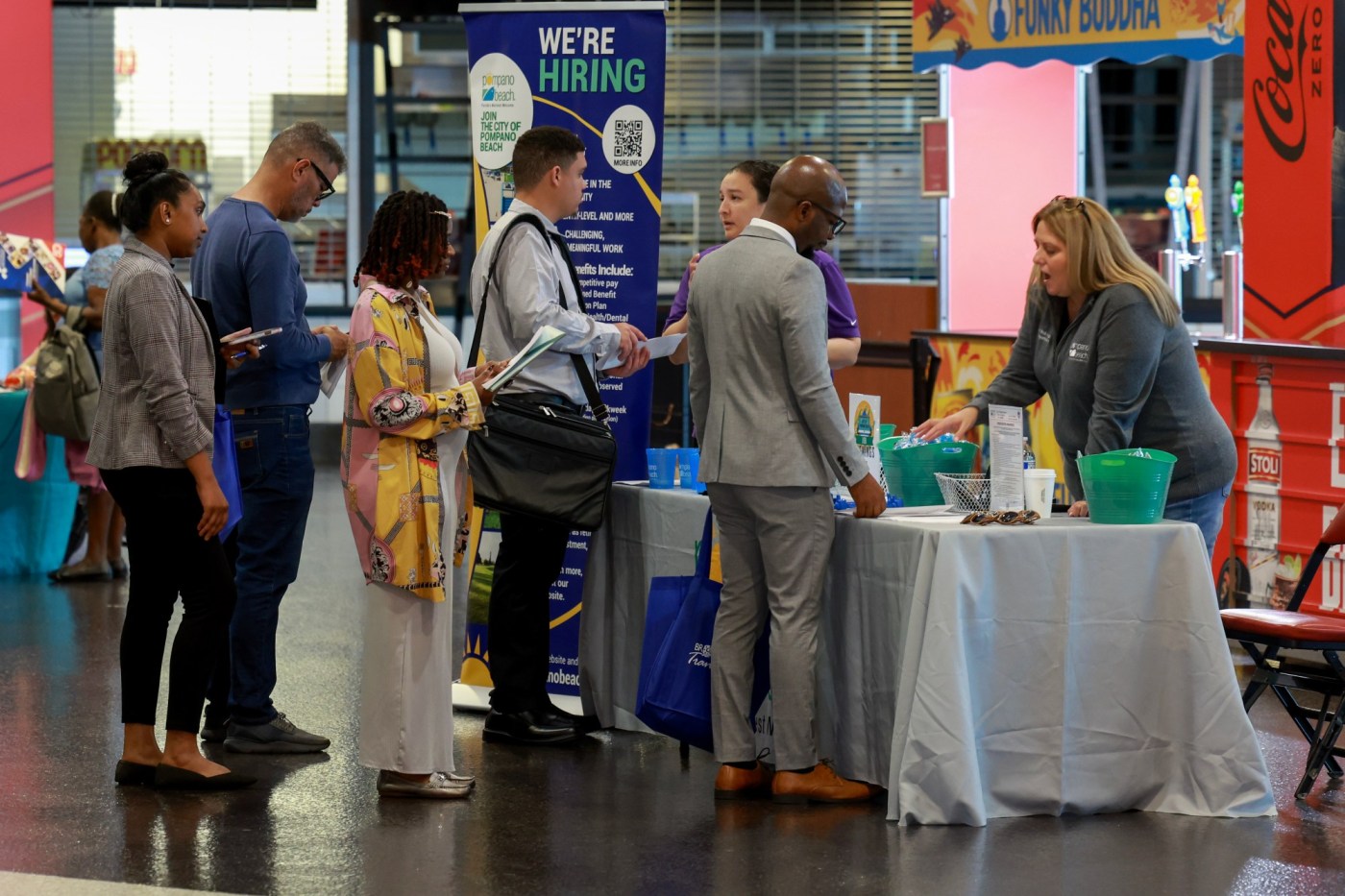
Half of local US labor markets won’t meet future workforce needs

posted in: News | 0

By Anna Helhoski | NerdWallet

More Americans than ever are now educated beyond a high school diploma.

And yet, half of all local labor markets are not on track to meet their own labor demands by 2031, according to a recent report titled “The Great Misalignment” from Georgetown University Center on Education and the Workforce (CEW).

The analysis measured 565 local labor markets in the U.S., all of which have at least one provider of certificates or associate degrees — also known as middle-skills credentials. Researchers found that, in half of all local economies, the number of middle-skills credentials conferred will fall short of meeting expected labor demand through 2031. It projects that at least 50% of all types of middle-skills credentials issued in these markets would need to change to meet those demands.

To provide more insight into the analysis, NerdWallet spoke with one of the authors of the report, Zack Mabel, research professor of education and economics at Georgetown University’s CEW and co-author of the report “The Great Misalignment.”

The following interview has been edited and condensed for length and clarity.

NerdWallet: What happens when middle-skills credentials and the local labor market don’t align?

Zack Mabel: Employers struggle to recruit skilled workers for the jobs that they need. Individual graduates are at risk of being trained in fields that they actually can’t find work in so they may find themselves underemployed or over-employed. Local economic growth is likely to be stymied as a result of these inefficiencies. Not to mention the fact that alignment, by itself, doesn’t guarantee the expanding of economic opportunity.

In many cases, much of that credential underproduction is also leading to underproduction in programs that provide pathways to quite high-paying jobs for middle-skills workers.

NerdWallet: Did you see trends in any specific middle-skills jobs that aren’t being met across job markets?

Zack Mabel: We know, for example, that middle-skills credentials that are aligned with blue collar jobs tend to be underproduced. So nationally, we expect that about 23% of job openings available to middle-skills workers over the next several years will be blue collar.

Middle-skills providers collectively are producing only 12% of their credentials in those fields. We know that there are some dramatic shortages in many of the programs that are training people for these workers.

NerdWallet: On the flip side, are there certificates and degrees from middle-skills jobs that are overly conferred?

Zack Mabel: We see that many students are sort of drawn to enter business programs — even for folks who are in certificate and associate degree programs. As a result, among middle-skills providers, 13% of their credentials are being awarded in management and professional programs. Whereas, less than 10% of the jobs available to middle-skills workers over the next several years are in those occupations. So there’s a sort of overall credential overproduction there as well.

One of the major contributors that we see to the overall levels of misalignment is actually programs that are awarded in general studies programs. These programs, oftentimes, are designed specifically with the intention of helping students to transfer to bachelor’s degree programs. But due to well-known challenges with transferring from two- to four-year schools, fewer than half of the students who graduate from those types of general studies programs successfully transfer to bachelor’s degree programs within six years.

NerdWallet: So what happens to those general studies students who plan to transfer, but don’t?

Zack Mabel: Those programs don’t have a direct, occupational path in the workforce, but the reality is that many of the graduates coming out of those programs are, in fact, finding themselves looking for work in local economies with those credentials. And so that’s a major driver of the overall misalignment that we see.

It’s a major challenge for the graduates with those credentials, because oftentimes employers don’t recognize those individuals as necessarily having the skills to be able to secure the work that they’re looking to hire for.

We also know that if you look at the earnings returns for workers with middle-skills credentials with these general studies programs, their earnings are quite low — especially early in their career.

NerdWallet: In terms of location, where does misalignment tend to proliferate?

Zack Mabel: We tend to see quite a lot of variation in alignment across labor markets even if we look at very large major metro areas. We also see quite a bit of variation across predominantly rural labor markets.

We do, however, tend to see that there is an urban-rural divide where urban areas tend to exhibit stronger alignment than rural areas. One of the major explanations for that is the fact that urban areas tend to have a lot more providers serving the area.

NerdWallet: Can you speak more to how some providers intentionally design programs by collaborating with local employers?

Zack Mabel: That’s the sort of best practice and we need to see a lot more of it. Right now, what we tend to see is that these institutional-employer partnerships, oftentimes, are one-off. So there’s a single institution that’s partnering with a single player and they’re focused on providing “externship” opportunities for students in one particular program.

What we and others in the field really think we need to move towards is finding ways to engage multiple institutions and multiple employers in sector-wide collaborations. So really, this is a question of scale and coordination across multiple entities in a local area to address the needs of providers and to ensure that graduates coming out of those programs both have the skills and competencies that local employers are asking for.

NerdWallet: How common or uncommon is it for students to stay within their local labor markets after they achieve that degree or certificate?

Zack Mabel: It’s certainly not always the case, but nationally, about 85% of middle-skills graduates will be working within their state within the first year. We also know that many middle-skilled students are attending institutions within 10 miles of their home. And so we, unfortunately, need a lot better data when it comes to what the post-college movement patterns of graduates are. That’s true across the board, both for middle-skills graduates as well as graduates from bachelor’s degree programs.

We know that middle-skills graduates are much more likely to be working in their local economy than the graduates of many bachelor’s degree programs. There’s a lot more uncertainty when it comes to where bachelor’s degrees are headed after they earn their degree, but we know that there’s a lot more movement there.

NerdWallet: Some states have free tuition programs specifically to fill areas of skills gaps. Basically, the state will pay for a students’ tuition if they’re studying in a certain high-need field, and in exchange, students are then required to work for a certain amount of time in that local area. Is there a need for more of those policies?

Zack Mabel: I think it could be one of many strategies. These place-based policies are a more straightforward win for the local economies and local employers and probably more uncertain for individuals themselves. And the reason I say that is because if you’re a student who is incentivized by one of these programs to enter a particular program, you graduate and now you have an obligation to stay in the local area.

Let’s say it’s a rural area — that means that you’re earning less and your purchasing power is lower than if you had moved to a different labor market where your earnings are higher and your earnings relative to your cost of living is higher.

NerdWallet: Can you speak to some of the racial and ethnic disparities in training and outcomes that the report explores?

Zack Mabel: We know that opportunity is often so closely tied to where you live, where you learn — it’s the geography of opportunity.

We find that just having access to a middle-skills provider in your local economy differs by race and ethnicity. In particular, American Indian and Alaska Native individuals are anywhere from three to 18 times more likely than individuals of other racial and ethnic groups to live in an area that’s not served by middle-skills providers.

Then, if we look among working adults who do have access to a local middle-skills provider, we actually see that Latino and Hispanic adults are the least likely to live in labor markets that are strongly aligned.

NerdWallet: What does moving toward greater alignment actually look like? And what are some of the challenges that lay ahead?

Zack Mabel: Funding is a real challenge for middle-skills providers. Public community colleges receive very little funding per student compared to four-year institutions. Their missions are much more multifaceted and complicated than any other types of institutions. We need to be sort of clear-eyed about what it will take in terms of providing these institutions with the resources for them to achieve outcomes that look different than they do today.

Oftentimes we build accountability measures that are trying to incentivize institutions to do things differently, but we don’t actually provide the resources that are necessary to enable them to do things differently.

NerdWallet: What are some of the limitations of achieving alignment for the individual in terms of opportunity and financial security for workers? The report mentioned that alignment, even if it is important, is definitely not a cure-all.

Zack Mabel: Absolutely not. Alignment is in no way an assurance of securing economic mobility, high earnings or any of these sort of outcomes that we hope to cultivate for individuals.

Alignment provides a snapshot of how well supply and demand are coming together. In many cases, we see that skilled providers are producing enough credentials in programs that are aligned with particularly low-paying occupations, including personal services.

Where I think alignment can be particularly helpful is as a tool to understand where there is an under-production of credentials in programs that are particularly valuable and have really strong pathways to high-paying occupations. Because that’s really where there is low-hanging fruit — untapped potential economic opportunity — that is being lost.

If we can find a way to expand credential production in those programs and help get more students into those programs, that provides the best chances that both employer needs are being met and individuals are going to come out of those programs ahead of where they started.

Anna Helhoski writes for NerdWallet. Email: anna@nerdwallet.com. Twitter: @AnnaHelhoski.