Current, former residents of St. Paul’s West Side Flats call for redress for historical displacement

posted in: Society | 0

Given the area’s poor infrastructure, heavy flooding along the Mississippi River in 1952 swept through homes and nearly devastated the Mexican-American community that lived between what is now roughly U.S. 52 and Robert Street, along the St Paul’s West Side Flats.

In the next few years, the city, St. Paul Port Authority, U.S. Army Corps of Engineers and others cleared the area of homes. Then, the same authorities installed a major flood wall, followed by new infrastructure for industrial businesses.

Larry Lucio, 74, remembers that time with sadness. The dozen members of his family shared a duplex, and when it came down, they received $6,000 from the Port Authority for the double lot in 1961, which would be the rough equivalent of $63,000 today — nowhere near the actual value of the property. Renters he knew fared even more poorly, some pocketing just $35 after being forced to move from one of the more affordable areas of St. Paul.

Larry Lucio, 74, points out what the streets near his St. Paul childhood home once looked like before having to move out in 1961 on Monday, July 1, 2024. (Devanie Andre / Pioneer Press)

Homeowners who complained that their property assessments had been undervalued soon found their homes condemned. One woman came home to a bulldozer in her living room. Families scattered. A newspaper survey in 1963 found that more than half of some 334 displaced households had left the West Side, and at least a couple dozen former residents had left the city.

Still, those who were able to stay connected to the West Side neighborhood found it “was a great experience,” said Lucio, a former director of the West Side Youth Service Bureau, youth guidance counselor, youth sports coach and school principal. “I wouldn’t have changed it for the world. On the West Side, everybody was family. When I got a directive from one of the elders in the community, it was ‘yes, ma’am’ and ‘yes, sir.’”

More than 2,100 displaced

In all, more than 2,100 residents were displaced, spanning some 436 families, according to the West Side Community Organization and neighborhood researchers. Not long after the population of the West Side Flats had fallen by half, the Port Authority saw its asset values double, according to neighborhood advocates.

Where homes had once stood, the Port Authority installed a business park, which drew a flurry of industrial users — including a metal shredding company — near the Holman Field airport. Prepping the infrastructure for their arrival cost the city and Port Authority more than $8 million from 1963 to 1965 alone.

West Side advocates say more than just an apology is overdue to the residents and descendants of the area, which is still 35% Latin. Decades of lost home value would have added up to millions of dollars in equity today.

After convening a community advisory group for a year and a half, the West Side Community Organization and consultants with Research in Action are putting the finishing touches on an 80-page report on the history of the flats, which will include 13 recommendations for redress for historical displacement, or potential efforts to prevent future displacement in the face of gentrification and rising housing costs.

Five of the most general recommendations were shared Monday when WSCO advocates released an early draft of the report, which will be issued in its final form to the public on July 18.

Five recommendations

They’re calling for an official public acknowledgement and memorialization of the history of the West Side Flats and its displaced families, as well as “economic remedies” and “economic justice for the entire West Side community.”

WSCO Executive Director Monica Bravo said her organization was still determining what the scope of those financial remedies might be.

The report calls for promoting “neighborhood belonging” for historically displaced families, their descendants and current residents, and for organizing against displacement while advancing affordability on the West Side. It also calls for “environmental justice” for hazards and contamination caused by industrial development.

For new housing developments, instead of studio and one- and two-bedroom apartments, “do you have four- or three-bedroom apartments for families?” Bravo said. “We’ve talked to developers who say they’re marketing to young professionals across the river.”

Todd Hurley, president and chief executive officer of the St. Paul Port Authority, said Monday he had not yet received a copy of the report and could not comment on its specifics, but he would review it when it became available.

Too often, said Bravo and other advocates, efforts to bring housing back to the community has resulted in ironic consequences. A Sherman Associates building dubbed the West Side Flats apartments at 84 Wabasha St. bills itself as luxury housing, with two-bedroom apartments currently renting for $2,100. Among its ground-level commercial tenants is a Starbucks.

Another developer, Buhl Investors, just opened two apartment buildings on Water Street and Plato Boulevard in the Farwell-on-Water development, across the street from the river, propped up by some $27 million or more in tax incentives known as tax increment financing. One of the buildings spans more than 220 units of market-rate luxury housing, with one-bedrooms starting above $1,800.

The other building, the Harbourline Apartments, includes 63 one- and two-bedroom units for renters earning no more than 50% area median income, including seven units for residents who were previously homeless.

Bravo called that a start, but she said the area needs equally affordable housing for families. Her organization sent the city a letter opposing the use of tax increment financing, which she said would be better suited to propping up struggling corners of Robert Street.

The developer has “renamed that area Farwell-on-Water,” said Bravo on Monday. “Actually, it’s the West Side Flats. They’ve renamed the district. That never went to the district council.”

Related Articles

Local News |


St. Paul: With recent expansion, Hmong Cultural Center Museum now spans more than 2,000 square feet

Local News |


Feud over alleged marijuana theft cited in St. Paul shooting death charges

Local News |


Macalester College plans to build new residence hall and welcome center

Local News |


St. Paul minimum wage hikes take effect for small and ‘micro’ businesses

Local News |


St. Paul: Breakaway Music Festival draws fans — and noise complaints
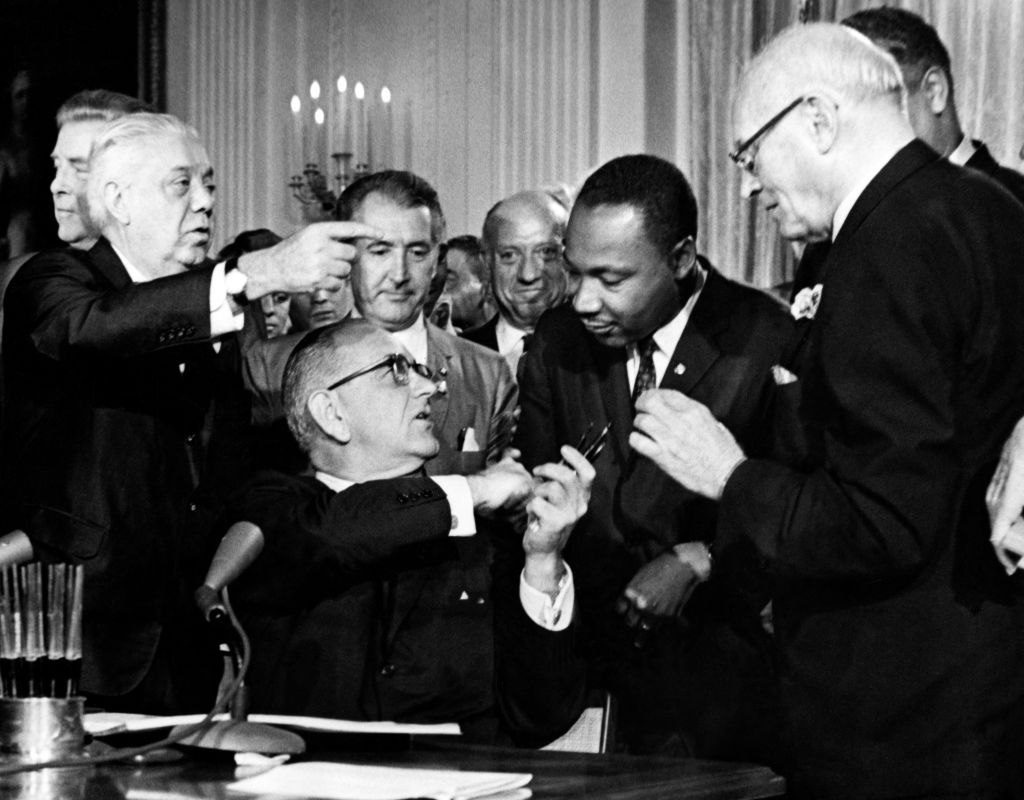
Today in History: July 2, Civil Rights Act signed into law

posted in: News | 0

Today is Tuesday, July 2, the 184th day of 2024. There are 182 days left in the year.

Today’s Highlight in History:

On July 2, 1964, President Lyndon B. Johnson signed into law a sweeping civil rights bill passed by Congress prohibiting discrimination and segregation based on race, color, sex, religion or national origin.

Also on this date:

In 1776, the Continental Congress passed a resolution saying that “these United Colonies are, and of right ought to be, free and independent States.”

In 1881, President James A. Garfield was shot by Charles J. Guiteau (gee-TOH’) at the Washington railroad station; Garfield died the following September. (Guiteau was hanged in June 1882.)

Related Articles


Today in History: July 1, Princess Diana’s birthday


Laugh (or cringe) at these history-making moments from presidential debates


In France, D-Day evokes both the joys of liberation and the pain of Normandy’s 20,000 civilian dead


The last WWII vets converge on Normandy for D-Day and fallen friends and to cement their legacy


Centenarian veterans are sharing their memories of D-Day, 80 years later

In 1917, rioting erupted in East St. Louis, Illinois, as white mobs attacked Black residents; at least 50 and as many as 200 people, most of them Black, are believed to have died in the violence.

In 1937, aviator Amelia Earhart and navigator Fred Noonan disappeared over the Pacific Ocean while attempting to make the first round-the-world flight along the equator.

In 1962, the first Walmart store opened in Rogers, Arkansas.

In 1976, the U.S. Supreme Court, in Gregg v. Georgia, ruled 7-2 that the death penalty was not inherently cruel or unusual.

In 1979, the Susan B. Anthony dollar coin was released to the public.

In 1986, ruling in a pair of cases, the Supreme Court upheld affirmative action as a remedy for past job discrimination.

In 1990, more than 1,400 Muslim pilgrims were killed in a stampede inside a pedestrian tunnel near Mecca, Saudi Arabia.

In 2002, Steve Fossett became the first person to complete a solo circumnavigation of the world nonstop in a balloon.

In 2018, rescue divers in Thailand found alive 12 boys and their soccer coach, who had been trapped by flooding as they explored a cave more than a week earlier.

In 2020, British socialite Ghislaine Maxwell was arrested in New Hampshire on charges that she had helped lure at least three girls – one as young as 14 – to be sexually abused by the late financier Jeffrey Epstein. (Maxwell would be convicted on five of six counts.)

In 2022, the police chief for the Uvalde, Texas, school district stepped down from his City Council seat amid criticism of his response to the mass shooting that left 19 students and two teachers dead.

Today’s Birthdays:

Former Philippine first lady Imelda Marcos is 95.
Actor Polly Holliday is 87.
Racing Hall of Famer Richard Petty is 87.
Former White House chief of staff and former New Hampshire governor John H. Sununu is 85.
Former Mexican President Vicente Fox is 82.
Writer-director-comedian Larry David is 77.
Rock musician Roy Bittan (Bruce Springsteen & the E Street Band) is 75.
Actor Wendy Schaal is 70.
Actor-model Jerry Hall is 68.
Former baseball player Jose Canseco is 60.
Race car driver Sam Hornish Jr. is 45.
Former NHL center Joe Thornton is 45.
Singer Michelle Branch is 41.
Actor Vanessa Lee Chester is 40.
Figure skater Johnny Weir is 40.
Actor-singer Ashley Tisdale is 39.
Actor Lindsay Lohan (LOH’-uhn) is 38.
Soccer player Alex Morgan is 35.
Actor Margot Robbie is 34.
Singer-rapper Saweetie is 31.
U.S. Olympic swimming gold medalist Ryan Murphy is 29.

DEMOCRATS IN CONGRESS ARE GETTING READY FOR A TRUMP PRESIDENCY

posted in: Politics | 0

DEMOCRATS IN CONGRESS ARE GETTING READY FOR A TRUMP PRESIDENCY

BY: Nathaniel Ballantyne

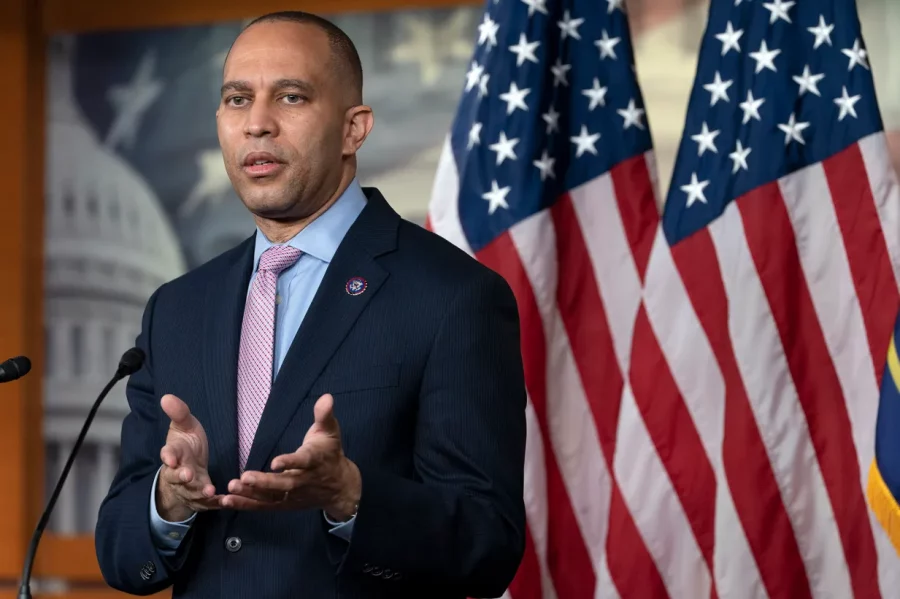
Washington, DC—As the Biden campaign scrambles to calm nerves about the president’s disastrous debate performance, Democrats on Capitol Hill are growing increasingly furious at those around him and despondent about his re-election prospects and their chances of winning the House and Senate majorities. Congressman Hakeem Jeffries (D-NY), the minority leader, is raising a lot of money using the prospect of losing the White House.

Conversations about a strategy shift are underway, with some Democratic lawmakers and many deep-pocketed donors plotting how to ensure a congressional check on a second Trump term should Biden continue in the race and lose. 

Congressman Hakeem Jeffries (D-NY)

The House is the last firewall, folks. We have to flip the House,” said one high-ranking Democrat. “Ninety-nine percent of the people I talked to can’t get their credit card out fast enough.”

Those private discussions could eventually morph into an explicit campaign to put a Democratic check on an expected Trump presidency—much as congressional Republicans did back in 1996 when BOB DOLE was on his way to a thumping.

Democrats aren’t there yet.  Top party leaders, we’re told, are prepared to continue stumping for Biden as the party’s best choice for November, as they did on yesterday’s Sunday show circuit. Part of it is a collective action problem; no one wants to be first and potentially the last, and part of it is that many believe that speaking out might only make Biden dig in further.

But make no mistake, the despair and frustration are real, and it is pushing upward inside the party. It has been felt acutely by frontline members. The swing-district Democrats who would be the cornerstone of any majority: Donors blew up their phones over the weekend, with some prodding them to go public with a group letter calling for a new candidate, an idea that some discussed over the weekend.

“The leadership of the party should be going to the White House and knocking down the doors and saying, ‘Time’s up,’” an adviser to top Democratic donors said. “Anybody trying to prolong the inevitable here is just basically putting us on a giant fucking death march towards the end.”

That sense of anger is palpable among rank-and-file congressional Democrats, many of whom blame Biden and his family for hiding the reality of his condition. The House Democrat lamented defending the president on the campaign trail despite getting political advice to run away from him, only to find out how bad things were on Thursday.

“It’s just his egotism and his family’s enabling,” the person said. “JILL [BIDEN] of all people — she sees him every single day. She’s the one person who could end this train wreck. This should have been a one-term president.”

This should have been no president at all. We knew Biden had health issues before he was elected, and those issues have worsened since he became president. His family is enjoying power and prestige, and asking his family to convince him to drop out is an exercise in futility. Meanwhile, Democrats in Congress are bracing and preparing for a second Trump presidency. 

Who knew a single debate performance could alter the course of history? Should Biden decide to step aside, who should replace him? And what would happen to the delegates pledged to him?

SUPREME COURT UPDATES: “DONALD TRUMP IMMUNE FROM PROSECUTION”

posted in: News | 0

Washington, DC – The Supreme Court ruled on Monday that former President Donald J. Trump is entitled to some level of immunity from prosecution. This decision, with a vote of 6 to 3 that divided along partisan lines, may effectively delay the trial of the case against him on charges of plotting to subvert the 2020 election.

Mr. Trump contended that he was entitled to absolute immunity from the charges, relying on a broad understanding of the separation of powers and a 1982 Supreme Court precedent that recognized such immunity in civil cases for actions taken by presidents within the “outer perimeter” of their official responsibilities. Lower courts rejected Mr. Trump’s claim, but the Supreme Court’s ruling, with its potential to delay the case enough that Mr. Trump could make it go away entirely if he prevails in November, could significantly impact the case’s outcome.

Here’s what to know:

The ruling: The justices said that Mr. Trump is immune from prosecution for official acts taken during his presidency but that there was a crucial distinction between official and private conduct. The case returns to the lower court, which will decide whether Mr. Trump’s actions were in an official or private capacity.

The charges: The former president faces three charges of conspiracy and one count of obstructing an official proceeding, all related to his efforts to cling to the presidency after his 2020 loss. He was indicted last August by the special counsel, Jack Smith, in one of two federal criminal cases against him; the other relates to the F.B.I. raid on his private club, Mar-a-Lago, in August 2022 that recovered missing government documents.

Lower courts ruled against Trump: The trial judge, Tanya S. Chutkan of the Federal District Court in Washington, denied Mr. Trump’s immunity request in December. “Whatever immunities a sitting president may enjoy, the United States has only one chief executive at a time, and that position does not confer a lifelong ‘get-out-of-jail-free’ pass,” she wrote.

A unanimous three-judge panel of the U.S. Court of Appeals for the District of Columbia Circuit agreed in February, saying that “any executive immunity that may have protected him while he served as president no longer protects him against this prosecution.”

The timing: Even before the ruling, the court’s decision to take up the case already helped Mr. Trump’s strategy to delay his prosecution until after the November election. With this ruling, the prospects for a trial before the election seem increasingly remote. If Mr. Trump prevails at the polls, he could order the Justice Department to drop the charges, significantly impacting the timing of the trial.

Other Jan. 6 cases: The court heard two other cases this term concerning the Jan. 6 attack on the Capitol, both of which relate to Mr. Trump. One — an attempt to bar Mr. Trump from the ballot in Colorado under Section 3 of the 14th Amendment, which made people who engage in insurrection ineligible to hold office — was unanimously rejected in March. The other limited the use of a federal obstruction law to prosecute members of the mob who stormed the Capitol. Two of the four charges against Mr. Trump are based on that law.