Noah Feldman: Supreme Court social media ruling is a free-speech landmark

posted in: Politics | 0

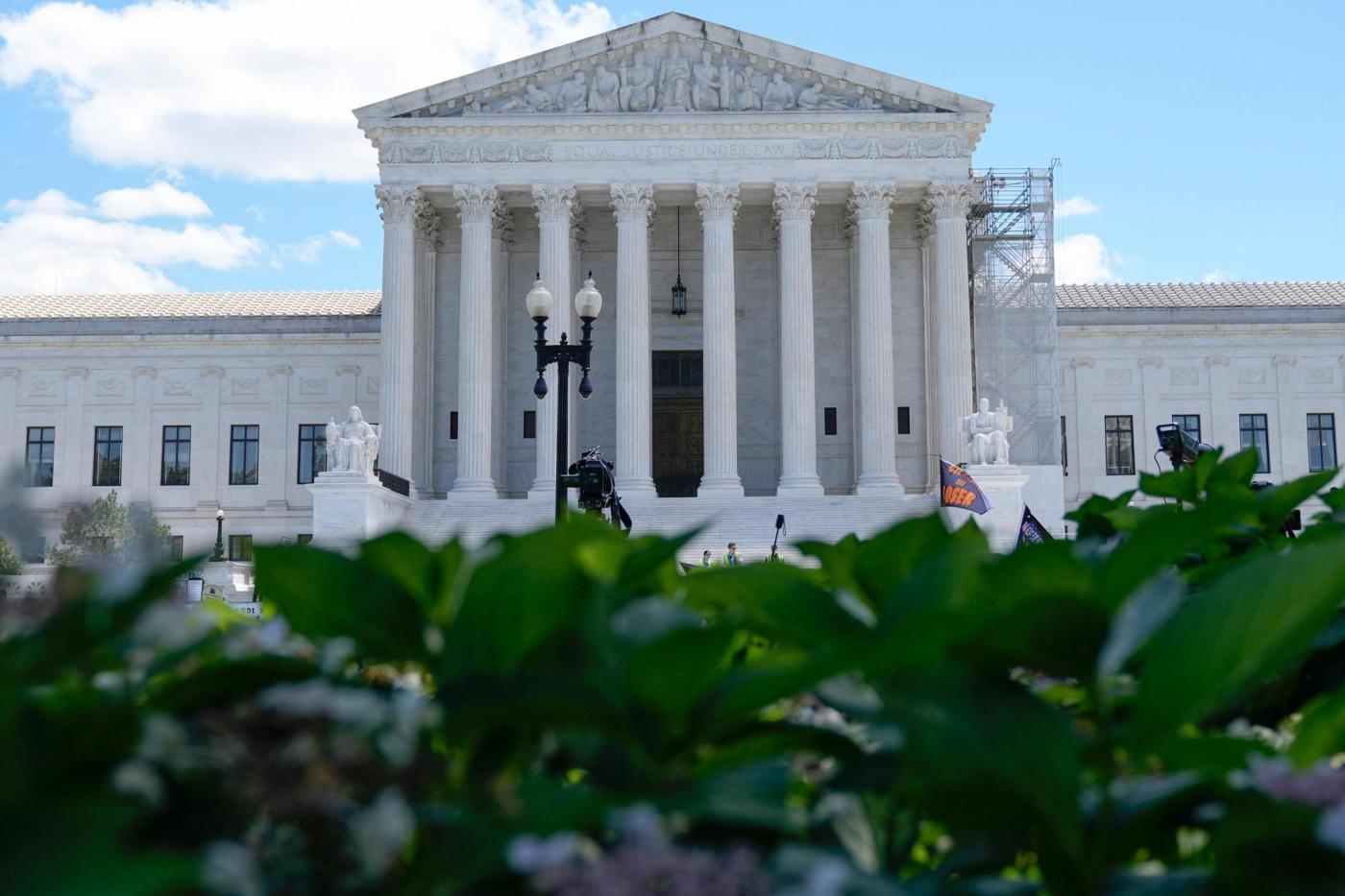
In a blockbuster decision, the Supreme Court has held for the first time that social media platforms, just like newspapers, have First Amendment rights that bar the government from forcing them to leave up or take down content.

The decision, Moody v. NetChoice, can be understood as the Brown v. Board of Education of the emerging field of social media law: It establishes basic principles and rights that the courts will use to shape the evolution of the social media industry in the U.S. and beyond.

The majority opinion, written by Justice Elena Kagan and joined by the court’s other liberals as well as by moderate conservatives Chief Justice John Roberts, Justice Brett Kavanaugh and Justice Amy Coney Barrett, technically sent the case back to the lower courts for a do-over. But in the process of telling the lower courts what they should do, the majority opinion laid out the free-speech principles that apply to social media.

That’s what makes the case so important.

At issue were laws passed by Texas and Florida in the wake of conservative users’ complaints that their views were being censored by the platforms. The laws were designed to limit how social media companies could remove or restrict political content. The lower courts, the majority said, hadn’t fully addressed the technical question of whether the state laws being challenged were “facially unconstitutional,” meaning they could not have been constitutional under any circumstances.

The most crucial part of this case is that the platforms are no different from newspapers, the archetypal bearers of free press and free speech rights. It’s significant that the chief justice gave Kagan, a lifetime strong supporter of free speech, the opportunity to write such an important decision.

In setting rules for content moderation and in curating users’ feeds through algorithms, Kagan wrote, the platforms are exercising editorial discretion. And it doesn’t matter that they typically allow the great majority of posted content to stay up: Editorial discretion is protected by the First Amendment and exists even if an editor or curator bars only certain limited types of speech.

This conclusion might sound obvious, but it wasn’t. For some years, advocates of directly regulating the platforms have claimed that they should be treated not like newspapers, but like common carriers — entities like railroads or package delivery companies that take on all comers, and therefore may be regulated by the government without worrying about freedom of speech.

Kagan’s opinion makes that argument passé. In addition to newspapers, which are entitled to First Amendment-protected editorial discretion when they decide what to publish, she also compared the platforms to cable companies, which the court has held may not be forced to carry content they don’t wish to carry.

Most fundamentally, Kagan drew an analogy between the platforms and the organizers of Boston’s St. Patrick’s Day parade in an important 1995 case called Hurley v. Irish-American Gay, Lesbian and Bisexual Group of Boston. In the Hurley case, the parade organizers refused to allow a gay-themed float in the parade, which violated Massachusetts antidiscrimination law. But in an opinion by Justice David Souter, one of the court’s leading thinkers on the topic of compelled speech, the majority held that the organizers of the parade had a free-speech right to curate the parade however they wanted, including by excluding the gay float. It didn’t matter that the organizers usually allowed new floats to join, and it didn’t matter what their motivation was.

In First Amendment law, comparing platforms to newspapers and parade organizers gives them the highest level of protection available. And that protection extends not just to human discretion in individual cases but to the algorithms that control the vast majority of content curation, Kagan wrote.

The algorithm question is especially subtle because it raises the intriguing question of whether free-speech rights should apply to purely algorithmic choice that is not oriented toward human decisions about what content should be allowed. Barrett wrote a concurrence in which she raised this problem without answering it, also invoking artificial intelligence as a potential twist. In a footnote, Kagan replied that her opinion wasn’t addressing algorithms that “respond solely to how users act online.”

But as someone who has advised various big platforms on content moderation and free-speech issues, I can tell you that I haven’t encountered an algorithm that pays no attention to curation according to content-moderation rules. If one does exist, that company could protect its algorithm by simply adding a component to the algorithm that considers such standards. And AI is itself a set of algorithms, which can be set to take account of content moderation rules — as all the public-facing, foundational LLM models already do.

The takeaway for the platforms, and their users, is that the act of curation is protected by the First Amendment.

Justice Samuel Alito, joined by the other hardline conservatives, justices Clarence Thomas and Neil Gorsuch, wrote a concurrence that functioned almost like a dissent. The conservatives wanted the common carrier arguments to be addressed, not sidelined the way the majority opinion did.

Alito’s key argument was that there should be no First Amendment protection when someone is merely the “compiler” of material for publication and the compilation is not “inherently expressive.” For what it’s worth, it seems obvious to me that the platforms’ curated compilations are inherently expressive, since they are meant to give users a certain experience and to differentiate their platform from the other platforms. But Alito would appear to disagree.

We will be hearing more about free speech and social media in the future. Barrett’s concurrence devoted a paragraph to raising questions about the federal government’s TikTok ban, which is likely to reach the Supreme Court in 2025. But those future cases will be decided against the backdrop of the NetChoice decision, which is going to be a free-speech landmark for at least a generation.

Related Articles

Opinion |


Trudy Rubin: Zelenskyy lays out how Ukraine can win, if the West loses its fear of Putin

Opinion |


Other voices: As America sank into the couch, Joe Biden and Donald Trump combined for a depressing farce. Enough

Opinion |


Stephen L. Carter: If Trump wins, liberals might regret this social media ruling

Opinion |


How should universities teach the Palestinian-Israeli conflict?

Opinion |


Nolan Finley: Biden lost more than the debate to a predictable Trump
Today in History: July 3, Union wins Battle of Gettysburg

posted in: Society | 0

Today is Wednesday, July 3, the 185th day of 2024. There are 181 days left in the year.

Today’s Highlight in History:

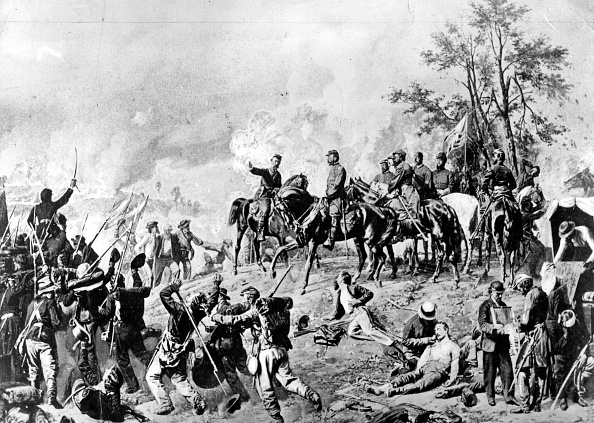
On July 3, 1863, the pivotal three-day Civil War Battle of Gettysburg in Pennsylvania ended in a major victory for the North as Confederate troops failed to breach Union positions during an assault known as Pickett’s Charge.

Also on this date:

In 1775, Gen. George Washington took command of the Continental Army at Cambridge, Massachusetts.

In 1944, during World War II, Soviet forces recaptured Minsk from the Germans.

Related Articles


Current, former residents of St. Paul’s West Side Flats call for redress for historical displacement


Today in History: July 2, Civil Rights Act signed into law


Today in History: July 1, Princess Diana’s birthday


Laugh (or cringe) at these history-making moments from presidential debates


In France, D-Day evokes both the joys of liberation and the pain of Normandy’s 20,000 civilian dead

In 1950, the first carrier strikes of the Korean War took place as the USS Valley Forge and the HMS Triumph sent fighter planes against North Korean targets.

In 1971, singer Jim Morrison of The Doors died in Paris at age 27.

In 1979, Dan White, convicted of voluntary manslaughter in the shooting deaths of San Francisco Mayor George Moscone (mahs-KOH’-nee) and Supervisor Harvey Milk, was sentenced to seven years and eight months in prison.

In 1986, President Ronald Reagan presided over a gala ceremony in New York Harbor that saw the relighting of the renovated Statue of Liberty.

In 1988, the USS Vincennes shot down an Iran Air jetliner over the Persian Gulf, killing all 290 people aboard.

In 2011, Novak Djokovic (NOH’-vak JOH’-kuh-vich) won his first Wimbledon, beating defending champion Rafael Nadal.

In 2012, Andy Griffith who made homespun American Southern wisdom his trademark as the wise sheriff in “The Andy Griffith Show,” died at his North Carolina home at age 86.

Today’s Birthdays:

Playwright Tom Stoppard is 87.
Attorney Gloria Allred is 83.
Actor Kurtwood Smith is 81.
Country singer Johnny Lee is 78.
Humorist Dave Barry is 77.
Actor Betty Buckley is 77.
Talk show host Montel Williams is 68.
Country singer Aaron Tippin is 66.
Rock musician Vince Clarke (Depeche Mode, Yaz, Erasure) is 64.
Actor Tom Cruise is 62.
Actor Thomas Gibson is 62.
Actor Connie Nielsen is 59.
Actor Yeardley Smith is 60.
Actor-singer Audra McDonald is 54.
Hockey Hall of Famer Teemu Selanne is 54.
WikiLeaks founder Julian Assange is 53.
Actor Patrick Wilson is 51.
Former mixed martial artist Wanderlei Silva is 48.
Actor Olivia Munn is 44.
Formula One driver Sebastian Vettel is 37.
Rock singer-songwriter Elle King is 35.

Wisconsin Supreme Court to consider whether 175-year-old law bans abortion

posted in: Society | 0

MADISON, Wis. (AP) — The Wisconsin Supreme Court decided Tuesday to consider two challenges to a 175-year-old law that conservatives maintain bans abortion without letting the cases wind through lower courts.

Abortion advocates stand an excellent chance of prevailing in both cases given the high court’s liberal tilt and remarks a liberal justice made on the campaign trail about how she supports abortion rights.

Wisconsin lawmakers enacted statutes in 1849 that had been widely interpreted as outlawing abortion in all cases except to save the mother’s life. The U.S. Supreme Court’s landmark 1973 Roe v. Wade ruling legalizing abortion nullified the statutes, but legislators never repealed them. The high court’s 2022 decision to overturn Roe v. Wade reactivated them.

Democratic Attorney General Josh Kaul filed a lawsuit challenging the statutes in 2022, arguing they were too old to enforce and a 1985 law that permits abortions before a fetus can survive outside the womb supersedes them. A Dane County judge ruled last year that the statutes outlaw attacking a woman in an attempt to kill her unborn baby but doesn’t ban abortions. The decision emboldened Planned Parenthood to resume offering abortions in Wisconsin after halting procedures when the U.S. Supreme Court overturned Roe v. Wade.

Sheboygan County District Attorney Joel Urmanski, a Republican, asked the state Supreme Court in February to overturn the ruling without letting an appeal move through the state’s lower appellate courts. He argued the ruling will have a statewide impact and guide lawmakers and the case will ultimately end at the Supreme Court anyway.

Days after Urmanski filed his request, Planned Parenthood of Wisconsin sued Urmanski and asked the Supreme Court to take it directly. The organization is seeking a ruling that the 1849 statutes are unconstitutional, arguing that the state constitution’s declaration that people have a right to life, liberty and the pursuit of happiness means women have a right to control their own bodies — essentially asking the court to declare a constitutional right to abortion.

The court released orders indicating the justices voted unanimously to take Urmanski’s appeal and voted 4-3 to take the Planned Parenthood case. The court’s four liberal justices voted to take that case, and the three conservative justices voted against taking it.

Urmanski’s attorneys, Andrew Phillips and Matthew Thome, didn’t immediately respond to an email seeking comment.

Persuading the court’s liberal majority to uphold the statutes looks next to impossible. Liberal Justice Janet Protasiewicz even went so far as stating openly during her campaign that she supports abortion rights, a major departure for a judicial candidate. Typically such candidates refrain from speaking about their personal views out of concerns they could appear biased on the bench.

The conservative justices accused the liberal majority in their Planned Parenthood dissents of playing politics.

“The signal to a watching public is that, when certain policy issues touch the right nerve, this court will follow the party line, not the law,” Hagedorn wrote.

Liberal Justice Jill Karofsky countered in a concurrence that the state Supreme Court is supposed to decide important state constitutional questions.

“Regardless of one’s views on the morality, legality, or constitutionality of abortion, it is undeniable that abortion regulation is an issue with immense personal and practical significance to many Wisconsinites,” Karofsky wrote.

Michelle Velasquez, chief strategy officer for Planned Parenthood of Wisconsin, said in a statement that the organization was grateful the court agreed to take its case and Wisconsin residents need to know whether abortion is legal in the state.

Wisconsin Watch, a media outlet, obtained a leaked draft of the order accepting the case last week, prompting Chief Justice Annette Ziegler to call for an investigation.

Anti-abortion groups decried the Supreme Court’s decision to take the Planned Parenthood case.

“Every Wisconsinite should be troubled by this blatant weaponization of the court system to enshrine death on demand,” Heather Weininger, executive director of Wisconsin Right to Life, said in a statement.

___

This story has been updated to correct the day of week in the first sentence to Tuesday, not Monday.

Related Articles


Lake Superior lighthouse back on the market after deal falls through


Seeking an antidote to gun violence, a St. Paul church will help turn firearms into gardening tools


Torrential rains wash out northeastern Minnesota roads, turn rivers into gushers


Top high school graduates for 2024


David McGrath: An only child times eight

Royce Lewis leaves early as Twins beat Tigers

posted in: News | 0

Tuesday’s win was an exciting show of what the Twins’ trio of stars can do when they’re all healthy.

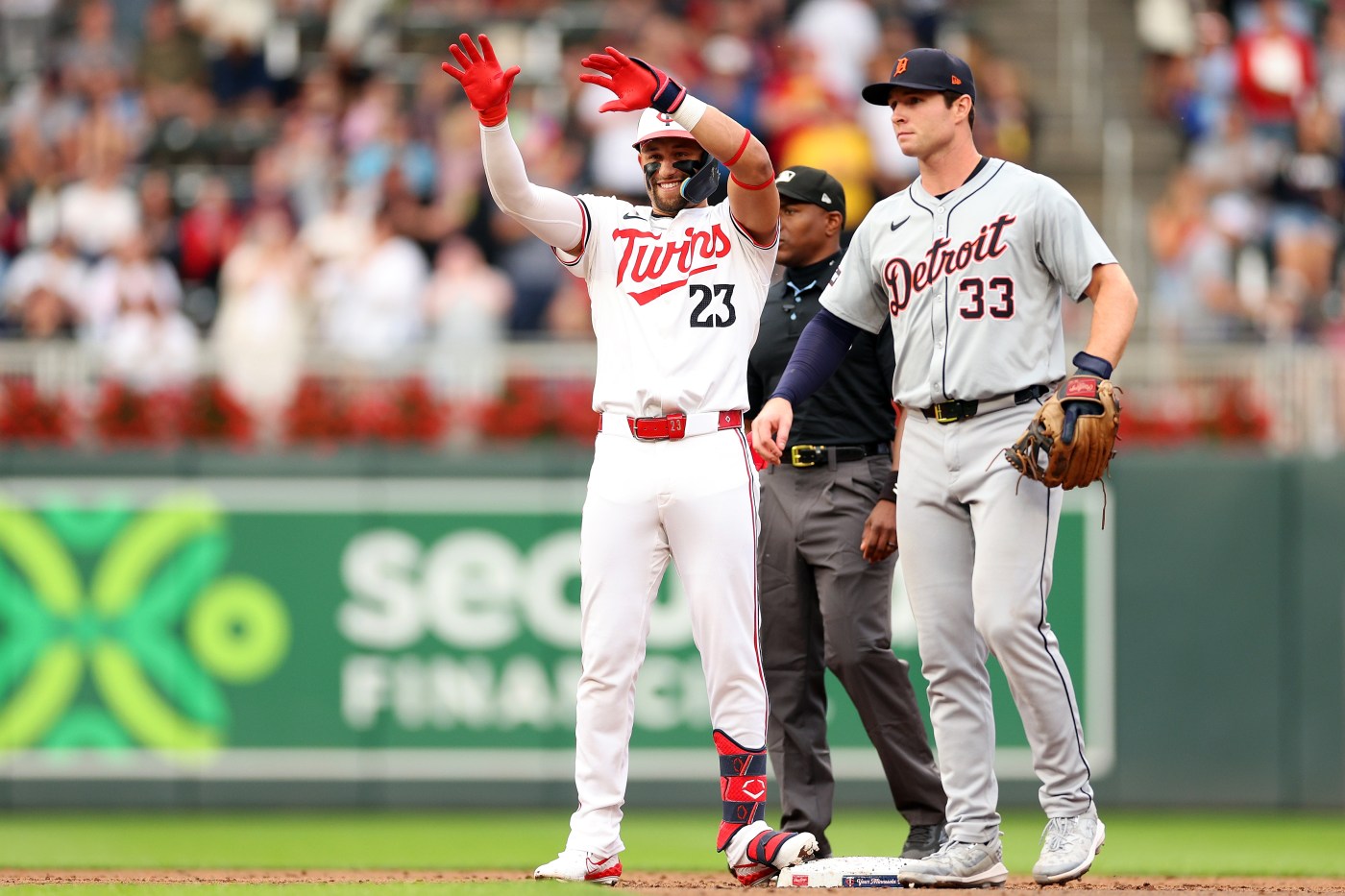
Royce Lewis snapped out of an 0-for-10 skid with a double off Detroit ace Tarik Skubal, bringing home a pair of runs. Byron Buxton doubled and then used his speed to score the go-ahead run. And Carlos Correa added an insurance home run in the Twins’ 5-3 win over the Tigers at Target Field.

But this trio has so rarely been healthy at the same time, and in the midst of all that, the injury bug returned. Again, it was for Lewis, who has been dynamic since his returning to the field in early June after straining his quadriceps in the first game of the season.

Lewis left early with left groin tightness and said he would have more information after the Twins receive magnetic resonance imaging results.

“This is out of my control. I have no idea,” Lewis said when asked if he was optimistic if the injury was minor. “But probably not very optimistic, to be honest with you. I’m praying, but it’s usually always horrible knows. So we’ll see.”

Lewis said he felt the tightness crop up when he was making his way to second base. And though he played two more innings in the field, he exited in the sixth inning.

The lead that Lewis gave them held until the fifth inning, when starter Simeon Woods Richardson gave up a pair of home runs, yielding three runs. Those would be the only three he’d give up in his 5 2/3-inning outing.

“Two pitches happened but that’s baseball,” Woods Richardson said. “ … I’m glad that (manager) Rocco (Baldelli) let me go back out there, showing faith, showing trust, showing belief.”

Just a half inning later, Manuel Margot tied the game with a home run to the bullpen in center field, extending the Twins’ (48-37) home run streak to a club-record 20 straight games.

And in the seventh, Buxton, who earlier in the day flashed the leather by stretching out for a diving catch, showed off some of the rest of his skill set in the seventh, hitting a double, racing to third on a wild pitch and sprinting home and diving in safely headfirst on a ball hit back to Tigers (38-47) second baseman Colt Keith.

A clearly-amped Buxton let out a yell and patted his chest after scoring the run to give the Twins the lead for good.

“He’s feeling good and you can really see it,” Baldelli said. “We’re seeing it right now. He’s very explosive and playing the game the way he knows how to play it.”

The very next inning, Correa provided some comfort for the Twins, sending a shot out to left-center on a first-pitch slider from reliever Beau Brieske.

The win moves the Twins to a season-high 11 games over .500.

“We had good at-bats. We did our best to avoid expanding,” Baldelli said. And it’s good to come back after an off day and keep it going, keep the momentum going in the direction we want.”