Kansas’ top court rejects 2 anti-abortion laws, bolstering a state right to abortion access

posted in: Society | 0

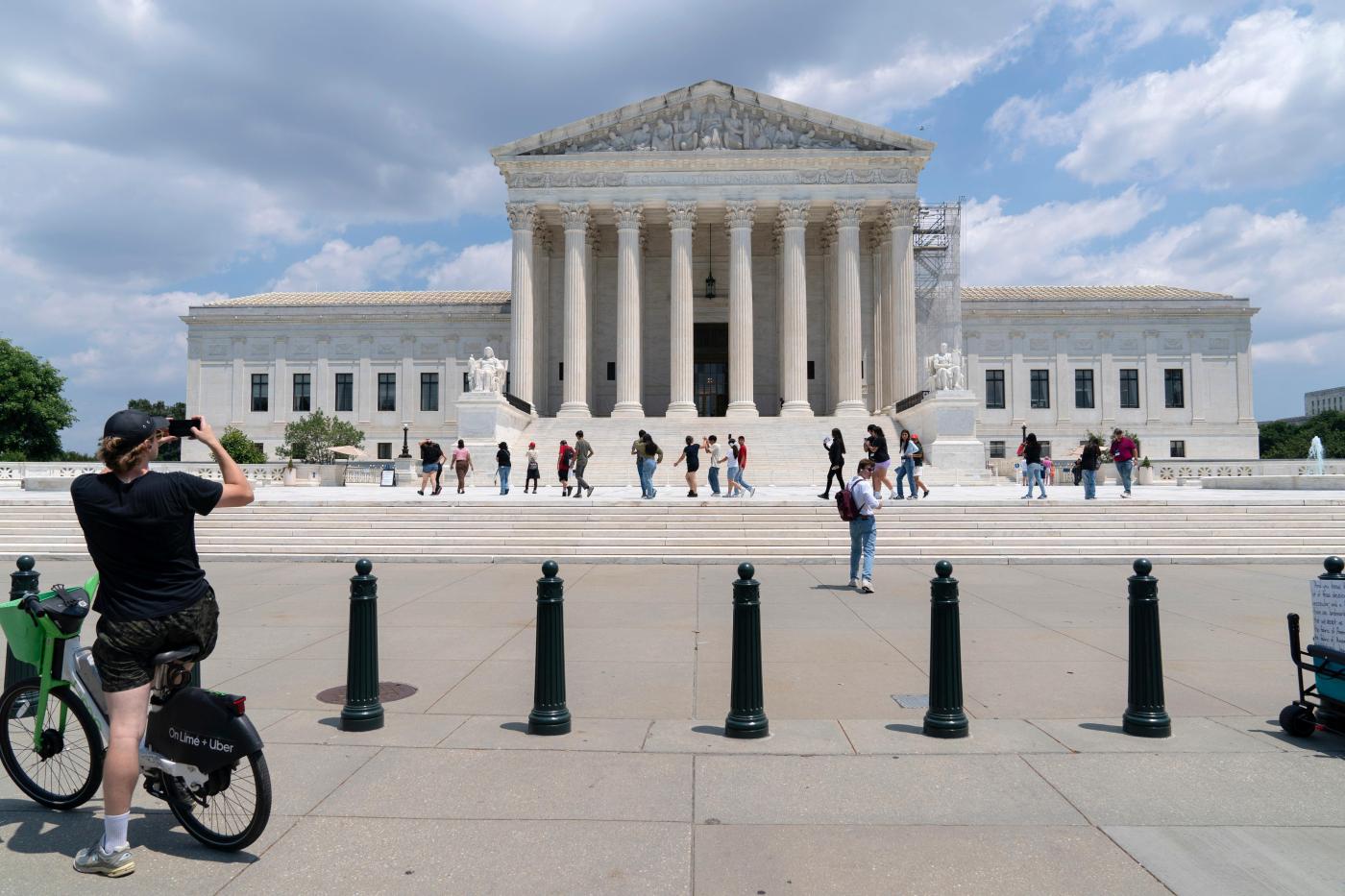
TOPEKA, Kan. — Kansas’ highest court on Friday struck down state laws regulating abortion providers more strictly than other health care professionals and a ban on a common second-trimester procedure, reaffirming its stance that the state constitution protects abortion access.

“We stand by our conclusion that section 1 of the Kansas Constitution Bill of Rights protects a fundamental right to personal autonomy, which includes a pregnant person’s right to terminate a pregnancy,” Justice Eric Rosen wrote for the majority in overturning the ban on a certain type of dilation and evacuation, also known as D&E.

In striking down the law on clinic regulations, the panel found that the state had failed to meet “its evidentiary burden to show the Challenged Laws further its interests in protection of maternal health and regulation of the medical profession as it relates to maternal health.”

The Kansas Supreme Court’s 5-1 rulings in two separate cases signal that the state’s Republican-controlled Legislature faces stricter limits on regulating abortion than GOP lawmakers thought and suggests other restrictions could fall. Lawsuits in lower state courts already are challenging restrictions on medication abortions, a ban on doctors using teleconferences to meet with patients, rules for what doctors must tell patients before an abortion and a requirement that patients wait 24 hours after receiving information about a procedure to terminate their pregnancies.

Justice K.J. Wall did not participate in either ruling on Friday while Justice Caleb Stegall was the lone dissenter.

In his dissenting opinion in the clinic regulations case, Stegall said the majority’s actions will damage the court’s legitimacy “for years to come.” He said that the declaration that the state constitution protects a right to bodily autonomy could affect a “massive swath” of health and safety regulations outside abortion, including licensing requirements for barbers.

“Surely the government does not have a compelling interest in who trims my beard?” Stegall wrote. “Let the lawsuits commence in this new target-rich environment. The majority has — perhaps unwittingly — put the entire administrative state on the chopping block of strict scrutiny.”

Stegall, who was appointed by conservative Republican Gov. Sam Brownback, is widely regarded as the court’s most conservative member.

Kansas’ top court declared in a 2019 decision that abortion access is a matter of bodily autonomy and a “fundamental” right under the state constitution. Voters in August 2022 also decisively rejected a proposed amendment that would have explicitly declared abortion not a fundamental right and allowed state lawmakers to greatly restrict or ban it.

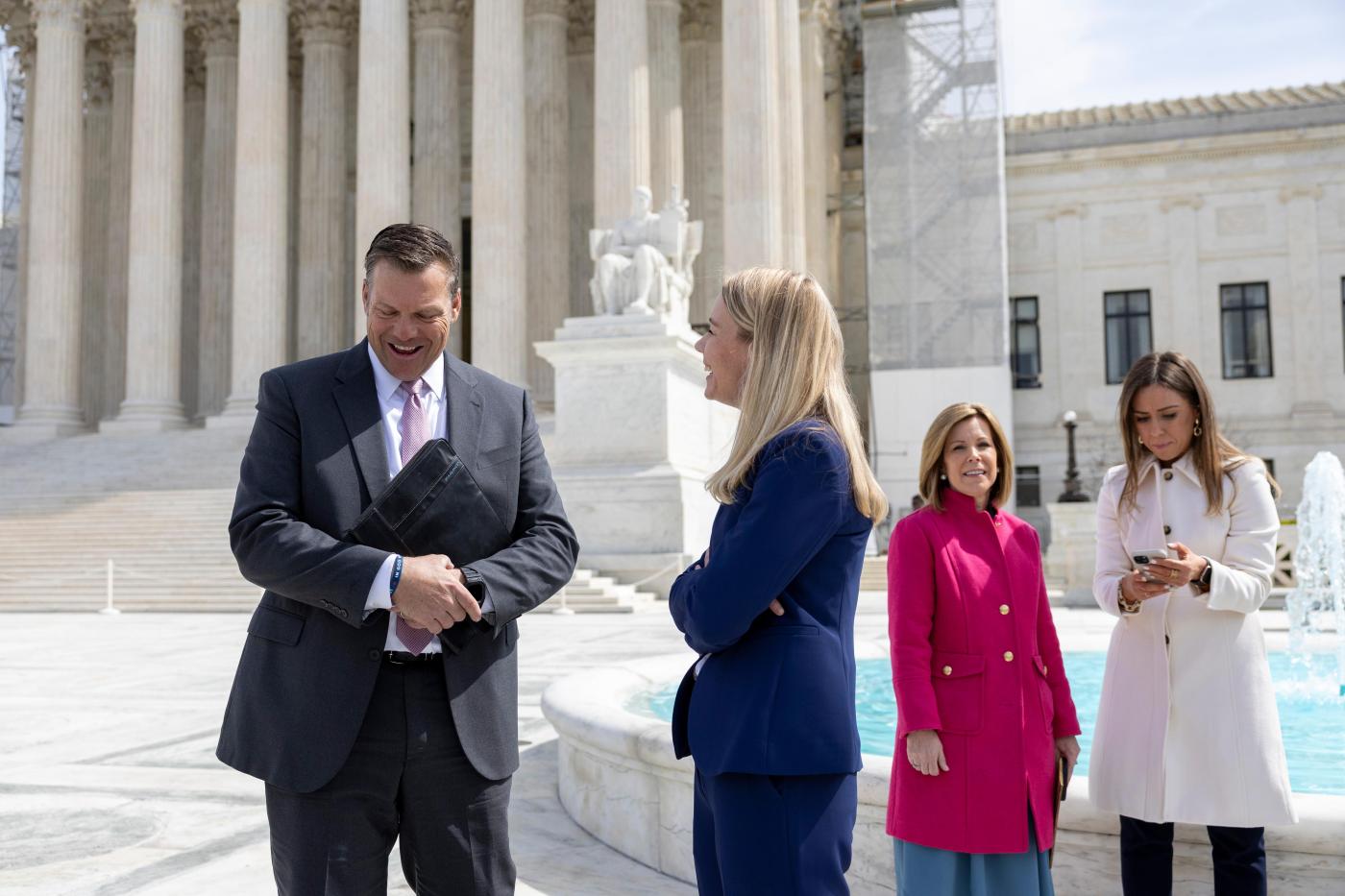
Lawyers for the state had urged the justices to walk back the 2019 ruling and uphold the two laws, which hadn’t yet been enforced because of the legal battles over them. The state’s solicitor general, appointed by Republican Attorney General Kris Kobach, had argued the 2022 vote didn’t matter in determining whether the laws could stand.

The court disagreed and handed abortion-rights supporters a big legal victory.

Kansas has become an outlier among states with Republican-controlled Legislatures since the U.S. Supreme Court issued its Dobbs decision in June 2022, allowing states to ban abortion completely. That’s led to an influx of patients from states with more restrictive laws, particularly Oklahoma and Texas. The Guttmacher Institute, which supports abortion rights, projected last month that about 20,000 abortions were performed in Kansas in 2023 or 152% more than in 2020.

Kansas doesn’t ban most abortions until the 22nd week of pregnancy, but it requires minors obtain the written consent of their parents or a guardian. Other requirements, including the 24-hour waiting period and what a provider must tell patients, have been put on hold. A lower court is considering a challenge to them by providers.

Abortion opponents argued ahead of the August 2022 vote that failing to change the state constitution would doom long-standing restrictions enacted under past GOP governors. Kansas saw a flurry of new restrictions under former Republican Gov. Sam Brownback from 2011 through 2018.

The health and safety rules aimed specifically at abortion providers were enacted in 2011. Supporters said they would protect women’s health — though there was no evidence provided then documenting that such rules in other states led to better health outcomes. Providers said the real goal was to force them out of business.

The ban on a certain type of D&E procedure performed during the second trimester was the first of its kind when it was enacted in 2015.

According to state health department statistics, about 600 D&E procedures were done in Kansas in 2022, accounting for 5% of the state’s total abortions. About 88% of the state’s abortions occurred in the first trimester. The state has yet to release statistics for 2023.

The procedure ban would have forced providers to use alternative methods that the Center for Reproductive Rights, an abortion-rights advocacy group, has said are riskier for the patient and more expensive.

The 2019 ruling came in the early stages of the lawsuit over the 2015 ban. The justices kept the law on hold but sent the case back to the trial court to examine the ban further. A trial judge said the law could not stand.

Three of the court’s seven justices joined the court since the 2019 decision. All three were appointed by Democratic Gov. Laura Kelly, a strong abortion-rights supporter, but one of the three — Wall — removed himself from the cases.
Bret Stephens: What would a better Israeli prime minister do?

posted in: Society | 0

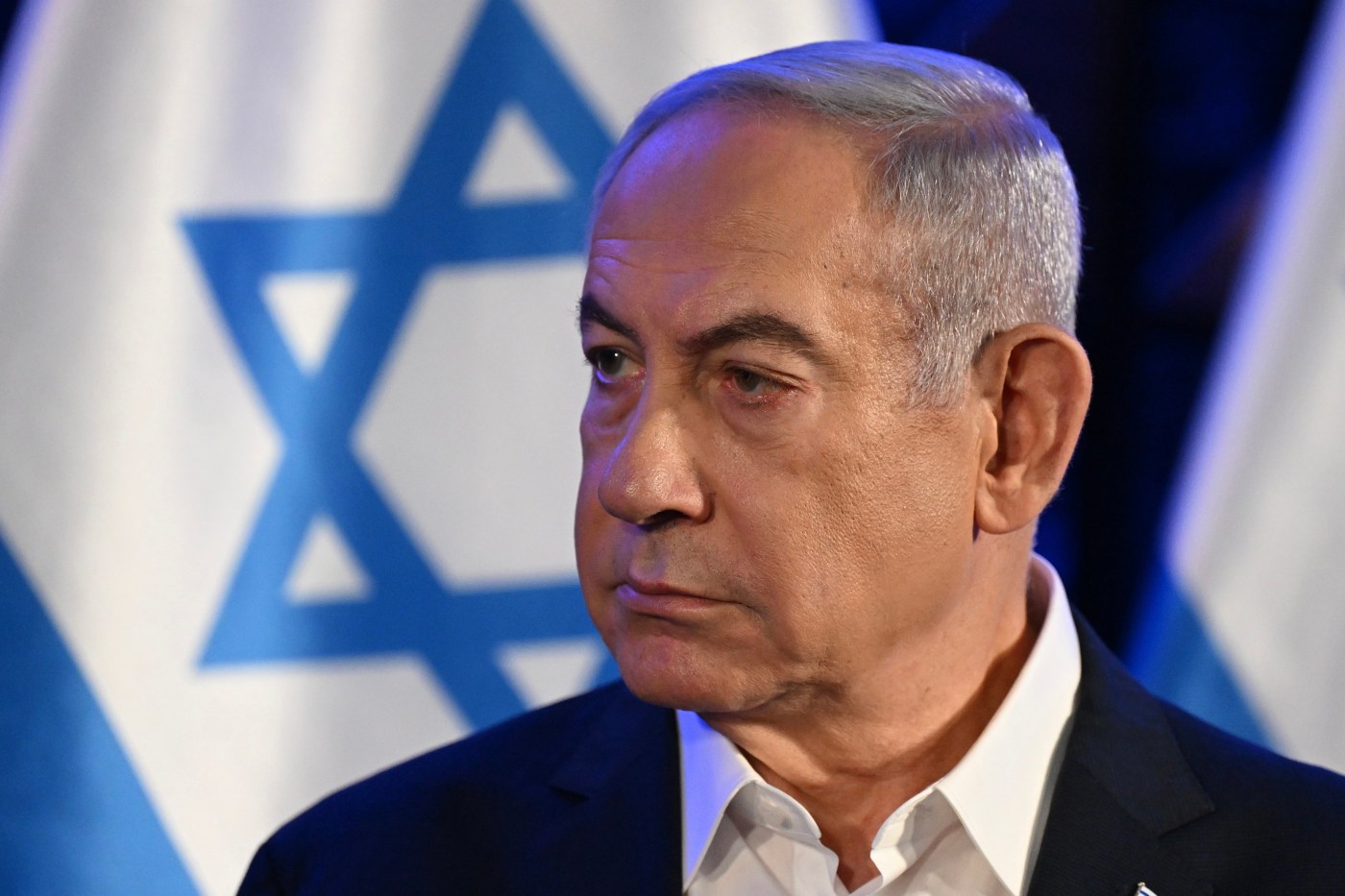
A better Israeli prime minister than Benjamin Netanyahu would immediately hold an election. Israelis deserve a government they believe can bring them out of crisis, not one that got them into this crisis. If that government is still led by Netanyahu, at least he would have an honest mandate, and dissenting Israelis would have fewer reasons to protest him. It would also give the prime minister more authority over a military that seems to think that it can openly oppose the views of its civilian masters.

A better Israeli prime minister would declare the following policy on a Palestinian state: Israel’s government will work toward one that looks like Costa Rica or the United Arab Emirates. It will oppose and obstruct one that is likely to look like Yemen or Afghanistan. If the character of a Palestinian state would be moderate, not militant, committed to the prosperity of its people, not to the destruction of its neighbors, then the likelihood of its creation would be far greater.

A better Israeli prime minister would create long-term safe zones within the Gaza Strip — at least while Israel remains in the territory — for women, children, the elderly and the sick. These would be monitored and financed by the U.S. Agency for International Development and its European counterparts; open to foreign journalists; and well provided with food, shelter and medicine. The zones would alleviate humanitarian distress, put fewer civilians in harm’s way, end the constant displacement of Palestinians from one part of the territory to another, simplify Israel’s efforts to strike terrorists, and deprive Hamas of some of its frequent propaganda victories in the battle of images.

A better Israeli prime minister would offer a postwar vision for Gaza: no Israeli occupation of any part of the territory in exchange for a 10-year Arab mandate for Gaza. It would be led by Arab states that have diplomatic relations with Israel, preferably including Saudi Arabia, with the goal of providing Palestinians with security and governance while ensuring that Hamas does not remain in power. Norway, Ireland, Spain and other governments that recognize Palestinian statehood should put their money where their mouths are by providing reconstruction assistance. If it succeeds, it can become a model for the West Bank.

A better Israeli prime minister would offer safe passage out of Gaza to Qatar for all Hamas fighters and leaders in exchange for the release of all remaining Israeli hostages, living and dead. Yahya Sinwar and the other masterminds of Oct. 7 can be brought to justice later. But Israel should strike no deal that effectively legitimizes Hamas’ continued grip on power.

A better Israeli prime minister would never accept ministers who aren’t qualified for their jobs, above all in a time of war. Itamar Ben-Gvir, the minister of national security, never served in the military. Bezalel Smotrich, the minister of finance, has no background in finance. Elections may bring right-wing rabble-rousers to power, but elections don’t require the prime minister to keep them in positions where they damage the national interest.

A better Israeli prime minister would set a clear deadline for the full implementation of U.N. Resolution 1701 of 2006, which requires Hezbollah to retreat behind the Litani River, several miles north of Lebanon’s border with Israel. The deadline would call attention to Hezbollah’s violations of the resolution, give Israel greater justification to go to war in the north if the deadline isn’t met and offer more reason for the United States to lend its full support for the effort.

A better Israeli prime minister would not be planning to deliver a speech to Congress when the war in Lebanon could erupt at any moment. He would not give a speech that would mainly serve to highlight America’s partisan divisions over support for Israel. Rather than antagonizing Democratic Party leaders and liberal Americans, he would work to repair strained ties with them by emphasizing that Israel remains the only country in the Middle East where progressive values are respected. And he would never air differences with the American president in public, at least not while Israel remains dependent on U.S. munitions. (He could also ask the president to return the courtesy.)

A better Israeli prime minister would oppose government stipends and subsidies for religious students who refuse enlistment orders. Those who contribute the least to Israel’s security and material well-being should expect to receive the least from those who give the most.

A better Israeli prime minister would articulate the real stakes in this war — not a war of Israel against Hamas, but a multifront campaign against an “Axis of Resistance” that includes not just Hezbollah and the Houthis but also their masters in Iran and its allies in Russia, Syria, China and North Korea. In other words, the fighting we see in Gaza isn’t a regional war between Jews against Muslims. It’s a battle in a long global struggle between the free and unfree worlds.

A better Israeli prime minister would do this and more. Israel’s crises will abate when it gets one.

Bret Stephens writes a column for the New York Times.

Related Articles

Opinion |


Stephen L. Carter: Debit card fees get a deserved hit from the Supreme Court

Opinion |


Noah Feldman: Supreme Court just expanded the imperial presidency

Opinion |


Mihir Sharma: The world’s climate leaders need better data

Opinion |


Lisa Jarvis: Game-changing HIV shot can’t get to high-risk groups fast enough

Opinion |


Stephen L. Carter: Trump might not wind up liking the Supreme Court’s immunity decision

Stephen L. Carter: Debit card fees get a deserved hit from the Supreme Court

posted in: Adventure | 0

Before announcing the outcome of Monday’s Supreme Court decision in Corner Post, Inc. v. Board of Governors of the Federal Reserve System, Justice Amy Coney Barrett joked that it wasn’t the case the multitude had packed the courtroom to hear. And with the presidential immunity decision being handed down minutes later, the case of Corner Post has been a bit crowded out of the news cycle.

Which is unfortunate.

Because whatever one’s views on the tribulations (and trials) of a certain Donald J. Trump, what happens on remand in Corner Post might well have a lasting impact on something everybody does: buying stuff.

According to the critics, because the Corner Post decision eases the path for people who sue administrative agencies, it represents just the latest fusillade in the court’s assault on the regulatory state. But I’m less sure that Barrett’s majority opinion is wrongheaded. And I’m intrigued that courts might soon be called upon to examine the merits of the “interchange” fees merchants pay to banks for debit card transactions.

That might not be a bad thing.

The case involves a challenge to a Federal Reserve rule called Regulation II, issued in 2021 under Dodd-Frank, to get a handle on debit card swipe fees. The rule, which applies to cards issued by banks with $10 billion or more in assets, sets a maximum debit card fee of .05% of the amount of the transaction, plus 21 cents. After Regulation II went into effect, the fees fell immediately, some by well over half. E-retailers appeared to see the biggest initial drop. (Credit cards typically charge higher transaction fees, but the plaintiffs in this case were only challenging debit card fees, perhaps because the contested regulation only applies to debit cards.)

Sounds good, right? The trouble is, many businesses think interchange fees are still too high — and they blame the Fed. The statute requires the Fed to assure that the fees “shall be reasonable and proportional to the cost incurred by the issuer with respect to the transaction.” Retailers argue that the ceiling of .05% plus 21 cents is neither reasonable nor proportional. Efforts to litigate the issue have been unavailing.

Enter a North Dakota truck stop called Corner Post. In 2021, the truck stop sued the Fed, asserting that the rule’s statutory maximum fee was more than what Dodd-Frank allows. What makes the lawsuit unusual is that Regulation II was finalized in 2011 — a full decade before the suit was filed, and seven years before Corner Post opened for business.

A plaintiff who wants to challenge a federal agency rule on its face must file suit “within six years after the right of action first accrues.” (The rule is different when a suit challenges the way a federal agency has applied its rules to the plaintiff.) The technical question before the justices was whether, as most federal courts have held, that means six years after the challenged rule is finalized; or whether, as the truck stop claimed, the suit may be filed six years after the injury materializes, no matter how long ago the rule went into effect.

The Supreme Court, in a 6-3 decision, held that the six-year period begins not when the rule takes effect, but “when the plaintiff has a complete and present cause of action” — meaning that the right to use “accrues” at the moment when the injury takes place.

Here’s where things get a bit existential: In the case of Corner Post, no injury was suffered in 2011, when Regulation II went into effect, or in the ensuing seven years, because the truck stop did not exist. Rather, the injury was the hundreds of thousands of dollars in swipe fees the truck stop eventually paid to banks. Every penny was paid long after the rest of the retail world had been forced to learn to live with the rule; and long after the banks had become accustomed to the income stream.

That last part is what worries the critics. Taking the majority seriously, were I to launch a new business tomorrow, the next day I’d be able to file suit against almost any extant administrative regulation, no matter how ancient and venerable, as long as the rule costs me money.

But private entities get sued all the time to halt longstanding practices said to have caused the plaintiff harm. It’s not clear why government agencies shouldn’t bear the same risk.

Besides, most controversial federal regulations are challenged immediately, and most of those challenges fail. So even if a few of the new lawsuits succeed, the shock suffered by a regulated entity is likely to be not much different than what often happens to the rules when a new president takes over.

All of which leads us back to the interchange fees themselves. At the level of policy, I have some sympathy for the claim that they’re too high — not because merchants are suffering, but because their customers are.

Poor customers in particular.

Swipe fees on debit and credit cards alike are regressive. Except in the rare case of a retailer that gives an explicit discount for cash — gas stations provide a prominent example — the fee is factored into the price of the good. Those fees, in turn, help subsidize credit card rewards, which are most likely to accrue to wealthier shoppers. Those who don’t use plastic (or titanium!) subsidize those who do, paying the same price and getting none of the benefits. This is a well-known difficulty. Thus do lower-income customers (and older ones) subsidize the well-off.

None of this is what Corner Post had in mind in filing suit, and the puzzle might not have a regulatory solution. But only if rules are repeatedly tested are we likely to have a serious conversation on such topics.

Stephen L. Carter is a Bloomberg Opinion columnist, a professor of law at Yale University and author of “Invisible: The Story of the Black Woman Lawyer Who Took Down America’s Most Powerful Mobster.”

Related Articles

Opinion |


Mihir Sharma: The world’s climate leaders need better data

Opinion |


Lisa Jarvis: Game-changing HIV shot can’t get to high-risk groups fast enough

Opinion |


Stephen L. Carter: Trump might not wind up liking the Supreme Court’s immunity decision

Opinion |


Other voices: U.S. chip dreams will fade without more skilled immigrants

Opinion |


Noah Feldman: Supreme Court social media ruling is a free-speech landmark

Noah Feldman: Supreme Court just expanded the imperial presidency

posted in: Adventure | 0

In a sweeping decision that constitutionalizes the modern reality of the imperial presidency, the U.S. Supreme Court has established near-total criminal immunity for Donald Trump’s official acts while he was president. It’s an outcome that would have astonished the nation’s founders, who feared precisely that if the chief executive amassed too much power, the republic would turn into an empire.

The conservative majority in the 6-3 decision left a little bit of room to prosecute Trump for unofficial or private acts committed while in office. But it defined such acts narrowly and said lower courts couldn’t examine Trump’s motives when determining whether a given act was official or not. The result will mean that most, maybe all the federal criminal charges against Trump for conduct related to Jan. 6 will get dismissed. And none has any realistic chance of going to trial before the presidential election in November.

In dissent, Justice Sonia Sotomayor, joined by the other two liberals, condemned the decision in the harshest terms. “In every use of official power,” she wrote,” the president is now a king above the law.”

This result would be deeply disturbing to the nation’s founders. Nothing in the Constitution’s text or original public meaning supports the immunity rules the court crafted.

To the contrary, as Sotomayor pointed out in her dissent, the Constitution specifically anticipates criminal prosecution of a president, noting that after impeachment, a president removed by the Senate “shall nevertheless be liable and subject to Indictment, Trial, Judgment and Punishment, according to Law.”

And Alexander Hamilton, in Federalist 69, specifically distinguished the president from the king of Great Britain because he could be impeached, removed and subject “to the forfeiture of life and estate by subsequent prosecution.”

Thus the constitutional basis for the court’s decision is entirely grounded in judge-made doctrine. And judge-made doctrine evolves over time, reflecting changing historical and political circumstances.

The single greatest transformation in the American constitutional system since 1789 is the rise of what historian Arthur Schlesinger Jr. famously called the imperial presidency. A modern president controls a military force greater than any other in the world, a projection of power that includes nuclear weapons. A modern president is surrounded by a huge executive branch and a bevy of executive branch officials who work for the president.

In the light of those modern developments, the Supreme Court has, over the last 60 years or so, gradually given the president more and more insulation from ordinary legal processes — far more than the framers would have dreamt of. The basic argument is that the president, as leader of the free world, needs to be able to do the job without too much interference. Unspoken is the understanding that the modern president is, in practice, much more like an elected ruler of a global empire than like the weak leader of a small republic restricted to the area of today’s I-95 corridor, as early presidents were.

To be sure, the Supreme Court made Richard Nixon hand over the Watergate tapes. It subjected Bill Clinton to testifying in the Paula Jones case. It has rhetorically insisted — in Trump’s case and in the past — that the president is not above the law. But the court in 1982 also gave the president immunity from civil suits for his official actions.

The Trump immunity decision extends that protection to criminal immunity — all in exercise of the same core idea that the all-powerful president needs to be free and undistracted to run the empire.

The constitutional takeaway is that the court’s six conservatives, all of them supposedly originalists who care about the text of the Constitution, deviated from their jurisprudential principles to create criminal immunity for Trump. The three liberals, in turn, made originalist arguments. Amy Coney Barrett departed from part of the majority’s argument and joined part of Sotomayor’s opinion on the narrow question of whether the details of a president’s official acts could be introduced as evidence in a trial to prove he committed a criminal unofficial act. That was sensible, but fell short of what her mentor, Antonin Scalia, would have said about the majority’s invention of immunity unimagined by the framers.

The court’s grant of criminal immunity operated in several steps, each of which affects a part of the Jan. 6-related prosecution of Trump.

First, the court held that the president’s official acts are presumed entitled to immunity unless the government can show that a given criminal charge would pose “no dangers of intrusion on the authority and functions of the executive branch.” As Sotomayor noted, most conceivable charges related to official acts would pose some danger of intrusion, so the immunity granted is effectively absolute for official acts. For example, the Supreme Court said that the charges against the former president for conspiring with the acting attorney general to change the election results were based on official acts and would therefore have to be dismissed.

When it came to the charges that Trump tried to pressure Vice President Mike Pence to refuse to certify the election, the court formally said that immunity should be presumed and the government would have to prove to the lower court that there was no danger of intrusion on the function of the executive branch. The majority opinion gave a long disquisition on how important it was for the president and vice president to be able to discuss policy, and left little doubt that the answer would be that immunity should be granted.

As for the charges that Trump conspired with his own campaign advisers to pressure state officials to change the election returns, the majority said that the lower courts would have to engage in intensive, fact-specific analysis of each charge to see whether it fell within Trump’s official responsibilities.

Some of these parts of the indictment might conceivably survive the lower courts’ scrutiny. But even here, the majority opinion appeared to give some credence to Trump’s view that as president, he might have the official power to speak to state officials about making sure a presidential election ran fairly. That’s a really terrible theory, but the lower court might adopt it and this Supreme Court seems unlikely to overturn the lower court if it does.

That leaves the criminal allegation that Trump incited the crowd on Jan. 6 to interfere with the counting of electoral votes at the U.S. Capitol. Once again, the court offered a lengthy discussion on why it’s so important for the president to be able to speak to the public, suggesting that “bully pulpit” speeches would count as official acts.

The court then left some small amount of room for the lower courts to say that when speaking as a candidate, for example, the president may be speaking unofficially. It concluded that it all depends on context, and directed the lower courts to look at the context. It’s hard for me to imagine this part of the indictment surviving the lower courts’ analysis, although my Bloomberg Opinion colleague Stephen Carter sees it differently.

The Supreme Court’s decision will not affect the New York criminal conviction against Trump for conduct before he became president nor the federal prosecution in Florida for keeping secret documents after he left office. The Georgia prosecutions might be affected, as the state courts will now have to determine whether Trump’s actions in trying to influence vote-counting there were official or unofficial.

In sum, the Supreme Court has gutted the historic effort to hold Donald Trump legally accountable for his efforts to overturn the 2020 election. That’s astonishing and tragic. The court’s decision reflects the gradual expansion of the imperial presidency.

A president tried to break our democracy by overturning the results of an election that he lost, and the Supreme Court has responded by protecting him from criminal prosecution. Our founders would be horrified. The Caesars would nod in approval.

Noah Feldman is a Bloomberg Opinion columnist. A professor of law at Harvard University, he is author, most recently, of “To Be a Jew Today: A New Guide to God, Israel, and the Jewish People.”

Related Articles

Opinion |


Mihir Sharma: The world’s climate leaders need better data

Opinion |


Lisa Jarvis: Game-changing HIV shot can’t get to high-risk groups fast enough

Opinion |


Stephen L. Carter: Trump might not wind up liking the Supreme Court’s immunity decision

Opinion |


Other voices: U.S. chip dreams will fade without more skilled immigrants

Opinion |


Noah Feldman: Supreme Court social media ruling is a free-speech landmark