
Lost in the presidential race? These are the issues that matter to voters

posted in: Politics | 0

Michelle Baruchman and Caleb Groves | (TNS) The Atlanta Journal-Constitution

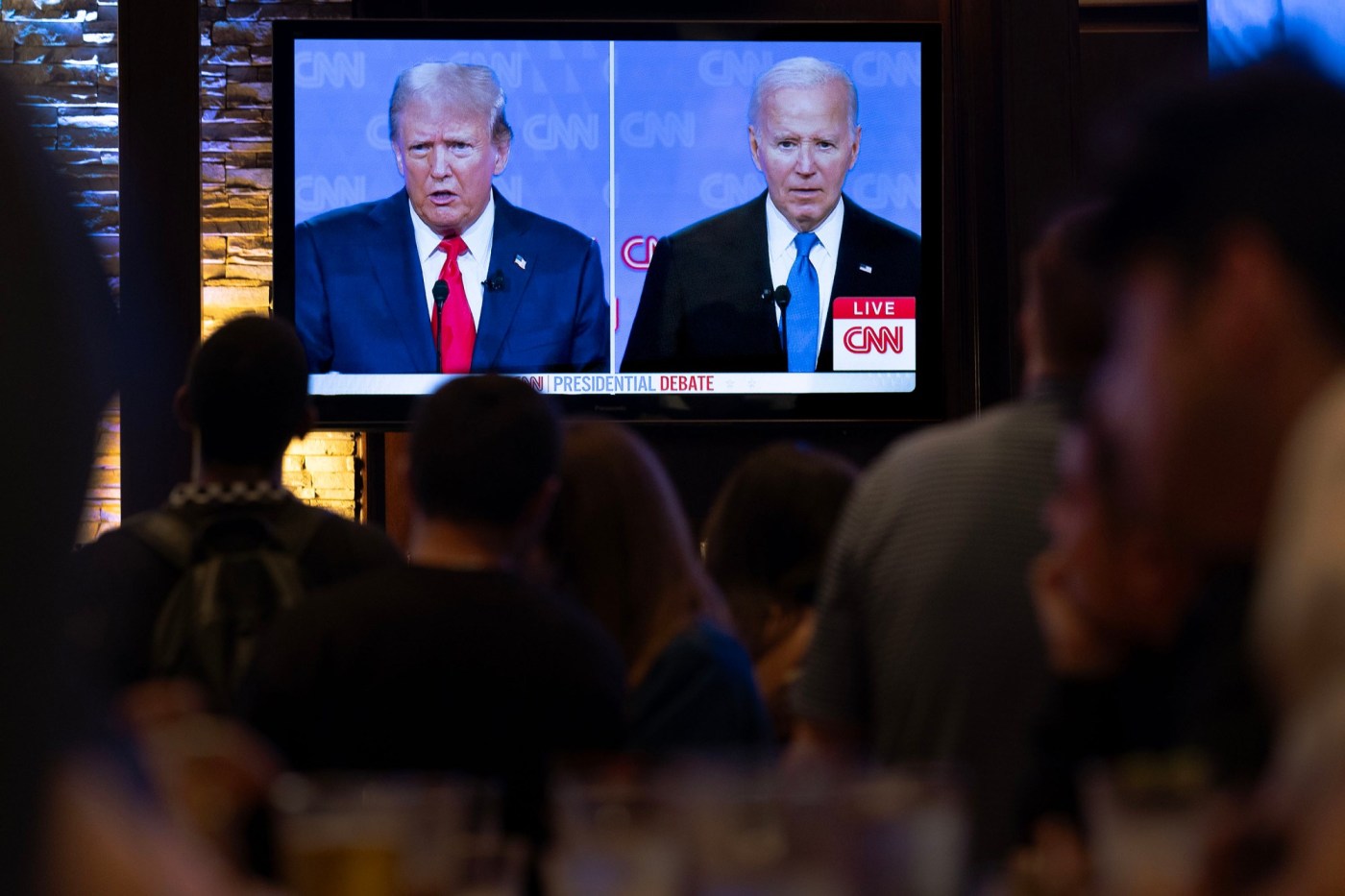
ATLANTA — Since the presidential debate in Atlanta last Thursday, President Joe Biden and former President Donald Trump have faced a barrage of criticism about their performance.

For Biden, it’s been framed around his age, with polls showing many voters consider him too old to serve another term. For Trump, his responses led some to consider him too dangerous to retake command.

The focus on the candidates’ personalities and defects have meant that key topics important to voters in Georgia have flown under the radar.

After Patrick Delisle, a 55-year-old physical therapist from Cherokee County, watched the televised debate hosted by CNN in Atlanta, he said neither candidate addressed some of the biggest issues he’s worried about, such as the economy and immigration.

“Both candidates, in my opinion, didn’t really answer questions a lot of times, but what did you expect from these two guys?” Delisle said.

Here are the issues that ranked highest in importance to Georgia voters, according to an Atlanta Journal-Constitution poll published ahead of the debate:

Inflation/cost of living

By far, the issues that reigned supreme on voters’ minds are those discussed at the kitchen table: gas prices, paying for groceries, housing. More than one-quarter of respondents, 26%, said inflation and cost of living will have the largest impact on their vote in November. The issue also ranked as the top concern when cutting across demographic lines, such as race, gender, age and income level.

Following the onset of the COVID-19 pandemic, inflation rose globally. But since recovery efforts began, the U.S. has seen its inflation figures reduced as compared with other developed countries. Still, many voters believe their dollar is not going as far as it used to.

“I used to be able to save a ton more money,” said Carly Loggins, a 23-year-old real estate agent from Athens. “I’m not able to save hardly anything now. I just live paycheck to paycheck.”

Economy/jobs

Concern about the nation’s economy and growth of jobs was also high on the list, with 16% ranking it their chief priority, despite data suggesting the economy is improving.

It can feel like whiplash to get a fair picture of the economy. On one hand, the unemployment rate is at an all-time low; Georgia added 9,200 jobs in May alone, a better-than-average record. The nation’s stock indexes — while volatile at times — have reached record highs during the Biden administration.

But on the other, the Federal Reserve has raised interest rates in an effort to fight against inflation, increasing the cost of borrowing.

Preserving democracy

Aside from pocketbook worries, 15% of voters in the AJC poll said they’re concerned about “preserving democracy” in the upcoming election. About 1 in 5 voters who are 65 years or older listed it as the most important issue. But there is a partisan divide: 25% of Democrats said it was their top priority, compared with 4% of Republicans.

Related Articles

National Politics |


Biden heads into a make-or-break stretch for his imperiled presidential campaign

National Politics |


Zelenskyy challenges Trump to reveal plans for quick end to war

National Politics |


In blockbuster term, Supreme Court boosts its own sway

National Politics |


Analysis: Republicans are downplaying abortion, but it keeps coming up

National Politics |


Trump’s immunity ruling sets up ‘mini trial’ before election

In Georgia and in the District of Columbia, Trump faces criminal charges involving his efforts to overturn the election results in 2020. He’s also charged in Florida with mishandling classified documents after he left office. That’s on top of his recent conviction on 34 counts of falsifying business records in a New York trial stemming from payments his campaign made to porn star Stormy Daniels.

In the debate, Trump said the prosecutions against him are politically motivated. He also declined responsibility for his supporters breaching the U.S. Capitol while Congress counted electoral votes in hopes of reversing his reelection defeat.

But all the cases against Trump are in some jeopardy. The U.S. Supreme Court released a ruling Monday that held presidents are partially immune from prosecution.

Karen Williams, who lives in DeKalb County, said preserving voter rights was her top issue this election.

“I am very, very focused on the preservation of democracy and the preservation of freedom,” Williams said. “The Biden-Harris administration personifies that. The opposing candidate, not so much.”

Immigration

Whether it was health care, jobs or the opioid epidemic, the conversation throughout the debate seemed to drift back toward immigration. It’s an issue that resonates with Georgia voters: 13% listed it as their primary concern in the AJC poll.

Jake Shanahan, a 77-year-old retiree from Sandy Springs, said he has been disappointed in Biden’s handling of the U.S.-Mexico border.

“You look at the news, and he says it’s secure,” Shanahan said. “It’s obvious that, if what’s on TV is true, it’s not secure. I think he should take action to correct that.”

That issue, however, varied across demographic lines. Just over 1% of Black respondents said it was their highest concern, compared with 17% of white respondents. And along party lines, 24% of Republicans said immigration was their main focus, compared with 4% of Democrats.

Under the Biden presidency, unlawful border crossings have reached historic highs, although they dropped to a three-year low in June. His administration has expanded some pathways to come to the U.S. legally, including protections for unauthorized immigrants married to U.S. citizens.

Meanwhile, when asked whether he would deport people who are in the country illegally, including those who are married to citizens, have jobs or have been in the U.S. for decades, Trump said: “We have to get a lot of these people out. We have to get them out fast.”

Abortion

Georgia was mentioned almost instantly during the presidential debate, with Biden highlighting the state’s abortion law that bans most abortions once a doctor can detect fetal cardiac activity, typically about six weeks into a pregnancy and before many know they are pregnant.

It’s a subject that has remained on voters’ minds, with 8% of voters in the AJC poll indicating abortion would determine their presidential preference. Among age groups, abortion was the biggest concern for those between 18 and 29 years old, at 14%. It also ranked as a higher concern for women (12%) than men, (2%).

Shana Williams, a 39-year-old health care worker from Decatur, said neither candidate at Thursday’s debate addressed issues in a nuanced way. But she sided with Biden’s stance on abortion.

“I think that it’s each person’s right to choose. For example, I was on birth control when I got pregnant,” Williams said. “Some people think, ‘Oh, you’re getting an abortion because you’re irresponsible; just practice safe sex.’ That’s not necessarily the case.”

Trump took credit for the three U.S. Supreme Court justices he nominated who voted to overturn Roe v. Wade, the 1973 decision that guaranteed a nationwide right to abortion. The decision striking down Roe allowed states to set their own restrictions.

Staff writers Lautaro Grinspan, Zachary Hansen, Michael E. Kanell, Mark Niesse, Maya T. Prabhu, J. Scott Trubey and David Wickert contributed to this article.

©2024 The Atlanta Journal-Constitution. Visit at ajc.com. Distributed by Tribune Content Agency, LLC.

Despite what some politicians say, crime rates are decreasing

posted in: News | 0

Amanda Her | (TNS) Stateline.org

Violent crime in the United States dropped significantly in the first quarter of 2024 compared with the same period last year, according to the FBI’s Quarterly Uniform Crime Report released in June.

The FBI’s data, collected from nearly 12,000 law enforcement agencies representing about 77% of the country’s population, suggests violent crime dropped by 15% compared with the first quarter of 2023.

The data, which covers reported crimes from January to March, shows a 26.4% decrease in murders, a 25.7% decrease in rapes, a 17.8% decrease in robberies, and a 12.5% decrease in aggravated assaults. Reported property crime also fell by 15.1%.

Nevertheless, the widespread public perception that crime is rising — a perception reinforced by presumptive Republican presidential nominee Donald Trump and many other GOP candidates — could figure prominently in November’s election. And state legislative and gubernatorial candidates from both parties likely also will cite crime statistics on the stump.

In a Gallup poll conducted late last year, 63% of respondents described the crime problem in the U.S. as either extremely or very serious. This is the highest percentage since Gallup began asking the question in 2000.

In May, Trump wrongly called FBI data showing a decline in crime “fake numbers.” In June, he erroneously claimed that the FBI’s crime statistics exclude 30% of cities, including the “biggest and most violent.”

He could have been referring to the fact some departments couldn’t report data in 2021 because the FBI switched data reporting systems, but experts say the overall numbers remain valid.

Related Articles

National Politics |


Biden heads into a make-or-break stretch for his imperiled presidential campaign

National Politics |


Zelenskyy challenges Trump to reveal plans for quick end to war

National Politics |


In blockbuster term, Supreme Court boosts its own sway

National Politics |


Analysis: Republicans are downplaying abortion, but it keeps coming up

National Politics |


Trump’s immunity ruling sets up ‘mini trial’ before election

President Joe Biden has also used crime statistics for political gain. In a May campaign email, Biden said that Trump “oversaw the largest increase in murder in U.S. history.” While this is not entirely inaccurate — the country did see the largest one-year increase in murders in 2020 — it omits context regarding the COVID-19 pandemic and the social upheaval following George Floyd’s murder by a Minneapolis police officer.

The latest FBI crime statistics align with other early data from 2024. In May, the Major Cities Chiefs Association released first-quarter data from a survey of 68 major metropolitan police departments showing a 17% drop in murders compared with the same period last year.

The FBI’s latest data is preliminary and unaudited, which means it will change as more law enforcement agencies refine their numbers throughout the year. National crime data is incomplete, as it only includes crimes reported to police, and not every law enforcement agency participates in the FBI’s crime reporting program.

Despite the data’s limitations, some criminologists and crime data experts say the data is reliable. Some say the FBI’s data likely overstates the decreases, suggesting the drop in violent crime is likely less dramatic but still trending downward.

“There’s a lot of uncertainty as to the accuracy of the data, so it matches but probably overstates what the trends are,” Jeff Asher, co-founder of AH Datalytics, a data consulting firm that specializes in crime data, told Stateline in an interview. “In theory, everything will get more accurate as the year goes on.”

Although national data suggests an overall major decrease in crime across the country, some criminologists caution that that isn’t necessarily the case in individual cities and neighborhoods.

“It looks good for the nation as a whole, but even with these great reductions, there are cities in the United States that have likely experienced increases that bucked the trend,” Charis Kubrin, a criminology, law and society professor at the University of California, Irvine, told Stateline.

The average American’s understanding of crime and crime statistics is heavily skewed by media coverage that focuses largely on when crimes are committed and by misleading political rhetoric, according to criminologists and crime data experts.

Instead of relying on statistics, which can feel impersonal, people tend to cling to anecdotes that resonate more emotionally. Politicians take advantage of this, Dan Gardner, author of the book “Risk: The Science and Politics of Fear,” told Stateline.

“If you are a political operative, capitalizing on fear of crime is incredibly easy to do,” Gardner said.

Telling a tragic story and framing it in a way so that voters feel they or their families could become victims of similar crimes unless they vote for a specific politician is a common, highly effective tactic, he added.

This use of fear as a motivator can drive people to the polls, Gardner said, but it also distorts public perception of crime.

“It’s a lousy way to understand the reality of personal safety and society, but it’s a very compelling form of marketing,” Gardner said.

The Council on Criminal Justice, a nonpartisan think tank, released a report in June urging police and the federal government to provide more timely crime data. The report emphasizes that crime data, especially national data, often lags up to a year, which hampers public understanding of crime trends and limits officials’ ability to make informed policy decisions to proactively address public safety issues.

“We need to accelerate improvements in our [crime] data,” John Roman, a senior fellow and the director of the Center on Public Safety and Justice at NORC at the University of Chicago, told Stateline. “The democratization of this data is really critical to more effective policy and programming.”

Stateline is part of States Newsroom, a national nonprofit news organization focused on state policy.

©2024 States Newsroom. Visit at stateline.org. Distributed by Tribune Content Agency, LLC.
13 states with Republican governors opt out of summer food program for kids

posted in: News | 0

Robbie Sequeira | (TNS) Stateline.org

A new, permanent summer grocery program will help nearly 21 million kids across 37 states get enough to eat this year while school’s out.

But 13 states with Republican governors have opted out of the federal program, citing their opposition to what they deride as “welfare” and their unwillingness to cover administrative costs.

Under the new $2.5 billion program created by Congress, eligible low-income households will receive a total of $120 per child over the three summer months when school-based free and reduced-price lunch programs aren’t available.

Washington, D.C., several territories and tribal nations also are participating. Families making up to 185% of the federal poverty level, or $57,720 for a family of four, are eligible.

Funds have already been distributed to families in many states.

Related Articles

National Politics |


Biden heads into a make-or-break stretch for his imperiled presidential campaign

National Politics |


Zelenskyy challenges Trump to reveal plans for quick end to war

National Politics |


In blockbuster term, Supreme Court boosts its own sway

National Politics |


Analysis: Republicans are downplaying abortion, but it keeps coming up

National Politics |


Trump’s immunity ruling sets up ‘mini trial’ before election

The money will be available on an electronic benefits transfer (EBT) card. Households enrolled in state-administered programs can use their benefits at retail stores that participate in the Supplemental Nutrition Assistance Program (SNAP), commonly known as food stamps.

The states that chose not to participate in Summer EBT — Alabama, Alaska, Florida, Georgia, Idaho, Iowa, Mississippi, Oklahoma, South Carolina, South Dakota, Texas, Utah and Wyoming — could decide to opt in next year.

While Oklahoma is not participating in the program, the Cherokee and Chickasaw tribes in the state are. Fourteen states with Republican governors are participating in the program.

The money put on the digital cards comes from the federal government, but states must cover half the cost of administering the program. Those costs include the salaries and benefits of the people running the program, office expenses and outreach efforts.

Iowa officials said the program would cost $2.2 million for the state to administer. Republican Gov. Kim Reynolds said in a news release that federal cash benefit programs don’t provide long-term solutions and that the EBT card “does nothing to promote nutrition” because there are few restrictions on food purchases.

The office of Mississippi Republican Gov. Tate Reeves said the state opted out of the program as part of his rejection of “attempts to expand the welfare state,” according to Mississippi Today.

Texas officials told The Texas Tribune that the federal government didn’t give them enough time to get the program up and running.

Jason Raven, a spokesperson for the South Carolina Department of Education, told Stateline that the state already has two federally funded summer programs that provide free meals to kids 18 and under.

But one advocacy group estimates that close to 150,000 children statewide don’t get enough food even with existing programs, the South Carolina Daily Gazette reported.

One participating state, Tennessee, has already announced it will opt out of the program in 2025, according to The Associated Press.

A spokesperson for Republican Gov. Bill Lee’s office said that Tennessee has other food assistance programs in place.

Change of heart

Three states — Louisiana, Nebraska and Vermont — originally said they would not participate in the summer program, but changed course.

After Louisiana Republican Gov. Jeff Landry’s administration and the state Department of Education opted not to apply for the program, the Louisiana legislature pushed back and included $3.6 million in the state budget to participate.

Vermont Republican Gov. Phil Scott’s administration initially opted out, saying the state wouldn’t be able to afford the administrative costs, according to Vermont Public. But state officials secured a waiver to participate after they said they worked with the federal government to get more flexibility in administering the program, VTDigger reported.

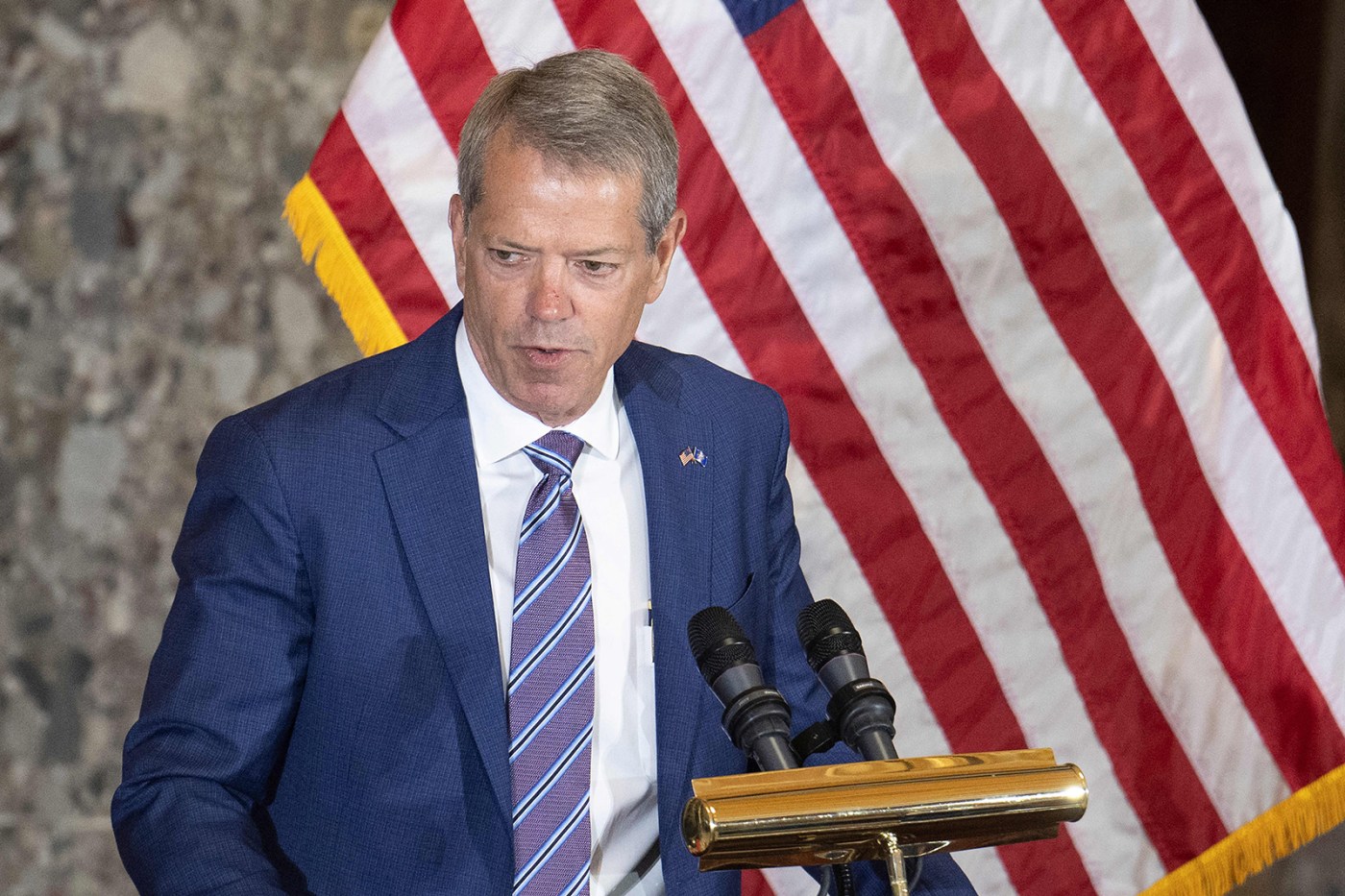
When Nebraska Republican Gov. Jim Pillen changed his mind about opting out of the U.S. Department of Agriculture program in February, it was a visit from schoolchildren that won him over.

“They talked about being hungry, and they talked about the summer USDA program and, depending upon access, when they’d get a sack of food,” Pillen said at a news conference. “And from my seat, what I saw there, we have to do better in Nebraska.”

Alabama’s legislature in May approved $10 million for the state to participate in 2025.

Kelsey Boone, senior child nutrition policy analyst at Food Research & Action Center, which advocates for people struggling with poverty-related hunger, said she expects more states to commit to Summer EBT in 2025, if the program demonstrates success.

“For most states, the trade-off ends up being that for all that’s being spent on administrative costs, the benefits of the program far outweighs it,” Boone said.

“I think there will be a lot of pushback and a lot of people reaching out to their state agencies and their state governors’ offices to, you know, ask them to run the program in 2025, and that will be very powerful,” she said.

Food insecurity

Roughly 17 million households experienced food insecurity in 2022, according to the USDA, compared with 13.5 million in 2021 and 13.8 million in 2020. The agency defines food insecurity as limited or uncertain access to adequate food.

In December 2022, Congress permanently authorized the Summer EBT program, with a start date of this summer.

Since 2010, the USDA has rolled out several versions of this program through various pilot programs. In its evaluation of the program over a decade, the department found that the Summer EBT program reduced childhood food insecurity by a “significant amount” and promoted a healthy diet.

Miriam Cobbs, a single mother of three children who lives in Missouri, praised the program as a lifeline for parents in the summer months. A May survey commissioned by meal-kit brand HelloFresh of more than 450 parents with kids under 18 found that 41% of parents struggle to provide food for their families during school breaks.

“With the food prices being so high, every little bit helps,” Cobbs said. “This is an awesome idea for people that have children at home for the summer. So many children go hungry during these summer months, especially when the parents have little income to work with.”

Stateline is part of States Newsroom, a national nonprofit news organization focused on state policy.

©2024 States Newsroom. Visit at stateline.org. Distributed by Tribune Content Agency, LLC.

St. Paul police investigating homicide in Como neighborhood

posted in: News | 0

St. Paul police said Friday they’ve investigating a homicide in the Como neighborhood.

Police are on the scene in the 900 block of Hatch Avenue.

The police department said they plan to release additional information Friday afternoon.

The homicide was the 15th of the year in St. Paul. There were 17 as of this time last year.

This is a breaking news story that will be updated.

Related Articles

Crime & Public Safety |


BCA identifies officers, provides more details in fatal shooting of North Branch woman

Crime & Public Safety |


Woman, 81, sentenced to life in prison in cold case love triangle murder in western Wisconsin

Crime & Public Safety |


St. Paul man charged with killing girlfriend’s estranged husband, who allegedly shot him last year

Crime & Public Safety |


Maplewood man pleads guilty to selecting St. Paul home at random, sexually assaulting woman

Crime & Public Safety |


Prosecutor: Burnsville officers justified in force used against gunman who killed three