Gen Z hates diet sodas, but loves them with ‘Zero Sugar’ branding

posted in: All news | 0

By Kristina Peterson, Bloomberg News

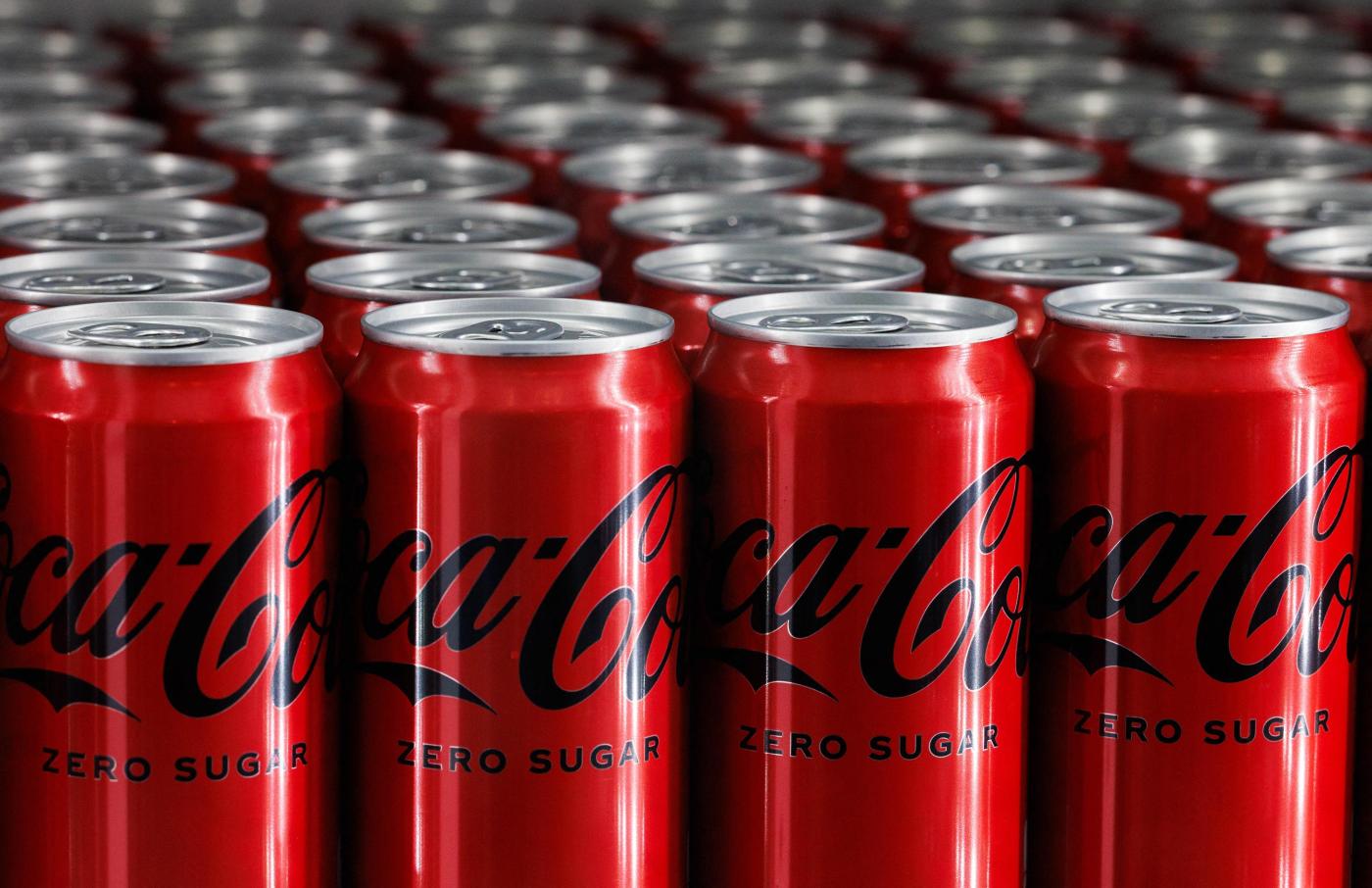
The first Pepsi Challenge tour in 50 years didn’t feature regular or even Diet Pepsi. Instead, the blind taste-test showdown last year pitted Pepsi Zero Sugar against Coca-Cola Zero Sugar.

Related Articles


The secret to perfect tortiglioni with peppers and eggplant from a 1929 Italian cookbook


Gretchen’s table: Warm winter’s chill with a hot bowl of this tangy and traditional Mexican stew


The most exciting restaurants opening across the US


Quick Fix: Beef Tenderloin with Cranberry Mustard Sauce and Green Beans with Rice


Fish cakes and Birmingham greens were a hit at the Harlem EatUp! festival

At the Super Bowl next month, it’s Zero Sugar that will star in the beverage company’s Pepsi commercial, not the original formula. PepsiCo Inc. is running a 30-second spot, which can run more than $8 million, to hype the no-calorie drink.

“We’ve gone all in” on Pepsi Zero Sugar in the last two years, said Ram Krishnan, the chief executive officer of PepsiCo North America, so much so that the vast majority of its Pepsi marketing budget is spent promoting Zero Sugar.

It’s not just Pepsi. Across the soda aisle, Diet is out and Zero Sugar is in. Keurig Dr Pepper Inc, for one, didn’t have a single Zero Sugar offering in 2020. Now it has more than 40.

Both Diet and Zero Sugar are calorie free, artificially sweetened imitations of their sugary brethren. Yet, the latter’s branding resonates more with younger, wellness-minded consumers, who shun sugar but don’t vibe with calorie counting or diet culture.

“The word ‘diet’ is from a different era. For a lot of younger consumers, it’s radioactive,” said Kevin Ryan, chief executive officer of Malachite Strategy and Research.

Last year a viral TikTok likened Diet Coke to a “fridge cigarette”: a guilty, unhealthy pleasure that takes the edge off. Zero Sugar, on the other hand, has more of a “health halo,” Krishnan, the Pepsi executive, said.

Zero Sugar sodas are a small but growing part of US soft drink sales. Last year, they accounted for 52% of the category’s sales growth, according to Circana data provided to Bloomberg. Both Pepsi and Coke sold more of their Zero Sugar offerings in the first nine months of 2025 than the same period a year prior. Sales of full sugar Pepsi and Coke declined during that time, as did Diet Pepsi. Diet Coke was up slightly.

It’s a sharp turn for soda’s fortunes in the US, where sales by volume have fallen 27% over the last two decades as more consumers opt for water and energy drinks instead.

PepsiCo’s success with its Zero Sugar soda represents a bright spot for the company, which has struggled elsewhere to adapt to changing tastes. The soda and snack-maker’s shares have posted annual declines for the past three years, which made it the target of an activist investor.

Elliott Investment Management took a roughly $4 billion stake in the company last year and has since pushed for products that appeal to a more health-conscious consumer and for PepsiCo to focus on its core brands.

For Madilyn Hovey, diet soda “just has that weird artificial taste to it.” While sipping a Dr Pepper Cherry Zero Sugar, the 25-year-old said “it’s easier to feel like you’re drinking the real thing.”

When Zero Sugar lines first launched, they were meant to taste closer to the real thing than Diet sodas. Since then, many have reformulated their sweetener mix to get even closer to the stuff made with sugar.

Reaching Gen-Z drinkers like Hovey — many of whom didn’t grow up drinking soda — is key to Keurig Dr Pepper’s strategy, said Derek Dabrowski, senior vice president of marketing at the maker of more than a dozen soda brands, including Sunkist, A&W and Canada Dry.

Six years ago, while competitors’ Zero Sugar drinks were multiplying, the company only had full sugar and Diet versions of its sodas.

“We were a little late to the party,” Dabrowski said.

The upside of that was the company could see what was working for rivals. Keurig Dr Pepper found that flavored Zero Sugar sodas were selling better than Zero Sugar colas, which aligned well with its portfolio.

From there, it decided to get into Zero in a big way. It axed Diet Sunkist, A&W and Canada Dry, replacing them with Zero Sugar options. (It kept Diet Dr Pepper, which has a loyal following.) It also added dozens of new flavors, like Dr Pepper Blackberry Zero Sugar and Dr Pepper Strawberries and Cream Zero Sugar.

While there was some internal anxiety that the changes would alienate customers, they didn’t, Dabrowski said. “It was a risk worth taking that has paid off.”

Keurig Dr Pepper’s US sales of beverages like soft drinks rose 14.4% in the third quarter to $2.7 billion, helping offset weakness in its coffee division. The company last year announced plans to split its refreshment beverage and coffee businesses in two, a move that some analysts say will allow the soda-maker to better compete with PepsiCo and Coca-Cola.

Leaning into variety has particularly helped win over Gen Z consumers. The company’s research has found that 72% of them try a new beverage every month, compared to just 16% of Boomers.

The limited-edition Dr Pepper Creamy Coconut — inspired from seeing people on social media add coconut syrup to Dr Pepper — was the company’s top-performing limited-time soda ever. Of course, it came in Zero Sugar, too.

Big soda brands are “really smart to create those multiple offerings,” said Ben Goodwin, CEO of Olipop Inc., a prebiotic soda that’s also winning over Gen Z with its health halo.

“I’m not an all-or-none kind of person,” said Megan Stitz, a 26-year-old physical therapist in Des Moines, Iowa, who recently started drinking Zero Sugar sodas to cut down on processed sugar. “I will still enjoy a full-sugar Coke if I want to.”

To that end, Pepsi has decided to bring back its taste test again this year with a new challenge. This time, people wearing blindfolds will decide in some markets if they prefer Pepsi Wild Cherry Zero Sugar or Coke Cherry Zero Sugar. Last year, Pepsi claims it won the battle in all 34 cities, including in Coke’s home turf, Atlanta.

©2026 Bloomberg L.P. Visit bloomberg.com. Distributed by Tribune Content Agency, LLC.

Sleep-tracking devices have limits. Experts want users to know what they are

posted in: All news | 0

By R.J. RICO and EMILIE MEGNIEN

ATLANTA (AP) — Your watch says you had three hours of deep sleep. Should you believe it?

Millions of people rely on phone apps and wearable devices like rings, smartwatches and sensors to monitor how well they’re sleeping, but these trackers don’t necessarily measure sleep directly. Instead, they infer states of slumber from signals like heart rate and movement, raising questions about how reliable the information is and how seriously it should be taken.

The U.S. sleep-tracking devices market generated about $5 billion in 2023 and is expected to double in revenue by 2030, according to market research firm Grand View Research. As the devices continue to gain popularity, experts say it is important to understand what they can and cannot tell you, and how their data should be used.

Here’s a look at the technology — and why one expert thinks its full potential has yet to be realized.

What your sleep tracker actually measures

Whether it’s an Apple Watch, a Fitbit, an Oura Ring or one of innumerable other competitors, health and fitness trackers largely take the same basic approach by recording the wearer’s movements and heart rate while at rest, according to Daniel Forger, a University of Michigan math professor who researches the science behind sleep wearables.

Middle school teacher Kate Stoye puts on an Oura ring, a wearable sleep tracking device, Wednesday, Jan. 7, 2026, in Hiram, Ga. (AP Photo/Emilie Megnien)

The algorithms used by major brands have become highly accurate for determining when someone is asleep, Forger said. The devices are also somewhat helpful for estimating sleep stages, though an in-lab study would be more precise, he said.

“If you really want to know definitively how much non-REM sleep you’re having versus REM sleep, that’s where the in-lab studies really excel,” Forger said.

The sleep numbers that matter most

Dr. Chantale Branson, a neurologist and professor at the Morehouse School of Medicine, said she frequently has patients showing up with sleep scores from fitness trackers in hand, sometimes fixated on granular details such as how much REM sleep they got on a certain night.

Branson says those patients are taking the wrong approach: the devices help highlight trends over time but should not be viewed as a definitive measure of one’s sleep health. Nor should any single night’s data be seen as significant.

“We would have believed them with or without the device and worked on trying to figure out why they can’t sleep — and that is what the wearables do not do,” she said.

Branson said she thinks people who check their sleep statistics every morning would be better served by spending their efforts on “sleep hygiene” such as creating a relaxing bedtime routine, avoiding screens before bed and making sure their sleep environment is comfortable. She advises those concerned about their sleep to consult a clinician before spending money on a wearable.

Wearable devices, including Apple Watches, can be used to track sleep, Wednesday, Jan. 21, 2026, in Atlanta, Ga. (AP Photo/Emilie Megnien)

Forger takes a more favorable view toward the devices, which he says help keep the overlooked importance of sleep front of mind. He recommends them even for people without significant sleep issues, saying they can offer insights that help users fine-tune their routines and feel more alert during the day.

“Seeing if your biological clock is in sync is a huge benefit because even if you’re giving yourself the right amount of time, if you’re sleeping at the wrong times, the sleep won’t be as efficient,” Forger said.

How sleep data can drive better habits

Kate Stoye, an Atlanta-area middle school teacher, bought an Oura Ring last summer, having heard positive things from friends who used it as a fertility tracker: “It’s so accurate,” she said. Stoye found the ring to be just as helpful with tracking her sleep. After noticing that the few nights she drank alcohol coincided with poorer sleep quality, she decided to give up alcohol.

“I don’t see much reason to drink if I know that it’s going to affect how I feel,” said Stoye, who always wears her device except when she is playing tennis or needs to charge it.

Another trend she says she detected in the ring’s data: the importance of not eating too late if she wants to get good rest.

“I always struggle with going to bed, and it’s often because I eat late at night,” Stoye said. “I know that about myself, and it knows it too.”

When sleep tracking becomes a problem

Mai Barreneche, who works in advertising in New York City, used to wear her Oura Ring constantly. She said it helped her develop good sleep habits and encouraged her to maintain a daily morning exercise regimen. But as a metric-driven person, she became “obsessed” enough with her nightly sleep scores that it began to cause her anxiety — a modern condition that researchers have dubbed “orthosomnia.”

Middle school teacher Kate Stoye checks her sleep score on her phone, Wednesday, Jan. 7, 2026, in Hiram, Ga. (AP Photo/Emilie Megnien)

“I remember I would go to bed thinking about the score I was going to get in the morning,” Barreneche said.

Barreneche decided not to wear her ring on a beach vacation a few years ago, and when she returned home, she never put it back on. She said she has maintained the good habits the device pointed her toward, but no longer wants the stress of monitoring her nightly scores.

Branson, of the Morehouse School of Medicine, said she’s observed similar score-induced anxiety as a recurring issue for some patients, particularly those who set goals to achieve a certain amount of REM sleep or who shared their nightly scores with friends using the same device. Comparing sleep types and stages is ill-advised since individual needs vary by age, genetics and other factors, she said.

Dr. Chantale Branson, a sleep neurologist at the Morehouse School of Medicine, stands for a portrait, Friday, Jan. 16, 2026, in Atlanta, Ga. (AP Photo/Emilie Megnien)

“These devices are supposed to help you,” Branson said. “And if you feel anxious or worried or frustrated about it, then it’s not helpful, and you should really talk to a professional.”

The future of wearables

Forger thinks the promise of wearables has been underestimated, with emerging research suggesting the devices could one day be designed to help detect infections before symptoms appear and to flag sleep pattern changes that may signal the onset of depression or an increased risk of relapse.

Related Articles


UnitedHealth shares plunge on rare reduced forecast, gov’t payment freeze


What to know about breast self-awareness and how it fits into cancer prevention


Shoveling snow? Over-exertion and cold temps can raise your heart risks


U, Fairview and M Physicians reach 10-year agreement after mediation


Addicted to your phone? Don’t break up with it entirely. Do this instead

“The body is making these really interesting and really important decisions that we’re not aware of to keep us healthy and active and alert at the right times of day,” he said. “If you have an infection, that rhythm very quickly starts to disappear because the body goes into overdrive to start fighting the infection. Those are the kind of things we can pick up.”

The technology could be particularly useful in low-resource communities, where wearables could help health issues to be identified more quickly and monitored remotely without requiring access to doctors or specialized clinics, according to Forger.

“There’s this really important story that’s about to come out: About just how understanding sleep rhythms and sleep architecture is going to generally improve our lives,” he said.

US stocks tick higher while the dollar’s value stabilizes

posted in: All news | 0

NEW YORK (AP) — The U.S. stock market is ticking further into record heights on Wednesday, while the U.S. dollar’s value stabilizes against other currencies after falling to its lowest level in nearly four years.

Related Articles


What’s a ‘good enough’ financial plan?


Holidays and a viral bear cup drive strong quarterly sales at Starbucks


Federal Reserve may keep rates unchanged for months as economy shows signs of health


Amazon cuts about 16,000 corporate jobs in the latest round of layoffs


TikTok faces app deletions, censorship claims and glitches in days after its ownership change

The S&P 500 rose 0.3%, coming off its latest all-time high. The Dow Jones Industrial Average was up 114 points, or 0.2%, as of 9:35 a.m. Eastern time, and the Nasdaq composite was 0.5% higher.

Some Big Tech companies and other influential stocks on Wall Street helped lead the way following an encouraging report from ASML. The Dutch company, whose machinery helps make chips, gave a forecast for 2026 revenue that topped analysts’ expectations.

ASML’s customers have been notably more encouraged about the medium term, CEO Christophe Fouquet said, mostly because of expectations for “the sustainability” of demand related to the artificial-intelligence boom. That helped allay some concerns that the AI frenzy has gone overboard and created a potential bubble that may burst.

Nvidia, the stock that’s become the poster child of the AI boom, climbed 1.2% and was the strongest single force lifting the S&P 500. ASML’s stock that trades in the United State was close to flat.

Stocks elsewhere in the market were mixed following the latest flurry of profit reports.

Starbucks jumped 4.9% after its revenue for the latest quarter topped analysts’ expectations, thanks in part to a viral bear cup. That was even though its profit for the end of 2025 fell short of analysts’ targets.

But Amphenol’s stock tumbled 14.9% even though the maker of fiber-optic connectors and other high-tech equipment reported stronger growth in profit and revenue for the end of 2025 than analysts had forecast. Expectations were high for the company after its stock came into the day with an already big surge of 23% for the young year so far.

Companies across the market are under heavy pressure to deliver solid growth in profits following the record-setting runs for their stock prices. Stock prices tend to follow the path of corporate profits over the long term, and earnings need to rise to quiet criticism that stock prices have grown too expensive.

In the foreign-currency market, the U.S. dollar found some stability and was up by roughly a third of a percent against the British pound and Japanese yen. A day earlier, an index measuring the U.S. dollar’s value against several of its peers dropped to its weakest level since early 2022.

The dollar’s value has been generally falling since President Donald Trump entered the White House last year, and its descent accelerated after Trump threatened tariffs earlier this month against several European countries that he said opposed his taking control of Greenland.

Such threats, along with worries about risks like the U.S. government’s heavy debt, have periodically pushed global investors to step away from U.S. markets, a move that’s come to be called “Sell America.”

In the bond market, Treasury yields held relatively steady ahead of an announcement coming in the afternoon from the Federal Reserve on interest rates. The widespread expectation is that it will hold its main interest rate steady.

The Fed cut rates several times last year in hopes of shoring up the job market, but inflation remains stubbornly above its 2% target, and lower interest rates could push prices higher for U.S. consumers while giving the economy a boost.

Lower interest rates could also further undercut the U.S. dollar’s value, which would help U.S. exporters. Trump has been pushing aggressively for lower rates.

The yield on the 10-year Treasury held at 4.24%, where it was late Tuesday.

As global investors have stepped away from the U.S. dollar due to political instability and other worries, prices have surged for gold and other metals as investors searched for something safer to own. Gold’s price topped $5,000 per ounce this week for the first time, and it added another 3.5% to $5,258.50.

In stock markets abroad, indexes sank in Europe following better performances in Asia.

South Korea’s Kospi rose 1.7% to another record, thanks in part to a 5.1% leap for chip company SK Hynix, while Hong Kong’s Hang Seng rallied 2.6%.

AP Business Writers Matt Ott and Elaine Kurtenbach contributed.

What’s a ‘good enough’ financial plan?

posted in: All news | 0

I’m a classic satisficer: I’m usually quick about making decisions and often fall back on the tried-and-true. Some people are optimizers, carefully analyzing almost every choice, whether it’s a new sofa or a cup of coffee.

Related Articles


US stocks tick higher while the dollar’s value stabilizes


Holidays and a viral bear cup drive strong quarterly sales at Starbucks


Federal Reserve may keep rates unchanged for months as economy shows signs of health


Amazon cuts about 16,000 corporate jobs in the latest round of layoffs


TikTok faces app deletions, censorship claims and glitches in days after its ownership change

If you want to make decent, “good enough” choices about your financial plan and portfolio and get onto other things, what strategies should you employ? And what should you stop doing? Here are some strategies to embrace.

Eliminate ‘onesies’ and embrace simple building blocks

Step away from those individual stocks. Forget I bonds and laddered portfolios of individual Treasury Inflation-Protected Securities. If you’re a satisficer, they’re not for you. Reduce your number of accounts and the holdings within them.

A portfolio with fewer moving parts is easier to oversee and simpler to document in case your loved ones or a financial advisor needs to take the wheel. Moreover, Morningstar research indicates that investors tend to do a better job buying and holding broadly diversified investments than they do ones that are more focused.

While they might not compel over some shorter time horizons, total-market index funds have been highly competitive with actively managed funds on a long-term basis, and they require little to no oversight. That means that satisficer portfolios should be heavy on total market index funds and even all-in-one investments like target-date funds. Satisficers should have as few accounts as possible, too.

Minimize other financial relationships

I’m part of a group chat with some delightful people who are keen to maximize their gains from credit cards and hotel loyalty programs. They’re always sharing tips on new card offers and swapping in and out of cards to score free travel.

These people have traveled all over the world, and there’s something to be said for beating the banks at their own game. They’re also eager to take advantage of free financing programs when buying cars, furniture, and electronics. Why not let the bank float you a loan and invest the funds in the interim, particularly now that you can earn a decent return on your safe money?

Yet as much as the math might argue for such strategies, managing multiple credit relationships requires time, energy, and discipline that most people don’t have to spare. For that reason, taking a minimalist approach to credit cards and other financial relationships is a good policy for most households, especially satisficing ones. My credit-card-optimizer friends might disagree, but I tend to think that a single, well-chosen credit card or two is plenty.

Automate everything you can

The data suggest that dollar-cost averaging is inferior to lump-sum investing. To which I say, “So what?” The fact is, most of us don’t have big lump sums lying around; we’re able to invest only as we earn money and save it.

Making automatic investments addresses a number of financial pain points in a single shot. It eliminates any question marks about whether and when to invest. And if the target investment amounts are high enough and you increase them as you receive pay increases and bonuses, it also obviates the need to track expenses or budget in the traditional sense.

Pay for help if you need it

Here’s another way in which the satisficers may be willing to depart from the optimizers. Yes, paying for financial planning guidance costs money, maybe more than you think it should. (It’s not unusual for good-quality planners to charge $350-$500 an hour or more.)

But if paying for professional financial help frees you up to do other things you enjoy more and it provides peace of mind with your decision-making, it can be money well spent. Moreover, a planner can help point out blind spots that even the most competent DIYers may have missed, while also serving as a valuable receptacle of financial information in caseyou’re unable to manage your own finances at some point. Finally, planners can leverage high-powered software that puts more precision behind decisions like whether to convert traditional IRAs to Roth.

This article was provided to The Associated Press by Morningstar. For more personal finance content, go to https://www.morningstar.com/personal-finance.

ChristineBenz is director of personal finance and retirement planning for Morningstar.

Related Links

1. Worried About Inflation? What to Know Before Buying TIPS ETFs

https://www.morningstar.com/funds/worried-about-inflation-what-know-before-buying-tips-etfs-2

2. 3 Big Changes for Retirement Planning

https://www.morningstar.com/retirement/3-big-changes-retirement-planning-2026

3. Ask Your Advisor These Questions About How They Get Paid

https://www.morningstar.com/personal-finance/ask-your-advisor-these-questions-about-how-they-get-paid-2