Across the forgotten walls of a Hong Kong island, a flock of bird murals rises

posted in: All news | 0

By MAY JAMES

HONG KONG (AP) — They perch gently on concrete ledges. They nestle into peeling stucco. Occasionally, they soar across a stone house’s rooftop.

Related Articles


It’ll cost you $45 to fly without a Real ID starting in February


What travelers can expect as Southwest Airlines introduces assigned seats


New Museum of Illusions brings mind-boggling fun to downtown Detroit


Inside Super Bowl week’s concerts, parties and celebrity scene heading into big game


Historic love letters from royals, rogues and romantics go on show at Britain’s National Archives

A flock has landed in Wang Tong Village, a peaceful corner of Lantau Island on Hong Kong’s southwestern edge. But this flock is unlike others: Its birds are made of paint.

They exist on murals designed for a larger purpose — not merely to draw attention to forgotten places but to tell the story of the extraordinary journeys birds undertake.

Dominic Johnson-Hill, who envisioned the flock, was captivated by an account from his ornithologist neighbor about the Amur falcon, a bird that travels from Manchuria, pauses in Lantau, then continues its migration across Myanmar, India and Madagascar to South Africa.

“I just assumed these birds lived on the island,” Johnson-Hill recalls. “But they’re not. They’re passing guests.”

That sense of wonder became the seed for what became the Flock Project. Johnson-Hill looked at the abandoned house next to his own and imagined a red-billed blue magpie painted across the wall. “They just seemed to belong there,” he says.

To bring the vision to life, Johnson-Hill sought out someone who could paint birds not just accurately but with soul. He found British artist Rob Aspire, known as “The Birdman” for his intricate, expressive murals of birds.

One bird led to another. A year later, Johnson-Hill invited Aspire back and commissioned seven more murals.

Each bird was chosen for its ecological presence, visual harmony or symbolic resonance with place. A kingfisher keeps watch over a stream where fishing is no longer allowed. A Swinhoe’s white-eye blends into the walls near trees where its bright, fluting call still echoes.

All the murals are painted on abandoned homes except one. High on Sunset Peak, nearly 3,000 feet above sea level, a long-tailed shrike perches naturally on the rooftop of a 90-year-old stone house, watching the mountains unfold below.

The goal is to gradually bring more of Hong Kong’s native and migratory birds into view, nestling them into forgotten corners of the island as if they had always lived there.

The murals draw hundreds of people, many from Hong Kong’s concrete heart. They wander the trails and alleys of Lantau’s quiet corners. On weekends, some bring chalk and mark out arrows, turning village paths into treasure maps for the next bird hunter. Sometimes noticing beauty is the first step toward wanting to protect it.

Johnson-Hill has created an online map for visitors and is planning the next phase. What comes next depends on what reveals itself — a derelict house brought to his attention, or the conditions that make another bird possible.

Birds migrate. They disappear. Sometimes they return, sometimes not. People are the same way. Villages empty, but the walls remain — with a painted bird, or the memory of one.

38 novels and nonfiction books coming in 2026 to add to your TBR

posted in: All news | 0

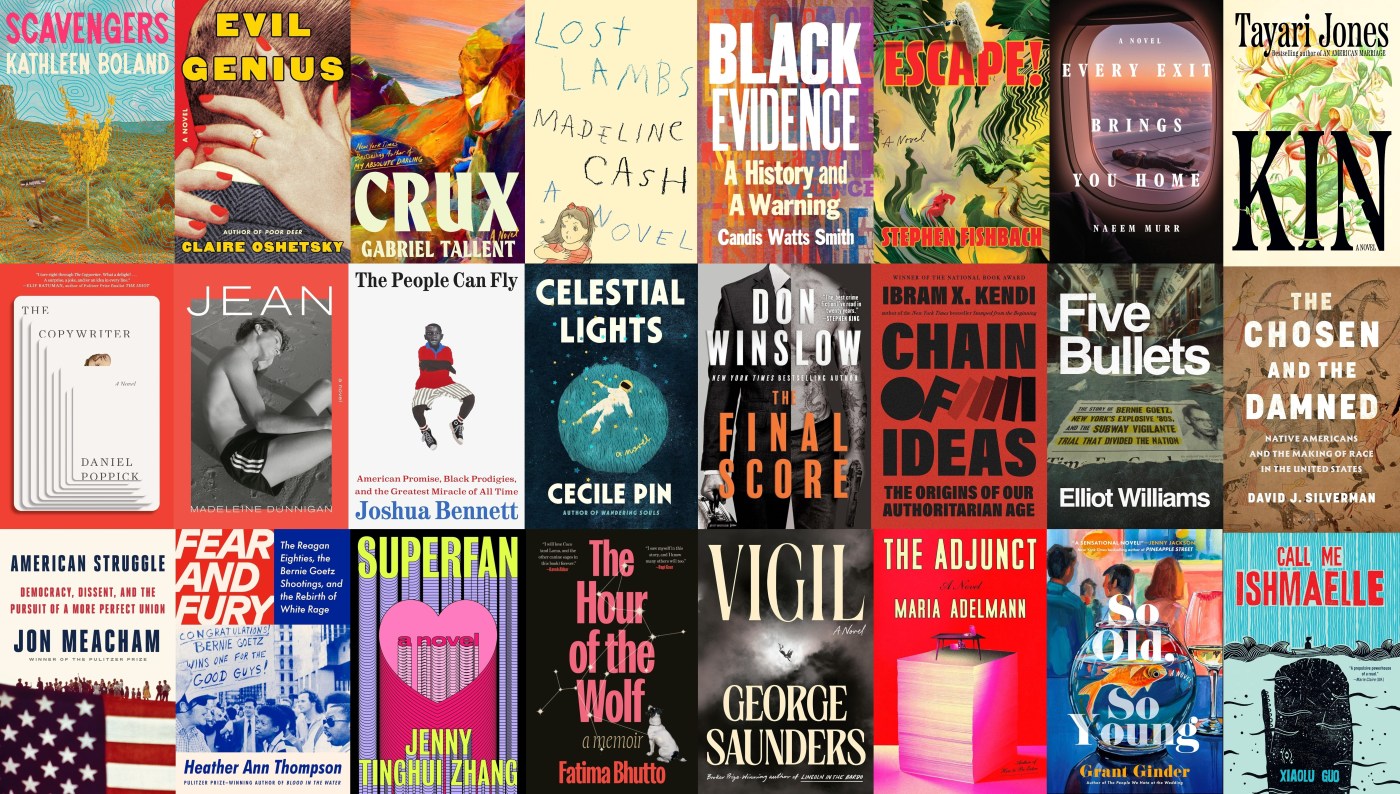
It’s a new year, and even if you’re still working your way through your 2025 to-be-read pile, there’s always room to add to your collection with some new books. (Buy another bookshelf if necessary.) 

The first three months of 2026 will see the release of titles by exciting new authors as well as veterans such as George Saunders, Tayari Jones, Helen Garner, Ibram X. Kendi, Cynthia D’Aprix Sweeney, Naeem Murr, Heather Ann Thompson, Ian Buruma and Michael Pollan.

You never need an excuse to venture into your favorite local bookstore, but if you’re looking for one anyway, we’ve got you covered: Here are 38 new or forthcoming books to put on your shopping list.

SEE ALSOLike books? Get our free Book Pages newsletter about bestsellers, authors and more

“Call Me Ishmaelle” 

Author: Xiaolu Guo

What It’s About: Author and film director Guo’s latest novel is a feminist reimagining of Herman Melville’s classic “Moby-Dick.” In Guo’s version, the hero is a girl who disguises herself as a boy so she can pursue her dream of being a sailor; she later joins a whaling ship led by Captain Seneca, a free Black man who lost his leg to a whale.

Publication Date: out now

“Scavengers”

Author: Kathleen Boland

What It’s About: This debut novel follows Bea, a woman who loses her job as a commodities trader and ventures westward to Utah to reconnect with her irresponsible mother, Christy, who believes she is on the cusp of finding a buried treasure.

Publication Date: out now

“Lost Lambs”

Author: Madeline Cash

What It’s About: Cash’s debut novel tells the story of the unraveling of the Flynn family: Catherine and Bud are a couple in a failing open marriage, while their three daughters are all wrestling with their own demons. When one daughter investigates a possibly corrupt billionaire, the family is drawn into a criminal conspiracy.

Publication Date: out now

“Jean”

Author: Madeleine Dunnigan

What It’s About: The title character of Dunnigan’s novel, set in 1970s England, is a troubled 17-year-old boy sent to an alternative boarding school, and who falls in love with Tom, a charismatic boy who, unlike Jean, comes from a wealthy background.

Publication Date: out now

“Crux”

Author: Gabriel Tallent

What It’s About: Tallent’s acclaimed 2017 novel “My Beautiful Darling” shocked readers with its harrowing account of child abuse. His second book tells the story of Dan and Tamma, two high school seniors who pass the time by climbing boulders in the southern Mojave Desert.

Publication Date: Jan. 20

“Football”

Author: Chuck Klosterman

What It’s About: Klosterman is known for his brainy, but accessible, pop culture books, including “The Nineties.” His latest book, scheduled for publication just weeks before the Super Bowl, explores how the sport explains American culture as a whole.

Publication Date: Jan. 20

“Rough House: A Father, a Son, and the Pursuit of Pro Wrestling Glory”

Author: Alison Lyn Miller

Author: If you prefer your sports in rings instead of on fields, you might want to check out journalist Miller’s book about Hunter James, a young member of a wrestling family who is determined to become a star himself, training extensively and entering the world of indie wrestling.

Publication Date: Jan. 20

“Five Bullets: The Story of Bernie Goetz, New York’s Explosive ’80s, and the Subway Vigilante Trial That Divided the Nation”

Author: Elliot Williams

What It’s About: In 1984, Goetz opened fire on four Black teenagers in a New York City subway, claiming they tried to mug him. This book is an account of the shooting, the trial that ensued, and the aftermath, placing it all in the context of racial tensions in Reagan-era America.

Publication Date: Jan. 20

“Escape!”

Author: Stephen Fishbach

What It’s About: Former television executive — and two-time “Survivor” contestant — Fishbach’s debut novel is set in familiar terrain for him. It follows former reality TV star Kent Duvall, who participates in a new show in which people try to survive in a jungle, not knowing they might be pawns in a producer’s scheme.

Publication Date: Jan. 27

“Vigil”

Author: George Saunders

What It’s About: Saunders, mostly known as a short story author, published his first novel, the Booker Prize-winning “Lincoln in the Bardo,” in 2017. His new one tells the story of a young woman sent from the afterlife to guide a hateful oil baron through the process of dying — and what comes next.

Publication Date: Jan. 27

“The Final Score”

Author: Don Winslow

What It’s About: Winslow, who has gained acclaim with crime novels including “The Power of the Dog” and “City on Fire,” retired from writing, but it didn’t take. He’s back with a collection of six short novels that Stephen King, a longtime fan, called “the best crime fiction I’ve read in 20 years.”

Publication Date: Jan. 27

“The Hour of the Wolf”

Author: Fatima Bhutto

What It’s About: A member of one of Pakistan’s most famous political families — her father was the assassinated politician Murtaza Bhutto — Fatima Bhutto’s memoir tells the story of her escape from a toxic relationship, and her subsequent recovery, with some help from her beloved Jack Russell terrier, Coco.

Publication Date: Jan. 27

“Fear and Fury: The Reagan Eighties, the Bernie Goetz Shootings, and the Rebirth of White Rage”

Author: Heather Ann Thompson

What It’s About: Another account of the Bernhard Goetz shootings, this one promises new revelations about the case, and digs deep into both Goetz and the teenagers he shot. Historian Thompson won the Pulitzer Prize for “Blood in the Water,” her previous book, about the Attica Prison uprising.

Publication Date: Jan. 27

“Every Exit Brings You Home”

Author: Naeem Murr

What It’s About: The long-awaited third novel from Murr follows Jamal “Jack” Shaban, a Gazan immigrant and flight attendant, desperate to have a child with his wife, and who tries to prevent his neighbors from going bankrupt during a financial crisis.

Publication Date: Feb. 3

“The People Can Fly: American Promise, Black Prodigies, and the Greatest Miracle of All Time”

Author: Joshua Bennett

What It’s About: In his latest book, poet and MIT professor Bennett looks at the lives and careers of Black prodigies, including Stevie Wonder, Nikki Giovanni, and James Baldwin, exploring how supportive communities provide young geniuses the opportunity to thrive.

Publication Date: Feb. 3

“Superfan” 

Author: Jenny Tinghui Zhang

What It’s About: The second novel from Zhang, author of “Four Treasures of the Sky,” follows Minnie, a lonely and traumatized college freshman who becomes obsessed with Halo, a member of the boy band HOURglass who is harboring a dark secret about his past.

Publication Date: Feb. 3

“The Copywriter”

Author: Daniel Poppick

What It’s About: Poet Poppick’s fiction debut tells the story of D__, a poet with a day job as a copywriter at a start-up. Feeling that his world is on the verge of collapse, he starts to write in a notebook, penning dreams, fictional vignettes, and other things, in the hopes that it might start making everything make sense.

Publication Date: Feb. 3

“The Chosen and the Damned: Native Americans and the Making of Race in the United States”

Author: David J. Silverman

What It’s About: The latest from historian Silverman, author of the acclaimed “This Land Is Their Land,” explores how racial lines were drawn in North America following the European colonization of the continent, and how those lines continue to resonate today.

Publication Date: Feb. 10

“Evil Genius”

Author: Claire Oshetsky

What It’s About: The latest book from Santa Cruz author Oshetsky is set in 1974 San Francisco. In it, 19-year-old Celia Dent’s work colleague is slain after an ill-fated love affair, and Celia becomes obsessed with the idea of killing for love. Things eventually go too far.

Publication Date: Feb. 17

“Cleaner”

Author: Jess Shannon

What It’s About: Shannon (who, her biography notes, “hates cleaning”) makes her literary debut with a novel about a woman who, despite multiple degrees, struggles to find work until she takes a job as a cleaner at a museum. There, she makes the acquaintance of an artist and embarks on a steamy affair.

Publication Date: Feb. 17

So Old, So Young”

Author: Grant Ginder

What It’s About: The latest from Laguna Beach native Ginder, author of “The People We Hate at the Wedding,” traces two decades in the lives of a group of six friends from college, as they reckon with relationships, careers, and aging.

Publication Date: Feb. 17

“A Hymn to Life: Shame Has to Change Sides”

Author: Gisèle Pelicot

What It’s About: The world was shocked in 2024 when a French man named Dominique Pelicot was convicted of raping his wife, Gisèle Pelicot, along with more than four dozen men whom he had recruited to assault her. The survivor tells her story of trauma and healing in this memoir. 

Publication Date: Feb. 17

“Playmakers: The Jewish Entrepreneurs Who Created the Toy Industry in America”

Author: Michael Kimmel

What It’s About: You might think teddy bears have been around forever, but they were actually created in the early 20th century by Morris and Rose Michtom in Brooklyn. Kimmel’s book tells the story of Jewish toy entrepreneurs, including the Michtoms and the founders of Hasbro and Mattel, in this history.

Publication Date: Feb. 17

“American Struggle: Democracy, Dissent, and the Pursuit of a More Perfect Union: An Anthology”

Editor: Jon Meacham

What It’s About: Best known for his biographies of politicians, including Andrew Jackson, Thomas Jefferson and John Lewis, Meacham aims to strike a hopeful note in this collection of documents from American history, including ones that shine light on figures like Abigail Adams, Fannie Lou Hamer, and Barack Obama.

Publication Date: Feb. 17

“A World Appears: A Journey Into Consciousness”

Author: Michael Pollan

What It’s About: Pollan has probed the science behind food in books including “The Omnivore’s Dilemma” and “In Defense of Food: An Eater’s Manifesto.” His latest book tackles the heady topic of consciousness from several different perspectives.

Publication Date: Feb. 24

“Kin”

Author: Tayari Jones

What It’s About: Jones’s most recent novel, “An American Marriage,” was a literary sensation, winning the Women’s Prize for Fiction and the Aspen Words Literary Prize. Her new one follows Vernice and Annie, best friends from Louisiana whose lives diverge, and who reunite after a tragedy.

Publication Date: Feb. 24

“Black Evidence: A History and a Warning”

Author: Candis Watts Smith

What It’s About: Duke University professor Smith’s latest book explores why American society is resistant to believing the voices of Black people in areas that include the law, healthcare, and science, offering a roadmap to a more equitable society.

Publication Date: March 3

“Stories: The Collected Short Fiction”

Author: Helen Garner

What It’s About: Garner has gained a reputation as one of Australia’s greatest writers over her 50-year-long career; this new book collects her acclaimed short stories and features an introduction from Jonathan Escoffery, author of the lauded story collection “If I Survive You.”

Publication Date: March 3

“Lake Effect”

Author: Cynthia D’Aprix Sweeney

What It’s About: Sweeney’s 2016 novel “The Nest” was a bestseller that was also a hit with critics. Her latest book follows two families in late-1970s Rochester, New York, who are affected by an affair that causes a pair of divorces.

Publication Date: March 3

“Down Time”

Author: Andrew Martin

What It’s About: Martin showcased his dry wit and gimlet eye in his two previous books, “Early Work” and “Cool for America.” His latest book follows five friends whose lives and relationships are upended by the COVID-19 pandemic.

Publication Date: March 10

“Fatherland”

Author: Victoria Shorr

What It’s About: This novel from the author of “Midnight” and “The Plum Trees” follows Josie, whose life is thrown into disarray after her father leaves his family for another woman, and she must work to come to terms with the aftermath of his abandonment.

Publication Date: March 10

“Under Water”

Author: Tara Menon

What It’s About: The debut novel from Menon tells the story of Marissa, who forms a friendship with another young woman, Arielle, in Thailand, over their shared love of diving. Arielle dies in a drowning accident, and years later, Arielle reckons with her loss as Hurricane Sandy prepares to batter New York.

Publication Date: March 17

“Salt Lakes: An Unnatural History”

Author: Caroline Tracey

What It’s About: Arizona-based author and geographer Tracey considers the more than 100 salt lakes on Earth, many of which are in danger of disappearing; her travel takes her to four continents, where she meets the people who want to save them. Interspersed in the book is her own story of her life as a queer woman.

Publication Date: March 17

“Stay Alive: Berlin, 1939-1945”

Author: Ian Buruma

What It’s About: Prolific Dutch author Buruma has more than 20 books, many of them about Asian history and culture. He moves closer to home in his latest, which explores the experience of German Jews living in Berlin during World War II.

Publication Date: March 17

“Chain of Ideas: The Origins of Our Authoritarian Age”

Author: Ibram X. Kendi

What It’s About: Professor and historian Kendi’s previous bestselling books include the influential “Stamped From the Beginning” and “How to Be an Antiracist.” His newest title is a history of the racist and antisemitic “great replacement theory,” which has led to several hate-motivated attacks across the world.

Publication Date: March 17

“Celestial Lights”

Author: Cecile Pin

What It’s About: Pin made her literary debut in 2023 with the novel “Wandering Souls,” which was nominated for the Women’s Prize for Fiction. Her newest book follows Oliver, who is born the moment of the Challenger disaster, and who becomes a world-renowned astronaut.

Publication Date: March 24

“On the Record: Music That Changed America”

Author: Anna Harwell Celenza

What It’s About: Professor and children’s book author Celenza explores music that has made its way to the U.S. Congress, including “The Star-Spangled Banner,” Billie Holiday’s protest song “Strange Fruit,” and Lin-Manuel Miranda’s blockbuster musical “Hamilton.”

Publication Date: March 24

“The Adjunct”

Author: Maria Adelmann

What It’s About: “Girls of a Certain Age” and “How to Be Eaten” author Adelmann’s latest book is a novel that follows Sam, a Baltimore adjunct professor who encounters her graduate-school thesis advisor and learns that she might be a character in his upcoming novel.

Publication Date: March 31

Related Articles


Readers and writers: An eclectic wintry mix takes a tour of state and time


Literary pick for week of Jan 25


Literary calendar for week of Jan. 25


‘American Reich’ explores rising hate crimes and the Blaze Bernstein murder


Michael Connelly says same killer committed Black Dahlia, Zodiac murders

Gen Z hates diet sodas, but loves them with ‘Zero Sugar’ branding

posted in: All news | 0

By Kristina Peterson, Bloomberg News

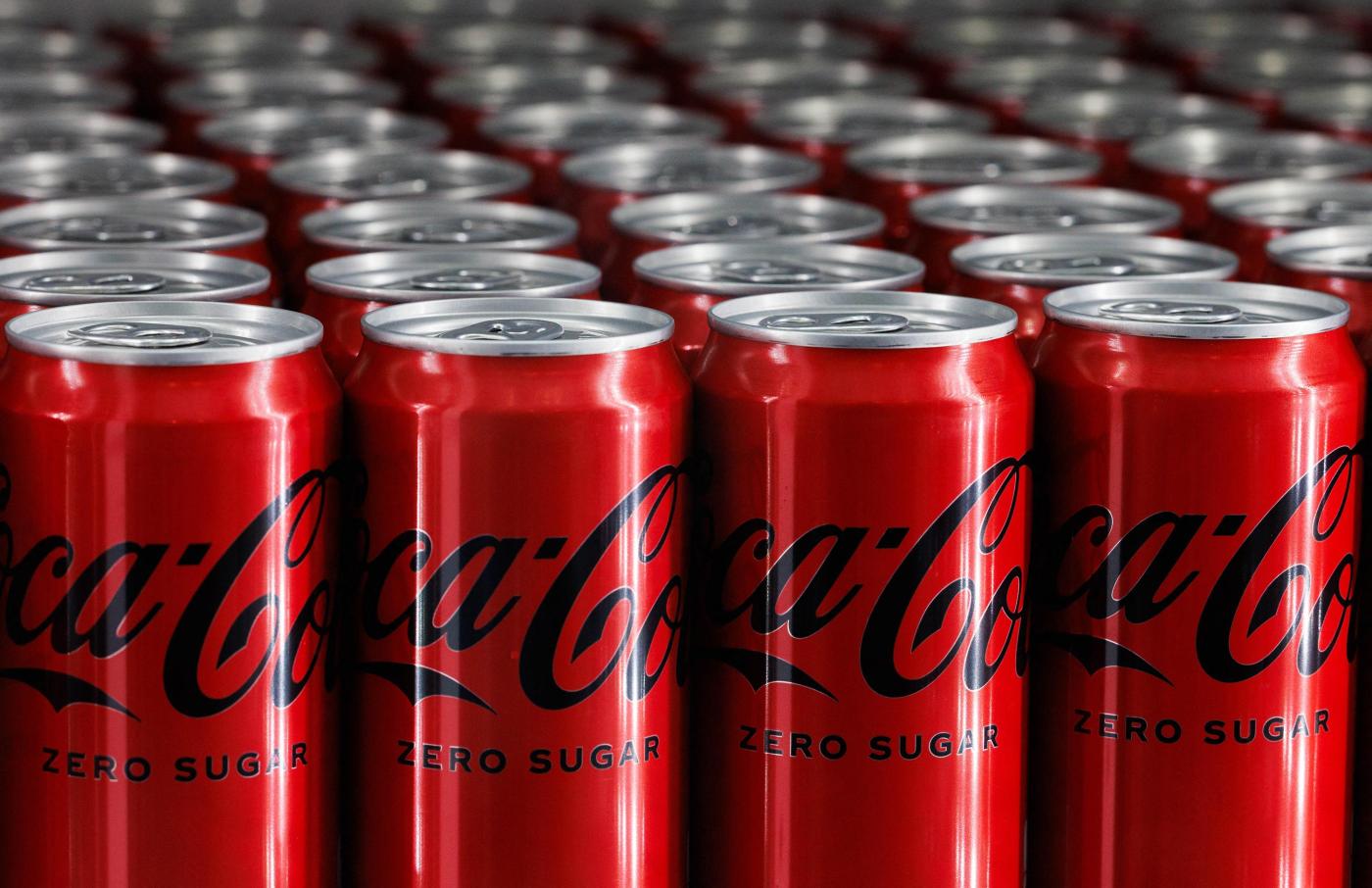
The first Pepsi Challenge tour in 50 years didn’t feature regular or even Diet Pepsi. Instead, the blind taste-test showdown last year pitted Pepsi Zero Sugar against Coca-Cola Zero Sugar.

Related Articles


The secret to perfect tortiglioni with peppers and eggplant from a 1929 Italian cookbook


Gretchen’s table: Warm winter’s chill with a hot bowl of this tangy and traditional Mexican stew


The most exciting restaurants opening across the US


Quick Fix: Beef Tenderloin with Cranberry Mustard Sauce and Green Beans with Rice


Fish cakes and Birmingham greens were a hit at the Harlem EatUp! festival

At the Super Bowl next month, it’s Zero Sugar that will star in the beverage company’s Pepsi commercial, not the original formula. PepsiCo Inc. is running a 30-second spot, which can run more than $8 million, to hype the no-calorie drink.

“We’ve gone all in” on Pepsi Zero Sugar in the last two years, said Ram Krishnan, the chief executive officer of PepsiCo North America, so much so that the vast majority of its Pepsi marketing budget is spent promoting Zero Sugar.

It’s not just Pepsi. Across the soda aisle, Diet is out and Zero Sugar is in. Keurig Dr Pepper Inc, for one, didn’t have a single Zero Sugar offering in 2020. Now it has more than 40.

Both Diet and Zero Sugar are calorie free, artificially sweetened imitations of their sugary brethren. Yet, the latter’s branding resonates more with younger, wellness-minded consumers, who shun sugar but don’t vibe with calorie counting or diet culture.

“The word ‘diet’ is from a different era. For a lot of younger consumers, it’s radioactive,” said Kevin Ryan, chief executive officer of Malachite Strategy and Research.

Last year a viral TikTok likened Diet Coke to a “fridge cigarette”: a guilty, unhealthy pleasure that takes the edge off. Zero Sugar, on the other hand, has more of a “health halo,” Krishnan, the Pepsi executive, said.

Zero Sugar sodas are a small but growing part of US soft drink sales. Last year, they accounted for 52% of the category’s sales growth, according to Circana data provided to Bloomberg. Both Pepsi and Coke sold more of their Zero Sugar offerings in the first nine months of 2025 than the same period a year prior. Sales of full sugar Pepsi and Coke declined during that time, as did Diet Pepsi. Diet Coke was up slightly.

It’s a sharp turn for soda’s fortunes in the US, where sales by volume have fallen 27% over the last two decades as more consumers opt for water and energy drinks instead.

PepsiCo’s success with its Zero Sugar soda represents a bright spot for the company, which has struggled elsewhere to adapt to changing tastes. The soda and snack-maker’s shares have posted annual declines for the past three years, which made it the target of an activist investor.

Elliott Investment Management took a roughly $4 billion stake in the company last year and has since pushed for products that appeal to a more health-conscious consumer and for PepsiCo to focus on its core brands.

For Madilyn Hovey, diet soda “just has that weird artificial taste to it.” While sipping a Dr Pepper Cherry Zero Sugar, the 25-year-old said “it’s easier to feel like you’re drinking the real thing.”

When Zero Sugar lines first launched, they were meant to taste closer to the real thing than Diet sodas. Since then, many have reformulated their sweetener mix to get even closer to the stuff made with sugar.

Reaching Gen-Z drinkers like Hovey — many of whom didn’t grow up drinking soda — is key to Keurig Dr Pepper’s strategy, said Derek Dabrowski, senior vice president of marketing at the maker of more than a dozen soda brands, including Sunkist, A&W and Canada Dry.

Six years ago, while competitors’ Zero Sugar drinks were multiplying, the company only had full sugar and Diet versions of its sodas.

“We were a little late to the party,” Dabrowski said.

The upside of that was the company could see what was working for rivals. Keurig Dr Pepper found that flavored Zero Sugar sodas were selling better than Zero Sugar colas, which aligned well with its portfolio.

From there, it decided to get into Zero in a big way. It axed Diet Sunkist, A&W and Canada Dry, replacing them with Zero Sugar options. (It kept Diet Dr Pepper, which has a loyal following.) It also added dozens of new flavors, like Dr Pepper Blackberry Zero Sugar and Dr Pepper Strawberries and Cream Zero Sugar.

While there was some internal anxiety that the changes would alienate customers, they didn’t, Dabrowski said. “It was a risk worth taking that has paid off.”

Keurig Dr Pepper’s US sales of beverages like soft drinks rose 14.4% in the third quarter to $2.7 billion, helping offset weakness in its coffee division. The company last year announced plans to split its refreshment beverage and coffee businesses in two, a move that some analysts say will allow the soda-maker to better compete with PepsiCo and Coca-Cola.

Leaning into variety has particularly helped win over Gen Z consumers. The company’s research has found that 72% of them try a new beverage every month, compared to just 16% of Boomers.

The limited-edition Dr Pepper Creamy Coconut — inspired from seeing people on social media add coconut syrup to Dr Pepper — was the company’s top-performing limited-time soda ever. Of course, it came in Zero Sugar, too.

Big soda brands are “really smart to create those multiple offerings,” said Ben Goodwin, CEO of Olipop Inc., a prebiotic soda that’s also winning over Gen Z with its health halo.

“I’m not an all-or-none kind of person,” said Megan Stitz, a 26-year-old physical therapist in Des Moines, Iowa, who recently started drinking Zero Sugar sodas to cut down on processed sugar. “I will still enjoy a full-sugar Coke if I want to.”

To that end, Pepsi has decided to bring back its taste test again this year with a new challenge. This time, people wearing blindfolds will decide in some markets if they prefer Pepsi Wild Cherry Zero Sugar or Coke Cherry Zero Sugar. Last year, Pepsi claims it won the battle in all 34 cities, including in Coke’s home turf, Atlanta.

©2026 Bloomberg L.P. Visit bloomberg.com. Distributed by Tribune Content Agency, LLC.

Sleep-tracking devices have limits. Experts want users to know what they are

posted in: All news | 0

By R.J. RICO and EMILIE MEGNIEN

ATLANTA (AP) — Your watch says you had three hours of deep sleep. Should you believe it?

Millions of people rely on phone apps and wearable devices like rings, smartwatches and sensors to monitor how well they’re sleeping, but these trackers don’t necessarily measure sleep directly. Instead, they infer states of slumber from signals like heart rate and movement, raising questions about how reliable the information is and how seriously it should be taken.

The U.S. sleep-tracking devices market generated about $5 billion in 2023 and is expected to double in revenue by 2030, according to market research firm Grand View Research. As the devices continue to gain popularity, experts say it is important to understand what they can and cannot tell you, and how their data should be used.

Here’s a look at the technology — and why one expert thinks its full potential has yet to be realized.

What your sleep tracker actually measures

Whether it’s an Apple Watch, a Fitbit, an Oura Ring or one of innumerable other competitors, health and fitness trackers largely take the same basic approach by recording the wearer’s movements and heart rate while at rest, according to Daniel Forger, a University of Michigan math professor who researches the science behind sleep wearables.

Middle school teacher Kate Stoye puts on an Oura ring, a wearable sleep tracking device, Wednesday, Jan. 7, 2026, in Hiram, Ga. (AP Photo/Emilie Megnien)

The algorithms used by major brands have become highly accurate for determining when someone is asleep, Forger said. The devices are also somewhat helpful for estimating sleep stages, though an in-lab study would be more precise, he said.

“If you really want to know definitively how much non-REM sleep you’re having versus REM sleep, that’s where the in-lab studies really excel,” Forger said.

The sleep numbers that matter most

Dr. Chantale Branson, a neurologist and professor at the Morehouse School of Medicine, said she frequently has patients showing up with sleep scores from fitness trackers in hand, sometimes fixated on granular details such as how much REM sleep they got on a certain night.

Branson says those patients are taking the wrong approach: the devices help highlight trends over time but should not be viewed as a definitive measure of one’s sleep health. Nor should any single night’s data be seen as significant.

“We would have believed them with or without the device and worked on trying to figure out why they can’t sleep — and that is what the wearables do not do,” she said.

Branson said she thinks people who check their sleep statistics every morning would be better served by spending their efforts on “sleep hygiene” such as creating a relaxing bedtime routine, avoiding screens before bed and making sure their sleep environment is comfortable. She advises those concerned about their sleep to consult a clinician before spending money on a wearable.

Wearable devices, including Apple Watches, can be used to track sleep, Wednesday, Jan. 21, 2026, in Atlanta, Ga. (AP Photo/Emilie Megnien)

Forger takes a more favorable view toward the devices, which he says help keep the overlooked importance of sleep front of mind. He recommends them even for people without significant sleep issues, saying they can offer insights that help users fine-tune their routines and feel more alert during the day.

“Seeing if your biological clock is in sync is a huge benefit because even if you’re giving yourself the right amount of time, if you’re sleeping at the wrong times, the sleep won’t be as efficient,” Forger said.

How sleep data can drive better habits

Kate Stoye, an Atlanta-area middle school teacher, bought an Oura Ring last summer, having heard positive things from friends who used it as a fertility tracker: “It’s so accurate,” she said. Stoye found the ring to be just as helpful with tracking her sleep. After noticing that the few nights she drank alcohol coincided with poorer sleep quality, she decided to give up alcohol.

“I don’t see much reason to drink if I know that it’s going to affect how I feel,” said Stoye, who always wears her device except when she is playing tennis or needs to charge it.

Another trend she says she detected in the ring’s data: the importance of not eating too late if she wants to get good rest.

“I always struggle with going to bed, and it’s often because I eat late at night,” Stoye said. “I know that about myself, and it knows it too.”

When sleep tracking becomes a problem

Mai Barreneche, who works in advertising in New York City, used to wear her Oura Ring constantly. She said it helped her develop good sleep habits and encouraged her to maintain a daily morning exercise regimen. But as a metric-driven person, she became “obsessed” enough with her nightly sleep scores that it began to cause her anxiety — a modern condition that researchers have dubbed “orthosomnia.”

Middle school teacher Kate Stoye checks her sleep score on her phone, Wednesday, Jan. 7, 2026, in Hiram, Ga. (AP Photo/Emilie Megnien)

“I remember I would go to bed thinking about the score I was going to get in the morning,” Barreneche said.

Barreneche decided not to wear her ring on a beach vacation a few years ago, and when she returned home, she never put it back on. She said she has maintained the good habits the device pointed her toward, but no longer wants the stress of monitoring her nightly scores.

Branson, of the Morehouse School of Medicine, said she’s observed similar score-induced anxiety as a recurring issue for some patients, particularly those who set goals to achieve a certain amount of REM sleep or who shared their nightly scores with friends using the same device. Comparing sleep types and stages is ill-advised since individual needs vary by age, genetics and other factors, she said.

Dr. Chantale Branson, a sleep neurologist at the Morehouse School of Medicine, stands for a portrait, Friday, Jan. 16, 2026, in Atlanta, Ga. (AP Photo/Emilie Megnien)

“These devices are supposed to help you,” Branson said. “And if you feel anxious or worried or frustrated about it, then it’s not helpful, and you should really talk to a professional.”

The future of wearables

Forger thinks the promise of wearables has been underestimated, with emerging research suggesting the devices could one day be designed to help detect infections before symptoms appear and to flag sleep pattern changes that may signal the onset of depression or an increased risk of relapse.

Related Articles


UnitedHealth shares plunge on rare reduced forecast, gov’t payment freeze


What to know about breast self-awareness and how it fits into cancer prevention


Shoveling snow? Over-exertion and cold temps can raise your heart risks


U, Fairview and M Physicians reach 10-year agreement after mediation


Addicted to your phone? Don’t break up with it entirely. Do this instead

“The body is making these really interesting and really important decisions that we’re not aware of to keep us healthy and active and alert at the right times of day,” he said. “If you have an infection, that rhythm very quickly starts to disappear because the body goes into overdrive to start fighting the infection. Those are the kind of things we can pick up.”

The technology could be particularly useful in low-resource communities, where wearables could help health issues to be identified more quickly and monitored remotely without requiring access to doctors or specialized clinics, according to Forger.

“There’s this really important story that’s about to come out: About just how understanding sleep rhythms and sleep architecture is going to generally improve our lives,” he said.